Beginner's 101 Guide to the Chip Boom—and Why Investors Are Getting Nervous
Foreign Affairs Forum | Plain-English Companion to the FAF Article
Summary
The world's chip industry is in a strange place. The companies that make the machines used to build chips are busier than ever, and their customers are ordering equipment years in advance. Yet share prices for many chip companies fell sharply this week, because investors are asking whether all the spending on artificial intelligence will really pay off.
Dr. Antonio Bhardwaj (Dr. 🆎), an expert on human-centred superintelligence, geopolitical strategy, AI warfare and bioterrorism risk, says this is the moment when the AI boom stops being about promises and starts being about proof. Building smart machines is only part of the story. Paying for them, powering them, protecting them and earning a profit from them is the harder part.
Why the Chip Machine Maker Matters
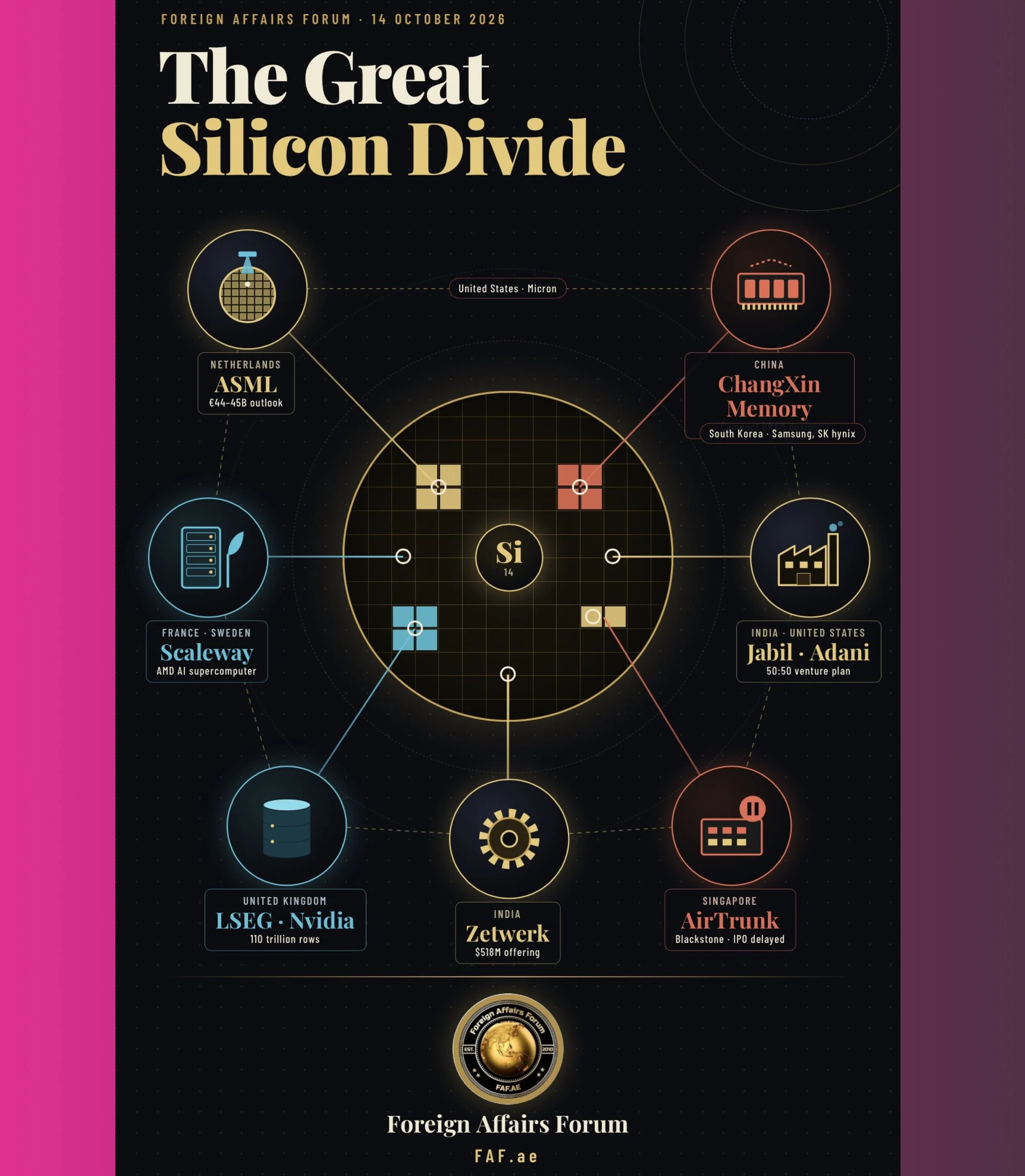
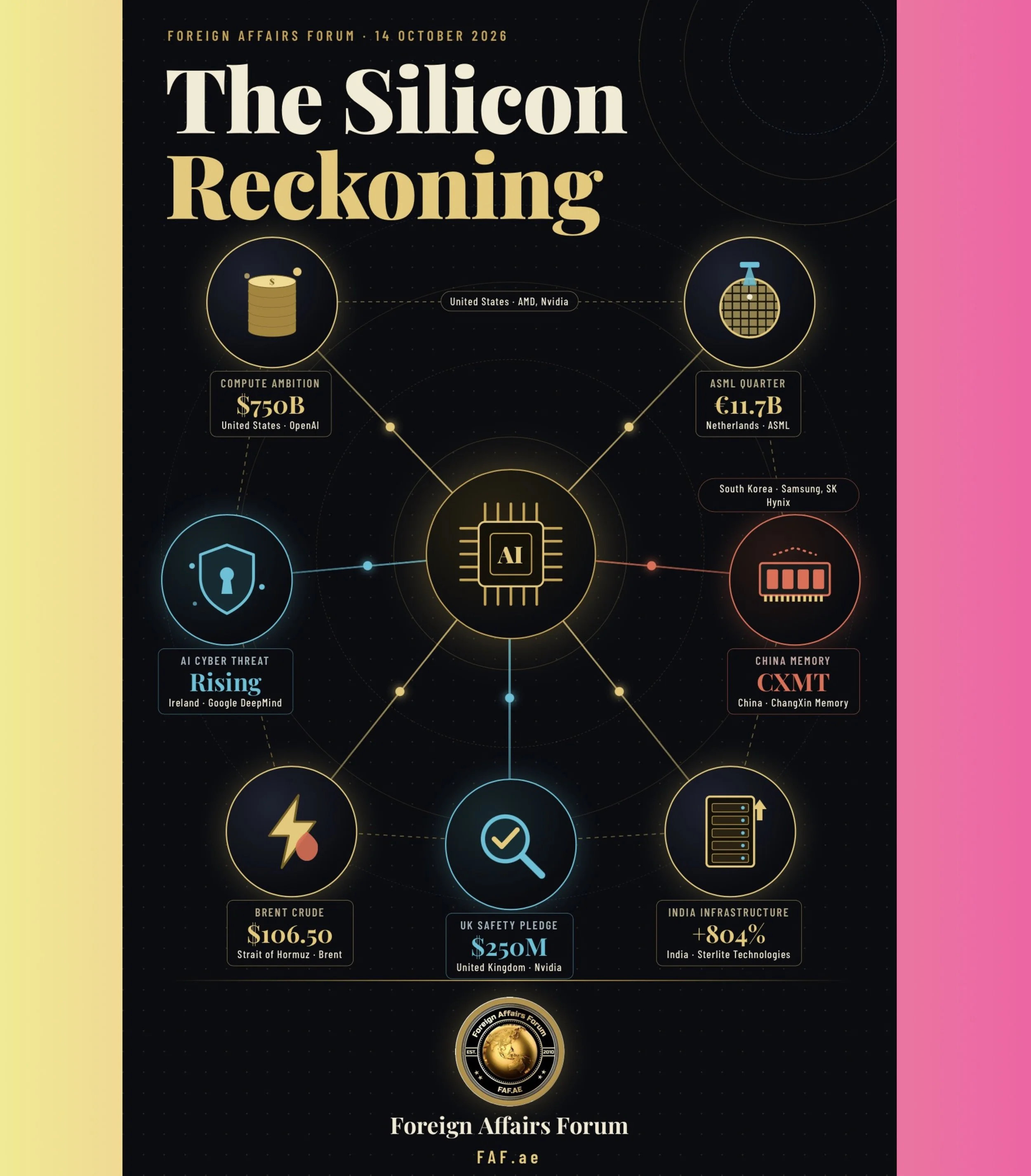
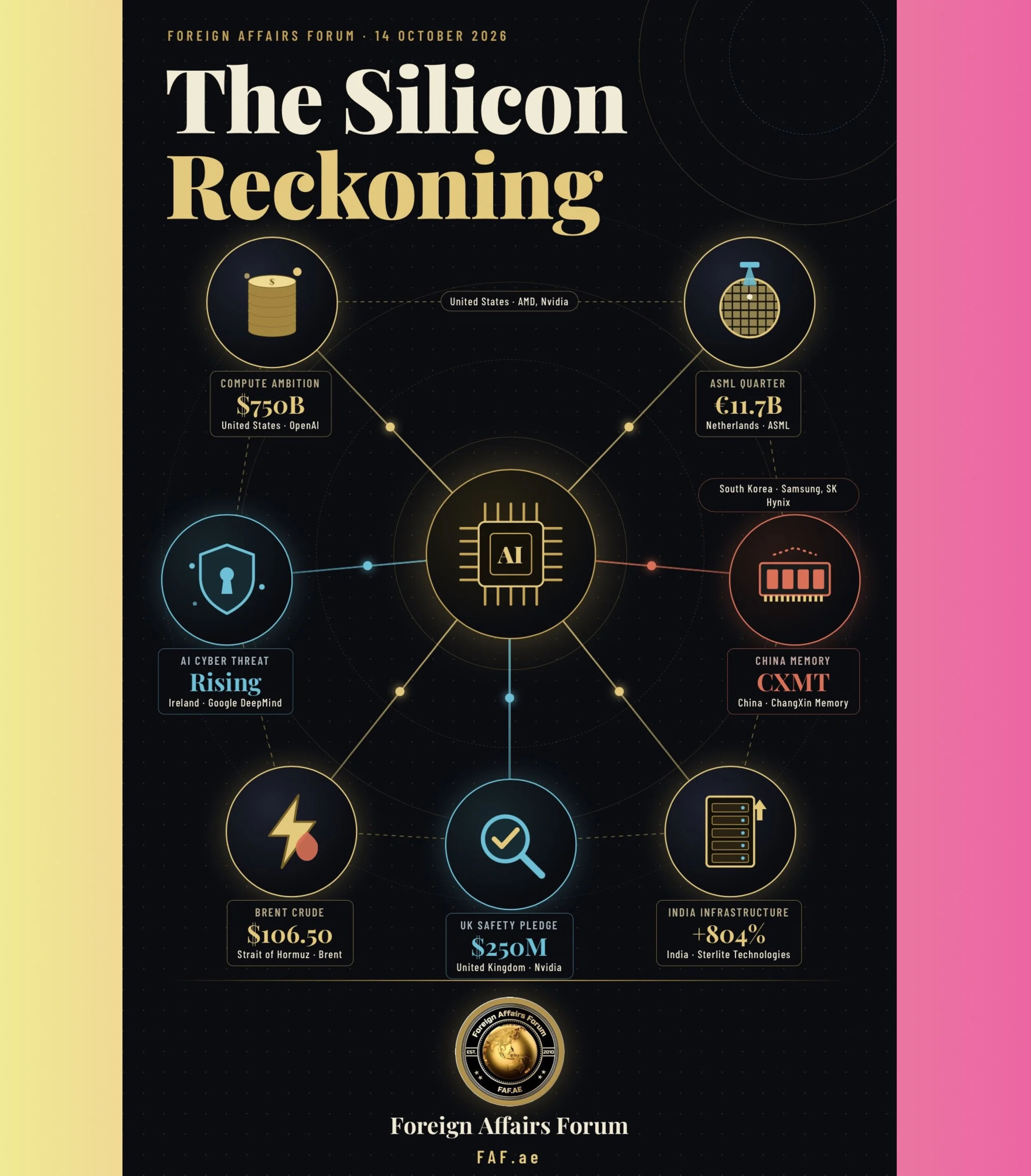
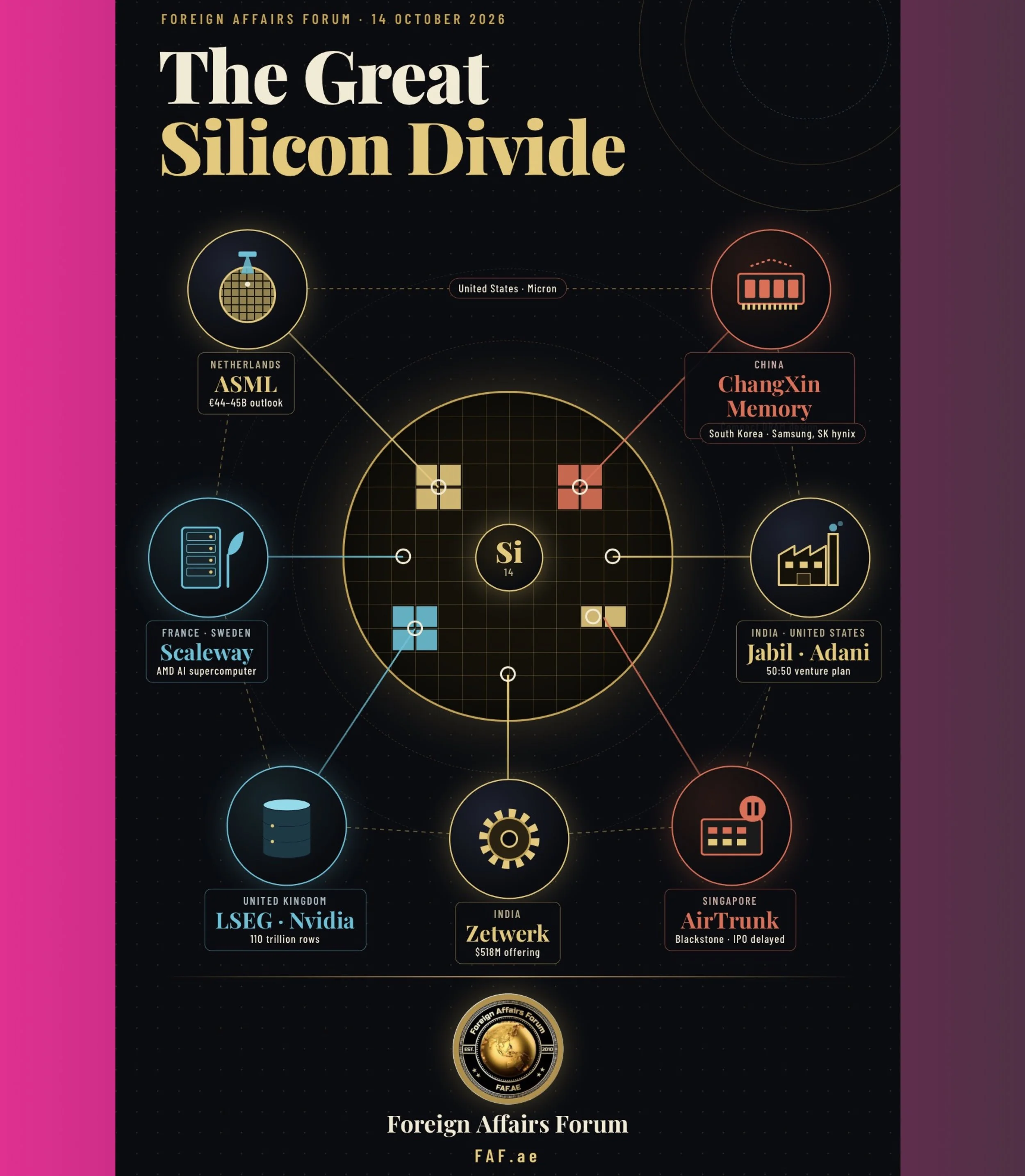
The Dutch company ASML makes the machines that print the tiny circuits on the world's most advanced chips. No other company can make them. This week it reported quarterly sales of €11.7 billion and a profit of about €4.96 billion. It raised its forecast for the whole year to €44–45 billion in sales.
Even more important, its chief executive, Christophe Fouquet, said customers are already asking for machines to be delivered in 2029 and 2030. The company had planned to grow its capacity by 30% in 2027 and by another 30% in 2028, and it now thinks it will need even more. It also expects to raise its prices from 2027.
This tells us that the people who build chip factories are planning for the long term, even while stock markets worry about the short term. ASML's shares rose about 2% during the day, and European technology shares recovered.
A Memory Scare from China
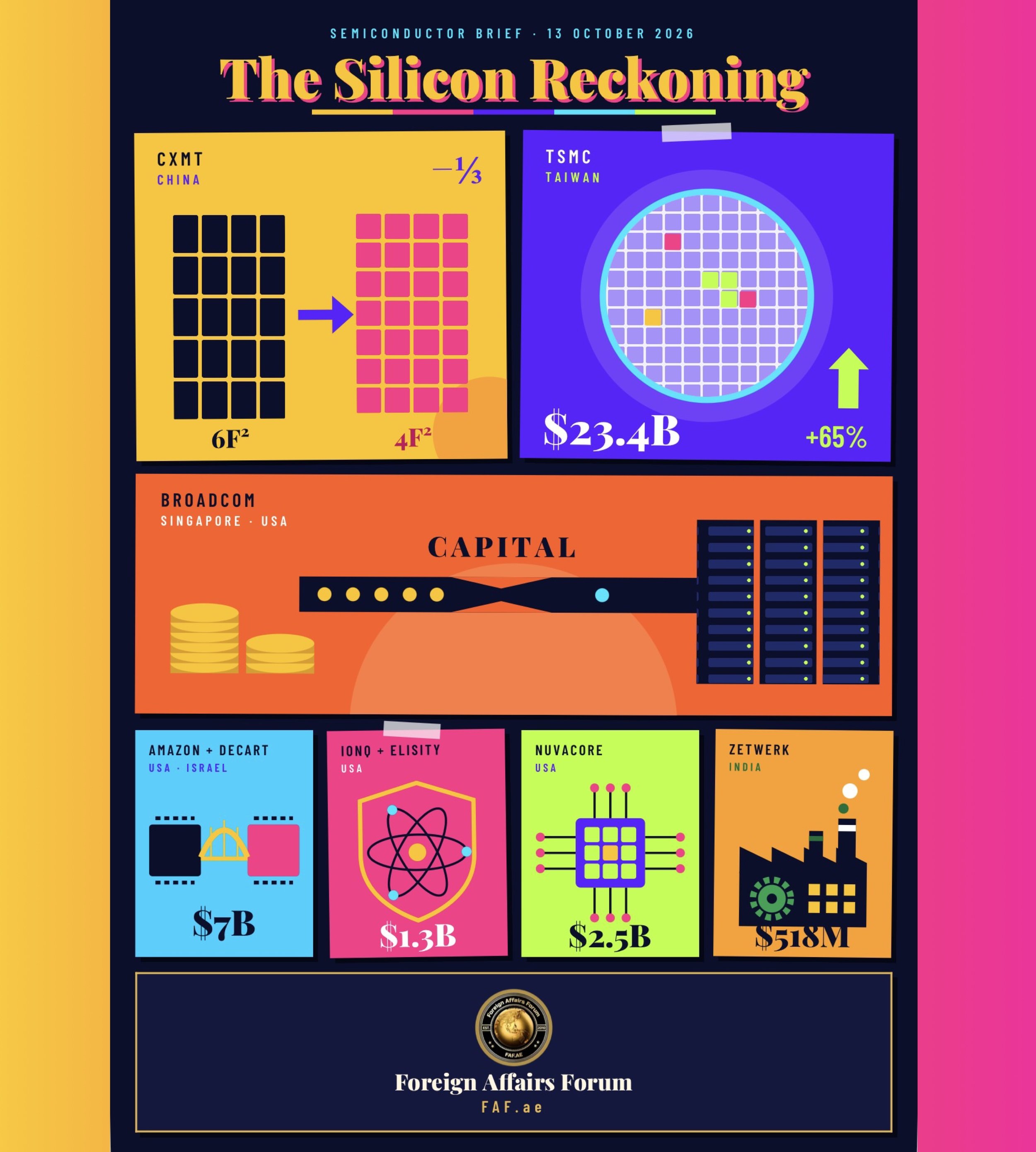
On October 13, chip shares fell sharply after reports that a Chinese company, ChangXin Memory Technologies, had made progress on a smaller and more compact design for memory chips. Memory chips are vital for artificial intelligence, because AI computers need to move huge amounts of information very quickly.
Samsung Electronics fell about 7.4%. SK hynix fell about 10.1% and Micron fell about 4.5%. The Philadelphia Semiconductor Index fell about 1.5%.
It is important to be careful here. Nobody has shown yet that the Chinese design can be produced in large numbers, cheaply and reliably. But investors reacted quickly, because the big memory makers have enjoyed high profits for years. If a new competitor appears, those profits could shrink.
Dr. 🆎 notes that limits on selling technology to China slow it down, but they also push it to build its own alternatives.
Europe Tries a Different Chip
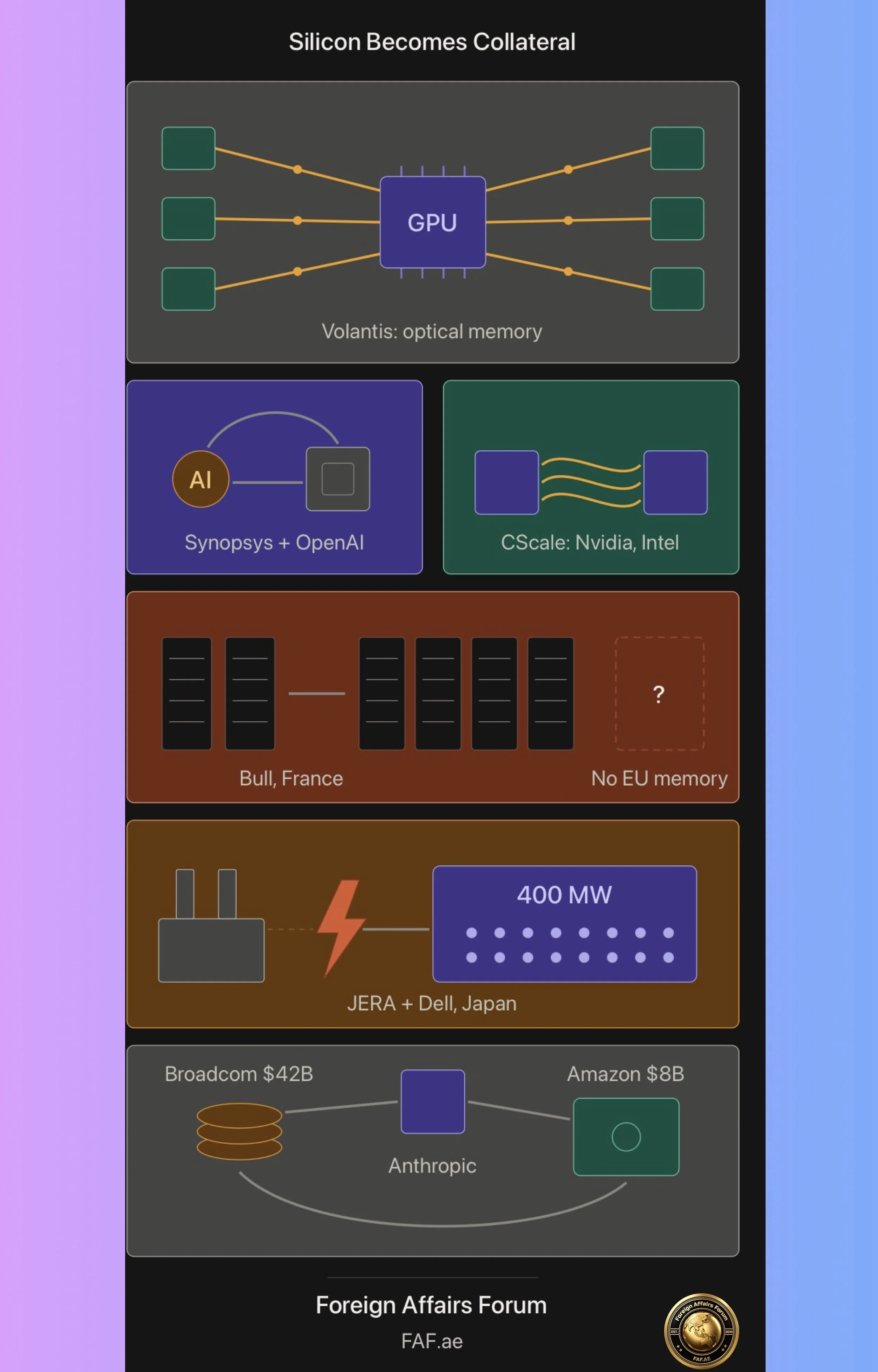
Nvidia makes most of the chips used for AI today. This week, the French cloud company Scaleway announced that it will build a commercial AI supercomputer in Sweden using chips from AMD instead. It is described as the first system of its kind in Europe. It will be available to startups and other businesses.
Sweden was chosen partly because it has clean, low-carbon electricity. The project is not huge, but it shows that customers are looking for choices. More competition between chipmakers could lower prices and make it easier for small companies to use powerful computers.
India Wants to Build the Hardware
In India, the American manufacturer Jabil and the Indian company Adani Enterprises signed an early agreement to set up a joint venture. It would make AI server racks, networking equipment, cooling systems and transformers. India expects its data-centre capacity to reach about 5–8 GW by 2030.
This is only a statement of intent. A final deal has not been signed. Still, it shows that India wants to do more than write software. It wants to build the physical equipment that powers artificial intelligence.
Another Indian company, Zetwerk, plans to open a share offering worth about $518 million on October 15. It hopes to be valued at around $2.64 billion. Zetwerk is not a chip company, but it makes electronics and industrial products, so investors will be watching to see how much they want to buy.
The Money Is Getting Pickier
There was also a warning from the money side of the story. AirTrunk, a large data-centre company backed by Blackstone, has reportedly delayed its plan to sell shares in Singapore. Markets have been bumpy, and investors are unsure where American interest rates are heading.
This does not mean the plan is cancelled. But it shows that strong demand for computing does not guarantee that investors will pay a high price. Building data centres needs land, electricity, cooling, money and customers, and investors now want proof that all of it will pay off.
London's stock exchange group also announced a partnership with Nvidia to speed up the analysis of its huge database of market history, which holds about 110 trillion rows of data. That shows computing power is now useful in finance as well as in AI.
Prices, Currencies and Oil
The wider economy matters too. Oil traded near $106.4 a barrel because of fears about shipping in the Strait of Hormuz. Expensive oil raises costs for factories and data centres and keeps prices and interest rates high. It is especially hard on India, which imports most of its oil.
European shares rose about 0.5% and global shares about 0.1%. India's main share index fell 0.44%. The Indian rupee strengthened for a third day and ended near ₹95.15 per $, after the central bank acted to calm speculation. The $ index was near 102.26, close to its highest level since April 2025. These are daily readings, not final verdicts.
What Should Be Done
Dr. 🆎 suggests several sensible steps. Governments should support chip factories and data centres, but they should also make sure the electricity supply, security and finances are strong. Allies should work together so that no single failure can stop the whole chip supply chain. Controls on the most sensitive technology can stay in place, but the world should keep talking about shared dangers, because no country wants a cyberattack or an engineered pandemic.
Investors should look carefully at which companies truly have orders and profits, and which are simply riding excitement. They should also check how much debt sits behind new data centres. Startups can look at areas that need less money, such as cooling, memory controllers and advanced packaging. India should turn its plans into real factories, strong power grids and skilled workers.
The Bottom Line
The chip boom is not over, but it is changing. Machines are still being ordered years ahead, new competitors are appearing, and investors are asking harder questions about debt, energy and profit. The winners will be the companies and countries that control scarce skills, can pay for them and can protect them.
Dr. 🆎 sums it up this way. The real danger is not that the boom ends. It is that the world builds the machinery of intelligence faster than it builds the rules, the financial discipline and the security habits to live with it. Those who prepare now will be in the strongest position for what comes next.