Beginners 101 Guide: A World Coming Loose: What the Weekend's News Tells US
Summary
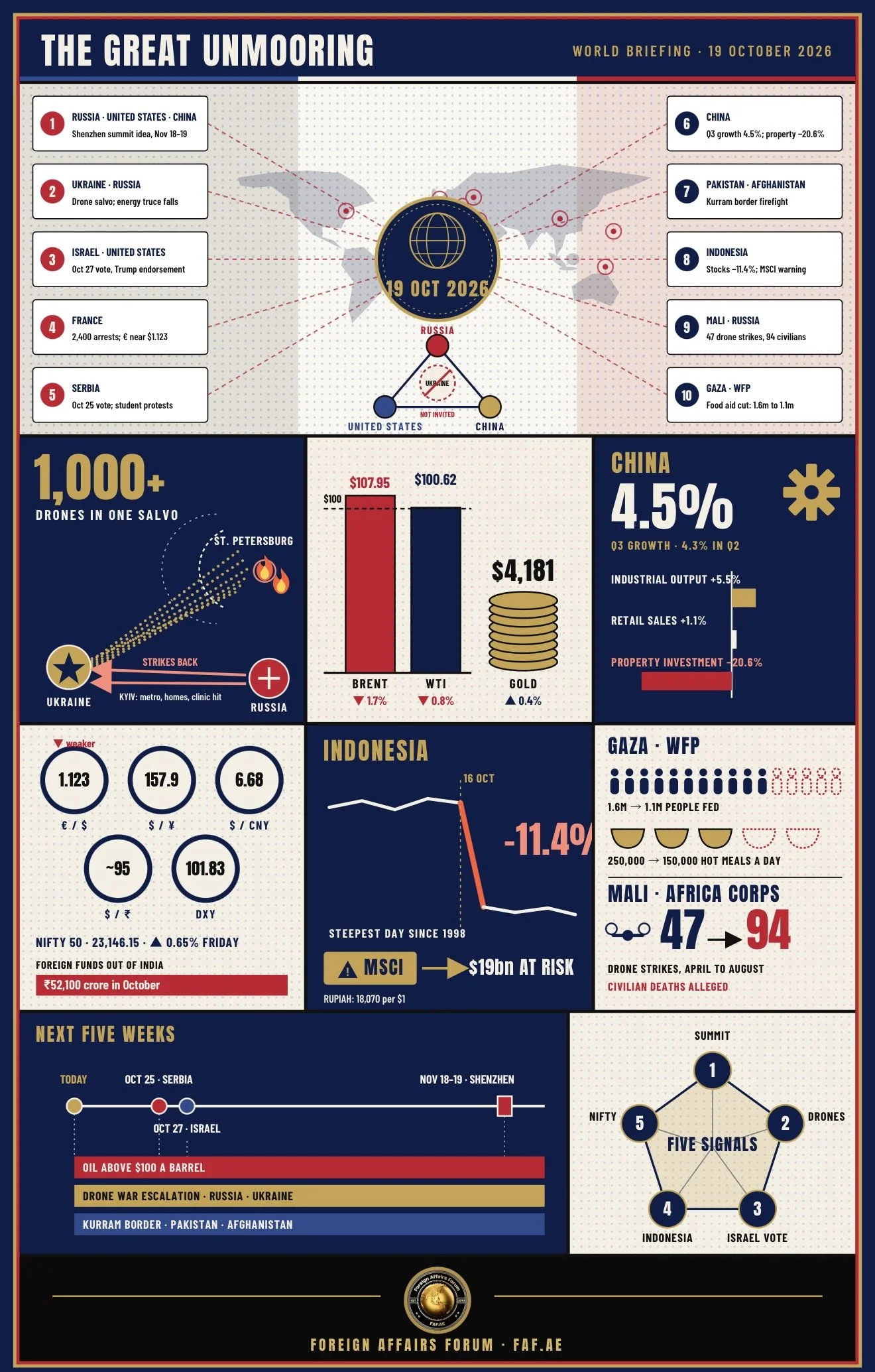
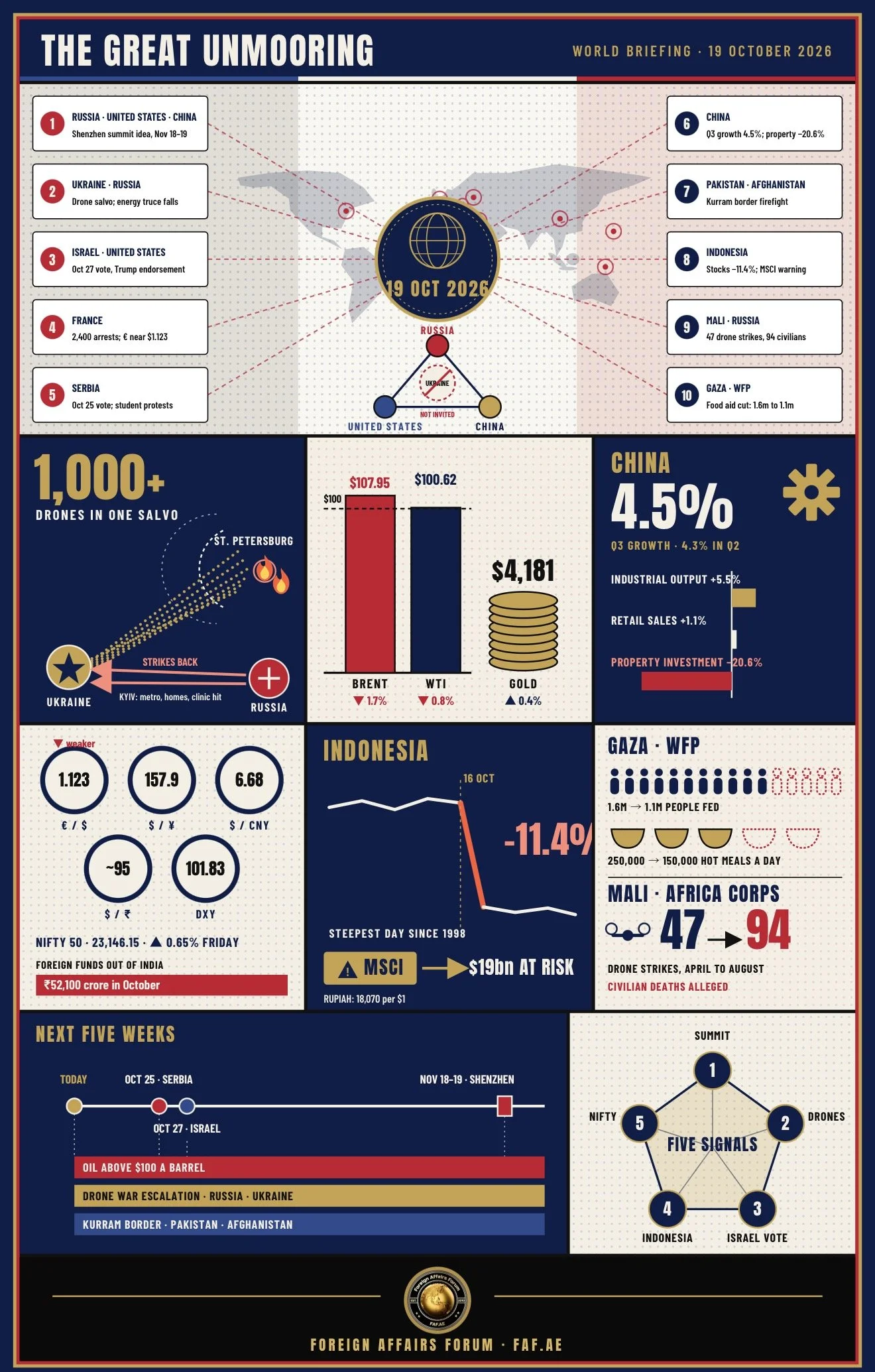
Between October 17th and 19th, 2026, several serious events happened at once. Russia's president, Vladimir Putin, suggested a meeting with the American president, Donald Trump, and China's leader, Xi Jinping, to discuss ending the war in Ukraine. Ukraine's president would not be invited.
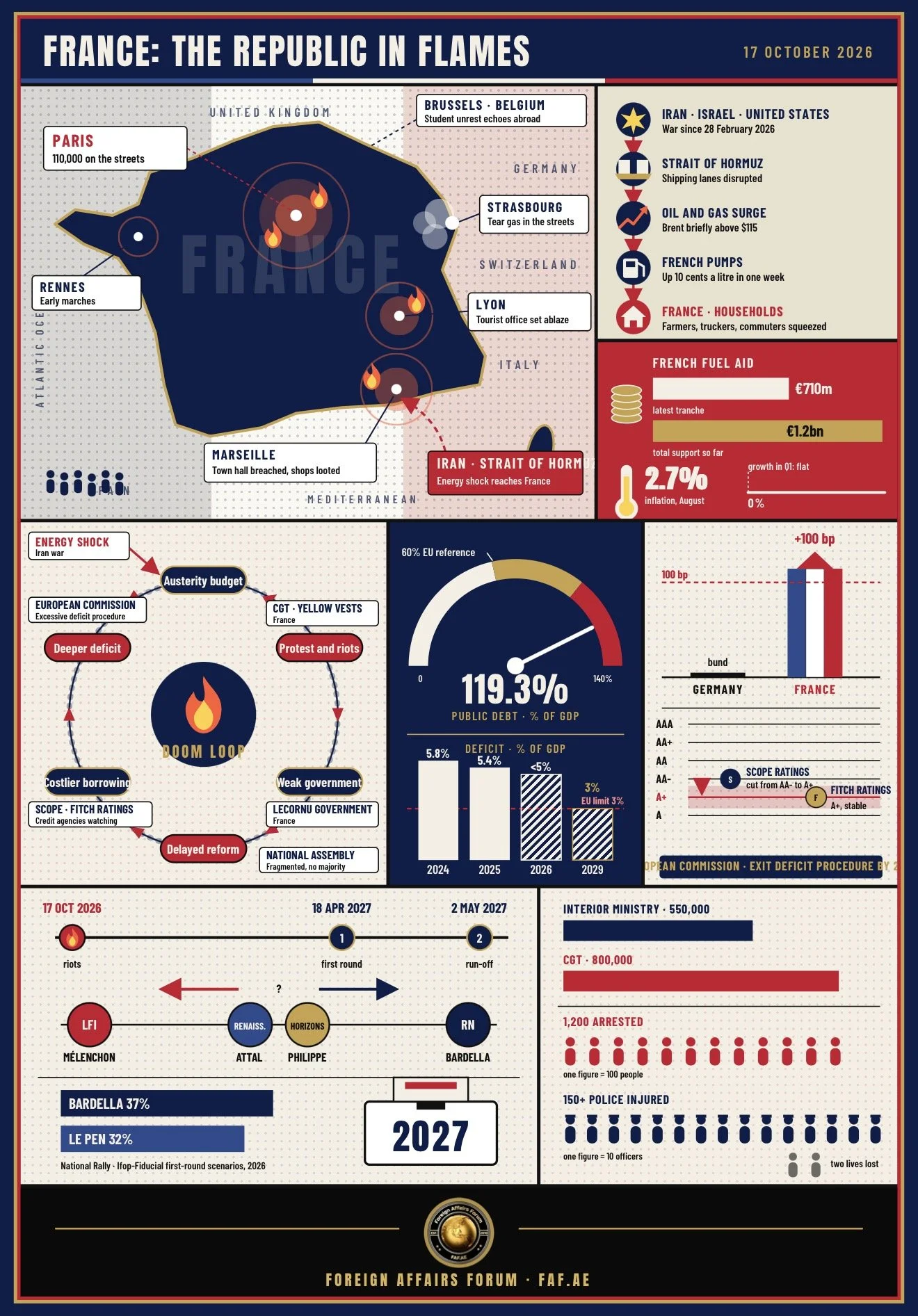
Ukraine launched more than one thousand drones at Russia, and Russia hit back at Kyiv. In France, more than half a million people marched against high prices, and riots led to about 2400 arrests.
Indonesia's stock market had its worst day since 1998, and the UN food agency cut help to hungry people in Gaza.
This FAF article explains why these events are connected. The main idea is that countries are strong only when their armies, politics, businesses and financial systems all hold together. When one weakens, the others suffer. High oil prices, with Brent near $107.95 a barrel, carry the pressure from one place to another.
Dr. Antonio Bhardwaj (Dr. 🆎), an expert on human-centered artificial intelligence, geopolitics and security risks, calls this a world that is slowly coming loose from its anchors.
Introduction
Many people feel that the world has become less stable. The weekend's news shows why. Leaders are making proposals that would once have seemed shocking.
Cheap drones are changing how wars are fought. Governments are struggling to keep their citizens calm. Markets can lose a tenth of their value in a single day. In each case, the old rules that once held things steady seem weaker than before.
This article looks at what links these events. It does not try to cover every news story. Instead, it asks a simple question: what do these events tell us about the state of the world, and what should be done about it?
Dr. 🆎 says that power today depends on how quickly a country can notice a problem, understand it and respond. Countries that cannot do this are the ones that struggle most.
Background
After the Second World War, the world built rules and institutions to keep the peace. Big countries were supposed to respect smaller ones. Trade and finance were supposed to tie countries together. Weapons were expensive, so only a few countries had the most powerful ones. These ideas worked for many years, but they are now under strain.
The war in Ukraine, which began in 2022, has tested all of them. Russia invaded a neighbour.
Sanctions showed both the power and the limits of financial pressure.
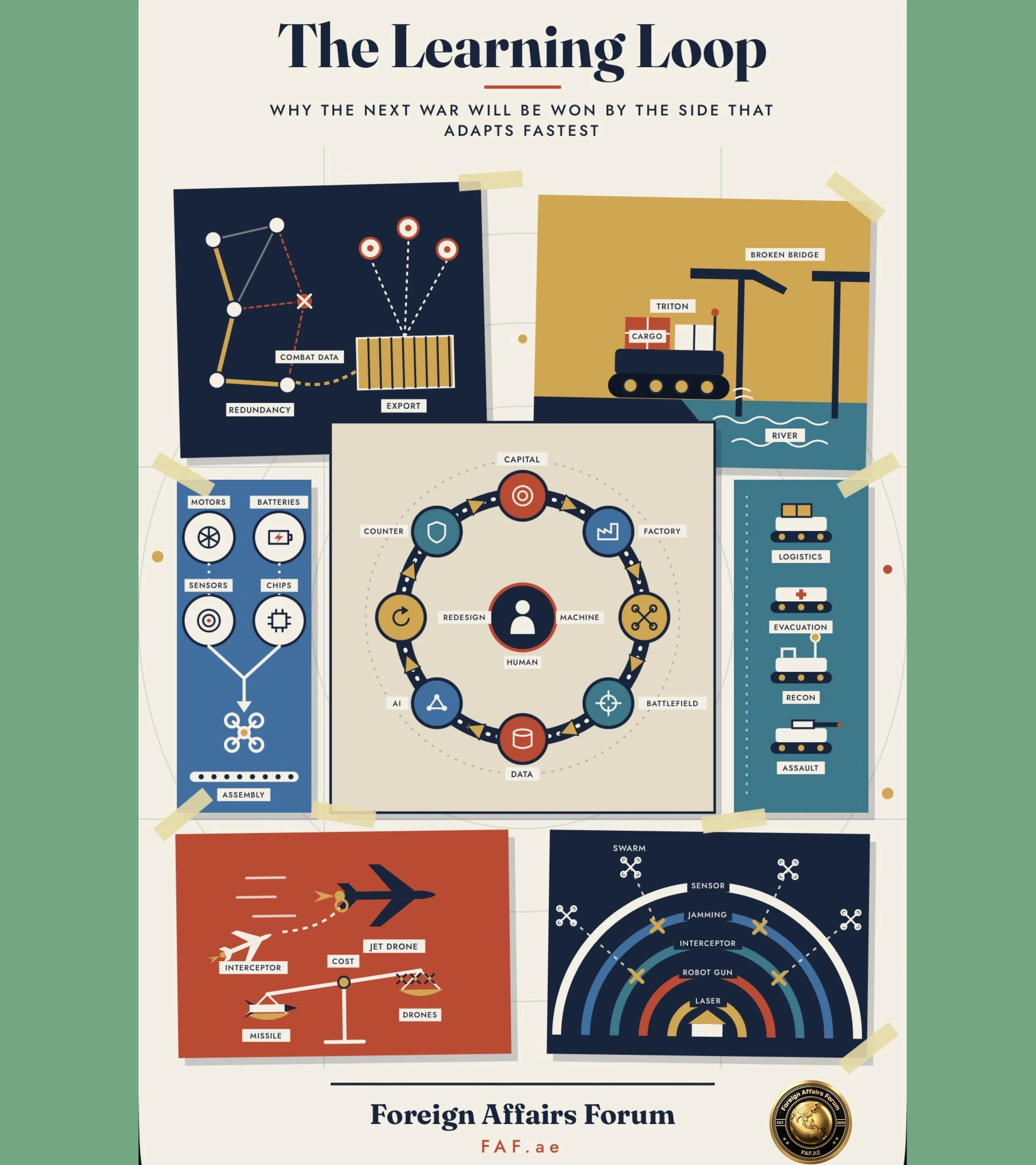
Cheap drones have made it easier for smaller forces to hit expensive targets. In the Middle East, a war involving Iran began in February 2026 and pushed up oil and gas prices around the world. Meanwhile, France, Serbia and Indonesia have all faced pressure at home, as citizens and investors lost trust in institutions.
Key Developments
The first big event was Putin's suggestion of a summit with Trump and Xi in Shenzhen, around the APEC meeting on November 18th and 19th. No meeting has been agreed, and the United States has not promised to attend. But the idea worries many people, because it would mean three big powers deciding the future of Ukraine without Ukraine in the room.
The second was the drone war. Ukraine launched more than one thousand drones, and fires broke out at oil facilities near St. Petersburg. Russia struck back, and an attack on Kyiv killed a woman, hurt three others and damaged a metro station, homes and a medical building. A recent agreement to stop attacks on energy facilities has effectively fallen apart.
The third was France, where the protests were large and mostly peaceful, but violent groups attacked public buildings and looted shops. Two people died, a police officer and a protester.
Elsewhere, Trump backed Israel's prime minister, Benjamin Netanyahu, before Israel's election on October 27th. China reported growth of 4.5% in the third quarter, but its property investment fell 20.6%. Pakistan and Afghanistan exchanged fire at their border. A report accused forces in Mali of killing ninety-four civilians in drone strikes. Serbia prepared for its election on October 25th.
Latest Facts and Concerns
The latest facts are clear.
No summit has been agreed. France has made about 2400 arrests and has not declared a state of emergency.
The € weakened to about $1.123. In Indonesia, the Jakarta stock index fell 11.4% in one day after the index provider MSCI warned it might downgrade the country, and the rupiah slid toward 18,070 to $1. The World Food Programme has cut the number of people it helps in Gaza from about 1.6 million to 1.1 million, just as winter approaches.
There are several worries. If Ukraine is left out of talks, smaller countries everywhere may fear the same fate. If drone attacks keep growing, energy supplies and civilians will be at greater risk. If France stays unstable, Europe will be weaker.
Dr. 🆎 also warns that hunger, crowded shelters and weak health services make disease outbreaks more likely, and that a world which lets these systems decay lowers its own defences. Markets are nervous too, with oil above $100 and the American ten-year interest rate near 5.05%.
Cause and Effect
Cheap drones make it easy to strike energy sites, and energy sites keep both armies and homes running. So attacks on them quickly affect prices and politics. High oil prices make life harder for families.
In France, that anger mixed with worries about weak public services and led to mass protests. The government cannot spend much more, because it already owes a great deal, and cannot cut spending without making people angrier.
Political trouble then affects money. When investors worry about a country, they sell its bonds and currency, which makes borrowing more expensive and leaves less to spend on people. In Indonesia, a single warning caused a market collapse. In Gaza, tight budgets among donor countries have led to cuts in food aid.
Dr. 🆎 explains that when great powers negotiate among themselves about the fate of others, international cooperation becomes decoration. Each problem makes the next one harder to solve.
Next Steps
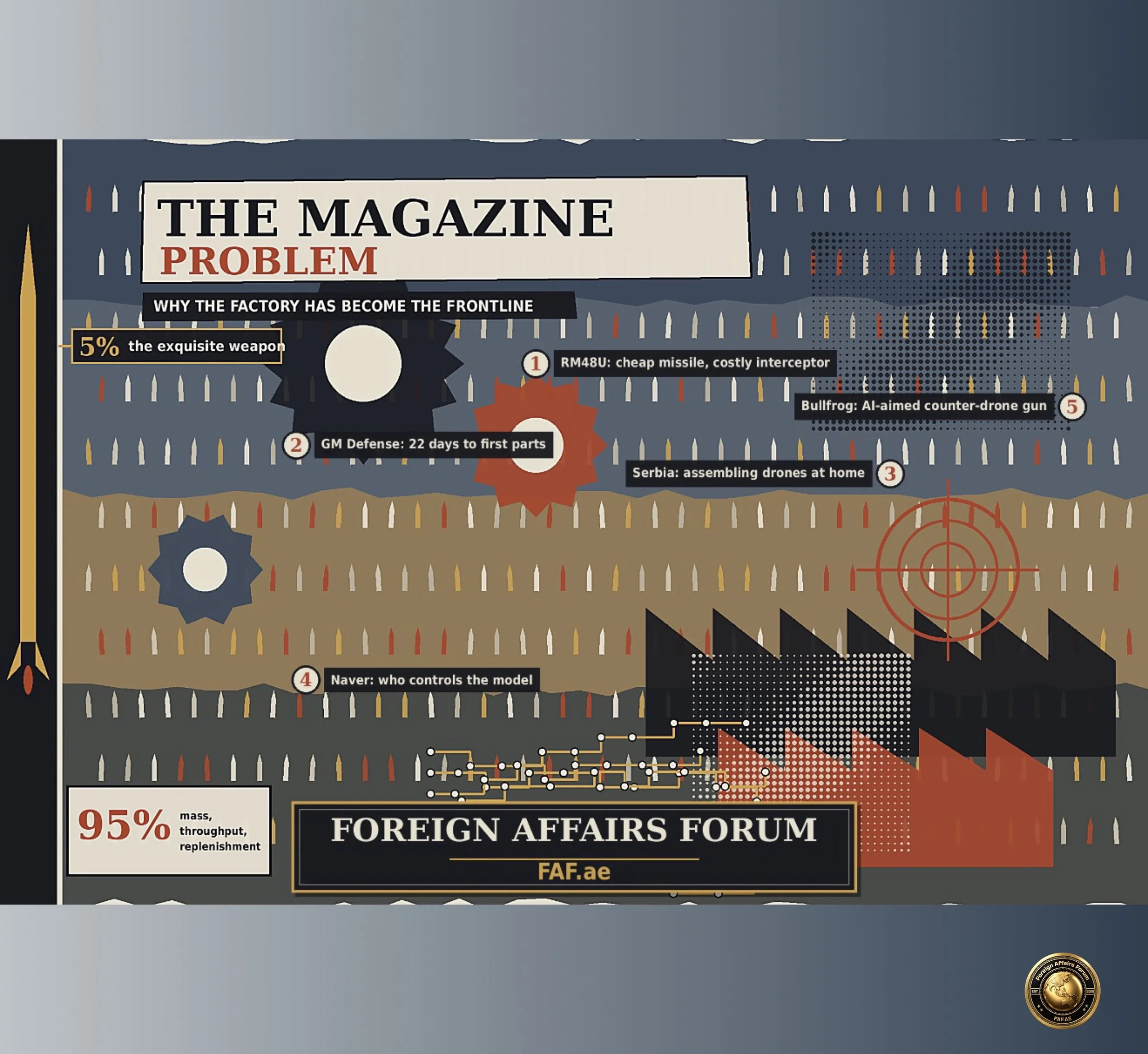
Several steps would help. Europe should insist that Ukraine takes part in any talks about its future and should prepare its own plan before the Shenzhen meeting. Countries should invest in defences against drone swarms and keep humans in charge of life-and-death decisions, a point Dr. 🆎 stresses strongly. France needs a fair plan that shares the burden of its budget problems and a clear, proportionate approach to policing.
Emerging economies such as Indonesia should fix the weaknesses that worry investors, and investors should avoid panic. Donor countries should restore food aid to Gaza before winter.
Dr. 🆎 argues that spending on food, clean water and basic health care is the cheapest way to keep the world both stable and safe.
Conclusion
The main lesson of the weekend is that a country's strength depends on many things working together: its military, its politics, its industry and its finances. When one fails, the others feel it. The coming weeks will show how much stress the system can take, with elections in Serbia on October 25th and Israel on October 27th, the proposed summit in November, and oil still above $100.
Dr. 🆎 says the world is not yet in collapse, but the anchors that once held it steady can no longer be taken for granted, and rebuilding them must start now.