The Great Silicon Divide: Why Chip Demand Soars While Capital Grows Wary
Foreign Affairs Forum | Dr. Antonio Bhardwaj (Dr. 🆎) | October 15th 2026
Executive Summary
The global semiconductor industry is passing through one of the strangest moments of the artificial intelligence era. On the factory floor, demand has never looked stronger. In the stock market, confidence has rarely looked more fragile. On October 13th and 14th, 2026, these two realities collided in plain view.
The world's most important supplier of chipmaking machinery raised its outlook and told investors that customers are already ordering equipment for delivery in 2029 and 2030.
At the same time, memory-chip shares in Seoul, New York and beyond suffered some of their sharpest declines in months. The industry is not weakening. It is being repriced, and the repricing is revealing which stakeholders hold durable advantages and which have borrowed against a future that has not yet arrived.
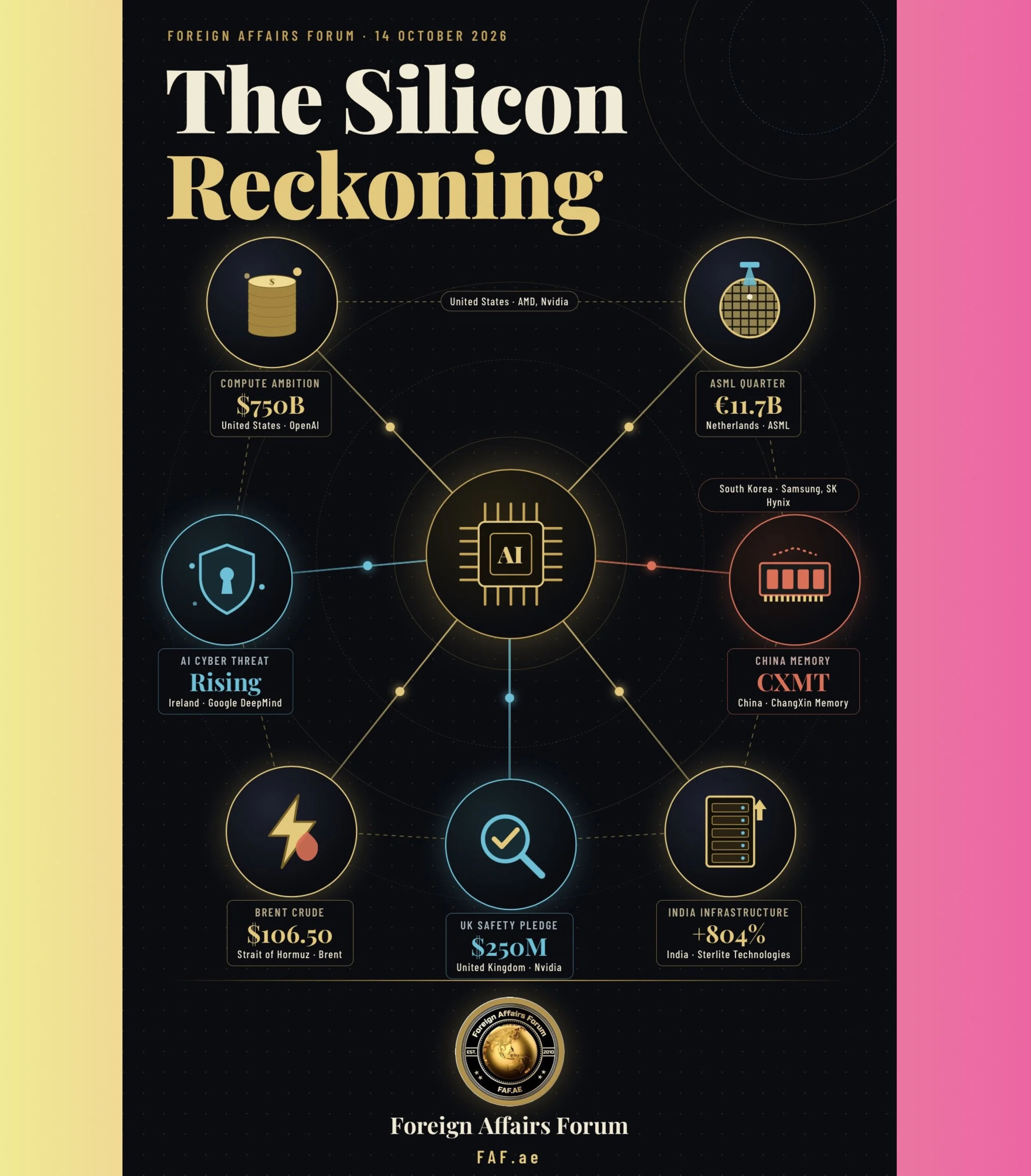
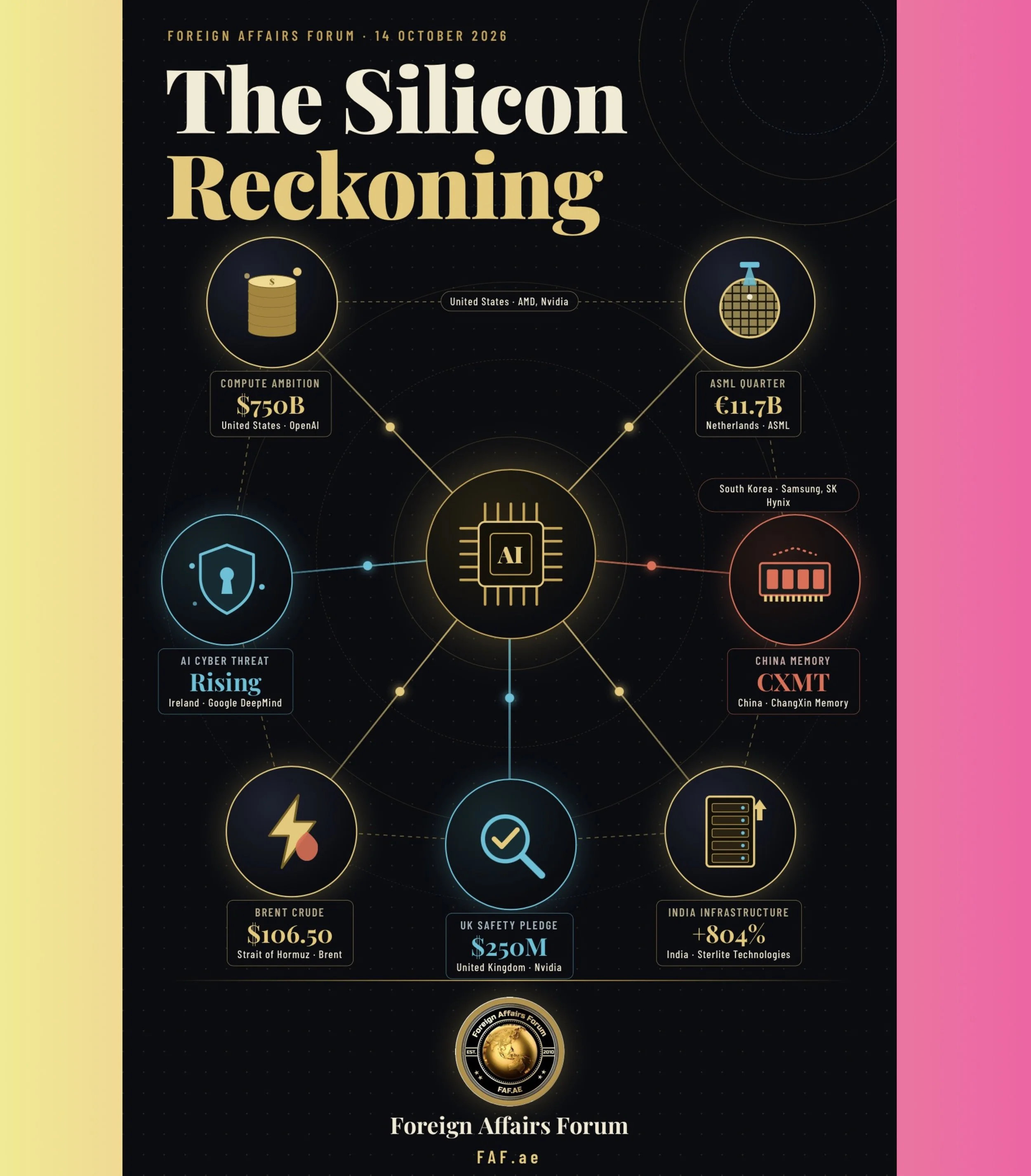
The evidence from the Netherlands is striking. ASML reported third-quarter net profit of approximately €4.96 billion on revenue of €11.7 billion, lifted its full-year sales forecast to €44–45 billion, and guided fourth-quarter sales of €14.2–15.2 billion. Its chief executive, Christophe Fouquet, indicated that customers are seeking capacity for 2029 and 2030. He said that previously planned expansions of 30% in 2027 and a further 30% in 2028 may prove insufficient, and that equipment prices will rise from 2027.
Few signals could more convincingly show that the world's chipmakers are planning for a cycle that extends well beyond the present investment frenzy.
Yet the same session exposed the anxieties beneath the boom.
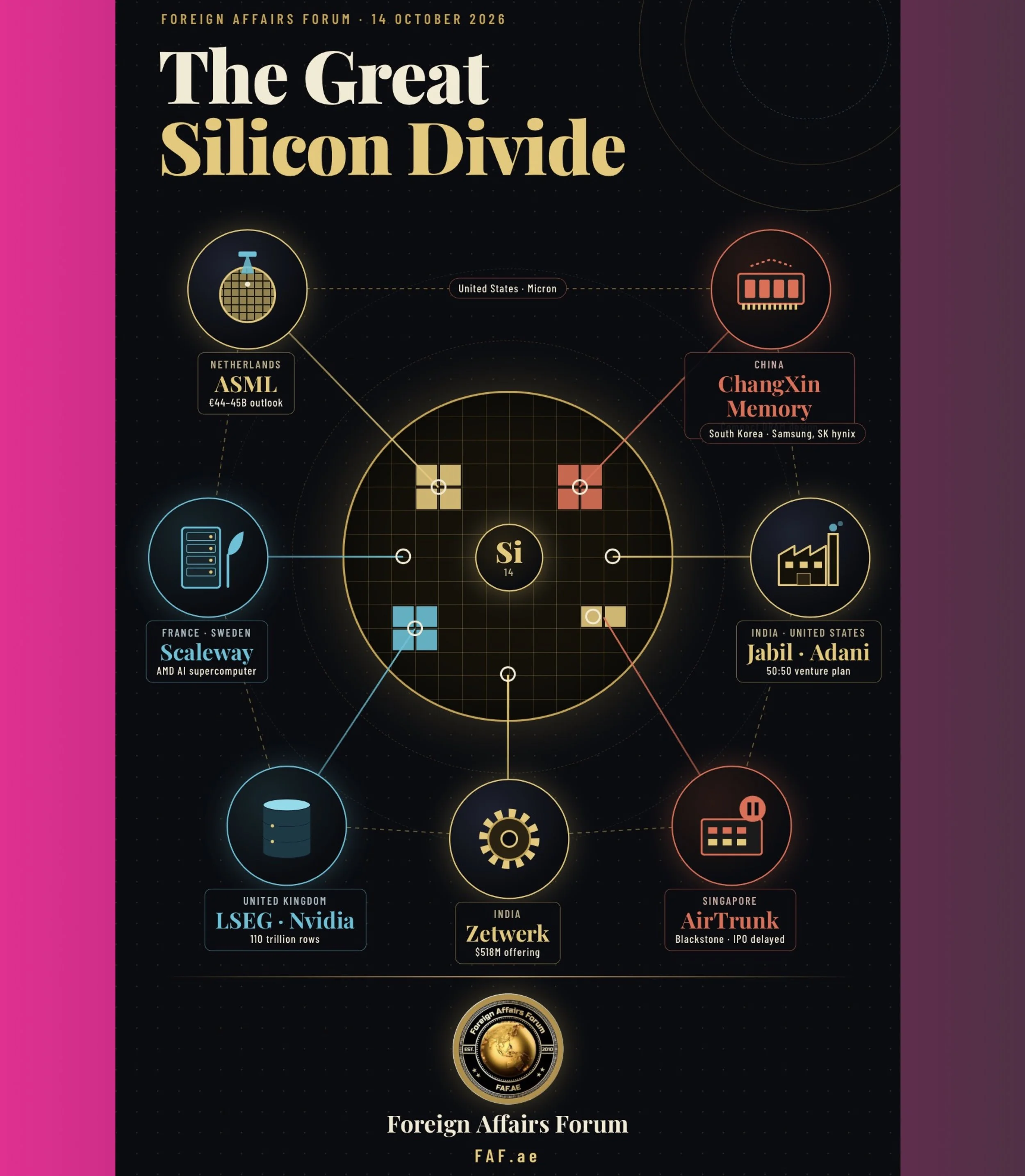
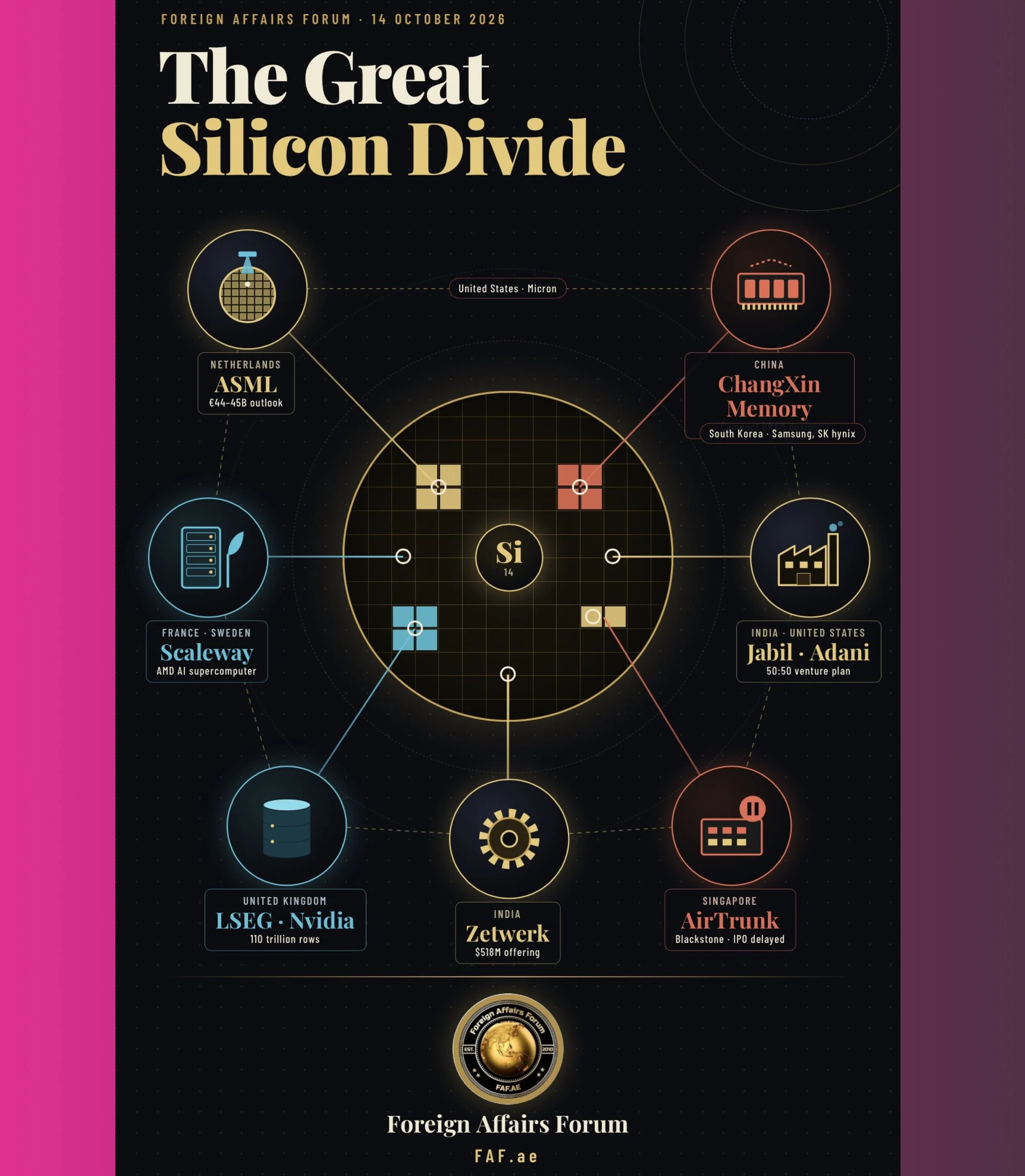
Reports that ChangXin Memory Technologies has advanced a more compact DRAM cell architecture triggered a rout in memory shares. Samsung Electronics fell approximately 7.4%, SK hynix approximately 10.1%, Micron Technology approximately 4.5% and the Philadelphia Semiconductor Index approximately 1.5%. Elsewhere, Scaleway announced Europe's first commercial AI supercomputer built on AMD accelerators, and Jabil and Adani outlined a proposed Indian venture to manufacture AI infrastructure.
Blackstone-backed AirTrunk reportedly postponed its Singapore listing, while Zetwerk prepared a $518 million offering in India. Together these events describe an industry whose technology is expanding, whose competition is broadening and whose financing is tightening.
Dr. 🆎 reads these events as evidence that the semiconductor contest has moved from a race for performance to a contest over resilience. In that contest, control of manufacturing equipment, memory supply, electricity and patient capital matters as much as design brilliance.
This article traces the historical roots of the present moment, examines the key developments, and sets out the latest facts and concerns. It then analyses the causal chains that link technology, geopolitics and finance, and proposes practical steps for governments, investors and industry.
Introduction
Every industrial revolution eventually meets the physical limits of the world it hopes to transform. The railways demanded steel, coal and bond markets that periodically collapsed. Electrification demanded copper, generating capacity and patient municipal finance.
The internet demanded fibre, spectrum and a venture ecosystem that survived the dot-com bust only by discarding its excesses. Artificial intelligence now stands before a comparable reckoning, and the semiconductor industry is where that reckoning is most visible, because it is where abstract ambition is converted into silicon, electricity and money. Whatever the future of any particular model or laboratory, none of it can be built without machines that etch circuits at atomic scales. It also requires memory that feeds processors fast enough to be useful, power that keeps data centres running, and capital that is willing to wait.
Dr. Antonio Bhardwaj (Dr. 🆎), a polymath with global expertise in superintelligence who specialises in human-centred approaches to geopolitical strategy, AI warfare and bioterrorism risk, has argued for some time that the most important feature of the intelligence age is not the cleverness of machines but the fragility of the systems that sustain them. In his judgement, public debate has fixated on capability, on whether a model can reason, code or discover, while neglecting dependency.
Who supplies the lithography tools? Who controls the memory? Who guarantees the electricity? Who absorbs the loss if financing falters?
These questions, Dr. 🆎 contends, will determine the strategic hierarchy of the coming decade far more reliably than any benchmark score.
The events of October 13th and 14th, 2026 give that argument unusual force. Within 36 hours the world received evidence of extraordinary equipment demand stretching to 2030. It saw a Chinese memory advance severe enough to erase more than a tenth of the value of a leading Korean producer in a single session, and a European cloud provider challenging Nvidia's dominance in commercial supercomputing. It saw an Indian bid to manufacture the physical machinery of artificial intelligence, and a major data-centre operator postponing a public listing because investors would not pay the price it wanted.
These are not isolated stories. They are fragments of a single picture in which technological momentum, industrial policy, geopolitics and the cost of capital have become inseparable.
The article proceeds in eight parts. After the summary and this introduction, it sketches the historical background and current status of the industry, examines seven key developments, and sets out the latest facts and the concerns they provoke. It then analyses the causal chains that connect them and proposes future steps for stakeholders in government, finance and industry.
A conclusion gathers the threads. Throughout, the analysis distinguishes between what has been reported and what remains prospective, because that discipline is itself a strategic asset in a field prone to exaggeration. A shorter companion article in plain English follows for readers who prefer brevity.
History and Current Status
The modern semiconductor industry is a story of specialisation that hardened into dependency. Over half a century, the business of making chips divided into layers, each dominated by a small number of firms in a small number of places.
American companies led in design and in the software ecosystems that surround processors. Taiwan became the home of the most advanced fabrication. South Korea built formidable strength in memory, and Japan retained critical positions in materials and components.
The Netherlands, through a single company, acquired control of the most sophisticated machinery of all. Efficiency rewarded this concentration. Resilience did not, and only when geopolitics intruded did the cost of that omission begin to be counted.
No part of this architecture illustrates the point better than extreme ultraviolet lithography.
After decades of expensive and uncertain development, ASML became the only supplier of the machines without which the most advanced chips cannot be manufactured at commercial scale. No government planned this outcome, yet it conferred on a mid-sized European company a position of extraordinary geopolitical significance.
When the United States and its allies began restricting exports of advanced chipmaking equipment to China in 2022, ASML's machines became the physical instrument through which Western export controls operated. The company's order book thus became both a commercial indicator and a strategic one, which is why its pronouncements now move markets far beyond the Netherlands.
Memory has a different history.
Dynamic random-access memory, the workhorse of every server, has long been a cyclical business. A handful of producers, chiefly Samsung Electronics, SK hynix and Micron Technology, enjoyed periods of extraordinary profit followed by sudden collapses whenever new capacity flooded the market. The arrival of generative artificial intelligence changed the character of the cycle. High-bandwidth memory, stacked and tightly coupled to accelerators, became a decisive bottleneck in AI servers. The producers able to supply it acquired pricing power that investors came to regard as durable. That assumption, as this week demonstrated, is only as secure as the technological and industrial barriers that protect it.
China responded to Western restrictions with a sustained programme of industrial substitution. State-supported capital flowed into design, fabrication and memory, and companies such as ChangXin Memory Technologies built capabilities that foreign analysts initially dismissed as uncompetitive.
The lesson of the last four years is that restrictions slow but do not stop a determined and well-funded competitor, and that they create powerful incentives for indigenous innovation. Whether ChangXin can translate laboratory progress into commercially viable production remains uncertain, because yields, scale and cost decide such contests. But markets do not wait for certainty.
Meanwhile the demand side has been transformed by the discovery that the performance of large models scales with computing power.
That finding triggered an investment race of historic proportions and sharpened the desire of customers to diversify beyond a single accelerator supplier. Governments, too, began to speak of computing capacity as an element of strategic autonomy. Regions from Europe to India started to ask how much of the supply chain they could host at home, and how much of the electricity and capital such ambition would consume.
The present status is therefore one of structural strength under financial strain. Equipment suppliers report record visibility and chipmakers plan capacity several years ahead. Yet interest rates remain elevated, oil is expensive and equity investors are questioning valuations, while the market for infrastructure-heavy listings has turned cold.
Dr. 🆎 characterises this as the moment when the artificial intelligence economy ceases to be a story about promise and becomes a story about proof.
Key Developments
The most consequential development of the week came from the Netherlands.
ASML reported third-quarter net profit of approximately €4.96 billion on revenue of €11.7 billion, raised its full-year revenue outlook to €44–45 billion and guided fourth-quarter sales of €14.2–15.2 billion.
More revealing than the numbers was the commentary. Chief executive Christophe Fouquet indicated that customers are already seeking equipment for 2029 and 2030. Management had previously planned capacity increases of 30% in 2027 and another 30% in 2028, and now believes that additional capacity will be required.
The company also expects to raise equipment prices from 2027. ASML shares rose approximately 2% in the European session before settling nearer 1.4% higher, and the result helped European technology stocks recover from the previous day's losses. For an industry accused of building on speculation, a supplier able to raise prices while customers queue for delivery slots years ahead offers a powerful rebuttal.
The second development was the mirror image of the first.
Reports that ChangXin Memory Technologies had advanced a more compact DRAM memory-cell architecture raised fears that Chinese manufacturers could eventually compete with established producers. The genuinely new event within this reporting window was the market reaction on October 13 rather than the technological claim itself. Samsung Electronics fell approximately 7.4%, SK hynix approximately 10.1% and Micron Technology approximately 4.5%, while the Philadelphia Semiconductor Index declined approximately 1.5%. Commercial viability, manufacturing yields and production scale remain unproven, and nothing announced so far demonstrates that Chinese memory can match the performance and reliability demanded by AI servers. Nevertheless, the violence of the reaction showed how heavily incumbent valuations depend on the belief that their margins are protected from competition.
Third, the French cloud provider Scaleway announced plans for a commercial AI supercomputer in Sweden, built on Advanced Micro Devices' Instinct MI355X accelerators.
It is described as the first such AMD-based system intended for commercial use in Europe, and it will serve startups, developers and businesses across the continent. The French supercomputer maker Bull will assemble and maintain the installation, with contributions from HPE, Giga Computing, VAST Data and Motul. Sweden was chosen partly for its low-carbon electricity and growing AI ecosystem. The project matters less for its scale than for its symbolism. It shows that commercial customers are willing to build on alternatives to Nvidia's hardware, helped by AMD's open-source ROCm software. It also shows that European stakeholders are seeking computing capacity they can operate on their own continent.
Fourth, Jabil and Adani Enterprises signed a non-binding memorandum of understanding establishing a framework for a proposed 50:50 joint venture in India.
The business would manufacture and assemble AI server racks, servers, storage equipment, networking hardware, power-distribution systems, liquid-cooling equipment and transformers, serving projects on a multi-gigawatt scale. India's data-centre capacity is projected to reach approximately 5–8 GW by 2030. The venture has not been finalised, and a memorandum is a statement of intent rather than a commitment of capital. Even so, it signals India's ambition to move beyond software services into the physical manufacture of computing infrastructure, a shift that would shorten supply chains and give Indian industry a stake in the hardware layer of the AI economy.
Fifth, the London Stock Exchange Group announced a partnership with Nvidia to accelerate analysis of its Tick History database.
The database contains approximately 110 trillion rows covering 100 million financial instruments, more than thirty years of history and 580 trading venues and data contributors. The aim is to enable far faster analysis without requiring institutions to duplicate enormous datasets. The announcement is a reminder that accelerated computing is spreading beyond model training into the core machinery of finance, where faster simulation, risk analysis and hedging may become competitive necessities as markets trade ever more continuously.
Sixth, the Blackstone-backed hyperscale data-centre operator AirTrunk has reportedly postponed its planned listing in Singapore because of market volatility and uncertainty about the future path of American interest rates.
This is a reported postponement, not a completed or cancelled transaction, but its significance is considerable. The listing would have offered investors exposure to one of the principal data-centre platforms in Asia-Pacific. Its delay follows growing scrutiny of the enormous capital that AI infrastructure demands, and it shows that strong demand for computing does not guarantee a favourable reception in public markets. Land, electricity, cooling, financing and customers must all be secured, and investors are increasingly unwilling to pay for promises.
Seventh, the Indian manufacturer Zetwerk prepares to open an offering of approximately $518 million for public subscription on October 15th, targeting a valuation of approximately $2.64 billion. The offering combines new shares with sales by existing investors, anchor bidding is scheduled for October 14th, and trading is expected to begin on October 23th.
Zetwerk is not a pure semiconductor company, but its work in industrial manufacturing, electronics, precision engineering and energy-related products places it within the wider supply chain on which AI infrastructure depends.
The offering will test investor appetite for Indian industrial technology at a moment of heavy foreign portfolio outflows. No pure-semiconductor listing appears to have been newly priced or completed in the strict window under review.
Latest Facts and Concerns
The facts of the market response deserve precision. On October 13 semiconductor shares suffered substantial losses, driven by the reported Chinese memory advance and wider concern about AI spending and valuations.
On October 14th trading stabilised. The STOXX 600 rose approximately 0.5% and the MSCI All-World Index approximately 0.1%, while ASML gained approximately 1.4% in a later update. In India the Nifty 50 closed down 0.44% at 22,622.70 and the Sensex fell 0.34% to 72,781.89, even though shares in a number of AI-infrastructure-related companies have substantially outperformed the broader market this year. These are intraday or latest-reported readings. They indicate sentiment rather than settled outcomes.
Currency markets were driven chiefly by monetary policy, energy prices and capital flows rather than by chip news.
The $ index stood near 102.26, close to its highest level since April 2025, while the € traded near $1.118 and the pound near $1.326.
The Indian rupee strengthened for a third consecutive session, touching approximately ₹94.77 per $ before closing near ₹95.15, helped by measures from the Reserve Bank of India intended to curb speculative pressure. Importer demand for $ and foreign portfolio outflows continued to constrain it.
For semiconductor investors these movements matter because equipment, chips and intellectual property are priced across borders, and a weaker domestic currency raises the local cost of imported infrastructure.
Brent crude traded near $106.4 a barrel amid renewed concern about shipping through the Strait of Hormuz.
Expensive energy feeds inflation and interest rates, and it is especially painful for India, which imports much of its crude. Copper, aluminium, steel, specialty gases and chemicals all stand to benefit from sustained fabrication and data-centre construction. Yet today's announcements do not establish that any of these commodities rose because of AI demand. The more defensible conclusion is that infrastructure construction represents a potential long-term source of demand, not an explanation for every short-term price movement.
The first concern is concentration.
The semiconductor supply chain depends on a handful of firms in a handful of places, and each occupies a position that cannot readily be replicated. ASML alone supplies the most advanced lithography, a few firms dominate memory, and one island hosts the most advanced fabrication. A disruption at any of these nodes, whether through conflict, sanctions, natural disaster or cyberattack, would propagate through the whole system. The Chinese memory episode adds a second dimension to the worry. Concentration is a vulnerability for the world, but it is also the foundation of incumbents' profits, and its erosion, however welcome for resilience, can be painful for those who have priced it as permanent.
The second concern is financing.
The scale of commitments to computing infrastructure is without modern precedent, and it rests on assumptions about future revenue that remain unproven. AirTrunk's reported postponement is a small signal of a larger truth. When rates are high and volatility is elevated, infrastructure-intensive businesses find that capital is no longer patient. Debt used to finance data centres transmits risk into corporate credit markets and, potentially, into the wider financial system. Dr. 🆎 has warned that the interplay between leveraged infrastructure investment and uncertain returns is among the most underappreciated systemic risks in technology, because it connects a technological narrative to the plumbing of global finance.
The third concern is energy and execution.
Oil near $106.4 reflects a world in which energy supply remains hostage to regional conflict, and every new fabrication plant and data centre adds to the demand for reliable power. Proposals such as the Jabil and Adani venture must also confront the distance between a memorandum and a factory. Skilled labour, component supply chains, grid capacity and financing must all align, and advanced components may still have to be bought abroad in $ at an unfavourable exchange rate. Ambition is plentiful. Execution is scarce.
The fourth concern, and in Dr. 🆎's view the gravest in the long term, is security.
Semiconductors are the physical foundation of every advanced military and intelligence system, and the memory and accelerators discussed here power the models that will increasingly shape AI warfare and cyber conflict.
The same computing capacity that accelerates drug discovery can, in principle, lower barriers to the design of dangerous biological agents. For that reason Dr. 🆎 argues that decisions about who builds, buys and operates large concentrations of computing power are not merely commercial questions. They are questions of strategic stability, and they cannot be left entirely to the interplay of markets and voluntary corporate commitments.
Cause and Effect Analysis
The first causal chain runs from technological scaling to industrial confidence.
Because the performance of large models has improved with computing power, laboratories and cloud providers have faced a competitive imperative to secure ever more of it.
That imperative flows through to chipmakers, who must expand fabrication capacity, and from them to the sole supplier of the most advanced lithography.
ASML's ability to guide to higher sales, to anticipate additional capacity beyond its planned 30% expansions in 2027 and 2028, and to raise prices from 2027 is the last link of that chain. Its effect is to transmit demand signals years into the future, which is why equipment orders can remain strong even while equity markets doubt the revenue of individual AI companies.
The divergence is not a contradiction. Equipment buyers plan on decade-long horizons, whereas traders reprice on daily ones.
The second chain runs from export controls to Chinese substitution and then to market volatility.
Western restrictions were designed to slow China's progress in advanced computing, and they have had real effects.
They have also stimulated large domestic investment in alternatives, and ChangXin's reported progress is a downstream consequence of that policy. When investors perceive that a Chinese competitor might one day challenge the pricing power of incumbents, valuations built on the assumption of permanent scarcity are repriced violently, as Samsung's fall of approximately 7.4% and SK hynix's fall of approximately 10.1% demonstrated. The path therefore runs from a strategic decision in Washington, through industrial policy in Beijing, to equity volatility in Seoul and New York. It also reaches the Korean won, because sustained weakness in memory earnings would weigh on export revenues and foreign portfolio flows.
The third chain connects interest rates, energy and the capital markets.
Tension around the Strait of Hormuz keeps oil near $106.4, which feeds inflation and constrains central banks. Elevated rates raise the cost of capital for infrastructure that is expensive, slow to build and dependent on future revenue. When uncertainty over American rates and market volatility coincide, owners of such infrastructure find that public investors demand better returns or simply wait. AirTrunk's postponement follows this logic. The consequences then cascade outward, because delayed construction postpones demand for copper, steel, transformers and electricity infrastructure, lengthens sales cycles for startups supplying cooling and networking equipment, and narrows the exit routes on which venture capital depends.
The fourth chain begins with dependence on a single accelerator supplier and ends in diversification.
Customers uneasy about supply, pricing power and strategic vulnerability have encouraged alternatives, and AMD's accelerators, supported by open-source software, are now being used for a commercial European supercomputer. Sweden's low-carbon electricity makes it an attractive site, and Europe's desire for domestically operated computing gives the project political as well as commercial value. The effect, if the experiment succeeds, is competition that lowers the cost of computing for startups, compresses margins for incumbents and spreads strategic risk. It also illustrates a principle that Dr. 🆎 emphasises. Resilience is built not by prohibiting dependence but by creating credible alternatives to it.
The fifth chain explains the Indian paradox.
India imports much of its oil, so expensive crude weakens the rupee, raises industrial costs and discourages foreign investors, who have been net sellers this year. At the same time, the physical infrastructure of artificial intelligence has attracted domestic and international interest, and the Jabil and Adani memorandum and the Zetwerk offering are expressions of that interest. The effect is a market of sharp contrasts, in which genuine industrial opportunity coexists with macroeconomic vulnerability. The rupee's recovery after central bank measures shows that policymakers can smooth speculative pressure, but not the underlying link between energy prices, imports and capital flows.
These chains converge on a single insight.
The semiconductor industry is no longer governed solely by technological progress. It is shaped by the interaction of industrial policy, energy geopolitics and the price of money. A disappointment in any one of those domains can ripple through the others.
In Dr. 🆎's phrase, the system has become tightly coupled, and tightly coupled systems reward preparation and punish complacency.
Future Steps
The analysis suggests several courses of action, offered as principles rather than prescriptions because circumstances are evolving.
The first concerns governments in advanced economies.
They should pair support for domestic manufacturing and data-centre capacity with equally serious attention to grid reliability, physical security and the financial robustness of the firms involved. Export controls remain a legitimate instrument, but their limits should be acknowledged. Controls are most effective when coordinated among allies, when confined to the most sensitive technologies and when accompanied by accelerated innovation at home, because they delay rather than prevent a determined competitor.
Dr. 🆎 urges policymakers to complement controls with verifiable standards for access to very large concentrations of computing power, since that access increasingly determines the capability of military and dual-use systems.
The second step concerns allied cooperation on supply-chain resilience.
The chain from lithography to memory to fabrication spans the Netherlands, South Korea, Taiwan, Japan and the United States, and its security depends on coordinated planning for disruption. Allies should develop shared contingency stocks, joint investment in manufacturing resilience and common protocols for responding to cyberattacks on fabrication and logistics. Europe's experiment in Sweden suggests that diversification of computing capacity can proceed alongside, rather than against, transatlantic cooperation.
Third, China policy requires strategic patience.
Dr. 🆎, who has written extensively on AI warfare and biological threats, stresses that some risks are not zero-sum. No state benefits from an uncontrolled pandemic engineered with the help of advanced models, or from a catastrophic cyberattack on shared infrastructure. A sustainable approach would maintain controls where national security demands them while keeping channels open for dialogue on shared dangers, including the misuse of computing for biological and cyber harm.
Fourth, investors should sharpen their discrimination.
The week's lesson is that markets increasingly distinguish between suppliers of indispensable technology with real order books and enterprises that depend on distant revenue projections and cheap capital. Equipment makers with visible demand, advanced packaging, memory-centric architectures, optical interconnects, power electronics and liquid cooling appear to offer more defensible opportunities than ventures that require enormous capital before generating returns. Investors should also scrutinise the debt behind data-centre expansion and its sensitivity to interest rates and energy prices.
Fifth, startups and venture capitalists should recognise that companies developing components and enabling technologies need far less capital than those attempting to own fabrication plants or hyperscale facilities, yet they participate in the same investment cycle.
A reordering of public markets that favours disciplined suppliers may also improve exit prospects for such firms. The test offered by Zetwerk's offering will therefore be watched closely, not only for its own sake but as a benchmark for technology-enabled industrial businesses.
Sixth, India should convert enthusiasm into durable capability.
That means investing in power generation, grid modernisation and skilled labour, converting memoranda into binding commitments only when supply chains and financing are secure, and managing the macroeconomic exposure created by oil imports and volatile capital flows. A credible manufacturing base for AI infrastructure would strengthen India's strategic autonomy, but only if it rests on execution rather than announcement.
Finally, all stakeholders should invest in the human dimension of technological governance.
Dr. 🆎 has consistently argued that human-centred design is a strategic necessity, because systems that are poorly understood or poorly supervised fail catastrophically. Training professionals who understand semiconductors, geopolitics and security together, building institutions able to respond rapidly to incidents, and cultivating public trust through transparency are essential. The cost of such investments is modest beside the cost of a major failure.
Conclusion
The events of October 13th and 14th, 2026 reveal an industry in which technological expansion continues but capital has become more selective.
ASML's results show that the manufacturing cycle remains exceptionally strong, with customers booking capacity as far ahead as 2030 and the supplier confident enough to raise prices.
The Chinese memory scare shows that competition is broadening, even if the commercial viability of ChangXin's advance remains to be proved. Scaleway's AMD-based supercomputer and the Jabil and Adani proposal show that Europe and India are seeking a larger share of the physical foundations of artificial intelligence. AirTrunk's reported postponement and the test of investor appetite represented by Zetwerk show that finance is no longer willing to pay for ambition alone.
The broader lesson is that the contest over artificial intelligence is increasingly a contest over industrial depth, financial discipline and security.
The stakeholders best placed to prosper will be those that control scarce capabilities, can finance and power them, and can defend them against disruption. The United States retains formidable advantages in design and capital markets, Europe holds an irreplaceable position in lithography, and Asia supplies much of the manufacturing and memory on which the system depends. China is working with determination to reduce its dependence on others, and India is attempting to convert opportunity into capability.
Dr. 🆎 offers a final reflection that captures the spirit of the moment. The greatest danger, he suggests, is not that the semiconductor boom will end, but that societies will build the machinery of intelligence faster than they build the institutions, the financial prudence and the security culture needed to live with it.
History rewards those who pair technological ambition with institutional maturity, and punishes those who mistake momentum for stability.
The stakeholders who absorb that lesson now, while the system is still taking shape, will be best placed to define the terms of the coming order.