A Beginner's 101 Guide: Why Computer Chips Are About More Than Speed
Summary
For many years, people judged the computer chip industry by one simple question: who can make the fastest chip? That question is no longer enough. The news from the last few days shows that winning in technology now depends on memory, software, money, security and teamwork between many different companies.
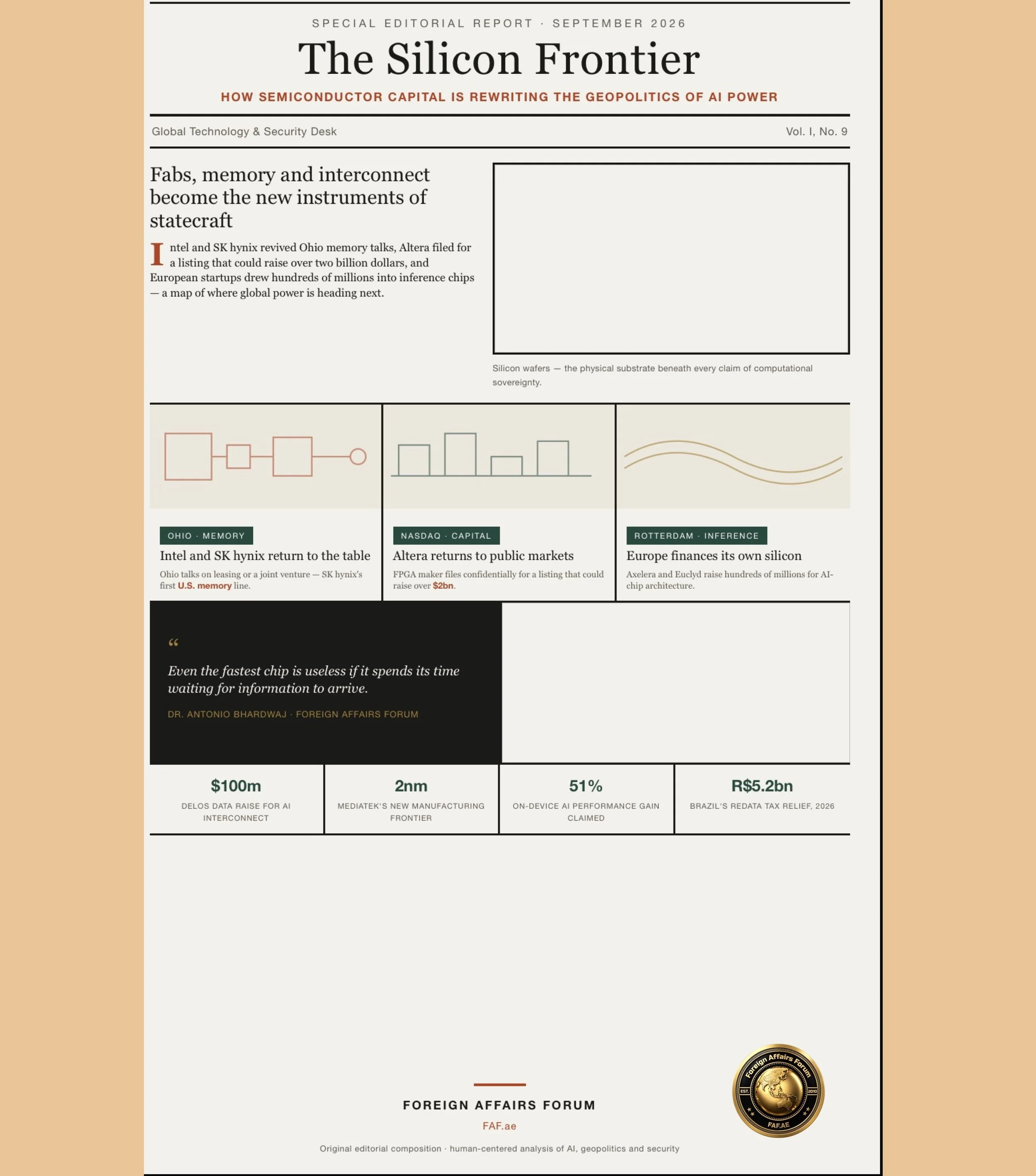
Dr. Antonio Bhardwaj (Dr. 🆎), an expert in human-centred artificial intelligence, geopolitical strategy and AI warfare, says the shift is easy to understand. In his words, a country or company does not win by owning one great chip. It wins by owning, or at least managing well, the whole chain.
Let us begin with memory.
Every computer needs working memory to hold information while it works.
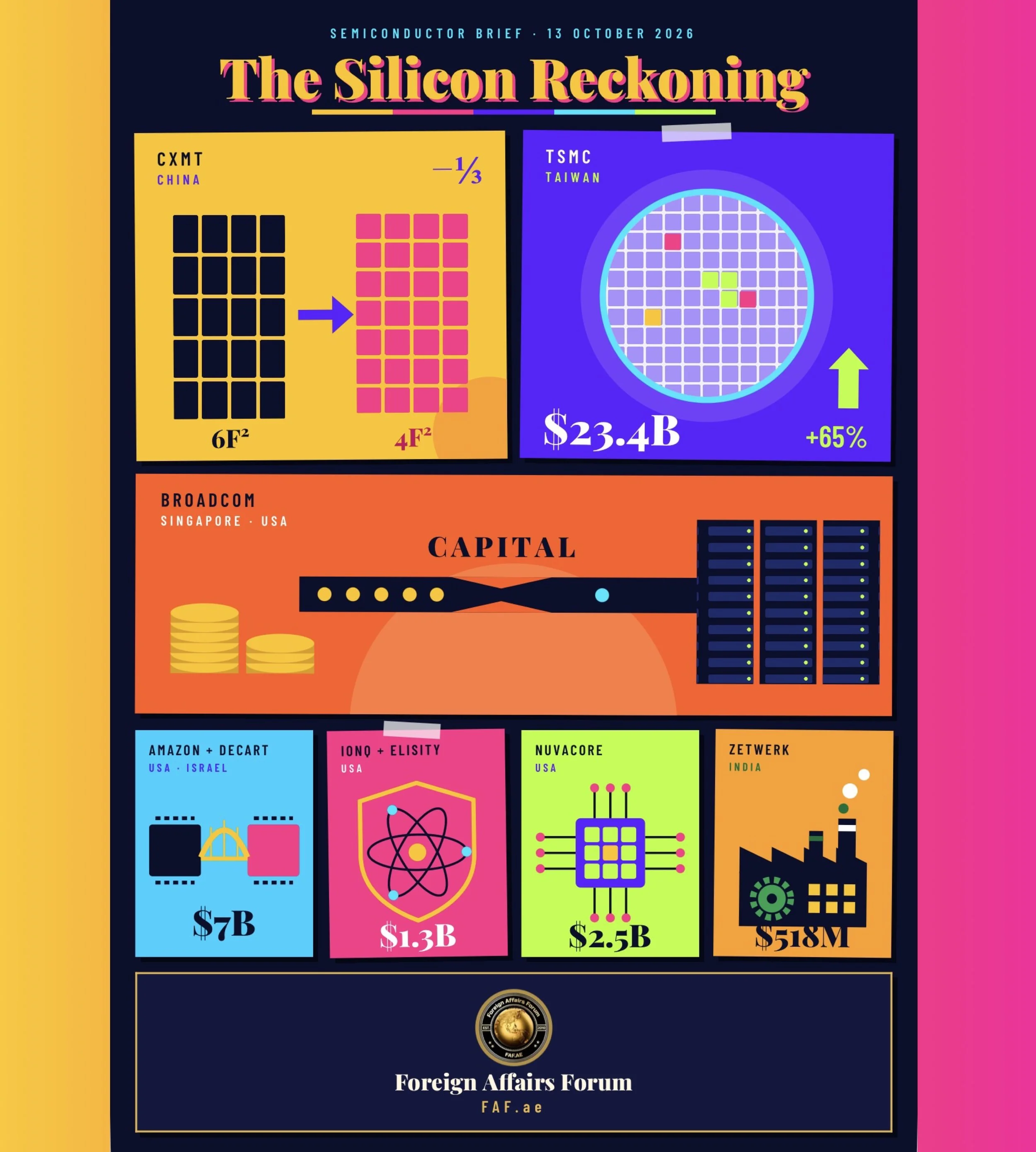
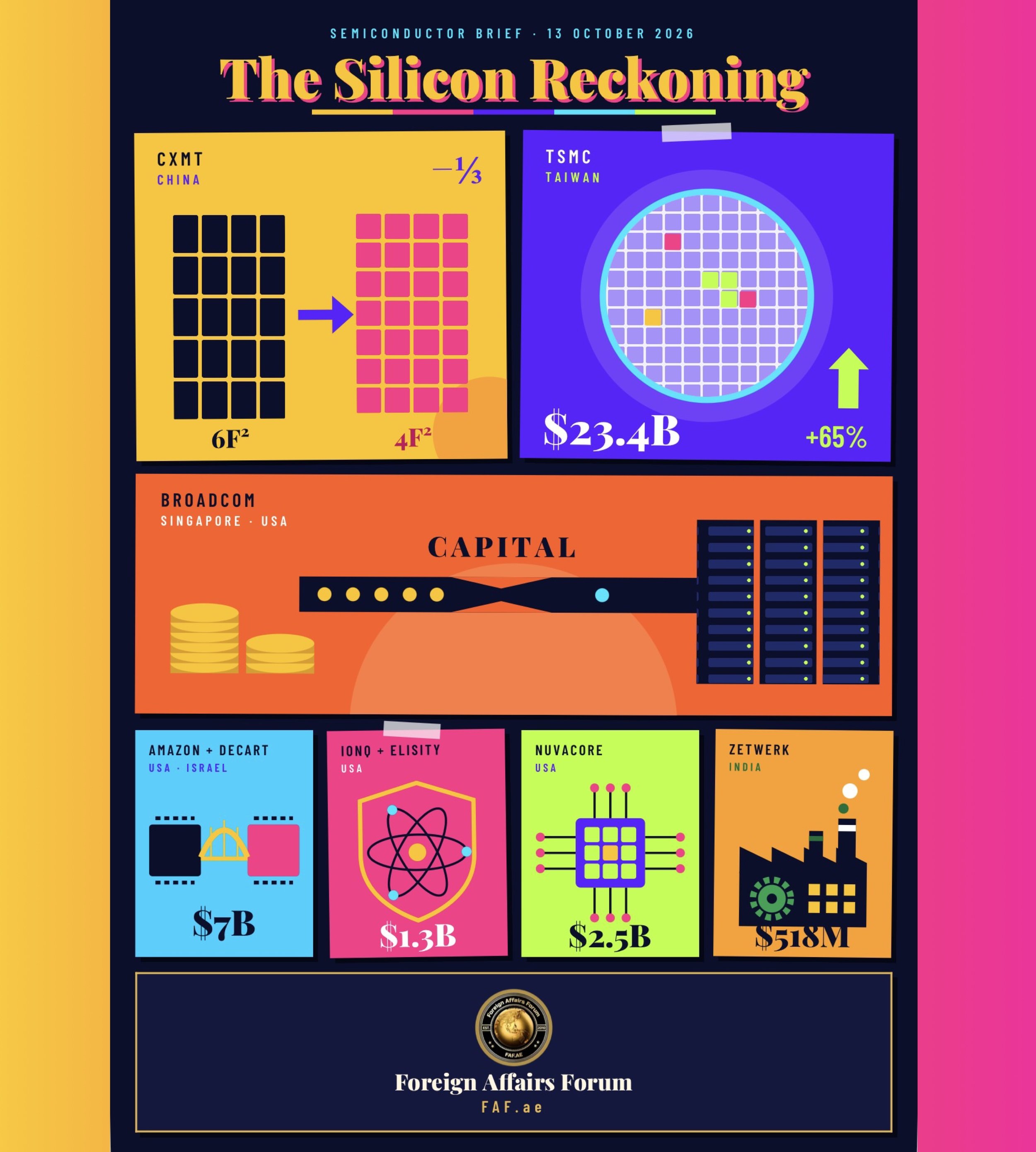
A Chinese company called ChangXin Memory Technologies says it has made progress on a new way to arrange memory cells, called a 4F² design. The older design is called 6F². The new layout could use about one-third less space for each memory cell. That means more memory could fit on the same piece of silicon. The company says it plans to sell server memory using this idea before the end of 2026. But there is an important warning. The company has not yet shown that it can make these chips in large numbers, at good quality and at a competitive price. An announcement is not the same as a finished product. Even so, the news matters, because it adds pressure on Samsung, SK hynix and Micron, the three big names in memory.
Next comes the maker of the world's most advanced chips. TSMC, based in Taiwan, is expected to report a profit of about NT$746.3 billion, which is roughly $23.4 billion, for the third quarter. That would be a 65% rise from a year ago and possibly its sixth record quarter in a row. This is only a forecast made by analysts. The real numbers will come out on October 15. Still, the message is clear. Companies around the world want powerful chips for artificial intelligence, and TSMC makes and packages many of them. This success is good for the company, but it also shows how much the world depends on one firm.
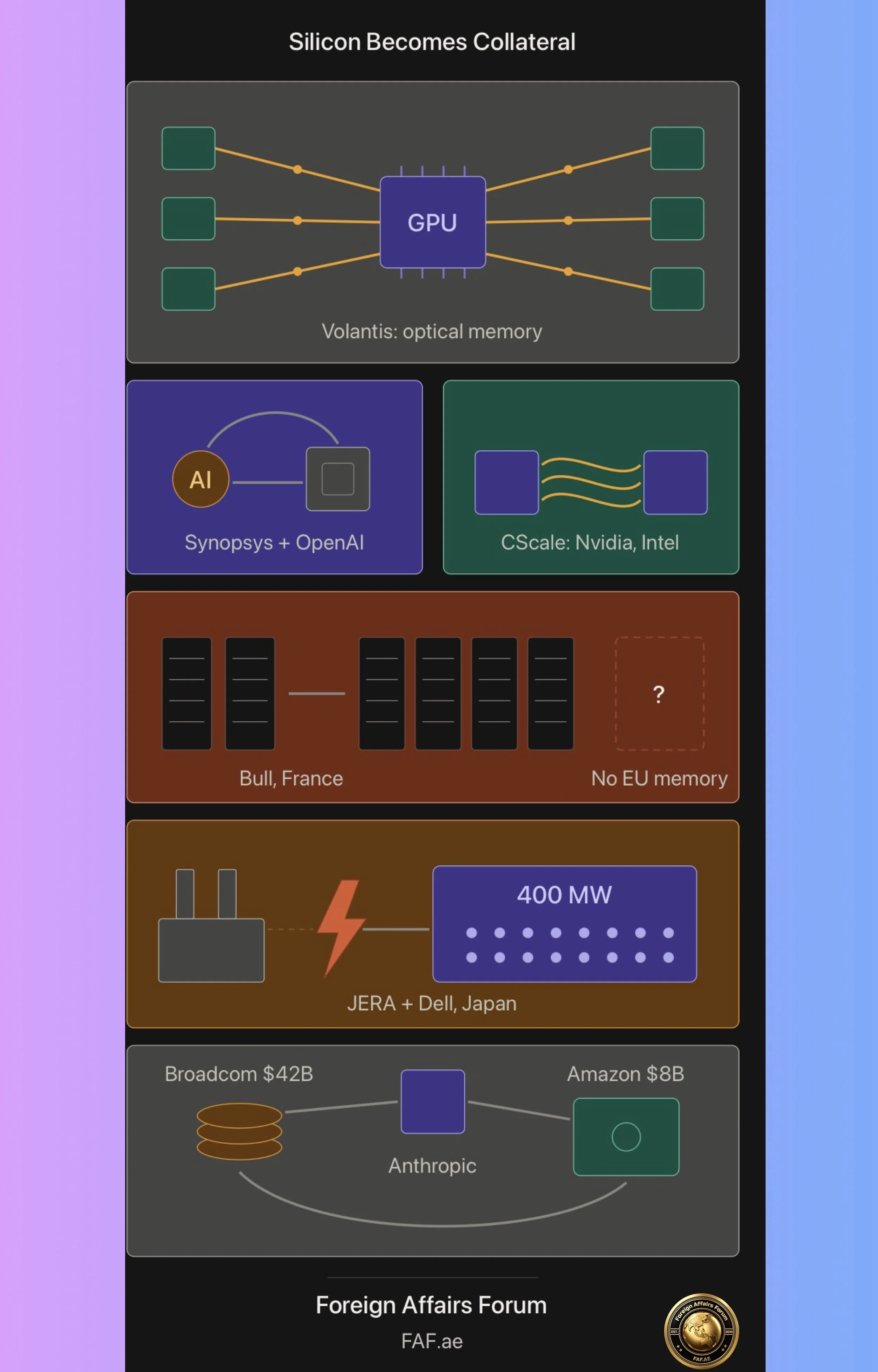
Now think about money. Hock Tan, the head of Broadcom, said in Singapore that money could become the biggest limit on how fast artificial intelligence can grow. He said the industry is getting past shortages of silicon wafers and memory chips, but paying for the next round of giant computer systems is very hard. This matters because Broadcom builds custom chips and networking equipment for the biggest cloud companies. If they find it harder to borrow or spend, everyone who sells to them will feel it.
Dr. 🆎 puts it this way: computing power is now a financial asset as well as an engineering achievement.
Software is also becoming more important. Amazon is reportedly in talks to buy a start-up called Decart for about $7 billion, according to The Wall Street Journal. Decart makes software that helps artificial intelligence programs run on many different kinds of chips. Why does this matter? Big cloud companies are building their own chips so they depend less on Nvidia. But a new chip is not useful if customers must rewrite all their programs to use it. Software that works across different chips solves that problem. The talks have not ended in a deal, so this is still only a report.
Another deal comes from the quantum computing world. IonQ has agreed to buy a cybersecurity company named Elisity for up to $1.3 billion, paid in company shares. IonQ earlier bought the chip maker SkyWater Technology to help it build quantum hardware. The new purchase is not a scientific breakthrough. It is a business move that turns IonQ into a wider technology and security company. The idea is that future computers, including quantum ones, will need strong protection.
India is also in the story. Zetwerk, a company that helps make machines, electronics and industrial parts, wants to raise about $518 million by selling shares to the public. It values itself at around $2.64 billion.
The sale opens on October 15 and closes on October 19, and trading is expected to begin on October 23.
Zetwerk does not make chips, but it works in electronics and industry, which are close neighbours.
Reuters reports that its sales grew by more than 55% in the April to June quarter. Its offering will show how investors value modern manufacturing in India.
The last item is about a young company called Nuvacore, backed by Sequoia. It is reportedly asking investors for hundreds of millions of dollars at a valuation of about $2.5 billion. It is only about six months old and has no product yet. It wants to build a new kind of central processor for artificial intelligence data centres. Its approach is unusual, because it designs the core of the processor first and chooses the standard instruction set later. This report is from October 9, a little earlier than the others, and the funding is still being discussed.
What do these stories have in common? They show that the chip business has become a team game. Memory, packaging, software, security and money all have to work together. If one part fails, the whole system suffers. A fast chip with too little memory is not very useful. A powerful system with no software that works across machines becomes locked into one supplier. A giant data centre with no financing is only a plan on paper.
There are also real worries.
The first is risk in making things. Many promising chip designs have failed when companies tried to produce them at scale. The second is dependence. So many advanced chips come from one company in one place that any disaster or conflict there would hurt the whole world. The third is cost. If borrowing becomes harder or more expensive, spending on artificial intelligence could slow down. The fourth is price. Some companies are being valued very highly before they have proven themselves, and investors could lose money if the hopes behind those prices do not come true. The fifth is safety. Powerful computing can be used for good, such as medicine and science, but it can also be misused. Dr. 🆎 warns that the rules for who can use very large amounts of computing power must be taken as seriously as the technology itself, especially because of risks linked to AI warfare and dangerous biological research.
So what should people do next?
Governments should pay as much attention to memory chips as they do to the most advanced processors. They should also spread manufacturing across more places, so that the world is less dependent on one location. Financial institutions should think carefully about how to pay for computing infrastructure without taking on dangerous levels of debt. Start-ups should look for ideas that make systems cheaper, faster or more energy-efficient, because those will be needed whatever chip design wins. Investors should ask hard questions about whether a company can actually deliver what it promises. And security experts should work more closely with technology builders, so that safety rules grow together with the machines.
In the coming days, a few facts will help everyone see where things are heading. TSMC will publish its real results on October 15. We will learn whether ChangXin can make its new memory at good quality and in large amounts. We will see whether Amazon and Decart reach a deal, and how investors respond to the Zetwerk sale. We will also learn whether money for artificial intelligence gets easier or harder to find.
The main lesson is simple. The winners in computing will not only be the people who make the fastest chip. They will be the people who make the whole system work better, cost less and stay safe.
Dr. 🆎 sums it up: the race will be won by whoever builds the most intelligent system around the chip, and does so with the wisdom to keep people at the centre.