The Fall of the First Mover: Why ChatGPT's User Millions Cannot Stop Gemini's Market Conquest
Executive Summary
The End of Technological Supremacy: How Google Proved That in AI, Ecosystem Integration Beats Raw Intelligence
The generative AI market experienced a seismic realignment during 2025, fundamentally challenging assumptions about network effects, distribution advantages, and the permanence of first-mover dominance.
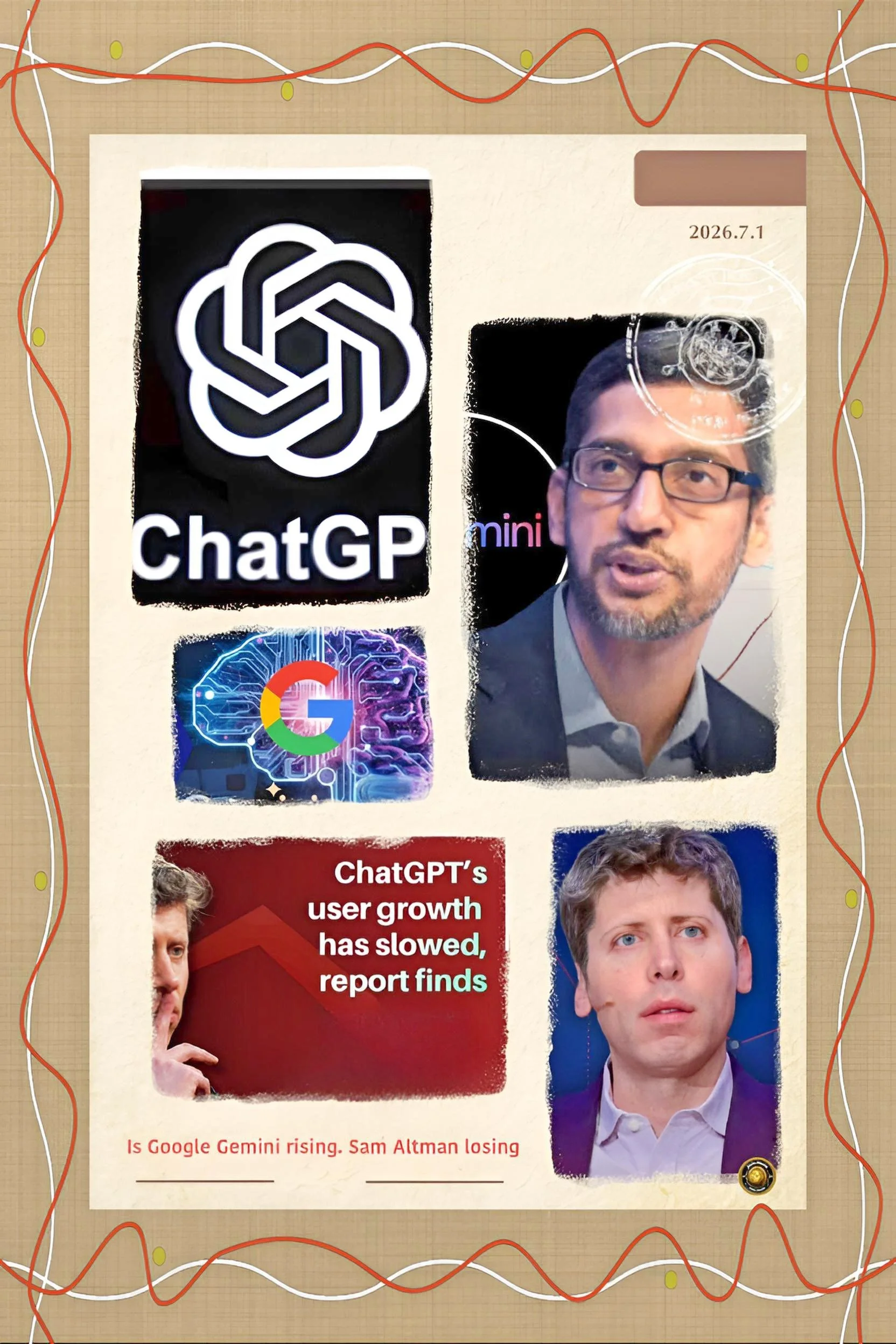
Google's Gemini platform surged from a marginal 5.4 percent market share to 18.2–21.5 percent within twelve months, while OpenAI's ChatGPT contracted from 86.7 percent to 64.5 percent over the same period. This apparent contradiction masks a more nuanced market reality: ChatGPT retains approximately 810 million monthly active users—substantially exceeding Gemini's 346–650 million—yet hemorrhages market share on web traffic metrics.
This inversion between user volume and market dominance reveals the structural fragmentation of the AI assistant landscape, where distribution mechanisms, engagement patterns, and measurement methodologies diverge dramatically across platforms.
The phenomenon underscores a critical transition point in the technology industry where integrated ecosystem advantages trump standalone technological excellence, initiating a restructuring that will define artificial intelligence competition throughout 2026 and beyond.
Introduction
When User Volume Becomes Irrelevant: How Distribution Density Dissolved ChatGPT's Monopoly in Twelve Months
The generative artificial intelligence sector achieved unprecedented scale during 2024 and 2025, with ChatGPT establishing an almost monopolistic position across consumer and enterprise applications. OpenAI's platform reached 810 million monthly active users by November 2025, surpassing the adoption curves of virtually all previous consumer technology breakthroughs.
Yet this extraordinary user volume obscures a troubling erosion in the competitive landscape. Within a single calendar year, ChatGPT surrendered more than 20 percentage points of market share to Google's Gemini—a decline that, when projected against the platform's substantial revenue base estimated at $12.7 billion to $25 billion annually, translates into potential revenue losses of $1 billion to $2 billion.
The apparent contradiction between ChatGPT's absolute user dominance and its declining market share poses an essential analytical puzzle for understanding the competitive dynamics of artificial intelligence. The resolution to this puzzle resides not in technological capability divergence. However, meaningful performance differences exist, but rather in the fundamental structural transformation of how users access and engage with AI systems across diverse platforms, devices, and integrated workflows.
Google's distribution advantages—embedding Gemini into search engines reaching 2 billion daily users, Android devices commanding 71 percent of the global smartphone market, and productivity applications including Gmail, Workspace, and Maps—create what industry observers term "ambient AI," where AI assistance encounters users through natural workflow integration rather than deliberate platform visitation.
This strategic recalibration has profound implications for the technology industry's competitive architecture. The transition suggests that as AI model capabilities converge toward functional parity across leading vendors, competitive advantage migrates from raw model sophistication toward ecosystem integration, user experience optimization, and distribution density.
Understanding these dynamics requires disaggregating market share metrics, analyzing engagement patterns across heterogeneous platforms, and examining the strategic imperatives driving both platforms' evolution throughout 2026.
History and Current Status: The Rise and Fragmentation of Generative AI Dominance
From Unchallengeable Dominance to Defensive Positioning: OpenAI's Failure to Recognize Its Own Vulnerability
ChatGPT's emergence in November 2022 established the fastest adoption trajectory in consumer technology history, surpassing 100 million users within two months of launch. The platform's conversational interface, combined with genuine advances in language model sophistication represented by the GPT-3.5 architecture, created a discontinuous break from prior AI assistant experiences characterized by limited capabilities and narrow use case applicability.
This discontinuity—the transition from constrained chatbots to systems capable of reasoning across domains, generating novel writing, debugging code, and engaging in genuinely thoughtful dialogue—generated user enthusiasm that transcended typical technology adoption patterns.
OpenAI capitalized on this enthusiasm through aggressive monetization strategies paired with continuous capability improvements. ChatGPT Plus, launched at $20 per month, quickly achieved substantial adoption among power users. The platform's API emerged as the preferred integration mechanism for developers, with OpenAI's architectural advantages and pricing structure driving adoption across countless third-party applications.
By 2024, OpenAI's platform had achieved near-monopolistic market positioning, with some measurement firms reporting 87 percent market share by web traffic metrics and comparable dominance across mobile platforms, particularly iOS, where dedicated app usage provided a measurable advantage.
During this period, Google maintained a secondary position despite its substantial AI research capabilities. The company's initial entry into conversational AI—Bard, launched in March 2023—suffered from product quality issues, restrictive content guidelines, and strategic confusion regarding its integration into core Google services.
This misstep created an opening for OpenAI to consolidate first-mover advantages. At the same time, Google struggled to reconcile its advertising business imperatives with experimental AI offerings that produced hallucinations and occasionally controversial outputs.
The competitive landscape shifted fundamentally during the latter half of 2025. Google released Gemini 3 in November 2025, representing a qualitatively different architectural approach to the problem of artificial intelligence assistance. Rather than building specialized models for distinct tasks—ChatGPT's reliance on DALL-E for image generation, separate code models, and different architectures for various reasoning tasks—Gemini was engineered from inception as a native multimodal system capable of processing text, images, audio, video, and extended documents within a single unified architecture.
Critically, Google simultaneously launched Gemini 3 Flash, a faster, more cost-effective variant that provides "frontier intelligence" at less than one-quarter the cost of the complete Gemini 3 Pro model.
The timing of this release coincided with deliberate integration across Google's entire product ecosystem. Google Search received AI Overviews powered by Gemini, presenting synthesized responses directly within search results and reaching the 2 billion daily search users without requiring platform switching.
Android, which commands 71 percent of the global smartphone market share, designated Gemini as its default AI assistant, ensuring billions of implicit encounters during routine device use. Workspace applications—Gmail, Docs, Sheets, Slides—received integrated Gemini features, making AI assistance available to enterprise customers without additional purchases or context switching. Chrome received similar treatment, embedding Gemini into browser functionality.
The market response to this systematic distribution advantage proved swift and substantial. Within six weeks of Gemini 3's launch, ChatGPT's web traffic declined 22 percent, falling from approximately 200 million daily visits in early December to roughly 158 million by early January 2026. More consequentially, Gemini's market share trajectory accelerated dramatically.
The platform's share of AI chatbot web traffic nearly doubled from approximately 8.6 percent in June 2025 to 18.2 percent by year-end, continuing to 21.5 percent in early January 2026, thereby crossing the symbolically significant 20 percent threshold.
Simultaneously, Gemini's monthly active user base expanded from 450 million in July 2025 to 650 million by November—representing 44 percent growth over three months, compared with ChatGPT's anemic 6 percent quarterly expansion.
Key Developments: The Architecture of Competitive Realignment
The Architecture Shift That Broke OpenAI's Hegemony: Gemini 3's Multimodal Design and Google's Relentless Ecosystem Embedding
The period spanning June 2025 through January 2026 witnessed several critical product and strategic developments, setting the stage for Google's market share gains.
**Architectural and Product Innovation**: Gemini 3 represents a significant advance in the design of multimodal AI systems. The model achieves 91.9 percent accuracy on GPQA Diamond—a benchmark for PhD-level reasoning—compared to ChatGPT 5.1's 88.1 percent.
More significantly, Gemini 3 demonstrates substantially superior capabilities for simultaneous reasoning across visual and textual inputs, with performance advantages particularly pronounced in interpreting UI layouts, architectural diagrams, scanned documents, and cross-media analysis.
ChatGPT 5.1 maintains advantages in coding-specific tasks and in structured reasoning that require iterative refinement, though the differences have narrowed substantially. On SWE-bench Verified metrics measuring software engineering prowess, the platforms achieve near-parity, with GPT-5.1 achieving marginal advantages.
The November 2025 launch of Gemini 3 Flash represented an equally consequential strategic move. By providing model capabilities that approximate Gemini 3 Pro at substantially reduced computational cost and latency, Google addressed a critical competitive vulnerability—namely, ChatGPT's entrenched position in latency-sensitive applications, including voice interaction, real-time collaboration, and mobile-first use cases. Gemini Live 2.0 achieves voice processing latency of 350 milliseconds, substantially outperforming ChatGPT Voice's 550 millisecond latency.
This seemingly marginal difference determines whether voice conversations feel natural or stilted, with research indicating that latencies exceeding 700 milliseconds fundamentally disrupt human perception of conversational fluency.
Engagement Metrics and User Experience Divergence
Analysis of engagement patterns reveals fundamentally different usage modalities between the platforms. ChatGPT users spend substantially more time per session—research indicates an approximately 5x increase in average session duration—yet visit less frequently.
Conversely, Gemini users encounter the platform multiple times daily through integrated Google services, though individual interaction duration typically proves shorter. Between July and November 2025, average session duration per ChatGPT user declined 22.5 percent, while average sessions per user contracted 20.7 percent. During the same period, Gemini user time-in-app doubled, increasing from approximately 5 minutes daily (March 2025) to 11 minutes (November 2025), primarily driven by the September 2025 introduction of Nano Banana. This sophisticated image-generation capability expanded Gemini's utility beyond text-based interaction.
Monetization Strategy Shifts and "Code Red" Response
OpenAI's response to Gemini's competitive threat demonstrated the urgency executives perceived.
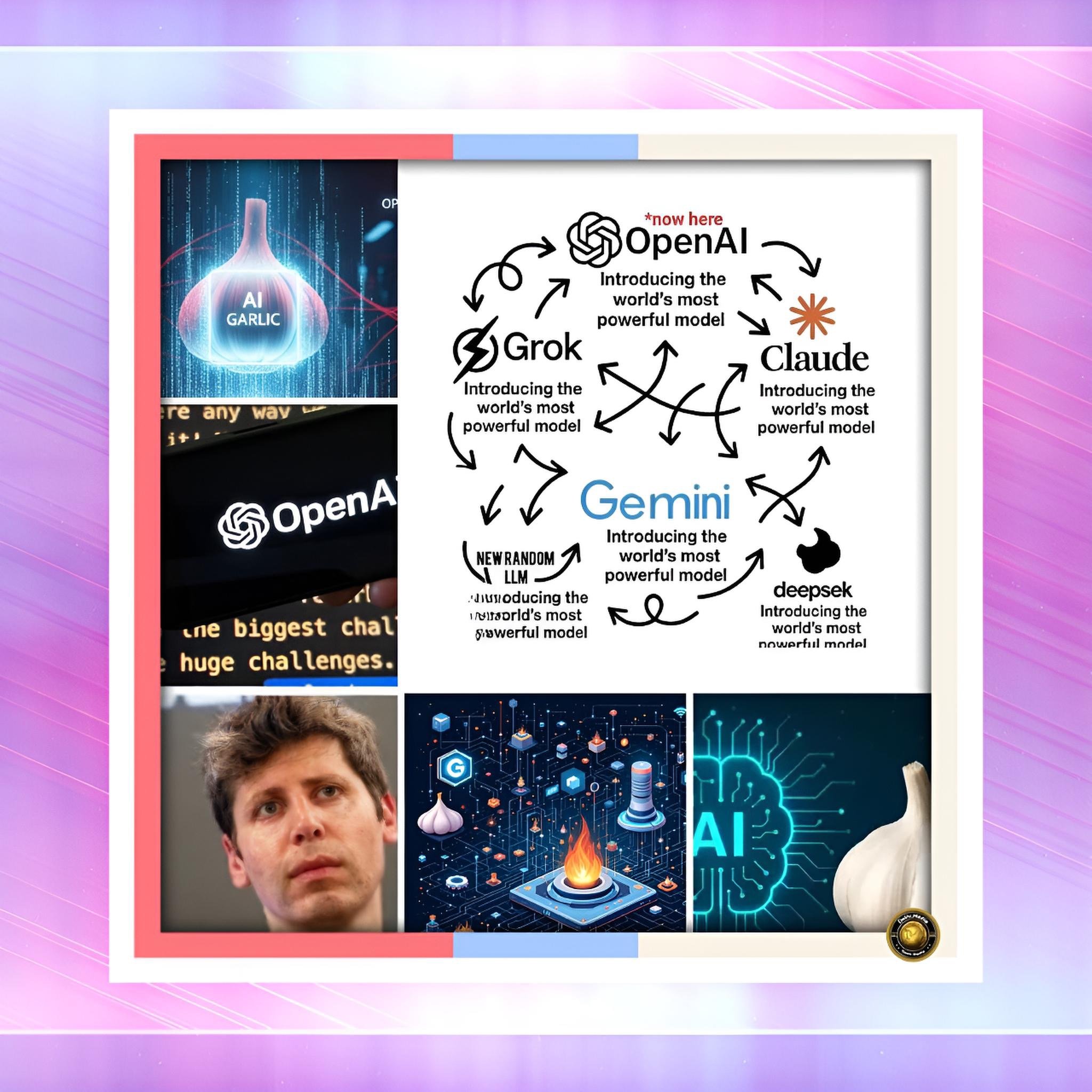
In early December 2025, CEO Sam Altman declared a "code red" emergency, immediately halting monetization initiatives, including advertising development and AI shopping assistants, to focus resources on core product improvements. Internal communications acknowledged that ChatGPT faced "critical" competitive challenges requiring rapid response.
Concurrently, OpenAI commenced development of ChatGPT Ads—a sophisticated advertising system planned for 2026 rollout that would integrate sponsored content into conversational responses, search results, and commerce recommendations. Preliminary mockups revealed sidebar advertising formats alongside primary responses, "powered by" partnerships featuring third-party tools, and dynamic ad generation where AI systems create customized promotional content responsive to individual user queries.
OpenAI's financial situation intensified urgency around advertising development. The company operates under a fundamentally unsustainable economic model where approximately 95 percent of ChatGPT users consume substantial computational resources without generating direct revenue. With infrastructure commitments exceeding $1.4 trillion and estimates of $3 billion to $5 billion in annual operational expenses, the platform requires substantial monetization acceleration.
A potential revenue loss of $1 billion to $2 billion from further market share erosion would devastate financial projections that already strain OpenAI's ability to service its $6.5 billion debt facility and justify its $157 billion valuation to existing and prospective investors.
Quality Degradation Concerns and User Trust Erosion
A more troubling dynamic emerged regarding user perceptions of ChatGPT quality. The August 2025 introduction of GPT-5 generated immediate reports of performance regressions. Users documented increased hallucination rates, diminished contextual accuracy, and a phenomenon researchers termed "tunnel vision"—a tendency for the model to establish reasoning frameworks early in extended conversations and subsequently struggle to deviate from initial trajectories even when provided contradictory information.
An MIT study released in 2025 offered neurological validation of subjective quality concerns, demonstrating, through EEG analysis, that intensive ChatGPT use is associated with decreased neural connectivity patterns consistent with cognitive offloading. Users reported that extensive reliance on ChatGPT for thinking tasks paradoxically reduced their own mental performance across multiple sessions.
Beyond neurological concerns, ChatGPT encountered operational quality issues stemming from August 2025 content restrictions implemented to address risks associated with mental health and emotional support conversations.
OpenAI's chief financial officer acknowledged to investors that these restrictions directly contributed to declining user engagement, as substantial ChatGPT usage involves users seeking emotional support, companionship, and psychological processing—functions that content policies increasingly restricted. Only 2 percent of ChatGPT users report strong trust in the platform's factual accuracy, while 89 percent explicitly avoid using it for factual questions.
This perception of unreliability, combined with quality control issues and engagement-dampening content restrictions, created a trust erosion dynamic that worked substantially to Gemini's advantage.
Latest Facts and Emerging Concerns: The Measurement Paradox and its Implications
Web Traffic Lies: How ChatGPT's Traffic Paradox Exposed the Fragmentation of Measurement and the Illusion of Market Share Comparisons
The apparent contradiction between ChatGPT's user dominance and declining market share reveals critical measurement divergences and structural platform asymmetries that require careful unpacking.
**The User Paradox Explained**: ChatGPT maintains roughly 810 million monthly active users, compared to Gemini's 346–650 million, yet the web traffic metrics driving market-share calculations show ChatGPT's market share contracting to 64.5 percent, while Gemini's approaches 21.5 percent.
This inversion reflects several reinforcing factors. Foremost, web traffic data disproportionately measures dedicated website visitation—the metric captures users explicitly navigating to chatgpt.com and gemini.google.com.
However, Gemini's distribution model emphasizes embedded integration across Android, Google Search, Chrome, and Workspace, where users access functionality without a separate platform visit. A user running an Android device who invokes Gemini through the standard assistant interface has accessed Gemini without generating traffic to a distinct Gemini website.
Secondly, engagement duration patterns distort market share calculations when measured by traffic frequency rather than aggregate time investment. ChatGPT's users spend substantially more time per session engaged in in-depth reasoning, research, and creative work, yet visit less frequently.
Gemini users access the platform multiple times daily across different Google services for more constrained queries and productivity tasks. Market share measurements based on traffic frequency, therefore, overweight Gemini's numerous lightweight interactions against ChatGPT's fewer but more intensive sessions.
Thirdly, platform-specific measurement biases inherent in mobile analytics complicate comparative analysis.
On iOS, ChatGPT dominates with approximately 67.6 million daily active users compared to Gemini's 3.8 million—an 18-fold difference. However, this iOS-centric metric obscures the reality that Gemini offers substantially superior integration with Android devices, where it serves as the default assistant on 1.4 billion Android phones, representing 71 percent of the global smartphone market share.
Many Android users invoke Gemini through native interface elements—power button hold, voice commands, context menus—generating utility without creating measurable "app engagement" in traditional analytics frameworks.
Referral Traffic and Content Discovery Dynamics
A more revealing asymmetry emerges when examining referral traffic patterns. ChatGPT's referral traffic to external websites declined 52 percent between July and August 2025, as OpenAI deliberately pivoted toward "answer-first" response architectures that present information directly within the chat interface rather than directing users to external sources.
This strategy mirrors Google's historical transition toward zero-click searches, where users find answers on results pages rather than visiting websites. By resolving queries internally, ChatGPT reduces external traffic while potentially improving the user experience by lowering navigation friction.
Conversely, Gemini's referral traffic surged 388 percent year-over-year between September and November 2025, indicating substantially higher user trust in AI-generated recommendations and greater propensity to click through to referenced sources, products, and services.
This asymmetry has critical implications for publisher economics, content creator monetization, and the broader digital ecosystem. Publishers and content creators increasingly recognize Gemini as a significant traffic source. In contrast, ChatGPT now functions more as a content aggregator, potentially competing with their traffic rather than directing users to them.
Market Concentration and Competitive Fragmentation
Market share data reveals accelerating consolidation toward a duopoly. ChatGPT and Gemini together control 86.2 percent of the measured market share, leaving the remaining platforms, including Grok, Claude, Perplexity, and open-weight models, to contest 13.8 percent. However, this aggregated measure obscures meaningful segmentation by use case and user profile.
Claude has achieved surprising strength in enterprise applications, achieving 32 percent market share among enterprise customers—a metric where OpenAI's ChatGPT claims only 25 percent despite its consumer dominance. Perplexity achieved 370% year-over-year growth through differentiation as a research-focused assistant that emphasizes source attribution and transparency.
Grok, xAI's platform, surpassed 3 percent market share despite launching less than one year prior, leveraging its unique positioning on X (formerly Twitter) and distinctive personality traits that appeal to specific user demographics.
Mobile-First Engagement and Latency-Sensitive Applications
An underappreciated asymmetry favors Gemini across time-critical applications, including voice interaction and real-time communication. The 200-millisecond latency differential between Gemini Live 2.0 (350ms) and ChatGPT Voice (550ms) proves decisive for applications where user perception of conversational naturalness determines adoption.
Research in human-computer interaction shows that conversational latencies exceeding 700 milliseconds produce perceptible unnaturalness, while 200-millisecond differentials within the sub-700-millisecond range nonetheless produce meaningful shifts in user preference.
Gemini's architectural advantage in audio-to-audio processing—the model processes raw waveforms as tokens rather than transcribing to text—preserves intonation, emotional valence, and sarcasm, enabling richer contextual understanding than transcription-based approaches.
These advantages compound across voice-assistant-dependent user segments, including automotive applications, smart home integration, and hands-free scenarios where visual interface access proves impractical.
Cause-and-Effect Analysis: The Structural Mechanics of Market Share Realignment
Four Structural Forces Reshaping AI Competition: Why Distribution Trumps Innovation When Capability Converges
The observed transition in market share emerges from multiple reinforcing causal mechanisms operating across technological, organizational, and market-structural dimensions.
Distribution as Primary Competitive Driver
At the most fundamental level, Gemini's market share gains reflect the overwhelming power of distribution density in consumer technology markets. Google's ecosystem encompasses approximately 2 billion daily Gmail users, 1 billion Gmail users, 1.4 billion Android devices, and billions of searches daily through Google Search.
Each of these distribution channels offers users an opportunity to encounter Gemini without deliberate platform switching or installation friction. The incremental adoption cost—the friction required to access Gemini relative to its integration into routine workflows—approximates zero for users already embedded in Google's ecosystem.
Conversely, ChatGPT requires deliberate user action for access: navigating to chatgpt.com, installing a dedicated mobile application, or explicitly activating the ChatGPT interface within third-party applications. This action requirement, however modest in absolute terms, creates sufficient friction to suppress adoption among users for whom AI assistance represents a peripheral tool rather than core functionality.
Market research on consumer technology adoption barriers shows that even seemingly trivial frictions—an extra click, a separate application launch, authentication requirements—reduce trial rates and sustained engagement by 20 percent to 40 percent for non-core applications.
Google's strategic embedding of Gemini across its ecosystem effectively transforms AI assistance from an optional peripheral tool accessed deliberately into an ambient service encountered naturally through natural workflow integration. Users receive AI-summarized search results without leaving the search interface.
Android users invoke Gemini through natural device interactions. Workspace users encounter AI features integrated into familiar productivity tools. This environmental saturation ensures that Gemini accumulates user encounters at scales vastly exceeding what standalone platforms can achieve.
Capability Convergence and the Irrelevance of Marginal Performance Advantages
The second causal mechanism operates at the product capability dimension. As detailed in the benchmark analysis, Gemini 3 and ChatGPT 5.1 achieve approximate functional parity across most use cases, with each platform maintaining distinctive advantages in narrow domains. Gemini excels at multimodal reasoning, large-context processing, and visual understanding.
ChatGPT maintains advantages in iterative coding scenarios and specific categories of creative synthesis. For the vast majority of user queries—factual questions, writing assistance, idea generation, research support, customer service automation, and basic coding tasks—both platforms perform equivalently from the user perspective.
When functionally equivalent options exist, consumer choice shifts toward platforms that offer superior convenience, integration, and user experience rather than marginal capability advantages. This principle, established across decades of consumer technology analysis, explains why ecosystems frequently displace superior standalone products.
The VCR market leader in the 1980s fragmented not because alternative technologies proved superior, but because distribution through cable systems and retail stores shifted market advantage toward companies optimizing for system integration rather than pure recording capability.
Applied to generative AI, this dynamic explains why ChatGPT's arguably superior coding capabilities and some users' preference for its conversational style prove insufficient to prevent market share erosion. For users seeking writing assistance, research support, or creative ideation, ChatGPT's marginal capabilities advantages are imperceptible, whereas Gemini's integration into Gmail, Search, and Workspace delivers immediate convenience benefits.
The market responds by shifting usage toward the more convenient option.
Quality Control Issues and Trust Erosion as Accelerating Factors
The third mechanism involves quality perception and trust dynamics. ChatGPT's August 2025 quality issues and July 2025 content restrictions created a perception among power users that platform quality had deteriorated and that content controls had become unnecessarily restrictive.
User reports of increased hallucination rates, diminished reasoning coherence, and narrowed response diversity provided evidence supporting these perceptions. Critically, these quality concerns manifested most prominently among the power-user cohort, which is most likely to evaluate alternatives.
Power users—researchers, professionals, creative workers, and developers who invest hours daily in AI interactions—represent the opinion-leading segment whose behavior influences broader adoption patterns. When this cohort perceives quality degradation, they evaluate alternatives and frequently encourage peers to experiment with competing platforms.
Gemini's simultaneous capability improvements and reputation as a technically sophisticated positioned it advantageously to capture and assess power users. The phenomenon created a virtuous cycle for Gemini: quality concerns drove power-user evaluations, positive Gemini experiences generated word-of-mouth recommendations, these recommendations accelerated broader adoption, and this adoption reinforced Gemini's integration investment as strategically justified.
Revenue Model Uncertainty and User Signal Ambiguity
OpenAI's aggressive monetization initiatives, combined with explicit acknowledgment that ChatGPT requires advertising revenue to achieve financial sustainability, created subtle ambiguity in user signals regarding the platform's long-term direction.
Users understood that ChatGPT's free tier existed in a precarious economic position supported by venture capital and hoped-for future advertising revenue. Explicit discussion of ChatGPT Ads—their planned 2026 launch and sophisticated ad integration formats—created user apprehension regarding whether future ChatGPT experiences would be degraded through advertising insertion.
Conversely, Gemini benefits from integration into Google's advertising-supported ecosystem, where users already expect and tolerate sponsored content. The economics of advertising-supported AI assistants appear more sustainable and less dependent on fundamental business model transformation.
Users who perceived ChatGPT's advertising transition as imminent exhibited greater willingness to evaluate alternatives, particularly those with established business models that do not require future monetization transitions.
Future Steps: Market Evolution Through 2026 and 2027
The Duopoly Emerges: What ChatGPT and Gemini Must Do to Survive 2026 and Why Specialization Is the Market's New Default
The competitive dynamics established in 2025 will likely continue to intensify throughout 2026, with several probable developments emerging across technological, strategic, and market dimensions.
Continued Market Share Gains for Gemini and Mobile-First Platforms
The structural advantages favoring Gemini—distribution density, ecosystem integration, and mobile-first optimization—exhibit characteristics that strengthen rather than attenuate over time.
Google's rollout of Gemini 4, anticipated during 2026, promises further capability advancement, including enhanced reasoning, improved planning, and larger context windows approaching millions of tokens. Project Astra, Google's initiative to develop a universal AI assistant capable of reasoning across real-world sensory input, positions Gemini for expansion beyond conversational AI into embodied-assistant and autonomous-task-execution domains.
Google's planned transformation of Search into an AI-first interface—announced by CEO Sundar Pichai and reflected in expanded AI Overviews across search results—will further deepen Gemini's integration into core user workflows. As an increasing proportion of search interactions receive AI-synthesized results incorporating Gemini reasoning, the platform's reach expands while ChatGPT's user acquisition from search discovery diminishes.
Conservative projections suggest Gemini could achieve 25 percent to 30 percent market share by the end of 2026, with continued growth possible if technology transitions prove seamless and user satisfaction remains high.
ChatGPT's Pivot Toward Enterprise and Monetization
OpenAI's strategic response to competitive pressure emphasizes enterprise focus and advertising monetization. Data indicates that OpenAI's API business—primarily enterprise usage—grew faster during 2025 than consumer ChatGPT usage, suggesting that platform leadership increasingly recognizes enterprise as the viable revenue foundation. Expect accelerating ChatGPT enterprise product development, including specialized industry-specific models, integration into enterprise software through partnerships, and pricing tiers tailored to different organizational sizes.
The 2026 launch of ChatGPT Ads will prove consequential for platform evolution. If successfully implemented, advertising revenue could reduce OpenAI's dependence on venture capital financing and improve the unit economics of free-tier users. However, advertising integration risks further user dissatisfaction among consumers already questioning platform quality.
OpenAI faces a tricky balance: insufficiently aggressive advertising fails to generate required revenue, whereas excessive or intrusive advertising accelerates user migration to competitors.
OpenAI has explicitly signaled development of GPT-6, intended to represent the next meaningful capability leap beyond GPT-5. Historical patterns suggest that sufficiently dramatic capability improvements—such as advances in reasoning, new modalities, or novel interaction paradigms—could reignite user enthusiasm and slow Gemini's share gains.
However, capability differentiation requires time to materialize, and competitive windows rarely accommodate extended development cycles without market share continuation during intervening periods.
Segmentation and Specialization by Use Case
The competitive market will likely evolve toward greater specialization and segmentation by user archetype and use case. Claude appears well-positioned to consolidate enterprise advantage, with its reputation for safety, interpretability, and alignment attracting organizations prioritizing control and auditability over raw capability.
Perplexity's research-focused positioning and emphasis on source attribution serve users for whom information provenance matters more than convenience.
Grok's differentiation through a distinctive personality and integration into X appeals to users who value authenticity and community over corporate polish.
This segmentation reduces the winner-takes-most dynamics that characterized 2024-2025. Rather than a single platform dominating across all use cases, the 2026-2027 market is likely to feature clear leaders in specific segments: Gemini in consumer convenience and integrated productivity, Claude in enterprise safety and interpretability, Perplexity in research and source attribution, and specialists in various vertical markets.
The overall market continues to consolidate at the aggregate level—smaller platforms struggle to maintain independent operations—while fragmenting at the segment level as users recognize that different platforms optimize for various requirements.
Measurement Framework Evolution and the Sunset of Web Traffic Metrics
The analysis complexity arising from divergent measurement methodologies will likely drive the adoption of more comprehensive measurement frameworks. Web traffic data, increasingly exposed as a poor proxy for overall user engagement and economic value, will gradually lose prominence in competitive analysis.
Emerging measurement approaches emphasize aggregate time investment, frequency of interaction across touchpoints, purchase intent signals within conversations, and enterprise adoption metrics rather than website visitation frequency.
Industry observers increasingly recognize that ChatGPT's relatively greater individual user investment, combined with Gemini's broader engagement, creates genuinely different value propositions that cannot be reduced to a single comparative metric.
Future competitive analysis will require explicit acknowledgment of measurement-methodology limitations and a transparent distinction between metrics capturing different dimensions of platform utility.
Conclusion
The End of Standalone Supremacy and the Triumph of Ecosystem Integration
The generative AI market's evolution during 2025 and trajectory through 2026 demonstrate with unprecedented clarity that in technology markets featuring functionally equivalent core offerings, distribution density and ecosystem integration overwhelm marginal capability advantages. Google's Gemini achieved in 12 months what had appeared impossible as recently as mid-2025: eroding OpenAI's quasi-monopoly market position.
This transition occurred despite ChatGPT maintaining technological sophistication, a substantial user base, and organizational capabilities. Instead, Gemini's gains reflected the relentless power of distribution—the reality that enabling users to access functionality through existing workflow and device integration produces adoption scaling that standalone platforms cannot match.
The implications extend beyond the immediate competitive dynamics between OpenAI and Google. The Gemini case study provides decisive evidence that first-mover advantages, while real and durable, prove insufficient to prevent market share erosion when second movers command substantially larger distribution ecosystems.
This principle will recur across numerous technology markets as artificial intelligence capabilities commoditize and differentiation increasingly derives from integration rather than isolation.
For OpenAI specifically, the challenge involves defending core user relationships and revenue streams while lacking distribution density approaching Google's ecosystem scale. Enterprise focus represents a strategically sound response, as enterprise customers are less sensitive to distribution convenience and more responsive to specialized capabilities and reliability.
Advertising monetization provides necessary revenue generation but carries the risk of further user dissatisfaction. Continued capability innovation through GPT-6 development offers potential for user reengagement, though capability advantages narrow the broader market context.
For Google, the challenge involves converting market share gains into sustainable business models and monetization approaches. Gemini's successful integration demonstrates technical execution excellence and strategic vision, but sustainability requires that users perceive increasing rather than declining value as advertising and monetization intensify. The company must balance aggressive monetization with addressing long-term AI infrastructure costs and preserving user satisfaction.
For the broader technology ecosystem, the transition signals that artificial intelligence competition has fundamentally shifted from the research and engineering phases—where OpenAI maintained an advantage—toward deployment, integration, and user experience phases, where larger platforms command an advantage.
This shift will accelerate as AI model capabilities continue to converge. Future AI platforms will succeed through superior integration, lower latency, better personalization, and a more sophisticated understanding of user context and intent, rather than through marginal improvements in benchmark performance.
The ChatGPT market share decline, analyzed through the lens of distribution mechanics, quality concerns, and capability convergence, ultimately reflects a fundamental principle of technology market dynamics: when functional equivalence emerges, users reward convenience, integration, and ecosystem alignment over marginal capability advantages.
ChatGPT's current position, though diminished from prior supremacy, remains formidable in absolute terms and defensible in enterprise segments where specialized capability remains relevant. However, the platform's era of standalone dominance has come to an end.
The generative AI market enters 2026 as a duopolistic structure with emerging segment specialization—a substantially different competitive landscape than the monopolistic position OpenAI commanded merely eighteen months prior.