Apple Integrates Google Gemini into Foundation Models: A Strategic Pivot in Artificial Intelligence Architecture
Executive Summary
Silicon Valley's New World Order: The Gemini Partnership Explained
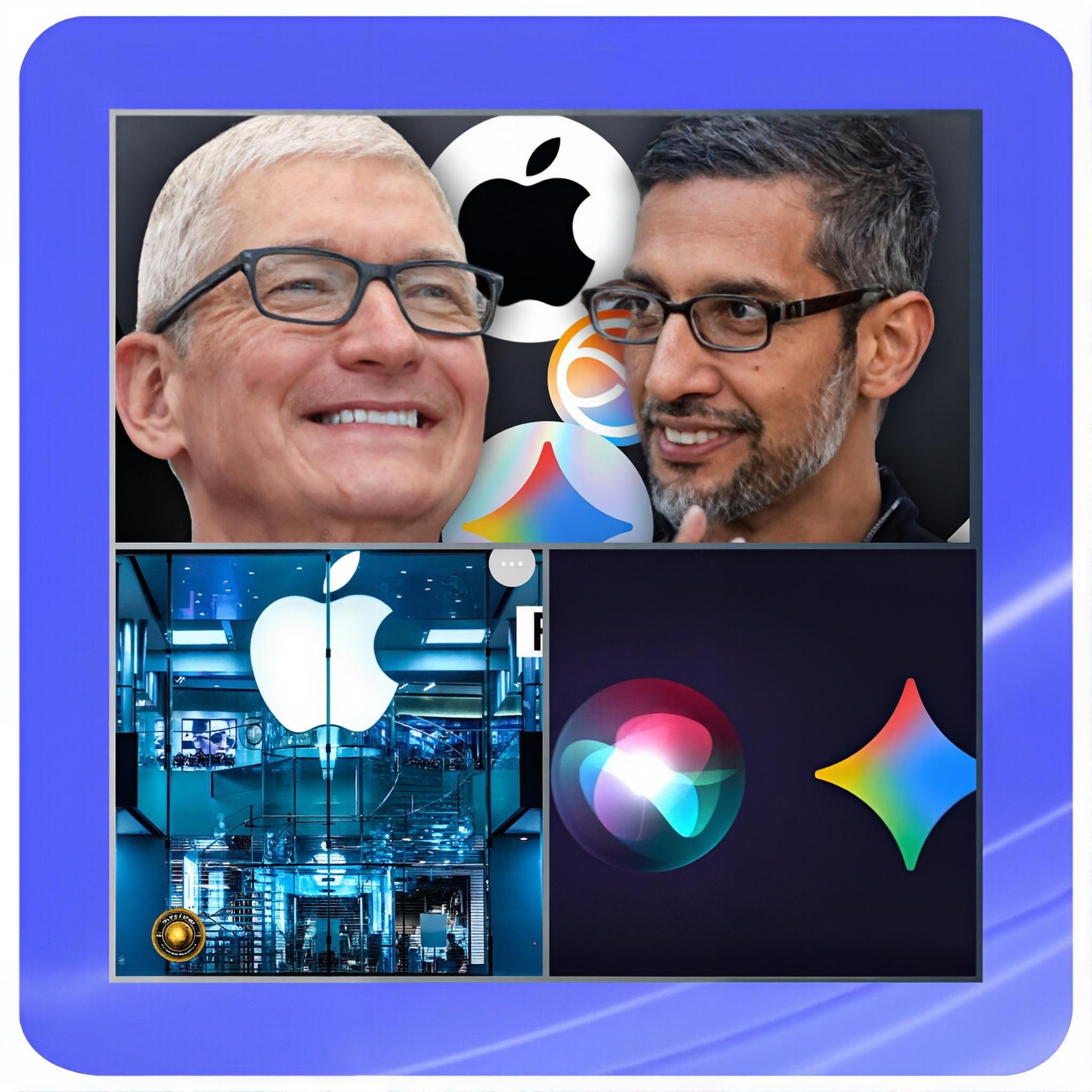
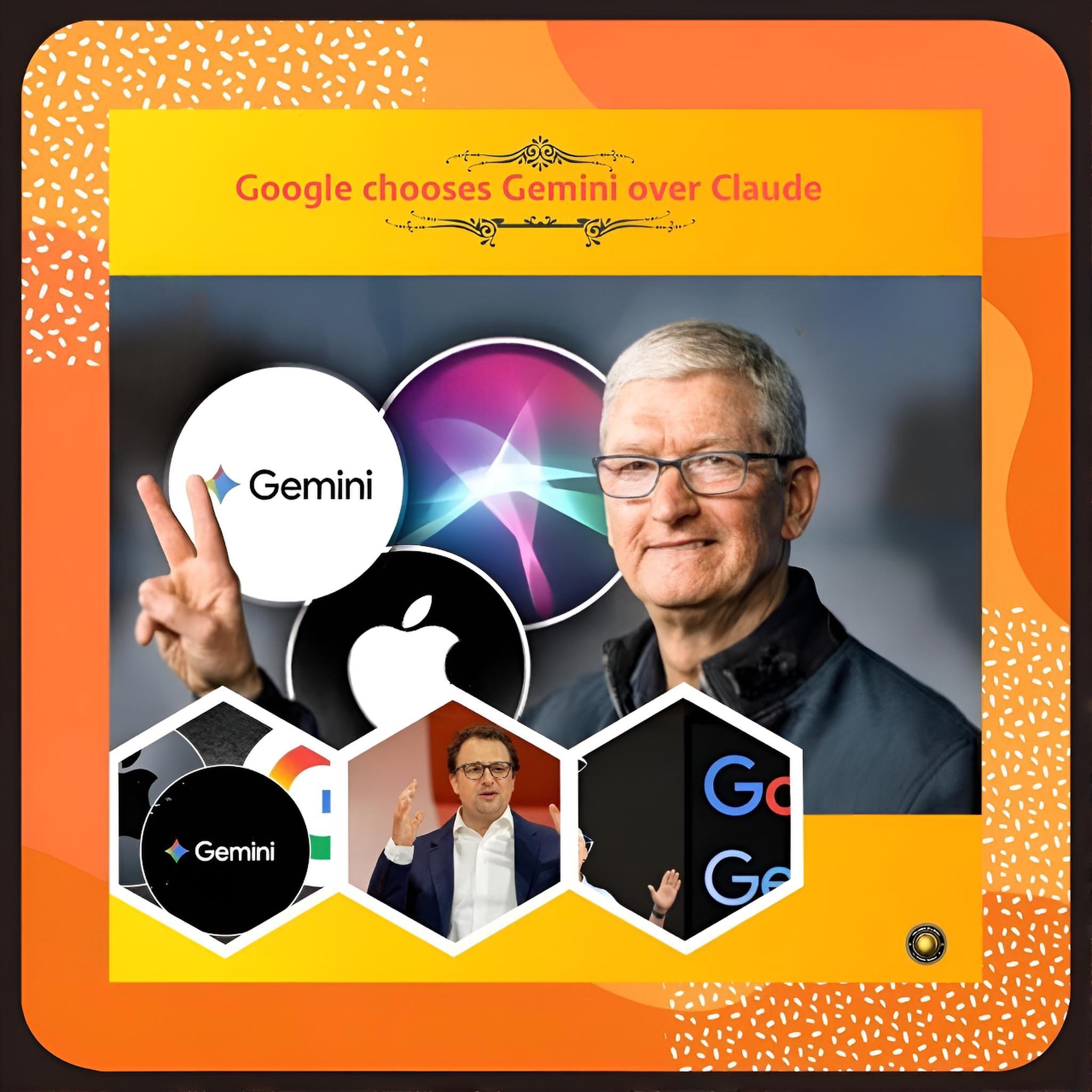
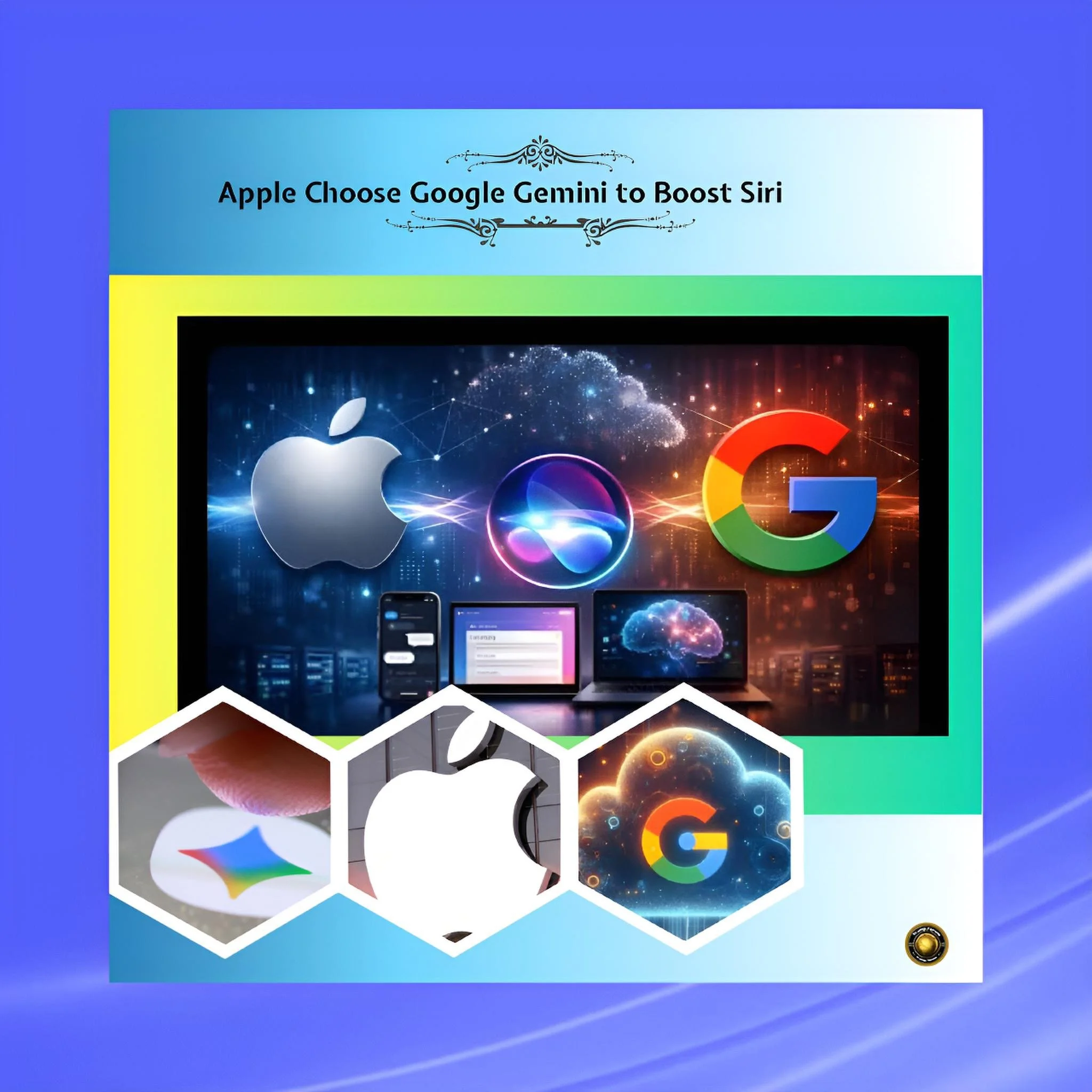
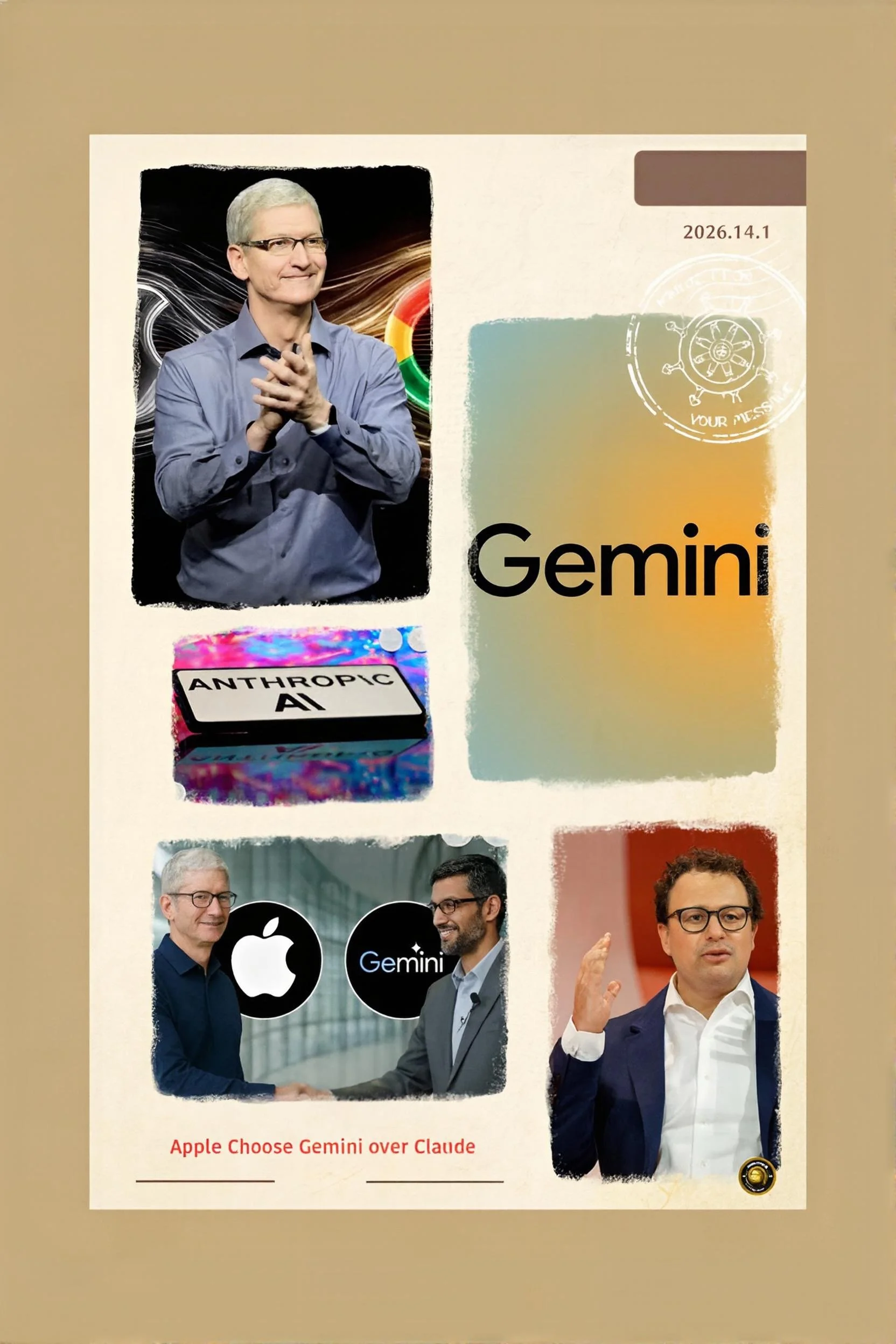
Apple and Google have formally announced a multi-year partnership through which Apple will leverage Google's Gemini AI models and cloud computing infrastructure to power the next generation of Apple Foundation Models.
This collaboration represents a fundamental shift in Apple's historical approach to artificial intelligence, marking the first instance in which the company has relied upon an external technological provider to form the basis of its core AI capabilities.
The partnership, formalized in January 2026, is projected to deliver a significantly enhanced Siri voice assistant and expanded Apple Intelligence functionalities throughout 2026 and beyond.
While the deal demonstrates pragmatic recognition of technological realities and competitive pressures within the AI landscape, it simultaneously raises consequential questions regarding antitrust compliance, user privacy preservation, and the nature of corporate competition in the artificial intelligence era.
Historical Development and Corporate Context
The Great Technology Pivot: How Apple Surrendered AI Independence
Apple's relationship with artificial intelligence has been characterized by deliberate incrementalism and privacy-centric design principles that diverge substantially from the approaches adopted by competing technology corporations.
The company introduced Siri in 2011 as a voice recognition and command execution system that operated primarily through cloud-based processing, a model that Apple subsequently evolved to emphasize on-device computation.
Throughout the 2010s and early 2020s, the organization maintained a strategic commitment to developing proprietary machine learning capabilities integrated directly into its silicon architecture and operating systems.
Beginning in 2021 and continuing through early 2024, Apple engaged in an extensive research and development phase that included acquiring specialized technology firms such as DarwinAI, which contributed expertise in neural network efficiency, and developing proprietary systems including ReALM, designed to enhance contextual understanding within voice assistant interactions.
In June 2024, Apple unveiled Apple Intelligence at its Worldwide Developers Conference, introducing a comprehensive framework built upon three-billion-parameter language models optimized for execution on consumer devices. This announcement represented the company's effort to establish a commercially viable AI system that preserved its foundational commitment to processing user data exclusively within controlled environments.
However, this trajectory encountered significant obstacles. Apple had previewed substantially more advanced Siri capabilities for introduction in 2024 under iOS 18, including features enabling the assistant to comprehend user personal context, perceive on-screen content, and execute sophisticated multi-step operations across applications. These capabilities required architectural innovations that Apple determined would necessitate extended development timelines.
Consequently, in March 2025, Apple postponed the rollout of its more personalized Siri iteration to 2026, a decision that disappointed investors and observers who had anticipated meaningful progress on Apple's stated AI initiatives.
This delay occurred within a competitive environment in which alternative technology providers had demonstrated substantially more advanced conversational AI capabilities.
OpenAI's ChatGPT, introduced in late 2022, had achieved rapid market adoption and influenced user expectations regarding AI assistant sophistication.
Google had developed and deployed its Gemini models across consumer and enterprise platforms.
Anthropic had introduced Claude, demonstrating alternative approaches to large language model safety and capability. Microsoft had integrated AI systems throughout its product portfolio.
Meanwhile, Apple remained constrained by the limitations of its internally developed models and the architectural complexity required to maintain its privacy commitments while delivering competitive AI experiences.
Current Status and Partnership Mechanics
The Apple-Google Gemini Bargain: Ambition Meets Reality
The Apple-Google partnership, announced on January 12, 2026, addresses these technical and competitive constraints through a collaborative framework. Both corporations issued a joint statement confirming that the next generation of Apple Foundation Models will be constructed upon the basis of Google's Gemini models and cloud infrastructure.
The arrangement is characterized as non-exclusive and multi-year in duration, indicating that Apple retains the flexibility to incorporate additional external AI providers while maintaining extended commitment to the Google partnership.
Financial arrangements have not been publicly disclosed by either corporation, though multiple credible reporting sources indicate that Apple will compensate Google at approximately one billion dollars annually for access to Gemini technology and customization services.
Reports suggest that Google will provide Apple with a specialized variant of the Gemini model containing approximately 1.2 trillion parameters, substantially exceeding the computational capabilities of Apple's proprietary models developed independently.
Critical to the partnership's structure is Apple's emphasis that all Apple Intelligence features will continue to operate either directly on user devices or through Apple's Private Cloud Compute infrastructure, which functions under Apple's exclusive operational control. Google will not have access to user interaction data, personal information, or prompt histories generated through Apple's systems.
The Gemini foundation will serve exclusively as the underlying intelligence infrastructure upon which Apple will construct, customize, and fine-tune its own Foundation Models, which will then be branded as Apple creations rather than Google products.
Key Technological Developments
Siri Gets a Brain Transplant: What Apple-Google Really Means
The anticipated Siri enhancement represents the immediate and most visible application of the Gemini-powered architecture. Technical specifications disclosed through reporting indicate that the new Siri implementation will feature substantially improved conversational capabilities, enabling multi-turn dialogues in which the assistant maintains contextual awareness across extended interactions.
Users will be able to reference previous statements and queries, with Siri demonstrating comprehension of pronouns and contextual relationships that previous implementations failed to interpret reliably.
The enhanced Siri will incorporate the capability to answer factual and world knowledge queries through conversational mechanisms rather than directing users to external search resources.
This functionality represents a significant departure from Siri's historical tendency to suggest that users consult alternative tools for sophisticated information requests. The system will provide responses infused with nuance and contextual depth rather than formulaic facts extracted from databases.
Emotional intelligence capabilities are projected to expand substantially, enabling Siri to recognize when users express emotional distress or solicit empathetic engagement and to respond through mechanisms designed to provide psychological support and understanding.
The assistant will develop capabilities to assist with complex planning and reservation functions, including travel booking and document creation integrated with Apple's productivity applications.
The technical architecture supporting these capabilities will employ tiered processing models. Simpler queries and routine operations will continue to execute through lightweight on-device models, preserving computational efficiency and battery performance.
More sophisticated requests that exceed on-device processing capabilities will be transmitted through private encryption mechanisms to Apple's cloud infrastructure, where Gemini-powered foundation models will perform computation and return results exclusively to the originating user's device.
Apple has committed to fine-tuning Gemini models according to Apple's preferences and user experience requirements, ensuring that Siri interactions conform to Apple's stylistic conventions and privacy standards.
The foundation models will be trained to identify themselves as Apple Siri rather than Google Gemini, and will incorporate integration with Apple's existing ChatGPT partnerships, enabling users to engage OpenAI's models when appropriate to specific query types.
The rollout timeline anticipates introduction of the more personalized Siri capabilities beginning in spring 2026 through iOS 26.4, with additional features anticipated for announcement at Apple's annual Worldwide Developers Conference in June 2026.
Reports indicate that certain advanced capabilities, including proactive suggestions based on application and calendar data and comprehension of extended conversation history, may not reach general availability until iOS 27 or later release cycles.
Latest Information and Contemporary Developments
The announcement generated substantial analytical reaction from technology industry observers. Dan Ives, a prominent technology sector analyst, characterized the partnership as addressing fundamental concerns regarding Apple's artificial intelligence strategy that had accumulated through extended delay periods.
Wall Street observers noted that the partnership represents recognition that Apple cannot independently compete with specialized AI technology providers within development timeframes required to maintain investor confidence and market competitiveness.
The partnership also carries antitrust implications resulting from prior legal proceedings against Google.
In August 2024, a federal judge determined that Google had engaged in illegal monopolistic practices by compensating Apple approximately thirty-eight billion dollars during the 2021-2022 period to maintain Google Search as the default search engine across Apple's ecosystem.
In December 2025, U.S. District Judge Amit Mehta imposed remedial requirements that explicitly prohibit Google from entering into exclusive partnerships with other technology corporations except through agreements terminating no longer than one year after formation.
The Apple-Google AI partnership appears to navigate this prohibition through its non-exclusive structure and stated basis in technological capability rather than search engine distribution. However, legal scholars and regulatory observers have questioned whether the arrangement satisfies the intent of antitrust remedies or merely exploits technical distinctions in contractual structure.
Critics including Elon Musk have suggested that the partnership represents a consolidation of technology sector power that undermines competition and consumer choice, regardless of formal legal compliance.
Privacy advocates have examined whether Apple's assurances regarding user data protection can be reliably enforced given the multi-organizational cooperation required to execute the system architecture. While Apple maintains that Google will not access user information, the operational integration of Google's models within Apple's systems necessarily creates contact points where privacy breaches could theoretically occur.
The complexity of cloud-based computation introduces potential security vulnerabilities that critics contend cannot be entirely eliminated through technical safeguards.
Cause and Effect Analysis
When the Strongest Tech Company Needed Help: The Google-Apple AI Revolution
The Gemini partnership represents consequence of multiple converging causal factors operating across technological, competitive, and organizational dimensions.
Technologically, Apple's commitment to on-device processing and privacy-preserving computation imposed architectural constraints that made rapid development of competitive large language models extraordinarily difficult.
The company's philosophy of integrating silicon design, operating system development, and application software into unified ecosystems created engineering dependencies that could not be rapidly reconstituted to support advanced AI capabilities.
Apple's decision to build all Apple Intelligence features through small language models optimized for edge computing created a capability ceiling that prevented the development of competitive conversational AI without radical architectural reconstruction.
Competitively, the December 2022 introduction of ChatGPT established market expectations regarding AI assistant sophistication that rendered Siri's existing capabilities functionally inadequate. Users who had experienced ChatGPT's conversational fluency and reasoning depth perceived Siri as antiquated and limited.
This perception damaged Apple's brand equity in the AI domain and created reputational costs that extended beyond the assistant domain to affect broader device purchasing decisions. Investors interpreted Apple's AI delays as symptomatic of fundamental strategic confusion and organizational execution failures, creating financial pressure that threatened to diminish Apple's market valuation relative to competitors perceived as leading in AI.
Organizationally, Apple faced turnover in leadership of artificial intelligence initiatives. John Giannandrea, who had led Apple's AI development efforts, departed the organization in December 2025. His replacement, Amar Subramanya, brought experience from both Google and Microsoft, suggesting a potential reorientation of Apple's approach toward accepting external partnerships rather than exclusively pursuing internal development.
This leadership transition may have facilitated organizational acceptance of strategies that would have encountered greater resistance under prior management structures.
The partnership creates cascading consequences affecting multiple stakeholder constituencies. For Apple users, the arrangement promises substantially enhanced Siri capabilities and broader Apple Intelligence features, delivering tangible improvements in computational assistance and personal assistant functionality.
The company's commitment to maintaining processing within Apple-controlled infrastructure may preserve privacy advantages relative to alternative AI solutions dependent upon third-party cloud providers.
For Google, the partnership represents a substantial commercial opportunity and competitive validation. The arrangement provides Google with direct integration into Apple's ecosystem serving more than one billion active devices, expanding Gemini's market penetration and utility perception among user populations that might otherwise remain unfamiliar with Google's AI offerings.
The financial compensation, though undisclosed, provides revenue streams that partially offset Google's substantial investments in AI model development and infrastructure.
For the broader technology competitive landscape, the partnership may establish precedents for cooperative arrangements among technology giants that would have been unimaginable in prior historical periods. The arrangement suggests that technological differentiation through proprietary AI development may be increasingly subordinated to collaboration mechanisms that enable rapid capability deployment.
This development has uncertain implications for innovation incentives and the sustainability of competition within the technology sector.
Future Trajectory and Strategic Implications
The Partnership That Reshaped Silicon Valley: Apple, Google, and the Future of AI
The Apple-Google partnership likely represents the initial stage of a substantially altered competitive landscape in which major technology corporations acknowledge that certain technological domains require external sourcing rather than independent development.
Apple's decision to rely upon Google's Gemini models for foundation purposes does not necessarily indicate that Apple will abandon proprietary AI development, but rather that the organization will pursue hybrid approaches in which specialized external capabilities are incorporated within Apple-controlled systems architectures.
Additional developments may include expanded partnerships with alternative AI providers. Apple currently maintains integration with OpenAI's ChatGPT and will continue to permit ChatGPT access through Siri interfaces.
Preliminary reports suggest that Apple may also investigate partnerships with Anthropic or other specialized AI companies to develop competitive alternatives to Google dependency and preserve organizational flexibility in future periods.
The Siri enhancement represents perhaps the most visible near-term consequence of the partnership, but the arrangement likely extends to broader implications for Apple Intelligence.
Reports indicate that capabilities including writing assistance, image generation, and information synthesis may ultimately incorporate Gemini-powered foundations rather than exclusively relying upon Apple's proprietary models.
This gradual integration may occur without explicit notification to users, as Apple transitions underlying technological substrates while maintaining consistent user-facing application experiences.
The partnership may also establish organizational precedents that encourage other technology corporations to pursue similar collaborative arrangements. Samsung, which has already integrated Google Gemini into its Galaxy AI offerings, may find validation in Apple's commitment to Gemini technologies.
Microsoft's positioning relative to alternative AI providers may shift as the competitive landscape reorganizes around partnership networks rather than exclusively proprietary development models.
Conclusion
From Proprietary Dreams to Practical Collaboration: Apple's Gemini Bet
The Apple-Google Gemini partnership represents a consequential transformation in technology industry competitive dynamics and Apple's organizational approach to artificial intelligence development.
Rather than interpreting the arrangement as indicative of Apple's technological weakness or strategic failure, more nuanced analysis recognizes the partnership as pragmatic response to the reality that certain technological capabilities can be more efficiently accessed through collaborative mechanisms than through independent development.
The company's commitment to maintaining privacy protections and user data security within its proprietary infrastructure suggests that the organization has successfully preserved its foundational strategic commitments while acknowledging the necessity of technological cooperation.
The partnership carries risks and uncertainties, including potential regulatory challenges, unexpected privacy vulnerabilities, and competitive dependencies that may constrain Apple's future strategic flexibility.
However, the arrangement also offers substantial benefits to Apple users through rapid improvement in Siri capabilities and broader artificial intelligence integration.
For the technology industry more broadly, the partnership signals that the era of exclusively proprietary AI development by individual corporations has likely concluded, and that future competitive advantage may derive increasingly from the capacity to integrate multiple technological systems into coherent user experiences rather than from the development of isolated technological components.
The success or failure of the partnership will ultimately be determined through user experiences with the enhanced Siri assistant and broader Apple Intelligence capabilities that will become available through 2026 and subsequent release cycles.
If the Gemini-powered implementations deliver the sophisticated conversational capabilities and contextual awareness that Apple has promised, the partnership may establish a template for future technology industry collaboration.
Conversely, if the arrangement fails to meet user expectations or generates unexpected privacy complications, it may prompt regulatory intervention and industry reconsideration regarding the appropriate boundaries of technology corporation cooperation in the artificial intelligence domain.