The Minneapolis ICE Fatality and the Collapse of Civil Order: A Crisis of Federal Accountability and Democratic Governance
Executive Summary
Crisis in the Twin Cities: A Federal Shooting Shatters Trust Between Washington and Municipal Democracy
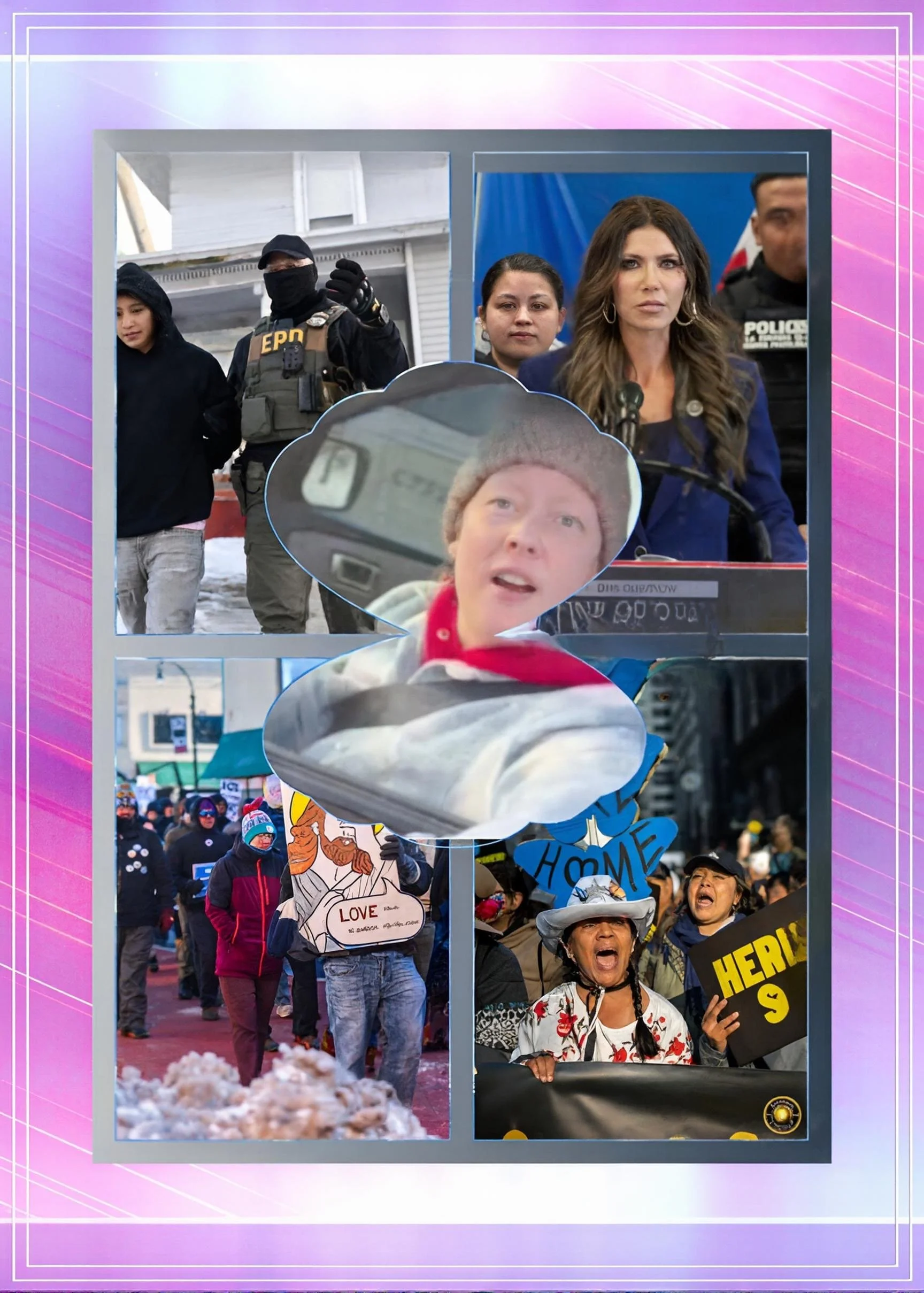
On the morning of 7 January 2026, a 37-year-old United States citizen and mother of three, Renee Nicole Good, was fatally shot in the head by a federal Immigration and Customs Enforcement (ICE) agent in Minneapolis, Minnesota. The incident, occurring as part of the Trump administration's unprecedented "Operation Metro Surge"—involving the deployment of approximately 2,000 federal immigration enforcement officers—precipitated a constitutional crisis centred on questions of federal accountability, the militarisation of urban law enforcement, and the fundamental nature of the state's authority to use lethal force against its own citizens.
Multiple video recordings reveal a stark divergence between the federal government's characterisation of the incident and documented evidence, catalysing fierce political contestation between the Trump administration, Democratic lawmakers, state and local authorities, and civil society organisations.
The fatal encounter represents not merely an isolated incident of use-of-force escalation, but rather a systemic illustration of the dangers inherent in deploying massive federal enforcement operations within urban democratic spaces without meaningful community engagement, local law enforcement coordination, or accountability mechanisms.
Introduction: When Federal Authority Collides with Democratic Institutions
The shooting of Renee Nicole Good presents a defining moment for contemporary American governance, one that encapsulates the profound tensions between executive-branch immigration enforcement initiatives and the constitutional obligations of democratic municipal authorities to protect their constituents.
The incident did not occur in isolation but rather emerged from a deliberate policy architecture constructed by the Trump administration to deploy unprecedented concentrations of federal enforcement personnel into major metropolitan areas governed by Democratic administrations. The Minneapolis operation forms part of a broader strategic deployment pattern, with similar intensive immigration enforcement actions simultaneously unfolding in Chicago, Los Angeles, Portland, and Washington, D.C.
The tragedy forces an interrogation of fundamental questions regarding federal power, local democratic accountability, the militarisation of civil society, and the legitimacy of state violence. Critically, it reveals a profound schism in how competing political actors—the federal executive, state officials, local governance bodies, and law enforcement professionals—perceive and interpret the same documented events.
This divergence speaks not merely to interpretive disagreements but to a deeper erosion of shared institutional understanding and trust between federal authorities and municipal democratic institutions.
Historical Context
Building the Machinery: How the Trump Administration Constructed an Unprecedented Federal Enforcement Architecture
The Minneapolis operation did not emerge spontaneously but rather reflects a calculated federal policy response to perceived deficiencies in state-level governance.
The immediate catalyst for the deployment involved allegations of fraud within Minnesota's child care subsidy programmes, triggered substantially by allegations circulated through conservative media regarding fraud within sectors of the Somali-American community. These allegations, amplified by President Trump's December remarks characterising Somali Americans in derogatory terms, created the political pretext for federal intervention.
The broader historical context reveals a pattern of intensive federal immigration enforcement operations targeting Democratic-governed urban centres. Beginning in December 2025, ICE initiated "Operation Metro Surge," which the Department of Homeland Security characterised as the "largest immigration enforcement operation ever conducted." Initial December operations resulted in nearly 700 arrests.
The successful political framing of these operations as addressing genuine public safety threats enabled the Trump administration to justify an exponential expansion of federal enforcement personnel deployed to Minneapolis beginning in early January 2026.
The federal operation explicitly targeted what administration officials characterised as "the worst of the worst"—individuals with violent criminal convictions or serious criminal histories. However, documentation by civil rights organisations and local law enforcement indicated that federal agents frequently detained individuals with no substantive criminal records, operated outside established protocols regarding local police coordination, and employed forceful apprehension tactics that generated community anxiety and institutional friction with local authorities.
Current Status and Events
The Moment of Reckoning: Video Evidence, Competing Narratives, and the Death of a Legal Observer
The fatal encounter occurred at approximately 9:40 a.m. on Wednesday, 7 January, at the intersection of 34th Street and Portland Avenue in south Minneapolis, an area designated as the Central neighbourhood, located approximately one mile from the location where George Floyd was murdered by Minneapolis police officer Derek Chauvin in May 2020. The geographical proximity carries profound symbolic weight, evoking the remembered trauma of police violence within the Minneapolis community.
Renee Nicole Good, a mother of three, resided in the neighbourhood with her partner and had recently relocated to Minneapolis from Colorado.
Described by family members as an award-winning poet, gifted musician, and individual noted for exceptional compassion and a lifelong commitment to serving others, Good had positioned herself as a legal observer—a civilian volunteer tasked with monitoring police and federal enforcement operations to deter misconduct, ensure legal compliance, and protect the rights of affected individuals.
Legal observation represents an established practise within progressive activism networks, designed to provide civilian accountability mechanisms when formal state oversight proves inadequate or compromised.
The immediate circumstances preceding the fatal encounter involved an ICE enforcement vehicle becoming stuck in a snowbank. Video evidence indicates that Good's maroon Honda Pilot was positioned sideways across Portland Avenue, apparently blocking the roadway. Eyewitness accounts indicate that ICE agents gave conflicting commands to the driver—with one agent instructing her to move the vehicle away from the stuck ICE vehicle, whilst simultaneously other agents approached the car demanding that the driver exit the vehicle.
Video footage captured by multiple witnesses reveals the following sequence: Two federal agents emerged from an unmarked enforcement vehicle and approached the driver's side of Good's Honda Pilot. The agents repeatedly commanded "Get out of the car" whilst one agent attempted to open the driver's side door, grasping the handle and reaching toward the open window.
As the agents approached, Good's vehicle reversed briefly before shifting into forward gear. The vehicle commenced moving rightward, apparently attempting to disengage from the enforcement interaction. At this juncture, a third ICE agent positioned near the front of Good's vehicle drew a firearm. Subsequent footage from multiple angles indicates that the vehicle appeared to rotate away from the armed agent rather than accelerating directly toward him. The agent discharged three shots at close range into the vehicle. Good's car proceeded forward briefly before colliding with a parked vehicle.
Minneapolis Police Chief Brian O'Hara subsequently reported that responding local law enforcement discovered Good with a gunshot wound to the head. First responders performed emergency cardiopulmonary resuscitation at the scene, and Good was transported to Hennepin County Medical Center, where she was pronounced dead upon arrival. The identity of the ICE agent who discharged the fatal shots remains publicly undisclosed, though Department of Homeland Security statements indicate he possessed ten years of experience within ICE's Enforcement and Removal Operations division.
Critically, subsequent investigations revealed that Renee Nicole Good possessed no prior involvement with immigration enforcement authorities, no substantive criminal record save for a minor traffic citation, and was not the subject of any law enforcement investigation or enforcement action. Her presence at the scene reflected her voluntary engagement as a legal observer attempting to monitor and document federal enforcement activities within her community.
Key Developments
Truth Under Fire: How Federal Rhetoric Confronted Documentary Evidence in the Minneapolis Shooting
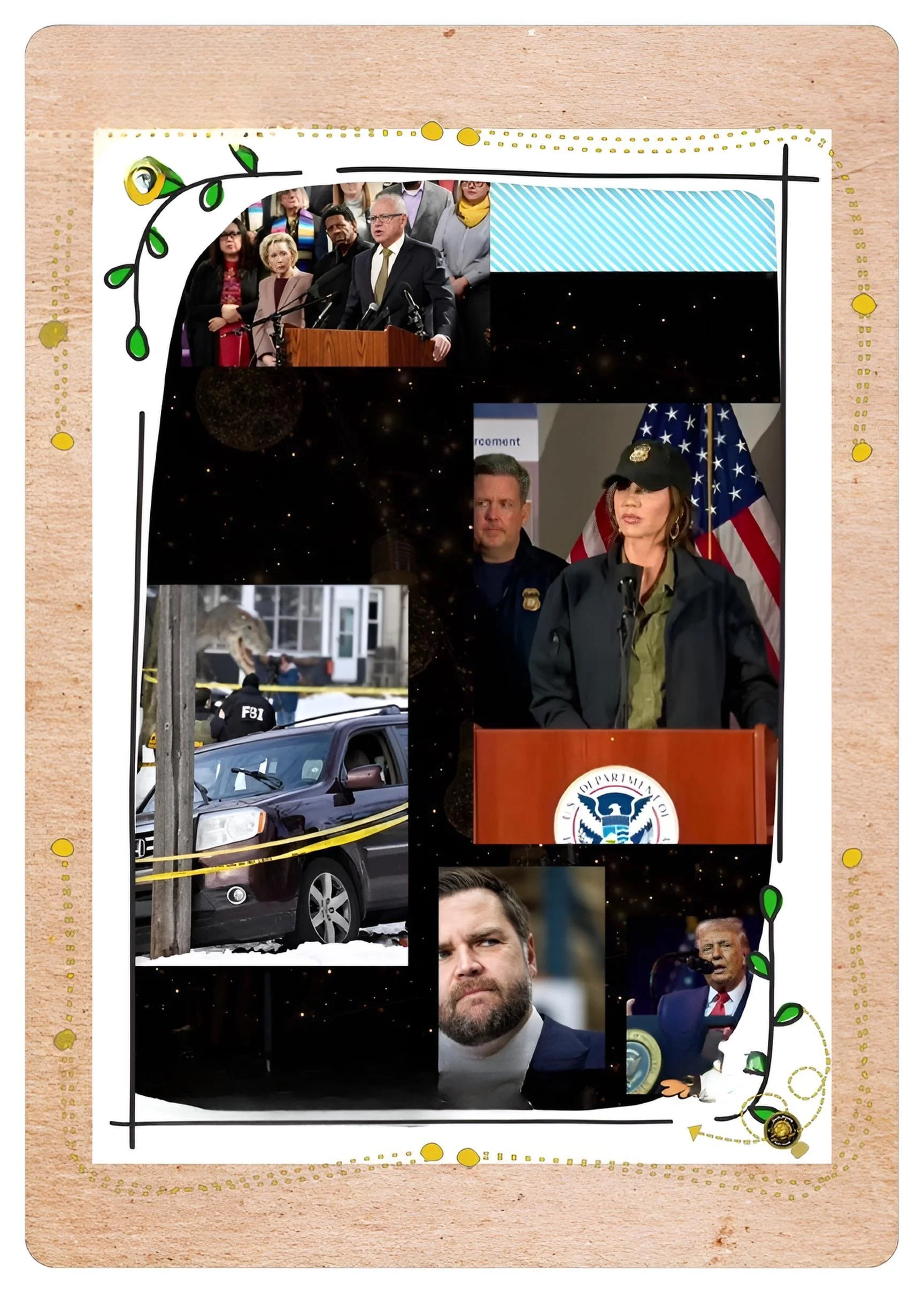
The fatal encounter immediately generated divergent official interpretations that reflect profound institutional and ideological conflicts. Within hours of the shooting, Homeland Security Assistant Secretary Tricia McLaughlin issued a statement characterising Good and others present at the scene as "rioters" and alleging that the vehicle had been used "to attempt to run them over, something she called 'an act of domestic terrorism.'" Homeland Security Secretary Kristi Noem amplified this characterisation, stating that Good had "attempted to run over" ICE officers and that the driver had "weaponised her vehicle."
President Trump himself issued social media statements asserting that "the woman driving the car was very disorderly, obstructing and resisting, who then violently, willfully, and viciously ran over the ICE Officer," and expressed astonishment that the officer had survived the encounter. Trump's statements implicitly endorsed the federal characterisation whilst simultaneously acknowledging the gravity of the shooting without evidencing regret regarding the fatal outcome.
In stark contrast to federal characterisations, Minneapolis Mayor Jacob Frey conducted a press conference in which he stated unequivocally: "Having seen the video myself, I want to tell everybody directly that is unacceptable. This was an agent recklessly exercising power that resulted in someone dying." Frey explicitly demanded that ICE personnel withdraw from Minneapolis, stating: "Get the f--- out of Minneapolis. We do not want you here. Your stated reason for being in this city is to create some kind of safety, and you are doing exactly the opposite. People are being hurt, families are being ripped apart."
Minnesota Governor Tim Walz similarly rejected the federal characterisation, posting on social media: "Don't believe this propaganda machine." Walz publicly announced that he had issued warning orders to the Minnesota National Guard and stood prepared to mobilise military forces if necessary to restore order. The Governor positioned the federal ICE operation as a destabilising force fundamentally undermining public safety rather than enhancing it.
Examination of video documentation by Geoffrey Alpert, a nationally recognised police use-of-force expert from the University of South Carolina, provided professional analysis directly contradicting federal assertions. Alpert observed that the vehicle wheels were turning to the right, indicating that the driver was attempting to flee rather than attack. He characterised the encounter as exemplifying "officer-created jeopardy," wherein the initial federal approach had escalated circumstances unnecessarily. Critically, Alpert noted that the armed agent possessed sufficient time and distance to simply step aside rather than discharge his weapon. Local law enforcement training protocols emphasise de-escalation rather than the weaponised response that occurred.
Minneapolis Police Chief Brian O'Hara, expressing professional concern grounded in law enforcement expertise, stated that he harboured "very concerning" reservations regarding the federal agent's use of deadly force. The Chief's statement represented a direct institutional contradiction from a fellow law enforcement professional, undermining federal claims that the shooting reflected standard tactical protocols.
Latest Facts
The Pattern Emerges: Nine Shootings, Similar Language, and Questions of Systematic Excess
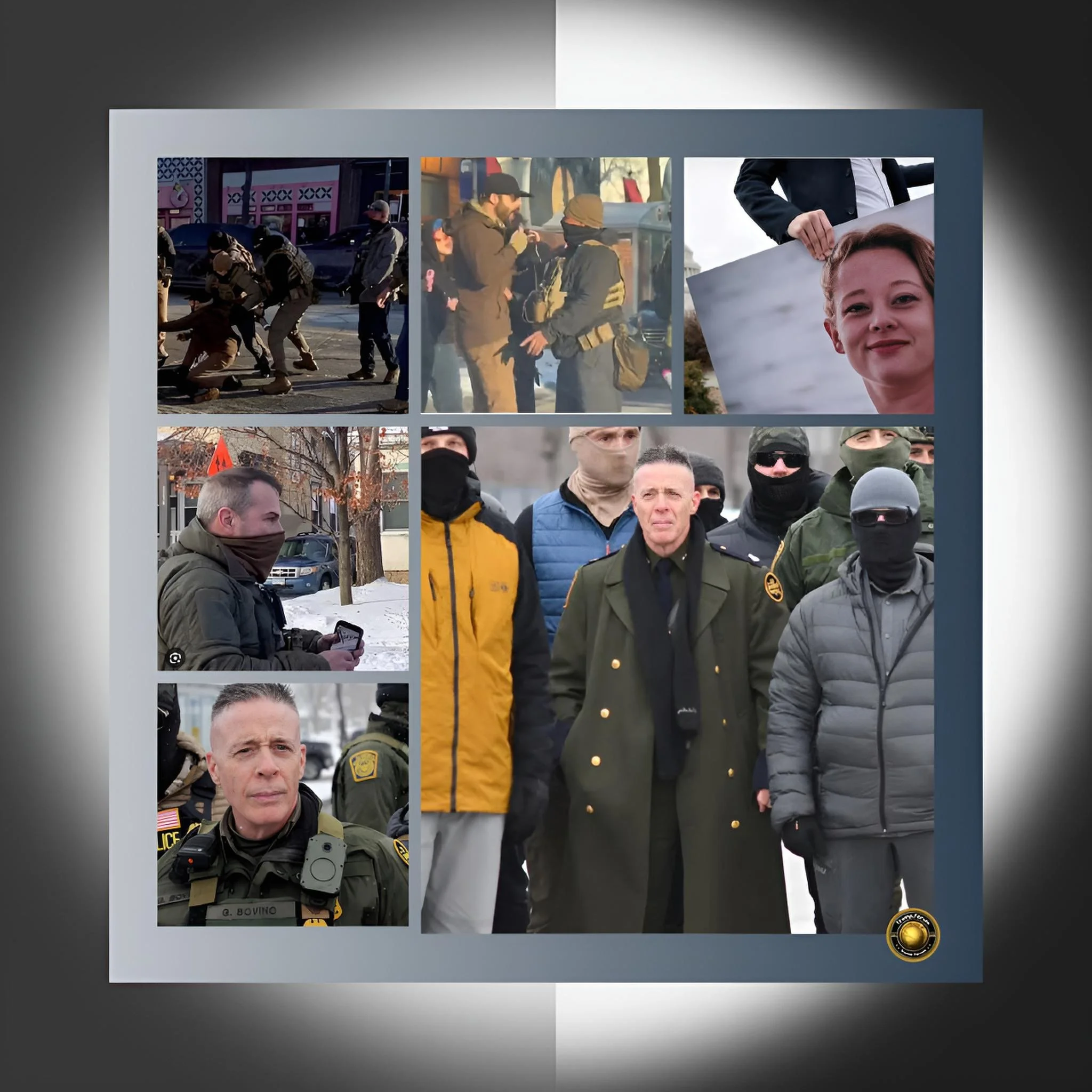
The fatal shooting of Renee Nicole Good represents the ninth documented incident involving ICE personnel shooting individuals in recent months. This pattern extends substantially beyond the Minneapolis incident, with multiple incidents occurring during Operation Midway Blitz in Chicago under the command of Border Patrol Commander Gregory Bovino—an individual also present in Minneapolis during the fatal encounter with Good. Notably, in previous Chicago incidents, the federal government characterised similarly situated circumstances using nearly identical language to that employed in the Minneapolis case.
In September 2025, Chicago resident Silverio Villegas-Gonzalez was fatally shot by federal agents during an ICE operation. In October 2025, Marimar Martinez was shot five times by federal agents during an ICE raid on Chicago's southwest side. Critically, DHS initially characterised Martinez as a "domestic terrorist," though all charges against her were subsequently dismissed when her case reached federal court. This pattern suggests a systematic federal approach to employing inflammatory characterisations to retrospectively justify use-of-force incidents.
A video recorded immediately following Good's shooting captured a physician who identified himself as a doctor offering to provide emergency medical assistance to the wounded woman. ICE agents present at the scene refused to permit the physician to approach Good, stating explicitly "I don't care," whilst Good lay bleeding from her fatal head wound. No ICE personnel appeared to provide emergency medical intervention during the critical minutes between the shooting and the arrival of Minneapolis emergency services. The withholding of voluntary medical assistance represents a profound failure of basic humanitarian concern.
Renee Good's partner, whose identity has not been publicly disclosed, was recorded at the scene weeping uncontrollably, describing Good as his wife and expressing complete bewilderment regarding the circumstances that had resulted in her death. The couple had recently relocated to Minneapolis and shared a child together. Donna Ganger, Good's mother, characterised her daughter as "an amazing human being," noting that she was "probably terrified" at the moment of the shooting. Ganger expressed profound anguish that her daughter had been killed in circumstances she characterised as fundamentally "stupid."
The Trump administration, far from demonstrating restraint following the fatal encounter, announced its intention to deploy additional ICE agents to Minneapolis. Homeland Security Secretary Noem stated explicitly that she was "not opposed to sending more" immigration enforcement officers to the region.
This escalatory response stands in direct contrast to requests from local authorities that federal operations be immediately terminated. The administration's doubling down on enforcement operations despite the fatal incident demonstrates a commitment to the policy objective that transcends the human cost of implementation.
Cause-and-Effect Analysis
The Architecture of Accountability Failure: How Federal Overreach Produced Tragic Consequences in Minneapolis
The fatal shooting of Renee Nicole Good does not represent an aberration within the federal immigration enforcement apparatus but rather emerges logically from institutional and policy structures deliberately constructed to minimise accountability and maximise enforcement intensity. Several causal pathways converge to produce the tragic outcome.
First, the deliberate deployment of 2,000 federal agents into a single metropolitan area without meaningful coordination with local law enforcement created a fundamentally destabilised operational environment.
ICE agents conducted enforcement operations without providing advance notice to the Minneapolis Police Department, operating as an autonomous federal force disconnected from established municipal structures designed to ensure professional standards, inter-agency coordination, and public accountability.
The absence of local police involvement reduced pressure for restraint and created a tactical environment wherein federal agents operated with limited concern for the community consequences of their conduct.
Second, the Trump administration's consistent rhetorical framing of immigration enforcement operations as justified responses to lawlessness and fraud created a political environment wherein federal agents perceived themselves as engaged in an emergency intervention to restore order in a community characterised as dysfunctional.
This framing transferred responsibility for the disorder onto local and state officials rather than acknowledging that federal operations themselves generated the destabilisation. The administration's explicit targeting of the Somali-American community, accompanied by Trump's derogatory characterisations, created a broader political context legitimising expansive federal power in Minneapolis.
Third, the absence of established protocols for the use of force by federal agents in domestic law enforcement operations created circumstances wherein individual officers made fatal decisions with minimal institutional oversight or restraint. The federal agent who discharged his weapon possessed no special expertise in the situation, was not under direct threat, and could have simply stepped aside. Yet institutional structures failed to generate sufficient pressure toward restraint.
The officer possessed ten years of experience within ICE's Enforcement and Removal Operations, suggesting a career within a division specifically tasked with apprehension and deportation—functions that inherently prioritise enforcement over de-escalation.
Fourth, the Trump administration's establishment of what amounts to a paramilitary force operating outside established professional law enforcement norms generated circumstances wherein federal agents perceived themselves as engaged in conflict rather than professional law enforcement.
The deployment of masked agents, tactical equipment, and special response teams transformed urban neighbourhoods into what appeared to many residents as militarised zones. This militarisation generated defensive community responses, including the legal observation efforts in which Renee Good was engaged. The federal government then characterised these community responses as obstruction and domestic terrorism, creating a dynamic wherein federal actions generated community resistance, which was then employed to justify further enforcement escalation.
Fifth, the Trump administration's deployment of federal agents specifically chosen for their aggressive tactics—including Border Patrol Commander Gregory Bovino, whose prior operations had generated substantial controversy—created an institutional selection effect favouring individuals predisposed toward aggressive confrontation. The administration deliberately chose agents known for controversial enforcement methods rather than selecting personnel emphasising community relations and de-escalation.
Sixth, the absence of meaningful investigation into prior federal use-of-force incidents—particularly those in Chicago where similar characterisations preceded dismissal of all charges—created circumstances wherein federal agents operated without awareness of institutional consequence. The repeated characterisation of individuals as "domestic terrorists" when no such charges materialised at trial demonstrated that federal rhetoric consistently exceeded justified legal characterisation. Yet this pattern generated no institutional correction, enabling federal agents to operate with confidence that baseless accusations would subsequently be walked back with minimal consequence.
Political Responses
The Ideological Divide: How Republicans, Trump Officials, and Democrats Fundamentally Disagree About What Occurred
The Trump administration has responded to the fatal shooting with consistent rhetorical and operational escalation.
President Trump has defended the shooting as an appropriate response to alleged aggression by a threatening civilian.
Vice President JD Vance issued statements attacking Democratic critics, declaring: "Every congressional democrat and every democrat who's running for president should be asked a simple question: Do you think this officer was wrong in defending his life against a deranged leftist who tried to run him over?" Vance's statement employed inflammatory political language characterising Good as a "deranged leftist" rather than acknowledging that the deceased individual was a United States citizen engaged in lawful civic observation.
Homeland Security Secretary Kristi Noem has emerged as a central figure in administering the federal response. Rather than exercising restraint following the fatal incident, Noem has doubled down on enforcement operations, announcing the deployment of additional agents to Minneapolis.
Noem has consistently characterised criticism of federal operations as failure to support law enforcement, stating in response to Governor Walz's concerns: "Really, you're worried about taxpayer dollars? There's been $9 billion stolen from the taxpayers in Minnesota since you became Governor. You won't let us in Minnesota's jails and there is rampant assault against our law enforcement thanks to vilification from politicians like you."
Democratic responses have concentrated on three principal themes: characterising the shooting as unjustified use of force, demanding withdrawal of federal operations from Minneapolis, and challenging the federal investigation process as insufficiently independent.
House Minority Leader Hakeem Jeffries issued a forceful statement: "The killing of Renee Nicole Good was an abomination – a disgrace. And blood is clearly on the hands of those individuals within the administration who've been pushing an extreme policy that has nothing to do with immigration enforcement connected to removing violent felons from this country."
Jeffries explicitly characterised Homeland Security Secretary Noem as a "stone-cold liar," arguing that "there is no evidence at all that this was a justified shooting."
Senate Minority Leader Chuck Schumer echoed Jeffries' assessment, stating: "You felt like your stomach was being punched. Looking at the video, there seemed no justification for what these agents did." Schumer expressed profound scepticism regarding the prospect of fair federal investigation, declaring: "There needs to be a full investigation at the federal level, though I have little faith in the FBI in doing a fair investigation."
Minnesota's Democratic delegation issued unequivocal statements. Representative Ilhan Omar characterised the shooting as "unconscionable and reprehensible," stating: "I am beyond outraged that their reckless, callous actions led to the killing of a legal observer in Minneapolis. My heart breaks for the victim's family, who will have to forever live with the pain caused by the Trump administration's reckless and deadly actions." Omar concluded: "This is not law enforcement. It is state violence. It is simply indefensible, and ICE must be held accountable."
Senator Amy Klobuchar stated: "While our immigration enforcement should be focused on apprehending and prosecuting violent criminals to make our communities safer, these ICE actions are doing the opposite and making our state less safe."
Governor Tim Walz has positioned himself as defending Minnesota against federal overreach, announcing National Guard deployment readiness and refusing to permit state investigatory participation to be excluded from the federal investigation process. The Governor's calculated resistance reflects the institutional stakes associated with federal military operations deployed within a democratic state.
Representative Pramila Jayapal, a Washington Democrat, characterised the shooting as "absolutely horrific" and accused Trump administration officials of systematic lying regarding the incident.
Congresswoman Robin Kelly announced her intention to file articles of impeachment against Secretary Noem, though the constitutional sufficiency of this vehicle for addressing federal conduct within executive agencies remains uncertain.
Investigation Process
The Investigation Crisis: When Federal Authorities Investigate Themselves, Trust Dissolves
The investigative response to Good's death has itself become a locus of controversy, exemplifying the breakdown of institutional trust between federal authorities and state and local governance bodies. Initially, the Minnesota Bureau of Criminal Apprehension and the Federal Bureau of Investigation agreed to conduct a collaborative investigation into the use of force by the federal agent. However, the FBI subsequently restricted state investigator access to evidence and effectively excluded Minnesota authorities from meaningful participation in the investigation. This action precipitated the BCA's withdrawal from the investigation, leaving the FBI as the sole investigating entity. Given that the FBI would be investigating conduct by a federal agency (DHS/ICE) that operates under the same executive branch, this investigative architecture raises fundamental questions regarding the independence and objectivity of the inquiry.
Governor Walz explicitly articulated these concerns: "Minnesota must be part of this investigation. Having been taken out of the investigation, it feels very very difficult that we will get a fair outcome. And I say that only because people in positions of power have already passed judgment."
Walz's observation reflects the reality that Vice President Vance, President Trump, and other executive branch officials have publicly declared the shooting justified before any independent investigation has concluded.
Minneapolis Police Chief Brian O'Hara has expressed professional reservations regarding the shooting and indicated that the Minneapolis Police Department had received no advance notice of the federal operation that resulted in Good's death.
This absence of coordination represents a substantial departure from established law enforcement protocols and reflects the federal government's deliberate choice to operate as an autonomous force disconnected from local institutional structures.
Future Trajectory
At the Crossroads: Will Minneapolis Establish a Precedent of Unaccountable Federal Power or Democratic Resistance?
The immediate trajectory of federal policy suggests continued escalation rather than restraint or reform. The Trump administration has explicitly rejected calls for withdrawal of federal operations and instead announced plans for deployment expansion.
Operation Metro Surge is explicitly designed to continue operations for an extended duration, with federal officials stating that they "will not be leaving until the problem is solved"—a formulation that grants federal authorities unlimited temporal discretion to continue operations indefinitely.
The broader policy architecture suggests that the Minneapolis operation represents merely one component of a nationwide pattern of intensive federal immigration enforcement in Democratic-governed urban centres. Similar operations are simultaneously underway in Chicago, Los Angeles, Portland, and Washington, D.C. The fatal shooting in Minneapolis has not altered this policy direction but has rather intensified calls from Democratic leadership for investigation and restraint.
Several possible future scenarios merit consideration.
First, the federal investigation of the ICE agent's conduct could conclude that the shooting was legally justified as an appropriate use of force, a conclusion that would provide precedent for continued aggressive federal enforcement tactics.
Second, an independent investigation by state or municipal authorities could reach an opposite conclusion, generating irreconcilable conflicts regarding the legal status of the shooting.
Third, the fatal incident could generate sufficient political pressure within Congress to prompt legislative action constraining federal immigration enforcement operations or requiring federal compliance with local law enforcement coordination protocols.
Fourth, the incident could precipitate escalated community resistance to federal operations, generating a cycle of federal escalation and community protest.
The question of congressional accountability represents a critical juncture. Democratic representatives have called for investigations and, in some cases, articles of impeachment against Secretary Noem. However, impeachment represents a constitutionally extraordinary measure requiring substantial majorities in both chambers, a political threshold appearing insurmountable under current congressional composition.
Accordingly, legislative constraints on federal policy appear unlikely absent substantial shifts in political power.
The Supreme Court's potential role remains undetermined. Constitutional challenges to federal immigration enforcement operations on grounds of inadequate coordination with state authorities or excessive force could reach the Court, though the current conservative majority has historically favoured broad executive authority regarding immigration enforcement.
Conclusion
Democracy in the Dock: Why the Death of Renee Nicole Good Challenges the Foundations of American Governance
The fatal shooting of Renee Nicole Good encapsulates fundamental questions regarding the nature of democratic governance in contemporary America. The incident illustrates tensions between centralised federal authority and local democratic accountability, between executive branch operational discretion and meaningful oversight mechanisms, and between rhetorical framing designed to justify coercive federal power and documented evidence of actual conduct.
If the federal government successfully maintains operations in Minneapolis despite the fatal incident and community opposition, a precedent will have been established that executive branch agencies can deploy military-scale enforcement operations in domestic communities against the express wishes of elected local and state officials, and that accountability for resulting fatalities will remain confined within federal investigatory processes insufficiently insulated from institutional conflicts of interest.
Conversely, if community and state-level resistance successfully constrains or terminates federal operations, a counter-precedent would emerge limiting executive authority to deploy overwhelming federal force into domestic communities opposed by local governance structures.
The Minneapolis incident accordingly represents not merely a discrete tragic event but rather a constitutional and political watershed. The manner in which federal authorities respond—whether acknowledging the gravity of the incident and implementing meaningful constraints on federal conduct, or alternatively doubling down on enforcement operations whilst dismissing community concerns—will substantially shape the trajectory of federal-municipal relations and the prospects for meaningful accountability within executive branch immigration enforcement operations.
The death of a United States citizen engaged in lawful civic observation by a federal agent operating under circumstances suggesting either gross negligence or deliberate escalation, coupled with a federal government response characterising the victim as engaged in "domestic terrorism," represents a rupture in the institutions designed to constrain governmental power.
Whether democratic institutions prove capable of responding to this rupture through meaningful investigation, accountability, and reform mechanisms will determine whether the rule of law remains meaningful in restraining federal executive power.