Strategic Divergence in Artificial Intelligence: Apple's Selection of Google Gemini Amidst Claude's Dominance in Enterprise Adoption
Executive Summary
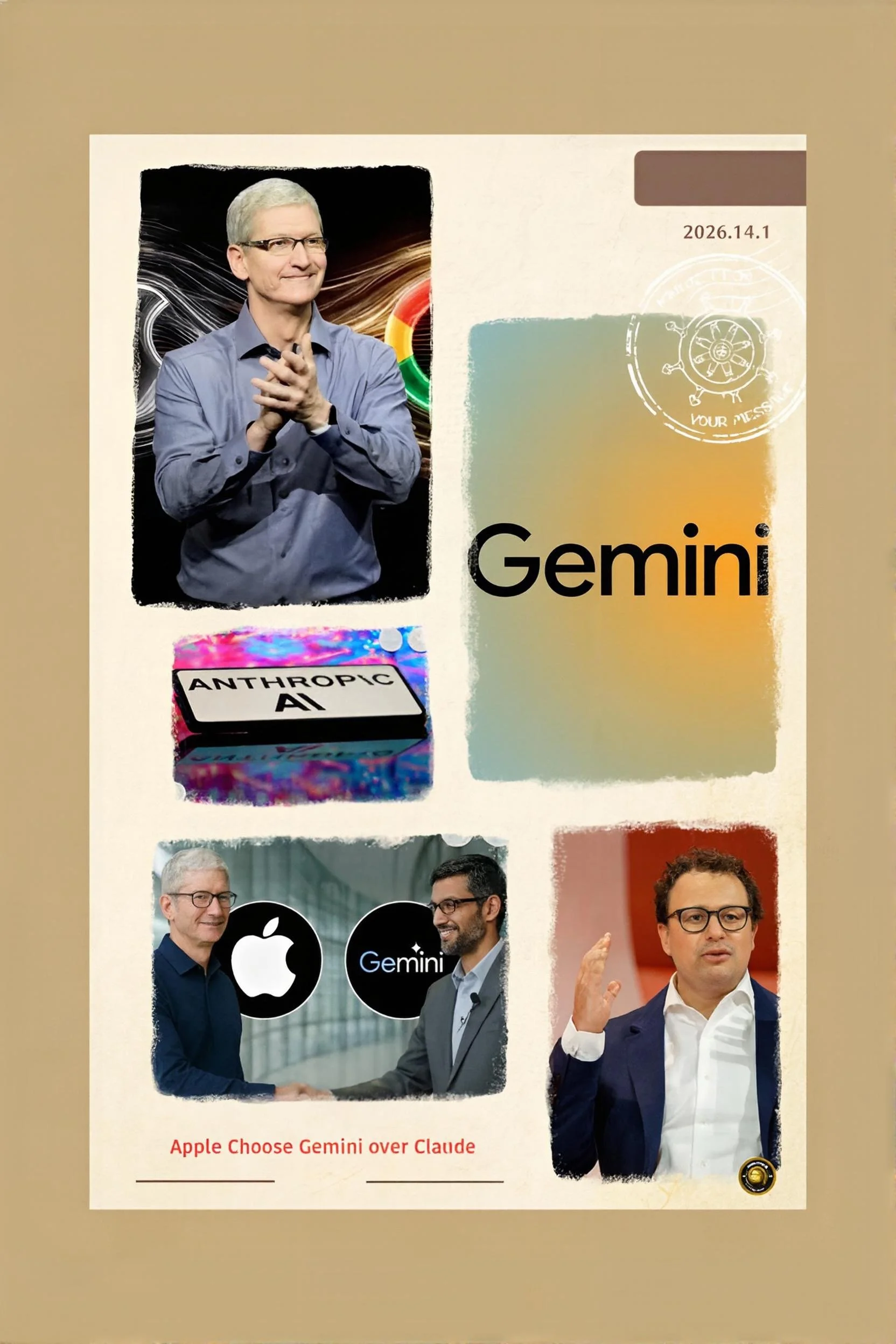
On January 12, 2026, Apple and Google announced a significant multi-year partnership in which Apple's next generation of Foundation Models will be built on Google's Gemini technology and cloud infrastructure.
This decision signals a critical inflection point in the artificial intelligence landscape, particularly when examined against Anthropic's Claude platform, which has emerged as the preferred choice among corporate enterprises. Apple's determination that Google's technology provides "the most capable foundation" for Apple Foundation Models reflects both the technological capabilities embedded in Gemini and the strategic priorities that govern Apple's approach to consumer artificial intelligence.
Simultaneously, Claude's commanding position within regulated industries—capturing 32 percent of enterprise adoption compared to 20 percent for Gemini—demonstrates a fundamental divergence in how different market segments evaluate and deploy generative artificial intelligence systems.
FAF analysis examines the causal factors underlying these seemingly contradictory outcomes, exploring how technological capabilities, regulatory compliance, organizational priorities, and market positioning create distinct pathways for deploying large language models across different commercial contexts.
Introduction
The contemporary landscape of generative artificial intelligence has become increasingly complex, characterized by multiple proprietary systems competing for market dominance across consumer and enterprise segments. Three principal platforms have emerged as competitive forces: OpenAI's ChatGPT, Google's Gemini, and Anthropic's Claude. Each possesses distinct technical architectures, governance philosophies, and strategic positioning.
Apple's recently announced partnership with Google to integrate Gemini into its ecosystem represents more than a simple technology procurement decision; it reflects deeper considerations about multimodal capabilities, processing velocity, and the integration of artificial intelligence within a consumer-facing hardware and software platform.
Conversely, Anthropic's remarkable penetration into regulated industries—particularly healthcare, finance, and government sectors—suggests that enterprises operating under stringent compliance regimes prioritize considerations that diverge markedly from Apple's calculus. This divergence merits rigorous examination, as it illuminates how different organizations weigh technical performance, safety guarantees, regulatory compliance, and strategic control over their artificial intelligence infrastructure.
The central question animating this analysis asks: how can Claude simultaneously dominate enterprise adoption among regulated industries while Gemini becomes Apple's preferred foundation model for consumer artificial intelligence?
The answer lies in understanding that technological superiority in narrow domains does not necessarily translate across different deployment contexts, and that organizational risk tolerance, regulatory environment, and strategic autonomy operate as powerful determinants of technology selection.
History and Current Status
The competitive landscape of large language models emerged dramatically following OpenAI's release of ChatGPT in November 2022, which catalyzed widespread recognition of generative artificial intelligence's potential applications.
OpenAI initially dominated both consumer mindshare and early enterprise adoption through a combination of technological capability and aggressive marketing. However, Google, leveraging its substantial research infrastructure and computational resources, began developing Gemini, positioning it as an alternative foundation model with particular emphasis on multimodal capabilities—the ability to process and integrate information from multiple data modalities, including text, images, audio, and video.
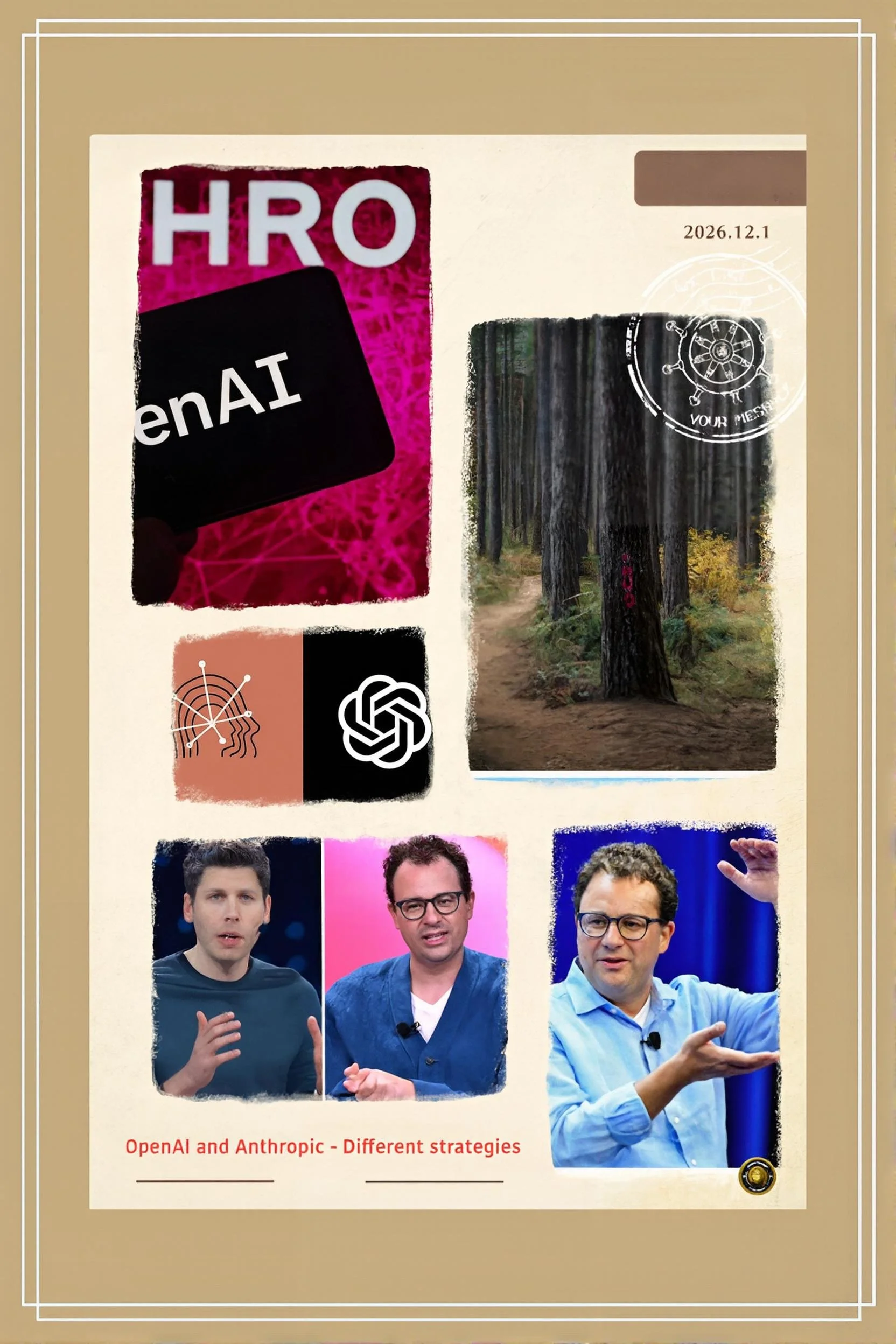
Anthropic, founded in 2021 by former OpenAI researchers including Dario Amodei and Daniela Amodei, adopted a markedly different philosophical approach. Rather than pursuing benchmark-driven performance metrics or consumer virality, Anthropic prioritized safety, alignment, and ethical considerations in artificial intelligence development.
The company developed Constitutional Artificial Intelligence, a methodology that emphasizes explicit ethical principles embedded in model architecture and training processes. Between 2023 and 2025, Claude evolved through successive iterations—Claude 2, Claude 3 variants (Opus, Sonnet, Haiku), and Claude 4—each advancing reasoning capabilities and contextual understanding while maintaining commitment to safety-first development.
By mid-2024, Apple had become acutely aware that its own artificial intelligence capabilities lagged those of competitors. Consumer perception of Siri's conversational abilities grew increasingly hostile relative to alternatives.
Apple initially incorporated OpenAI's ChatGPT integration into Siri, announced in October 2024, as a temporary measure while developing more sophisticated artificial intelligence systems internally. However, organizational challenges and technical obstacles delayed the deployment of proprietary Apple Foundation Models. Discussions that began in preliminary form in August 2025 included consultations with both Anthropic and OpenAI regarding potential partnerships.
Anthropic appeared as a credible candidate, having demonstrated particular success in coding applications and regulatory compliance. OpenAI maintained its existing relationship through ChatGPT integration. Yet by December 2025, Apple's strategic calculus shifted decisively toward Google, a company with which it maintained longstanding partnerships and technical relationships.
Apple's partnership with Google was announced on January 11-12, 2026, in a coordinated joint statement. The agreement specifies that Apple Foundation Models will be built on top of Gemini models and Google Cloud infrastructure. Apple emphasized that it determined "after careful evaluation" that Google's technology "provides the most capable foundation" for its objectives.
The partnership is explicitly non-exclusive, meaning Apple continues to collaborate with OpenAI through ChatGPT integration and retains the capacity for future partnerships.
The implementation strategy envisions a tripartite approach: certain functions execute on-device using Apple's proprietary lightweight models; more complex computational tasks leverage Apple's Private Cloud Compute infrastructure, maintaining privacy standards; and the most demanding reasoning tasks requiring depth of knowledge escalate to Gemini with explicit user consent and transparent data handling.
Apple Intelligence—the umbrella term for Apple's artificial intelligence features—will maintain on-device processing for sensitive functions while benefiting from Gemini's advanced capabilities for open-ended reasoning, multimodal analysis, and conversational depth.
Concurrent with Apple's Gemini integration, Anthropic announced a significant expansion of its Claude platform, specifically tailored to the healthcare sector.
Introduced in January 2026, Claude for Healthcare offers a comprehensive suite including HIPAA-ready infrastructure, native integrations with medical data systems (CMS Coverage Database, ICD-10 coding, National Provider Identifier Registry, PubMed medical literature), and compliance frameworks that explicitly address healthcare's complex regulatory environment.
This strategic move crystallizes Anthropic's positioning in regulated industries, recognizing that different market segments require fundamentally distinct product architectures and compliance guarantees.
Key Developments
The technical specifications of Gemini and Claude reveal why different organizations reach divergent conclusions regarding optimal platform selection. Gemini represents Google's latest generation large language model, designed with multimodal sophistication as a central architectural principle.
It processes and integrates text, images, audio, and video simultaneously, enabling it to comprehend complex visual scenarios and synthesize information across modalities. Gemini operates at scale within Google's ecosystem—native integration with Gmail, Google Docs, Google Sheets, Google Drive, and Android provides immediate pathways for deployment within organizations already operating on Google's infrastructure.
The model achieves rapid response times through optimization for velocity, delivering processing speeds significantly faster than those of competing platforms. Gemini's context window—the amount of text a model can process simultaneously—has expanded to 1 million tokens in the Gemini 3 Pro variant, enabling it to ingest and analyze entire research papers, lengthy financial documents, or extensive code repositories.
From a technical benchmarking perspective, Gemini 2.5 Pro demonstrates competitive performance on graduate-level reasoning tasks (83.0 percent accuracy) and high school mathematics competitions (83.0 percent accuracy), while exhibiting strong performance in visual reasoning (79.6 percent) and agentic coding applications (63.2 percent on SWE-bench).
Claude, by contrast, has been deliberately engineered according to different priorities. While Anthropic has committed to delivering multimodal capabilities, they have not yet been deployed in production, leaving Claude primarily a text-focused system. However, this apparent limitation reflects deliberate architectural choices prioritizing safety, reasoning depth, and interpretability over breadth.
Claude's Constitutional Artificial Intelligence framework embeds explicit ethical principles directly within model training and response generation. The system incorporates techniques to reduce hallucination—the generation of false information presented with confidence—which represents a particular concern in regulated industries where erroneous outputs carry serious consequences.
Claude achieves exceptional performance on software engineering benchmarks, scoring 72.5 percent on SWE-bench, indicating superior capability in code understanding, design pattern implementation, and production-ready documentation generation. The model excels at processing long documents, leveraging context windows of 200,000 tokens by default, with enterprise deployments supporting windows exceeding 1 million tokens.
Critically, Claude employs zero-data-retention policies in enterprise deployments, meaning user interactions do not contribute to model training and are not retained for future analysis. Anthropic has obtained SOC 2 Type II certification and ISO 27001 compliance, demonstrating that independent audits validate its security and data-handling practices.
The specific reasons for Apple's selection of Gemini become apparent when examining the technical requirements of a consumer artificial intelligence platform integrated into iPhone, iPad, and Mac ecosystems.
Siri, Apple's voice assistant, requires the ability to engage in conversational exchanges that transcend isolated commands. It must synthesize information across multiple app contexts, understand ambiguous language through reasoning about user intent, and provide responsive interaction even when processing complex queries.
Multimodal understanding is essential to meet modern consumer expectations—users increasingly expect AI systems to analyze photographs they display, understand visual content in messages and documents, and integrate visual information into conversational responses.
Processing velocity matters immensely on consumer devices, where delays in response create a perception of sluggish, unintelligent systems. Gemini's architectural optimization for speed, multimodal sophistication, and real-time reasoning capabilities align precisely with these consumer-facing requirements.
Simultaneously, Apple's partnership structure preserves the company's fiercely protected privacy positioning. By maintaining three tiers of processing—on-device, Private Cloud Compute, and cloud-based Gemini—Apple retains explicit user control. For sensitive queries, processing remains device-local. For queries requiring additional computational capacity while maintaining privacy, Apple's Private Cloud Compute infrastructure processes information under Apple's governance.
Only for the most complex reasoning tasks requiring Gemini's depth does information escalate to Google's servers, and this occurs with explicit user notification and consent. This tripartite architecture allows Apple to preserve the privacy brand promise—"what happens on your iPhone stays on your iPhone"—while accessing Gemini's superior capabilities for specific use cases.
Google, conversely, gains access to Apple's 1.5 billion-device installed base, representing unprecedented penetration into the consumer market and likely path toward monetization through product discovery and commerce integration.
Enterprise adoption patterns during the same period reveal strikingly different dynamics. Anthropic reported that enterprise adoption of Claude grew from under 1,000 business customers to over 300,000 in approximately 2 years.
Revenue run rate reached $5 billion by August 2025, with growth accelerating throughout the year. Critically, adoption concentrates most heavily in regulated industries. Financial institutions employ Claude for risk analysis, regulatory reporting, and financial document analysis, where the model's safety-first architecture and superior reasoning on complex documents provide essential guarantees.
Healthcare organizations leverage Claude for medical coding review, clinical documentation support, insurance claims processing, and research synthesis. Government agencies and contractors use Claude for analyses that require provenance and interpretability.
A 2025 enterprise adoption study found that 32 percent of enterprises use Claude, compared to 20 percent using Gemini. This gap widens in regulated sectors—in finance and healthcare, Claude adoption exceeds Gemini adoption by substantially larger margins.
Anthropic's January 2026 announcement of Claude for Healthcare, including HIPAA-ready infrastructure and native connectors to major healthcare systems, represents a strategic deepening of this dominance.
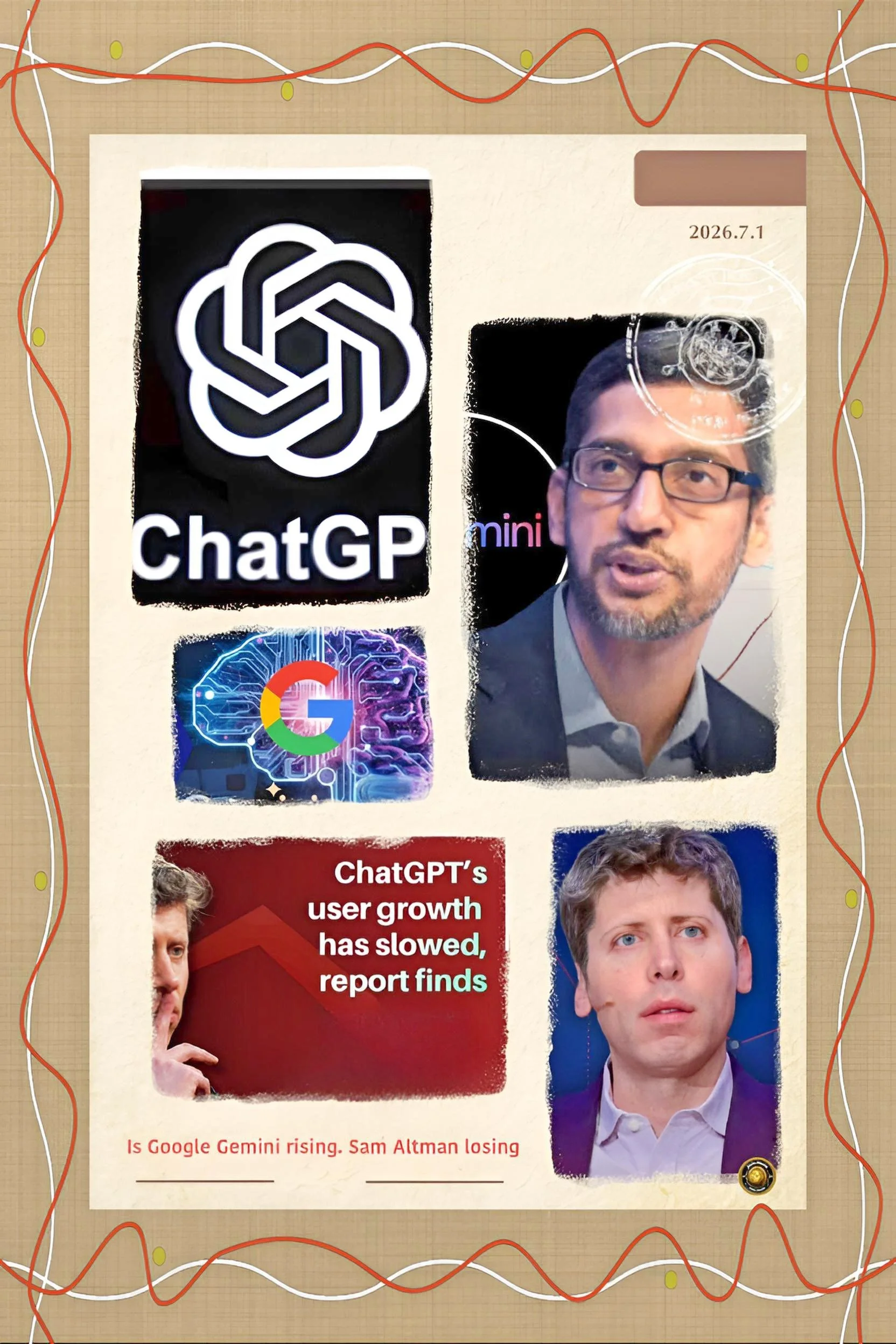
OpenAI's ChatGPT maintains the most extensive overall adoption base (35.8 percent of businesses as of November 2025), but growth has moderated substantially.
The platform excels in customer-facing applications, content generation, and consumer-facing creative use cases. However, in regulated industries, ChatGPT's more permissive approach to outputs and less stringent safety guarantees create concerns among compliance and risk management teams.
Latest Facts and Concerns
The Apple-Google partnership announcement precipitated several notable market reactions and analytical responses.
Google's market capitalization briefly exceeded Apple's for the first time since 2019, suggesting that market participants perceive the agreement as strategically significant and favorable to Google.
Bank of America analysts assessed the partnership as reinforcing "Gemini's position as a leading LLM for mobile devices" and strengthening investor confidence in the durability of Google's search distribution and long-term monetization potential.
Some observers speculate that the partnership may eventually culminate in Gemini's chatbot application receiving pre-installation on iPhones, though neither company has confirmed this possibility. The estimated financial value of the partnership ranges from approximately one billion dollars, though precise terms remain undisclosed.
For OpenAI, the development raised questions regarding the future of ChatGPT integration within Apple Intelligence. OpenAI declined to provide an immediate comment, though Apple confirmed that existing ChatGPT integration arrangements remain unaltered. This suggests that Apple may maintain a multi-model strategy, deploying different AI systems for different tasks based on comparative capabilities.
Anthropic faced no direct competitive threat from the Apple announcement, as the company had never been positioned as a consumer-facing platform.
Claude's positioning addresses enterprise needs, particularly in regulated sectors, whereas Gemini's integration into Apple's consumer ecosystem targets different market segments. However, Anthropic's January 2026 announcement of Claude for Healthcare demonstrates strategic urgency in deepening moats around regulated industry adoption.
The announcement highlighted partnerships with major pharmaceutical companies, including Sanofi, which reported that Claude has become integral to its AI transformation, with usage by "most Sanofians daily" and visible efficiency gains across the value chain. Other healthcare partners emphasized that Anthropic's focus on safety and alignment with compliance requirements proved decisive in the vendor selection process.
Technical concerns regarding the implementation of the partnership emerged among industry analysts. The complexity of integrating Gemini into billions of Apple devices while maintaining privacy standards and on-device responsiveness represents a substantial engineering challenge.
Apple and Google must carefully calibrate which queries trigger on-device processing, which execute through Private Cloud Compute, and which escalate to Gemini servers.
Premature escalation to cloud processing undermines privacy positioning; excessive reliance on on-device models forfeits the benefits of Gemini's advanced reasoning. Analysts note that this hybrid architecture requires novel approaches to distributed inference and may encounter latency issues during peak usage periods.
Regulatory scrutiny emerged as a secondary concern. The combination of Apple's distribution power and Google's artificial intelligence capabilities in a single integrated system prompted questions regarding competitive implications, particularly from authorities examining technology platform concentration.
The non-exclusive nature of Apple's agreement provides some regulatory mitigation, as does the continued integration with OpenAI.
Nevertheless, the partnership establishes a powerful alliance between two of technology's most dominant companies, raising questions among policy analysts about competitive dynamics in artificial intelligence.
From Anthropic's perspective, the partnership's validation of Gemini's technical superiority in multimodal, speed-sensitive applications is accepted without contest.
Anthropic executives and analysts acknowledge that Gemini genuinely excels in the domains Apple values most. However, this admission does not undermine Anthropic's enterprise positioning, as Claude's safety-first architecture and superior reasoning on complex analytical tasks address fundamentally different market segments and priorities.
Enterprise customers in regulated industries make procurement decisions based on criteria different from those that guide Apple's consumer product strategy. Compliance guarantees, safety frameworks, and interpretability matter more than processing speed or native Google ecosystem integration.
Cause-and-Effect Analysis
The divergent selections of Gemini (Apple) and Claude (enterprise) emerge from distinct causal chains operating at the level of organizational priorities, market structure, and technological requirements.
For Apple, the causal sequence begins with institutional failure. Apple's internal artificial intelligence capabilities, despite extraordinary engineering resources and computational capacity, have not yet achieved production-readiness for advanced conversational AI at consumer scale.
Explanations for this institutional difficulty remain partially opaque. Still, observers note that Apple's culture of vertical integration and internal control has historically created friction when engaging with rapidly evolving research domains. Building competitive large language models requires not only computational resources but also access to frontier artificial intelligence research, world-class researchers, and cultures that permit rapid iteration.
Apple's traditional organizational structure, while optimal for consumer hardware and software integration, proved suboptimal for frontier research in artificial intelligence. This structural impedance necessitated external partnerships.
The selection of Google among available partners followed from a comparative capability assessment. Google's Gemini demonstrated superior performance in precisely those dimensions most relevant to consumer artificial intelligence: multimodal sophistication, processing velocity, and seamless integration with Google's ecosystem of consumer services. Apple's assessment explicitly prioritized technical capability in these specific domains.
The partnership structure—enabling on-device processing, Private Cloud Compute, and cloud escalation—represented a pragmatic design compromise allowing Apple to maintain its privacy positioning while accessing Gemini's capabilities. Additionally, Google was a known partner with whom Apple maintained established relationships.
Anthropic, while possessing superior reasoning capabilities, did not offer multimodal sophistication at production scale, lacked architectural optimization for consumer device processing, and represented a smaller, less established organization.
OpenAI, while possessing multimodal capabilities, was evaluated and found to offer fewer advantages than Google in Apple's assessment.
For enterprise adoption of Claude, the causal sequence differs markedly. Enterprise technology procurement operates according to a distinct risk calculus from consumer product strategy.
In regulated industries, procurement decisions are driven by compliance requirements, liability mitigation, and risk management. The consequences of artificial intelligence errors in healthcare—misdiagnosis, adverse drug interactions, or inappropriate coding recommendations—carry life-or-death implications.
In finance, erroneous risk analysis or hallucinated regulatory requirements create fiduciary liability. In government, transparency and interpretability requirements mandate that artificial intelligence outputs remain auditable and explainable.
These risk management imperatives create structural demand for the characteristics that define Claude's architecture. Constitutional Artificial Intelligence—embedding ethical principles within model training—assures simple testing. A safety-first development methodology demonstrates an organization's commitment to harm prevention. Zero-data-retention policies address enterprise anxieties about data being used for competitive intelligence or retained longer than necessary.
Third-party compliance certifications (SOC 2 Type II, ISO 27001) provide independently audited evidence that stated practices are actually implemented. Superior reasoning capability on complex documents—a strength of Claude relative to Gemini—directly addresses enterprise use cases involving financial analysis, medical literature synthesis, and regulatory documentation interpretation.
Anthropic's aggressive hiring strategy and expansion of specialized applications directly contributed to the acceleration of enterprise adoption. Between 2024 and 2025, Anthropic invested heavily in Applied AI teams—solutions architects, forward-deployed engineers, and compliance specialists embedded within client organizations.
This approach transforms Claude deployment from IT procurement into a strategic business transformation, with engineers working alongside client teams for extended periods to customize implementations, establish governance frameworks, and demonstrate value. This go-to-market strategy deliberately targets regulated industries and emphasizes compliance and governance over raw capability.
Google's failure to achieve comparable adoption in regulated industries stems from legitimate technical and positioning factors. Gemini's deeper integration with Google's ecosystem—while advantageous for consumer products and Google-centric enterprises—raises data residency and governance concerns for healthcare and finance organizations.
Medical data in healthcare systems, financial data in banking, and sensitive government information require careful control over where information flows and who accesses it.
The implicit data integration between Gemini and Google's broader infrastructure creates anxiety. Additionally, Google's dominant position in digital advertising creates competitive concerns for enterprises that view Google as a competitor or worry about competitive intelligence gathering.
Anthropic, by contrast, has no advertising business, no search distribution, and no inherent competitive conflicts with its customers. This structural independence provides trust advantages that technical capability alone cannot overcome.
Future Steps
Apple's integration of Gemini into consumer devices is scheduled to commence in spring 2026, with more sophisticated Siri capabilities anticipated throughout 2026 and into subsequent years.
Apple plans to announce additional Siri capabilities at its Worldwide Developers Conference in June 2026, including conversational memory, proactive suggestions, and enhanced on-screen awareness.
The implementation will unfold gradually, beginning with basic functionality and expanding toward the complex multi-app orchestration, conversational context understanding, and emotional intelligence that Apple envisions.
For the partnership itself, Apple and Google will invest technical resources over the multi-year timeframe to optimize integration between Gemini and Apple's infrastructure, refine the tripartite processing model, and potentially expand Gemini integration into Apple's ecosystem beyond Siri.
Future iterations may incorporate Gemini into other Apple Intelligence features, potentially including document generation, image analysis, and cross-app intelligent suggestions.
Anthropic's trajectory suggests continued expansion in regulated industries, with healthcare representing an initial focus. The company has signaled intentions to develop industry-specific Claude variants for finance, government, and other regulated sectors.
International expansion appears to be a significant priority, with Anthropic appointing regional leaders for Europe, Japan, and Asia-Pacific, and opening new offices in Tokyo, Seoul, Singapore, and Bangalore.
The company's hiring plan calls for thousands of additional positions throughout 2025-2026, with particular emphasis on technical roles supporting customer deployment.
The broader market for artificial intelligence appears to be consolidating around a multi-provider equilibrium. OpenAI maintains dominance in consumer creativity and broad business applications.
Google's Gemini strengthens its position in consumer devices and Google-centric enterprises. Anthropic captures the growing segment of regulated industry procurement, prioritizing safety and compliance.
This differentiation appears structurally stable, as each platform's advantages are specific to particular deployment contexts and not easily replicated by competitors.
Government and regulatory responses to the Apple-Google partnership remain uncertain. Some observers anticipate regulatory scrutiny of the partnership as potentially anti-competitive, while others note that non-exclusive arrangements and continued OpenAI integration reduce competitive concerns.
The trajectory of artificial intelligence regulation—particularly regarding safety, alignment, and transparency—may influence how regulatory authorities view these partnerships.
Conclusion
Apple's selection of Google's Gemini and the concurrent dominance of Claude in regulated enterprise adoption represent not contradictory market outcomes but rather the expected equilibrium outcome of markets differentiated by technical requirements, risk tolerance, and organizational priorities.
Apple's consumer-facing artificial intelligence platform requires multimodal sophistication, processing velocity, and seamless integration with Google's infrastructure—capabilities that Gemini excels in.
Gemini's advantages in these specific dimensions do not translate into superiority across all artificial intelligence applications. In regulated industries where safety, compliance, reasoning depth, and interpretability are paramount, Claude's architecture and positioning provide superior value despite potentially lower processing speeds or weaker native integrations.
The convergence of these two trends—Apple-Gemini integration and Claude's enterprise dominance—illuminates fundamental truths about the deployment of artificial intelligence.
First, technological superiority is domain-specific; no single model dominates across all dimensions.
Second, organizational risk tolerance and regulatory requirements operate as powerful determinants of technology selection, often outweighing pure performance metrics.
Third, positioning matters immensely; a platform's success depends on alignment between technical capabilities and market segment needs.
Fourth, the artificial intelligence market is likely to support multiple competitors, each dominant in particular segments, rather than winner-take-all dynamics.
Finally, the strategic importance of partnerships—Apple-Google, Anthropic's enterprise relationships, OpenAI's Microsoft collaboration—suggests that future artificial intelligence deployment will involve orchestrated ecosystems of complementary technologies rather than monolithic platforms.
The implications extend beyond competitive dynamics. As artificial intelligence becomes increasingly embedded in critical decision-making domains—such as medical diagnosis, financial risk assessment, and regulatory compliance—the distinction between speed-optimized systems like Gemini and safety-optimized systems like Claude becomes not merely a competitive advantage but an essential safety requirement. Different applications require different artificial intelligence architectures.
The market's emergent differentiation reflects recognition of this truth and represents evolutionary adaptation toward ecologically stable specialization.