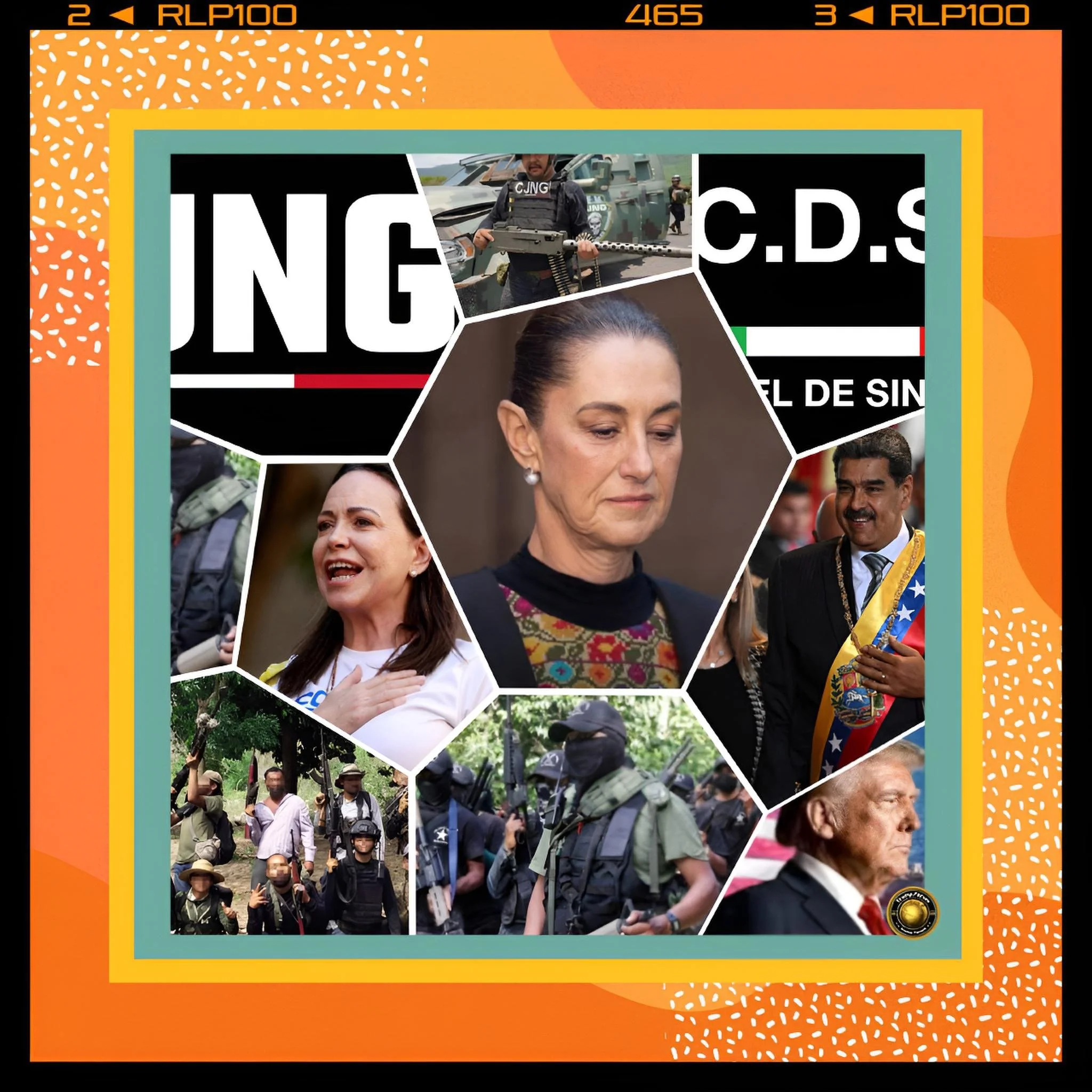
American thunder in the Caribbean: The seizure of Maduro and the reassertion of hemispheric hegemony - Part I
Executive Summary
The Extraordinary Captures the Inevitable: Maduro’s Fall and Venezuela’s Uncertain Future
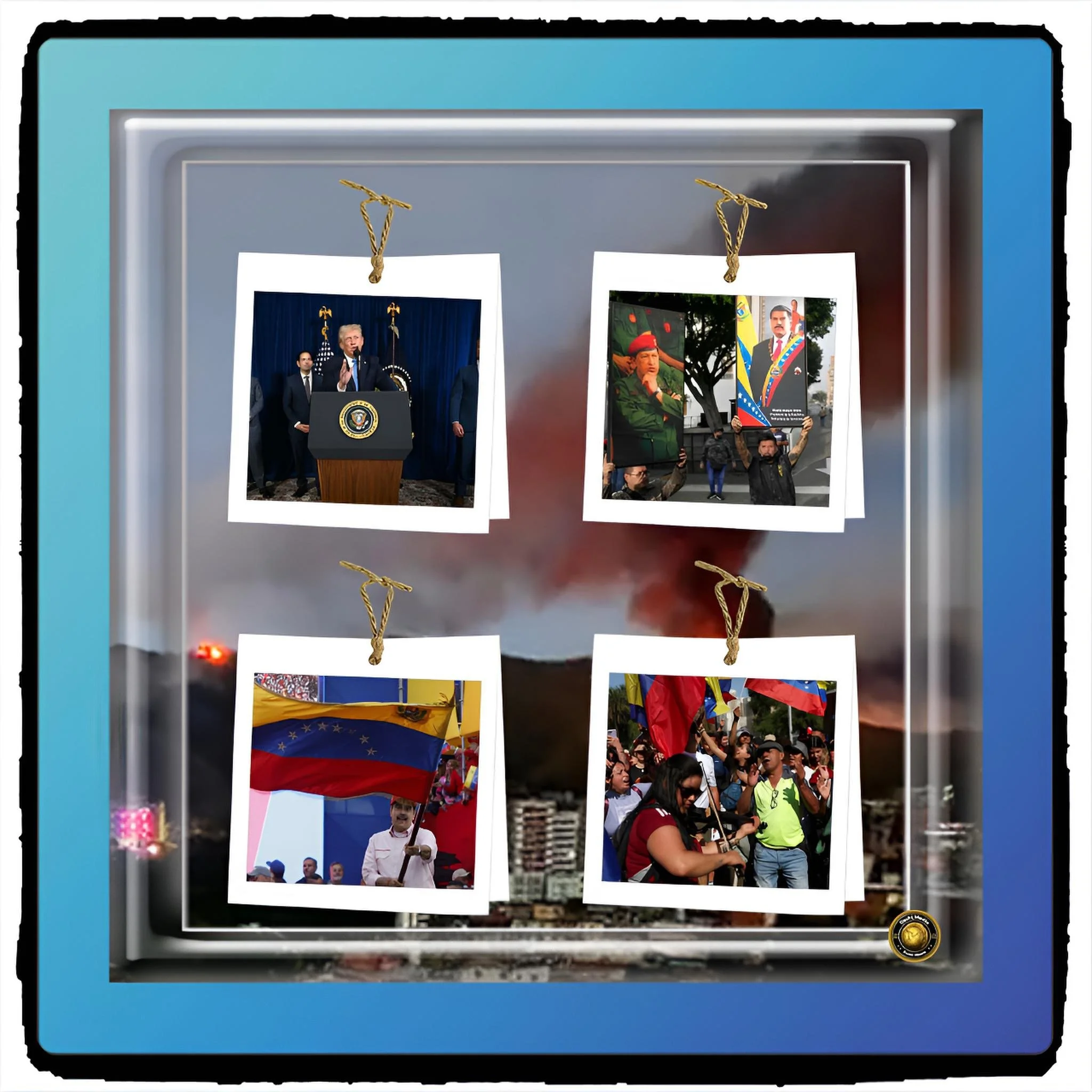
On the morning of January 3, 2026, the United States conducted what constitutes the most audacious military intervention in Latin America since the 1989 Panama invasion.
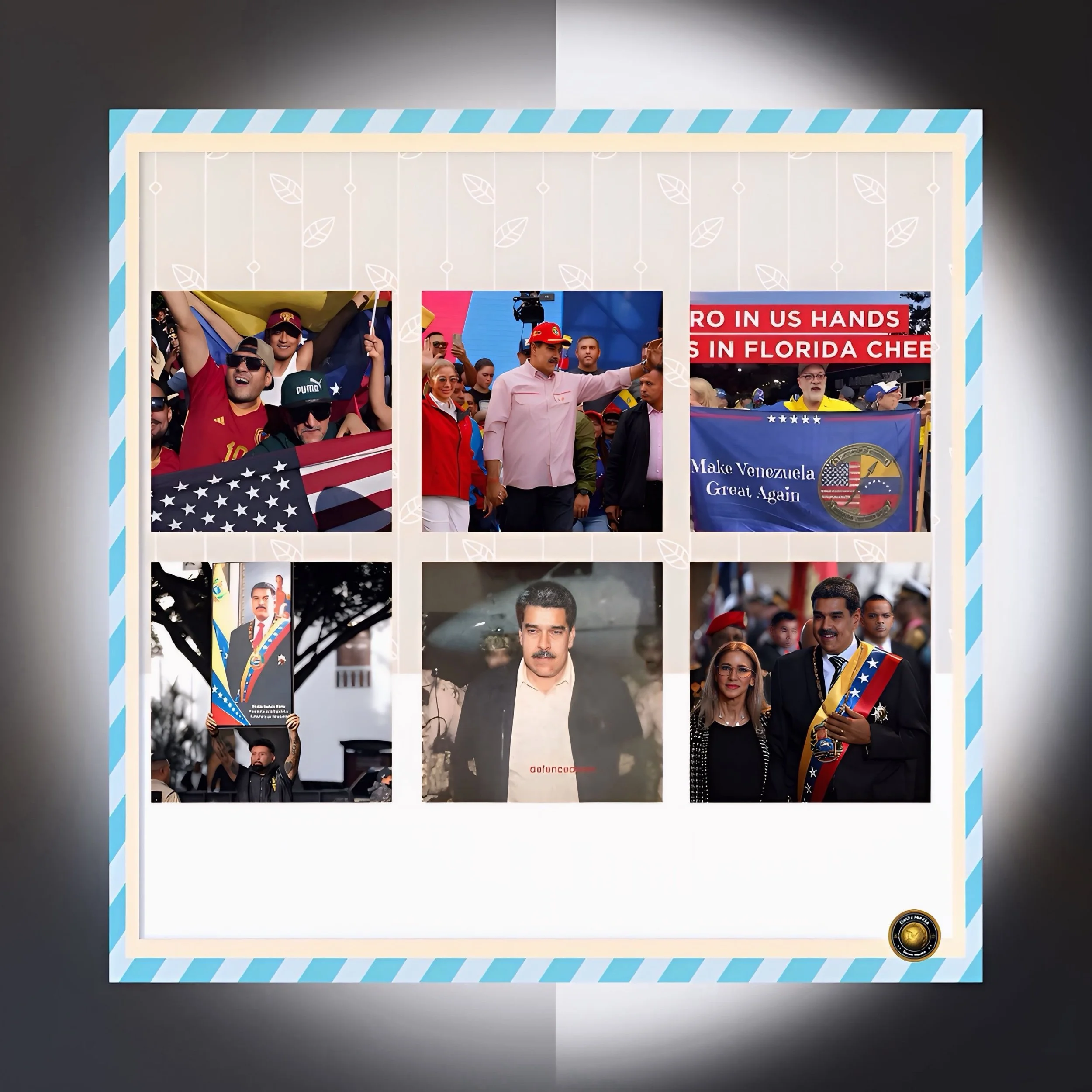
President Donald Trump announced that elite Delta Force operatives had captured Venezuelan President Nicolás Maduro and his wife, Cilia Flores, who were subsequently flown to New York to face a multi-count federal indictment for narco-terrorism and drug trafficking.
This extraordinary operation culminated months of escalating military pressure, including 35 documented strikes against alleged drug trafficking vessels that resulted in over 100 documented fatalities.
The capture represents a seismic shift in Western Hemisphere geopolitics, exposing fundamental tensions between international law, unilateral military action, and the pursuit of regime change. Venezuela now faces an unprecedented power vacuum with Vice President Delcy Rodríguez reportedly in Russia, regime officials dispersed, and opposition figures positioned to contest control of a nation devastated by thirteen years of Chavista governance.
The implications extend far beyond Caracas, signalling a fundamental reassertion of American hegemonic power in Latin America whilst simultaneously raising urgent questions about the precedent established, the likely consequences of state collapse, and whether democratic transition can emerge from the chaos likely to follow.
Introduction: When the extraordinary becomes inevitable
From maritime enforcement to regime change: The methodical American campaign against Maduro
The apprehension of Nicolás Maduro did not emerge spontaneously from the tropical Caribbean dawn. Rather, it represents the culmination of a methodically escalating campaign that began in late August 2025, when the Trump administration ordered the Pentagon to execute military operations against targets it classified as narco-terrorist organisations.
What initially appeared to the international community as maritime strikes against drug trafficking vessels evolved, across five months, into an undisguised campaign of regime change dressed in the rhetorical garments of counter-narcotics enforcement.
The operation demonstrates the extent to which the Trump administration, having consolidated control of both executive and legislative branches, feels emboldened to pursue objectives that previous American administrations would have pursued through proxies, economic pressure, or covert means.
That Maduro has fallen speaks less to the immediate military competence of Delta Force than to the profound internal weakness of the Venezuelan state, the international isolation of the regime, and the convergence of American strategic interests—oil, geopolitical competition with Russia and China, and immigration control—that collectively defined the political economy of Trump's Latin American strategy.
History and current status: The Chavista collapse and Maduro's thirteen-year descent
Thirteen years of decay: How a revolutionary project became a criminal enterprise
Nicolás Maduro assumed the presidency in April 2013 following the death of Hugo Chávez, the revolutionary figure who had fundamentally transformed Venezuelan society through nationalist resource nationalisation and socialist ideology.
Maduro, a former labour organiser and bus driver, inherited not merely a nation but a revolutionary project already displaying signs of profound structural exhaustion. The Venezuelan economy, which had benefited enormously from Chávez's early oil wealth redistribution, had become utterly dependent upon sustained petroleum revenues.
By 2013, declining oil production, crumbling infrastructure, and the absence of economic diversification signalled a coming catastrophe. Yet for over a decade, Maduro consolidated authoritarian control through mechanisms that international observers have meticulously documented. He packed the judiciary with loyalists, dissolved the opposition-controlled National Assembly through questionable constitutional interpretations, banned opposition candidates from electoral participation, and responded to massive street protests with violent suppression that resulted in documented deaths, torture, and the imprisonment of political adversaries.
The 2018 presidential election, officially declaring Maduro the victor with claims of 68 percent support, was internationally condemned as fraudulent and marred by the absence of independent observers or genuine security measures.
The 2024 election followed an identical pattern: Maduro declared victory despite widespread assertions from the opposition and independent observers that his challenger, Edmundo González, had secured victory by a margin exceeding two-to-one.
By this point, Venezuela had become a state in name only—its currency worthless, its healthcare system non-functional, and its oil production collapsed from three million barrels daily in 2000 to barely 400,000 barrels in 2024. Over seven million Venezuelans—more than one-quarter of the population—had fled the country, constituting one of the largest refugee crises of the contemporary era.
The humanitarian catastrophe had become so severe that even sympathetic observers acknowledged that Maduro's government no longer functioned as a legitimate state apparatus.
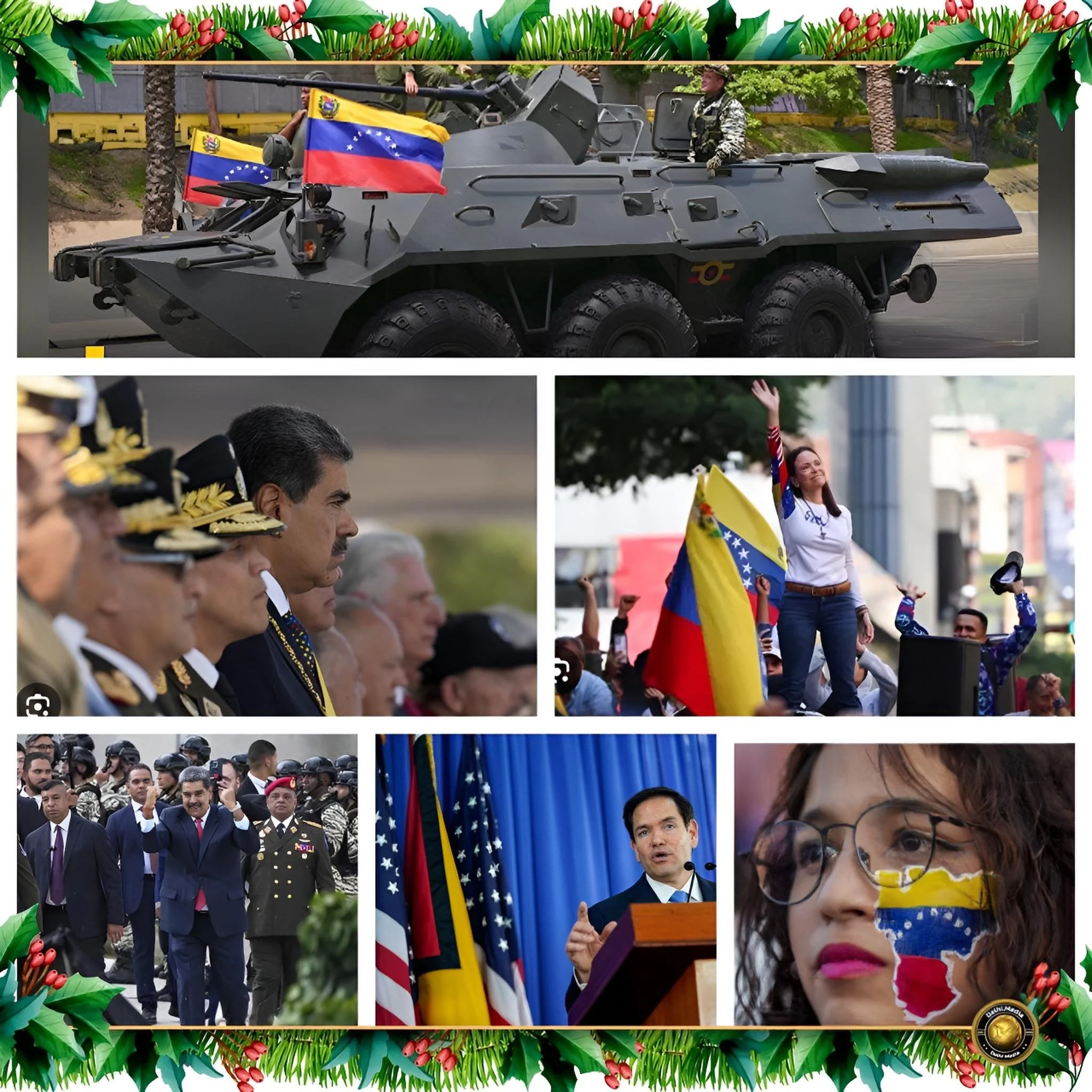
At the moment of his capture on January 3, 2026, Maduro's regime remained intact institutionally, yet hollow substantively. His security apparatus continued to operate, his military leadership remained seemingly loyal, and his inner circle—including Defence Minister Vladimir Padrino López, Interior Minister Diosdado Cabello, and his brother Jorge Rodríguez—maintained control over state machinery. Yet this institutional survival masked an underlying fragility.
The regime's legitimacy, never grounded in genuine electoral mandate, had eroded to the point where even the PSUV (United Socialist Party) confronted mounting dissension. The opposition, unified behind the candidacy of María Corina Machado (a Nobel Peace Prize laureate by December 2025) and Edmundo González, enjoyed majority support estimated at 70 percent of the voting population.
What had sustained Maduro was not popular will but rather the entrenched interest of military leadership, criminal networks integrated into state structures, and international patronage from Russia, China, and Iran.
Key developments: From maritime strikes to regime capture
The escalation blueprint: From Caribbean strikes to the capture of a president
The trajectory from maritime enforcement to regime change followed a deliberate escalatory logic. In late August 2025, the Trump administration issued a classified covert order directing the Pentagon to execute military operations against targets it designated as affiliated with narco-terrorist organisations.
The initial public justification emphasised drug trafficking interdiction, yet internal documents and official statements revealed a multifaceted agenda encompassing oil access, geopolitical competition with Russia, and migration control.
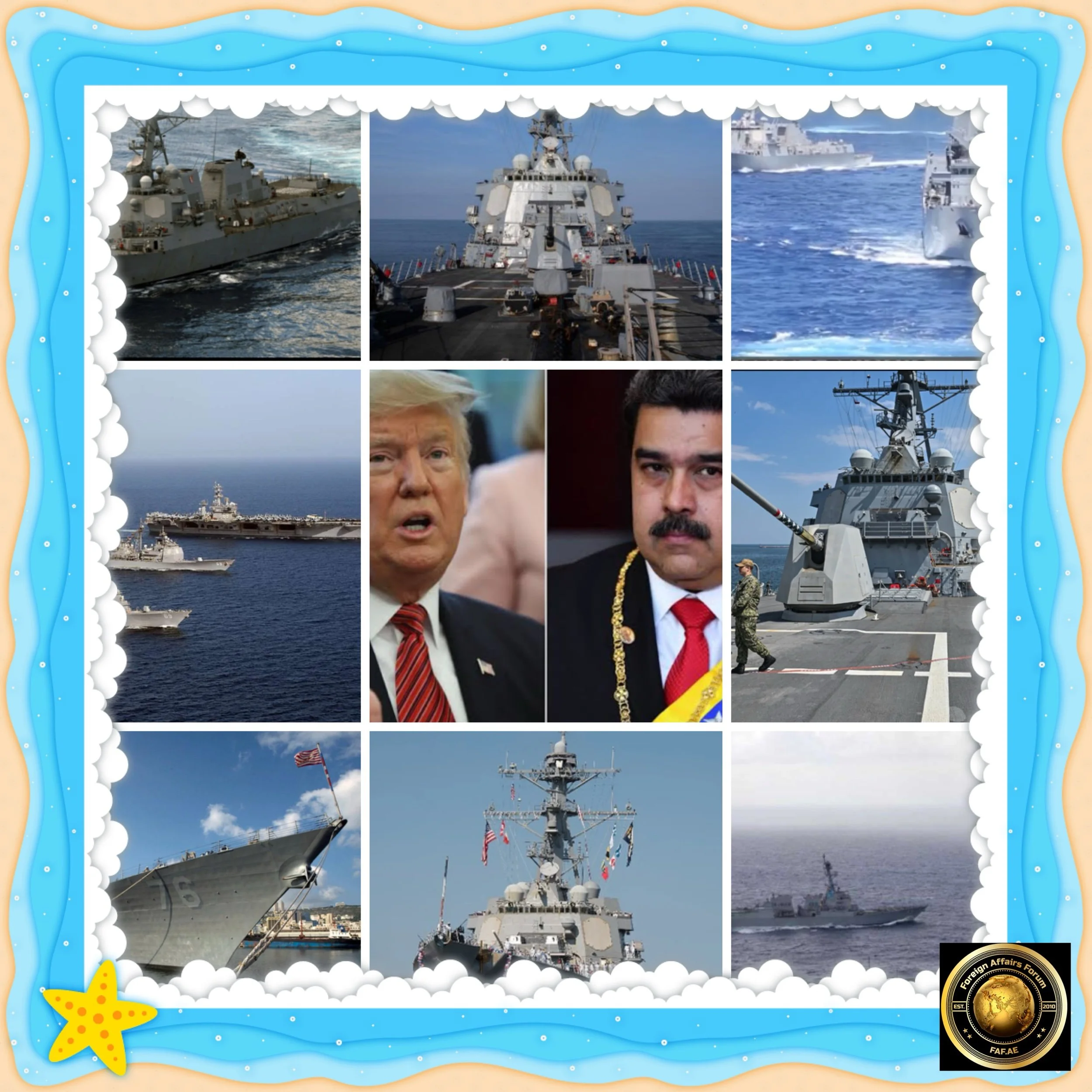
By September 2025, American strike operations intensified dramatically. The United States deployed the USS Gerald Ford, described as the most advanced aircraft carrier in service, alongside eight additional warships and approximately 10,000 troops to the Caribbean. This military concentration, the largest since the 1962 Cuban Missile Crisis, signalled unmistakably that preparations for potential land operations had begun.
The operational tempo accelerated through autumn 2025. Between September and December, the U.S. military documented 35 strikes against vessels allegedly engaged in drug trafficking, resulting in over 100 confirmed deaths. The Trump administration justified these operations through reference to drug trafficking, yet international observers, including intelligence agencies from allied nations, questioned both the evidence linking the targeted vessels to narcotics and the proportionality of the military response.
Critically, counternarcotics experts noted that Venezuela constituted a relatively minor player in global drug trafficking, with the majority of cocaine transiting through Venezuela destined for European markets rather than North American consumption. The fentanyl crisis, which has devastated American communities, originates in China rather than Venezuela. This discrepancy between stated rationale and strategic reality revealed the operation's true motivation.
In December 2025, the Trump administration escalated the campaign beyond maritime interdiction. Secretary of State Marco Rubio announced a "blockade" of Venezuelan oil tankers, explicitly stating that Maduro must "return" Venezuelan oil, land, and other assets that the administration characterised as previously "stolen" from the United States.
This framing revealed the ideological undergirding of American policy: a refusal to acknowledge Venezuelan sovereignty over its own natural resources, and an assertion that American corporations possessed inherent rights to Venezuelan petroleum reserves.
By mid-December, Trump, through his Truth Social platform, threatened strikes of "unprecedented" scale and warned that Maduro's "days are numbered." These declarations functioned as both threat and political messaging to domestic constituencies, particularly Cuban American legislators who had pressed the administration to take decisive action against leftist Latin American regimes.
The final phase moved from threat to execution. Multiple sources confirm that Trump ordered the operation early in December, with final authorisation occurring on December 17. The operation itself unfolded with military precision.
Delta Force operatives, guided by CIA intelligence identifying Maduro's precise location, conducted a night-time raid on January 3, 2026.
The operation encompassed airstrikes on military installations, dock facilities, and other infrastructure across multiple Venezuelan states, with particular concentration on the capital, Caracas. The assault lasted less than thirty minutes, yet generated at least seven substantial explosions audible across the city.
The strike achieved its primary objective: the seizure and extraction of Maduro and Flores.
By early morning, Trump announced the successful "capture," whilst Attorney General Pam Bondi released a video of the operation and confirmed that Maduro and Flores would face trial in the Southern District of New York on charges of narco-terrorism conspiracy, cocaine importation, and weapons trafficking.
Latest facts and central concerns: Uncertainty and power vacuum
Power vacuum and constitutional chaos: Who really governs Venezuela now?
As of January 3, 2026, several critical facts remain contested or unclear. The Trump administration claims Maduro and Flores were being transported to New York, likely to the Metropolitan Detention Centre in Brooklyn, where defendants in federal cases typically await trial. Venezuelan authorities have not officially confirmed the capture, though Vice President Delcy Rodríguez issued statements demanding "proof of life" from the United States.
The legal implications remain contested; whilst the Trump administration justified the operation through reference to the existing 2020 indictment, international law scholars have noted that the operation lacked Security Council authorisation and therefore violates the UN Charter's prohibition on the use of force as an instrument of state policy.
The Ker-Frisbie doctrine, which permits U.S. courts to try individuals regardless of how they were brought to trial, provides legal cover in the American system, though this doctrine itself remains controversial in international law.
Critically, the Venezuelan succession remains fundamentally unclear. Vice President Delcy Rodríguez, who would normally assume the presidency under Article 233 of the Venezuelan Constitution, was reportedly in Russia when the strikes occurred and did not immediately return. Her audio statements to state television maintained the fiction of regime continuity whilst demanding proof of Maduro's whereabouts. Her brother, Jorge Rodríguez, president of the National Assembly and Maduro's chief political strategist, remained in Caracas but did not appear publicly immediately following the strikes. Defence Minister Vladimir Padrino López, the military's longest-serving top officer with eleven years in position, addressed state television characterising the American strikes as "criminal military aggression." Interior Minister Diosdado Cabello appeared flanked by police forces, pledging regime resistance. Yet none of these figures commanded universal support within either the military or the PSUV.
The question of who actually governs Venezuela—whether regime figures attempt continuity, whether military factions fracture into competing power centres, or whether opposition forces can mobilise to seize the vacuum—remains entirely open.
Two profound concerns dominate expert analysis.
First, the precedent established by unilateral military regime change without international authorisation fundamentally alters the post-Cold War legal architecture. If the United States can justify military intervention through drug trafficking allegations, the threshold for intervention against any number of Latin American, Asian, or African regimes has been dramatically lowered. This precedent particularly concerns allied nations, who have begun quietly curtailing intelligence sharing with American partners out of concern that the United States might employ such intelligence to justify military action in violation of international law.
Second, and more pressing, the operational success of capturing Maduro does not resolve the far more difficult problem of managing the transition that follows. Venezuela's institutional decay, the integration of criminal networks into state structures, the entrenched interests of military leadership, and the sheer humanitarian catastrophe already underway mean that Maduro's absence creates not a resolution but rather an opening for potential civil conflict, institutional collapse, or seizure of power by authoritarian military figures potentially more ruthless than Maduro himself.
Cause and effect analysis: The convergence of oil, geopolitics, and domestic politics
Oil, geopolitics, and domination: The hidden architecture of American intervention
The decision to deploy special forces and conduct regime change did not emerge from a single causal factor but rather from the convergence of three distinct policy domains that Trump's administration synthesised into a unified campaign. Understanding this convergence requires disaggregating the stated rationale from the operative strategic logic.
The Oil Imperative and Corporate Interests
The Trump administration explicitly framed Venezuelan oil as an American asset improperly controlled by a foreign regime. This framing represents not merely rhetorical positioning but rather reflects a fundamental ideological claim to Venezuelan sovereignty.
Chevron, the sole American oil company operating in Venezuela, possesses a unique strategic position. In February 2025, when Trump and Rubio announced intentions to revoke Chevron's operating license, Maduro responded by halting cooperation on deportation flights. This exchange revealed the underlying leverage structure: control of oil access became a bargaining chip in negotiations over immigration and broader Latin American policy.
Trump ultimately renewed Chevron's license with modified conditions, yet the administration maintained continuous pressure. By December, when Trump announced the blockade of Venezuelan oil tankers and invoked the language of stolen American assets, the operation's connection to oil access became unmistakable.
Trump's explicit statement that Venezuela must return "oil, land, and other assets" claimed American ownership over Venezuelan resources, effectively asserting that nationalisation by Venezuela in the 2000s constituted theft rather than sovereign economic restructuring.
The Drug Trafficking Narrative as Rhetorical Cover
Publicly, the Trump administration justified military operations through reference to drug trafficking and national security. This narrative proved politically potent because it connected abstract geopolitical concerns to immediate American anxieties about fentanyl and cocaine. Yet the evidence linking Maduro personally to significant drug trafficking remains disputed.
Whilst Venezuela's military officers have engaged in trafficking activities, and criminal organisations have utilised Venezuelan territory as a transit corridor, Venezuela constitutes a peripheral actor in the global cocaine market. Most Venezuelan cocaine reaches Europe rather than North America, and fentanyl—the substance driving overdose deaths in America—originates in China, not Venezuela. Counternarcotics experts within U.S. intelligence agencies privately questioned whether the boat strikes were proportionate to the documented trafficking, particularly given that civilians and migrants constituted many of those killed.
Secretary Rubio's December statement that the objective was to "instil fear" in potential traffickers revealed the rhetorical function of the drug narrative: not evidence-based interdiction but rather psychological warfare designed to soften public and military resistance to regime change operations.
Geopolitical Competition with Russia and China
The deeper rationale emerged from structural anxiety about American hegemonic power in the Western Hemisphere. Russia had positioned itself as Maduro's primary security guarantor, providing military advisors, advanced air-defence systems, and diplomatic protection. China maintained substantial interests in Venezuelan oil and mining sectors.
The Trump administration viewed a Maduro-aligned Venezuela as a permanent toehold for great power competition in what Washington considers an American sphere of influence. Removing Maduro—particularly through direct military action—served to displace Russian influence, constrain Chinese leverage, and reassert American hegemony.
The operation occurred within the context of broader Trump administration concerns regarding BRICS expansion, Chinese manufacturing dominance, and Russian influence across the Global South. Venezuela represented an opportunity to project American power in its near abroad and to demonstrate resolve to other potential Russian or Chinese clients.
Immigration Control and Domestic Constituency Management
The Trump administration's emphasis on deporting Venezuelan migrants and preventing future emigration connected the regime change campaign to immigration policy. The administration explicitly accused Maduro of "emptying prisons and mental institutions into the United States"—a charge for which credible evidence remains absent. Yet this narrative resonated with core Trump constituencies concerned about migration.
By militarising pressure on Venezuela, the administration positioned itself as decisive on immigration whilst simultaneously signalling to allied governments in Central and South America that cooperation on deportation and migration control would be rewarded whilst non-cooperation would result in military pressure.
Domestic Political Dynamics
The operation reflected the consolidated power of Trump's second-term administration, particularly the influence of two key figures: Marco Rubio, Secretary of State and longstanding Venezuela hawk, and Stephen Miller, Deputy Chief of Staff and immigration hardliner. Rubio had advocated for aggressive Venezuelan policy throughout his career; the secretary of state's role as primary architect of the covert order represented a vindication of his strategic position.
Trump, seeking to demonstrate decisiveness and reward the anti-leftist Cuban American constituencies that had expanded Republican margins in south Florida, embraced a military option that previous administrations had considered too risky. The absence of congressional authorisation—a substantial legal question—proved politically sustainable because control of both chambers meant no legislative constraint on executive action.
The unfolding consequences: Chaos versus consolidation
The moment of maximum danger approaches. As institutional authority fragments across Caracas, multiple actors now vie for control of a state apparatus already fractured by thirteen years of authoritarian governance.
The consequences likely to unfold appear likely to correspond to what security analysts term the "turbulence scenario"—neither the best-case democratic transition nor the worst-case reconsolidated dictatorship, but rather an extended period of internecine conflict, institutional decay, and criminal network expansion.
The opposition figures positioned to seize the transition—María Corina Machado and Edmundo González—command substantial popular support, yet face formidable obstacles. The military remains entangled with regime interests; officers have accumulated wealth and power through integration into state predation, and many face potential prosecution for human rights violations. Without military cooperation, opposition figures cannot consolidate power. Yet the military has not fractured; whilst middle and lower-ranking officers may harbour resentments, the upper officer corps retains institutional cohesion.
Diosdado Cabello, who commands elements of the security apparatus involved in repression, remains a potential kingmaker. His control over the counterintelligence service (DGCIM) and presidential guard gives him leverage to either facilitate or block opposition consolidation.
Simultaneously, the power vacuum creates space for criminal networks already deeply embedded in Venezuelan state structures to expand autonomously. Tren de Aragua, the gang designated by the United States as a terrorist organisation, controls significant territory and has demonstrated capacity for violence and territorial control.
The absence of state authority could permit multiple criminal organisations to wage open conflict for control of drug trafficking routes, illegal mining operations, and other illicit revenue streams. The Honduras precedent—where the 2009 coup and subsequent state weakness permitted dramatic expansion of criminal networks—offers cautionary illustration. Over the subsequent fifteen years, Honduras descended into a maelstrom of gang violence and organisational instability from which it has never recovered.
The humanitarian consequences appear likely to escalate catastrophically. Seven million Venezuelans have already fled; border countries including Colombia, which hosts over two million Venezuelan refugees, face potentially massive new migration waves if state collapse deepens. The already non-functional healthcare system, electricity grid, and food distribution networks could deteriorate further. Yet remarkably, some Venezuelan analysts assert privately that even chaos might prove preferable to indefinite dictatorship, arguing that an unstable transition at least creates possibility for eventual democratisation whilst consolidated authoritarian rule offers only stagnation and repression.
This calculation reflects the desperation of populations subjected to over a decade of economic collapse and political persecution.
Future steps and international management
The turbulence ahead: Why Maduro's fall may create greater suffering before potential relief
The Trump administration has indicated through Vice President JD Vance and Secretary Rubio that it anticipates no further military action in Venezuela "now that Maduro is in U.S. custody," yet this assertion requires scrutiny.
The statement appears designed to signal to the international community that the operation was discrete and limited. Yet if regime consolidation falters, if violence escalates, or if other actors demonstrate capacity to seize power, the administration has established the precedent and capability for sustained military intervention. The deployment of 12,000 troops and multiple carrier strike groups provides the force posture for sustained operations.
The international community now faces choices that will determine whether Venezuela transitions toward democracy or descends toward state collapse.
Maria Corina Machado has positioned herself as the principal opposition figure, having been awarded the Nobel Peace Prize whilst in hiding from Maduro's security services. Her escape from Venezuela and triumphant appearance in Norway to accept the prize created powerful symbolic positioning. Yet symbolic positioning does not translate automatically into state consolidation.
She and Edmundo González require military support or, at a minimum, military neutrality to prevent regime figures or criminal organisations from seizing power. This support could theoretically come from the United States, yet explicit American military backing risks delegitimising an opposition government as a puppet regime. The delicate challenge involves facilitating opposition consolidation without creating the appearance of American occupation.
Russia has signalled that it considers the operation a grave violation of international law and has called for clarification of Maduro's whereabouts, yet Moscow faces severe constraints on any response.
The Ukraine war consumes Russian military and economic resources; the experience of Syria, where Russian support for the Assad regime became unsustainable and withdrew during Ukraine crisis, demonstrated the limits of Russian commitment to autocratic allies facing existential challenges. China similarly faces constraints; its distant position and limited military reach in the Caribbean mean that meaningful intervention would require infrastructure it does not possess.
The regional Latin American response has fractured: Argentina's Javier Milei praised the operation; Colombia's Gustavo Petro condemned it as violation of sovereignty; Brazil's Lula called it an unacceptable affront.
Conclusion: The American reassertion and its discontents
The precedent has been set: American hegemony reasserted, international law wounded
The fall of Nicolás Maduro, whatever the ultimate trajectory of Venezuelan politics in the months ahead, represents a watershed moment in the post-Cold War international system. It demonstrates that the United States, with sufficient consolidation of domestic political power and absence of great power peer competition in its immediate region, can execute military regime change operations without the constraints that limited such operations in previous decades.
The operation was technically proficient, politically sustainable domestically, and operationally successful in its immediate objective. Yet it establishes a precedent whose longer-term implications remain genuinely uncertain.
The international law dimension cannot be ignored. The operation lacked UN Security Council authorisation, lacked credible evidence of the imminent threats typically justifying self-defence actions, and lacked democratic legitimacy within Venezuela itself. Whilst the Ker-Frisbie doctrine permits American courts to prosecute Maduro regardless of how he was seized, this doctrine reflects American jurisprudential tradition rather than international law consensus.
The European Union's cautious response—simultaneously declaring Maduro illegitimate whilst calling for respect for international law—captures the genuine tension between the geopolitical desirability of Maduro's removal and the legal impropriety of the method employed.
The humanitarian and political consequences remain overwhelmingly uncertain. The most plausible scenario involves an extended period of institutional competition, criminal violence, potential civil conflict, and possible military strongman consolidation.
This turbulence scenario represents neither democratic triumph nor dictatorship, but rather a dangerous passage during which Venezuelans face renewed suffering even as authoritarian consolidated rule becomes temporarily less likely. The opposition figures positioned to govern—Machado and González—possess legitimacy grounded in the 2024 election and subsequent popular mobilisation, yet lack the security force apparatus necessary to prevent spoilers from derailing transition.
What emerges from this extraordinary intervention is a fundamental reassertion of American power in its Western Hemisphere sphere of influence. Whether this reassertion produces the democratic Venezuela that Trump administration officials publicly advocate for, or instead catalyses a descent into chaos and renewed authoritarianism under new leadership, depends on factors far beyond American military capability or political will. It depends on whether Venezuelan military officers prove willing to facilitate transition, whether opposition forces maintain cohesion, whether international support materialises for democratic consolidation, and whether the region's societies prove resilient enough to navigate the turbulence ahead.
On these questions, the record of recent Latin American transitions offers modest grounds for optimism, yet profound reasons for concern.