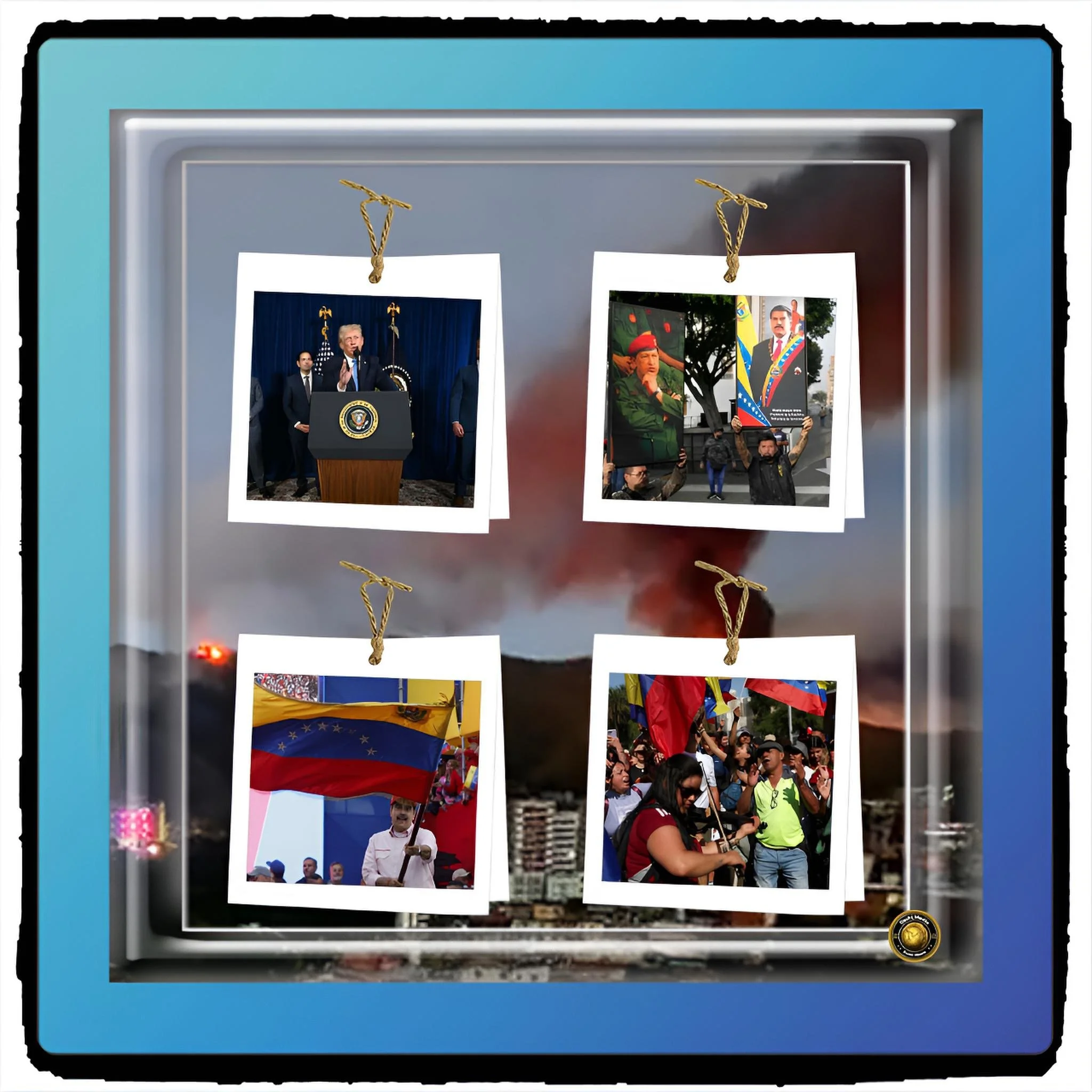
Empire Unchained: How the US Capture of Maduro Shattered the Post-War International Order - Part III
Executive Summary
The January 3 Abduction That Changed Everything: How One Midnight Raid Obliterated Global Legal Restraints
On January 3, 2026, the United States executed the most significant military intervention in Latin America since the 1989 invasion of Panama, capturing Venezuelan President Nicolás Maduro and his wife, Cilia Flores, through a coordinated operation involving Delta Force special operations units and sustained airstrikes on Caracas. This development sends seismic reverberations across South America and fundamentally challenges the post-Cold War international legal framework.
The operation exposes a profound rupture in global governance norms: a permanent member of the UN Security Council has unilaterally conducted what experts classify as a regime-change operation without congressional authorization, ICC mandate, or UN Security Council sanction.
The message transmitted to South America is categorical and destabilizing: the United States has formally abandoned diplomatic restraint and institutionalist frameworks in favor of direct coercive projection in its hemisphere. For the broader world, the precedent suggests that military intervention against sitting heads of state now operates outside the constraints that governed the post-1945 international system.
This transformation carries profound consequences for sovereignty principles, the future of military interventionism, and the fragile equilibrium between competing global powers.
Introduction: The Operational Shock and Its Timing
From Diplomacy to Decapitation: The Methodical Eight-Month Siege That Culminated in Maduro’s Midnight Extraction
The capture of Nicolás Maduro arrived neither as an isolated military strike nor as a sudden departure from stated policy. Instead, it represented the logical crescendo of an eight-month escalation campaign orchestrated with methodical precision. Between August 2025 and January 2026, the Trump administration had progressively tightened a multi-domain siege around Venezuela, culminating in the overnight operation that transformed strategic ambiguity into kinetic reality.
Maduro had begun his final day in office on January 2 by offering, through Spanish media, to engage in serious dialogue with Washington on drug trafficking.
By dawn on January 3, he was airborne to New York in American custody, facing charges of narco-terrorism conspiracy, cocaine importation, weapons possession, and conspiracy related to these offenses.
What distinguishes this moment from previous US interventions is not the military capability displayed—the operation itself lasted less than thirty minutes, with at least seven explosions concentrated around military installations in Caracas and at Fort Tiuna, the presidential compound. Instead, it is the explicit framework chosen to justify the action and the international legal architecture that was deliberately circumvented in its execution.
The Trump administration framed the operation as the enforcement of a 2020 indictment rather than regime change. This semantic distinction has become central to the political and legal defense of the action.
Secretary of State Marco Rubio stated unequivocally that the operation concluded immediately upon Maduro’s capture, as the primary objective—the arrest of a fugitive facing criminal charges in US courts—had been achieved. Yet the subsequent announcement that the United States would temporarily “run” Venezuela until a proper transition could be arranged rendered this distinction merely rhetorical.
Historical Context: The Architecture of Pressure and the Collapse of Diplomatic Alternatives
How a Disputed Election Evolved Into the First US Regime-Change Operation of the 2026 Geopolitical Reset
The capture cannot be comprehended apart from the deliberate strategy that preceded it. Maduro’s legitimacy had begun its terminal decline following the July 2024 presidential election, which the international community widely rejected as rigged in his favor.
Venezuela’s own electoral commission published tallies suggesting that opposition candidate Edmundo González had achieved a decisive victory, yet Maduro claimed victory and was sworn in for a third six-year term on January 10, 2025.
This audacious seizure of power triggered widespread protests, mass arrests exceeding 2,000 individuals in a single week, and a unified international rejection spanning the political spectrum from left-leaning Brazil to centrist Colombia to right-wing Argentina and Chile.
The Trump administration escalated from diplomatic isolation to economic siege during 2025. In March 2020, during Trump’s first term, Maduro had been indicted on narco-terrorism charges in the Southern District of New York.
During the second Trump administration, beginning in August 2025, this indictment evolved into the foundation for an active military campaign. The administration doubled the bounty on Maduro’s capture to fifty million dollars, designated the Cartel de los Soles as a foreign terrorist organization, and, most symbolically, designated Venezuela’s government itself as a state sponsor of terrorism.
By December 2025, Trump had declared a blockade of all sanctioned oil tankers moving to and from Venezuela, effectively weaponizing maritime commerce. The administration simultaneously seized Venezuelan oil tankers, conducted more than twenty military strikes against alleged drug-smuggling vessels in Caribbean waters (resulting in at least ninety-nine deaths), and authorized the CIA to deploy a covert intelligence team to Caracas in August 2025.
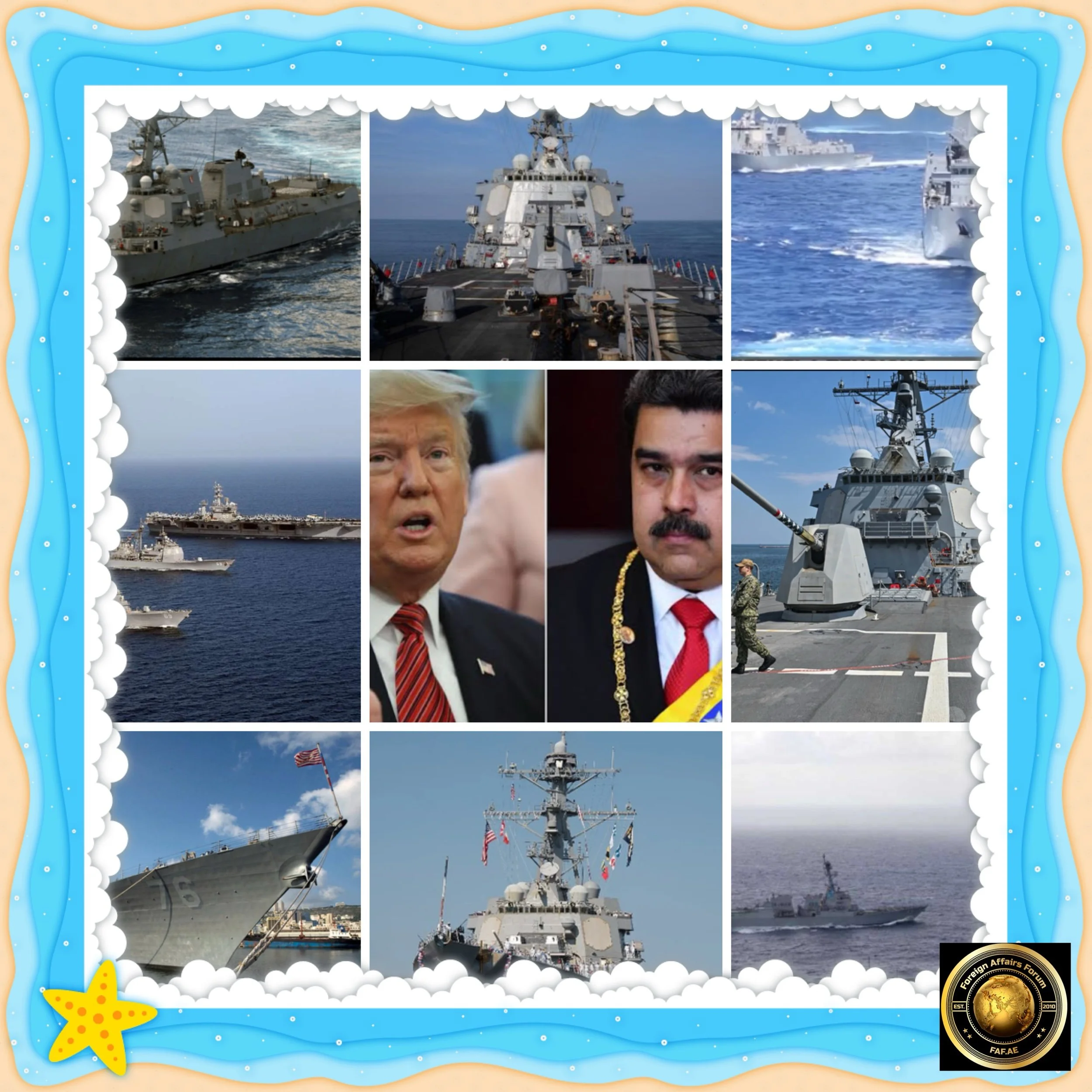
What rendered the January 3 operation militarily feasible was not merely the preceding pressure campaign, but the deployment of overwhelming force in the immediate theater. The USS Gerald R. Ford, a nuclear-powered aircraft carrier strike group carrying more than four thousand sailors and marines, had been positioned in Caribbean waters.
Ten F-35 fighter jets were stationed in Puerto Rico. The naval and air architecture for decisive military action had been progressively assembled under the rhetorical cover of counter-narcotics operations. Yet, each step had systematically eroded Venezuela’s capacity to resist.
The operation itself represented a seamless conjunction of maritime dominance, intelligence advantage, and special operations expertise. Delta Force units, the Army’s elite special mission unit responsible for the 2019 operation that killed Islamic State leader Abu Bakr al-Baghdadi, executed the raid on Fort Tiuna with surgical precision.
Trump subsequently boasted that not a single American service member was killed and not a single piece of American equipment was lost, a claim that, if accurate, speaks to the overwhelming asymmetry in capabilities between the two forces.
Current Status and Key Developments: The Immediate Aftermath and Vacuum of Authority
The Governance Vacuum Nobody Expected: What Happens When a Major Power Captures a Leader But Has No Succession Plan
As of January 3, 2026, the operational phase has concluded, yet the political phase remains entirely unresolved. Maduro and his wife were being transported to New York aboard a US warship to face criminal trial in federal court.
Vice President Delcy Rodríguez, who technically succeeded to the executive authority under Venezuela’s constitutional framework, issued statements demanding “proof of life” for Maduro and denying the legitimacy of his capture, while also appearing to negotiate with the Trump administration through back channels.
Secretary of State Rubio revealed that he had already spoken with Rodríguez and suggested she was “open to cooperating” with Washington on terms that would facilitate Venezuela’s integration into a US-preferred political and economic order.
The ambiguity surrounding Venezuela’s governance immediately after Maduro’s removal is profound. The military apparatus remains formally intact, with Defense Minister Vladimir Padrino López announcing deployment of armed forces and declaring a state of external disturbance that granted expanded emergency powers—yet these announcements contained no reference to Maduro’s alleged capture, creating a bizarre temporal dislocation in which the command structure appeared to be operating in parallel with a reality it could neither confirm nor deny.
Opposition figures, most notably Nobel Peace Prize winner María Corina Machado, issued statements asserting their readiness to assume leadership. Yet, Trump publicly questioned Machado’s capacity to govern, suggesting she lacked sufficient internal support and respect within Venezuela to serve as a viable successor.
This governance vacuum extends across multiple dimensions simultaneously. The constitutional order is in abeyance. The international community remains divided on the legitimacy of Venezuela’s government.
Most critically, the question of who controls the Venezuelan military—historically the ultimate arbiter of political power in Caracas—remains unanswered. If military factions split their allegiance between remaining loyalty to the Maduro apparatus (now severed from its head) and accommodation with US-imposed arrangements, Venezuela faces not merely political instability but potential military fragmentation.
Latest Facts and Immediate Concerns: The Legal, Political, and Strategic Implications
The Legal Landmine Trump Just Created: Why the ‘Criminal Extradition’ Defence Crumbles Under International Law Scrutiny
The Trump administration’s characterization of the operation as criminal extradition rather than regime change rests on three fundamental claims: that Maduro’s indictment provided legal authority for capture; that the operation targeted a criminal fugitive rather than a political opponent; and that no prolonged occupation or intervention is planned. Each of these claims faces substantial legal and political scrutiny.
The International Criminal Court has not issued an arrest warrant for Maduro, despite conducting a formal investigation into alleged crimes against humanity committed by Venezuelan security forces. The capture was therefore carried out pursuant to a US domestic indictment, not an international legal instrument.
UN Secretary-General António Guterres stated he was “deeply alarmed” by the operation and emphasized that “the rules of international law have not been respected.”
The UN Charter explicitly prohibits the threat or use of force against the territorial integrity or political independence of any state.
The US operation violated Venezuelan sovereignty without any Security Council authorization, without any plausible claim of self-defense, and without the legal foundation that might have existed had an ICC arrest warrant been in place.
The characterization as extradition also strains credibility in light of Trump’s declaration that the US would “run” Venezuela until a proper transition could be arranged, and his subsequent announcement that the military was prepared to conduct additional and “much larger” operations if deemed necessary.
Attorney General Pam Bondi stated that Maduro would “face the full wrath of American justice,” signaling that the operation is not merely a limited law enforcement action but the opening phase of a broader geopolitical reconfiguration. Trump explicitly rejected the notion that Venezuela would remain under opposition control immediately; instead, American personnel would govern the country during the transition period, with oil companies poised to invest billions in rebuilding the damaged energy infrastructure.
The operation raises profound questions regarding congressional authorization. The Trump administration conducted the operation without seeking approval from Congress, despite a bipartisan group of senators having proposed a measure in November 2025 requiring congressional approval for future military actions in Venezuela.
Democratic Congressman Jim Himes of Connecticut stated that although Maduro is illegitimate, “I see no evidence that his presidency poses a threat justifying military action without Congressional authorization.” The administration’s silence on the constitutional authority for the operation speaks volumes about its vulnerability to legal challenge.
The political uncertainty is equally acute. Venezuela’s opposition movement, while unified in opposing Maduro, remains fragmented regarding both the desirability of US military intervention and the optimal successor government. Edmundo González, recognized by the US as Venezuela’s legitimate president-elect, is in exile abroad; Machado, despite her international prominence, lacks broad organizational support within Venezuela’s fractured society.
The military remains the most organized institution in the country, yet its loyalty is contingent rather than solidified. Should military factions resist US-imposed governance, or should they splinter into competing commands, Venezuela faces the prospect of prolonged civil turmoil regardless of Maduro’s absence.
Cause-and-Effect Analysis: The Cascade of Consequences Across Hemispheric and Global Dimensions
Latin America’s Nightmare Realised: How One Military Strike Destroyed Two Decades of Regional Sovereignty Protection
The capture of Maduro triggers cascading consequences that extend far beyond Venezuela’s borders, with distinct implications for South America and the broader international system.
For South America
The Revival of Spheres of Influence and the Destabilization of Regional Consensus
The operation shattered the carefully constructed consensus among major Latin American powers regarding Venezuela. Brazilian President Luiz Inácio Lula da Silva had positioned Brazil as a mediator between Washington and Caracas, offering to facilitate dialogue and prevent military escalation.
Mexican President Claudia Sheinbaum had invoked Mexico’s traditional Estrada Doctrine—the principle of non-intervention in the internal affairs of other nations—to oppose unilateral US military action. Colombian President Gustavo Petro, despite his government’s alignment with US strategic interests in different domains, had rejected what he termed “aggression against Venezuela’s sovereignty and Latin America.”
These positions reflected not ideological solidarity with Maduro, but rather concern that unilateral US military intervention would establish a precedent permitting similar actions against other governments deemed hostile to Washington’s interests.
The operation has vindicated the deepest anxieties of South American leaders and transformed theoretical concern into manifest reality. Lula immediately stated that the US had “crossed the line of the permissible” and called upon the United Nations to impose consequences for what he characterized as “the first step toward a world of violence, chaos, and instability.”
Brazil convened an emergency government meeting and demanded a response from the UN Security Council.
Colombia’s Petro announced the deployment of military forces to Colombia’s border with Venezuela, preparing for a potential refugee surge that could number in the hundreds of thousands. Mexico’s foreign ministry condemned the action as a violation of the UN Charter and the principles of self-determination that underpin the post-war order.
Yet beyond these immediate statements lies a more consequential shift: the operation has vindicated the thesis long propounded by skeptics of US hegemony that Washington reserves the right to employ unilateral military force against governments it deems hostile, regardless of their political character or popular legitimacy.
Argentina’s President Javier Milei, the closest South American ally to Trump’s ideological orientation, nonetheless focused his response on the irregular migration and drug trafficking flows emanating from Venezuela rather than endorsing the military intervention itself.
Even among governments that explicitly opposed Maduro’s rule—Argentina, Chile, Peru, Paraguay—the method of his removal sparked reflexive concern about the precedent it set.
The operation crystallizes a fundamental geopolitical reality: the United States retains overwhelming military superiority in its hemisphere and has demonstrated willingness to exercise it unilaterally.
China and Russia, despite their rhetorical support for Venezuela, possessed neither the capability nor the proximity to mount any effective response. Chinese tankers that had been transporting Venezuelan crude to China were redirected to Nigeria; Russian support remained limited to diplomatic condemnation.
This asymmetry underscores a critical message: great power competition in Latin America now occurs within a framework in which US military dominance is unchallengeable, rendering non-military instruments of Chinese and Russian influence vulnerable to American coercive action.
The seizure of sanctioned tankers has partially undone China’s 2025 strategy of heavily stockpiling Venezuelan oil. Russia’s longstanding military cooperation with Caracas proved worthless in preventing the capture of its president.
The operation, therefore, sends a sobering message to South American states: the concept of American restraint, rooted in respect for sovereignty and international law, cannot be relied upon.
This has not merely damaged the international legal architecture, but has corroded the basis of strategic predictability that smaller and mid-sized powers require to formulate their foreign policy.
Brazil, Mexico, Colombia, and other regional powers had been operating on the assumption that unilateral military interventions in the Western Hemisphere were a thing of the past.
The January 3 operation definitively closed that chapter.
For the Global Order
The Rupture with Liberal Internationalism and the Revival of Sphere-of-Influence Politics
The capture of Maduro represents far more than a tactical victory in a regional conflict. It symbolizes a deliberate and formal abandonment of the international legal frameworks that have constrained great power behavior since 1945.
The UN Secretary-General’s statement that the operation “constitutes a dangerous precedent” reflects recognition that a fundamental rule of the post-war order has been breached.
The Trump administration explicitly grounded its action in the revival of the Monroe Doctrine.
The National Security Strategy released in December 2025 stated that the United States would “reassert and enforce the Monroe Doctrine to restore American preeminence in the Western Hemisphere.”
The administration’s justification explicitly rejected the notion that international law, the UN Charter, or multilateral institutions should constrain US military action in regions deemed vital to American strategic interests.
Secretary of State Rubio’s framing of Maduro as a “fugitive of American justice” rather than a sovereign head of state exemplifies the rhetorical displacement of international law frameworks by a doctrine of absolute state sovereignty in pursuit of narrowly defined national interests.
This represents not merely a policy shift within the existing international order, but a deliberate attempt to reconstruct the international system along pre-1945 lines: a world of great power spheres of influence, unrestrained by institutional constraints, where military capacity determines outcomes and smaller nations exist within the security umbrellas established by dominant powers.
The comparison to the 1989 invasion of Panama is instructive.
The US justified the Panama operation as a law enforcement action targeting Manuel Noriega, who had been indicted on drug-related charges—precisely the rhetoric now being deployed regarding Maduro. Yet the Panama intervention established a precedent that sitting heads of state in the American hemisphere could be captured and removed if deemed hostile to US interests.
The implications for the broader international system are profound. If the United States can unilaterally conduct military operations to remove a foreign head of state without UN Security Council authorization or ICC warrant, the legal framework constraining similar actions by Russia, China, or other major powers has been substantially weakened.
Russia has explicitly noted that the precedent established by US action in Venezuela undermines any claim that Washington is concerned with international law.
Chinese analysts have characterized the operation as a declaration of a “new Monroe Doctrine” and an assertion of US hegemony precisely because it demonstrates that international law provides no meaningful constraint on American military action when vital interests are perceived to be at stake.
Energy Markets and Global Commodity Volatility
The Oil Market Paradox: Why America’s Geopolitical Victory Will Lower Crude Prices and Destabilise OPEC
The capture of Maduro initiates a complex sequence of consequences in global energy markets. Venezuela possesses the world’s largest proven crude oil reserves, yet decades of mismanagement and US sanctions have reduced production to minimal levels.
Current Venezuelan crude exports flow predominantly to China, which accounts for approximately eighty percent of Venezuela’s remaining oil shipments.
The Trump administration’s seizure of sanctioned oil tankers and blockade of Venezuelan oil exports has created uncertainty regarding whether Venezuela’s productive capacity will be brought online and whether those barrels will flow to Western markets or remain redirected toward Chinese purchasers.
In the short term—the immediate weeks following Maduro’s capture—oil prices are likely to experience modest volatility driven by geopolitical risk premiums.
Analysts project an initial spike of 2 to 3 dollars per barrel, with some estimates reaching 5 dollars per barrel, depending on the pace of political stabilization in Venezuela; however, the medium- and long-term trajectory points toward downward pressure on global crude prices.
If Venezuela stabilizes under a government more amenable to Western engagement, foreign investment in the petroleum sector will increase, Venezuelan production capacity will be restored, and additional barrels will flow into an already-oversupplied global market.
The global crude market is currently under downward pressure, with both Brent and West Texas Intermediate crude prices having fallen nearly 20% during 2025 due to anticipated oversupply exceeding 3 million barrels per day.
This creates a paradoxical outcome for the Trump administration: a geopolitical and military victory in Venezuela that, if successful, will contribute to lower global energy prices.
This may benefit American consumers and weaken the economic position of energy-exporting adversaries like Russia and Iran. Yet it simultaneously undermines the OPEC+ production discipline orchestrated by Saudi Arabia and Russia to maintain higher prices. China’s substantial oil stockpiling during 2025, conducted at favorable prices due to geopolitical risk premiums, will become even more economically advantageous as prices decline.
The Precedent and Future Interventionism
The operation establishes a methodology for future interventions: maritime blockade, sanctions pressure, CIA intelligence and covert operations, designated terrorist organization designations framing political leadership as criminal entities, and ultimately direct military intervention presented as law enforcement against a fugitive.
This sequence is readily applicable to other governments deemed hostile to US interests, including Iran, Syria, North Korea, and others. The legal vulnerability of this approach is profound, yet the strategic confidence displayed by the Trump administration suggests they believe American military superiority will deter serious consequences or meaningful resistance.
Brazil and Mexico’s call for UN Security Council action will likely prove futile, as the United States can veto any resolution. The International Criminal Court has no jurisdiction over the United States, and the administration has demonstrated disregard for ICC processes.
The primary costs of the precedent will be incurred not by the United States directly, but by the international legal order and smaller nations who lose whatever protection sovereignty principles and international law provided against unilateral coercive action.
Future Steps: The Uncertain Path of Governance and Reconstruction
The Ungovernable Transition: Why US Occupation of Venezuela May Prove More Destabilising Than Maduro’s Departure
Trump’s declaration that the United States will “run” Venezuela until a proper transition can be arranged opens questions that remain wholly unresolved.
The administration has not specified the timeline for transition, the mechanism by which Venezuelan political authority will be transferred to a successor government, or the criteria by which a “safe” and “proper” transition will be deemed to have occurred.
Trump suggested that María Corina Machado, the opposition figure and Nobel Peace Prize recipient, “lacks the support and respect within the country” to assume leadership, yet no alternative has been identified.
The suggestion that Secretary of State Rubio is negotiating with Vice President Delcy Rodríguez regarding her willingness to cooperate with US governance arrangements hints that the administration may contemplate a transition involving figures from within the Maduro apparatus rather than opposition figures.
This scenario—the replacement of Maduro with a compliant successor drawn from the military or administrative elite—would technically fulfill Trump’s pledge to facilitate a “transition,” yet would preserve the fundamental structures of state power that generated Venezuela’s humanitarian catastrophe.
It would also create a government whose legitimacy rests entirely on US military support and whose policies would be constrained by the requirement to maintain American approval. Such a governance arrangement would likely prove unstable and fraught with resistance from both Venezuelan civil society and international actors who prioritize democratic restoration.
The alternative scenario—a transition to democratic governance led by opposition figures—faces the countervailing challenge of building governmental capacity and legitimacy in a nation whose institutions have been devastated by two decades of authoritarian mismanagement and economic collapse.
The military remains the most organized institution, yet its loyalty to democratic governance cannot be assured.
Widespread anger directed at both the Maduro apparatus and the United States for military intervention could generate sustained instability.
The Trump administration has signaled its intention to leverage Venezuelan resources to support economic reconstruction.
Trump stated that American oil companies are “ready to invest billions” in the restoration of the damaged energy infrastructure, implying that economic transition will be coupled with the transfer of Venezuelan resource extraction to American corporate control.
This approach mirrors the pattern established in Iraq and Afghanistan, where military intervention was justified partly on grounds of addressing humanitarian crises and establishing democratic governance, yet resulted in the consolidation of American economic interests and ongoing security challenges.
The humanitarian dimension of Venezuela’s crisis—which has generated the exodus of nearly seven million Venezuelans (approximately one-quarter of the population) to Colombia, Brazil, and other neighboring countries—will not be addressed by regime change alone.
Economic reconstruction, if it occurs, will require years and substantial capital investment. During the interregnum of US governance, Venezuelan citizens will continue to experience shortages, infrastructure collapse, and economic deprivation.
The possibility of accelerated migration flows toward the US and neighboring countries looms prominently, potentially creating political challenges for the Trump administration in its domestic political context.
Conclusion
The New Age of Unrestrained Power: How Maduro’s Capture Redraws the Map of Global Competition for the Next Decade
The capture of Nicolás Maduro on January 3, 2026, represents a watershed moment in twenty-first-century geopolitics.
It marks the formal abandonment of the international legal frameworks that have constrained unilateral military intervention since 1945, the revival of spheres-of-influence politics centered on American military dominance, and the establishment of a precedent that permits the unilateral removal of foreign heads of state when deemed to serve American strategic interests.
For South America, the message is unambiguous: the United States retains the will and capacity to employ military force in its hemisphere without meaningful constraint, rendering the concept of sovereignty a conditional principle rather than an absolute right.
Regional powers like Brazil and Mexico, which had been constructing consensus-based approaches to regional stability, now confront a fundamental rupture in strategic assumptions. The international legal order that provided whatever protection smaller nations had against great-power coercion has been demonstrably breached.
For the broader world, the precedent is profoundly destabilizing. China and Russia, despite their rhetorical solidarity with Venezuela, have been confronted with the reality that military superiority and geographic proximity determine outcomes in great-power competition.
The international institutional frameworks that emerged from the Second World War have been revealed as contingent constraints on power rather than binding rules.
If the United States can violate UN Charter principles with impunity, the legal foundation for claims that Russia violated Ukrainian sovereignty or that China violates international law in the Taiwan Strait has been substantially weakened.
Yet the operation also embeds within itself the seeds of future instability. The governance vacuum in Venezuela, the unresolved military situation, the precedent of American military intervention, and the humanitarian catastrophe afflicting Venezuelan civil society all suggest that Maduro’s removal will initiate rather than conclude a chapter of Venezuelan turmoil.
Whether the Trump administration’s vision of energy dominance and hemispheric primacy proves durable or collapses under the weight of unforeseen consequences in Venezuela will shape the trajectory of American power and the structure of the international system for decades to come.
The capture of Maduro sends a message that resonates across every continental and oceanic boundary: the age of international law as a constraint on the actions of militarily dominant powers has ended, and the age of explicit great power spheres of influence has begun.
This represents not merely a tactical victory but a systemic transformation whose full implications will unfold across the subsequent years of the twenty-first century.