The Arteries of Power Are Severing: How major powers are Weaponizing Underwater Cables and Fracturing Global Communications
Executive Summary
When the Ocean Floor Becomes a Battlefield: Subsea Cables, the New Frontline of Great-Power Competition
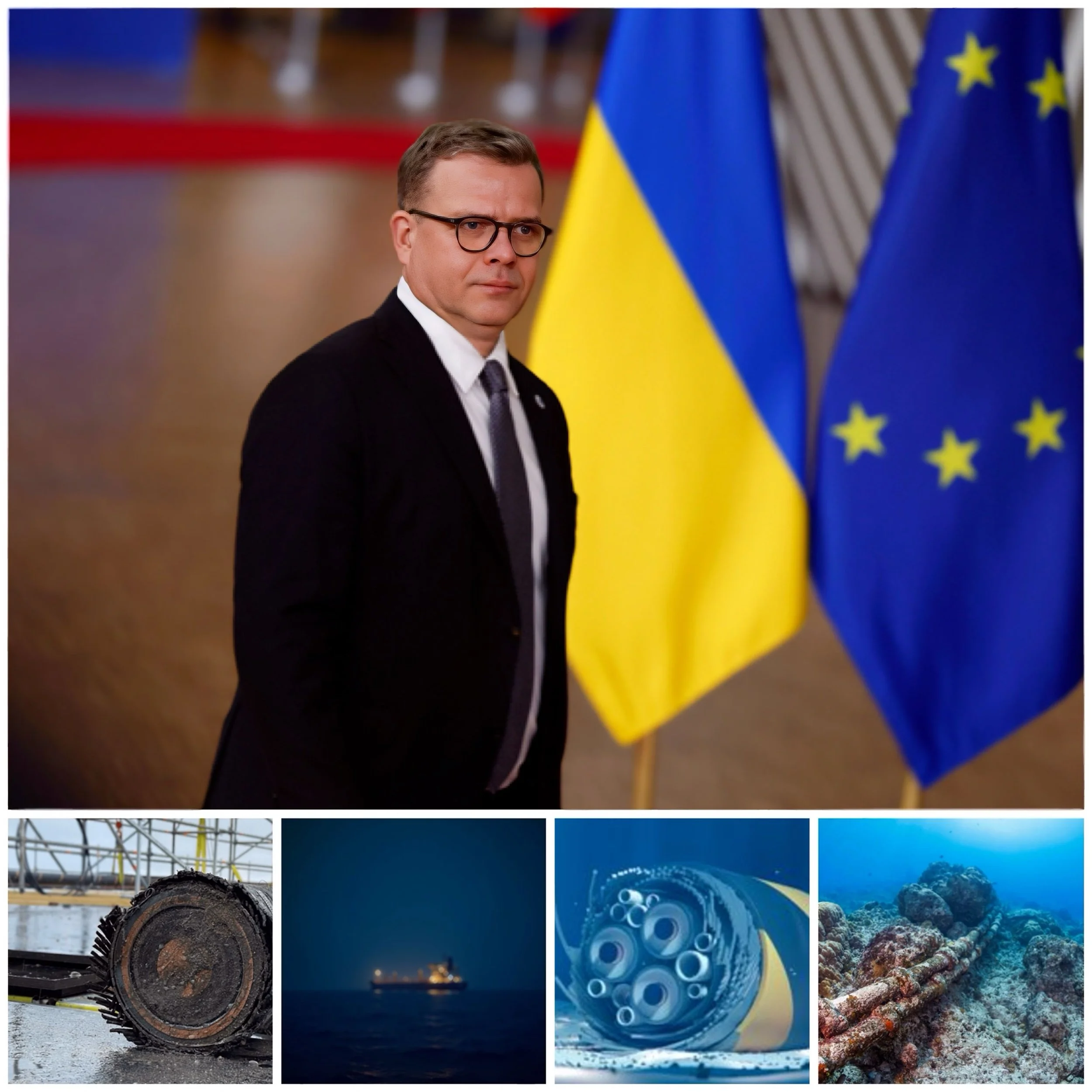
Subsea fiber-optic cables have become the critical arteries of the global digital economy, carrying approximately 99 percent of all transoceanic data traffic—encompassing financial transactions, government communications, military directives, and the vast infrastructure supporting artificial intelligence. Yet this indispensable connectivity has metamorphosed from Rudyard Kipling's vision of unified humanity into a fractured terrain of strategic competition and covert sabotage. Since 2022, subsea cable incidents have escalated dramatically, with 44 documented cable damages occurring across 32 separate incidents between 2024 and 2025 alone. China's unveiling of a deep-sea cable cutter capable of severing armored cables at depths exceeding 13,000 feet—twice the operational depth of conventional subsea communication systems—alongside repeated incidents of suspected sabotage by state-linked vessels, has exposed profound vulnerabilities in infrastructure upon which the modern world depends.
The fragmentation of global cabling into geopolitically aligned blocs, the emergence of gray-zone warfare tactics targeting critical undersea infrastructure, and the inadequacy of existing international legal frameworks to enforce accountability represent a defining challenge for global security and economic resilience in this century.
Introduction
The Silent War Below: Subsea Cables Transform from Commerce to Coercion in Modern Statecraft
The world's telecommunication systems rest upon an extraordinary feat of engineering: more than 1.2 million kilometres of fiber-optic cables criss-crossing the ocean floor, connecting continents and enabling instantaneous communication across vast distances.
These gossamer threads of glass and metal constitute the nervous system of the global economy, facilitating $10 trillion in daily financial transactions flowing through London and New York alone, powering cloud infrastructure that sustains billions of devices, and ensuring the operational continuity of military command-and-control systems that underpin international security architectures.
The centrality of subsea cables to contemporary geopolitical and economic life cannot be overstated—a vulnerability that has not escaped the notice of strategic competitors, particularly China and Russia, who have increasingly weaponised this infrastructure as a tool of coercion falling below the threshold of open warfare. The incidents that have unfolded over the past three years reveal a disturbing pattern: carefully calibrated attacks that test the resilience of targeted nations, probe the efficacy of international response mechanisms, and inch closer toward a paradigm where undersea infrastructure sabotage becomes a normalised instrument of state power.
What was once a domain of commercial competition and incidental maritime accidents has transformed into a contested battleground where the stakes encompass economic stability, military readiness, and the fundamental question of whether democracies can defend the digital infrastructure upon which their power ultimately rests.
Historical Context and the Evolution of Cable Vulnerability
From Telegraph Triumph to Strategic Choke Point: A Century of Submarine Cable Vulnerability
The history of submarine telecommunications infrastructure reveals an enduring tension between the promise of connectivity and the fragility of that promise when exposed to intentional harm.
When Kipling penned "The Deep-Sea Cables" in 1893, less than two decades after the first successful transatlantic cable linking the British Isles to North America, the poet captured the wonder of a technological marvel that seemed destined to dissolve the barriers separating humanity. The cable revolution preceded the modern internet by nearly a century, yet the fundamental promise remained unchanged: instantaneous communication across impossible distances. International recognition of submarine cables' strategic importance crystallised remarkably early. In 1884—more than a century before fibre-optics displaced copper—the international community convened in Paris to establish the Convention for the Protection of Submarine Telegraph Cables, making it an actionable offence to damage submarine communications infrastructure, whether through wilful malice or culpable negligence.
This legal framework, which established principles that persist in modern UNCLOS Article 113, acknowledged what subsequent generations have repeatedly learned: cables represent not merely commercial infrastructure but the sinews of statecraft itself.
Yet for most of the twentieth century, cable sabotage remained peripheral to strategic calculations. The vulnerabilities that existed were primarily accidental—fishermen's nets snagging cables, ships' anchors tangling in the infrastructure, natural disasters disrupting transmission lines.
Approximately two-thirds of all cable faults historically resulted from such human activities, while environmental hazards and internal system failures accounted for the remainder. The 1980s and 1990s saw the gradual transition from copper telegraph cables to fibre-optic systems, with accompanying dramatic improvements in capacity and resilience.
Yet the fundamental geometry remained constant: submarine cables passed through international waters and the exclusive economic zones of numerous states, traversing bottlenecks like the Malacca Strait, the Taiwan Strait, the Suez Canal approaches, and the Strait of Hormuz. These passages, whilst geographically inevitable, created strategic chokepoints that careful observers recognised as potential vulnerabilities in an increasingly technology-dependent global system. For decades, however, such concerns remained largely academic.
The post-Cold War era of globalisation and interconnection created powerful disincentives for intentional infrastructure sabotage—the damage to global commerce and financial systems from such actions would harm perpetrators almost as severely as targets. This presumption of mutual vulnerability as a stabilising force began to erode after 2015, when China launched its "Digital Silk Road" initiative, followed by mounting tensions in the Indo-Pacific, Russia's invasion of Ukraine, and the steady militarisation of maritime competition in contested regions.
Current Status: The Undersea Infrastructure Landscape
99% of Global Communications Hanging by a Thread: The Fragile Economics of Undersea Infrastructure
As of 2025, approximately 530 submarine cables form the backbone of global telecommunications, with roughly 90 licensed systems operating or planned to enter service within the United States alone. This distributed infrastructure, spanning 1.2 million kilometres, has achieved the remarkable feat of transmitting 95 to 99 percent of all intercontinental data traffic without visible degradation or disruption—at least until recently.
The cable ecosystem comprises multiple classes of actors: legacy telecommunications carriers who originally dominated the industry, national governments that have invested in strategically significant routes, and increasingly, the technology giants (Google, Meta, Amazon, Microsoft) who have recognised that dependence upon shared infrastructure creates unacceptable vulnerability for their operations.
The investment dynamics of the subsea cable industry are undergoing profound transformation. Between 2025 and 2027, approximately $13 billion will flow into new subsea cable projects, driven substantially by the computational demands of artificial intelligence and machine learning systems, which require rapid, high-capacity data movement between globally distributed data centres.
Google, the world's single largest investor in submarine cable networks, maintains involvement in approximately 33 different routes and has become the de facto arbiter of cable routing for much of the private sector. Meta has announced Project Waterworth, a planned 40,000-kilometre global subsea cable requiring capital expenditure exceeding $10 billion, designed to provide the company with dedicated, sole-ownership infrastructure for data transmission without reliance upon shared telecommunications carriers. Amazon has filed plans for a cable connecting Ireland and Maryland.
These corporate infrastructure projects, initially motivated by operational efficiency and latency reduction, have become intertwined with national security considerations. The cables that once carried commercial data now transmit military communications, intelligence assessments, and commands that cascade through allied security architectures.
The economics of cable construction present both opportunities and vulnerabilities. Individual submarine cables cost between $30,000 and $50,000 per kilometre to install, with total project costs often reaching $500 million to $1 billion for trans-oceanic routes. This extraordinary capital intensity has concentrated supply-side capacity amongst a small number of specialised firms. The cable-laying capability globally is severely constrained; only a handful of companies possess the specialised ships and technical expertise required for installation and repair operations.
This bottleneck has created persistent shortages of cable-laying capacity, with major projects now being booked many years in advance. The competition for this capacity has become a latent flash-point in US-China competition, as American policymakers have increasingly moved to exclude Chinese firms from participating in cable projects deemed strategically significant, whilst simultaneously seeking to secure preferred access to limited repair capacity in key regions.
Escalating Incidents and the Emergence of Deliberate Sabotage
Gray-Zone Sabotage Becomes Standard Practice: The Alarming Pattern of Deliberate Cable Severances
The trajectory from incidental damage to suspected state-sponsored sabotage is evident when examining the incidents of 2022 onwards. On 26 September 2022, Nord Stream 1 and Nord Stream 2—the massive natural gas pipelines carrying Russian energy exports across the Baltic Sea—experienced four separate explosions within a span of hours, rendering three of four pipes inoperable and releasing approximately 443 to 486 kilotonnes of methane into the Baltic environment.
Although the Nord Stream incident ultimately involved energy infrastructure rather than telecommunications cables, its significance lay in demonstrating the feasibility and political willingness of major powers to engage in deliberate subsea infrastructure sabotage.
The incident occurred within international waters but within the exclusive economic zones of Denmark and Sweden, creating jurisdictional complexities that prevented rapid forensic investigation. Subsequent investigations by Swedish, Danish, and German authorities proved inconclusive regarding attribution, though investigative evidence has implicated individuals with ties to Ukrainian diving operations, complicating the initial Western presumption of Russian responsibility. The uncertainty surrounding Nord Stream's origins established a precedent: undersea sabotage operates within a fog of plausible deniability that frustrates attribution and complicates accountability.
Less than five months after Nord Stream, in February 2023, Taiwan reported the severance of two submarine cables linking its main island to the Matsu Islands, an archipelago of critical strategic significance approximately 10 kilometres from mainland China's coast. The cables, which provided internet connectivity to approximately 13,000 residents of the islands, remained severed for nearly two months whilst repair operations proceeded.
Taiwanese authorities identified two Chinese-registered vessels as likely responsible for the incident, though no definitive proof of intentional sabotage emerged. The timing of the incident—occurring during a period of heightened Chinese military exercises surrounding Taiwan—suggested deliberate rather than accidental causation, yet the absence of unambiguous forensic evidence prevented formal attribution or diplomatic escalation.
This incident, which might have been dismissed as anomalous, took on new significance when subsequent disruptions followed a remarkably similar pattern: Chinese-flagged vessels operating near Taiwan's critical cable locations, followed by severances that paralysed digital connectivity for offshore islands and coastal communities.
By 2024, Taiwan's national authorities reported that cable disruptions had become a recurrent phenomenon, with seven to eight breaks annually attributed with varying degrees of confidence to Chinese-linked vessels. In 2023 alone, the Matsu-Taiwan cables experienced 12 severances, incurring repair costs exceeding NTD $96.4 million (approximately USD $2.9 million). The frequency and clustering of these incidents, combined with radar data indicating vessels operating in proximity to cable routes at the precise moments of disruption, generated substantial presumptive evidence of intentional sabotage.
Moreover, Taiwanese Coast Guard officials intercepted Chinese research vessels conducting seabed surveys and gathering hydrographic data on cable locations—activity that appeared designed to facilitate future targeting of critical infrastructure.
The geographic distribution of cable incidents expanded dramatically in late 2024, with the Baltic Sea and waters surrounding Taiwan emerging as focal-points of suspected state-linked sabotage. In November 2024, the Yi Peng 3, a Chinese bulk carrier, was identified as operating in proximity to undersea cables connecting Finland and Germany, followed by an immediate cable disruption. Within 24 hours, a second incident damaged cables linking Sweden and Lithuania.
The extraordinary coincidence of Chinese vessel activity and subsequent cable severances across multiple locations in the same region, combined with coordinated incidents in the Taiwan Strait suggesting synchronisation between Chinese and Russian operations, indicated a strategic campaign rather than random accidents. Between 2024 and 2025, Insikt Group documented four distinct incidents in the Baltic Sea involving eight cable damages, alongside five incidents in the Taiwan Strait with five documented cable damages, with suspected involvement by China- or Russia-linked vessels in the majority of cases.
In January 2025, the Chinese vessel Shunxin 39—a cargo ship with erratic tracking patterns and a crew of seven Chinese nationals—was suspected of damaging the TPE cable north of Taipei. Subsequent radar analysis revealed the vessel had altered course in a manner inconsistent with standard cargo operations, disabled its positioning system identifiers, and navigated directly over cable routes immediately before reported disruptions.
In February 2025, the Hong Tai 58, another Chinese-crewed vessel, damaged the TPKM-3 undersea cable connecting the Penghu Islands with Taiwan. Taiwan's Coast Guard intercepted the vessel and detained its captain and crew on suspicion of intentional sabotage, marking one of the few instances in which regional authorities have moved beyond investigation toward enforcement action.
The detention, whilst symbolically significant, ultimately produced limited strategic effect—a pattern that would repeat as Taiwan sought to prosecute cable-cutting incidents within ambiguous legal frameworks lacking clarity on state responsibility and appropriate remedial measures.
The escalation of incidents across multiple regions during this period—Baltic Sea, Taiwan Strait, Red Sea—appeared coordinated in timing if not in explicit operational collaboration. In September 2025, multiple subsea cables in the Red Sea were damaged in incidents affecting connectivity between Europe, the Middle East, and Asia.
Given the strategic significance of these passages and the frequency of cable disruptions in contested maritime zones, a discernible pattern emerged: subsea cable sabotage had become an accepted instrument of statecraft, deployed by revisionist powers to test the resilience of democratic societies, probe the efficacy of international response mechanisms, and advance geopolitical objectives below the threshold that would trigger military retaliation.
China's Escalatory Technological Capabilities
China Reveals Its Underwater Weapon: A 13,000-Foot Cable Cutter That Redefines Infrastructure Vulnerability
The strategic implications of subsea cable vulnerabilities took on new dimensions in March 2025, when Chinese state media and scientific publications revealed the existence of a sophisticated deep-sea cable-cutting device developed by the China Ship Scientific Research Centre. The device, designed for compatibility with unmanned submersibles including the Fendouzhe and Haidou series, represents a qualitative escalation in China's capability to conduct deliberate infrastructure sabotage at depths previously immune to intentional disruption.
The technical specifications of this cutting apparatus reveal engineering sophistication calibrated specifically for the challenge of severing armoured submarine cables. Operating at depths reaching 13,000 feet—more than double the typical 2,000-metre operational depth of existing subsea communication infrastructure—the device features a diamond-coated grinding wheel measuring 150 millimetres in diameter, rotating at 1,600 revolutions per minute, with sufficient mechanical force to fracture steel-reinforced cables whilst avoiding disturbance to surrounding marine sediments.
The apparatus employs a titanium alloy shell and oil-compensated seals designed to withstand the crushing pressures of the deep-sea environment, where water pressure exceeds 400 atmospheres. Powered by a one-kilowatt motor with an 8:1 gear reducer, the device generates approximately six Newton-metres of torque—sufficient for prolonged operation, though extended use raises concerns regarding thermal management at extreme depths.
The system's remote operation capacity, utilising robotic arms controlled from surface vessels or submersible platforms, enables cutting operations to proceed without surfacing, thereby reducing the likelihood of detection through satellite observation or vessel-based surveillance. The device incorporates sophisticated positioning systems designed to ensure accuracy in low-visibility conditions typical of the deep ocean, allowing operators to align the cutting apparatus with target cables with precision approaching one metre—sufficient for reliable severance of infrastructure spanning mere centimetres in diameter.
The significance of this capability extends beyond the mere technical ability to sever cables. China operates the world's largest fleet of submersibles, both manned and unmanned, providing unprecedented access to deep-ocean environments. The revealed cutting device can be mounted on cheap, readily available submersible platforms, enabling a potential proliferation of capability throughout China's maritime forces.
The device's dual-use nature—ostensibly designed for civilian salvage operations and seabed mining—creates plausible ambiguity regarding its true strategic purpose, consistent with China's broader doctrine of gray-zone operations that avoid the unambiguous crossing of thresholds that would justify military retaliation.
The revelation of this technological capability triggered immediate concerns within Western security establishments. The device's operational depth of 13,000 feet far exceeds the maximum depths at which existing submarine cables operate—typically between 1,000 and 2,000 metres.
This asymmetry suggests that China's development of the cutting apparatus was not motivated by necessity arising from Taiwan Strait cable depths, but rather reflects strategic planning for future operations targeting undersea infrastructure in regions where maximum operational depth advantages would provide meaningful tactical advantage.
Potential target zones include cables transiting the Guam region, which constitutes part of the second island chain essential to United States military strategy in the Indo-Pacific, or other critical chokepoints where cable routing creates geographical concentrations of critical infrastructure.
The Digital Silk Road and Geopolitical Fragmentation
Beijing’s Stranglehold: How China Controls Critical Global Communications Infrastructure Through HMN Technologies
China's strategic approach to subsea cable infrastructure extends far beyond the capacity for destructive interference; it encompasses comprehensive efforts to establish control over the construction, operation, and maintenance of global telecommunications networks through its "Digital Silk Road" initiative launched in 2015. The centrepiece of this strategy involves HMN Technologies (formerly Huawei Marine Networks), which has emerged as a dominant force in subsea cable supply and installation during the past decade.
HMN Technologies has completed approximately 108 subsea cable projects over the past decade, laying more than 60,000 kilometres of undersea infrastructure—a distance equivalent to one-and-a-half times the circumference of the Earth at the equator.
The company's involvement in Indo-Pacific cable projects alone spans 16 separate initiatives collectively valued at approximately USD $1.6 billion. In Indonesia, HMN Technologies has completed eleven undersea cable projects; in South Korea, seven; and in the United Arab Emirates, six.
The company's market penetration has been extraordinary: it has supplied or installed eighteen percent of all subsea cables (measured by total length) laid globally during the past four years and is currently positioned as the world's fourth largest submarine cable provider, behind only SubCom (United States), Alcatel Submarine Network (France), and NEC (Japan).
The competitive advantage underlying HMN Technologies' market dominance rests substantially upon pricing. The company's cable installation and supply contracts consistently undercut Western competitors by twenty to thirty percent, allowing Beijing-backed entities to capture market share in developing nations and emerging regions where price sensitivity shapes procurement decisions.
This pricing advantage, combined with substantial Chinese state financing through development banks and bilateral loan arrangements, has enabled HMN Technologies to expand its geographic footprint across Asia, Africa, the Middle East, and the Pacific.
The geopolitical significance of Chinese dominance in undersea cable construction cannot be overstated. Cable infrastructure creates lasting dependencies; once installed, cables bind nations together in patterns of data flows and communication pathways that prove difficult to alter without extraordinary capital expenditure.
Nations that depend upon Chinese-supplied and Chinese-operated cables for international connectivity face inherent vulnerabilities to potential future interruption or interception of communications. The existence of Chinese-controlled infrastructure creates opportunities for surveillance, signals intelligence gathering, and strategic leverage that extend beyond the physical architecture of the cables themselves.
Countries dependent upon Chinese companies for cable maintenance and repair operations similarly face potential vulnerabilities should geopolitical tensions escalate to the point where Beijing seeks to weaponise these dependencies.
Recognising these vulnerabilities, the United States government has undertaken systematic efforts to exclude HMN Technologies from projects deemed strategically significant. Between 2019 and 2023, the United States intervened in at least six separate cable contracts to prevent HMN Technologies from participating in projects that would connect the Americas with Asia-Pacific regions.
The US Export-Import Bank provided financing to SubCom, the American cable supplier, to facilitate more competitive pricing. American diplomats conveyed warnings to prospective customers regarding security risks associated with Chinese-supplied infrastructure and threatened potential sanctions against foreign telecommunications carriers that engaged HMN Technologies for projects involving American interests.
These exclusionary efforts have had measurable impact. Whereas HMN Technologies was once positioned to potentially capture sixty percent of the global cable market by 2030, the company's actual participation has declined to approximately ten percent of existing and planned cables. Yet this American counter-effort has created perverse consequences.
By excluding Chinese companies from collaboration on major international cable projects, the United States has reduced opportunities for Western firms to participate in infrastructure development across the Indo-Pacific. The fragmentation that has resulted drives precisely the geopolitical alignment by cable bloc that American policy purportedly seeks to prevent.
Moreover, American firms remain substantially dependent upon Chinese companies for cable repair operations in key regions; deliberately excluding China from cable construction whilst maintaining reliance upon Chinese repair capacity creates sustained vulnerabilities in the other direction.
The Surge of Private Sector Infrastructure Investment
Tech Giants’ $13 Billion Gamble: Why Google, Meta, and Amazon Are Building Their Own Underwater Empires
Parallel to the geopolitical competition between Chinese and American cable providers, technology giants have begun investing unprecedented capital into private subsea cable infrastructure, seeking to reduce dependence upon shared telecommunications networks and establish dedicated capacity for their operations.
Google has become the world's largest private investor in submarine cables, with involvement in approximately 33 different routes and cumulative investments exceeding USD $47 billion between 2016 and 2018 alone. The company's strategy encompasses sole ownership of certain regional routes as well as consortium participation in larger trans-oceanic cables.
Meta's Project Waterworth represents an escalation of private-sector ambition in subsea cable ownership. The project entails construction of a 40,000-kilometre global subsea cable network at a capital cost exceeding USD $10 billion, designed to provide Meta with sole operational control and dedicated capacity, in contrast to previous consortium-based arrangements.
The planned routing—extending from the eastern coast of the United States, through South Africa, onward to India, and returning to the western United States via Australia—creates a globally distributed "W"-shaped topology that offers geographic diversity from conventional cable routes and reduces concentration risk. Critically, Meta's Project Waterworth represents the company's first wholly owned subsea cable; previous investments involved consortium arrangements with shared operational responsibility.
The transition to sole ownership reflects Meta's assessment that dependence upon shared infrastructure creates unacceptable exposure to disruption in an environment of escalating geopolitical tensions and deliberate sabotage.
Amazon has similarly announced plans for infrastructure expansion, with a planned cable connecting Ireland and the eastern United States. These corporate infrastructure investments, whilst commercially motivated, explicitly incorporate national security considerations.
The capacity constraints in global cable-laying infrastructure—with available resources booked years in advance—mean that major technology corporations must begin planning and reserving capacity well before actual deployment.
The rush to secure cable-laying resources reflects recognition that undersea cable infrastructure has become essential infrastructure in the truest sense: its disruption threatens not merely commercial operations but also government communications, military command-and-control systems, and financial market integrity.
The emergence of privately owned, technology-company-controlled cable infrastructure raises distinct governance questions. These private cables traverse international waters and cross the exclusive economic zones of numerous nations, yet their operation remains under the control of private corporations with primary fiduciary obligations to shareholders rather than public interest considerations.
Governments lack formal mechanisms to compel private cable operators to maintain specific routing patterns, provide priority access to government communications, or maintain infrastructure in contexts of geopolitical escalation. The blurring of distinction between public and private infrastructure—between critical national security assets and commercial operations—creates strategic ambiguities that international law has yet to adequately address.
Vulnerabilities, Attribution, and the Gray Zone
The Attribution Trap: Why Submarine Cable Sabotage Remains Virtually Unpunishable Under International Law
The fundamental challenge confronting efforts to secure subsea cables rests upon the extreme difficulty of differentiating between accidental damage and deliberate sabotage, combined with the near-impossibility of definitively attributing malicious acts to specific state actors in the absence of compelling forensic evidence.
Approximately seventy percent of all subsea cable disruptions historically result from human activities—fishing nets snagging cables, ships' anchors dragging across infrastructure, dredging operations encountering buried cables. The remaining thirty percent comprises natural hazards (earthquakes, severe weather, underwater geological processes) and internal system failures.
This statistical baseline creates substantial space for plausible deniability: even if a cable severance resulted from deliberate sabotage, the target state can invoke the established prevalence of accidental damage as a credible explanation, frustrating diplomatic escalation or legal enforcement.
The challenge of attribution is compounded by the technical characteristics of potential sabotage vectors. Submarines and unmanned underwater vehicles can approach cable locations whilst leaving minimal forensic signatures.
The Automatic Identification System, which maritime states have relied upon for decades to track vessel movements, operates on open VHF frequencies readily susceptible to spoofing, jamming, and deliberate disablement. Vessels can switch off their AIS transmitters, rendering them invisible to monitoring systems, or can operate with false identification information.
When submarine or unmanned submersible platforms are utilised for sabotage operations, the attribution challenge becomes nearly insurmountable; underwater vehicles leave no distinct signatures comparable to those generated by surface vessels, and their detection requires active sonar or direct observation—capabilities that remain unavailable to many cable operators.
Even when forensic evidence exists—radar data showing vessels in proximity to cable routes at moments of disruption, vessel identification information suggesting connections to hostile nations, eyewitness reports of suspicious activity—the standards for legal attribution to a state actor remain extremely demanding under international law.
The International Court of Justice has established that attribution requires either proof of explicit governmental authority to conduct the offensive action or demonstration of specific instructions, direction, or control exercised by the state over non-state actors. These evidentiary requirements were developed in contexts of discrete military operations or terrorism; their application to subsea cable sabotage creates peculiar challenges.
If Russia or China operates through private shipping companies, civilian research vessels, or fishing operations that are not formally integrated into military structures, the legal pathway from observed damage to state responsibility becomes tenuous even where circumstantial evidence is substantial.
The investigations into the Nord Stream pipeline sabotage of September 2022 illustrate these attribution challenges in their starkest form. The incident occurred in international waters within the exclusive economic zones of Denmark and Sweden.
Multiple states conducted investigations; the Swedish and Danish investigations were ultimately closed in February 2024 without definitive conclusions regarding perpetrator identity. The German investigation, operating with access to more extensive forensic evidence, has continued longer but has struggled to move beyond identification of individuals toward establishment of state responsibility.
As of 2025, German authorities have identified seven suspects, some of whom have been arrested or detained in other jurisdictions (notably, a Ukrainian suspect arrested in Italy in August 2025 and another in Poland in September 2025), yet the investigation has failed to conclusively establish whether the Nord Stream sabotage was conducted by Russian actors, Ukrainian actors, Western intelligence services, or some combination.
The enduring inability to attribute the incident after more than two years of investigation illustrates the structural challenges inherent in establishing causation and responsibility for subsea infrastructure damage.
This attribution challenge creates strategic incentives for states to engage in subsea cable sabotage. The act inflicts tangible damage on target nations whilst the perpetrator faces minimal risk of definitive attribution or international enforcement action.
Gray-zone sabotage—actions falling below the threshold of manifest military attack that would justify immediate retaliation—becomes an attractive tool for states seeking to pressure adversaries without triggering escalation spirals.
China's apparent campaign of cable severances around Taiwan, for instance, serves multiple strategic objectives simultaneously: it tests Taiwan's technical and administrative capacity to respond to infrastructure damage; it demonstrates China's capability to degrade Taiwan's communications with the outside world; it reveals gaps in Taiwan's maritime surveillance and rapid response systems; it inflicts financial costs upon Taiwan's communications infrastructure; and it does all of this whilst maintaining sufficient ambiguity regarding intentionality that Taiwan's democratic allies face political difficulty in responding with proportional measures.
Economic and Strategic Implications
Trillions at Risk: How a Single Cable Cut Could Destabilize Global Financial Markets
The vulnerability of subsea cables to deliberate sabotage carries implications extending far beyond technical telecommunications challenges. These cables carry the vast majority of global financial transactions.
London and New York together process approximately USD $10 trillion in daily financial transactions, the overwhelming majority of which traverse subsea cables. Disruption of critical cables creates immediate financial market impacts: trading ceases, price discovery mechanisms fail, liquidity vanishes, and panic ensues. Historical studies have estimated that interruption of subsea cable communications creates indirect financial costs exceeding USD $1.5 million per hour, with repair operations typically requiring up to 16 hours before full restoration of service.
These calculations suggest that a single major cable severance affecting multiple routes simultaneously could generate financial losses measured in tens of millions of dollars, a figure that would dwarf the capital costs of the infrastructure damage itself.
Beyond financial markets, subsea cables carry military and intelligence communications that are essential to allied security architectures. The United States military's ability to coordinate operations across the Indo-Pacific depends critically upon reliable high-capacity data links between forward-deployed forces, regional command headquarters, and the continental United States.
Disruption of these cables during a period of military crisis—precisely the scenario most likely to trigger deliberate sabotage in the context of potential Chinese military action against Taiwan—could degrade American command-and-control effectiveness at the precise moment when its integrity is most essential.
Subsea cables carry classified government communications that are typically routed through dedicated military cable systems (such as the Global Network Operations Centre), yet substantial portions of government communications traverse commercial cables with encryption applied at higher protocol layers.
The existence of Chinese-supplied or Chinese-controlled cable infrastructure creates potential vulnerabilities to signal intelligence gathering that extends beyond deliberate sabotage to encompass steady-state surveillance and exploitation of access to information flows. The ambiguity between deliberate sabotage (which damages cables) and passive surveillance (which merely extracts information from them) creates distinct vulnerabilities that international law has yet to adequately address.
The most immediate economic impact of subsea cable vulnerabilities has manifested in the technology sector's own decision-making regarding capital allocation and infrastructure investment. The fact that Meta, Google, and Amazon have collectively decided to invest more than USD $13 billion in private subsea cable infrastructure over the next two years reflects their assessment that the risks associated with dependence upon shared telecommunications networks have become unacceptable.
These investments, which would not be economically justified on purely commercial grounds—given that conventional cable bandwidth can be purchased substantially cheaper through existing providers—represent explicit responses to geopolitical risk.
The capital that these companies are deploying toward cable infrastructure represents capital that would otherwise be available for research and development, acquisition of complementary technologies, or expansion of computational capacity.
To the extent that subsea cable vulnerability drives incremental capital expenditure on redundant infrastructure, the ultimate cost of that vulnerability is borne by consumers and shareholders, in the form of reduced corporate profitability or higher prices for digital services.
International Legal Framework and Its Limitations
140-Year-Old Laws Meet Modern Warfare: The Gaping Legal Holes in Submarine Cable Protection
The international legal regime governing undersea cables has remained substantially unchanged since the Convention for the Protection of Submarine Telegraph Cables was established in 1884. That convention established as an international criminal offence the deliberate or negligently-caused damage to submarine cables; the provision was subsequently incorporated into UNCLOS Article 113, which requires that states adopt domestic legislation imposing criminal penalties for damage to submarine cables, whether deliberately or through culpable negligence.
Yet this legal framework, whilst formally robust, operates with profound practical limitations in the context of state-sponsored sabotage. Article II of the 1884 Convention requires that states make cable damage a "punishable offence"; UNCLOS Article 113 imposes a similar obligation on signatory states. However, the framework contains a critical gap: it does not require that states actually exercise jurisdiction to prosecute alleged offenders.
More critically, it does not establish mechanisms for attributing responsibility to a state actor based upon circumstantial evidence or suspicious vessel activities. If a vessel flagged to a nation that is indifferent to cable protection laws operates in proximity to a cable and that cable is subsequently damaged, international law provides no basis for holding the flag state responsible absent explicit evidence that the damage was committed pursuant to governmental authority and under specific instructions or directions of the state.
The legal regime governing the high seas, articulated in UNCLOS Articles 87-89, grants all states the freedom to navigate and conduct activities on the high seas. This freedom encompasses the right to lay submarine cables; however, it does not afford stronger protections for cables already laid than those enjoyed by cable owners.
States may establish patrols and monitor vessel activities in their exclusive economic zones, but their authority to intercept vessels and investigate activities on the high seas remains limited. Warships and government vessels can approach other vessels, order them to display their flag, and conduct boarding inspections where piracy or serious violations of international law are suspected.
However, the determination that a vessel engaged in cable sabotage rarely meets these evidentiary thresholds in real-time, before cables are actually severed. By the time a state has sufficient evidence to justify boarding and inspection of a vessel suspected of planning cable sabotage, the damaging act has typically already occurred, rendering the boarding operation a post-hoc investigation rather than a preventive intervention.
The inadequacy of international legal frameworks to address state-sponsored subsea cable sabotage reflects the challenges that international law systematically encounters when addressing novel forms of statecraft that fall below the threshold of manifest warfare. The law of armed conflict addresses military attacks; law enforcement frameworks address criminal activity; law-of-the-sea conventions address navigation and resource extraction.
Yet gray-zone sabotage—actions carefully calibrated to inflict damage whilst maintaining ambiguity regarding intentionality—occupies a gap in the legal architecture. Taiwan has moved to address this gap through domestic legislation. In December 2025, Taiwan's legislature passed stiffer penalties for intentional subsea cable damage, explicitly designating certain cable routes as critical infrastructure deserving heightened legal protection.
However, the enforcement of these penalties remains dependent upon Taiwan's ability to apprehend and prosecute individuals suspected of cable sabotage—an outcome that requires jurisdiction, evidence, and ultimately diplomatic cooperation from other nations, which may be unwilling to extradite suspects if doing so would generate diplomatic friction with more powerful actors.
Geopolitical Realignment and the Emergence of Cable blocs
The Digital Curtain Falls: Subsea Cables Split into Competing Blocs, Ending Global Connectivity as We Know It
The combination of China's growing capacity for subsea infrastructure sabotage, Chinese dominance in subsea cable supply and construction, the United States' counter-strategy of excluding Chinese firms from strategically significant projects, and the private sector's movement toward dedicated infrastructure has driven the fragmentation of global subsea cable networks into distinct geopolitical blocs. This fragmentation inverts the promise that Kipling embedded in his 1893 poem: rather than serving as a unifying force transcending national boundaries, subsea cables have become symbols and instruments of geopolitical division.
The US-led bloc encompasses cable routes and operators aligned with American strategic interests and controlled by trusted Western companies. SubCom (United States), Alcatel Submarine Network (France), and NEC (Japan) form the dominant supply-side providers for this bloc.
Google, Meta, Amazon, and Microsoft have all positioned their private infrastructure within this ecosystem, with governance arrangements that exclude Chinese participation or control. NATO coordination mechanisms, including the emerging Project HEIST initiative, operate within this bloc to enhance resilience and interoperability.
The Chinese-led bloc encompasses subsea cable infrastructure financed, constructed, or operated by Chinese state-affiliated entities, particularly HMN Technologies and its parent constellation of telecommunications companies (China Telecom, China Unicom, China Mobile). This bloc extends across Asia, Africa, the Middle East, and the Pacific, with particular density in regions participating in Beijing's Belt and Road Initiative.
These cables, whilst ostensibly commercial infrastructure, carry implicit strategic leverage for Beijing—dependence upon Chinese-supplied and Chinese-maintained infrastructure creates vulnerabilities to potential future Chinese coercion.
A third category—nonaligned or diversified cable infrastructure—encompasses routes developed through multilateral consortia or by developing nations seeking to reduce dependence upon either pole of the great-power competition.
However, the economic and technical constraints on cable development mean that truly nonaligned infrastructure remains limited. The majority of nations must either align with Western providers or accept dependence upon Chinese supply chains.
The political and strategic costs of this fragmentation are substantial. Global telecommunications connectivity becomes dependent upon geopolitical alignment rather than commercial logic or technical efficiency.
Nations seeking to maintain strategic autonomy from both American and Chinese spheres of influence face constrained options. Developing countries that would benefit from Chinese financing for cable infrastructure must accept potential future vulnerability to Chinese coercion; those that reject Chinese infrastructure must commit to higher-cost alternatives provided by Western companies. The result is a system increasingly organised around geopolitical loyalty rather than functional optimization.
Emerging Defensive Technologies and NATO's Response
NATO’s Desperate Gamble: Project HEIST Attempts to Reroute the Internet to Space Before It’s Too Late
Recognition of subsea cable vulnerabilities has catalysed efforts to develop protective technologies and operational strategies designed to enhance resilience. These efforts have taken multiple forms, spanning physical protection, surveillance and detection, and redundancy through alternative communications pathways.
NATO's Project HEIST (Hybrid Space/Submarine Architecture to Ensure Information Security of Telecommunications), supported with a €400,000 grant through NATO's Science for Peace and Security Programme for a broader USD $2.5 million initiative, represents the most comprehensive allied effort to address subsea cable vulnerability through technological innovation.
The project, led by researchers from Blekinge Institute of Technology in Sweden in collaboration with American institutions (Cornell University, Johns Hopkins University), aims to develop systems capable of detecting cable breaks with one-metre accuracy and automatically rerouting high-priority internet traffic to satellite communications in the event of cable disruption.
The technical challenge underlying HEIST's objectives is substantial. Current fibre-optic cables operate with data throughput measured in terabits per second; existing satellite communications systems operate with capacity measured in gigabits per second—orders of magnitude lower.
Future projections suggest that global subsea cable capacity will reach approximately 8,750 terabits per second by 2026, whilst satellite capacity will approach 50 terabits per second. This asymmetry means that satellites cannot serve as complete replacements for subsea cables, only as emergency backup for priority traffic.
HEIST's research agenda encompasses exploration of higher-bandwidth laser-optical satellite communication systems that might approach subsea cable throughput, drawing on recent NASA experiments demonstrating potential to increase data transmission rates by 40-fold relative to conventional radiofrequency satellite links.
If such technologies can be operationalised, they would provide a genuine alternative pathway for data transmission independent of subsea cables, substantially reducing vulnerability to coordinated cable sabotage affecting multiple routes simultaneously.
Physical protection measures have also received increasing attention. Burial of cables beneath the seabed, particularly in shallow waters where accidental damage is most likely, can substantially reduce vulnerability to fishing nets and ship anchors. Rock placement and mattress coverings provide additional protection.
However, these techniques remain incomplete solutions; they may reduce accidental damage but offer limited protection against deliberate sabotage conducted by determined state actors with access to submersible platforms and deep-sea cutting equipment. The extreme depth at which China's new cable-cutting device operates renders many physical protection strategies ineffective.
Surveillance and detection technologies offer complementary approaches. The Submarine Cable Automatic Warning System (SAWS) deployed by Taiwan on critical cable routes automatically sends alerts to vessels in the vicinity, warning them against anchoring or engaging in activities that might damage cables.
Automatic Identification System data, combined with satellite-based vessel monitoring and naval patrols, can enhance awareness of suspicious vessel activities near cable routes. However, these monitoring systems remain vulnerable to intentional circumvention; vessels can disable AIS transmitters, and underwater vehicles remain effectively undetectable through conventional surveillance means.
NATO's Baltic Sentry operation, established in 2025 in response to multiple suspected Russian and Chinese cable-cutting incidents in the Baltic Sea, represents militarisation of cable protection.
The operation deploys naval vessels, aircraft, and drones to monitor critical undersea infrastructure and maintain constant surveillance of suspicious vessel activities. However, maintaining 24/7 surveillance of 1.2 million kilometres of cable routes at global scale would require deployment of military resources vastly exceeding what any conceivable alliance could sustain.
The Baltic Sentry operation demonstrates NATO's political commitment to cable protection but simultaneously reveals the futility of attempting to defend subsea infrastructure through conventional military surveillance.
Taiwan's Escalating Vulnerability and Strategic Implications
The Canary in the Digital Coal Mine: Why Taiwan’s Cable Crisis Portends Global Catastrophe
Taiwan faces the most acute vulnerability to subsea cable sabotage of any major economy. The island's geographic location makes it dependent upon undersea cables for approximately 99 percent of its international internet connectivity. The frequency of suspected cable severances—seven to eight incidents annually—has normalized infrastructure disruption as a feature of Taiwan's operating environment. More significantly, China's demonstrated capacity and apparent willingness to conduct cable sabotage establishes a capability that Beijing could rapidly escalate in response to political developments that trigger Chinese coercive pressure.
The strategic implications of this vulnerability extend beyond immediate communications disruption to encompass broader questions about Taiwan's economic and military viability. Taiwan's economy depends critically upon its status as a global technology and semiconductor hub.
The island hosts the world's dominant semiconductor foundries (Taiwan Semiconductor Manufacturing Company) and supplies critical components to technology companies globally. High-frequency cable damage disrupts Taiwan's ability to serve clients reliably, potentially triggering capital flight and international investor concern regarding the security of Taiwan-based infrastructure. Financial markets, which depend critically upon high-speed communications, would be substantially disrupted by Taiwan Strait cable damage, with potential for generating global market instability.
Beyond economic dimensions, subsea cable vulnerability has military implications. Taiwan's military command-and-control systems depend critically upon communications with allied forces, particularly the United States military's presence in the Indo-Pacific. Disruption of critical cables during a military crisis—precisely the scenario in which cables would be most vulnerable to deliberate sabotage—could impede Taiwan's ability to coordinate with its primary security guarantor.
China's apparent strategy involves building a capability to degrade Taiwan's communications with the outside world as an element of broader coercive pressure designed to convince Taiwanese populations that the government cannot provide security or maintain essential services during a crisis.
Taiwan has undertaken defensive measures in response to escalating cable incidents. The establishment of an interagency platform for submarine cable security in 2025, improved coordination between the Navy and Coast Guard, acceleration of cable repair capabilities, and deployment of automated warning systems represent reasonable responses given Taiwan's limited resources.
However, these defensive measures address symptoms rather than underlying vulnerabilities. Taiwan's fundamental geographic exposure to submarine cable sabotage cannot be eliminated through any measure short of achieving dramatic improvements in satellite-based backup communications, which remain impractical given bandwidth constraints.
Cause-and-Effect Analysis: Why Cable Sabotage Now?
Why Now? The Convergence of Technology, Competition, and Chaos That Triggered the Subsea Cable Crisis
The escalation of subsea cable incidents from negligible phenomenon to recurrent strategic challenge warrants analysis of underlying causal factors. Several interconnected dynamics drive the recent intensification of suspected state-sponsored cable sabotage.
First, the increasing integration of subsea cables into military and government communications has elevated the strategic value of these systems. Three decades ago, subsea cables carried predominantly commercial telecommunications traffic.
Today, they carry classified military communications, intelligence assessments, and government directives that are central to allied security architectures. This elevation of strategic importance creates incentives for adversaries to invest in capabilities designed to disrupt these communications.
Second, the emergence of artificial intelligence and large-scale machine learning systems has created unprecedented demand for high-bandwidth, low-latency data transmission between globally distributed computing centres.
This surge in data demand has increased the strategic concentration value of existing cable routes and elevated the economic costs of cable disruption. A single major cable severance in 2025 creates substantially higher financial losses than an equivalent incident would have generated five years prior, purely as a consequence of the exponential growth in data flows.
Third, the geopolitical environment has become substantially more competitive and confrontational. The period of post-Cold War unipolarity that characterised the 1990s and 2000s, during which subsea cable sabotage was not a significant strategic concern, has given way to multipolar competition characterised by persistent tension between the United States and its allies on one hand and China and Russia on the other. This competition encompasses all domains of statecraft, including civilian infrastructure that was previously treated as outside the realm of strategic military competition.
Fourth, the technological evolution of unmanned and remotely-operated submersible systems has reduced the barriers to accessing the deep-ocean environment. Decades ago, sabotage of deep-ocean infrastructure would have required deployment of highly specialized military assets.
Today, commercial submersibles can be repurposed for strategic objectives, and autonomous underwater vehicles have become increasingly capable. This democratisation of deep-ocean access has reduced the technological specialization required for cable sabotage.
Fifth, the deliberate ambiguity surrounding cable sabotage incidents—the difficulty of definitively attributing damage to specific actors—has made cable disruption an attractive instrument of gray-zone coercion.
States can inflict damage without facing high risk of definitive attribution or escalatory retaliation. The absence of international legal mechanisms capable of addressing gray-zone sabotage creates a permissive strategic environment for such activities.
Sixth, the demonstrated success of subsea cable sabotage in degrading targeted nations' resilience and signalling strategic resolve has created positive reinforcement loops that incentivise further escalation.
China's campaign of cable severances around Taiwan has revealed shortcomings in Taiwan's response mechanisms and maritime awareness. Each successful incident provides operational intelligence regarding Taiwan's detection capabilities, response times, and repair procedures—information that becomes incorporated into Chinese operational planning for future campaigns.
Future Trajectories and Strategic Implications
Toward Digital Fragmentation: The Submarine Cable Wars of the 2030s Will Reshape Global Power
The trajectory of subsea cable vulnerability in the coming decade will likely be shaped by three reinforcing dynamics: the increasing integration of artificial intelligence systems into critical national infrastructure, the continued geopolitical competition between the United States and China over technological dominance, and the inadequacy of existing international legal and military frameworks to deter or respond to gray-zone sabotage.
Investment in subsea cable infrastructure will continue to accelerate, driven by the computational demands of artificial intelligence systems that require vast quantities of high-bandwidth, low-latency connectivity. This expansion of cable infrastructure will increase the target set available for potential sabotage, even as new cables provide greater redundancy and resilience.
The paradox of modern infrastructure resilience is that efforts to build redundancy often merely expand the total surface area of vulnerability—additional cables provide backup pathways, but they also create additional nodes at which sabotage might occur.
China's demonstrated capacity and apparent willingness to conduct cable sabotage will likely incentivise accelerated development of Chinese submersible capabilities designed specifically for deep-ocean infrastructure operations. The revealed cable-cutting device will almost certainly inspire further technical refinement and potential proliferation among Chinese maritime forces.
The strategic logic that has driven China to develop deep-sea cutting capabilities applies with equal force to other domains of subsea infrastructure; power cables connecting offshore wind installations, oil and gas pipelines, and military sensing arrays all become potential targets for Chinese sabotage in contexts of geopolitical escalation.
Taiwan remains the most likely zone of intensified cable sabotage in the near term. If China's gray-zone coercive campaign succeeds in generating political pressure within Taiwan for political accommodation with Beijing, the strategic purpose of cable sabotage will have been achieved and the incidents may diminish.
Conversely, if Taiwan maintains its commitment to political autonomy and democratic governance, China faces incentives to escalate cable sabotage campaigns as part of broader coercive pressure campaigns designed to degrade Taiwan's capacity to sustain essential services during a potential military crisis.
The Atlantic and Nordic regions will likely experience continued cable vulnerabilities associated with Russian gray-zone operations designed to undermine NATO cohesion and demonstrate Moscow's capacity to threaten critical infrastructure.
The concentration of NATO member states in the Nordic and Baltic regions, combined with the geographic concentration of critical undersea cable routes, creates a high-risk zone for potential escalation.
The Red Sea and Indian Ocean regions remain zones of potential vulnerability, particularly as global shipping shifts away from Suez Canal routes in response to Houthi attacks and geopolitical instability in the Middle East. The emergence of alternative routing through the Indian Ocean and Southeast Asian chokepoints will create new cable routes transiting regions with weak state capacity for surveillance and protection.
Conclusion
Securing the Unsecurable: Can Democracy Defend the Infrastructure That Sustains It?
Rudyard Kipling's vision of unified humanity enabled by instantaneous telecommunications remains compelling; yet the realisation of that vision has generated dependencies and vulnerabilities that have become central to the nature of great-power competition in the twenty-first century.
Subsea cables, which carry 99 percent of global transoceanic communications, have ceased to be infrastructure that can be presumed to exist and function reliably; they have become contested terrain upon which the stability of the international system itself partially depends.
The incidents of 2022-2025—from the Nord Stream explosions through the escalating campaigns of cable severances around Taiwan and in the Baltic—indicate that great powers have embraced subsea cable sabotage as a tool of statecraft.
The emergence of China's deep-sea cutting device, the proliferation of unmanned submersible platforms, and the enduring difficulty of attributing sabotage to specific actors have created a strategic environment in which subsea cable vulnerability threatens not merely commercial convenience but the stability of financial systems, the effectiveness of military command and control, and the capacity of democracies to sustain the digital infrastructure upon which their power ultimately rests.
The response to these threats requires action across multiple dimensions simultaneously. The international legal framework governing subsea cables must be modernised to address the reality of state-sponsored sabotage and gray-zone coercion.
Existing treaties dating to 1884, whilst formally establishing cable protection as an international obligation, lack enforcement mechanisms adequate to deter determined state actors. New international agreements should establish clearer standards for attribution, broader authority for enforcement operations in contested maritime zones, and meaningful penalties for states that permit their flags to be used in sabotage operations.
Technological responses—through NATO's Project HEIST and parallel private-sector initiatives—should be accelerated to develop satellite-based backup systems capable of sustaining critical communications during subsea cable disruptions.
The investment required for such systems is substantial; however, the costs of vulnerability to coordinated cable sabotage affecting multiple routes simultaneously would be orders of magnitude greater.
The fragmenting geopolitical division of subsea cable networks into competing blocs should be addressed through efforts to establish multilateral standards for infrastructure security that can be applied across all blocs.
The notion that cables can be segregated into American blocs, Chinese blocs, and nonaligned blocs reflects an acknowledgement of geopolitical reality; however, the risks generated by that fragmentation—reduced redundancy, increased vulnerability to disruptions within blocs, and creation of competing digital ecosystems—justify efforts to establish interoperability standards and emergency coordination mechanisms that transcend geopolitical divides.
Taiwan should be afforded priority assistance in developing resilient communications infrastructure, including deployment of satellite backup systems specifically designed to sustain military and government communications during subsea cable disruptions.
The vulnerability of Taiwan to coordinated cable sabotage carries implications extending far beyond Taiwan itself; disruption of Taiwan's connectivity during a military crisis could trigger global financial market instability and impede the United States military's ability to coordinate response operations.
Ultimately, the transformation of subsea cables from presumed reliable infrastructure into contested terrain reflects deeper truths about the nature of contemporary geopolitical competition.
The digital infrastructure upon which modern economies depend has become a primary arena of great-power rivalry. Securing that infrastructure requires not merely technical solutions but political willingness to maintain open access to critical infrastructure whilst simultaneously developing redundancy and resilience adequate to sustain essential functions during periods of adversarial action.
The challenge ahead involves simultaneously embracing the openness that the internet promised whilst building resilience adequate to sustain that openness in an era of persistent, sophisticated, state-sponsored threats to critical infrastructure.
The stakes—measured in trillions of dollars of financial transactions, millions of lives dependent upon reliable digital connectivity, and the very capacity of democratic societies to function effectively—could scarcely be higher.