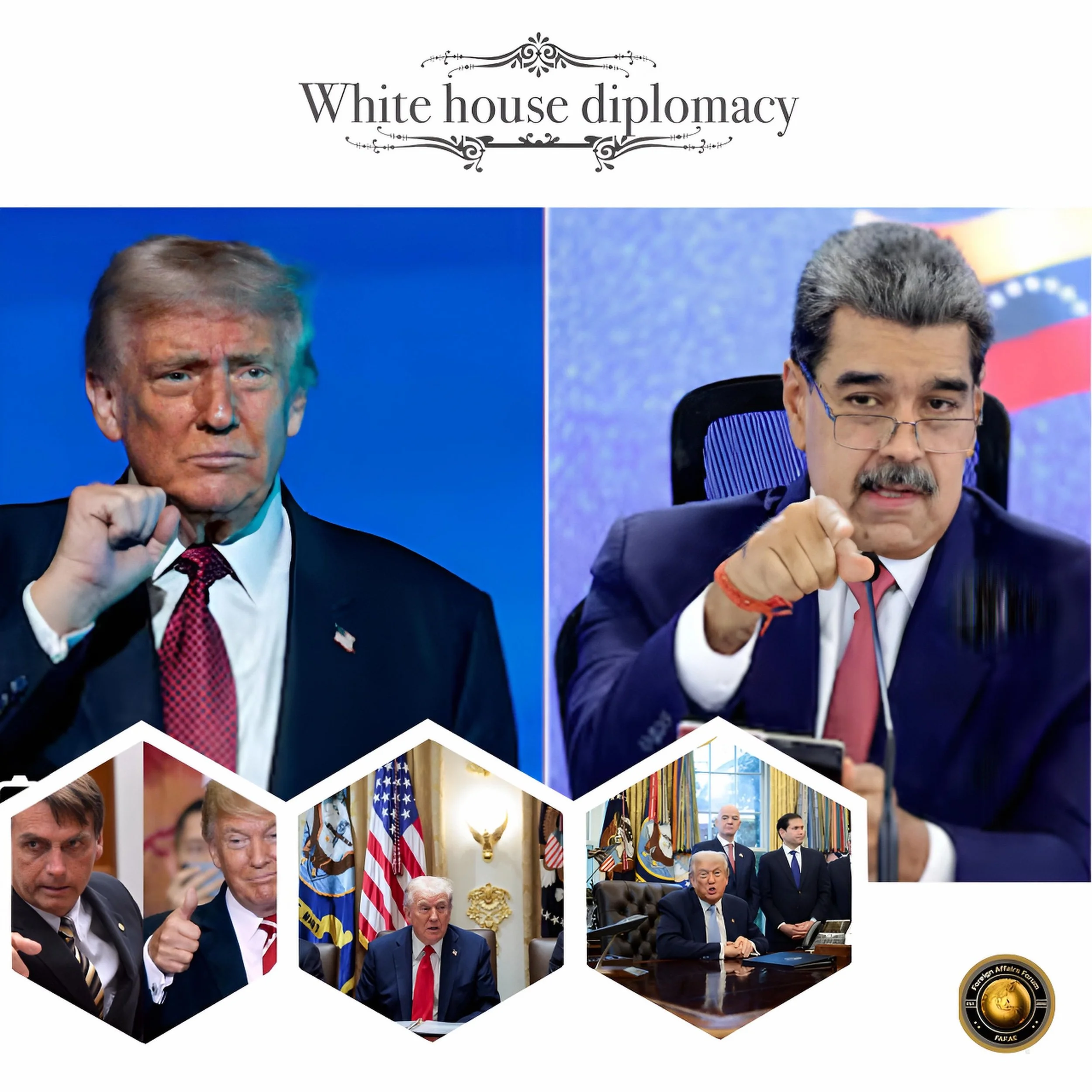
US Military Deployment Near Venezuela: Escalating Tensions and International Reactions
Executive Summary
In recent weeks, the United States has augmented its military presence near Venezuela, prompting significant regional and international discourse regarding its implications.
This initiative encompasses deploying naval and aerial assets strategically positioned in the Caribbean and adjacent maritime regions.
Its primary objective is to monitor developments within Venezuela while preemptively addressing potential threats to regional stability.
The U.S. government argues that this military buildup is a precautionary strategy to enforce democratic ideals and support the Venezuelan people's quest for democratic governance.
However, critics argue that this military escalation may further complicate existing tensions and could yield adverse consequences for Venezuela, which is currently mired in a political and humanitarian crisis.
Reactions on the international stage to the U.S. military escalation have been mixed. Some American countries have voiced support for this measure, deeming it essential for counteracting authoritarianism in Venezuela.
Conversely, nations allied with the Maduro regime have denounced the deployment as an act of aggression.
This array of responses has triggered diplomatic discussions and reactions from entities such as the United Nations and the Organization of American States, underscoring the global ramifications of this intricate scenario.
As tensions rise, the international community remains vigilant, hoping for a diplomatic resolution to the crisis while contending with the ramifications of military interventions and the quest for stability in Venezuela.
Introduction
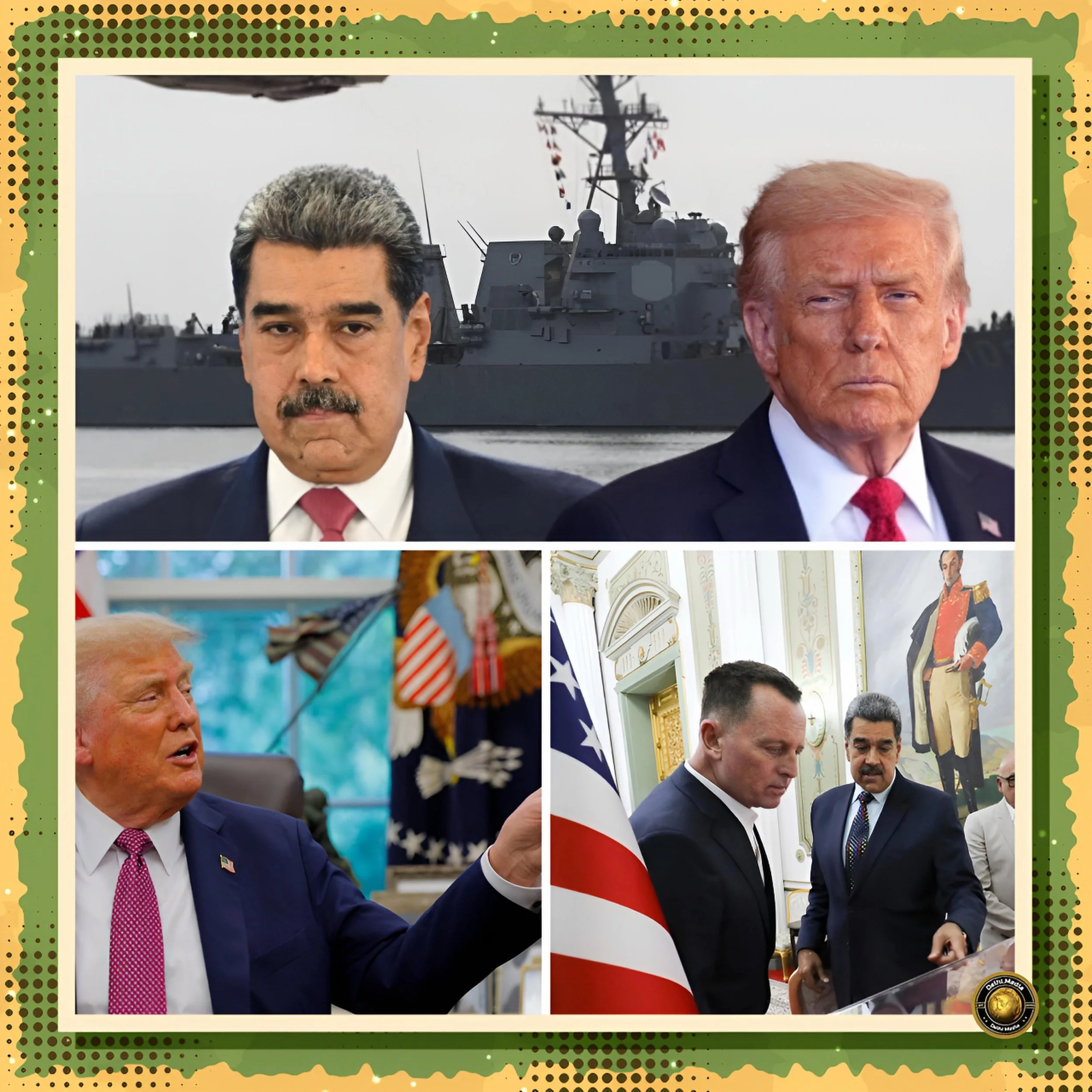
The United States has orchestrated a considerable naval deployment towards Venezuelan waters, escalating tensions with the Maduro administration and provoking pronounced international reactions.
This military maneuver represents one of the most significant U.S. naval operations in the Caribbean in recent history.
The U.S. Military Deployment
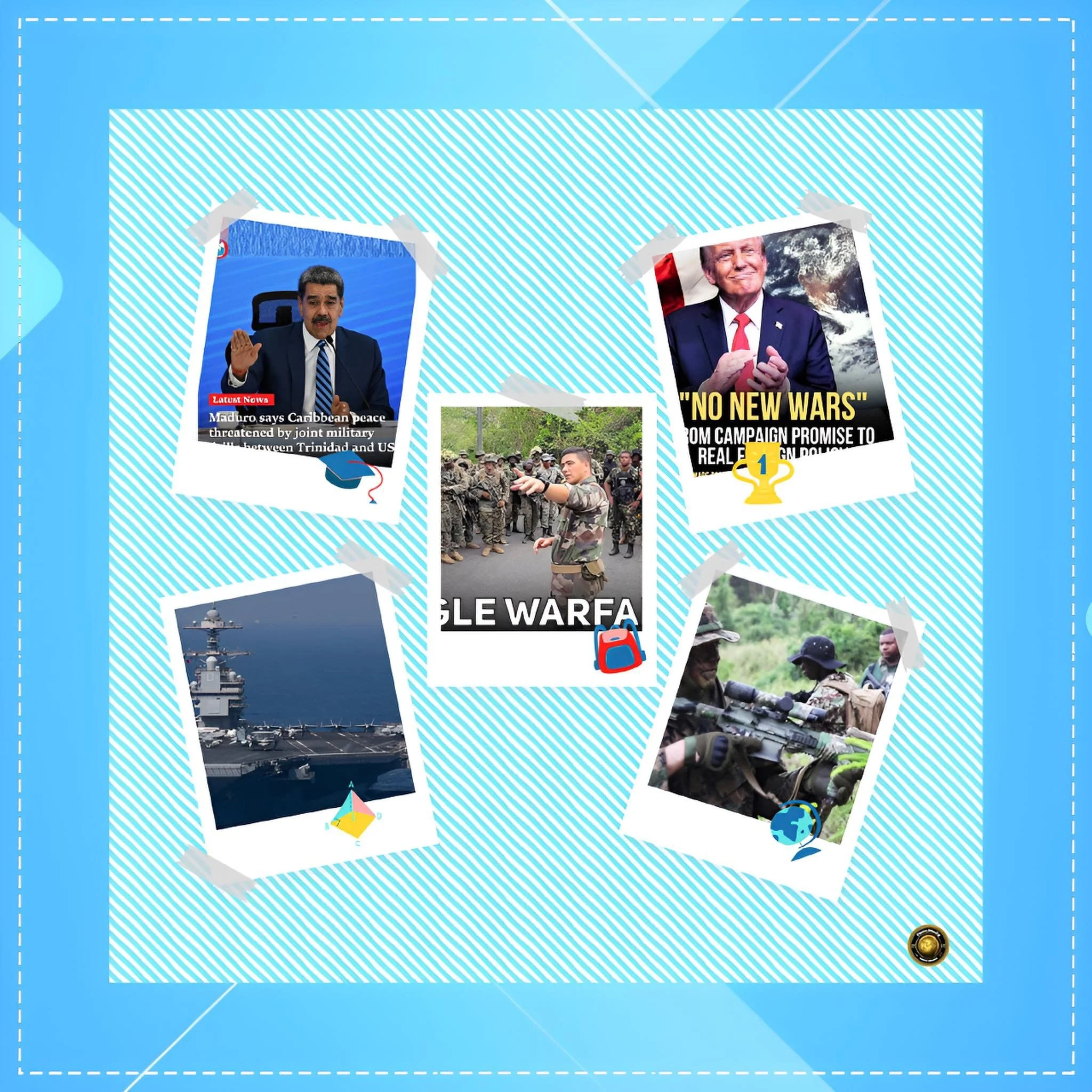
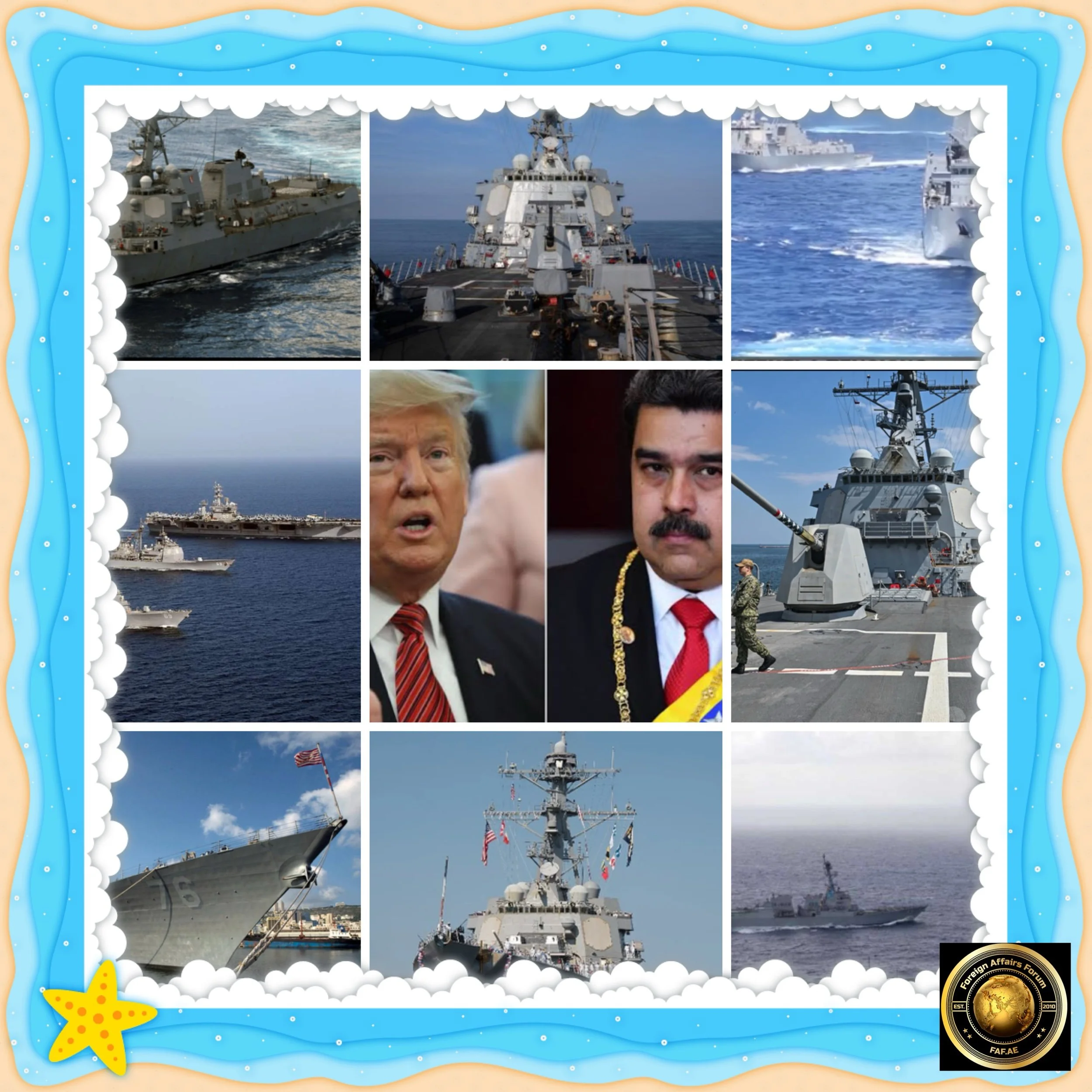
The U.S. has dispatched three Aegis-class guided-missile destroyers—the USS Gravely, USS Jason Dunham, and USS Sampson—into Venezuelan coastal waters.
An amphibious assault group comprising the USS San Antonio, USS Iwo Jima, and USS Fort Lauderdale complements this. Overall, the group hosts approximately 4,500 U.S. military personnel, including 2,200 Marines.
Additional assets include P-8 Poseidon reconnaissance aircraft and at least one attack submarine, and operations are expected to last several months.
The Trump administration has justified this deployment as part of broader counter-narcotics initiatives, targeting entities it labels as “narco-terrorist organizations” in Latin America.
Notably, President Nicolás Maduro has been implicated as the head of the “Cartel de los Soles” (Cartel of the Suns), a cocaine trafficking syndicate, prompting an escalation of the bounty on his capture from $25 million to $50 million.
Maduro’s Response
In response, Venezuelan President Nicolás Maduro has taken robust measures, mobilizing 4.5 million militia members nationwide.
On August 18, 2025, he announced the activation of a special plan to ensure comprehensive territorial coverage, asserting that “no empire will touch the sacred soil of Venezuela.”
He denounced the U.S. military deployment as “extravagant, bizarre, and outlandish,” emphasizing Venezuela’s sovereignty and readiness to defend its territory.
In a precautionary move, the Venezuelan government has suspended drone operations for 30 days, signaling potential preparations for aerial threats.
Foreign Minister Yvan Gil has dismissed U.S. allegations of drug trafficking, criticizing them as indications of the U.S.'s “lack of credibility” and policy failures in the region.
International Reactions
Latin American Opposition
Key Latin American nations have vehemently opposed the U.S. military deployment:
Colombia
President Gustavo Petro has issued a stern warning, suggesting that a U.S. invasion could replicate the destabilizing impacts seen in Syria, urging that such actions could exacerbate transnational criminal activity and increase the influx of Venezuelan migrants into Colombia.
Furthermore, he noted that this could lead to a dramatic fall in oil prices, potentially jeopardizing Ecopetrol, the state oil company.
Mexico
President Claudia Sheinbaum has reiterated opposition to military intervention in the region, invoking Mexico's constitutional prohibition against foreign intervention and advocating for U.S. restraint.
Cuba
President Miguel Díaz-Canel has strongly opposed U.S. actions, highlighting the potential consequences for regional stability and sovereignty.
These responses collectively reflect a complex and precarious geopolitical landscape amid the escalating U.S. military activities near Venezuela.
Brazil
Brazil’s response to the U.S. warships moving toward Venezuela has been cautious and aligned with principles of non-intervention and regional stability.
While Brazil, under the previous presidency of Jair Bolsonaro, showed significant opposition to Nicolás Maduro’s government and supported the Venezuelan opposition, officially Brazil has rejected direct military intervention in Venezuela.
Brazil is part of the Lima Group, which advocates for a managed political solution that would see Maduro step down peacefully and a transitional government installed, rather than military confrontation.
The Brazilian military and government emphasize the importance of respecting national sovereignty and avoiding actions that could escalate tensions or provoke conflict in the region.
Brazil’s Vice President Hamilton Mourão, a retired general, has publicly stated that Brazil would not allow U.S. troops to enter Venezuelan territory from its borders and that any conflict would only arise if Brazil itself is attacked first.
Brazil’s approach focuses on humanitarian aid and border security measures, but it aims to avoid direct involvement in military escalations.
In summary, Brazil supports peaceful resolution and non-intervention, opposing the militarization of the Venezuela crisis while being wary of U.S. naval deployments near Venezuelan waters
Significant Power Responses to U.S. Military Actions in Venezuela
China
The People's Republic has unequivocally positioned itself in support of Venezuela. Foreign Ministry spokesperson Mao Ning condemned the recent escalation of U.S. military posture in the region and cautioned against external interference.
Beijing opposes any actions that contravene the principles enshrined in the UN Charter, particularly those pertaining to state sovereignty and security.
Moreover, China has called upon the U.S. to engage in actions that would favor peace and stability in Latin America and the Caribbean.
Venezuelan President Maduro has warmly received China’s ambassador to Caracas, highlighting what he described as "notable advances" in their bilateral cooperative projects.
Russia
Historically, Russia has maintained a supportive stance towards the Venezuelan regime, providing substantial military assistance to the Maduro government amidst increasing isolation.
Russia’s response to the deployment of U.S. warships moving toward Venezuela has been one of strong disapproval and condemnation, viewing it as a provocative and aggressive act by the United States.
Russia, as Venezuela’s ally, has reinforced its support for Maduro, denouncing U.S. actions as imperialistic and destabilizing. This stance follows Russia’s historical pattern of backing Venezuela against U.S. influence and interference. Russia has also sent its warships to the region in past years as a symbolic gesture of solidarity with Venezuela and as a geopolitical signal to the U.S.
Thus, Russia perceives the U.S. naval deployment near Venezuela as a hostile move and aligns with Maduro’s rhetoric of defense against U.S. “provocations,” supporting Venezuela’s claims of sovereignty and resistance to U.S. pressure and military presence in the region.
Europe
Europe’s response to the deployment of U.S. warships near Venezuela has been generally cautious and measured.
While there is recognition of the United States’ stated goal of combating drug trafficking in the region, European officials have expressed concern about the potential for increased regional tensions and instability resulting from the U.S. military presence so close to Venezuelan waters.
European countries and the European Union have supported mainly diplomatic and political solutions over military posturing.
They emphasize the importance of respecting national sovereignty and international law. Many European diplomats have viewed the escalation involving U.S. warships as a risk of further militarization in a region already fraught with political and economic challenges.
Although Europeans understand the U.S. concerns around drug trafficking, there is caution against actions that could be perceived as aggressive or intrusive, which may provoke defensive measures from Venezuela and complicate broader diplomatic relations in Latin America.
In sum, Europe’s response tilts toward advocating diplomatic dialogue and regional stability. It cautiously observes the unfolding developments of U.S. military movements near Venezuela while urging de-escalation and respect for sovereignty to avoid exacerbating tensions.
The Arab world and Iran
The Arab world’s response to the U.S. warships moving toward Venezuela has been muted mainly in direct public statements, but generally aligned with calls for respecting sovereignty and avoiding military escalation.
Many Arab countries emphasize diplomatic solutions and non-interference, reflecting broader principles of international relations predominant in the region.
There has been no significant indication of support for U.S. military actions near Venezuela, consistent with many Arab states’ cautious stance on U.S. interventions abroad.
Iran, on the other hand, has strongly condemned the U.S. deployment of warships near Venezuela.
The Iranian Foreign Ministry denounced the U.S. threats and military movements as violations of Venezuela’s national sovereignty and territorial integrity, describing them as “belligerent policies” and illegal under international law, explicitly citing the UN Charter’s prohibition on the use of force or threats against independent states.
Iran expressed solidarity with Venezuela and called on the United Nations Security Council and the Secretary-General to address the dangerous situation threatening peace in the Caribbean region.
This condemnation aligns with Iran’s long-standing opposition to U.S. military interventions and its close ties with the Maduro government.
Additionally, Iran has previously sent warships on long voyages, reportedly toward Venezuela, seen as a show of support and as a geopolitical message against U.S. influence in the region. Iran warns that it has the right to be present in international waters and cautions others against miscalculation regarding its naval activities.
Both the Arab world and Iran urge respect for sovereignty and prefer diplomatic approaches, refraining from supporting U.S. military moves near Venezuela. Iran also condemns the U.S. naval deployment as aggressive and unlawful, aligns firmly with Venezuela politically, and calls for international action to prevent escalation.
Regional Implications
The deployment of U.S. military assets has provoked broader regional anxieties, with analysts suggesting that the current situation in Venezuela could signify a precedent that might extend to other nations in Latin America facing similar U.S. measures.
Observers from the region have expressed skepticism regarding the confrontational tactics employed by the Trump administration in what is perceived as America's sphere of influence, particularly when juxtaposed against its global messaging on peace and stability.
White House Justification and Positioning
White House Press Secretary Karoline Leavitt articulated that President Trump has maintained a steadfast commitment to leveraging "every element of American power" to combat narcotics trafficking and to hold accountable those responsible for such activities.
The administration has designated the Venezuelan government as a "narco-terror cartel," dismissing Maduro as a legitimate president and instead labeling him a “fugitive” who has been indicted in the U.S. for drug trafficking offenses.
When pressed about the potential for U.S. military ground intervention in Venezuela, Leavitt left the door open, reiterating the administration's readiness to deploy all means necessary to curb drug trafficking.
Conclusion
Strategic Implications
This naval deployment marks a significant escalation in U.S.-Venezuela tensions, representing the most pronounced U.S. military footprint in the Caribbean in recent years.
The operation appears strategically designed to exert maximum pressure on the Maduro government while maintaining plausible deniability under the pretext of counter-narcotics operations.
The international response reflects a pronounced dichotomy, with the majority of Latin American countries opposing the U.S. deployment, whilst major powers such as China and Russia lend support to Venezuela.
This situation has the potential to exacerbate regional dynamics further and could set a concerning precedent for future U.S. military involvement in Latin America justified by counter-narcotics rhetoric.
Furthermore, the mobilization of 4.5 million Venezuelan militia personnel constitutes one of the most significant civilian responses witnessed in modern Latin American history, underscoring the gravity with which the Maduro administration perceives the U.S. threat.
As this military standoff evolves, both regional and international stakeholders are closely monitoring developments for indications of further escalation.