Why Money Talked Louder Than National Security in the AI Race: A Simple Explanation
Summary
In 2025, something surprising happened in the race between America and China for artificial intelligence supremacy. The government had spent years trying to stop Chinese companies from getting American computer chips.
These restrictions were supposed to keep America ahead in the AI race.
But by the end of the year, the government had completely reversed course and started allowing the sales again.
Why? Because making money turned out to be more important than security concerns.
What Happened at the Beginning of 2025
On January 20, 2025, a Chinese AI company called DeepSeek released a new artificial intelligence model called R1. Think of an AI model like a student who has been trained on millions of examples to solve problems.
DeepSeek's R1 was impressive because it worked almost as well as the best American AI models created by companies like OpenAI, but it was much cheaper to build and use.
Here is a concrete example to understand how significant this was: if you wanted to ask OpenAI's best AI model a complex reasoning question, it might cost you sixty dollars per million word chunks you process.
DeepSeek's equivalent model cost fifty-five cents for the same work. That is more than a hundred times cheaper. This shocked American technology companies because they had assumed that only they could build really smart AI models, and that those models would always be expensive and profitable.
The Chinese success with DeepSeek showed something important: maybe the restrictions the American government had put in place to keep advanced computer chips away from China were not working as planned.
DeepSeek had built its powerful model using older, restricted chips rather than the newest technology. If China could do so much with older chips, why was the American government still blocking access to the newest ones?
The Corporate Lobbying Begins
When American technology leaders realized the government might consider loosening these restrictions, they started lobbying hard. Lobbying means trying to convince government officials to change the rules in your favor.
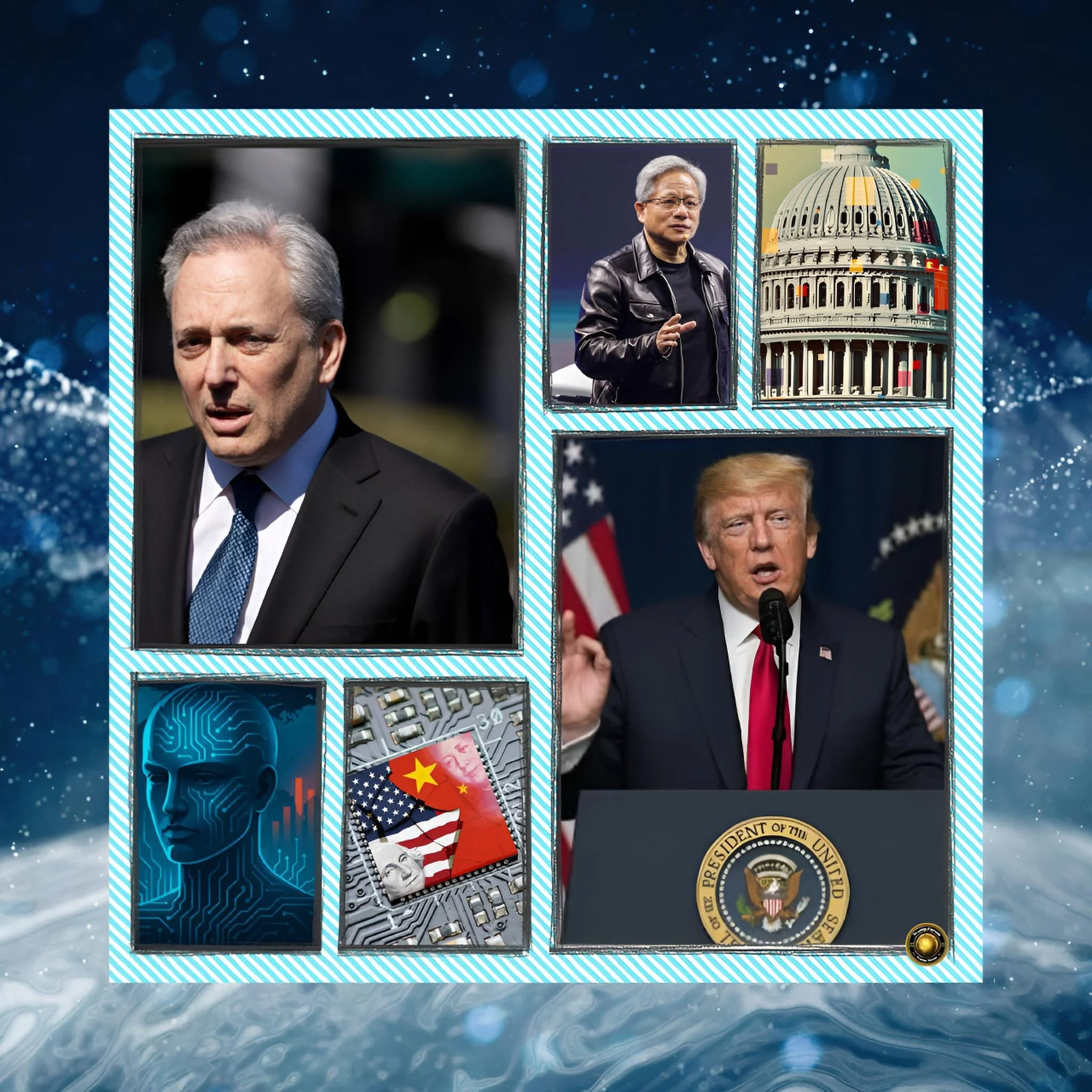
The biggest player was Nvidia, a company that makes the computer chips used for AI training. Nvidia's CEO, Jensen Huang, met directly with President Trump and Republican senators to make his case.
Huang's argument was straightforward: if America does not let Nvidia sell chips to China, China will just build its own chips instead.
Think of it like this. Imagine the American government bans car companies from selling advanced automobiles to Mexico. If those restrictions stay in place, Mexico might decide to build its own car company rather than keep waiting for American exports.
Eventually, that Mexican car company might become very good. By that point, American companies have lost customers and profits, and Mexico might become a real competitor anyway.
Huang and other technology executives said the same thing about chips: blocking sales to China will not stop Chinese progress, it will just force China to invest more in making its own chips.
So why not let American companies sell chips to China, make profits from those sales, and keep developing better chips faster than China can copy them?
It is a strategy that lets everyone win. American companies make money. The government can even tax those sales. But America stays ahead because American companies innovate faster than competitors in other countries.
The Money That Made the Difference
To understand why this argument won, you need to know how profitable computer chips for AI are.
In 2025, Nvidia made 130 billion dollars in revenue, which was more than double the year before.
Out of every dollar Nvidia made, about seventy-five cents was pure profit—that is extraordinarily high. When companies make that much money, they have the power to influence government decisions through lobbying, by hiring important people from the government to work for them, and by funding politicians who listen to them.
Nvidia spent almost two million dollars on lobbying in just three months of 2025.
That money paid for lawyers, public relations experts, and communications specialists who could meet with government officials and convince them that loosening restrictions made sense?
Compare that to how much money national security agencies had to argue for keeping restrictions tight. The national security side did not have nearly as much money or access to the President. That is a huge advantage for the company.
The lobbyist work the magic
The White House had a key official named David Sacks who was in charge of AI policy.
Sacks is a venture capitalist, which means he makes money by investing in technology companies. His whole career, he had been around Silicon Valley people who wanted fewer rules and restrictions.
When the question came up about whether to loosen chip export restrictions, Sacks naturally thought about it the way a businessman would, not the way a military strategist would.
He worked with Congress to stop a bill that would have kept restrictions tight.
The Government's New Plan
By December 2025, President Trump announced a new plan.
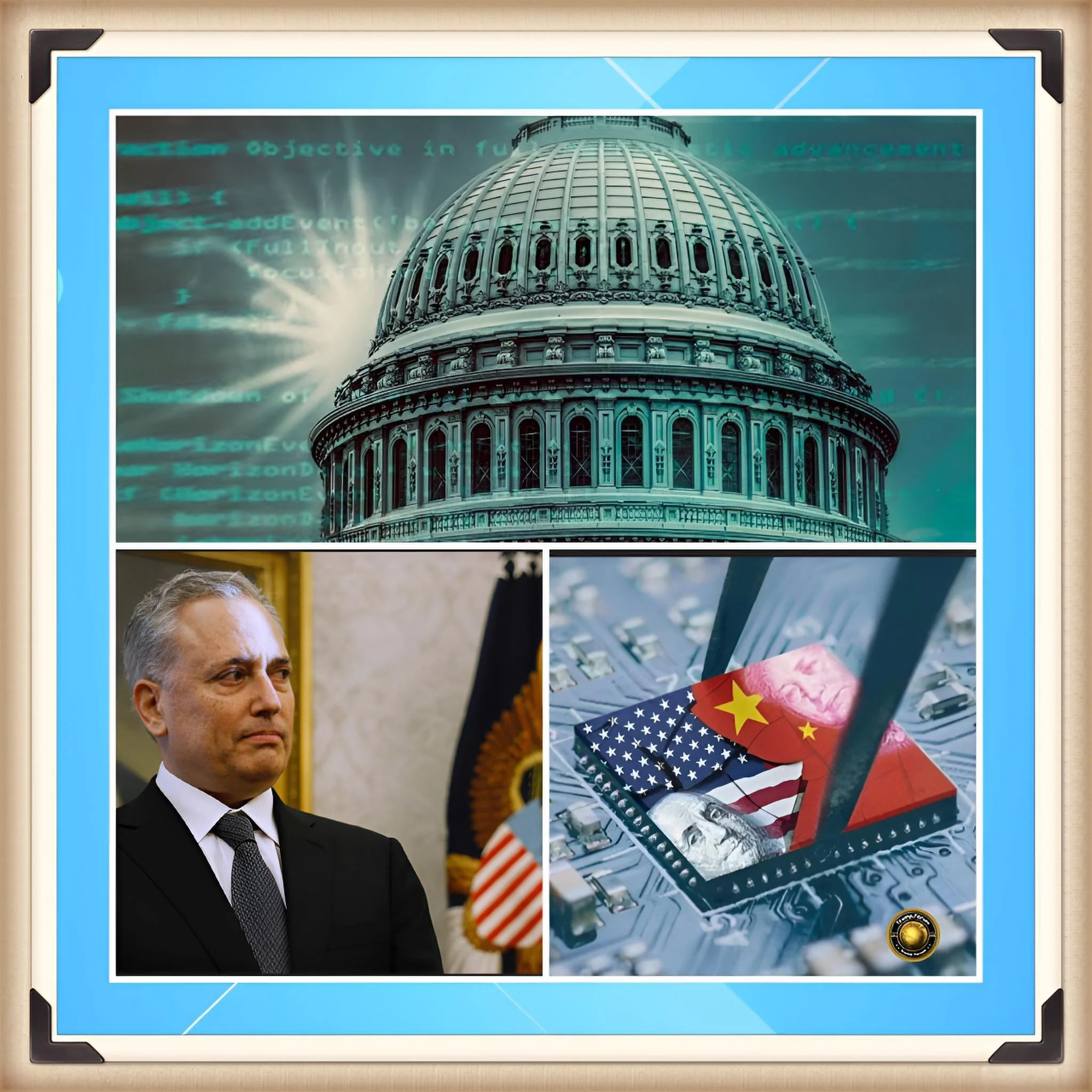
America would still keep the very newest, most powerful chips away from China. But America would allow sales of an older generation of advanced chips called H200s. China would be allowed to buy these chips, but the American government would take a twenty-five percent cut of the money from each sale. Think of it like a tax.
This deal made several people happy. Nvidia gets to sell chips to China and make profits. The government gets tax money from those sales.
China gets to buy computers that help with AI research. And America stays ahead because it is always one or two generations of chips ahead of what China can buy.
Is This Strategy Smart or Dangerous?
Supporters of this new policy say it is the smartest approach. They argue that America will always innovate faster than China because American companies are better funded and better motivated. As long as America sells China yesterday's technology rather than today's, American companies can stay ahead. Plus, American companies make more money and fund better research. Everyone wins.
Critics worry this is dangerous. They say that letting China buy advanced chips could help the Chinese military, even if it looks like the chips are only for business purposes.
They also worry that one day, China will innovate faster than America, and when that happens, America will have already lost money that could have been spent on other security measures.
The Real Story
The year 2025 showed something important about how modern democracies work.
Big companies with billions of dollars and access to powerful politicians can shape national security policy to match what they want to sell.
In this case, Nvidia wanted to sell chips to China, and that is what ultimately happened.
The government and companies found a way to make it look like a smart national security strategy, but the main driver was money, not security.
This pattern will probably repeat with other technologies.
When quantum computers become powerful, or when advanced manufacturing becomes possible, companies will again lobby the government to loosen restrictions so they can sell their products. And once again, profit will likely beat out the original security concerns.
That is not necessarily wrong—companies want to make money, that is their job.
But it means that ordinary people should understand that military strategists do not always make national security decisions.
Conclusion
Sometimes they are made by business executives who happen to have access to the president's ear and the resources to change people's minds.