Major Events Leading to World War II and Contemporary Warnings of World War III
Executive Summary
Major Events Leading to World War II and Contemporary Warnings of World War III, including the signing of the Treaty of Versailles in 1919, the rise of fascist regimes in Germany and Italy, the military invasions of Poland and China, and recent geopolitical tensions in the Middle East, Ukraine, and Taiwan
Treaty of Versailes
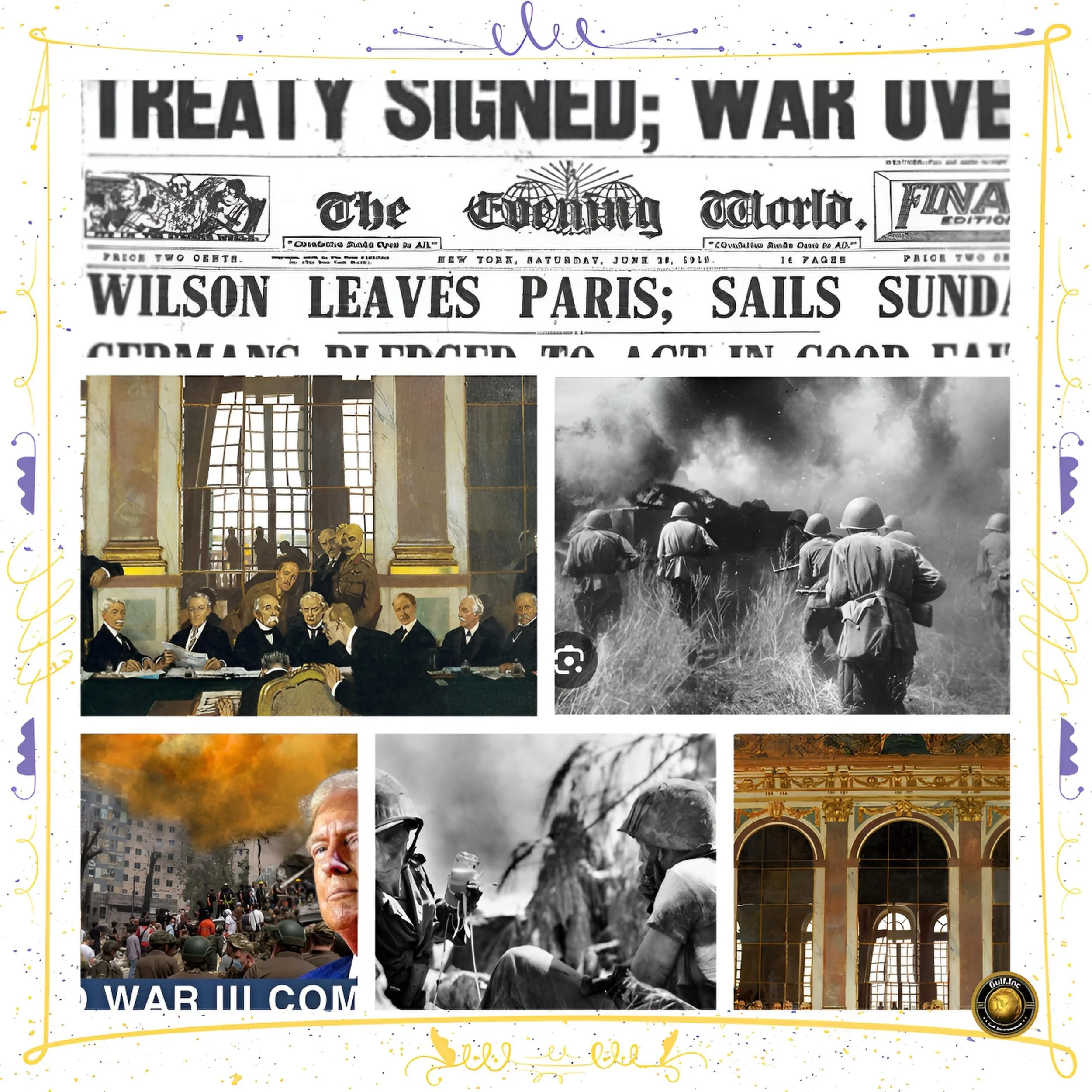
The Treaty of 1919, signed on June 28, marked a pivotal moment shaped by conflicting interests among the Allied victors.
President Woodrow Wilson envisioned a world built on "peace without victory," aiming for harmony and stability.
Meanwhile, Britain sought to restore Germany’s battered economy, and France and other nations demanded justice for the widespread destruction caused by the war.
These divergent goals created a tense and challengingenvironment for negotiators.
Ultimately, the Allies rejected Wilson’s ideal of peace without victory, insisting instead that Germany be held accountable—forcing it to surrender colonies across Africa, Asia, and the Pacific, cede territory to France and Poland, limit its military, pay reparations, and accept blame for the war.
This treaty punished Germany and redefined the post-war order, setting the stage for future conflicts.
In summary, The Treaty of Versailles, signed in 1919 at the end of World War I, created conditions that directly contributed to the outbreak of World War ll by imposing harsh and punitive reparations and territorial arrangements on Germany.
This fostered widespread German resentment and political instability, enabling extremist movements like the Nazis to gain power.
Key Provisions of the Treaty Causing Resentment
Reparations and Economic Burden
The treaty required Germany to pay heavy reparations to the Allied powers, estimated at approximately 132 billion gold marks (about $33 billion at the time.
These reparations crippled Germany's already fragile post-war economy, leading to hyperinflation, mass unemployment, and widespread social hardship during the 1920s.
The economic distress undermined faith in the Weimar Republic and created fertile ground for radical parties promising national revival.
Territorial Losses
Germany was forced to cede significant territories, including Alsace-Lorraine to France, Eupen-Malmedy to Belgium, and large eastern lands to the newly recreated Poland, including the Polish Corridor that split East Prussia from the rest of Germany.
These losses not only reduced German's industrial and agricultural capacity but were also perceived as humiliating and unjust by many Germans.
The demilitarization of the Rhineland removed German troops from a key defensive area, leaving the country militarily vulnerable and humiliating national pride.
Military Restrictions and War Guilt Clause
The treaty severely limited the size and capabilities of the German military, reducing its army to 100,000 troops and banning tanks, aircraft, and submarines.
Article 231, the "war guilt clause," placed sole responsibility for the war on Germany, further humiliating its people and government.
This clause justified the reparations and was resented as a national insult.
How These Conditions Led to World War II
The treaty's punitive measures created a deep sense of injustice, economic crisis, and political instability in Germany.
Radical nationalist movements, including Hitler's Nazi Party, exploited this resentment by promising to overturn the treaty, restore Germany's honor, and rebuild military strength.
The economic hardships and territorial grievances fueled support for aggressive foreign policies, including territorial expansion in Eastern Europe and reunification with lost lands.
The treaty also sowed distrust in international institutions and diplomacy, weakening the prospects for peaceful conflict resolution during the interwar period.
This volatile environment directly precipitated
Germany's aggressive moves in the 1930s—such as remilitarizing the Rhineland, annexing Austria (Anschluss), and invading Poland-actions that triggered World War I.
In summary, the Treaty of Versailles created conditions of severe economic hardship, national humiliation, and political instability in Germany through its reparations, territorial losses, and military restrictions.
These factors cultivated fertile ground for extremist ideologies and aggressive nationalism, directly setting the stage for World War II.
Historical facts and causes leading to World War II
The outbreak of World War II in 1939 was the result of multiple interconnected factors that created a volatile international environment.
The Treaty of Versailles stands, as detailed above, as perhaps the most significant catalyst, imposing harsh reparations and territorial losses on Germany that fostered deep resentment and economic instability.
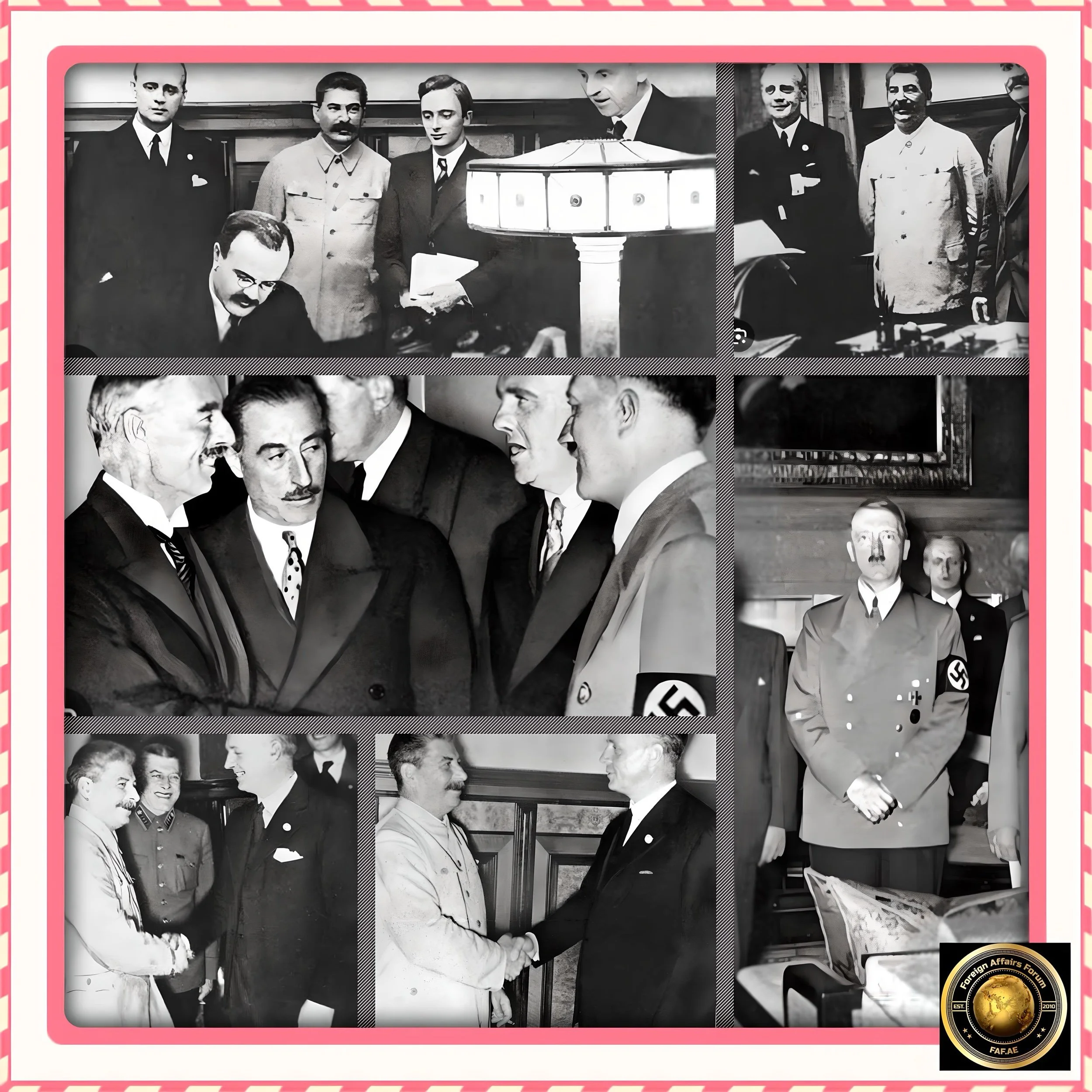
The treaty’s “war guilt” clause held Germany solely responsible for World War I, creating profound national humiliation that Adolf Hitler would later exploit.
The Great Depression provided crucial conditions for the rise of extremist movements.
Academic research demonstrates that economic hardship, particularly sustained economic contraction, significantly boosted support for fascist parties across Europe.
The depression was “especially good for fascists in countries that had not enjoyed democracy before 1914; where fascist parties already had a parliamentary base; in countries on the losing side in WWI; and in countries that experienced boundary changes after 1918”.
The failure of international institutions, particularly the League of Nations, to effectively address aggression and maintain collective security allowed authoritarian regimes to expand unchecked.
The policy of appeasement by Western democracies emboldened Hitler’s territorial ambitions, while the rise of militarism in Germany and Japan created the military apparatus necessary for global conflict.
Specific triggering events included Germany’s remilitarization of the Rhineland (1936), the Anschluss with Austria (1938), the annexation of the Sudetenland (1938), and finally the invasion of Poland on September 1, 1939, which prompted Britain and France to declare war.
Contemporary Warning Patterns for World War III
Current Global Risk Assessment
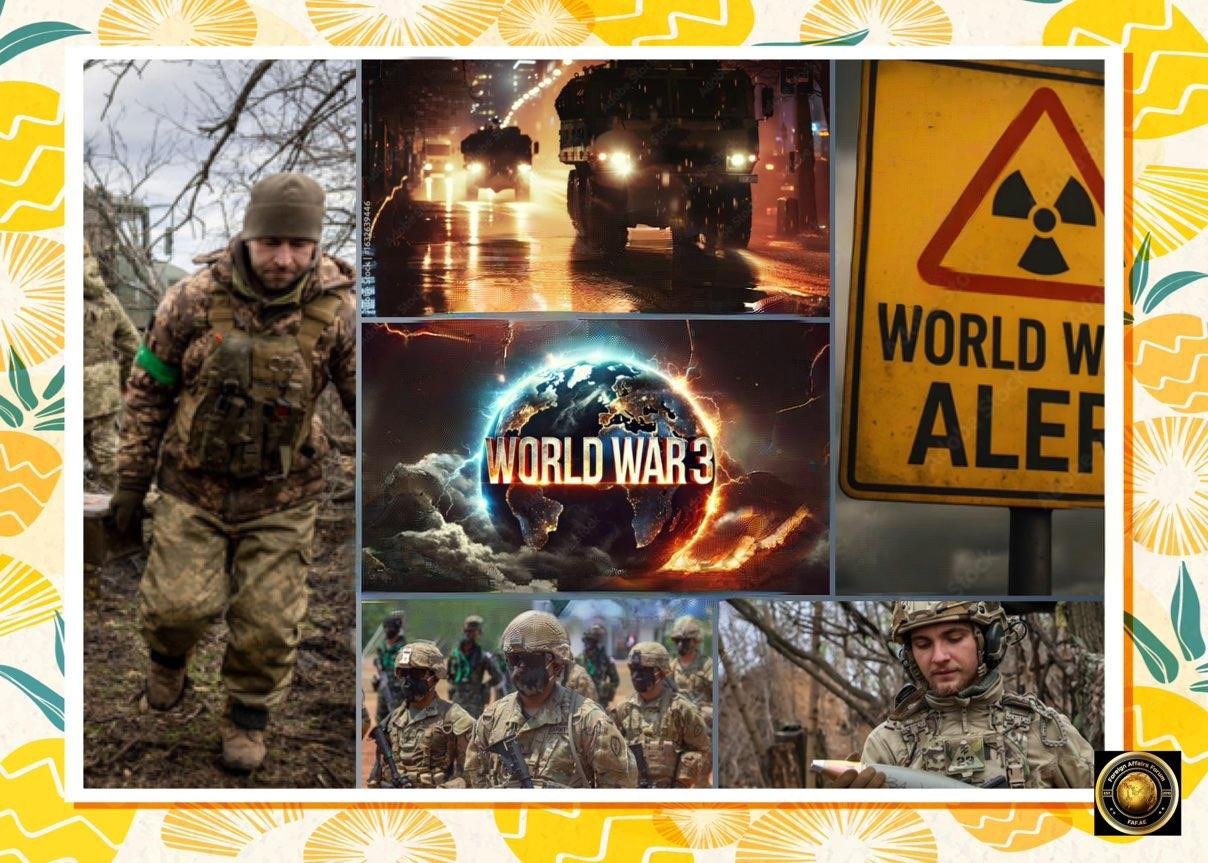
FAF analysis designates 2025 as the “Age of the Polycrisis,” a period marked by the interaction and mutual amplification of multiple global crises across geopolitical fault lines.
The Global Peace Index 2025 points to critical escalation zones where conflict risks are intensifying, with India Kashmir leading after a terror attack in April 2025 that nearly brought India and Pakistan to the verge of open warfare.
State-based armed conflict has risen from #8 to #1 in the global risk rankings, with 23% of survey respondents identifying it as the top concern for 2025.
This indicates increasing worries about proxy wars, civil conflicts, and interstate tensions that might escalate into larger conflicts.
The Axis of Upheaval
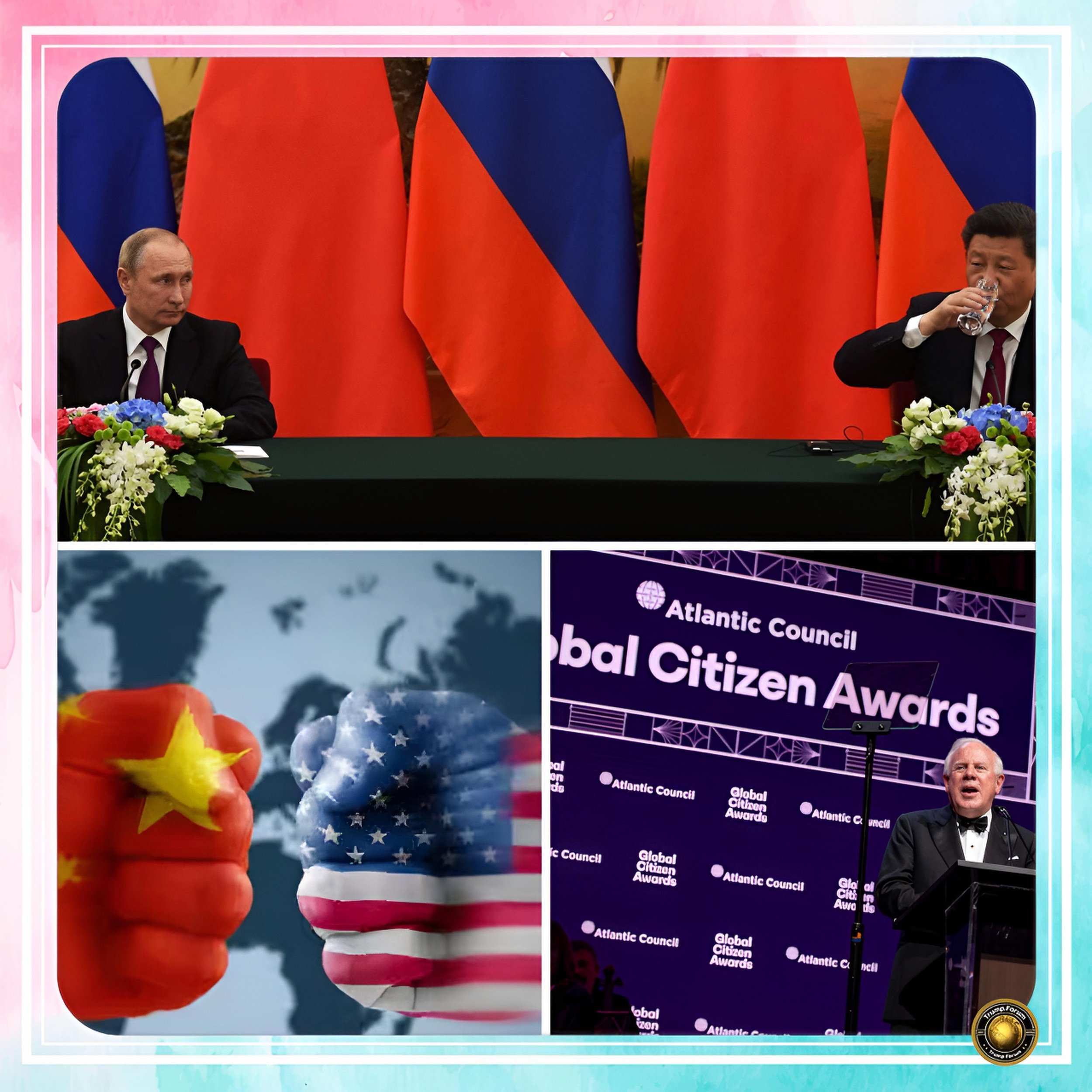
Modern geopolitical analysis highlights Russia, China, Iran, and North Korea as an “axis of upheaval”—countries whose cooperation aims to challenge established international norms.
This informal alliance fundamentally threatens the Western-led international order, with defense cooperation fostering sustained aggression and enhancing military capabilities across all members.
Nuclear proliferation within this axis poses particular dangers.
While Russia and China modernize their strategic arsenals, North Korea advances the qualitative development of its capabilities, and Iran approaches technical thresholds that bring it closer to nuclear weapons.
These states often cooperate through technology transfers, sanctions evasion, and diplomatic support, undermining multilateral disarmament efforts.
Potential Trigger Scenarios
Military experts outline several pathways through which current tensions could escalate into global conflict:
Taiwan Conflict
A Chinese invasion of Taiwan could prompt an immediate U.S. military response under existing security commitments, potentially involving Japan and other regional allies.
Middle East Escalation
The ongoing Israel-Gaza conflict has already spilled over into neighboring regions, involving Lebanon, Iran, Yemen, and Syria.
Iran’s proxy network and threats to disrupt oil transport via the Strait of Hormuz heighten the risk of broader escalation.
NATO-Russia Confrontation
A direct Western confrontation with Russia could occur if NATO Article 5 is invoked, especially if conflicts extend beyond Ukraine.
Nuclear Threshold Crossing
Unlike past world wars, any major conflict between nuclear powers carries a significant risk of nuclear escalation, fundamentally changing the stakes of global conflict.
Who Would Lead World War III?
Primary Aggressors
Scholarly analysis indicates that China is the most probable primary aggressor in a potential World War III scenario, especially through actions against Taiwan.
China’s extensive military upgrades, territorial claims in the South China Sea, and stated goal to reunify with Taiwan make it the immediate flashpoint for global conflict.
Russia, under Vladimir Putin, has shown willingness to deploy military force to reshape the international landscape, as seen in Ukraine.
Russia’s nuclear threats and efforts to revive Soviet-era influence continue to heighten escalation risks.
Iran, with its regional influence, proxy networks, and nuclear ambitions, presents multiple avenues to broader conflict.
Its support for Hamas, Hezbollah, and Houthi forces facilitates conflict expansion across the Middle East.
Alliance Structures
Western Alliance System
NATO’s Article 5, which mandates collective defense, creates automatic escalation triggers similar to those that sparked World War I.
With 31 member countries spending over $1.2 trillion annually on defense, NATO forms a strong military coalition.
Eastern Alignment
China, Russia, Iran, and North Korea increasingly coordinate policies and provide mutual support, despite lacking formal alliances.
This “axis of upheaval” benefits from complementary capabilities and shared opposition to Western dominance.
Regional Dynamics
Key players include India (possibly aligned with the West), Japan and South Korea (likely Western allies), and various Middle Eastern nations whose alliances are still evolving.
Modern Leaders Compared to Hitler
Authoritarian Personality Patterns
While no current leader exactly mirrors Hitler’s blend of ideology and circumstance, some authoritarian tendencies are concerning.
Vladimir Putin has fostered a personality cult centered on the idea that “only a strong and tough leader can defend Russia’s national interests.”
Putin's regime shows signs of charismatic authoritarianism, backed by propaganda and suppression of dissent.
Xi Jinping has consolidated power similarly to totalitarian leaders, creating a personality cult and removing constitutional term limits.
His governance combines traditional Chinese authoritarianism with advanced surveillance and control.
Key Differences from Hitler
Modern authoritarians operate under different constraints than Hitler did.
Nuclear deterrence significantly changes conflict calculations.
The threat of mutually assured destruction discourages direct conflict among major powers.
Economic interdependence and global supply chains impose additional costs on aggressive actions.
International organizations, while imperfect, offer more conflict management tools than those available before World War II.
The United Nations, despite Security Council deadlock, provides diplomatic avenues that did not exist in the interwar period.
Conclusion
FAF comprehensive analysis on the Likelihood of World War III
Cautious Evaluation
FAF firmly concludes that although the risks of World War III have increased significantly, current circumstances are fundamentally different from the 1930s.
Texas A&M military scholars assert that comparisons to past world wars are largely exaggerated, emphasizing the crucial differences in international institutions and nuclear deterrence that strongly mitigate such risks.
Boston University international relations expert Joshua Shifrinson states that we are indeed closer to the brink of World War III than last year, yet we remain several steps away from a conflict comparable to the World Wars of the past.
Critical Warning Indicators
Nevertheless, multiple academic sources identify strong parallels to pre-World War I conditions, signaling the need for vigilance.
The Belfer Center’s analysis of U.S.-China relations explicitly draws instructive comparisons to the diplomatic failures of 1914.
Key warning signs include:
Automated alliance systems that could rapidly escalate tensions via treaty obligations
Accelerated decision-making processes driven by modern missile technology
Breakdown of crisis communication channels among major powers
Systemic challenges undermining international law and institutions
The Nuclear Dilemma
The most defining difference from previous world wars lies in nuclear weapons, which serve both as a potential escalator and a critical deterrent.
Nuclear capabilities have successfully prevented large-scale conflicts among major powers for over seventy years, yet they also carry the potential for unprecedented destruction if deterrence fails.
Current expert analysis indicates that nuclear weapons are likely to be used only in the late stages of conflict, by nations feeling desperate and perceiving no alternatives.
This creates a unique strategic environment, markedly different from past wars where conventional military victory was possible.
Scholars agree that, although the structural conditions for a major conflict are present, the combined effect of nuclear deterrence, economic interdependence, and robust international institutions provides formidable safeguards against World War III.
However, they emphasize that managing great power tensions demands proactive diplomacy and strong institutions to prevent miscalculations that could lead to catastrophic wars, as tragically occurred in 1914 and 1939.