The Challenges Facing American Farmers: Labor Shortages, Structural Changes, and Immigration Policy
Executive Summary
The Challenges Facing American Farmers: labor shortages due to an aging workforce and declining rural populations, structural changes including technological advancements and shifting market demands, and immigration policies that directly impact the availability of agricultural labor.
These issues collectively pose significant hurdles to sustaining productivity and economic viability in the U.S. agricultural sector.
Introduction
American agriculture is currently confronting an unprecedented labor crisis that jeopardizes the stability of the nation’s food supply.
In 2024, an estimated 2.4 million agricultural jobs remain unfilled, with 56% of farmers reporting shortages of labor.
This situation marks one of the most challenging labor environments in recent decades for the sector.
This crisis is attributable to a confluence of demographic shifts, escalating operational costs, and restrictive immigration policies—factors that cumulatively exert significant pressure on labor-intensive crops such as apples, fruits, and vegetables.
Extent of the Labor Crisis
The agricultural workforce has experienced a substantial decline, with approximately 155,000 jobs lost between March and July 2025 alone, representing a 7% reduction.
This decline aligns with broader immigration trends, as total immigrant labor decreased by 750,000 individuals during the same period, directly impacting farms heavily reliant on foreign-born workers.
The most severe shortages are evident in labor-dependent operations.
For example, apple growers in Washington State, despite projecting record harvests of 142 million boxes, are compelled to become more selective regarding harvests due to labor shortages.
Similar patterns are observable across other specialty crops, where labor demands remain high while the available workforce continues to diminish.
Trends of labor crisis in 2025
In 2025, the agricultural labor shortage in the United States has persisted and, according to nearly all industry reports, intensified since 2024.
The estimated number of unfilled agricultural jobs remains at about 2.4 million, but new data suggests the crisis is even more severe for specific regions and crop types.
Labor Shortage Trends for 2025
Over 60% of large-scale U.S. producers reported significant labor shortages in 2025, marking a 20-year high for the industry and an increase from 56% in 2024 farmonaut .
Labor shortages are most critical in sectors reliant on manual harvesting, such as fruit and vegetable production in California, the Southeast, and specialty crop regions, where up to 40% of workers are undocumented and vulnerable to immigration enforcement actions.
Untilled agricultural positions remain at approximately 2.4 million in 2025, with the agricultural worktorce continuing to age (average age nearing 60), and with even fewer young workers entering the industry.
The proportion of undocumented workers is estimated to be 50-70% of the entire agricultural labor force, equating to 1.2-1.7 million people in 2025
Wage inflation has hit record levels; labor costs for U.S. agriculture are forecast to exceed $53 billion in 2025, up nearly 30% for small farms and almost 40% of overall expenses for some specialty crop operations.
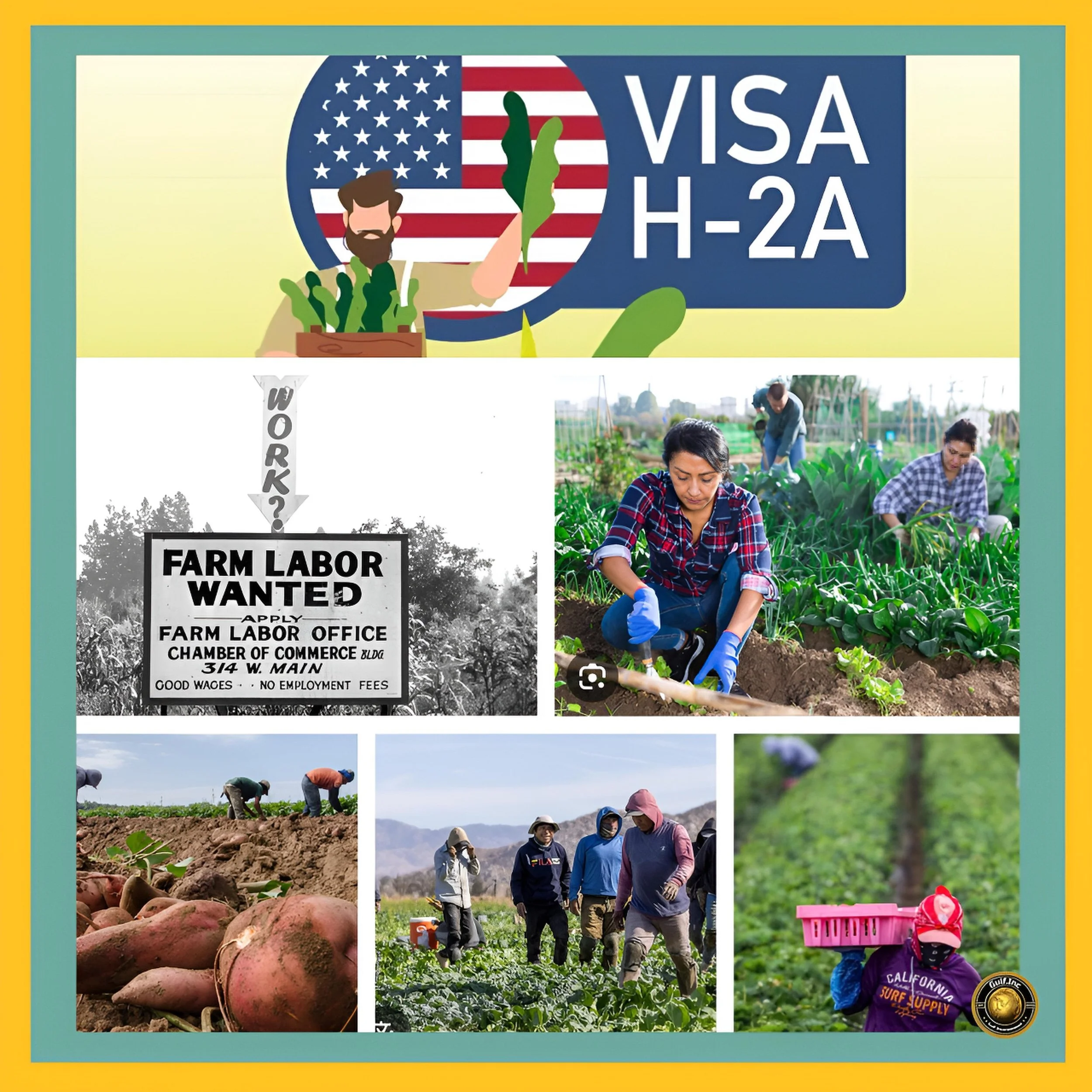
Many producers continue to depend on temporary foreign worker visa programs like H-2A, but bureaucratic delays and higher fees mean these still fall far short of overall industry needs.
Recent Developments and Policy Impact
Immigration crackdowns and restrictive enforcement, especially in California and New York, have led to absenteeism and sometimes drastic workforce declines (20-40% loss), causing billions in crop losses and price surges for consumers.
The Farm Workforce Modernization Act was introduced in May 2025, aiming to create pathways for legal work status for long-term farmworkers, but legislative progress remains slow and uncertain.
Automation and technology adoption are accelerating as farms seek to mitigate labor gaps, but for many crops, manual workers remain irreplaceable.
The situation in 2025 shows deepening labor challenges in U.S. agriculture, with ongoing shortages, surging costs, an aging and changing workforce, and an urgent need for policy reform if production and food security are to be sustained.
Farm Structure and Employment Patterns
The United States' agricultural sector is predominantly composed of family farms—96% in 2023—which contribute 83% of total agricultural output. Despite their economic importance, these farms exhibit high levels of concentration.
Small family farms, with gross cash farm incomes below $350,000, account for 86% of all farms but generate only 17% of agricultural value, operating on 41% of arable land.
Conversely, large-scale family farms (annual incomes exceeding $1 million) constitute just 4% of farms yet produce 48% of output and utilize 31% of farmland.
Between 2017 and 2023, the total number of farms declined from approximately 2.04 million to 1.9 million, signifying a loss of over 140,000 farms.
This trend reflects ongoing economic pressures, particularly impacting smaller operations.
Employment Statistics and Wage Dynamics
Data from the Bureau of Labor Statistics indicate modest growth in agricultural employment, increasing from 1.07 million in 2010 to approximately 1.18 million in 2024, a 10% rise.
However, this aggregate growth conceals underlying challenges related to workforce composition and sustainability.
Wage data reveal mounting economic pressures on agricultural employers. In 2024, average wages for farm labor reached $19.10 per hour, reflecting a 3.09% increase over the previous year.
The H-2A visa program, which averages nearly $20 per hour for 2025, exhibits regional variations—Washington State, for example, reporting minimum wages of $19.82 per hour, considerably above the state minimum wage of $16.66.
Over the past decade, labor costs in agriculture have increased by approximately 127%, vastly outpacing the 22% rise in payments received for agricultural products.
This cost-wage disparity has compelled many operations to increasingly depend on the H-2A program or face potential closure.
The H-2A Visa Program: Costs and Challenges
The H-2A program has become the primary legal pathway for agricultural labor, certifying 384,900 positions in fiscal year 2024.
Nonetheless, the program imposes substantial financial and operational burdens on employers beyond wage obligations.
Direct Costs Per Worker
Labor certification fees: $100 application plus $10 per worker
Visa application fees: $190 per worker (reimbursable)
Transportation from home country: $400-$650 per worker
Housing construction and maintenance: $9,000–$13,000 per worker
Agent fees: approximately $100 per worker
Ongoing Obligations
Provision of free housing meeting federal standards
Daily transportation between housing and work sites
Transportation to essential services such as grocery stores
Employment guarantees for at least 75% of the contract period
Vehicle insurance, with coverage up to $100,000 per seat (maximum $5 million)
Given these requirements, the total cost per worker can exceed $10,000 before wages are paid, rendering the program prohibitively expensive for many smaller operations.
Demographic and Economic Drivers
The agricultural labor force faces several demographic challenges, including an aging population.
The average age of farm operators has reached 58.1 years, with a fourfold increase in producers over 65 compared to those under 35.
This trend indicates a shrinking pipeline of younger farmers. Contributing factors include high startup costs, volatile commodity prices, and strenuous working conditions, discouraging youth entry into agriculture.
Rural depopulation further constrains labor availability, as economic opportunities in urban centers attract residents away from rural communities.
This shift disproportionately impacts regions heavily dependent on agriculture.
Intensifying competition for labor occurs across sectors such as construction and manufacturing, which often offer more favorable wages and working conditions.
Impact of Immigration Policies Under the Trump Administration
The policies enacted during the Trump administration introduced considerable uncertainty for farms relying on immigrant labor.
An estimated 42% of crop farmworkers lack legal authorization, with most operating within 75 miles of their residence. Immigration enforcement actions, including raids in Los Angeles and Nebraska, have disrupted operations and fostered fear among workers.
Such enforcement activities have resulted in absenteeism and unharvested crops, causing economic losses estimated between $250,000 and $300,000 per affected farm.
Policy tensions persist, with official statements indicating support for temporary worker programs but simultaneously emphasizing strict enforcement, including the rejection of amnesty for undocumented workers.
The consequence has been a 38.9% rise in wholesale vegetable prices from June to July 2025—the largest increase since March 2022—as well as over 500,000 immigrants losing work authorization, thereby further constraining supply.
Regional Variations and Crop-Specific Impacts
Labor shortages disproportionately impact certain regions and crops. States such as California, Washington, and Florida face the most severe shortages due to their concentration of labor-intensive crops. California, with 88,050 H-2A admissions in 2023, exemplifies this challenge.
Specialty crops—including fruits, vegetables, and tree nuts—are most vulnerable due to their labor-intensive nature and limited mechanization options.
Apple producers, for example, encounter particular difficulties because mechanization cannot adequately replace manual harvests for high-quality fruit.
Geographically, the top five H-2A employer states—Florida, Georgia, California, Washington, and North Carolina—account for nearly half of all certified positions.
Economic and Financial Sustainability Challenges
Beyond labor costs, farmers confront a confluence of economic pressures threatening operational viability.
Input costs surged sharply, with fertilizer prices increasing over 60% between 2021 and 2022, and overall production expenses continuing to rise.
Despite stabilization in some inputs, labor costs are projected to increase by an additional 6.9% in 2024.
Farm income has declined, with net farm income decreasing by approximately 25.5% in 2023 and an estimated 17.4% in 2024.
Nonetheless, the actual decline in 2024 was less severe than projected, falling by about 4.1% to $140.7 billion.
Recovery prospects suggest a rebound to approximately $179.5-$180 billion in 2025, primarily driven by emergency government payments and high cattle prices.
This potential upturn depends on temporary support measures, which may be unsustainable if labor and input costs continue to escalate.
Additional market pressures include trade disputes and tariffs, which have diminished export markets and depressed commodity prices—further endangering farm financial stability.
Technological and Operational Adaptations
In response to labor shortages, agricultural operations are increasingly investing in automation and efficiency measures.
Historically, technological advancements have allowed the sector to nearly triple output while reducing labor hours by 80% from 1948 to 2017, exemplifying productivity gains.
However, challenges persist. Many labor-intensive crops cannot be mechanized without compromising quality, particularly high-value fruits and vegetables.
High costs and uncertain returns further hinder automation adoption, especially among smaller, financially pressured farms.
Conclusion
The ongoing agricultural labor crisis underscores the urgent need for comprehensive policy responses that balance immediate needs with long-term sustainability.
Stakeholders advocate for immigration reforms that grant legal status and expand temporary worker programs, including modifications to streamline the H-2A process for smaller farms.
Furthermore, economic support measures are critical to help farms adapt to rising labor costs without sacrificing production.
The future viability of American agriculture hinges on coordinated efforts involving immigration policy, economic assistance, and technological development.
Failure to implement effective policies risks significant transformations within the sector, with potential implications for food security, rural community stability, and reliance on imports.