India rise in geopolitics as a global power
Executive Summary
India and the Rebalancing of Asia: An in-depth analysis of India's rising geopolitical influence, strategic economic initiatives, and diplomatic efforts within the broader context of shifting regional power dynamics across Asia.
Introduction
India’s remarkable journey from being a marginalized post-colonial nation to a formidable force on the Asian geopolitical stage exemplifies one of the most dramatic strategic shifts of the 21st century.
Once hesitant to involve itself deeply in global security affairs, favoring a stance of non-alignment, India is now stepping confidently into the spotlight as a key influencer in reshaping regional and international power dynamics.
The Economic Rise of India
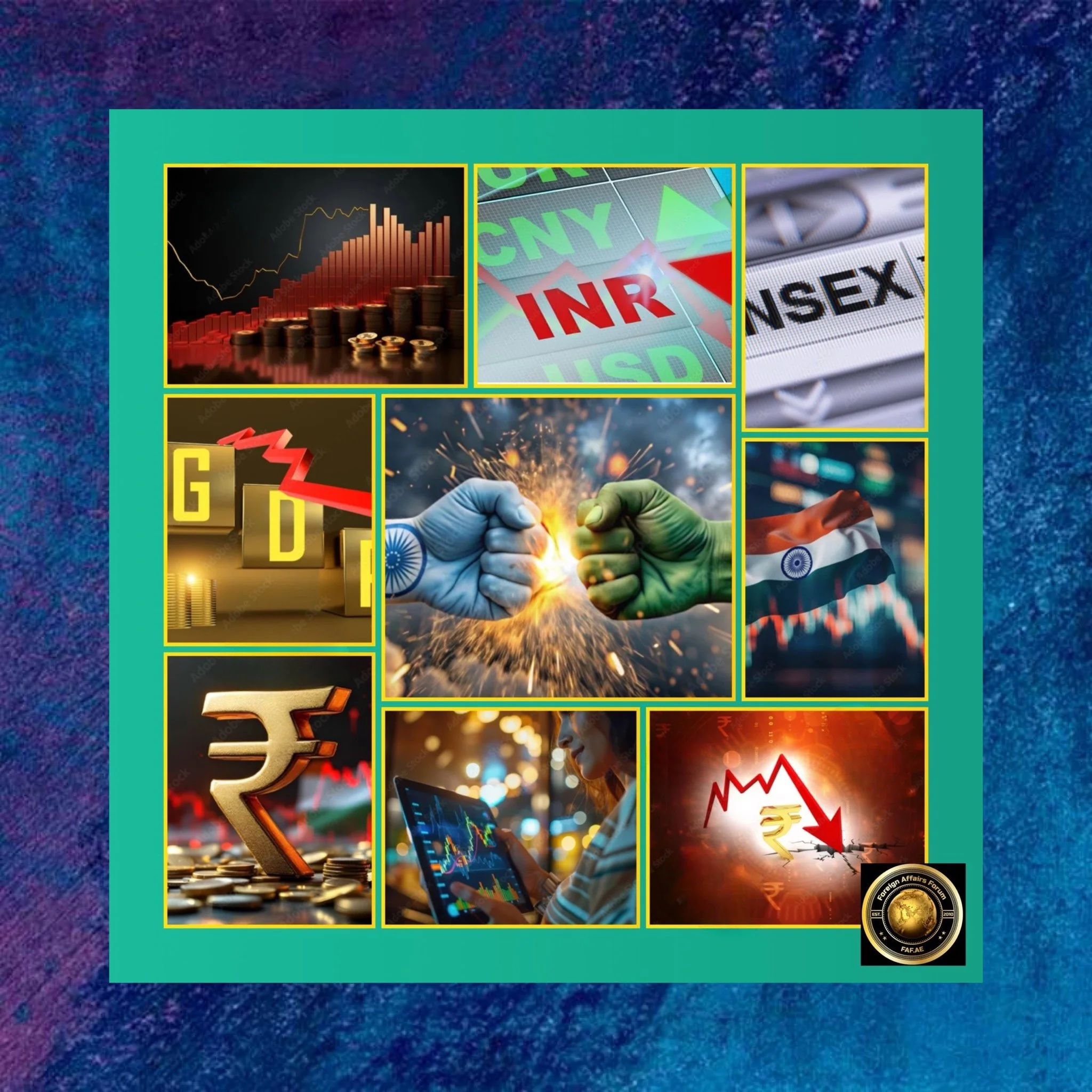
At the heart of this transformation lies India’s explosive economic growth. By 2025, it is set to cement its position as the world’s fourth-largest economy with a staggering nominal GDP of $4.19 trillion, surpassing Japan—a feat it achieved just recently, climbing from tenth place in 2014.
Looking ahead, projections anticipate India will claim the third spot by 2028, overtaking Germany, and in terms of purchasing power parity (PPP), it is already the third-largest in the world, valued at $17.36 trillion—only behind the United States and China.
The future looks even brighter, with estimates suggesting India’s economy could reach $20.7 trillion by 2030 and potentially become the second-largest globally by 2038, boasting a projected GDP of $34.2 trillion.
India’s growth is nothing short of extraordinary. Maintaining a robust 7.8% growth rate in early FY 2025-26, it outpaces most other major economies around the world, adding approximately $1 trillion to its GDP every 12 to 18 months—an impressive feat reflecting resilience and dynamism.
Modernizing the Military and Expanding Defense Capabilities
Parallel to its economic ascension, India is rapidly modernizing its military forces. As the fifth-largest global spender on defense, India allocated $86.1 billion in 2024—more than the UK, France, and Japan—signaling its strategic priorities.
With over 1.4 million active personnel, India boasts the second-largest military force in the world and the largest volunteer army.
When reserves and paramilitary forces are included, this number exceeds 5 million, giving India significant regional influence and formidable power projection across the Indo-Pacific region.
India’s push for indigenous military capabilities through initiatives like “Make in India” is transforming its defense landscape.
It operates over 2,100 aircraft—including advanced fighters like the Rafale and indigenous Tejas jets—and maintains a nuclear arsenal of around 160 warheads equipped with intercontinental ballistic missile systems.
India’s evolution from a cautious, non-aligned state to a strategic powerhouse is reshaping its role on the world stage. It is a story of resilience, innovation, and an ambitious vision for the future.
Digital Revolution and Technological Capabilities
India’s technological transformation in the 21st century has been nothing short of revolutionary.
Today, over one billion mobile subscribers connect seamlessly across the nation, and India boasts the second-largest internet user base worldwide.
The digital economy is booming, making up 11.74% of GDP—equivalent to $402 billion in 2022-23—and is on track to nearly double its contribution to around 20% of the national income by 2029-30.
Since its launch in 2015, the Digital India initiative has laid the foundation for groundbreaking infrastructure that’s reshaping the nation.
The Unified Payments Interface (UPI), a marvel of financial innovation, processed over 1,867 crore transactions totaling $279.4 billion in April 2025 alone, and India handled nearly half of all global real-time transactions in 2023.
This digital leap has empowered India to bypass traditional development hurdles, positioning itself as a global fintech powerhouse.
The country’s artificial intelligence capabilities are also expanding at an impressive pace through the IndiaAI Mission, backed by a $1.17 billion budget over five years. By May 2025, India’s AI infrastructure saw a leap with over 34,000 GPUs powering advanced computations.
Moreover, India is boldly building semiconductor capabilities with the India Semiconductor Mission. With a hefty $8.57 billion USD investment supporting six major projects worth $17.48 billion, the nation is boldly forging its path in high-tech manufacturing.
Strategic Positioning in Asian Geopolitics
India’s rise as a comprehensive power is reshaping the entire landscape of Asian strategy.
Unlike China, which faces daunting demographic hurdles with its aging population, India boasts a youthful median age of 28.8 years, with a vibrant workforce set to grow well into 2047.
This demographic dividend, paired with the world’s second-highest savings rate among major economies, lays a robust foundation for sustainable growth.
India’s strategic autonomy is a key asset, enabling it to deftly navigate complex geopolitical terrain while staying clear of bloc politics.
The nation actively engages in influential frameworks like the Quad, BRICS, and the Shanghai Cooperation Organization, showcasing its ability to cultivate relationships across both Western and non-Western powers.
However, the road to becoming a true Great Power is not without hurdles. Per capita income currently stands at $2,940—signaling a need for more inclusive prosperity.
While India’s economy is massive in total, lifting hundreds of millions out of poverty and maintaining growth presents ongoing challenges. Infrastructure shortages persist despite heavy investments; the government plans to pump over $290 billion annually into upgrades until 2030—yet decades of underinvestment mean progress requires relentless effort.
Furthermore, as India’s power grows, it must balance domestic priorities with increasing international responsibilities. Its journey from a closed, socialist economy to a dynamic, market-oriented system continues, with structural reforms still needed to compete effectively on the global stage.
Conclusion
Regional and Global Implications
India’s rise is dramatically transforming the landscape of Asian power dynamics.
As a new major player emerges alongside the United States and China, fresh opportunities for coalition-building and strategic partnerships are blossoming.
Harnessing its status as the world’s largest democracy, India wields significant soft power, championing democratic values and governance models across the globe.
The fact that India is projected to host 55% of the world’s Global Capability Centers underscores its deep integration into global value chains—beyond traditional outsourcing—to become a powerhouse of innovation and digital prowess.
This technological leap positions India as an indispensable partner for multinational corporations eager to tap into its talented workforce and advanced digital infrastructure.
India’s comeback to the geopolitical stage marks a historic shift after decades of staying on the sidelines. With strong economic fundamentals, expanding military capabilities, and cutting-edge technology, India is poised to play a pivotal role in shaping the Asian order of the 21st century.
Yet, to unlock its full potential as a global power, India must skillfully navigate complex domestic and international challenges while sustaining the growth that has brought it this far.