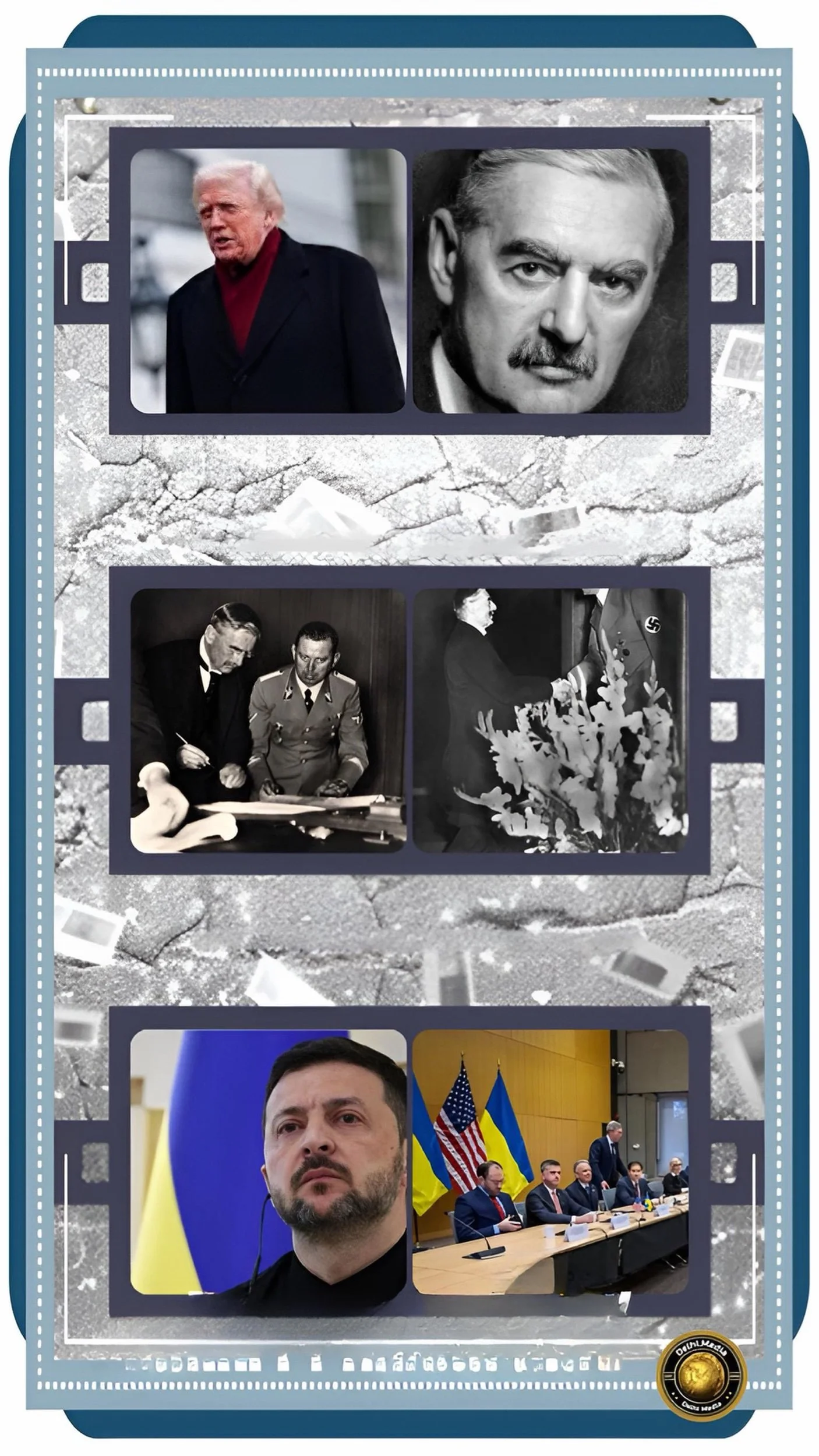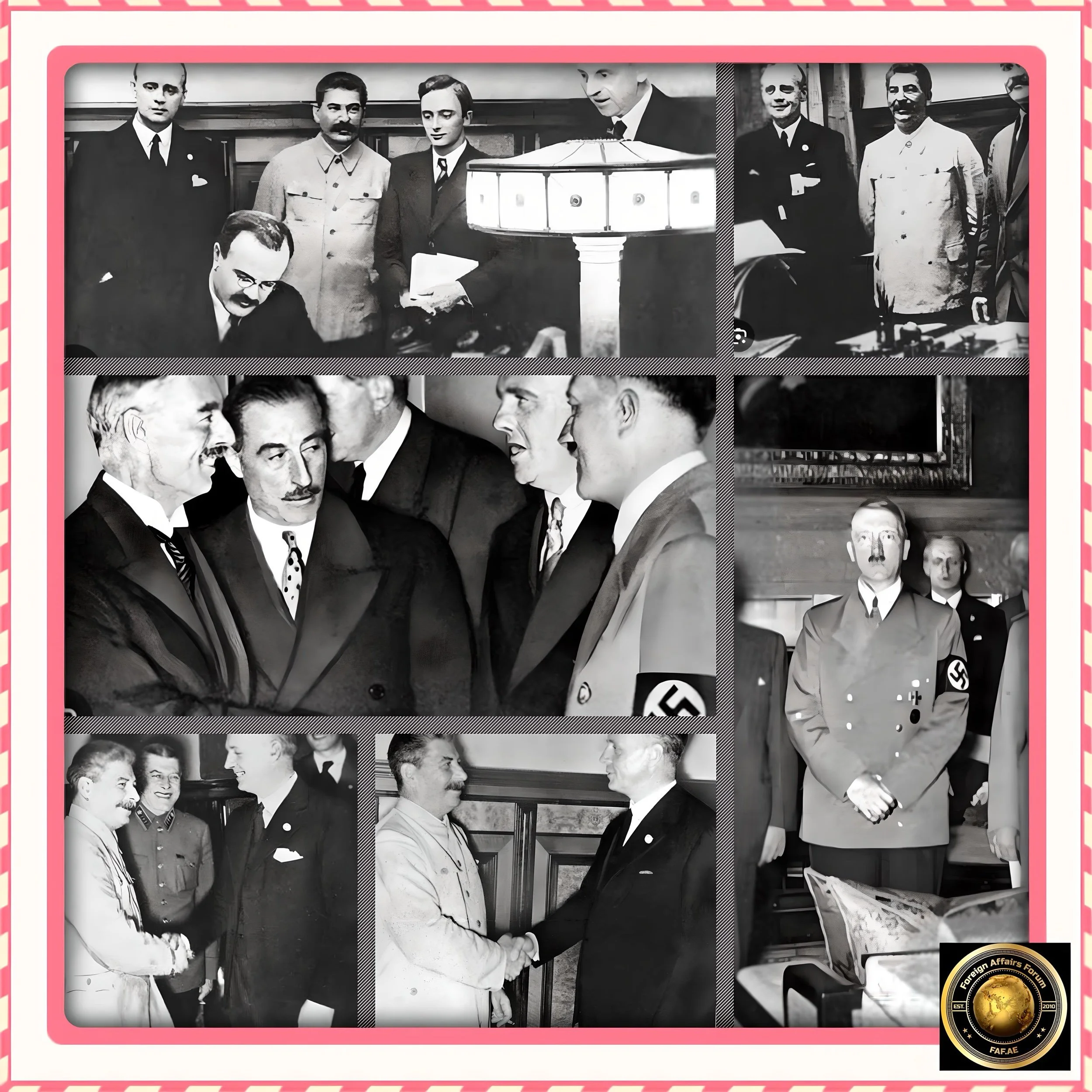
The Molotov-Ribbentrop Pact: Historical Insights and Contemporary Parallels in the Ukraine-Russia Conflict: An Analysis of Factors Leading to World War II
Executive Summary
The Molotov-Ribbentrop Pact, officially known as the Treaty of Non-Aggression between Germany and the Soviet Union, was signed on August 23, 1939.
This agreement, orchestrated by the foreign ministers of both nations, Vyacheslav Molotov and Joachim von Ribbentrop, set the stage for a sinister collaboration between two totalitarian regimes.
The pact not only stipulated that the two countries would refrain from military aggression against each other for the next ten years but also included secret protocols that effectively divided Eastern Europe into spheres of influence.
This arrangement facilitated the invasion and subsequent partitioning of Poland, marking the onset of World War II.
The echoes of this historical agreement resonate strongly in the present-day conflict between Ukraine and Russia. Much like the prelude to World War II, we witness a pattern of aggressive territorial ambitions fueled by a disregard for national sovereignty and democratic principles.
The annexation of Crimea by Russia in 2014 and the ongoing military interventions in Eastern Ukraine can be viewed through the lens of the Molotov-Ribbentrop Pact, highlighting how entrenched geopolitical interests can manifest in direct conflict, often at the expense of smaller nations caught in the crossfire.
In analyzing the historical lessons from the Molotov-Ribbentrop Pact, we confront the dangers of appeasement and the perilous consequences of power vacuums in international relations.
The contemporary parallels serve as a reminder of the fragility of peace and the urgent need for a cohesive international response to aggression, as nations grapple with the realities of hybrid warfare, misinformation, and the implications of authoritarianism on global stability.
Understanding the past allows us to engage more thoughtfully with the present, as we seek paths toward resolution and a more secure future for nations like Ukraine facing similar challenges.
Introduction
The Molotov-Ribbentrop Pact, signed on August 23, 1939, represents a critical juncture in the evolution of diplomatic relations, encapsulating a disquieting alliance between Nazi Germany and the Soviet Union.
This non-aggression treaty not only facilitated the partitioning of Eastern Europe into distinct spheres of influence but also established dangerous precedents for power dynamics that resonate in today's geopolitical landscape.
In the current climate, Vladimir Putin's incursion into Ukraine bears striking resemblance to Joseph Stalin's strategies of territorial assertion in 1939.
Both leaders have adeptly employed historical narratives and nationalist rhetoric to justify their respective ambitions, illustrating a recurrent theme of ideology being wielded as a veil over expansionist objectives.
Geographically, the parallels are compelling; just as Stalin aimed to extend Soviet influence across Eastern Europe in the wake of Poland's dismemberment, Putin's maneuvers indicate a resurgence of Russian imperial aspirations over Ukraine and adjacent territories.
Moreover, the diplomatic strategies employed by both regimes exhibit disturbing similarities.
The Nazi-Soviet Pact was characterized by a veneer of collaboration and shared interests, which effectively concealed the inherent antagonism driving both powers.
Today, Putin's approach reflects a comparable amalgamation of duplicitous diplomacy and tactical aggression, challenging the foundational principles of state sovereignty and self-determination that have underpinned the post-Cold War international order.
A thorough analysis of these historical parallels highlights the fragile state of modern international relations and underscores the imperative for strengthened security assurances to deter Russian aggression.
The reemergence of sphere-of-influence doctrines threatens to dismantle the hard-won stability established in the aftermath of the Cold War. Absent credible military support, Ukraine—and potentially other neighboring nations—could find themselves vulnerable to predatory state behavior.
By understanding these historical lessons, the international community is better equipped to navigate the complexities of contemporary geopolitical challenges and formulate effective responses to the risks posed by aggressive revisionist powers.
Historical Context: The Architecture of the Molotov-Ribbentrop Pact
The Molotov-Ribbentrop Pact emerged from a nuanced geopolitical context shaped by the ambitions of major powers intent on reconfiguring the European landscape.
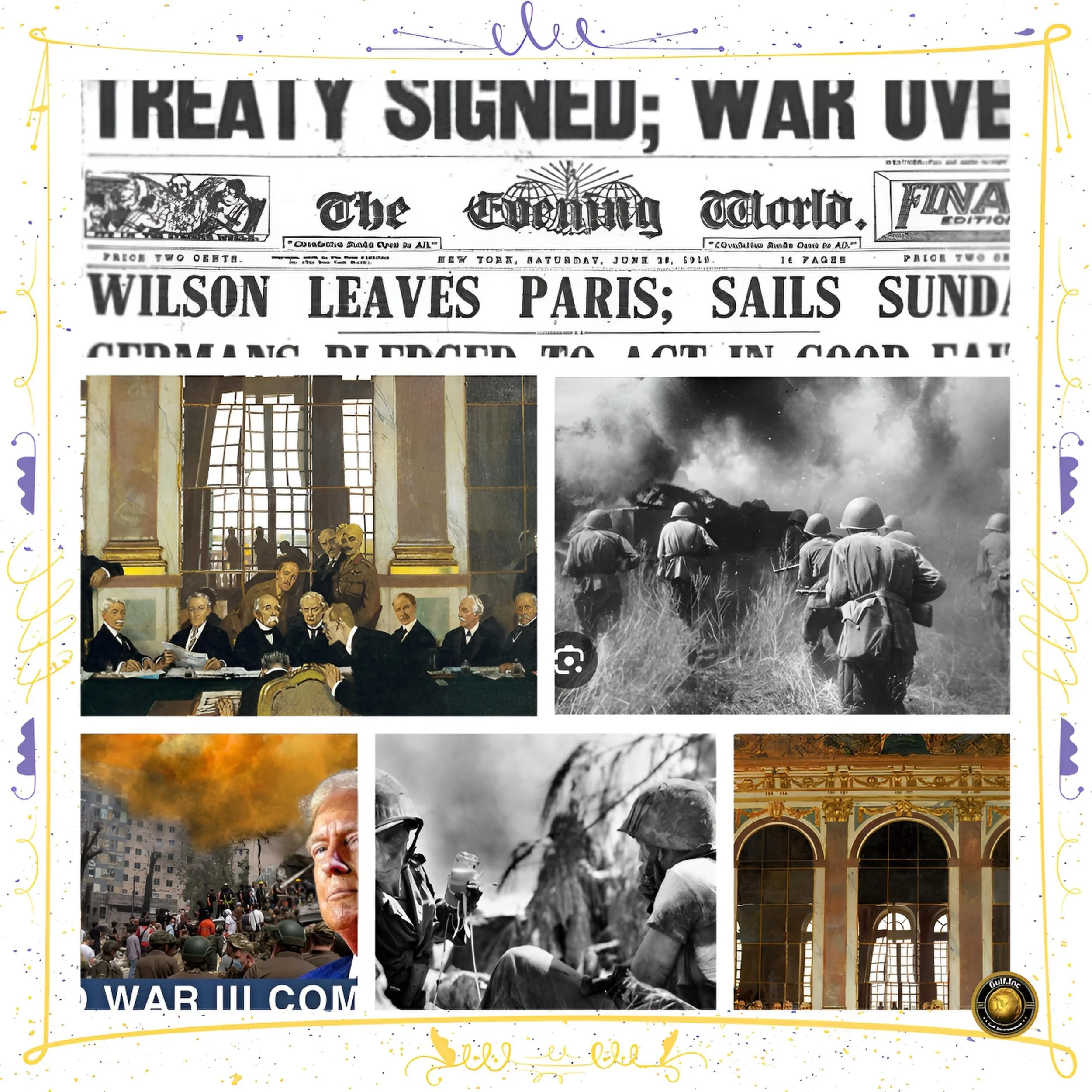
Signed on August 23, 1939, by Soviet Foreign Minister Vyacheslav Molotov and German Foreign Minister Joachim von Ribbentrop, the treaty ostensibly functioned as a non-aggression agreement.
However, it was underpinned by secret protocols that fundamentally redefined the geopolitical order in Eastern Europe.
On the surface, the pact ensured mutual non-aggression for a period of ten years. Nevertheless, the covert clauses delineated spheres of influence, effectively relegating smaller nations to mere instruments for the strategic ambitions of Germany and the Soviet Union.
The terms allocated western Poland and Lithuania to Nazi Germany, while the Soviet Union appropriated eastern Poland, Finland, Estonia, Latvia, and Bessarabia (present-day Moldova).
This partition repudiated the post-World War I order designed to maintain a balance of power and showcased both regimes' willingness to eschew diplomatic solutions in favor of territorial acquisition through military aggression.
Stalin's motivations were distinctly pragmatic; he aimed to create a buffer zone against potential German encroachment while buying time to modernize the Red Army.
This strategic calculus was exacerbated by the USSR's exclusion from the Munich Agreement of 1938, coupled with unsuccessful efforts to establish a collective security architecture with Western powers, which contributed to a sense of geopolitical isolation within the Soviet state.
The immediate ramifications of the pact were significant. Germany commenced its invasion of Poland on September 1, 1939, implementing blitzkrieg tactics that marked the official onset of World War II.
The Soviet Union followed suit, invading from the east on September 17, and executing the plans outlined in the pact with remarkable coordination.
This unprecedented military collaboration between the two totalitarian regimes highlighted their shared strategic objectives, allowing them to simultaneously advance their territorial ambitions without the anxiety of a two-front war.
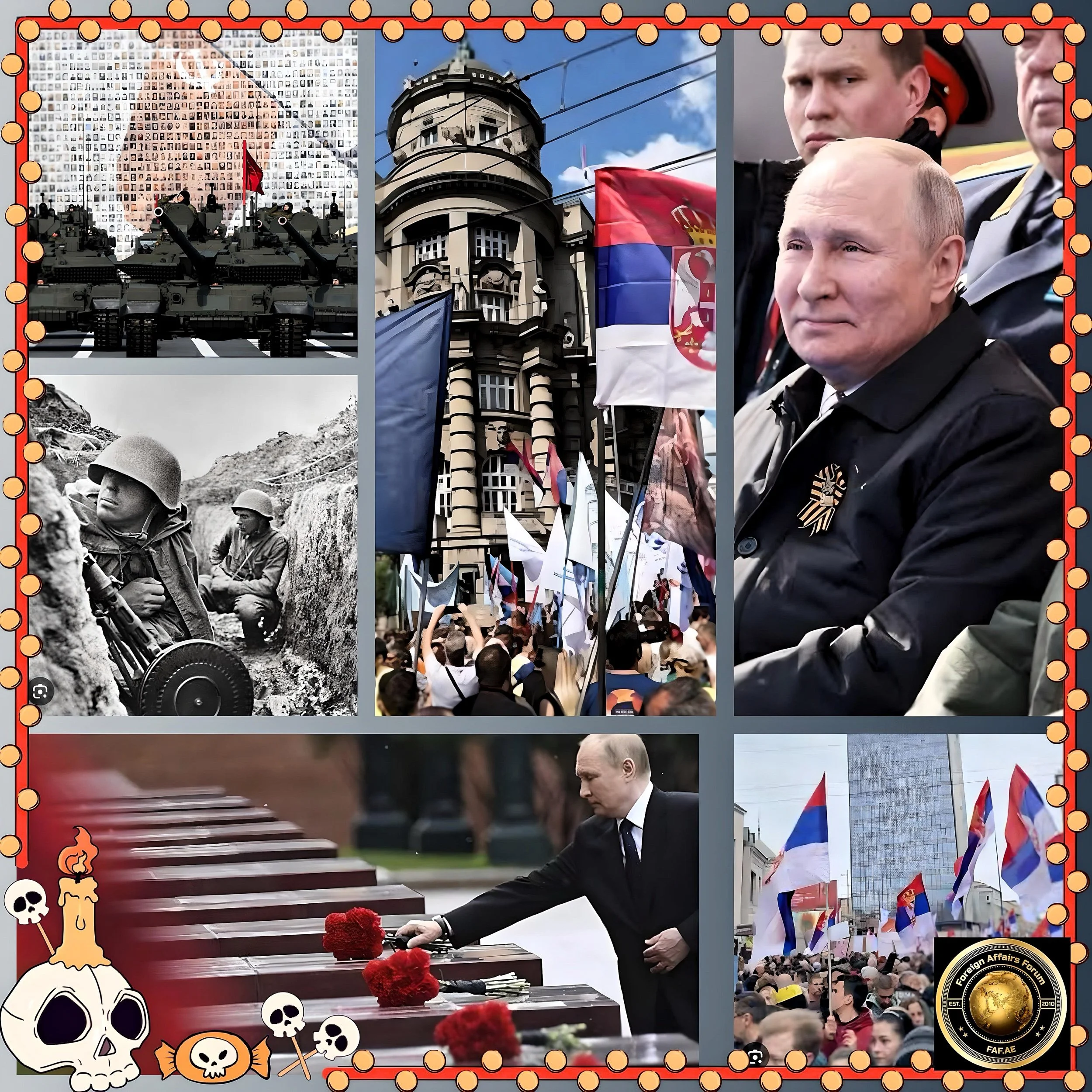
The joint military parade in Brest-Litovsk on September 22 exemplified the depth of cooperation between these ideologically opposed yet strategically aligned nations.
This display of their armed forces side by side visually underscored a dark chapter in European history, reflecting the extreme measures both regimes undertook to forge an alliance for mutual benefit, prioritizing their expansionist goals over lives and national sovereignty.
The Pact’s Impact on World War II and Eastern Europe
The Molotov-Ribbentrop Pact was a critical diplomatic maneuver that significantly contributed to the outbreak of World War II by resolving Germany's primary strategic challenge of engaging multiple adversaries simultaneously.
The non-aggression pact with the Soviet Union emboldened Adolf Hitler to launch a sequence of military offensives across Europe, driven by the conviction that Joseph Stalin would adhere to the pact's terms, which included the pivotal German-Soviet Commercial Agreement of 1940.
This agreement facilitated the exchange of approximately 650 million Reichsmarks worth of essential raw materials—such as grain, oil, and various strategic metals—from the Soviet Union to Germany, in return for industrial machinery and advanced military technology.
The execution of the pact's secret protocols led to catastrophic consequences for the affected nations.
Poland was effectively erased as a sovereign entity, partitioned between the totalitarian regimes of Nazi Germany and the Soviet Union, both of which conducted systematic purges of Polish intellectuals and dismantled its political infrastructure.
The Soviet Union’s declared "sphere of influence" quickly devolved into active occupation and formal annexation.
Under duress, the Baltic states—Estonia, Latvia, and Lithuania—entered into “mutual assistance treaties” in 1939, allowing the establishment of Soviet military installations on their territories and setting the stage for later domination.
By August 1940, these nations were fully integrated into the Soviet Union, their sovereignty obliterated through the installation of puppet governments aligned with Moscow’s strategic interests.
Finland's resistance to Soviet demands culminated in the Winter War (1939-1940), during which Finland ceded approximately 10% of its territory to Soviet forces while managing to preserve its nominal independence.
The human toll stemming from the pact extended well beyond immediate military casualties; tens of thousands of Baltic individuals faced execution or forced deportation following the onset of Soviet occupation.
The region endured decades of oppressive governance, with sovereignty only restored in 1991, long after the pact's ramifications had fundamentally altered the political landscape of Eastern Europe.
The dissolution of this agreement was marked by Hitler's commencement of Operation Barbarossa on June 22, 1941, which transformed the dynamics of World War II, shifting the Soviet Union from a collaborator of Germany to a pivotal member of the Allied coalition.
Nevertheless, the territorial arrangements delineated in the pact’s secret protocols cast enduring shadows over the post-war landscape, as Stalin skillfully maneuvered at the Yalta Conference in 1945 to secure Allied recognition of Soviet jurisdiction over extensive areas designated in the 1939 agreement.
This legacy profoundly shaped the geopolitical contours of Europe for decades thereafter.
Putin’s Rehabilitation of Sphere-of-Influence Politics
Contemporary Russian foreign policy, particularly under Vladimir Putin, reflects a significant reevaluation of the geopolitical paradigms established by the Molotov-Ribbentrop Pact of 1939.
Putin's embrace of this contentious agreement is framed as a necessary reaction against Soviet isolationism, coupled with a critique of the West's failures in crafting effective collective security arrangements.
This inclination towards historical revisionism illustrates Putin's overarching geopolitical narrative, which asserts that great powers possess the inherent right to delineate exclusive spheres of influence that encompass neighboring territories.
In this view, the sovereignty of smaller states is often diminished, as seen in Putin's assertive stance towards Ukraine.
Putin’s perspective on Ukraine bears resemblance to Stalin's outlook on Eastern Europe during the late 1930s.
He perceives Ukraine not as an independent state with the capacity for genuine democratic governance, but rather as an integral part of Russia's inherent sphere of influence, effectively subsumed within its territorial domain.
This notion is explicitly elaborated in his July 2021 essay, where he claims that Russians and Ukrainians constitute “one people,” echoing Stalin’s justifications for interventions under the pretext of safeguarding the rights of ethnic Russians and Belarusians in Poland.
Both leaders have employed strikingly similar rhetorical strategies to validate their territorial aspirations, utilizing historical narratives, cultural ties, and urgent security concerns as justifications for territorial expansion.
The annexation of Crimea in 2014 serves as a poignant illustration of Putin’s doctrine of spheres of influence, marked by dubious referenda and claims of protecting ethnic Russians—a methodology reminiscent of Soviet practices in the Baltic states during the interwar period.
Moreover, Putin's demands for Ukrainian neutrality and acknowledgment of Russian territorial claims underscore his expectations for great power negotiations that overshadow the rights and aspirations of smaller nations.
This stance draws historical parallels to the Nazi-Soviet dialogues preceding World War II, during which the fates of states were often determined by larger powers with little regard for the sovereignty or preferences of those nations.
Diplomatically, Putin has consistently pursued bilateral dialogues with the United States, addressing what he terms the "European security architecture."
This approach effectively seeks to sideline European nations, including Ukraine, from critical discussions that bear weight on their sovereignty and geopolitical futures.
Such tactics parallel Stalin's strategies in his negotiations with Hitler, where direct engagement with the Nazi regime took precedence over consultations with Western democracies or other affected Eastern European nations.
In both cases, there lies an underlying assumption that smaller states are merely impediments within the broader context of great power diplomacy, rather than being recognized as legitimate actors in the international system.
Contemporary Parallels in the Ukraine-Russia Conflict
The 2022 Russian invasion of Ukraine exemplifies the extreme manifestation of Vladimir Putin’s geopolitical ideology, which is predicated on spheres of influence and utilizes rhetoric and tactics reminiscent of the prelude to World War II, particularly surrounding the Molotov-Ribbentrop Pact.
Putin’s aggressive strategy echoes historical practices of coercive diplomacy and military intervention that reshaped Europe’s geopolitical landscape.
His initial objective to rapidly seize Kyiv reflects a strategic approach similar to that of Joseph Stalin, who aimed for swift territorial control.
Stalin’s 1940 annexation of the Baltic states serves as a pertinent precedent; it involved a calculated blend of military intimidation and political subterfuge to install compliant regimes favorable to Soviet interests.
In parallel, Putin's ambition to establish a puppet government in Ukraine seeks to reinforce Russia's control over its former Soviet territories while undermining Western influence.
The Kremlin’s narrative advocating for the “demilitarization and denazification” of Ukraine starkly mirrors the Soviet Union's World War II-era propaganda, which depicted military interventions as liberatory actions against fascist regimes.
This constructed justification served to rationalize aggressive operations by framing them as protective measures for ostensibly vulnerable populations.
Moreover, Russia’s current territorial ambitions resonate with the historical paradigms of 1939 regarding spheres of influence.
The annexation of significant Ukrainian territories, such as Crimea in 2014, and the ongoing military operations illustrate a continuity of ideation akin to Stalin’s territorial expansions, assuming a presumption of international acquiescence to its actions.
Putin’s assertion in July 2023 that the “western territories of Poland are a gift from Stalin to the Poles” underscores his interpretation of the post-World War II territorial arrangement as a basis for contemporary claims.
International responses to the Ukraine invasion reveal both parallels and divergences from the events of 1939.
Initial reactions to Russian aggression mirrored the inadequate Western response to the Molotov-Ribbentrop Pact, notably following Crimea's annexation.
However, the comprehensive invasion in 2022 prompted a more robust and immediate coalition response characterized by military aid, economic sanctions, and NATO's strategic enlargement, a notable departure from the limited support given to Poland during the Nazi invasion.
The ongoing discourse around potential negotiations illustrates inherent tensions between appeasement strategies and the imperative to resist further encroachments.
Advocacy for negotiations that may entail territorial concessions for Ukraine evokes troubling echoes of the 1938 Munich Agreement, which fatally empowered Adolf Hitler's further aggression.
Historians and contemporary strategists warn against historical miscalculations, affirming that yielding to territorial expansion often precipitates more extensive conflicts.
Implications for Contemporary Diplomacy and Security
The legacy of the Molotov-Ribbentrop Pact offers critical insights for modern diplomatic initiatives aimed at countering Russian aggression.
A foundational lesson from this historical agreement is the inherent risk of recognizing sphere-of-influence arrangements as legitimate constructs. Such frameworks invariably lead to conflict and human hardship, undermining the sovereignty and self-determination of smaller states.
Stalin’s belief that great powers could dictate the fate of weaker nations without their input closely parallels Putin’s demands for bilateral talks on Ukrainian and European security, which systemically exclude the voices of the directly impacted entities.
The eventual disintegration of the Molotov-Ribbentrop Pact serves as a cautionary illustration of the fragility inherent in agreements based solely on power dynamics, particularly as the interests of authoritarian regimes evolve.
The historical instances of the Baltic states under Soviet control poignantly underscore the necessity for vigilance regarding any security arrangements that might offer Russia undue influence or veto power over Ukraine’s foreign policy, as such paths have formerly led to total domination.
The tepid international response to the Molotov-Ribbentrop Pact significantly contributed to the onset of World War II, highlighting the perils of complacency.
Current deliberations regarding Ukraine's prospective NATO membership and security guarantees resonate with the failures of collective security seen in the 1930s.
The prevailing lesson remains that only credible military deterrence, bolstered by steadfast commitments from allied states, can effectively thwart further territorial ambitions from Russia.
Geopolitical Implications for the International Order
Putin's resurgence of sphere-of-influence ideologies presents a fundamental challenge to the post-Cold War international order, which has been grounded in the principles of sovereign equality and the right of self-determination.
The Molotov-Ribbentrop Pact serves as a stark illustration of the rejection of these principles, treating smaller states as expendable pawns in the broader strategic calculus of great power politics rather than acknowledging them as legitimate actors on the international stage.
The ramifications of the ongoing conflict are significant: if Russia successfully retains control over Ukrainian territories through coercive means, it could establish a perilous precedent, emboldening other authoritarian regimes to pursue similar territorial ambitions with the belief that such actions will not elicit meaningful international pushback.
This shift would represent a grave regression from the established norms of international law and cooperative frameworks that have, in theory, provided relative stability since the conclusion of World War II.
The resolution of the Ukraine conflict will bear substantial implications for the trajectory of global geopolitics, specifically determining whether the normalization of territorial conquests becomes a viable strategy within international relations.
Strategic Imperatives: Crafting Robust Security Frameworks and Deterrence Mechanisms
An examination of the Molotov-Ribbentrop Pact yields critical insights for contemporary geopolitical strategy: effective deterrence against Russian aggression in Ukraine mandates the establishment of significant security guarantees, bolstered by military capabilities.
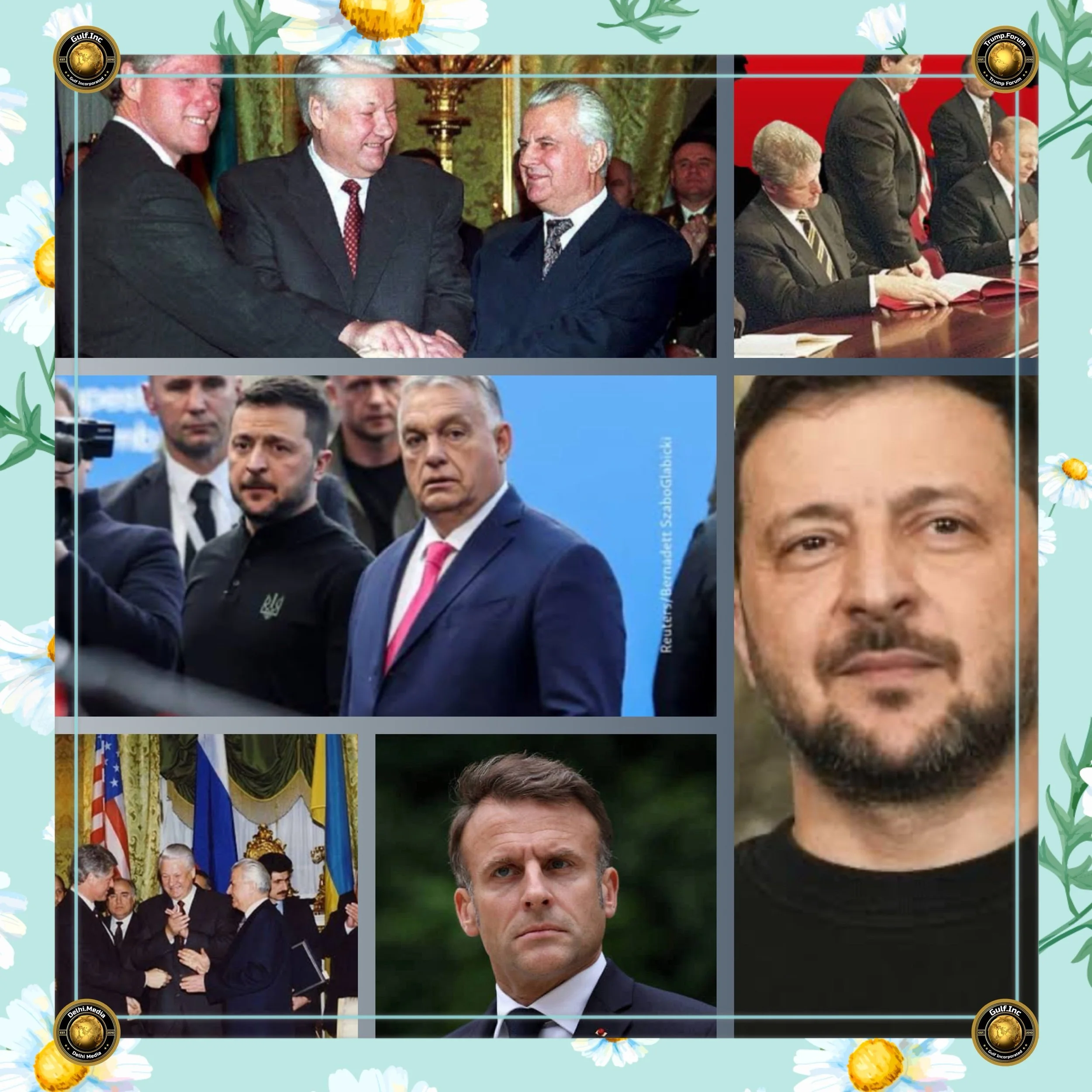
The limitations of the Budapest Memorandum are striking; its failure to avert Russian military incursions in 2014 and 2022 underscores the inadequacy of relying exclusively on diplomatic assurances devoid of enforceable mechanisms.
This inadequacy is particularly salient when engaging with leadership committed to territorial expansion.
Current developments in Ukraine resonate with historical parallels faced by Poland and the Baltic states in 1939.
In both cases, the promises enshrined in international law and diplomatic agreements quickly disintegrated when confronted by aggressive expansionist policies.
In light of this context, NATO membership emerges as the most credible and sustainable security framework for Ukraine.
The obligations enshrined in Article 5 of the NATO treaty have historically acted as a formidable deterrent against Russian actions aimed at member states, fostering a collective security environment.
Historical evidence suggests that alternative security arrangements lacking enforceable mutual defense commitments are inherently inadequate in the face of persistent threats.
Any proposed interim security measures must integrate explicit provisions for military enforcement; without such guarantees, their legitimacy and efficacy will inevitably be undermined.
The international community would do well to learn from the miscalculations of 1938 and 1939, particularly the imperative to eschew the legitimization of territorial acquisitions through agreements that reward aggressive behavior.
This awareness is vital for the preservation of a stable global order.
Looking forward, future diplomatic initiatives regarding Ukraine must prioritize the inclusion of Ukrainian representatives as equal stakeholders in discussions.
Engaging Ukraine merely as an instrument in great power negotiations undermines its sovereignty and agency.
The historical context provided by the Molotov-Ribbentrop Pact serves as a compelling cautionary tale: excluding affected states from negotiations about their futures invariably leads to heightened conflict and instability.
Ensuring that Ukrainian perspectives and rights are central to negotiations is essential for cultivating a lasting peace and robust security framework.
Conclusion
The historical ramifications of the Molotov-Ribbentrop Pact are essential for analyzing the contemporary Russian aggression towards Ukraine. This infamous agreement, executed in 1939, established a perilous precedent that reverberates through today’s geopolitical landscape.
Vladimir Putin's revival of the sphere-of-influence doctrine, coupled with his blatant territorial ambitions, reflects the ideological currents that prompted the formation of this significant pact between Nazi Germany and the Soviet Union.
His diplomatic strategies reveal a readiness to flout established international norms, akin to the historical leaders who treated smaller nations as instruments to be manipulated.
The collapse of the Molotov-Ribbentrop Pact underscores the inherent fragility and catastrophic human costs arising from diplomatic arrangements that prioritize the interests of major powers over the sovereignty of nations.
This disintegration led to one of history's most destructive conflicts—World War II—highlighting the peril in perceiving states like Ukraine as mere tools of foreign policy rather than recognizing their sovereignty and right to self-determination.
The ongoing conflict in Ukraine serves as a crucial litmus test for the international community’s adherence to these historical insights.
Global leaders face a binary decision: to acquiesce to Russia's expansionist objectives or to honor their security commitments to Ukraine.
The implications of this choice are profound, determining whether we will revert to a pessimistic framework of sphere-of-influence politics in international relations or whether we can sustain the principles of sovereign equality and democratic self-governance.
The lasting legacy of the Molotov-Ribbentrop Pact stands as a stark reminder that only a resolute and collective response to territorial aggression, bolstered by credible military deterrents, can prevent a resurgence of the darkest episodes in our shared history.
The global community must understand that failure to adequately address aggressive posturing today could lead us to replicate the errors of the past.