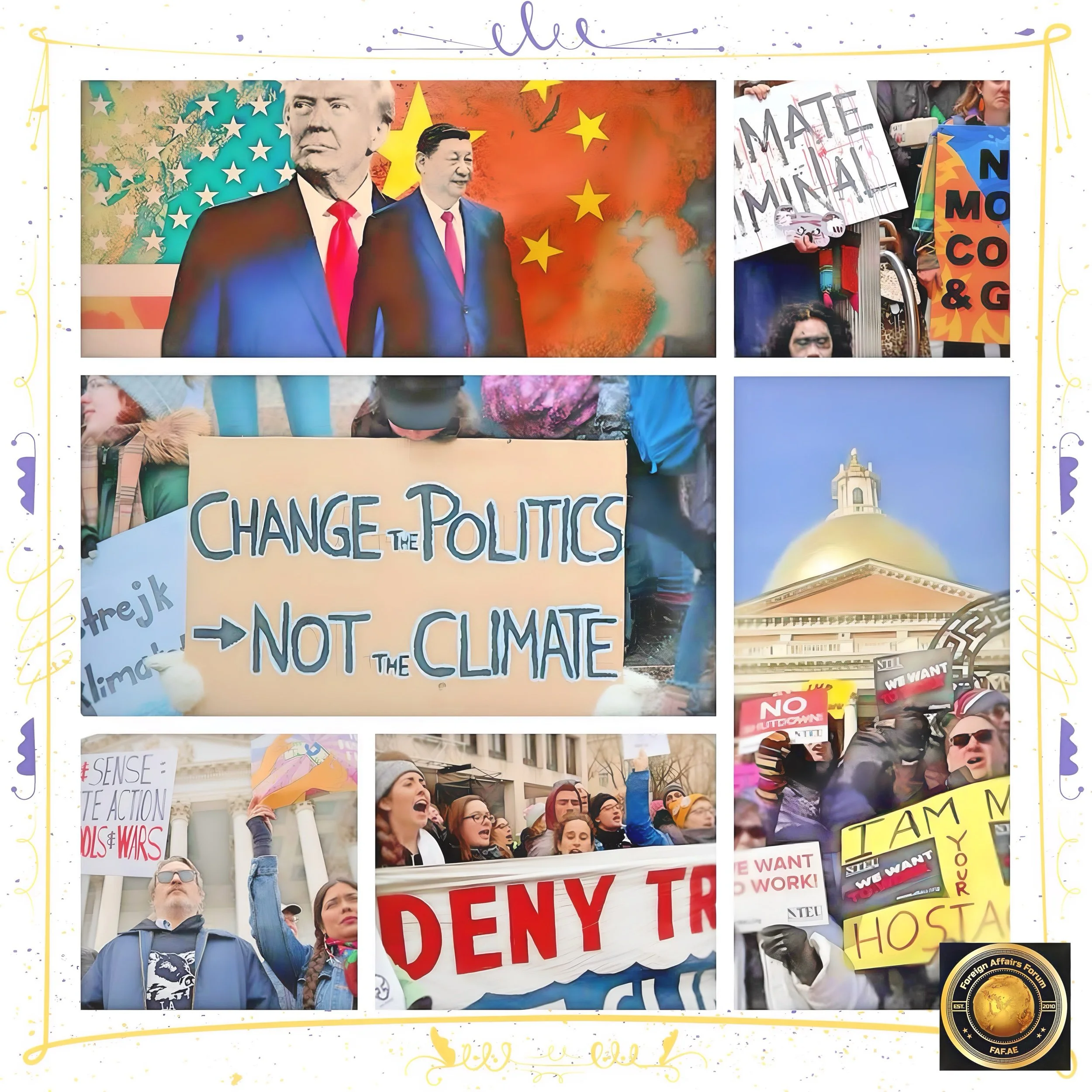
Climate is a hoax - How Trump Lost the War on Climate—to China
Introduction
The Trump administration’s comprehensive assault on climate policy has inadvertently handed China an unprecedented opportunity to dominate the clean energy economy of the future.
While the United States retreats from climate leadership through systematic policy rollbacks, China has accelerated its renewable energy deployment to historic levels, fundamentally altering the global balance of clean technology power.
Trump’s Climate Policy Demolition
Since returning to office in January 2025, Trump has executed the most comprehensive climate policy reversal in U.S. history. The administration has systematically dismantled the foundations of federal climate action through a cascade of executive orders and regulatory changes:
The centerpiece of this assault is Trump’s proposal to rescind the EPA’s “endangerment finding”—the 2009 scientific determination that greenhouse gases threaten public health.
This finding serves as the legal foundation for virtually all federal climate regulations.
EPA Administrator Lee Zeldin called this “the largest deregulatory action in the history of America”, effectively eliminating the federal government’s authority to regulate greenhouse gas emissions under the Clean Air Act.
Beyond this foundational attack, the administration has systematically eliminated climate programs across government agencies.
Trump withdrew from the Paris Agreement for the second time on his first day in office, terminated the American Climate Corps, slashed funding for renewable energy projects, and even fired the staff of NOAA’s Climate.gov website.
The administration has also directed the Justice Department to challenge state-level climate policies, attempting to block even subnational climate action.
The fossil fuel industry has been richly rewarded for its support. Trump’s “One Big Beautiful Bill” delivered approximately $80 billion in tax breaks and subsidies to oil and gas companies over the next decade.
This includes enhanced carbon capture credits that actually facilitate increased oil extraction, bonus depreciation allowing companies to write off drilling costs immediately, and exemptions from minimum corporate taxes.
China’s Clean Energy Revolution
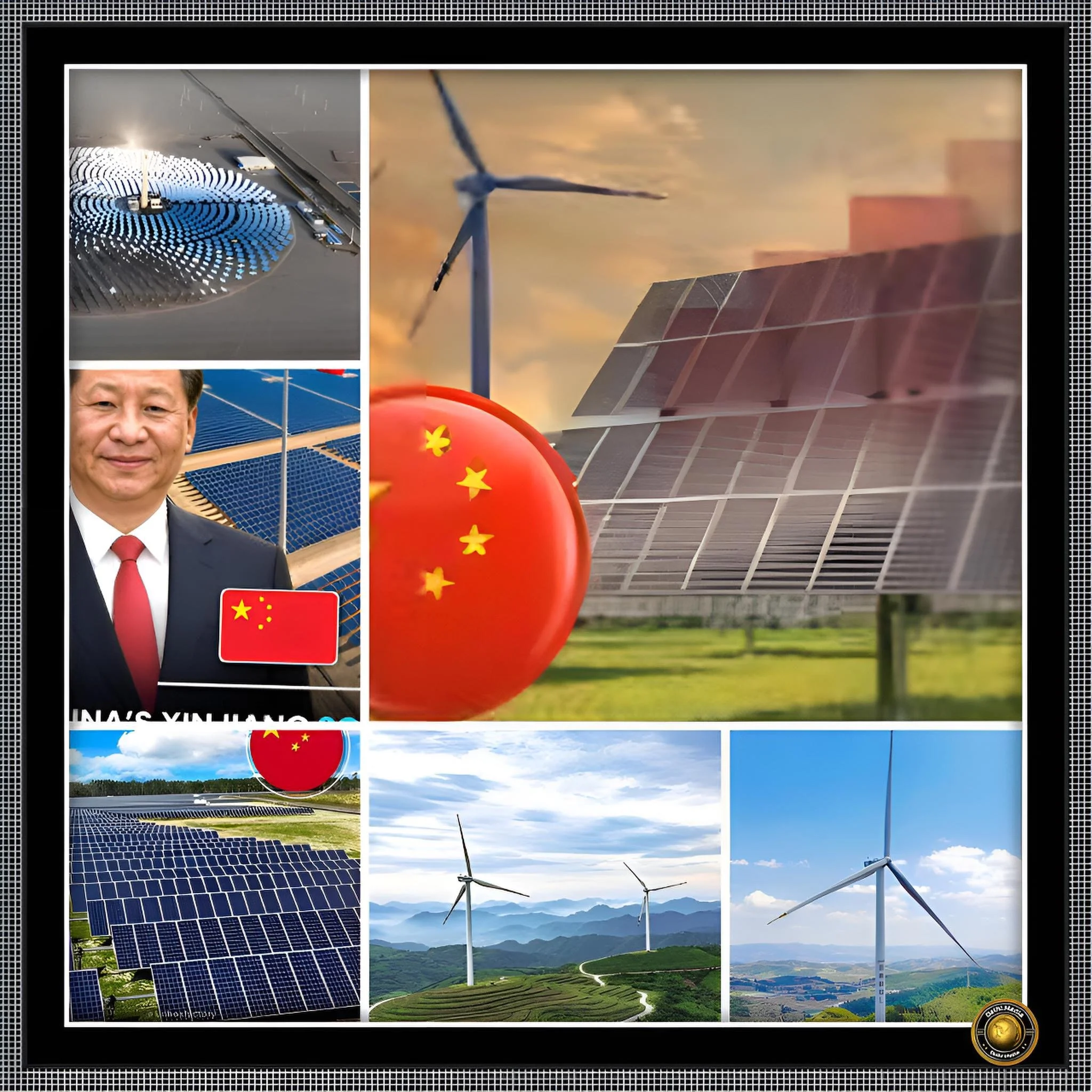
While Trump wages war on climate policy, China has achieved unprecedented milestones in clean energy deployment that position it as the undisputed global leader in the technologies that will define the future economy.
China’s renewable energy expansion in 2024-2025 has been nothing short of revolutionary.
The country added a staggering 277 GW of solar capacity in 2024 alone—more than tripling its installation rate in just two years.
Wind capacity additions reached 79 GW, bringing China’s combined wind and solar capacity to 1,482 GW by early 2025, officially surpassing the country’s coal-fired capacity for the first time.
The scale of China’s achievement becomes clear in international context. In the first five months of 2025, China installed 198 GW of solar and 46 GW of wind—enough capacity to match the total electricity consumption of countries like Indonesia or Turkey.
By April 2025, wind and solar generated a record 26% of China’s electricity, with renewables overall providing 36% of power generation.
China’s dominance extends far beyond domestic deployment to control of global supply chains.
Chinese companies control 80-85% of every stage of solar panel manufacturing, from polysilicon production to finished modules.
The country produces over 60% of global EV batteries and controls 87% of rare earth mineral processing essential for clean technologies.
This vertical integration has enabled China to achieve cost reductions that make its clean technologies globally competitive—solar panel prices have fallen to historic lows of $0.10 per watt.
The Geopolitical Consequences
Trump’s climate retreat is fundamentally reshaping global power dynamics in ways that benefit China while undermining American influence.
As one former U.S. climate official observed, “By withdrawing from the Paris Agreement and doing all this stuff, you make China look better by standing still”.
The immediate impact is visible in international climate diplomacy.
While Trump has pulled the U.S. out of global climate processes, China continues to engage constructively in international forums.
The U.S. may not even send a delegation to the COP30 climate summit in Brazil in Nov 2025, an unprecedented move that would further isolate America from global climate governance.
More consequentially, Trump’s policies are accelerating technological dependence on China among U.S. allies and developing nations.
The administration’s tariffs on Chinese clean technologies—reaching 100% on electric vehicles and 50% on solar cells—are not spurring American manufacturing but rather forcing allies to choose between expensive, often unavailable American alternatives and increasingly sophisticated Chinese options.
China’s Belt and Road Initiative, despite earlier criticism for coal financing, has pivoted decisively toward clean energy.
Since 2021, nearly 90% of proposed coal projects under BRI have been cancelled, while three-quarters of new projects under construction are renewables.
This shift allows China to present itself as a clean development partner to the Global South while the U.S. retreats from climate finance commitments.
Historical Responsibility and Future Trajectories
The irony of Trump’s “America First” approach is that it ignores the United States’ outsized historical responsibility for climate change while ceding future economic opportunities to China.
The U.S. remains responsible for 20% of all historical greenhouse gas emissions since 1850, compared to China’s 13%. On a per-capita basis, the disparity is even starker: Americans have generated 1,570 tonnes of CO2 per person compared to just 227 tonnes for Chinese citizens.
Yet while China’s emissions appear to have peaked in 2024-2025, U.S. emissions remained essentially flat in 2024 despite record economic growth.
Analysts project that Trump’s policies will cause U.S. emissions to plateau or even rise through the remainder of the decade, making it impossible for America to meet its Paris Agreement commitments.
This trajectory suggests China will likely never overtake the U.S. in cumulative historical emissions, particularly if Trump’s fossil fuel policies continue.
But China is positioning itself to dominate the clean energy technologies that will power the decarbonized economy that the rest of the world is building with or without American participation.
The economic implications are already becoming apparent. The U.S. has lost over $15 billion in clean energy investments and 12,000 jobs even before Trump’s policies fully take effect.
Meanwhile, China continues massive investments in grid infrastructure, energy storage, and next-generation technologies like green hydrogen that will define future energy systems.
The Strategic Miscalculation
Trump’s climate war represents a fundamental strategic miscalculation.
By framing climate action as economically damaging rather than as a source of competitive advantage, the administration is voluntarily surrendering American leadership in what may be the most important technological and economic transformation since the Industrial Revolution.
The fossil fuel industry Trump champions is increasingly a declining sector globally, while clean energy represents the fastest-growing segment of the global economy.
China understands this reality and is positioning itself accordingly. As one analysis noted, China’s clean energy policies can be described as “underpromise so that it can overdeliver”—setting conservative targets while consistently exceeding them.
Trump’s approach does the opposite, making grandiose promises about fossil fuel dominance while the global economy moves inexorably toward decarbonization.
This leaves American companies, workers, and communities unprepared for the energy transition that is happening regardless of U.S. policy preferences.
The ultimate irony is that Trump’s stated goal of containing China’s rise is being undermined by his own climate policies. By abandoning the clean energy race, America is handing China uncontested leadership in the industries that will drive 21st-century economic growth.
When the world inevitably moves to address climate change more seriously—driven by escalating physical impacts and falling clean technology costs—U.S. allies and partners will have no choice but to turn to China for the technologies America chose not to develop.
In this critical decade for climate action, Trump’s war on climate policy isn’t just failing to stop the global energy transition—it’s ensuring that China will lead it while America gets left behind.