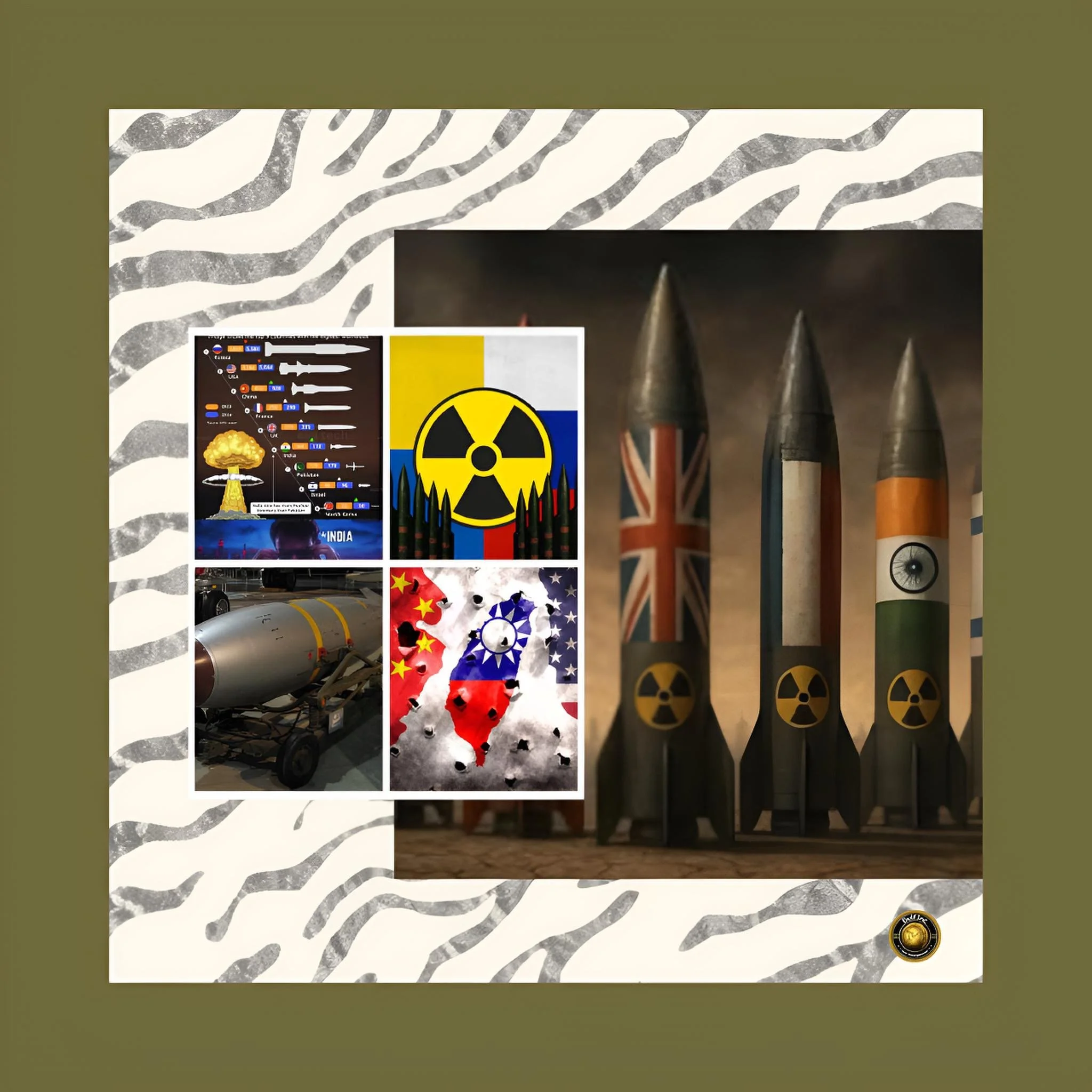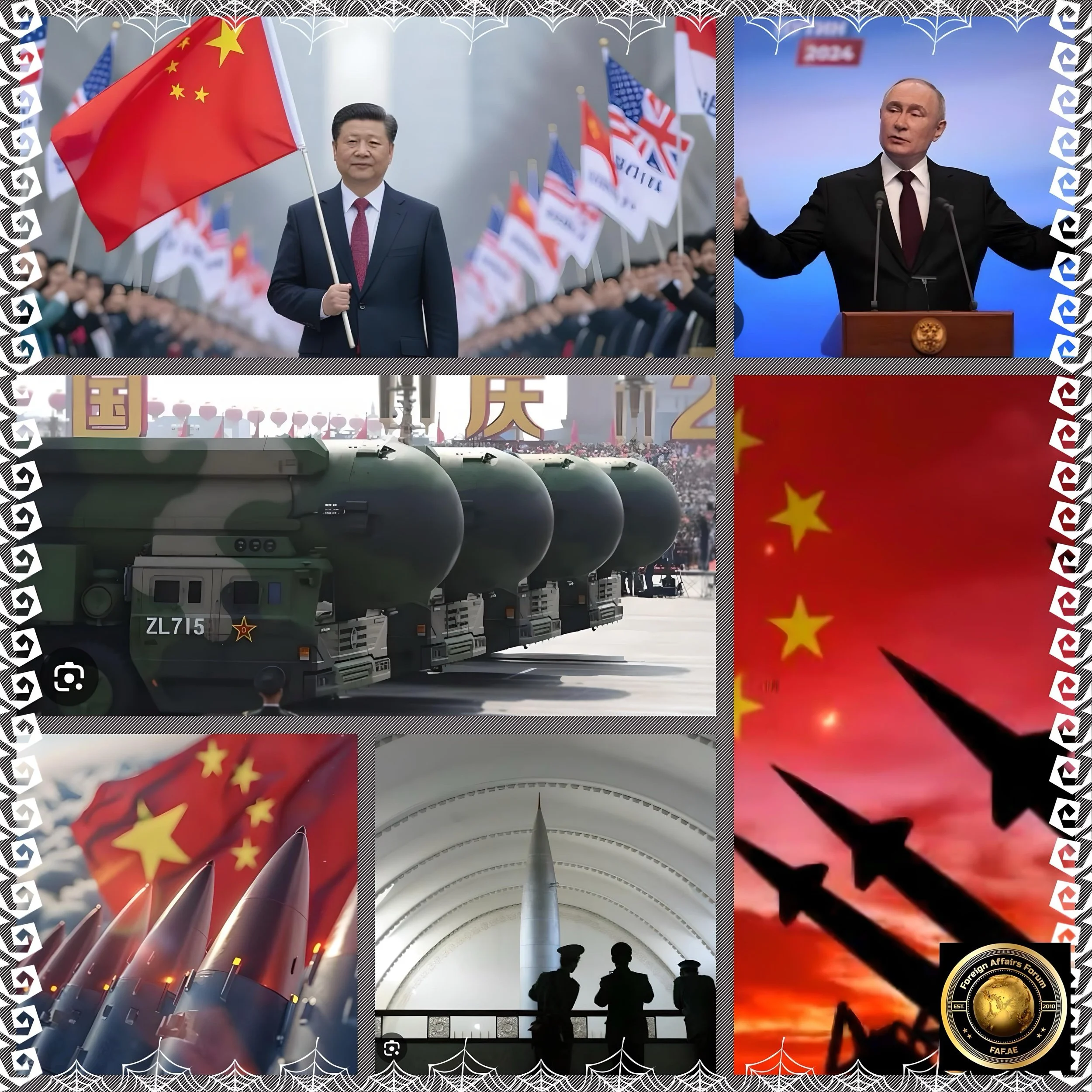
Is China Shifting Its Nuclear Launch Strategy : Adoption of a perilous Cold War-era policy
Executive Summary
Recent developments indicate that China may be revising its nuclear launch strategy, potentially adopting a stance that mirrors the high-stakes approaches of the Cold War.
This shift raises concerns about the implications of such a policy, which historically involved the readiness to use nuclear weapons in response to perceived threats.
FAF analysis delves into monitoring China's advancements in its military capabilities and signals regarding its nuclear posture, as these changes could contribute to an escalated arms race and heightened tensions in global geopolitics.
Understanding the motivations behind this shift and its consequences is crucial for assessing future security dynamics in the region and beyond.
Introduction
Mounting evidence suggests that China is quietly departing from its historically relaxed nuclear posture and moving toward adopting one of the Cold War’s most dangerous policies: launch-on-warning (LOW).
This potential shift represents a fundamental transformation in Chinese nuclear doctrine that could destabilize the global strategic balance and undermine Beijing’s long-standing no-first-use pledge.
The Traditional Chinese Approach
For six decades since China’s first nuclear test in 1964, Beijing has maintained a deliberately restrained nuclear posture that differed markedly from the hair-trigger stances of the United States and Soviet Union during the Cold War.
China’s nuclear strategy rested on three foundational pillars: an unconditional no-first-use policy, maintenance of a minimal deterrent arsenal, and keeping nuclear weapons on low alert in peacetime with warheads stored separately from delivery systems.
This approach reflected China’s “assured retaliation” doctrine—the belief that a small but survivable nuclear force could inflict unacceptable damage on any aggressor even after absorbing a first strike.
The strategy allowed China to maintain roughly 200-300 nuclear warheads for decades while focusing national resources on economic development and conventional military modernization.
Signs of Strategic Shift
Explosive Arsenal Growth
The clearest indicator of China’s evolving nuclear posture is the unprecedented expansion of its nuclear arsenal.
Since 2020, China has tripled its nuclear warhead count from approximately 200 to over 600 warheads by 2025.
The Pentagon projects China will exceed 1,000 warheads by 2030 and potentially reach 1,500 by 2035.
This growth trajectory represents the most rapid nuclear expansion in Chinese history and suggests Beijing is moving far beyond its traditional “minimum deterrence” requirements.
The Stockholm International Peace Research Institute confirms that China is now adding approximately 100 warheads annually, making it the world’s fastest-growing nuclear program.
Massive Infrastructure Development
Even more telling is China’s construction of what experts call the most significant nuclear infrastructure expansion ever undertaken by any country.
Since 2021, satellite imagery has revealed China building at least 350 new intercontinental ballistic missile (ICBM) silos across three major sites in northern and central China.
The Yumen field in Gansu province contains approximately 120 silos, the Hami site in Xinjiang has 110 silos under construction, and a third field near Ordos in Inner Mongolia adds another 29 silos.
This represents more than a ten-fold increase from the roughly 20 silos China operated for liquid-fueled DF-5 missiles for decades.
The silos are arranged in precise grid patterns approximately 3 kilometers apart and span areas of roughly 800 square kilometers each.
Construction has proceeded at breakneck pace, with commercial satellite imagery showing almost weekly progress since work began in early 2021.
Evidence of Launch-on-Warning Adoption
Multiple intelligence assessments now indicate that China is implementing what it calls “early warning counterstrike capabilities”—the Chinese term for a launch-on-warning posture.
The Pentagon’s 2024 report on Chinese military power explicitly states that China “will implement a launch-on-warning posture this decade”.
Launch-on-warning represents a fundamental departure from China’s traditional nuclear strategy.
Instead of absorbing a nuclear attack and then retaliating, LOW enables launching nuclear weapons upon detecting incoming missiles but before they strike Chinese targets.
This compresses decision-making time to 15-30 minutes and requires keeping some nuclear weapons on high alert status.
Several specific developments support assessments that China is moving toward LOW:
Command and Control Modernization
China has developed increasingly sophisticated early warning systems, including over-the-horizon radars, satellite-based sensors, and mobile command posts designed to survive initial attacks.
Russia offered assistance developing Chinese early warning systems in 2019, and China likely has at least three early-warning satellites operational by 2025.
Alert Status Changes
For the first time, some Chinese nuclear warheads are now believed to be maintained on high operational alert.
The Stockholm International Peace Research Institute reports that approximately 2,100 nuclear warheads globally are kept on high alert, with China joining the United States and Russia in this category.
Exercise Patterns
Chinese forces have reportedly conducted military exercises involving launch-on-warning scenarios, which would require some warheads and missiles to be mated together rather than stored separately.
This represents a significant departure from China’s traditional de-alerting practices.
Doctrinal Ambiguity
Perhaps most concerning is growing ambiguity around China’s nuclear doctrine itself.
In September 2023, China’s proposal on global governance notably omitted its traditional no-first-use commitments—the first time Beijing had failed to include these pledges in a major policy document.
While Chinese officials have since reaffirmed the no-first-use policy, the omission raised questions about potential doctrinal evolution.
The shift toward launch-on-warning further complicates China’s no-first-use pledge.
While technically still reactive, LOW enables nuclear retaliation before confirming that incoming weapons are actually nuclear rather than conventional, potentially undermining the policy’s practical meaning.
Driving Forces Behind Change
Threat Perception Evolution
Chinese strategic thinking has been fundamentally shaped by perceptions of growing threats to the survivability of its nuclear deterrent.
Advances in U.S. missile defense systems, precision conventional strike capabilities, and intelligence-surveillance-reconnaissance systems have raised Chinese concerns about potential counterforce attacks against its nuclear forces.
The deployment of U.S. missile defense systems in the Asia-Pacific region, along with statements in recent U.S.
Nuclear Posture Reviews about potentially using nuclear weapons in response to non-nuclear strategic attacks, have particularly alarmed Chinese strategists.
Beijing views these developments as potentially undermining the credibility of its retaliatory deterrent.
Xi Jinping’s Strategic Vision
The nuclear modernization program appears closely tied to Chinese President Xi Jinping’s broader military modernization goals.
Xi has called for building a “world-class military” by mid-century and has elevated the political importance of nuclear weapons within China’s overall security strategy.
One Chinese scholar hinted at Xi’s personal involvement, noting that “to adapt to the changing circumstances in international security, President Xi Jinping personally planned and prepared the building of strategic forces”.
This suggests the nuclear expansion reflects deliberate high-level political decisions rather than merely technical responses to external threats.
Great Power Competition
China’s nuclear buildup also reflects its broader ambition to challenge U.S. global dominance and establish itself as a co-equal nuclear power.
Rather than maintaining minimal deterrence, China appears to be seeking what experts term “effective parity” or even comprehensive nuclear parity with the United States and Russia.
This represents a fundamental shift in Chinese strategic thinking—from using nuclear weapons purely for defensive deterrence to potentially viewing them as instruments of coercive leverage in great power competition.
Implications and Risks
Regional and Global Destabilization
China’s adoption of launch-on-warning could significantly destabilize regional and global security.
The compressed decision-making timeframes inherent in LOW increase risks of accidental or inadvertent nuclear use, particularly given the potential for conventional and nuclear forces to become “entangled” during a crisis.
The expansion of China’s nuclear arsenal is already prompting responses from other regional powers.
India has expressed concern about China’s buildup and may expand its own nuclear forces in response.
The United States is reviewing its nuclear modernization plans in light of facing two nuclear “peer competitors” for the first time.
Arms Control Challenges
China’s nuclear expansion also complicates arms control efforts.
Beijing has consistently refused to participate in nuclear arms control negotiations, arguing that its arsenal remains far smaller than those of the United States and Russia.
However, if China reaches 1,000-1,500 warheads by the mid-2030s, this rationale becomes increasingly difficult to sustain.
The shift toward launch-on-warning particularly complicates future arms control negotiations, as LOW postures historically have been among the most difficult to regulate and verify.
Alliance Implications
For U.S. allies in the Asia-Pacific region, China’s nuclear modernization raises fundamental questions about the credibility of U.S. extended deterrence commitments.
A more capable and aggressive Chinese nuclear force could complicate U.S. calculations about defending allies like Japan, South Korea, and Taiwan.
The Xi-Putin Nuclear Understanding
The May 2025 joint statement between Xi Jinping and Vladimir Putin, while calling on nuclear states to “reject Cold War mentality,” notably omitted traditional Chinese formulations about nuclear weapons policy.
The statement emphasized nuclear-weapon states’ “special responsibility” but failed to specifically mention no-first-use or other traditional Chinese nuclear commitments.
This omission, combined with the deeper China-Russia strategic partnership, suggests potential coordination in nuclear policies as both countries face what they perceive as U.S. containment efforts.
The statement’s focus on opposing U.S. “extended nuclear deterrence” arrangements further indicates how China’s nuclear thinking may be evolving.
Conclusion
While Chinese officials continue to publicly reaffirm the no-first-use policy and claim their nuclear modernization serves purely defensive purposes, the evidence increasingly points toward a more assertive nuclear posture.
The combination of rapid arsenal growth, massive infrastructure development, adoption of launch-on-warning capabilities, and growing doctrinal ambiguity suggests China is departing from its historically restrained approach.
If these trends continue, the world may soon face a three-way nuclear competition among major powers for the first time since the Cold War era.
The implications for global stability, regional security, and arms control could be profound—transforming the nuclear landscape in ways that make the world significantly more dangerous than it has been for decades.
China’s potential adoption of launch-on-warning represents more than a technical military adjustment; it signals a fundamental shift toward viewing nuclear weapons as instruments of power projection rather than merely tools of last resort.
This transformation, if confirmed, would mark the end of China’s unique position as a nuclear power committed to strategic restraint and herald a new era of nuclear competition with unpredictable consequences.