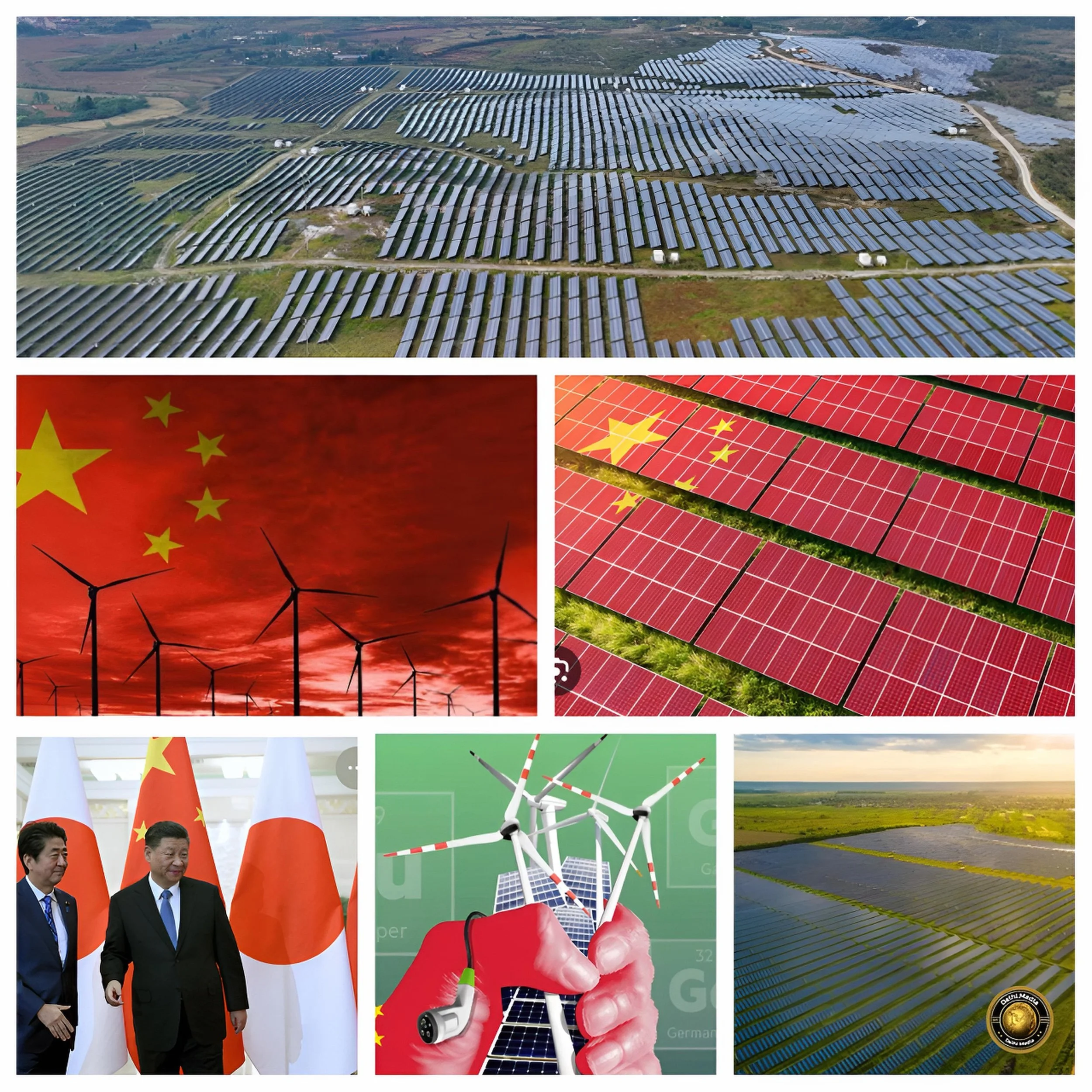
How China Became a Solar Power: Beijing’s Green Energy Revolution
Introduction
China’s transformation into the world’s undisputed solar superpower represents one of the most consequential industrial and geopolitical shifts of the 21st century.
Between 2010 and 2024, the country executed an ambitious strategy that combined massive state investment, ruthless economies of scale, technological innovation, and strategic industrial policy to capture over 80% of global solar photovoltaic manufacturing capacity.
This dominance extends across the entire supply chain—from polysilicon production to wafer fabrication to finished modules—and has fundamentally reshaped global energy markets, trade relationships, and the economics of climate action itself.
Beijing’s $50 billion investment in solar manufacturing capacity since 2011, ten times that of Europe combined, has not only positioned China as the essential enabler of the global renewable energy transition but also raised profound questions about supply chain vulnerabilities, forced labor, trade dependencies, and the geopolitical implications of concentrated industrial power.
The Scale of China’s Solar Dominance
Manufacturing Supremacy Across the Value Chain
China’s control over solar manufacturing represents an industrial achievement of historic proportions.
As of 2024, China accounts for more than 80% of global production capacity at every stage of the solar photovoltaic supply chain, including polysilicon (82%, up from just 26% in 2010), ingots, wafers (over 95%), cells (88%), and modules (80%).
The International Energy Agency projects that China’s share of specific components, particularly polysilicon and wafers, could reach 95% or higher in the coming years.
This vertical integration extends to equipment manufacturing, with all ten of the world’s top solar PV manufacturing equipment suppliers being Chinese companies.
The geographic concentration is equally striking.
China’s polysilicon and ingot manufacturing capacity is concentrated in regions with cheap electricity from coal and hydropower—notably Xinjiang, Inner Mongolia, Ningxia, Sichuan, and Yunnan—where energy-intensive production processes can operate at significantly lower costs than competitors abroad.
Downstream, cell and module manufacturing clusters in eastern provinces like Jiangsu, Anhui, and Zhejiang benefit from proximity to export infrastructure and established supply chains.
This strategic geographic clustering optimizes cost structures while creating formidable barriers to entry for would-be competitors in other countries.
Explosive Capacity Growth and Installation Records
China’s installed solar capacity has experienced exponential growth, defying historical precedent.
From a modest 4.2 gigawatts in 2012, capacity surged to 125 GW by 2017, 252.5 GW by 2020, and approximately 600 GW by the end of 2023.
By 2024, China reached 887 GW of installed solar capacity—more than six times that of the United States and representing approximately 58% of global solar capacity.
In 2024 alone, China added a staggering 277 GW of new solar capacity, equivalent to 55% of all global solar installations for the year and 15% of the world’s total cumulative installed solar capacity.
To put this in perspective, China installed more solar in 2024 than the rest of the world installed in 2022.
This buildout has been supported by massive industrial capacity expansion.
Global solar manufacturing capacity tripled from 2021 to 2023 and reached approximately 1,100 GW per year by the end of 2024, with China accounting for 80-85% of this capacity.
However, actual deployment forecasts suggest only about half of this manufacturing capacity will be utilized, creating a significant supply glut that has driven module prices down by nearly 50% year-on-year in 2023 alone.
This overcapacity, while creating financial stress for manufacturers, has made solar panels cheaper than ever before, accelerating global adoption, particularly in developing countries.
China’s solar exports have become a cornerstone of its manufacturing economy and a critical driver of the global energy transition.
In 2024, China exported approximately 236 GW of solar modules, a 13% increase from the previous year, with total export value reaching $85 billion.
Europe remained the largest regional market with 94.4 GW of imports despite a 7% year-on-year decline.
In comparison, emerging markets demonstrated explosive growth:
(1) Middle East saw a 99% increase (28.79 GW)
(2) Africa grew by 43% (11.36 GW)
(3) Asia-Pacific expanded by 26% (68.11 GW)
(4) Americas increased by 10% (33.28 GW).
Individual country imports tell a compelling story of China’s global reach.
In 2024, Brazil imported 22.5 GW, Pakistan 16.91 GW (up 127% year-on-year), India 16.73 GW, and Saudi Arabia 16.55 GW (up 115%).
Remarkably, some countries imported solar modules equivalent to or exceeding their entire existing grid capacity, with Kenya, Yemen, Sri Lanka, Tanzania, Namibia, Senegal, Cambodia, Afghanistan, and Pakistan each importing amounts ranging from 50% to over 100% of their grid capacity since 2018.
This demonstrates that Chinese solar exports are not merely supplementing existing energy systems but are fundamentally transforming them, enabling developing nations to leapfrog fossil-fuel infrastructure entirely.
China’s clean energy exports—including solar panels, electric vehicles, batteries, and wind turbines—totaled $177 billion in 2024, representing approximately 5% of China’s total exports.
The country exported solar products to 191 of the 192 other UN member states, creating a truly global commercial footprint.
Solar panel exports alone maintained steady volumes despite surging domestic demand, and projections suggest continued growth as global capacity installations expand.
The Drivers of China’s Solar Ascendancy
Strategic Government Investment and Industrial Policy
China’s solar dominance did not emerge organically through market forces alone but rather through deliberate and sustained government intervention spanning more than two decades.
Since 2011, China has invested over $50 billion in new solar PV supply capacity —ten times more than Europe —and created up to 300,000 manufacturing jobs across the value chain.
This investment encompasses both supply-side support (grants, low-cost loans from state-owned banks, subsidies to manufacturers) and demand-side incentives (feed-in tariffs introduced in 2011, competitive auctions beginning in 2019, installation subsidies).
The designation of solar PV as a “strategic emerging industry” in China’s 12th Five-Year Plan (2011-2015) and its inclusion among “the new three” priority sectors (alongside electric vehicles and lithium batteries) provided a powerful signal to investors and local governments that solar represented the future of China’s economy.
This led subnational governments to provide extensive support to local solar firms, including guaranteed bank loans and infrastructure assistance.
Chinese solar manufacturers received over $50 billion in subsidies between 2011 and 2023, reducing manufacturing costs by up to 30% and providing a decisive competitive advantage.
More recently, China dramatically increased solar subsidies tenfold in 2024, raising total support from 100 million yuan to 1 billion yuan ($137 million), with 300 million yuan ($41 million) directed specifically toward rural solar power generation and 700 million yuan ($96 million) toward clean energy product development in central and western regions.
These subsidies aim to address domestic energy access, stimulate technological innovation, reduce fossil fuel dependence, and maintain employment in a strategic sector experiencing financial stress due to overcapacity.
Government support has been so extensive that Chinese solar companies have been able to maintain production and expand capacity despite operating at significant losses and posting negative cash flows.
JinkoSolar alone received $165.6 million in subsidies in 2023, an 8% increase from the previous year.
This state backing has enabled Chinese manufacturers to engage in aggressive price competition that competitors in Europe and North America cannot match without similar government support.
Economies of Scale and Supply Chain Integration
China’s manufacturing cost advantages stem fundamentally from achieving unprecedented economies of scale combined with complete vertical integration of the supply chain.
Solar PV technology, characterized by simplicity and reproducibility, is particularly well-suited for mass production.
Chinese manufacturers have leveraged this characteristic to build facilities operating at scales that dwarf competitors elsewhere, allowing them to spread fixed costs across enormous production volumes and negotiate better terms with suppliers of raw materials and equipment.
Research comparing solar manufacturing costs across regions reveals that China is 10% cheaper than India, 20% more affordable than the United States, and 35% cheaper than Europe.
These cost differentials reflect multiple factors: lower energy costs (particularly in Xinjiang, where electricity can cost as little as $0.03/kWh compared to $0.08/kWh in the U.S. and $0.20/kWh in Europe), lower labor costs, cheaper land and infrastructure, and more efficient capital allocation.
Additionally, China benefits from lower overhead costs and streamlined regulatory environments that facilitate rapid capacity expansion.
Vertical integration of the supply chain compounds these advantages.
By controlling production from upstream polysilicon through downstream module assembly, Chinese manufacturers can optimize logistics, reduce transportation costs, ensure supply security, and capture value at each stage of the value chain.
This integration also enables rapid technology transfer and implementation of innovations across the production process.
Wood Mackenzie notes that Chinese manufacturers are widening both the technology and cost gap with international competitors, making it increasingly difficult for other countries to develop competitive alternatives.
Technological Innovation and Efficiency Gains
While often overlooked in discussions focused on subsidies and scale, technological innovation has been a critical driver of China’s solar success.
Chinese companies have achieved dramatic improvements in solar cell conversion efficiency, rising from 16% in 2012 to 22% in 2023 for conventional technologies.
These gains result from substantial investments in research and development, enabling continuous improvements in cell architecture, materials utilization, and manufacturing processes.
Since 2014, Chinese photovoltaic companies have achieved over 56 world efficiency records across various technology platforms, including tunnel oxide passivated contact (TOPCon), heterojunction (HJT), back contact (BC), and emerging perovskite technologies.
As of 2025, TOPCon technology dominates with an expected 71.1% market share in China, while n-type crystalline silicon cells (TOPCon + HJT + BC combined) are projected to exceed 96.9% market share, marking the saturation of n-type technology.
Leading companies like Huasun Energy have built fully integrated supply chains with 20 GW annual capacity in HJT technology, achieving cell efficiencies of 26.2% and module outputs of 768.9 W at 24.75% efficiency.
The next frontier involves perovskite-silicon tandem cells, which promise to break through the efficiency ceiling of conventional silicon cells.
Chinese manufacturers have achieved laboratory efficiencies exceeding 30% and even 33% for these tandem technologies, with Trina Solar, LONGi, and Huasun leading development efforts.
Huasun’s HJT-perovskite tandem cells currently achieve 32.1% efficiency, providing a technological foundation for continued leadership.
These innovations not only reduce the levelized cost of solar electricity but also demonstrate China’s evolution from a low-cost manufacturer to a genuine technology leader capable of setting the direction for the global industry.
Automation and process optimization have further driven down costs.
Continuous improvements in manufacturing technology have reduced the consumption of costly raw materials —such as silicon and silver—while simultaneously increasing throughput and yield rates.
The industry has also dramatically reduced the carbon emissions intensity of production by 50% since 2011 through more efficient use of materials and energy.
However, absolute emissions have quadrupled due to the scale of expansion.
Economic and Climate Impacts
Cost Reduction and Global Solar Adoption
China’s manufacturing scale has been the most critical factor driving down the global cost of solar energy, making it the cheapest source of electricity in most of the world.
According to recent analysis, 91% of new solar and wind plants are now cheaper than the cheapest available form of fossil fuel power when accounting for fuel costs.
Polysilicon prices, module costs, and installation expenses have all declined dramatically, with module prices falling nearly 50% year-on-year in 2023 alone.
The average export price of Chinese solar cells dropped from $0.32 per watt to $0.26 per watt (a 20% decline) even as export volumes surged 13.6% to reach 167 GW.
These price reductions have had transformative effects on global energy access and climate action.
A 2024 Ember analysis found that 63% of emerging markets in Africa, Asia, and Latin America now draw a greater share of their power from solar than the United States does.
Countries like Brazil, Chile, El Salvador, Morocco, Kenya, and Namibia are outpacing the U.S. in their renewable energy transitions largely due to access to affordable Chinese solar technology.
For many rural households and communities in developing countries, a small solar kit is now far cheaper than a diesel generator, enabling direct energy access without grid connection.
The economic accessibility of Chinese solar products has effectively democratized the energy transition, allowing resource-constrained countries to pursue ambitious climate goals that would have been financially impossible with higher-cost technology.
This dynamic creates a profound tension in international climate politics: while Western governments express concern about China’s manufacturing dominance and trade practices, they simultaneously benefit from Chinese production driving down the costs of meeting their own renewable energy targets.
China’s Domestic Energy Transition
China’s solar industry has been equally transformative domestically, playing a central role in the country’s ambitious pledge to reach peak carbon emissions before 2030 and achieve carbon neutrality by 2060.
Solar power contributed 3.5% of China’s total energy capacity in 2020, but the massive capacity additions since then have dramatically increased this share.
In 2024, clean generation growth led by solar and wind met 84% of China’s electricity demand growth, and in the first half of 2025, it actually exceeded demand growth—suggesting China may have already reached peak fossil electricity generation.
President Xi Jinping initially set a target of 1,200 GW of combined wind and solar capacity by 2030, a goal widely considered ambitious when announced.
China reached this target in 2024—six years ahead of schedule.
Researchers now estimate that achieving true carbon neutrality by 2060 will require China to add approximately 4,500 GW of wind and solar capacity between 2020 and 2060, necessitating investments of approximately $12.7 trillion.
Without carbon capture and storage technology, China would need to invest 44% more in wind and solar after 2040 to compensate.
Solar energy’s economic contribution to China has become substantial. In 2024, clean energy technologies (including solar, wind, EVs, and batteries) accounted for more than 10% of China’s GDP for the first time ever, with total sales and investments reaching 13.6 trillion yuan ($1.9 trillion).
Solar power alone contributed 21% of the total value of clean energy industries, adding 2.8 trillion yuan ($390 billion) to the national economy.
China added 277 GW of solar and 79 GW of wind capacity in 2024, bringing cumulative solar and wind capacity to 1,407 GW—a foundation sufficient to support China’s near-term decarbonization objectives.
Geopolitical Dimensions and Trade Tensions
Supply Chain Vulnerabilities and Concentration Risk
China’s overwhelming dominance of solar manufacturing has created significant concerns about supply chain vulnerability and strategic dependence.
The International Energy Agency explicitly warned in 2022 that “the world will almost completely rely on China for the supply of key building blocks for solar panel production through 2025,” highlighting considerable vulnerability to potential disruptions.
The concentration is particularly acute in upstream components: China controls 89% of solar-grade polysilicon production, with the six largest manufacturers all Chinese.
For semiconductor applications, which require polysilicon production at scale to remain economically viable, this concentration poses risks beyond just renewable energy.
Geographic concentration within China compounds these risks.
Xinjiang province alone accounts for approximately 35-45% of global polysilicon production, with four of the world’s five largest polysilicon factories located there.
This concentration in a single politically sensitive region creates multiple vulnerability points: policy changes, natural disasters, pandemics, geopolitical conflicts, or production disruptions could cascade through global supply chains.
Indeed, incidents in Xinjiang in 2020 led to an estimated 4% decline in annual polysilicon production, contributing to a near tripling of polysilicon prices between 2020 and 2021 and demonstrating the system’s fragility.
Western policymakers have increasingly framed this dependence as a national security concern.
U.S. Treasury Secretary Janet Yellen has emphasized that China’s excess manufacturing capacity in solar panels, EVs, and batteries threatens American industries and supply chains.
The European Commission has similarly expressed concerns about overreliance on Chinese supply chains, investigating potential countervailing duties and considering measures to encourage domestic manufacturing.
However, efforts to diversify have proven challenging given China’s entrenched cost advantages and the massive scale of investment required to build competitive alternatives.
Forced Labor Allegations and Ethical Concerns
The concentration of polysilicon production in Xinjiang has generated intense controversy over allegations of forced labor involving Uyghur Muslims and other ethnic minorities.
Since 2017, the Chinese government has detained an estimated one million or more Uyghurs in internment camps, with thousands allegedly subjected to forced labor in mines and factories producing polysilicon and other solar components.
According to researchers at Sheffield Hallam University, nearly every silicon-based solar module—at least 95% of the global market—likely contains some Xinjiang silicon.
Evidence compiled from Chinese government and corporate sources reveals that labor transfer programs operate within “an environment of unprecedented coercion, undergirded by the constant threat of re-education and internment”.
Companies operating in Xinjiang have acknowledged accepting workers through government labor transfer programs, with GCL-Poly Energy Holdings reporting in 2019 that it had accepted 121 poor minority workers from such programs.
Solar giants including Longi Green Energy Technology, JA Solar Technology, and JinkoSolar Holding have all had multiyear contracts to purchase polysilicon from Xinjiang-based manufacturers.
The United States has responded with increasingly stringent import restrictions.
U.S. Customs and Border Protection issued a region-wide withhold release order on products from Xinjiang in 2021, and the Uyghur Forced Labor Prevention Act (UFLPA) establishes a presumption that goods produced wholly or partially in Xinjiang are made with forced labor unless importers can prove otherwise.
This effectively shifts the burden of proof from customs authorities to companies, creating powerful incentives for supply chain restructuring.
However, solar industry representatives argue that adequate due diligence is impossible in Xinjiang due to restrictions on worker access and information opacity, and that polysilicon and other components are often blended from multiple sources, making tracing extremely difficult.
The forced labor controversy creates a profound ethical dilemma for the global energy transition: the most affordable technology for combating climate change is produced, in significant part, through systems alleged to involve human rights abuses.
This tension has generated calls for supply chain diversification not just on security grounds but on moral grounds, even as such diversification would likely slow deployment and increase costs.
Trade Barriers and Circumvention Strategies
Escalating trade tensions between China and Western countries have reshaped global solar trade flows and investment patterns.
The United States has imposed cumulative tariffs on Chinese solar products reaching 274% for some Vietnamese exporters (who source Chinese components), with average U.S. tariffs on Chinese imports standing at 57.6% as of September 2025.
The Biden administration imposed 50% tariffs on Chinese solar imports, and the Trump administration added Section 201 safeguard tariffs and Section 301 tariffs targeting unfair trade practices.
The European Commission introduced tariffs up to 45% on Chinese EVs and has conducted counter-subsidy investigations in wind and solar equipment.
Chinese manufacturers have responded through sophisticated circumvention and offshoring strategies.
Following initial U.S. tariffs on Chinese solar cells and modules in 2012 and 2015, Chinese companies shifted production to Southeast Asian countries, particularly Malaysia, Thailand, and Vietnam, which subsequently became the sources of over 90% of U.S. solar imports.
However, the Commerce Department accused these exporters of benefiting from unfair subsidies and circumventing U.S. levies, leading to additional duties—including a 274% rate on certain Vietnamese imports.
More recently, Chinese companies have pursued a “third-level” strategy of investing in local solar manufacturing capacity in strategic regions, particularly the Middle East and Gulf states.
In the first half of 2025 alone, Chinese Belt and Road Initiative investments in green energy reached $9.7 billion, supporting 11.9 GW of solar and wind projects in emerging markets.
Chinese solar companies announced $168 billion in foreign investments in clean energy manufacturing, generation, and transmission between 2023 and 2024.
Notable projects include Xinyi Glass Holding’s $700 million solar PV glass production base in Egypt and Longi Green Energy’s green hydrogen projects in Nigeria.
This offshoring strategy serves multiple purposes: reducing transportation costs, better serving local markets, circumventing tariffs imposed by the U.S. and Europe, and countering diversification efforts by positioning Chinese technology and capital at the center of emerging manufacturing hubs in regions more receptive to Chinese investment.
By building manufacturing capacity in countries that can then export to tariff-imposing markets, Chinese companies maintain market access while nominally complying with trade restrictions.
The Belt and Road Initiative as Solar Diplomacy
China’s Belt and Road Initiative (BRI) has evolved into a crucial vehicle for extending solar industry influence globally while addressing domestic overcapacity challenges.
The BRI framework provides both financing mechanisms (through institutions like the Silk Road Fund and state-owned banks) and diplomatic platforms for promoting Chinese solar investments in partner countries.
In the first half of 2025, Chinese engagement in BRI countries reached $66.2 billion in construction contracts and $57.1 billion in investments, with renewable energy projects accounting for 56% of green energy investments in 2023.
China’s BRI solar engagement follows a three-level progression. First, large-scale exports of solar modules to BRI countries began around 2017, driven by fundamental supply-demand dynamics.
Second, Chinese state-owned and private companies have invested directly in solar power project construction and development, typically framed within BRI cooperation documents and often funded through Chinese policy banks.
Third, Chinese solar manufacturers are establishing local manufacturing bases in BRI countries to localize supply chains and serve as re-export platforms.
BRI solar projects have achieved notable successes in expanding energy access.
China financed construction of a 50 MW solar plant in Kenya—the country’s first utility-scale solar facility—which has supplied over 100,000 MWh of electricity annually since opening in 2019, supporting more than 350,000 people.
The Africa Solar Belt Program, announced in 2023, aims to provide 50,000 African households with solar home systems between 2024 and 2027 using public funds of approximately $14 million, representing a shift from China’s traditional utility-scale investments toward “small and beautiful” projects prioritizing social benefits.
However, BRI solar investments face significant implementation challenges.
Past initiatives have struggled with identifying local electricity demand due to inadequate data, mismatches between centralized generation and dispersed rural needs, financing constraints in recipient countries, and coordination difficulties across multiple stakeholders.
Additionally, overcapacity in China’s solar industry has driven much of the BRI solar push as manufacturers seek alternative markets to absorb excess production, raising questions about whether projects prioritize recipient country development needs or Chinese industrial policy objectives.
The strategic dimension of BRI solar investments extends beyond economics.
China’s engagement in Gulf solar projects, for example, serves to diversify and deepen energy relationships with oil-producing nations, transforming what was once a purely import relationship into a mutual investment and technology cooperation.
This positions China to maintain influence even as these countries transition away from fossil fuel dependence—a form of forward-looking energy diplomacy that secures strategic relationships for a post-carbon future.
Challenges and Future Outlook
Industry Overcapacity and Financial Stress
Despite its dominance, China’s solar industry faces severe financial challenges stemming from massive overcapacity.
Manufacturing capacity of approximately 1,100 GW per year far exceeds projected annual deployment of around 400-532 GW, creating a cumulative “spare” capacity of potentially 3,837 GW between 2024 and 2030 if current trends continue.
This oversupply has driven spot prices for solar modules down nearly 50% year-on-year in 2023, with prices falling from $0.32 to $0.26 per watt even as volumes increased.
Many Chinese solar companies are operating at significant losses, with negative cash flows and mounting debt.
The financial stress has prompted government intervention. In February 2025, China’s National Development and Reform Commission announced plans to scale back subsidies for renewable energy projects following the boom in installations.
Chinese polysilicon producers are reportedly in talks to create a $7 billion fund to acquire and shut down roughly one-third of production capacity—an OPEC-like consortium aimed at stabilizing prices at levels profitable for Chinese firms while remaining prohibitively low for international competitors.
This capacity rationalization could lead to industry consolidation, with smaller manufacturers facing bankruptcy while larger, better-capitalized firms gain market share.
The overcapacity problem reflects the interaction between China’s political economy and industrial dynamics.
Competing local governments throughout China have added subsidized capacity in solar manufacturing as a priority sector, driving profits down and pushing firms to export what the domestic market cannot absorb.
While this has accelerated global solar adoption by making panels cheaper than ever, it has created a financially unsustainable situation for manufacturers that may ultimately require government-orchestrated restructuring.
Technological Competition and the Race for Next-Generation Solar
The Chinese solar industry is entering a period of intense technological competition as manufacturers race to develop and commercialize next-generation high-efficiency technologies.
The current focus centers on competition among n-type technologies—particularly TOPCon, HJT, and BC—with perovskite-silicon tandem cells emerging as the most promising long-term pathway.
TOPCon currently dominates with an expected 71.1% market share in China in 2025 and benefits from relatively simple manufacturing processes, lower capital requirements, and proven reliability.
Companies like Jinko Solar are accelerating production of TOPCon 3.0 products targeting 650W+ modules to capture premium pricing power.
However, HJT technology offers superior temperature coefficients and bifaciality (85% versus 80% for TOPCon), potentially generating 11% more energy over a module’s lifecycle and up to 33% more in shaded conditions.
Leading HJT manufacturer Huasun Energy has built 20 GW of annual capacity and achieved cell efficiencies of 26.2%.
Back Contact (BC) technology eliminates front-side metal wiring to improve light absorption and aesthetics, generating up to 11% more energy over the lifecycle compared to TOPCon.
However, BC faces challenges in large-scale utility applications due to lower bifaciality (less than 60%) limiting back-side generation, though it excels in distributed and residential installations where aesthetics matter.
LONGi Green Energy and other major manufacturers are investing heavily in BC as a platform technology that can integrate with TOPCon, HJT, or perovskite cells.
The most transformative potential lies in perovskite-silicon tandem technology, which promises to break through the efficiency ceiling of conventional silicon cells.
Multiple Chinese manufacturers have achieved laboratory efficiencies above 30%, with LONGi reaching 33%, Trina Solar 30.6%, and Huasun 32.1%.
Trina Solar has announced plans to establish a perovskite pilot production line that will simultaneously improve module efficiency by over 4%, potentially propelling the industry into an era of 30%+ commercial modules.
Trina’s chairman Gao Jifan declared that “perovskite-silicon tandem technology represents one of the core directions for the next-generation high efficiency PV sector” and that “debates are meaningless” about competing pathways.
This technological competition will determine which Chinese manufacturers emerge as leaders in the next phase of solar industry evolution.
Companies that successfully commercialize higher-efficiency technologies at competitive costs will capture premium market segments and pricing power, while those that fail to innovate risk becoming commoditized producers competing solely on price.
The technological arms race also has geopolitical implications: maintaining leadership in next-generation solar technology would extend China’s strategic advantage even if other countries succeed in building domestic manufacturing capacity for current-generation technologies.
Global Decarbonization and the China Dependency Dilemma
The fundamental tension facing global climate policy is that the most affordable and scalable pathway to rapid decarbonization depends heavily on Chinese manufacturing capacity, yet this dependence creates strategic vulnerabilities that many governments find unacceptable.
Achieving the COP28 target of tripling global renewable energy capacity by 2030 requires installing approximately 1 TW of solar annually through 2030.
China’s manufacturing capacity of 1,100-1,300 GW per year is sufficient to meet this entire global demand single-handedly—but realizing this potential requires countries to accept Chinese supply chains or face higher costs and slower deployment.
Recent analysis estimates that China’s clean energy exports in 2024 alone will avoid 360 million metric tons of CO2 emissions annually once deployed—with solar panel exports accounting for the largest share.
If China maintains its current global market share, exports of solar, EVs, batteries, and wind turbines could rise significantly from the 2024 level of $177 billion, amplifying China’s role in global emissions reduction.
The avoided emissions from Chinese clean technology exports, manufacturing investments abroad, and project finance total approximately 450 MtCO2 per year—a contribution to climate action that no other country or region currently approaches.
Yet many governments are implementing policies that explicitly aim to reduce dependence on Chinese supply chains, even at the cost of slower renewable deployment and higher expenses.
The U.S. Inflation Reduction Act includes domestic content requirements and manufacturing subsidies designed to rebuild American solar production.
The European Union is exploring similar measures while considering tariffs on Chinese clean technology imports. India is pursuing domestic manufacturing mandates, and Brazil has adjusted tariff structures to protect emerging local producers.
These policies reflect a judgment that the strategic risks of Chinese supply chain dependence outweigh the climate benefits of cheaper, faster deployment.
This creates a zero-sum dynamic where climate progress and strategic autonomy appear to conflict.
Economist Jeffrey Frankel has argued that Western countries should embrace Chinese solar subsidies rather than counter them with tariffs, noting that “why do they want to charge the cost of clean-energy subsidies to their own taxpayers (or their national debts), in place of charging the cost to Chinese taxpayers?”
From this perspective, Chinese subsidies represent a transfer of wealth from Chinese taxpayers to the rest of the world while simultaneously advancing global climate goals.
However, this argument overlooks the strategic implications of concentrated manufacturing power, the forced labor concerns in supply chains, and the long-term consequences of allowing domestic manufacturing capabilities to atrophy.
The path forward likely requires parallel strategies: accepting Chinese supply in the near term to maintain deployment momentum while simultaneously investing in diversified manufacturing capacity for long-term resilience, implementing stringent human rights due diligence to address forced labor concerns, and developing international frameworks for clean energy trade that balance climate urgency with strategic considerations.
The success or failure of these efforts will shape not only the pace of global decarbonization but also the geopolitical order of the 21st century.
Conclusion
China’s ascension to solar superpower status represents a convergence of strategic industrial policy, massive capital investment, technological innovation, and ruthless exploitation of scale economies that has fundamentally altered global energy markets and geopolitics.
With over 80% control of manufacturing capacity across the entire solar value chain, $50 billion in investment since 2011, and 887 GW of domestic installed capacity by 2024, China has positioned itself as the indispensable enabler of the global renewable energy transition.
The country’s solar exports have made clean energy accessible to developing nations, driven module costs down by 50% in recent years, and accelerated deployment worldwide—demonstrating how industrial strategy can serve both national economic interests and global climate objectives.
Yet this dominance has generated profound tensions.
Supply chain concentration creates vulnerabilities to disruption, and allegations of forced labor in Xinjiang raise urgent ethical concerns.
Strategic dependence on Chinese manufacturing has prompted Western governments to impose tariffs and invest in domestic alternatives despite higher costs.
China’s Belt and Road Initiative solar diplomacy extends its influence to emerging markets while addressing domestic overcapacity, but questions persist about whether these investments prioritize recipient development or Chinese industrial needs.
Looking forward, China faces financial stress from overcapacity even as it races to commercialize next-generation technologies like perovskite-silicon tandems that could extend its technological lead.
The global community must navigate the tension between climate urgency—which argues for embracing affordable Chinese solar technology—and strategic prudence, which demands supply chain diversification and human rights accountability.
How this tension resolves will determine not only the pace of global decarbonization but also the geopolitical architecture of the energy transition and the distribution of strategic power in a post-carbon world.
China’s solar revolution, born from Beijing’s green energy ambitions, has indeed fueled a global transformation—but the ultimate consequences of this transformation remain contested and unfolding.