Trump’s Venezuela Strategy and Its Regional Implications
Introduction
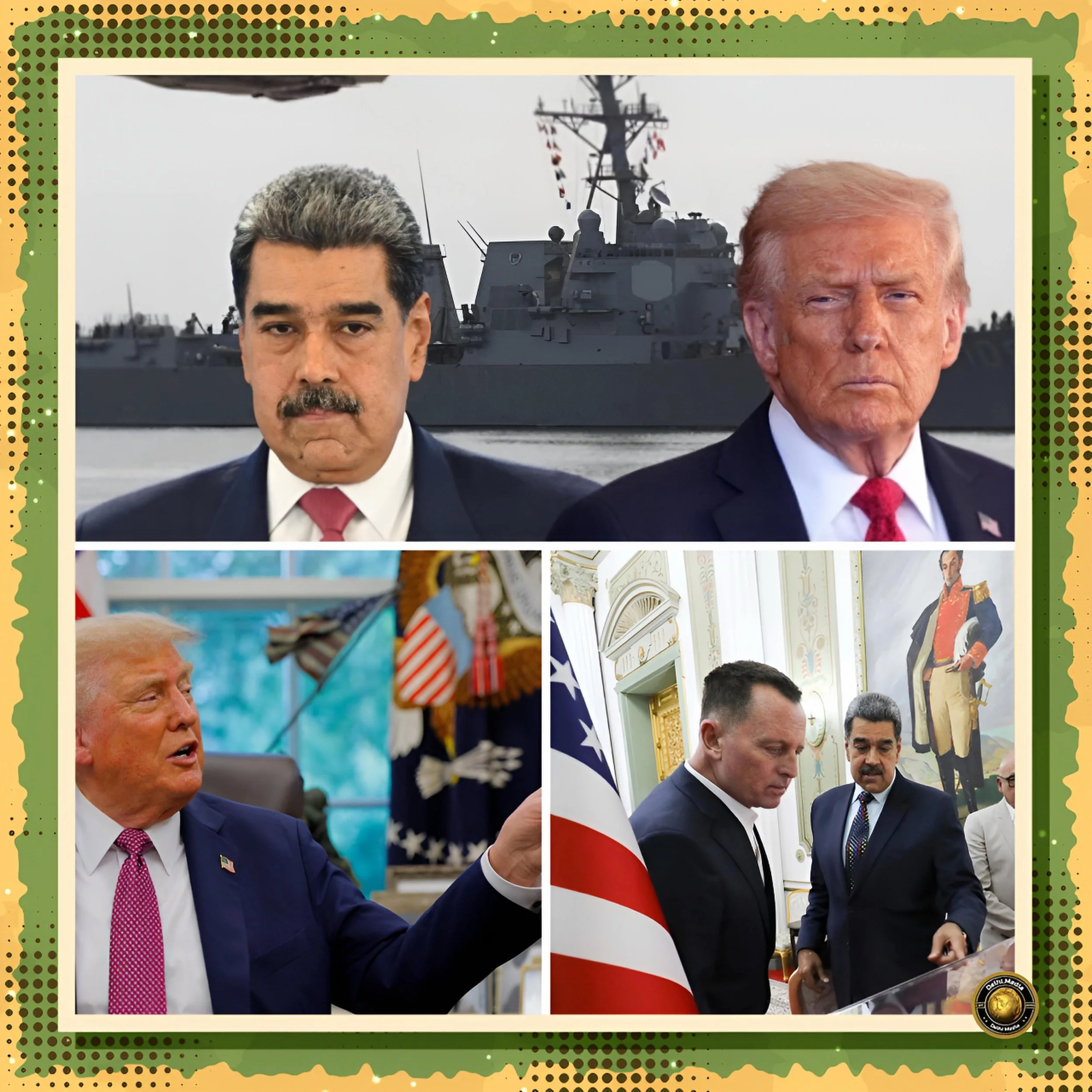
Trump’s approach to Venezuela in his second term represents a significant escalation from his first presidency, combining military buildup, covert operations, and what analysts characterize as targeted pressure aimed at regime change—all while the White House maintains the public justification of combating narcoterrorism.
Understanding this strategy requires examining the military deployment, the legal and evidentiary questions surrounding it, Latin American responses, and the broader geopolitical implications.
Military Escalation and Operation Southern Spear
The Trump administration has deployed an unprecedented military presence to the Caribbean.
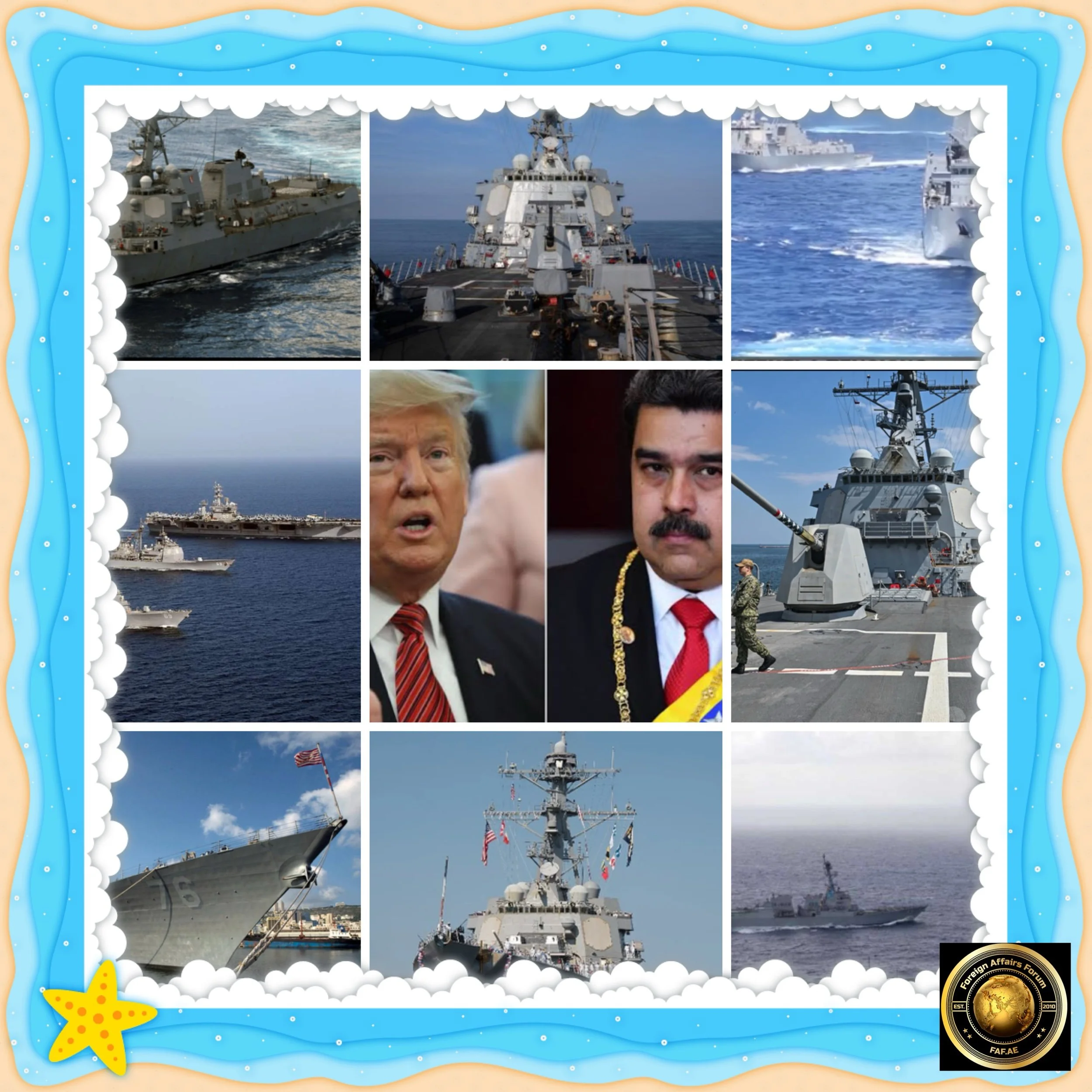
The USS Gerald R. Ford, the world’s largest nuclear-powered aircraft carrier, accompanied by approximately 60 aircraft, including F-18 fighter jets, entered the U.S. Southern Command area of responsibility in November 2025.
This carrier strike group joins additional naval assets already positioned in the region, including three Arleigh Burke-class guided-missile destroyers (USS Mahan, USS Winston S. Churchill, and USS Bainbridge) and the USS Iwo Jima Amphibious Ready Group, bringing the total U.S. military presence in Latin America to 15,000 troops.
The broader military campaign has been officially designated Operation Southern Spear, announced by Defense Secretary Pete Hegseth on November 13, 2025.
According to Pentagon leadership, this operation aims to “defend our Homeland, remove narco-terrorists from our Hemisphere, and secure our Homeland from the drugs that are killing our people”.
Beyond naval operations, the U.S. military has also deployed advanced aircraft to the region.
According to the New York Times, satellite imagery and investigations, the U.S. began operating the Air Force’s AC-130J Ghostrider (described as “designed to destroy targets on the ground or at sea using missiles or barrages from its cannons and machine guns”), a Navy P-8A Poseidon, and a C-40 Clipper out of El Salvador starting in mid-October 2025.
Strategic bombers, including B-52s and B-1s capable of carrying long-range cruise missiles, have also conducted intimidation flights near Venezuelan airspace.
The Drone Strike Campaign: Narcoterrorism Claims and Evidence Questions
Since September 2025, U.S. military forces have conducted at least 20 strikes on 21 vessels in both Caribbean and Pacific waters, resulting in at least 80 deaths.
The Trump administration justifies these operations as targeting narco-terrorists and drug trafficking organizations, particularly the Tren de Aragua gang, which was designated as a Foreign Terrorist Organization in February 2025.
However, the evidentiary foundation for these claims remains contested. As of the most recent reporting, U.S. officials have not provided specific evidence that the targeted vessels were smuggling drugs or posed a threat to the United States.
In several cases, national security sources acknowledged that boats appeared to turn back when attacked.
Ecuador released one survivor of an October strike with no evidence linking him to drug trafficking.
In another instance, when two survivors from a November 2025 strike arrived in the U.S., one had a drug-related charge from 2018, while the other had been released in 2021 after serving a prison sentence for a 2009 murder, not recent trafficking activity.
The Pentagon has not released the identities of those killed or offered specific evidence of drug trafficking involvement in most strikes.
United Nations human rights chief Volker Türk urged an investigation into the strikes, warning of “strong indications” of “extrajudicial killings”.[cbsnews]
Covert Operations and Regime Change Authorization
Beyond the public military operations, the Trump administration authorized the Central Intelligence Agency to conduct lethal covert operations within Venezuela in October 2025.
Trump himself confirmed this authorization, stating that “We have a significant influx of drugs arriving from Venezuela, much of it via sea routes, and we intend to intercept them on land as well”.
According to multiple sources, American officials have privately indicated that the ultimate objective is to remove President Maduro from power.
The briefing materials presented to Trump in November 2025 included options ranging from no action to air strikes on seaports, airports, and military facilities, with another option—considered less likely but discussed—being the deployment of special operations forces to apprehend or kill Maduro and senior advisers.
The Trump administration has also elevated the financial bounty on Maduro to $50 million, mirroring tactics from previous anti-narcotics and counterterrorism campaigns.[cnn]
Shift from First-Term Strategy
Trump’s first term (2017-2021) pursued a “maximum-pressure” strategy against Venezuela that included comprehensive oil embargoes, recognition of opposition leader Juan Guaidó as interim president, and threats of military intervention.
However, this approach failed to dislodge Maduro, in part because Guaidó’s attempted coup was unable to secure military support.
Key mistakes in the first-term approach, according to policy analysts, included abandoning multilateralism in favor of unilateral U.S. action, pursuing an overly broad pressure strategy without engaging regional stakeholders, and failing to provide regime officials with viable exit strategies that would allow them to envision a future beyond Maduro.
The approach strengthened Maduro’s anti-imperial rhetoric and generated regional unease about U.S. military intervention.
In the second term, Trump appears determined to avoid the diplomatic stalemate that characterized his first efforts.
Rather than relying on opposition figures like Guaidó, the administration is pursuing a more direct military approach combined with covert CIA operations.
This shift suggests Trump views his previous failed strategy as insufficiently aggressive rather than fundamentally flawed in its objectives.
Evidence and Legitimacy Questions
The primary justification for U.S. military operations rests on narcoterrorism allegations, yet critical gaps remain in the evidentiary record:
Venezuela does not produce fentanyl, which accounts for nearly all synthetic opioid deaths in the United States.
While Venezuela serves as a transit country for cocaine produced in Colombia, an estimated 94 percent of drugs seized in the U.S. are intercepted at the southern border, and the major cocaine trafficking route to the United States flows through the Pacific from Colombia rather than the Caribbean.
Even if U.S. strikes successfully reduced Caribbean cocaine trafficking, analysts assess this would likely result in route diversification rather than a net reduction of cocaine arriving in the United States.
Legal scholars have questioned the constitutional and international law basis for the strikes.
An Obama-era legal figure, Harold Hongju Koh, called the operations “lawless, dangerous, and reckless.”
Former Chief White House ethics lawyer Richard Painter termed them violations of international and federal law.
George W. Bush administration legal figure John Yoo questioned whether there exists sufficient legal authority, arguing that “There has to be a line between crime and war”.
The strikes may also violate the War Powers Resolution, which requires the president to consult with Congress before deploying armed forces into hostilities.
While the Trump administration cited Article II commander-in-chief authority, critics note that sustained military operations without formal authorization represent a significant expansion of executive power.
Latin American Regional Response
Latin America faces considerable uncertainty about Trump’s unpredictable foreign policy.
Regional capitals are watching closely as the administration pursues unilateral military action while downplaying traditional security cooperation partnerships.
Colombia, traditionally the closest U.S. security ally in the region, has experienced particular strain.
Trump previously threatened 25 percent tariffs against Colombia when the government resisted deportation policies, and later imposed a 50 percent tariff on Brazil, partially to pressure judicial outcomes.
Colombian President Gustavo Petro suspended the sending of confidential information to the Trump administration in November 2025, concurrent with the USS Gerald Ford’s arrival in Caribbean waters.
Petro has also faced implicit threats of imprisonment from U.S. senators should he coordinate with Venezuela.
Brazil, under President Lula, called for Venezuela to release complete vote tallies from the disputed 2024 election but has not endorsed U.S. military intervention.
The country maintains a cautious position, concerned about regional destabilization but wary of contradicting U.S. pressure.
Mexico and other regional actors have expressed concerns about U.S. interference in Latin American sovereignty.
The absence of regional coordination represents a sharp departure from decades of bilateral and multilateral cooperation frameworks.
As one analyst noted, the message being sent across Latin America is that “traditional security and counter-narcotic ties with regional governments appear to hold little weight for the Trump administration, while personal relationships between Latin American leaders and the White House or partisan alignment count for far more”.
Caribbean nations have expressed concerns about the direct impacts of strikes on their fishing, tourism, and energy industries.
Risks and Potential Consequences
Military intervention in Venezuela presents substantial risks that analysts have documented
Power vacuum and instability
The sudden removal of Maduro could create a dangerous power vacuum.
Venezuela contains multiple armed factions beyond Maduro loyalists, and these groups would likely resist U.S.-imposed solutions by force.
Such conflict could resemble Colombia’s decades-long internal armed conflict, requiring billions in sustained U.S. assistance.
Experts agree that the violent elimination of Maduro would not lead to a peaceful transition.
Paradoxical strengthening of Maduro’s position
Maduro has effectively used U.S. military threats to activate Venezuela’s citizen militia and rally international support against what he characterizes as American imperialism.
Regional condemnations of U.S. actions—even from nations that did not recognize Maduro’s 2024 election as legitimate—have allowed him to present himself as leading a united front against foreign aggression, potentially consolidating domestic support.
Drug trafficking redirection
If Caribbean operations succeeded in reducing cocaine shipments through that route, trafficking organizations would likely shift to alternative routes through Mexico or the Pacific—where the central cocaine corridor already operates.
The impact on overall drug flows to the United States would likely be minimal.
Border instability
Venezuela has deployed 15,000 troops to its Colombian border, while Colombia maintains its own border forces to counter armed groups.
Any U.S. military intervention could destabilize this already tense border region, threatening millions of Colombians and potentially drawing that country into conflict.
Humanitarian escalation
More than 7.7 million Venezuelans have already fled the country, generating one of the most significant migration crises globally.
Approximately 19 million people inside Venezuela are in need and unable to access adequate health care and nutrition. Military escalation could dramatically increase displacement and humanitarian suffering.
Strategic Implications and Expert Assessment
Analysts from institutions such as the International Crisis Group, the Carnegie Endowment for International Peace, and the Stimson Center have characterized the Trump administration’s approach as strategically unsound.
Observers describe the deployment of military force without regional consultation or legal authorization as a warning to Latin American capitals that the Trump administration will pursue its objectives by force, regardless of regional concerns or international cooperation frameworks.
The framing of drug interdiction as the primary objective appears to many analysts as a cover for regime change objectives, particularly given the military capability deployed (strategic bombers, aircraft carriers), which far exceeds what drug trafficking interdiction would require.
Regional experts note that the administration’s messaging—what analysts call “drugs are the excuse”—is well understood in Latin American capitals.
The signal being transmitted is that the Trump administration is “intent on pursuing specific objectives and will use military force against leaders and countries that don’t fall in line”.
Conclusion
Trump’s Apparent Determination and Unresolved Questions
Unlike his first term, when Trump accepted National Security Advisor H.R. McMaster’s arguments against invasion, Trump appears more committed to regime change in his second term.
Trump was briefed on updated military options in November 2025 but has not yet made a final decision regarding escalation from maritime strikes to land operations.
The White House has informed Congress that it lacks formal legal justification for land strikes in Venezuela. Yet, the administration continues to plan such operations, suggesting it may proceed despite legal constraints.
Whether Trump will authorize expanded military operations against Venezuelan territory remains the central unanswered question.
His reluctance to approve operations that might result in American military casualties or embarrassing failure may restrain escalation, or his stated determination to accomplish regime change in a way that evaded him in his first term may overcome such reservations.
What remains clear is that Venezuela has become central to Trump’s Latin America policy, and the region’s stability—along with that of neighboring Colombia—hangs on decisions still to be made in the White House.