Germany’s Israeli Dogma Lives On: Policy Shifts Amid Growing Public Pressure
Introduction
Background
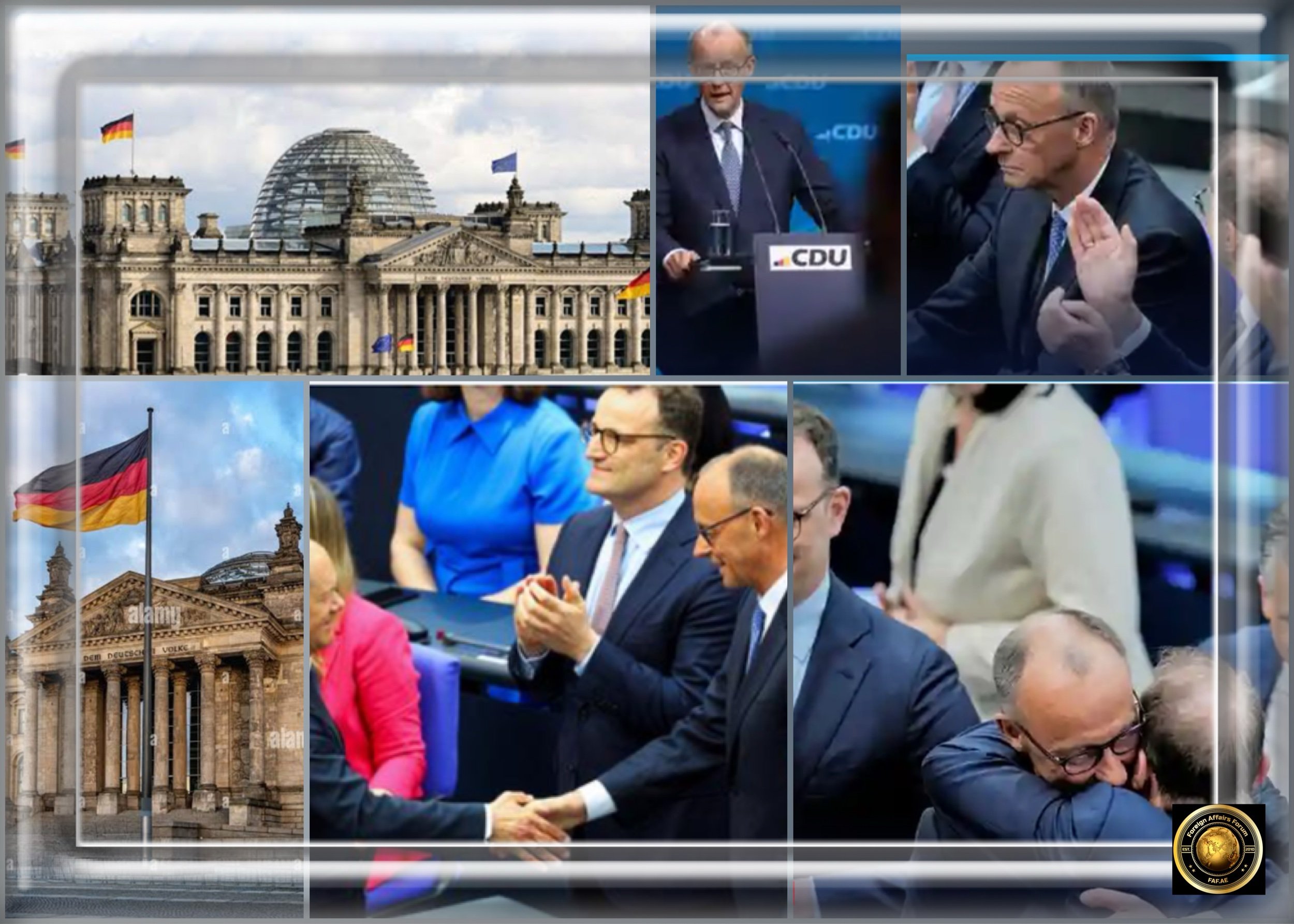
Friedrich Merz became Germany’s 10th post-war chancellor in May 2025, following snap federal elections held in February 2025.
His Christian Democratic Union (CDU) won 28.5% of the vote and formed a coalition government with the Social Democratic Party (SPD).
The election took place seven months ahead of schedule due to the collapse of Olaf Scholz’s governing coalition in November 2024.
Germany’s relationship with Israel is anchored in the concept of Staatsräson (reason of state), formally articulated by Angela Merkel in 2008 when she declared Israel’s security as part of Germany’s national interest.
This principle stems from Germany’s historical responsibility for the Holocaust and has been reaffirmed by successive chancellors, including Olaf Scholz in 2023.
The Citizenship Test Requirements
Since 2024, Germany has implemented stringent citizenship requirements relating to Israel and Jewish life.
Interior Minister Nancy Faeser introduced 12 new questions to the naturalization test, including explicit recognition of Israel’s right to exist.
The test now asks prospective citizens about.
Israel’s founding year (1948) and legal basis (UN resolution)
Germany’s special responsibility toward Israel
What statements about Israel are forbidden in Germany
Consequences of Holocaust denial (up to 5 years imprisonment)
These measures were designed to filter out antisemites and those who don’t share German values, with Faeser stating that “anyone who does not share our values cannot get a German passport”.
Merz’s Policy Shift on Arms Exports
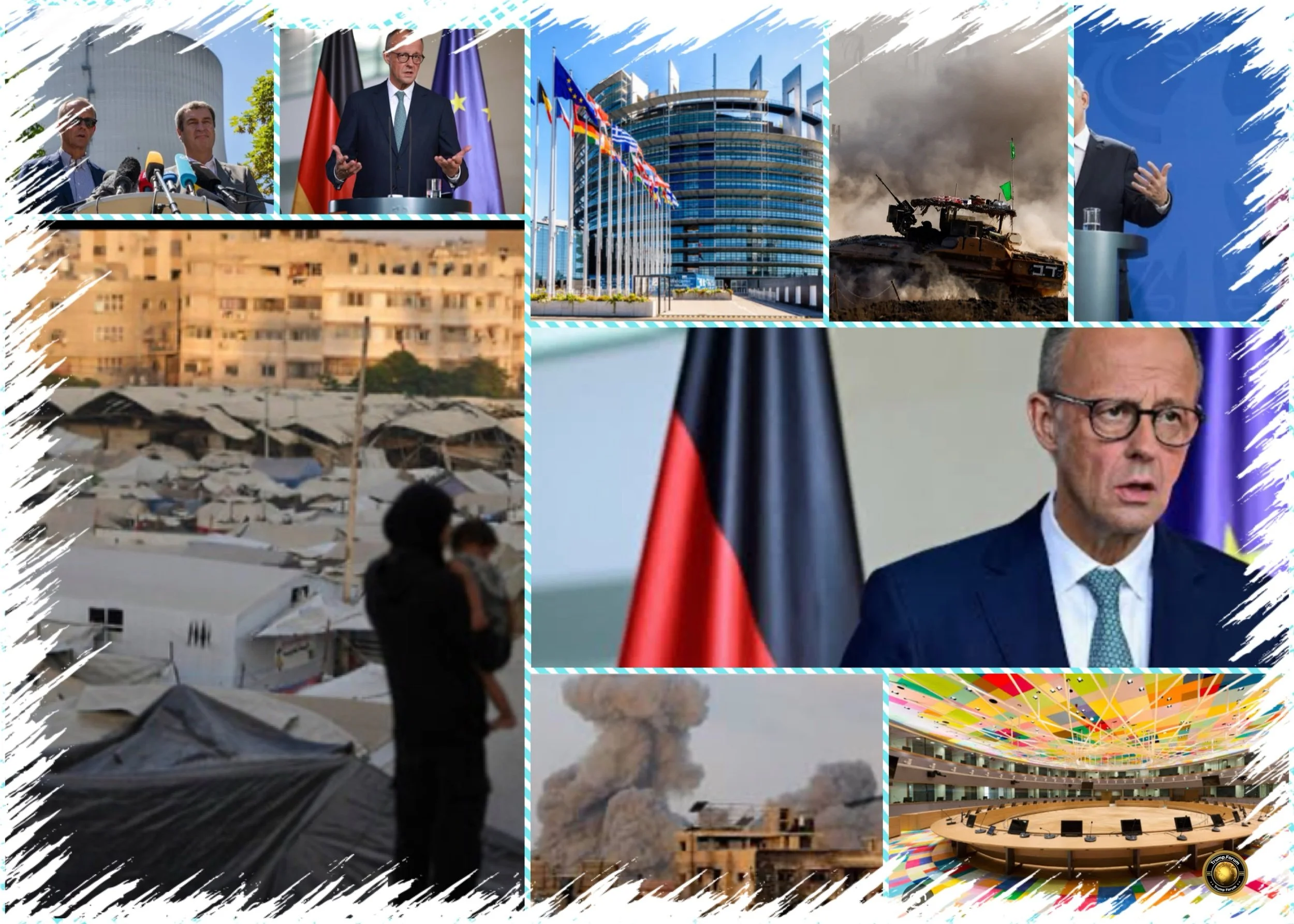
On August 8, 2025, Chancellor Merz made a dramatic policy shift by announcing Germany would suspend arms exports to Israel that could be used in Gaza.
This decision came in response to Israel’s Security Cabinet approving a plan to take control of Gaza City, which Merz called an escalation that would claim “hundreds of thousands of civilian lives”.
The arms embargo marked a significant departure from Germany’s traditional stance.
According to the Stockholm International Peace Research Institute, Germany was Israel’s second-largest arms supplier after the United States, accounting for one-third of Israel’s arms imports from 2020-2024. In 2023, Germany approved €326.5 million in arms exports to Israel.
Merz defended his decision by stating: “We cannot supply weapons into a conflict that is now trying to be solved solely through military means”.
However, he emphasized that Germany’s fundamental support for Israel remained unchanged, declaring: “The Federal Republic of Germany has stood firmly at Israel’s side for 80 years. That will not change”.
Internal Political Backlash
The arms suspension decision sparked significant criticism within Merz’s own party.
The Christian Social Union (CSU), the CDU’s Bavarian sister party, was particularly critical.
Former CSU president Horst Seehofer called it a “bad decision” and a “foreign policy error”.
CSU parliamentary leader Alexander Hoffmann complained that they weren’t consulted and viewed it as “highly problematic”.
Critics accused Merz of acting unilaterally without proper consultation, forcing him to cut short his summer vacation to defend the decision in media interviews.
Despite the backlash, Merz stood by his position, arguing that any full-scale advance into Gaza City would cause countless victims.
Shifting German Public Opinion
German public sentiment toward Israel has undergone a dramatic transformation. Multiple polls reveal a stark shift in attitudes:
Support for Israel
Only 36% of Germans now view Israel positively, down from 46% in 2021
57% hold a negative view of Israel, up from 23% in 2022
38% of Germans view Israel negatively according to Bertelsmann Foundation polling
Policy Preferences
66% of Germans want their government to exert greater pressure on Israel
73% support stricter regulations on arms exports, with 30% favoring an outright ban
54% support recognizing Palestinian statehood
Only 31% feel Germany has special responsibility toward Israel due to historical background
Gaza Conflict Attitudes
65% consider Israel’s actions in Gaza “inappropriate”
73% see “some truth” in characterizing Israel’s actions as “genocide”
Only 13% voiced support for Israel’s military campaign
European Context and Diplomatic Pressure
Germany finds itself increasingly isolated within Europe on Israel policy. Several European nations have announced plans to recognize Palestinian statehood in September 2025:
Unconditional Recognition
France committed to recognizing Palestine during the UN General Assembly
Malta and Australia also plan September recognition
Conditional Recognition
United Kingdom will recognize Palestine unless Israel agrees to a ceasefire and commits to a two-state solution
Canada requires Palestinian Authority elections without Hamas
This European shift has created tension between Netanyahu’s government and Western allies.
Netanyahu accused French President Macron of “fueling antisemitic fire” through Palestine recognition plans, prompting France to call his accusations “abject” and “erroneous”.
Germany’s Continued Resistance to European Pressure
Despite growing European criticism, Germany maintains its stance on several key issues namely.
EU-Israel Association Agreement
Germany opposes suspending or reviewing the EU-Israel Association Agreement, despite 17 EU countries voting for a review in May 2025. Merz stated that “an overriding or even a termination of this agreement is out of the question with the federal German government”.
Palestinian Statehood
Germany continues to reject recognition of Palestinian statehood without Israeli participation, maintaining that it should result from negotiations between the parties.
This puts Germany at odds with France and the UK, who plan September recognition.
EU Research Cooperation
Germany blocked proposals to deny Israel access to the Horizon Europe research fund, which would have cut off up to €200 million in grants.
The German Rectors’ Conference publicly opposed restrictions on EU-Israel research cooperation.
Merz’s Direct Diplomacy with Netanyahu
Chancellor Merz has maintained direct communication with Israeli Prime Minister Netanyahu through multiple phone calls, demonstrating Germany’s continued diplomatic engagement.
July 18, 2025
Merz called the Gaza situation “unacceptable” and urged Netanyahu to provide humanitarian aid “quickly, safely, and in required quantities.” He also warned against West Bank annexation steps.
July 27, 2025
Merz expressed “deep concern about the catastrophic humanitarian situation” in Gaza and called for an immediate ceasefire, urging aid for the “starving civilian population”.
June 19, 2025
In discussions about Iran, Merz advocated for moderation while expressing Germany’s support for Israeli military actions targeting Iran’s nuclear facilities.
The Staatsräson Debate
The traditional Staatsräson principle faces growing scrutiny.
Critics argue it has become an excuse for unconditional support of Netanyahu’s government, which includes right-wing extremists.
When Angela Merkel coined the formula in 2008, Israel was led by Ehud Olmert, who supported a two-state solution—a stark contrast to Netanyahu’s policies.
Some German analysts now advocate for abandoning the Staatsräson framework in favor of a more nuanced approach that supports Israel’s security while maintaining critical distance from specific government policies.
However, this principle remains deeply embedded in German political consensus across party lines.
Implications and Assessment
The evidence suggests Germany’s Israel policy reflects tactical adjustments rather than fundamental change.
While Merz suspended certain arms exports and adopted more critical rhetoric about Gaza operations, core elements of German support remain intact:
Continued arms exports for non-Gaza purposes (such as submarines for Israel’s nuclear deterrent)
Opposition to EU sanctions or agreement suspensions
Rejection of Palestinian statehood recognition
Maintenance of Staatsräson as official policy
The policy shifts appear driven primarily by mounting public pressure and European diplomatic isolation rather than genuine recalibration of Germany’s strategic relationship with Israel.
As one analyst noted, this represents a “warning shot” rather than complete reversal.
The tension between Germany’s historical obligations and current public sentiment creates an unprecedented challenge for German leadership.
With only 31% of Germans feeling special responsibility toward Israel, the gap between official policy and public opinion continues to widen, potentially undermining the long-term sustainability of Germany’s traditional Israel stance.
Conclusion
Germany's entrenched commitment to its “Israeli dogma” appears to withstand increasing scrutiny, evidenced by the persistence of its foundational principles despite shifting tones and some tactical adjustments.
The essential framework of German-Israeli relations largely remains intact, even as there are escalating domestic and international pressures advocating for more significant policy alterations.
Official German policy is still anchored in the concept of Staatsräson, which posits that Israel's security constitutes a vital German interest deeply tied to the legacy of Holocaust remembrance.
However, there are intensifying calls for a reassessment of this principle in light of contemporary realities, especially given the alarming trends of violence in Gaza.
Critics, including both journalists and policy analysts, contend that leveraging the Holocaust as the primary justification for current policy risks neglecting the ethical obligation to oppose egregious human rights violations occurring in Gaza, irrespective of historical precedents.
While the German government has not formally classified Israel's actions in Gaza as genocide, public discourse around the issue has surged.
The principle of "never again" is increasingly framed as a call for unwavering opposition to atrocities regardless of the perpetrator. This sentiment is gaining traction among the general populace, civil society groups, and a faction of politicians, challenging a long-established political consensus.