USS Gerald R. Ford, Venezuela Tensions, Legal and Strategic Questions and cost of war!
Introduction
Military Deployment and Scale
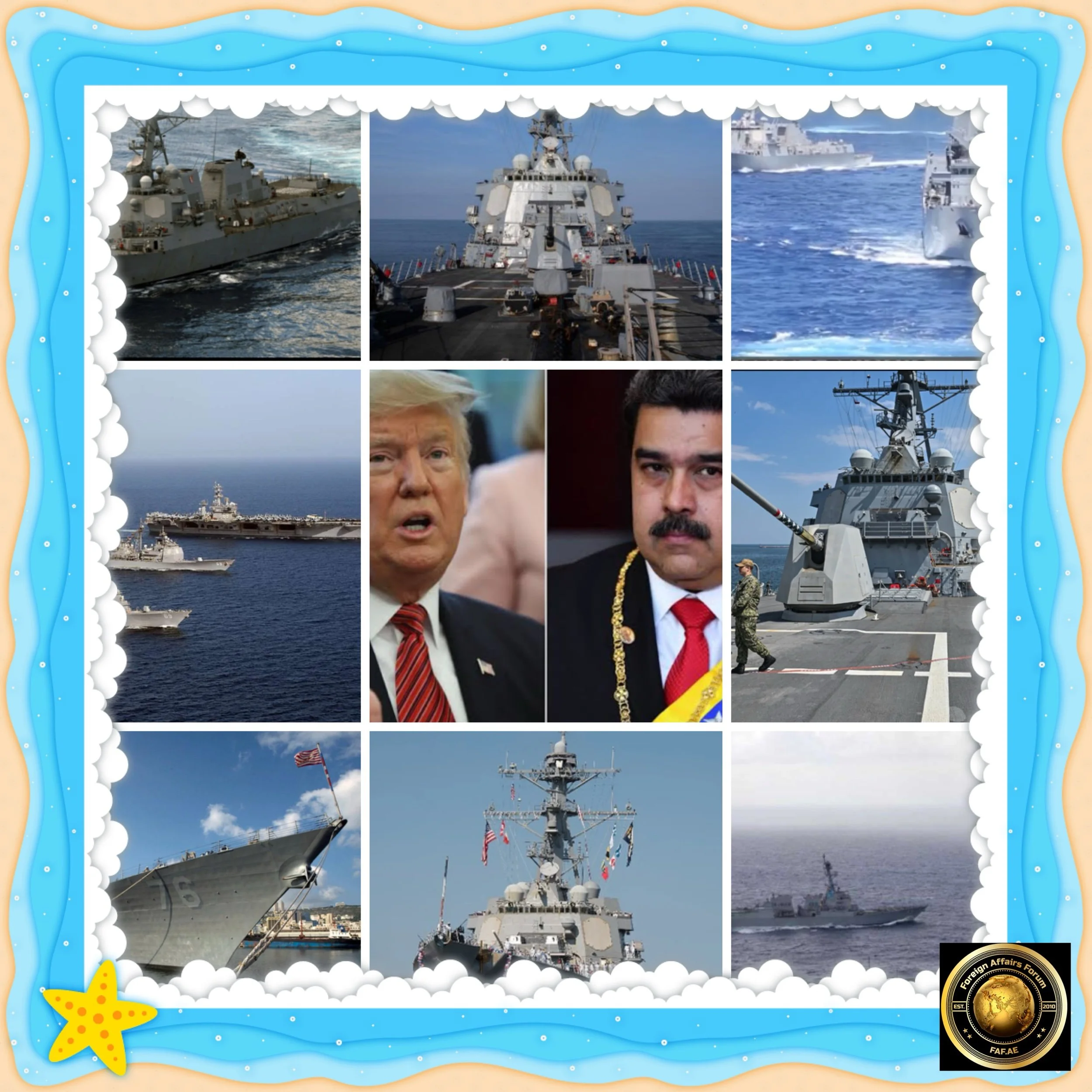
The USS Gerald R. Ford Carrier Strike Group entered the Caribbean Sea on November 16, 2025, representing the largest U.S. military buildup in the Caribbean in decades.
The strike group includes more than 4,000 sailors, nine air squadrons with F/A-18 Super Hornets, guided-missile destroyers (USS Bainbridge and USS Mahan), and the integrated air and missile defense command ship USS Winston S. Churchill.
Combined with the USS Iwo Jima Amphibious Ready Group already deployed since August with approximately 4,000 Marines and sailors, the total force approaches 15,000 personnel—nearly 20% of the Navy’s deployed warships.
Military Training Exercise in Trinidad and Tobago
The U.S. is conducting military training exercises in Trinidad and Tobago (located only 7 miles from Venezuela) through November 21, 2025.
The exercises include the Marines from the 22nd Marine Expeditionary Unit, with operations occurring in rural and urban areas during dusk and nighttime, including helicopter operations.
Trinidad and Tobago’s Foreign Minister Sean Sobers denied the drills were a precursor to military action against Venezuela, stating they focus on counter-transnational threats and disaster response capabilities.
However, Venezuelan President Maduro characterized the exercises as “irresponsible” and accused the U.S. of threatening peace in the Caribbean.
Trump’s Openness to Talks with Maduro
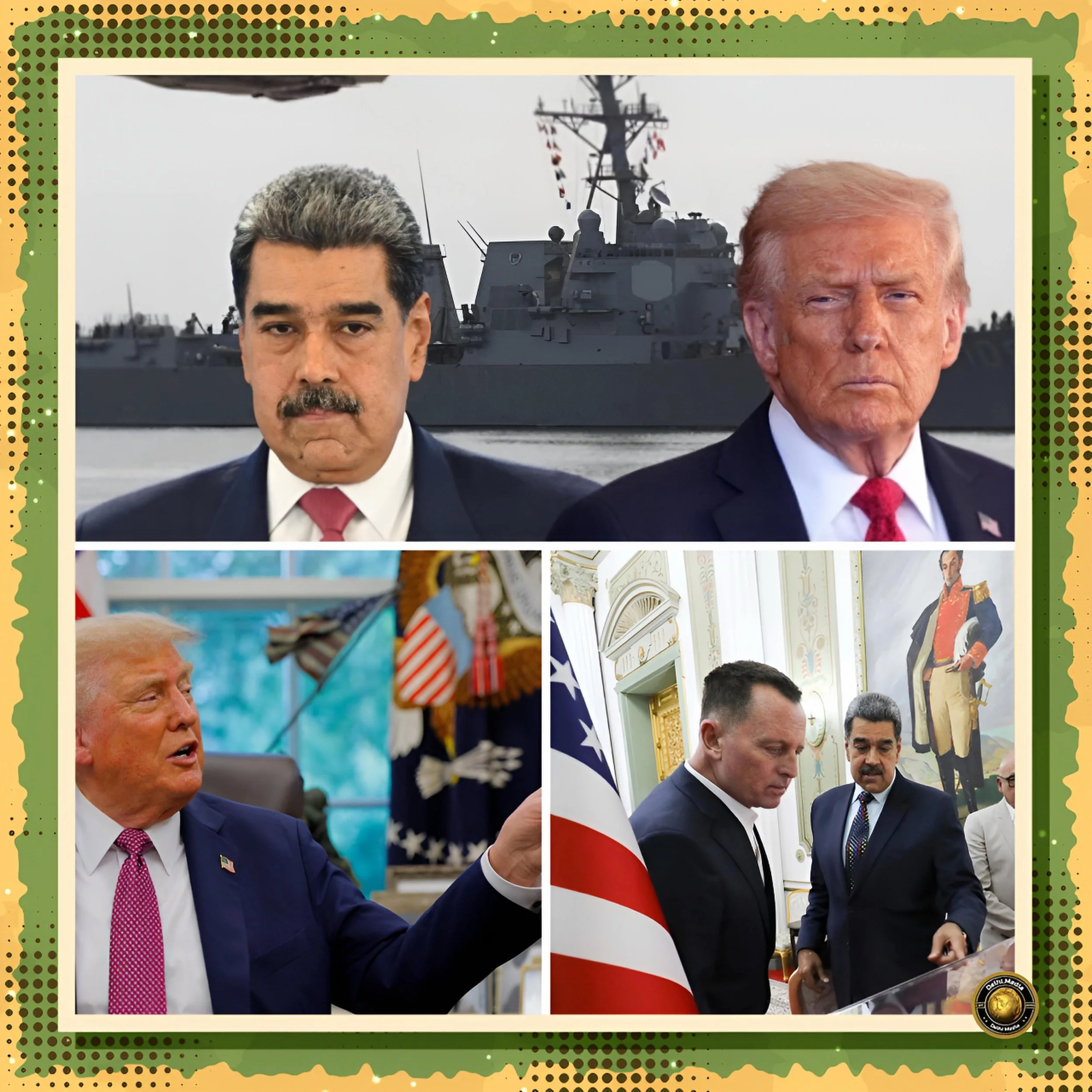
Trump stated on November 16, 2025: “We may be having some discussions with Maduro, and we’ll see how that turns out. They would like to talk.” However, this was paired with significant escalation signals.
The same day, Secretary of State Marco Rubio announced the designation of Venezuela’s Cartel de los Soles as a foreign terrorist organization (effective November 24), a designation Rubio alleged was headed by Maduro himself.
Congressional Authorization for Military Action
Trump explicitly stated he does not believe congressional approval is required for ongoing operations, saying “We like to keep Congress involved… I mean, we’re stopping drug dealers and drugs from coming into our country” but emphasizing he does not need lawmakers’ approval to act.
Trump has not authorized ground strikes as of November 16 and emphasized he has “not planned or authorized any land-based military strikes” but indicated such authority may exist through the cartel designation.
The Congressional Authorization Problem
Legal Justification Currently Lacking
Administration officials formally told Congress on November 5 that the U.S. currently lacks legal justification to strike land targets in Venezuela.
The Justice Department’s Office of Legal Counsel opinion that justified maritime strikes does not extend to land targets, and “the execute order that launched the US military campaign against suspected drug boats does not extend to land targets.”
The administration is seeking a separate legal opinion to justify strikes against land targets without needing to ask Congress to authorize military force.
However, no decisions have been made yet, and what constitutes legal authority “one day may very well not be the next,” according to a U.S. official.
Senate War Powers Resolutions Failed
The Senate has voted twice to block unauthorized military action against Venezuela, with both votes failing:
First vote (October 8): Failed 51-48
Second vote (November 5): Failed 49-51
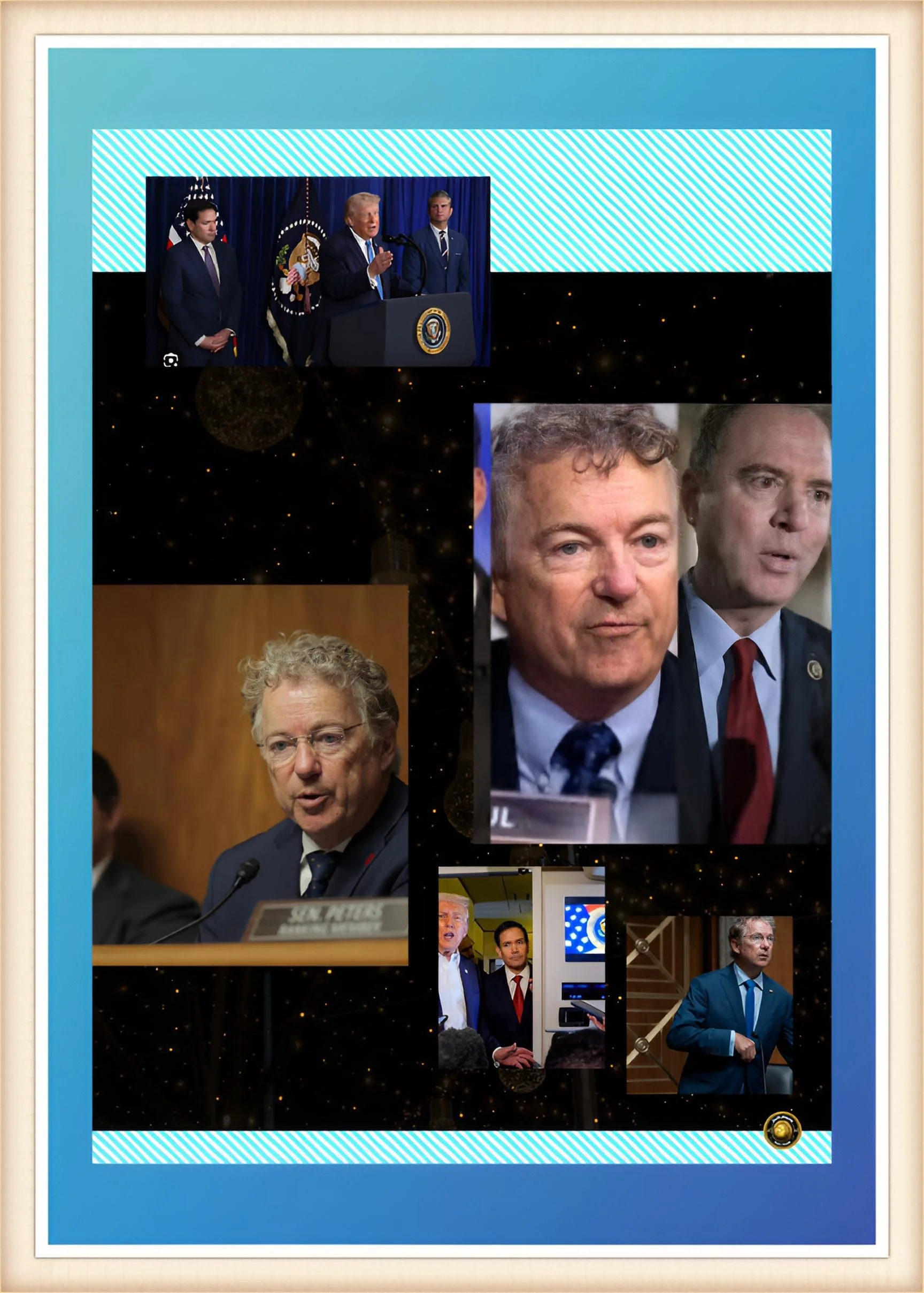
Senators Tim Kaine (D-VA), Rand Paul (R-KY), and Adam Schiff (D-CA) led bipartisan efforts to pass a war powers resolution that would prevent military strikes in Venezuela unless explicitly authorized by Congress or declared war.
Only Senators Paul (R-KY) and Murkowski (R-AK) voted with all Democrats to support the resolution.
Kaine argued: “Congress should not cede its power to any president. If colleagues believe that a war against the narco-traffickers in the ocean or a war against Venezuela is a good idea, then put an [authorization of military force] on the table and debate and vote it, but don’t just hand the power over to an executive.”
The National Security Justification: The Core Problem
Venezuela is Not a Primary U.S. Drug Threat
The administration’s framing of Venezuela as a primary security threat contradicts the government’s own data.
According to America’s Consolidated Counterdrug Database—the official interagency source tracking drug flows—approximately 210 metric tons of cocaine transited Venezuela in 2018, representing less than 10% of U.S.-bound cocaine.
This directly undermines claims that Venezuela represents an “armed conflict” level threat to the United States.
Intelligence Community Assessment Contradicts Administration Claims
The April 2025 assessment of the U.S. intelligence community contradicts the administration’s claim that President Maduro directs the activities of Venezuelan criminal gangs such as Tren de Aragua and Cartel de los Soles.
This creates a credibility gap between the executive branch’s legal assertions and the intelligence community’s actual findings.
Evidence for “Narco-Terrorist” Classification Lacking
The AP investigation into the September 2 strike identified the deceased as primarily small-scale fishermen and individuals driven into drug trafficking by economic desperation, not cartel operatives.
The AP team found that most of the nine men killed were making their first or second drug runs for approximately $500 per trip—not organized criminal activity.
Those killed included a fisherman, a bus driver, a former military cadet, laborers, and a motorcycle driver.
The Trump administration provided no evidence to Congress detailing how it assessed the boats’ cargo or determined passengers’ gang affiliation before strikes.
Christopher Sabatini, a research fellow at Chatham House, stated the Trump administration “has completely exaggerated” the scope of small fishermen’s activities by linking them to major gangs and deeming them an immediate threat.
The “Armed Conflict” Claim Stretches Legal Doctrine Absurdly
The administration’s legal framework rests on Trump’s claim that the U.S. is in a “non-international armed conflict” with drug cartels.
Under this theory, because drugs can kill Americans, the U.S. could be “at war” with anyone involved in the drug trade. As one legal analysis noted: “By this logic, every street dealer is a terrorist and an enemy combatant.”
This approach lacks precedent and relies on misapplying the 2001 Authorization for Use of Military Force (AUMF) against al-Qaeda and the Taliban to domestic criminal organizations operating in international waters.
International Law Violations and Expert Assessment
Multiple Legal Frameworks Violated
According to William Burke-White of the University of Pennsylvania, these operations violate both international law and U.S. domestic law:
Under international law, the strikes contravene the UN Charter’s prohibition on the use of force and humanitarian law principles.
The U.S. has not demonstrated that it is responding to an armed attack by Venezuela (required under Article 51 self-defense doctrine) nor has it shown Venezuela is “demonstrably unwilling or unable to prevent” the threat.
Under U.S. domestic law, the operations exceed constitutional limits because there has been no declaration of war, no congressional authorization for use of military force, and no plausible claim that operations were necessary to repel an imminent armed attack.
The War Powers Resolution requires presidential notification to Congress within 48 hours and termination of hostilities within 60 days absent authorization, yet these operations continue without formal congressional authorization.
International Bodies Condemn the Approach
A former International Criminal Court prosecutor characterized the strikes as “crimes against humanity.”
The United Kingdom and Colombia have both halted intelligence sharing on narcotrafficking in protest.
Cost of Venezuela war
A full-scale US war in Venezuela would be extremely expensive, with costs varying significantly based on the duration and intensity of the conflict.
Here are the estimated costs in US dollars for different time frames
Short Term (3 Months)
The daily cost of a large US military operation is roughly $18 million per day.
Over three months (about90 days), this would amount to approximately $1.6 billion.
This includes expenses for naval assets, aircraft, fuel, munitions, personnel, and logistics.
Medium Term (6 Months to1 Year)
Extending the conflict to6–12 months, the daily costs would continue to accumulate.
For6 months (about180 days): $3.2 billion
For12 months (about365 days): $6.5 billion
Additional costs include longer deployments, wear and tear on equipment, expanded logistics, and potential combat losses.
Long Term (More than1 Year)
After the first year, costs rise further due to the need for occupation, stabilization, and rebuilding efforts.
The total could easily exceed $10–15 billion per year, especially if the US is involved in a protracted occupation, dealing with guerrilla resistance, or rebuilding Venezuela’s infrastructure and government.
Experts note that any major intervention would likely require a large number of troops (potentially over100,000), and the occupation phase would be very costly in both money and personnel.
Key Factors Affecting Costs
The size and duration of US military deployments (including aircraft carriers, warships, aircraft, and troops).
The intensity of combat operations and the need for new weapons or replacements.
The impact on global oil prices, which could drive up the cost of fuel and other resources.
Post-conflict stabilization, humanitarian aid, and reconstruction, which can add billions more.
In summary, the US could spend over $1.5 billion in the first three months, over $6 billion in the first year, and much more if the war drags on or involves a long occupation.
The Congressional Debt and Expenditure Question
Congress has expressed concern about the costs and effectiveness of military escalation.
The Quincy Institute notes this represents “the most significant U.S. military buildup in the Caribbean since the 1962 Cuban Missile Crisis,” yet the administration has presented no clear military objective or exit strategy.
The concern is two-fold
Undefined Objectives
Trump has indicated decisions remain unmade about how far military action would extend, creating uncertainty about future expenditures.
Precedent Risk
Permitting military action without congressional authorization based on unsubstantiated executive claims “risks giving the president unlimited power to use the military at his whim,” potentially including actions within the U.S. against alleged cartel members.
Conclusion
The Trump administration has failed to establish a credible national security rationale or a legal foundation that complies with the War Powers Resolution and constitutional standards for military engagement against Venezuela.
The administration admits it presently lacks legal justification for conducting land strikes, is attempting to develop one through a new opinion from the Justice Department, and has twice failed to secure congressional approval via War Powers Resolutions.
The core issue: Assertions that the U.S. is engaged in an “armed conflict” with Venezuelan gangs and small-scale fishermen are inconsistent with U.S. intelligence reports, government drug-trafficking data, and investigative journalism that identify the actual victims of the strikes.
Until these credibility issues are addressed, any expansion of military operations would require congressional authorization—a step the administration has neither formally pursued nor obtained, with Senate Republicans blocking such efforts through procedural votes.
Most critically, it is projected that the Venezuela conflict could cost U.S. taxpayers billions of dollars, potentially exacerbating the already declining U.S. economy and stock market.
Furthermore, President Trump’s campaign promise to avoid initiating new wars and instead work to end existing conflicts would be rendered invalid.