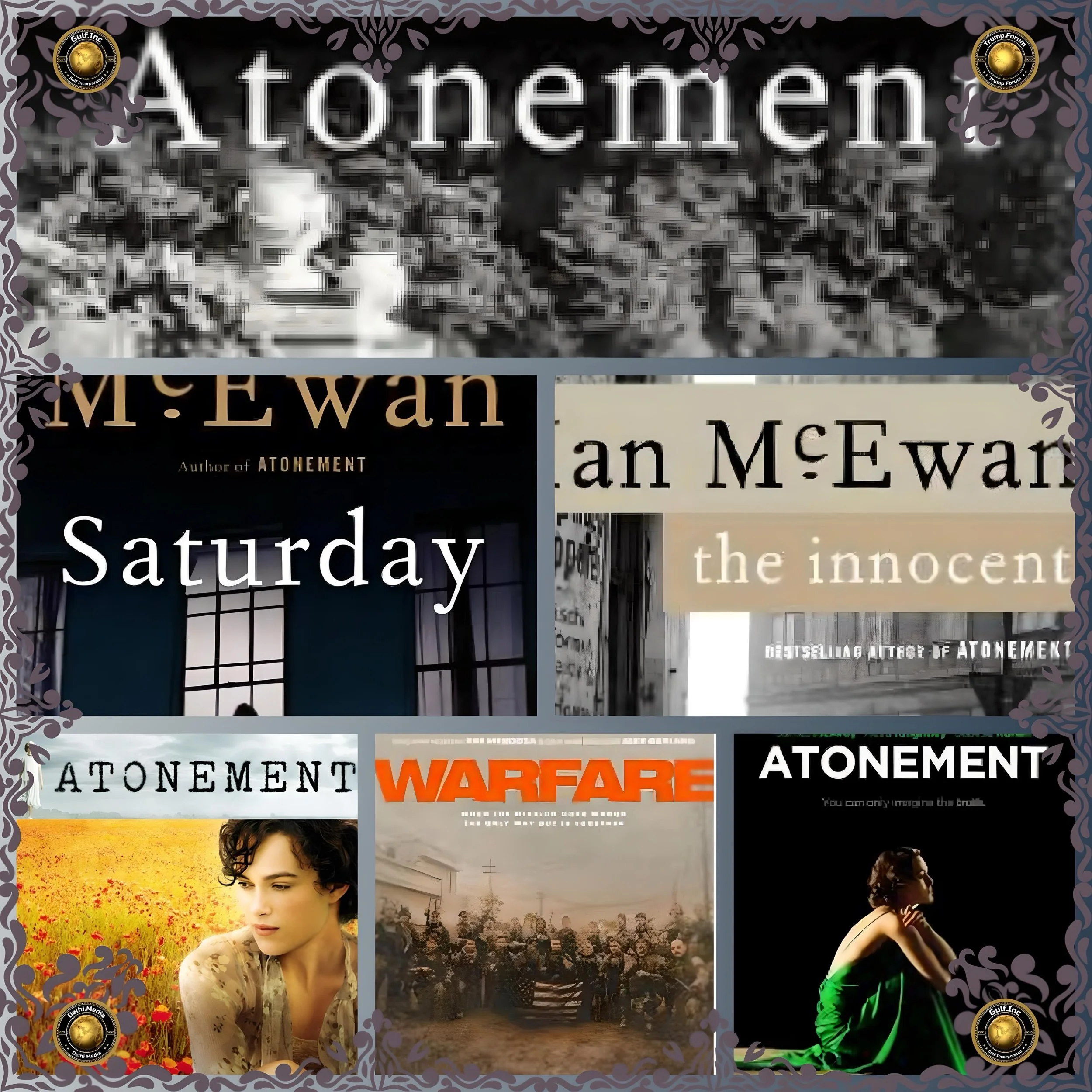
Critical Insights from Ian McEwan's "Atonement" for Today's Geopolitical Landscape
Executive Summary
FAF analysis of Ian McEwan’s novel Atonement reveals several profound lessons that resonate deeply within the context of our contemporary geopolitical landscape.
The story intricately weaves themes of guilt, redemption, and the complexities of human relationships, which can be applied to current global dynamics.
One crucial lesson is the idea of individual responsibility and the far-reaching consequences of our actions.
The protagonist, Briony Tallis, makes a fateful decision based on her youthful misconceptions and desires, leading to life-altering repercussions for those around her.
This underscores the importance of accountability in leadership and decision-making on the world stage, where a single misstep can escalate into international conflict or humanitarian crises.
Furthermore, McEwan explores the notion of perspective and its impact on understanding truth.
The narrative presents various viewpoints, highlighting how different interpretations of the same events can lead to fundamental misunderstandings.
This teaches us the necessity of empathy and open dialogue among nations in our geopolitical world. Recognizing diverse perspectives can help mitigate tensions and foster cooperation in addressing global challenges.
Lastly, the theme of atonement reminds us of the potential for forgiveness and reconciliation. Just as Briony seeks to make amends for her past mistakes, nations must also confront historical grievances to move forward peacefully. The journey towards healing in international relations is often difficult, yet it remains crucial for sustainable peace.
These lessons from "Atonement" highlight the intricate interplay of actions, perceptions, and the quest for reconciliation, offering valuable insights for navigating the complexities of today's global affairs.
Foreward
Ian McEwan’s Atonement offers profound insights that extend far beyond its World War II setting, revealing critical lessons for understanding and navigating today’s complex geopolitical landscape.
FAF comprehensively analyzes the novel’s exploration of truth, narrative, responsibility, and consequences, providing a powerful framework for examining contemporary global challenges.
The Dangerous Power of False Narratives
Truth as a Casualty of Power and Perception
The novel’s central tragedy stems from Briony’s false accusation against Robbie, demonstrating how constructed narratives can become more powerful than objective truth.
This lesson resonates powerfully with the phenomenon of “post-truth” politics and the weaponization of information in our contemporary world.
McEwan shows how false accusations destroy lives even after the truth emerges.
The psychological and social devastation experienced by Robbie mirrors the damage inflicted by disinformation campaigns in modern geopolitics, where false narratives can justify military interventions, economic sanctions, or social persecution long after their inaccuracy is exposed.
The Persistence of Strategic Deception
The novel reveals how geopolitical narratives function as instruments of strategic competition, designed to “inspire and justify political action and serve to legitimize friends and delegitimize foes”.
Just as Briony’s childish misunderstanding escalates into a life-destroying accusation, contemporary geopolitical actors often construct oversimplified narratives that reduce complex international situations to binary moral frameworks.
Social Class and Contemporary Inequality
Enduring Class Divisions in Global Politics
McEwan’s portrayal of class conflict between Robbie Turner and the Tallis family reflects broader patterns of social inequality that continue to shape contemporary geopolitics.
The novel demonstrates how class-based perspectives and prejudices can distort justice and perpetuate systemic oppression.
In today’s world, these class dynamics manifest in global inequalities between developed and developing nations, where economic disparities create ongoing tensions and conflicts.
The novel’s critique of social hierarchy resonates with contemporary struggles over resource distribution, trade policies, and international development aid.
The Intersection of Personal and Political Power
The way social class influences perception and judgment in Atonement parallels how economic and social inequalities skew access to political influence in modern democracies.
Wealthy individuals and interest groups can have disproportionate influence over policy decisions, reinforcing existing power structures just as the Tallis family’s social position enables them to silence Robbie’s voice.
Memory, Trauma, and Collective Responsibility
Traumatic Memory and National Identity
The novel’s treatment of World War II as both historical backdrop and source of collective trauma offers crucial insights into how collective memories of conflicts affect present-day international relations.
McEwan demonstrates that war affects, influences, and damages the lives of innocent people, characterizing it as “an industrial process” and a “collective insanity”.
Contemporary conflicts often draw upon emotionally loaded collective memories of past conflicts that can make negotiating compromise solutions virtually impossible.
The novel suggests that understanding how traumatic memories shape national narratives is essential for preventing the cyclical nature of international violence.
Narrative Responsibility in Global Context
Briony’s lifelong struggle with atonement highlights the ethical dimensions of storytelling and representation, especially when power differentials are involved.
This lesson is particularly relevant for contemporary media, political leaders, and international organizations who shape global narratives about conflicts, humanitarian crises, and cultural differences.
The novel’s emphasis on narrative responsibility calls for more careful, ethical approaches to international reporting and diplomatic communication.
It warns against the dangers of manipulative storytelling that exploits vulnerabilities for political or economic gain.
War and the Fragility of Civilization
The Industrial Nature of Modern Conflict
McEwan’s depiction of World War II as “an industrial process” anticipates contemporary concerns about the mechanization and dehumanization of warfare.
The novel’s detailed portrayal of the Dunkirk evacuation and its aftermath reveals how modern warfare destroys the fabric of civilization itself.
This insight remains critically relevant in an era of cyber warfare, drone attacks, and hybrid conflicts that blur the lines between military and civilian targets.
The novel suggests that technological advancement in warfare does not diminish its fundamental brutality or its capacity to shatter social bonds.
Collective Memory and Peace-Building
The novel’s treatment of how different societies remember and commemorate warfare offers valuable lessons for contemporary peace-building efforts.
McEwan suggests that the way societies choose to remember conflicts—whether they emphasize heroism or suffering, victory or loss—significantly shapes their propensity for future violence.
The Ethics of Narrative Power
Unreliable Narrators and Democratic Discourse
The novel’s sophisticated use of unreliable narration serves as a metaphor for the challenges facing democratic discourse in the information age.
Just as readers must navigate Briony’s self-serving account of events, contemporary citizens must develop critical skills to evaluate competing political narratives and media representations.
The Responsibility of Truth-Telling
Ultimately, Atonement argues for the fundamental importance of truth and accountability in both personal and political spheres.
The novel suggests that genuine atonement—whether individual or collective—requires honest acknowledgment of harm caused, not merely the construction of self-serving narratives.
Conclusion
Contemporary Applications
These lessons from Atonement provide valuable guidance for addressing current geopolitical challenges. To name a few.
Information Warfare
The novel’s exploration of how false narratives gain power and persist offers insights into combating disinformation and propaganda in the digital age.
International Justice
The theme of accountability and atonement speaks to contemporary debates about transitional justice, war crimes tribunals, and truth and reconciliation commissions.
Social Inequality
The novel’s class analysis remains relevant for understanding how economic disparities fuel international tensions and domestic political upheavals.
Collective Memory
The work’s treatment of how societies remember trauma provides frameworks for understanding how historical grievances shape contemporary conflicts.
Ian McEwan’s Atonement thus serves not merely as a historical novel about World War II, but as a profound meditation on the enduring human challenges of truth, power, responsibility, and reconciliation that continue to shape our interconnected world.
Its lessons remind us that the stakes of narrative construction, social justice, and ethical responsibility remain as high today as they were in the tumultuous decades the novel portrays.