Lessons of Overextension in Geopolitical Environments- The Impermanence of Empires - Part IV
Executive Summary
Insights on the Perils of Overextension in Geopolitical Landscapes
In the complex realm of international relations, the dangers of overextension can manifest in a variety of forms, often leading to significant consequences for nations involved.
Overextension refers to the scenario where a country stretches its military, economic, or diplomatic capabilities beyond sustainable limits.
A prime example can be seen in the historical context of the Roman Empire, which, at its height, sprawled across Europe, North Africa, and the Middle East.
The immense geographic reach created logistical challenges, strained military resources, and complicated governance, ultimately contributing to the Empire’s decline. This serves as a poignant reminder of how ambition can outpace the means available to sustain it.
In contemporary geopolitics, we can observe similar patterns with nations that engage in extensive military campaigns or seek to impose their influence globally without adequate resources.
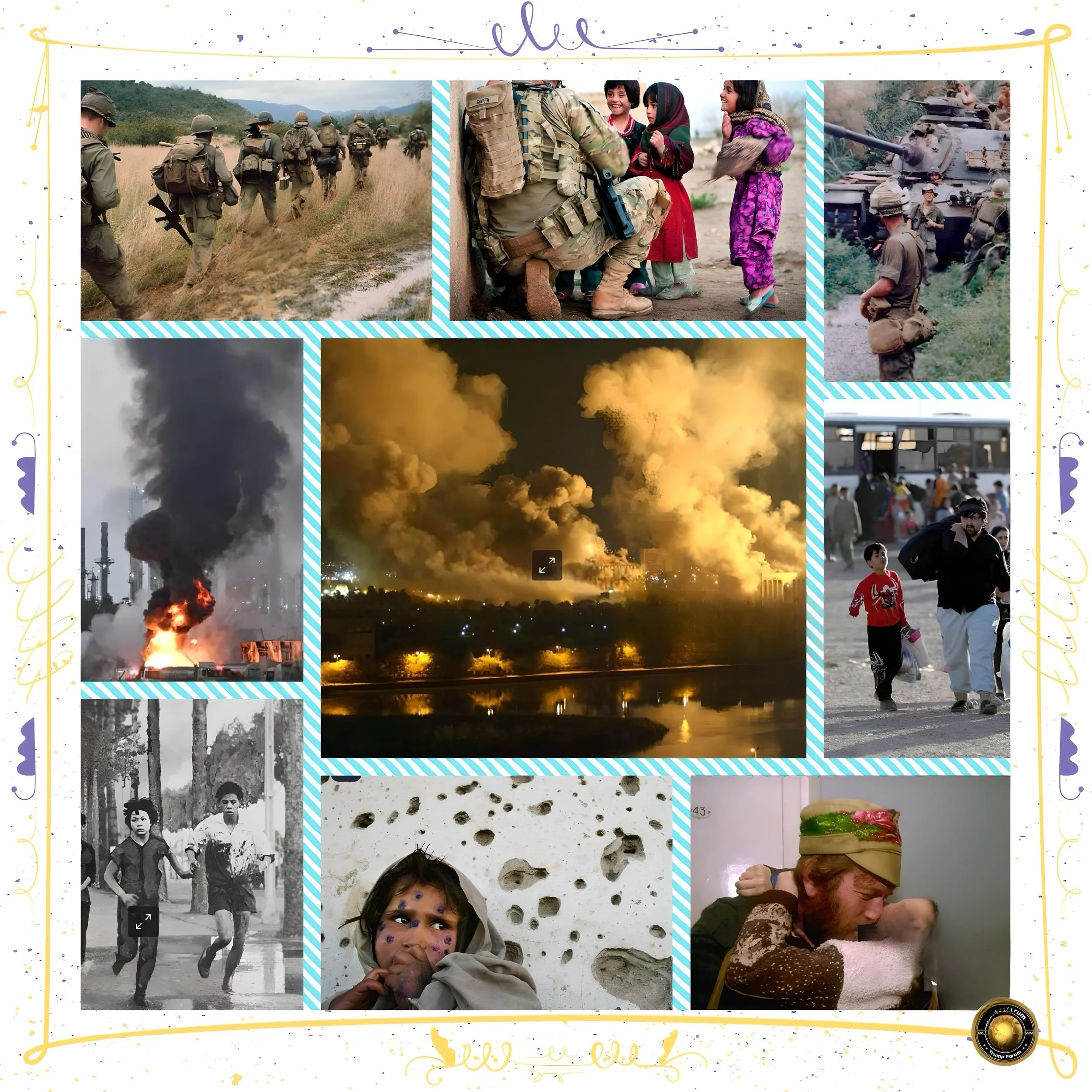
The United States’ involvement in Iraq and Afghanistan, for instance, showcased the risks of becoming embroiled in protracted conflicts that exceed manageable boundaries.
The consequences were not only costly in terms of finances and human lives but also resulted in strained international relations and diminished global standing.
Furthermore, overextension can lead to domestic unrest as public support wanes in the face of escalating military expenditures and rising casualties.
Societal tolerance for prolonged overseas commitments can diminish rapidly, leading to calls for withdrawal and reevaluation of foreign policy strategies.
In summary, the imperative lesson drawn from historical and contemporary geopolitical scenarios is the crucial need for nations to carefully assess their strategic ambitions against their capacity for sustained engagement.
The careful balance of power, resource allocation, and diplomatic efforts is essential in avoiding the pitfalls associated with overextension, ensuring that nations do not find themselves stretched too thin in the pursuit of global influence.
Introduction
In examining historical trends, a notable pattern emerges: significant powers often face dire consequences when they exceed manageable limits in their quest for influence—particularly in the absence of strong mechanisms for cooperation or protective buffers.
Throughout history, two striking examples illustrate this principle:
The Burden of Britain’s Global Empire
For much of its existence, Britain maintained an extensive network of colonies and military outposts spanning the globe.
While this ambitious expansion initially projected power and prestige, it ultimately placed immense strain on Britain’s financial resources and administrative capabilities.
The costs associated with maintaining such far-flung territories—ranging from military expenditures to bureaucratic management—were unsustainable.
As a result, the empire found itself in a continuous struggle to balance its ambitions with the practicalities of governance, hastening its gradual decline.
The Soviet Union's Afghan Quagmire
Similarly, the Soviet Union’s decade-long military intervention in Afghanistan stands as a stark cautionary tale.
This campaign drained the USSR’s resources significantly, diverting critical military and economic funds to support an increasingly protracted and unpopular conflict.
Moreover, it exposed essential vulnerabilities within the Soviet political and economic systems.
The inability to manage the complex dynamics of this engagement contributed to widespread discontent and ultimately played a major role in the dissolution of the Soviet Union itself.
Overextension of US Power in the Vietnam and Afghanistan Wars: Conclusion
Vietnam War
The United States' involvement in Vietnam intensified throughout the early 1960s, primarily driven by the aim of curbing the proliferation of communism in line with the domino theory.
U.S. policymakers operated under the assumption that a significant military presence could realign Vietnam's political trajectory to favor Western interests.
However, this strategy significantly underestimated the resolve, tactical adaptability, and profound local knowledge possessed by the North Vietnamese and the Viet Cong.
Despite deploying over 500,000 U.S. troops at the peak of involvement and committing vast military and financial resources, the conflict resulted in a protracted stalemate and eventual withdrawal.
The Vietnam War exemplified how sheer military dominance and extensive resources do not inherently lead to strategic success—particularly when political objectives remain ambiguous and local contexts are inadequately understood.
The U.S.'s overextension in Vietnam culminated in a conflict that claimed more lives and resources than could be rationalized by its outcomes, fundamentally reshaping U.S. foreign policy paradigms for subsequent decades.
Afghanistan War
The U.S.-led invasion of Afghanistan post-9/11 initially succeeded in dismantling the Taliban regime.
However, as the mission transitioned from pure counterterrorism to a broader nation-building endeavor—aiming to create a stable, democratic Afghanistan that aligned with U.S. strategic interests—the operation adopted a multifaceted complexity.
American initiatives encountered significant obstacles due to a superficial comprehension of Afghanistan's intricate cultural dynamics, an overreliance on air power, and alliances with local partners that were frequently unreliable or engaged in abusive practices.
The Afghanistan War illuminated the limitations of U.S. military power in facilitating sustainable political and social transformation abroad.
Similar to the Vietnam experience, it pointed to the dangers of overextension: ambiguous objectives, inadequate local knowledge, and the inherent challenges in pursuing nation-building through military intervention.
The rapid resurgence of the Taliban following U.S. withdrawal starkly highlighted the volatility and fragility of achievements gained through external intervention.
US Overextension in the Iraq and Syria Wars
Iraq War: Overreach and Incomplete Withdrawal
Ambitious Aims, Unmet Realities
The US invasion of Iraq in 2003 aimed for rapid regime change, eradication of weapons of mass destruction (which were never found), installation of a democratic system, and the permanent neutralization of terror threats.
However, these goals underestimated Iraq’s sectarian complexity and the challenge of state-building after decades of authoritarian rule.
Resource Strain and Mission Creep: Extended military operations, coupled with nation-building programs, taxed US military and diplomatic resources.
Attempts to dismantle existing institutions (such as the Iraqi Army) created power vacuums that fueled insurgency, sectarian strife, and the eventual emergence of ISIS.
Premature Withdrawal
The 2011 withdrawal was largely driven by American domestic pressures rather than clear success on the ground.
Despite the official end of combat operations, underlying insecurity, institutional fragility, and renewed violence soon led to US re-engagement against ISIS in 2014.
Syria: Limited Engagement, Incomplete Outcomes
Narrow Mission, Expanding Complexity: US involvement in Syria began with a clear mandate: defeat ISIS.
Yet, this evolved into precarious alliances with Kurdish forces, efforts to contain Iranian and Russian influence, and attempts to shape outcomes in a multi-party civil war.
Partial and Abrupt Withdrawals
Announcements of troop removals in 2019 and later years, often driven by shifting US political priorities, left security gaps quickly filled by Assad, Russia, and remaining jihadist groups.
This undermined gains against ISIS and weakened America’s local partners.
Incomplete Stabilization
The lack of comprehensive reconstruction or political settlement meant that neither the territorial defeat of ISIS nor broader US goals were fully achieved.
Modern Parallels: Cyberspace, Supply Chains, and Carbon Management
In today’s interconnected world, major powers may be less inclined to overreach through traditional military garrisons, yet they face comparable dangers in more intangible domains.
Cyberspace: The Risks of Digital Overextension
Vulnerabilities in an Interconnected Era
Countries with expansive digital infrastructure and vast networks are increasingly susceptible to cascading failures, data breaches, and cyberattacks.
The interconnectivity of these systems serves both as a strength and as a potential weakness; a failure in one segment can precipitate widespread repercussions across numerous sectors and interests.
Importance of Cooperative Buffers
To counteract these risks, cyber resilience increasingly hinges on fostering international cooperation.
Sharing threat intelligence among nations, standardizing regulations, and building mutual trust with allies and third-party vendors are essential strategies to bolster collective security.
Emerging Trends in Cyber Threats
Recent patterns indicate a surge in cyberattacks, particularly through sophisticated software supply chains.
These incidents highlight how easily organizations can face exploitation of their weaknesses when a united front in cybersecurity is lacking.
Supply Chains: Modern Economic Fragilities
Interconnected Economies at Risk
Today’s global economy is intricately linked through complex supply chains characterized by deep interdependence. A disruption—whether from political upheaval, natural disasters, or unforeseen crises—can reverberate across the entire system, as vividly demonstrated by the recent global pandemic.
Lessons from Overreliance
The tendency towards overspecialization and "just-in-time" inventory strategies, while initially advantageous for efficiency, has created a brittle economic framework lacking redundancy.
Building Cooperative Buffers
To enhance resilience, organizations must actively engage in constructing diversified supplier networks and collaborations aimed at risk reduction and sustainable decarbonization.
Leading companies are increasingly transforming their supplier relationships into strategic partnerships that foster innovation and resilience, rather than solely focusing on cost minimization.
Carbon Budgets: Navigating Environmental Constraints
Imposing Carbon Limits
As the world collectively shifts towards sustainable practices, “carbon budgets” have become critical parameters influencing national ambitions and corporate strategies. These budgets impose limitations that challenge the pursuit of unchecked growth.
Dangers of Overextending Growth
Failing to account for carbon implications while pursuing industrial expansion can lead to severe consequences, such as regulatory fallout, reputational harm, and the threat of stranded assets—industries that cannot adapt to environmental mandates.
Encouraging Cooperative Approaches
Achieving effective reductions in emissions, especially those tied to supply chains (often termed scope 3 emissions), necessitates proactive collaboration with partners and suppliers. Merely imposing unilateral mandates falls short in addressing these multifaceted challenges.
Key Geopolitical Lessons for Today's World
Core Principles for Sustainable Engagement
Resilience Through Cooperation
The risks of overextension become particularly acute in the absence of alliances, redundancies, or shared protective frameworks.
Cultivating denser ties—not only with allies but also with suppliers, vendors, and neutral entities—can enhance adaptability and resistance to hazards.
Avoiding Unilateral Overreach
In realms such as cyberspace, trade, or environmental regulation, operating independently or relying solely on unilateral controls can invite retaliatory measures, circumvention strategies, or undermine efforts to achieve intended outcomes.
Balancing Ambition with Realistic Capacity
It is crucial to pursue growth and influence within the limits of existing resources, adaptive capacities, and external partnerships.
Conclusion
The historical trajectories of Britain’s empire and the Soviet Union provide enduring lessons about the perils of overextension.
Overextension US Reality in Vietnam, Afganistan, Iraq and Syria illustrate the hazards of strategic overreach—pursuing expansive aims without sufficient understanding of local dynamics or a sustainable exit plan.
“Wars of Incomplete Job and Withdrawal”
The historical narrative consistently indicates that U.S. military engagements in various regions have often resulted in unfulfilled strategic objectives and contributed to unstable socio-political environments.
In Iraq, the decision for early troop withdrawal, combined with significant institutional failures, necessitated a subsequent reintervention.
Similarly, in Syria, a limited U.S. commitment and sudden troop drawdowns have perpetuated insecurity and led to fragmented alliances among local and regional actors.
The conflicts in Vietnam and Afghanistan are frequently characterized as "lost wars," resulting not only in a loss of U.S. credibility but also significant human casualties and the abandonment of substantial military equipment, amounting to hundreds of billions of dollars.
Collectively, these two conflicts have incurred an estimated cost of approximately $3.3 trillion. Along parallel lines, the wars in Iraq and Syria accounted for an additional $2.89 trillion.
Consequently, the total financial burden of the Vietnam, Afghanistan, Iraq, and Syria conflicts on the U.S. economy is approximately $6.19 trillion.
It is essential to note that this expenditure has contributed significantly to the national debt, effectively utilizing taxpayer funds.
Lessons Learned
Military Power Alone Is Insufficient
Durable change requires nuanced engagement with sociopolitical realities, not just battlefield dominance.
Undefined or Shifting Goals Lead to Drift: Ambiguous objectives increased costs and eroded domestic and international support.
Withdrawal Without Stability Is Risky
Leaving fragile states without solid institutions and broad-based legitimacy enables new cycles of violence and external interference.
FAF Judgment
The wars in Vietnam, Afganisthan, Iraq, and Syria are frequently cited as case studies of the limits of US power and the dangers of open-ended intervention without a realistic plan for post-conflict governance and security.
These experiences have fundamentally influenced US strategic thinking and caution regarding future military engagements abroad.
In the complex landscape of today’s interconnected world, failure to establish cooperative support systems not only accelerates decline but does so with unprecedented speed and complexity.
Therefore, strategic planning for collective resilience—be it in cyber ecosystems, supply chain dynamics, or environmental strategies—has emerged as a pressing imperative for all major powers seeking to navigate the multifaceted risks of the 21st century.