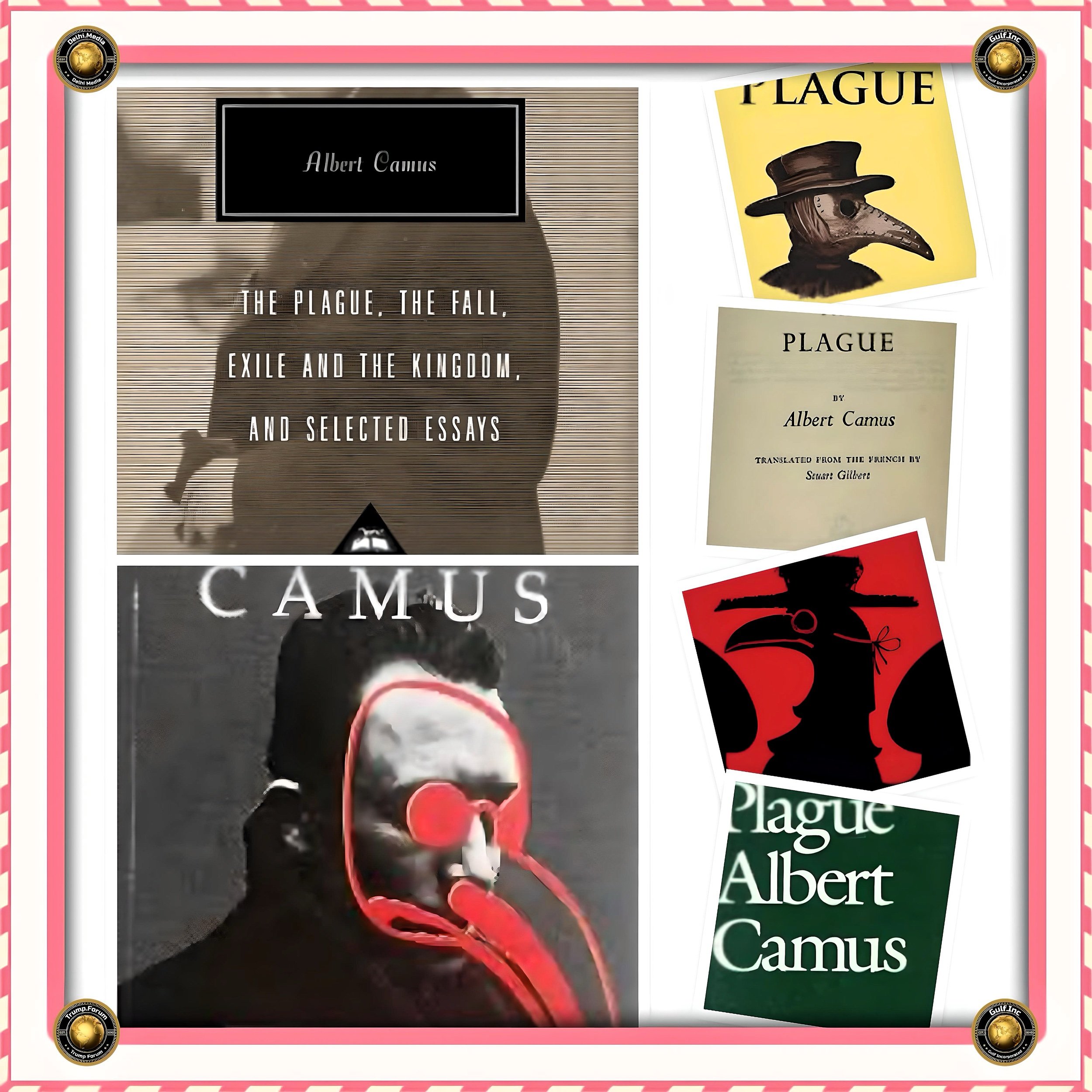
Albert Camus’ “The Plague” and Contemporary Geopolitics: Existential Parallels in a Fractured World
Introduction
Albert Camus’s “The Plague” transcends its immediate narrative to provide insights into societal responses to existential crises—insights that resonate with contemporary geopolitical tensions.
The novel constructs a compelling framework for analyzing today's global conflicts and their psychological ramifications for individuals and communities.
It explores human behavior under extreme duress, collective responses to pervasive threats, and the search for existential connotation.
The Philosophical Architecture of Crisis
Camus's existentialist framework in “The Plague” revolves around the concept of absurdity—the tension between humanity’s intrinsic quest for meaning and an indifferent universe.
This framework is remarkably relevant to contemporary geopolitical crises, where conventional notions of international order and security have been fundamentally undermined by ongoing conflicts, notably in Ukraine, the Middle East, and the shifting dynamics among global powers.
The novel’s exploration of isolation and quarantine serves as a literal and metaphorical lens for understanding societal fragmentation.
Just as the plague isolates the inhabitants of Oran, current geopolitical tensions foster psychological and social barriers that fracture communities and global alliances.
Initially, the citizens of Oran exhibit indifference to shared suffering, each perceiving their pain as unique, echoing contemporary societies’ responses to distant conflicts and humanitarian crises.
Collective Trauma and Social Cohesion Under Pressure
Recent research on armed conflict illustrates that societies enduring prolonged violence encounter significant threats to social cohesion.
The psychological toll of modern warfare extends far beyond active combatants, infiltrating entire populations through persistent exposure to traumatic events, displacement, and uncertainty.
For instance, in Gaza, civilians have endured what is termed “continuous traumatic stress” across over three generations, rendering the population “traumatized.”
This condition parallels Camus’ depiction of the plague’s enduring erosion of social structures while simultaneously creating opportunities for collective solidarity.
In the narrative, some citizens transcend their initial apathy by engaging in the anti-plague efforts, breaking through the isolation that characterized their existence.
Similarly, contemporary conflicts demonstrate how extreme circumstances can fracture and unite communities, sometimes concurrently.
Existential Responses to Modern Warfare
The psychological mechanisms elucidated by Camus in “The Plague” exhibit direct parallels to contemporary societal responses to ongoing conflicts.
Research surrounding the Russia-Ukraine war and Middle Eastern conflicts reveals denial, acknowledgment, blame assignment, and eventual acceptance—processes that epidemiologists recognize as characteristic of societies facing major crises.
Current geopolitical tensions manifest key psychological responses that align with Camus’ observations:
Normalization of Suffering
Camus’ narrator notes humanity’s remarkable capacity to normalize extensive suffering.
This phenomenon is evident in contemporary reactions to protracted conflicts, where repeated exposure to violence engenders psychological desensitization rather than sustained activism.
Search for Meaning Through Resistance
The novel underscores the significance of actively opposing death and suffering as the most meaningful human endeavor, mirroring contemporary resistance movements and humanitarian initiatives.
The characters in “The Plague” derive purpose not from understanding the plague’s origins but from combating its consequences—a reflection observable in modern humanitarian responses to geopolitical crises.
Collective Identity Formation
Under extreme stress, both Camus’ fictional Oran and real-world conflict zones form new collective identities forged through shared suffering and resistance.
However, research indicates that such solidarity often remains tightly knit within in-groups, frequently excluding identified out-groups.
The Moral Dilemmas of Modern Conflict
Today’s military and civilian entities grapple with moral dilemmas that resonate with those depicted by Camus.
Modern warfare presents ethical challenges that invoke what military psychologists term “moral injuries”—psychological damage arising from conflicts between personal ethics and the realities of combat.
Conclusion
These dilemmas manifest in various forms
Civilian Protection vs. Mission Completion
Military personnel often face circumstances where the safeguarding of civilians conflicts with operational goals.
The psychological burden accompanying these decisions can result in lasting trauma that extends far beyond physical wounds.
Individual vs. Collective Responsibility
Like Dr. Rieux’s experiences in “The Plague,” contemporary aid workers, medical professionals, and public servants encounter ethical dilemmas in crisis situations that reflect tensions between personal values and collective expectations.
Through these lenses, “The Plague” serves as a relevant commentary on the moral complexities faced in modern conflicts, offering a philosophical engagement with the challenges posed by contemporary crises.