Ephemeral Power and Expansionist Ideologies: Lessons from America, Britain, France, Russia, and Israel - Part V
Executive Summary
Transient Authority and Imperialistic Beliefs. Insights from the Historical Experiences of America, Britain, France, Russia, and Israel
In examining the complex interplay between fleeting geopolitical power and the overarching narratives of expansionist ideologies, one can draw valuable lessons from the historical trajectories of nations such as the United States, the United Kingdom, France, Russia, and Israel.
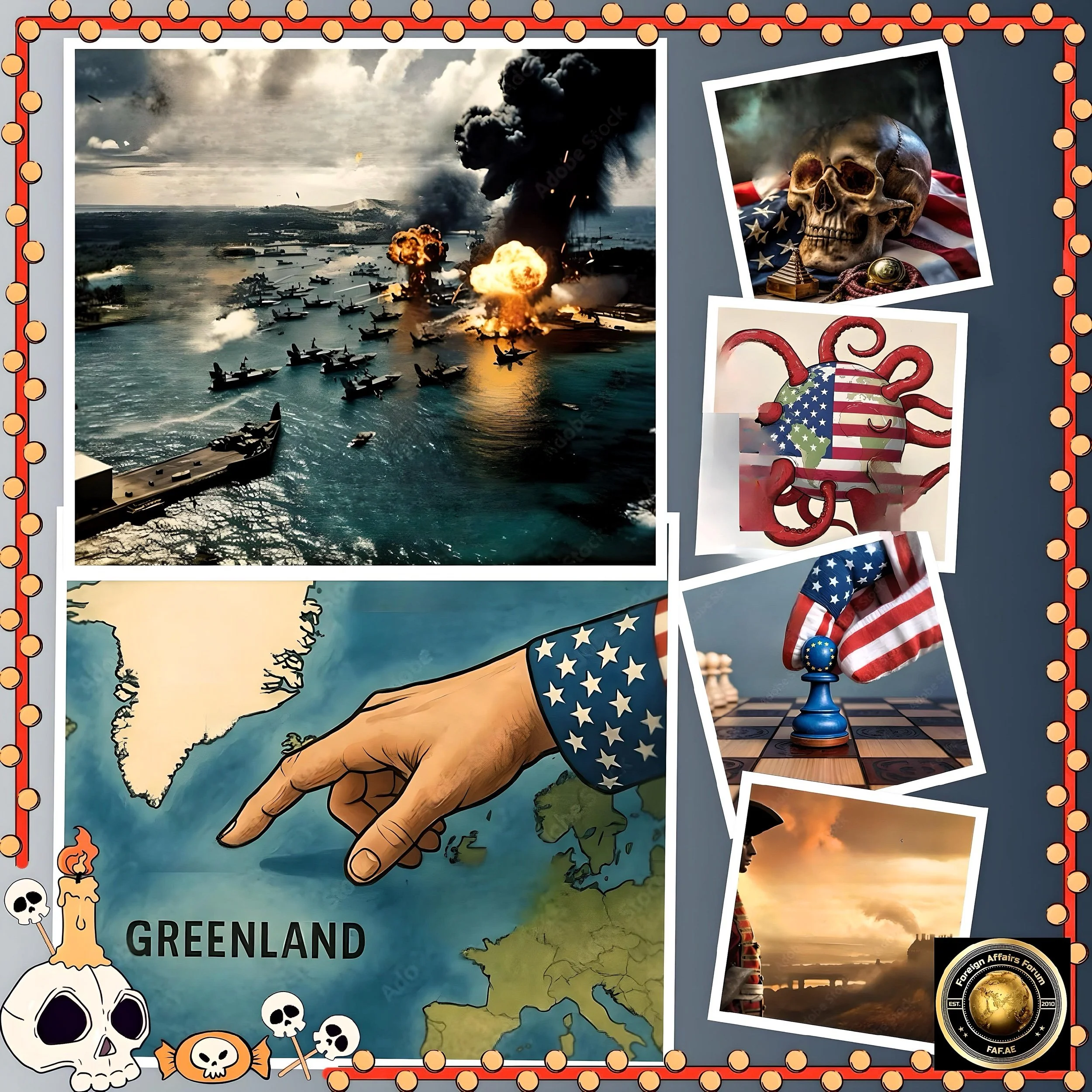
The United States, for instance, has often grappled with its role on the global stage, propelled by a narrative of manifest destiny that initially justified territorial expansion across North America.
This doctrine fueled the westward movement and underpinned the nation’s perception of its exceptionalism, often leading to conflicts and colonial endeavors that reshaped the American landscape and foreign territories.
Similarly, during its imperial height, Britain demonstrated how ephemeral control can be artfully cloaked in the guise of civilizing missions.
The vast British Empire sought to spread its cultural and political ideologies worldwide through its naval supremacy and economic influence, claiming various territories as extensions of its realm.
However, this empire's subsequent decline shows how such power can be fleeting and unsustainable over time.
France's approach to expansionism, particularly during the Napoleonic Wars, reveals a blend of ambition and cultural superiority.
French leaders pursued aggressive campaigns across Europe, envisioning the spread of revolutionary ideals alongside territorial conquests.
Yet, the eventual backlash led to reconsidering the limits of power and the complexities inherent in such expansive ambitions.
Russia's imperial journey, marked by its vast land conquests and the ambitious pursuit of influence over neighboring territories, highlights a different facet of expansionist ideology.
The drive for a greater Russia often came at a steep cost, leading to internal strife and questions about national identity, all while showcasing the delicate balance between ambition and the stability of the state.
Finally, Israel’s modern struggles with territorial expansion and security illustrate the tensions between ideological beliefs and realpolitik.
The ongoing conflict over land and sovereignty embodies deep-rooted narratives of cultural and historical claims, often leading to complex international responses and further entrenching divisions rather than fostering peace.
Together, these case studies illuminate a vital lesson about the fragile nature of power: that the ideologies that spur nations toward expansion can ultimately lead to their undoing.
Understanding the intricate threads of these historical narratives can provide contemporary policymakers with insights into the consequences of imperial ambitions and the pursuit of ephemeral power.
Introduction
Power, like the tides, ebbs and flows. Between the nineteenth and twenty-first centuries, five very different polities—America, Britain, France, Russia, and Israel—embraced grand expansionist ideologies that promised permanence but ultimately confronted their limits.
The FAF analysis report traces those ideologies' rise, zenith, and recalibration, drawing out historical patterns and practical lessons for the turbulent multipolar era.
Across three centuries, expansionist doctrines—from Manifest Destiny to the mission civilisatrice, from British liberal imperialism to Soviet–Russian Eurasianism and Zionist settlement ideology—combined moral claims, strategic calculation, and economic ambition.
Each doctrine appeared immutable in its prime, yet each encountered predictable constraints: fiscal overreach, demographic shifts, resistance from subject peoples, and the emergence of new competitors.
Understanding these cycles is critical for policymakers seeking to manage today’s power transitions and avoid repeating past mistakes.
Structure of This Analysis
Theoretical Frames
America
Manifest Destiny to Post-Unipolar Drift
Britain
Liberal Empire to Post-Imperial Reset
France
Mission Civilisatrice and Its Afterlives
Russia
Eurasianism across the Tsarist, Soviet, and Putin Eras
Israel
Zionist Expansion and the Settlement Enterprise
Recurring Drivers of Rise and Decline
Strategic Lessons for the Twenty-First Century
Conclusion: Managing Inevitable Transitions
Theoretical Frameworks
Power Cycle and Power Transition Theory
Charles Doran’s power-cycle model presents a systematic trajectory that leading states tend to follow over time.
This trajectory includes four distinct phases: an initial phase of rapid relative growth, followed by a peak where the state is at the height of its power, then a phase of deceleration as growth slows, ultimately culminating in a decline in dominance.
In conjunction with this, Organski’s power-transition theory offers predictive insight into international conflict.
It asserts that when rising powers come perilously close to achieving parity with a hegemonic power, the likelihood of conflict increases.
This is particularly relevant in geopolitical landscapes where emerging states challenge established ones.
Expansionist Ideology
Expansionist ideologies serve as a critical binding force, knitting together various domestic constituencies around the shared justification for engaging in costly foreign ventures. These ideologies typically rest on three foundational pillars:
Providential or Civilizing Mission
This pillar frames a moral obligation to spread specific values to other regions, often seen as inferior.
Racial or Cultural Hierarchy
A prevailing belief that certain races or cultures are inherently superior justifies the view that target territories are "underdeveloped" or need guidance.
Security-Economic Logic
This is an argument that portrays foreign interventions as necessary for not just economic gain but also for ensuring national security through the promise of prosperity or protection from perceived threats.
When structural factors such as economic shifts, demographic changes, or technological disruptions occur, these ideologies often lag in response, leading to significant friction and potential crises within and between nations.
The United States: From Manifest Destiny to Post-Unipolar Drift
Nineteenth Century – Manifest Destiny
The concept of Manifest Destiny, introduced by journalist John O’Sullivan in 1845, articulated a fervent belief that the United States was destined to expand across the North American continent as a divinely ordained mission.
This ideology was heavily laden with notions of American exceptionalism, a belief in the superiority of white Americans, and the promotion of republican liberty as a foundational tenet.
This mindset was operationalized through various means, such as the Indian Removal Act of 1830, the Mexican-American War from 1846 to 1848, and homesteading policies that encouraged westward expansion.
Twentieth Century – Liberal Internationalism and the Unipolar Moment
In the aftermath of World War II, the U.S. adapted its previous notions of continental expansionism into a strategy for global leadership, laying the groundwork for international institutions like the Bretton Woods system and the North Atlantic Treaty Organization (NATO).
The “unipolar moment” period from 1991 to 2003 marked the apex of U.S. influence and dominance on the global stage; however, military engagements in Afghanistan and Iraq revealed significant limitations in American power.
Twenty-First Century – Relative Decline
Current indicators highlight a notable downturn in American preeminence, with its share of global GDP shrinking to around 15% based on purchasing power parity.
Domestic polarization has intensified, while the balance of power is shifting towards emerging players, such as China and India, contributing to a landscape characterized by "unbalanced multipolarity."
This evolving power dynamic has prompted a reevaluation of America's ideological stance, leading to debates over the once-cherished notion of the "shining city on a hill" versus calls for a more restrained foreign policy.
Lesson
The historical analysis suggests that expansionist ideologies yield benefits only if the nation's economic growth consistently outpaces its rivals.
However, as competitors draw nearer in strength, the potential for overreach increases, culminating in a loss of legitimacy and depletion of resources.
Britain: Liberal Empire to Post-Imperial Reset
Nineteenth Century – Liberal Expansion
During the nineteenth century, Britain portrayed itself as an "Empire of Liberty," intertwining commerce, Christianity, and free trade as the pillars of its imperial identity.
Its naval supremacy allowed it to establish informal control over Latin America and formal rule over vast territories in India and Africa.
Establishing a racial hierarchy served as a justification for its colonial rule, with Social Darwinism becoming a common rhetorical framework supporting imperial ambitions.
Twentieth Century – High Noon and Rapid Sunset
The extensive toll of two World Wars, combined with the Suez Crisis in 1956 and mounting anti-colonial movements, hastened Britain's retreat from its colonies.
The dissolution of the empire gave way to the Commonwealth, and the United Kingdom shifted its focus towards forming a closer Atlantic alliance with the United States and, at times, pursuing European integration.
Twenty-First Century – Post-Brexit Search for Role
The recent Brexit decision has brought to the forefront a yearning for the autonomy reminiscent of the imperial past, albeit in the context of diminished global influence.
The notion of "Global Britain" seeks to carve out niche areas of soft power, such as finance and education, even as its complex power capabilities continue to wane.
Lesson
The experience of British imperialism illustrates that financial constraints and rising nationalist sentiments within former colonies ultimately overwhelm even the most lucrative empires, especially when the growth rate of the imperial hub falls below that of the broader system.
France: Mission Civilisatrice and Its Afterlives
Nineteenth Century – From Mercantilism to Republican Mission
In the late nineteenth century, the elites of France’s Third Republic fused the concepts of republicanism with a purported "civilizing mission," using it to justify their conquests in Africa and Indochina.
Prominent figures like Jules Ferry asserted that "superior races" were responsible for " civilizing" those deemed inferior, establishing a moral rationale for imperial expansion.
Twentieth Century – Wars of Decolonization
The toll taken by protracted and costly conflicts in Indochina (1946-1954) and Algeria (1954-1962) fractured the previously unified domestic consensus around colonialism.
After achieving independence in 1962, France maintained a network of influence in Africa, commonly referred to as Françafrique.
This network relied on the French language, military presence, and currency ties via the CFA franc.
Twenty-First Century – Selective Projection and Soft Power
In more recent times, French military interventions in regions such as Mali (2013) have been cloaked in the updated rhetoric of a civilizing mission, framed around concepts like “stability” and “good governance.”
However, growing domestic debates regarding the legacy of colonialism and systemic racism are increasingly challenging the moral foundations of these interventions.
Lesson
The case of France reveals that while universalist and humanitarian rhetoric can temporarily mask coercive practices, this façade eventually shatters when disparities between proclaimed ideals and the harsh realities of colonial rule become impossible to ignore.
Russia: Eurasianism Across Tsarist, Soviet, and Putin Era
Nineteenth Century – Tsarist Expansion and Slavophilism
During the imperial period, Russia's expansive ambitions across Siberia and the Caucasus were often cast as a unifying mission for Orthodox Slavs, emphasizing a sense of stewardship over the vast region known as Eurasia.
Twentieth Century – Soviet Union
The Soviet era saw a radical shift as communist internationalism became intertwined with imperial governance, exerting control over Eastern Europe and Central Asia.
However, the dissolution of the Soviet Union in 1991 initiated a profound retreat, characterized by widespread nostalgia for the superpower status that had been lost.
Twenty-First Century – Neo-Eurasianism
In contemporary times, ideologues like Aleksandr Dugin have revived the notion of Eurasianism, portraying it as a civilizational alternative to Western influences, commonly labeled as "Atlanticism."
Recent events, such as the annexation of Crimea in 2014 and the invasion of Ukraine in 2022, have been justified through the lens of reclaiming “historical Russian lands,” reflecting a revival of revanchist sentiment.
Lesson
The resurgence of revanchist ideologies often emerges following a sudden loss of status; however, such ideologies cannot compensate for an economy that lacks diversification.
Moreover, coercive actions risk inciting counterbalancing coalitions among neighboring states, further complicating the geopolitical landscape.
Israel: Zionist Expansion and the Settlement Enterprise**
Ideological Foundations
Zionism emerged as a nationalist movement that positioned Jews as a distinct nation entitled to self-determination within their ancestral homeland of historic Palestine.
This ideology was rooted in the belief that Jews were entitled to establish a sovereign state in a territory they consider their own, which they view through historical, cultural, and religious lenses.
Early advocates of this movement were candid about their intentions, at times even discussing the controversial notion of “transfer”—the forced relocation of the Arab population—to secure a substantial Jewish demographic majority in the region.
Post-1948 Expansion Dynamics
Following the establishment of the State of Israel in 1948, an environment of conflict and territorial expansion took shape, reaching a significant turning point during the Six-Day War in 1967. Israel's military success allowed it to seize control of the West Bank, Gaza Strip, and Golan Heights.
This victory not only expanded Israeli territory but also catalyzed the growth of settlement projects, which were often justified through a combination of security concerns and religious claims to the land as an integral part of Jewish identity.
A pivotal moment in the settlement initiative was the “Drobles Plan” of 1978, which proposed a strategy of saturating Palestinian-populated areas with Jewish settlements to create geographic realities that would thwart the establishment of a contiguous Palestinian state.
Twenty-First Century Trends
In recent decades, the Israeli government has continued to endorse the establishment of large settlement blocs and has taken steps to legalize outposts that were previously unauthorized.
Despite overwhelming international legal consensus deeming these settlements as illegal under international law, the continued support from the United States—coupled with a fragmented Palestinian political landscape—has served to weaken any substantial external pushback against these developments.
This inconsistency creates a complicated environment where settlements expand, despite the increasing challenges they pose to peace efforts.
Critical Insights on Demographic Engineering and Conflict
The strategic implementation of demographic engineering through settler colonialism may yield short-term tactical advantages, yet it simultaneously ingrains a cycle of enduring conflict and international diplomatic isolation.
Such practices ultimately erode long-term legitimacy in the eyes of the global community.
Recurring Factors Influencing Rise and Decline
Demographic Momentum
Regions with a youthful demographic often experience higher rates of outward migration and military enlistment; however, as populations age, this advantage can reverse, complicating expansionist initiatives.
Technological Superiority
Historical examples, such as Britain’s naval steam power, the industrial innovations of the United States, and Israel's advancements in cyber technology, illustrate how technological prowess can facilitate territorial expansion until such advantages become widely spread or diffuse.
Ideological Adaptability
The ability of ruling powers to modify their ideological narratives is crucial. For instance, the United States transitioned from the concept of Manifest Destiny to a more benevolent Wilsonian approach.
In contrast, rigid adherence to outdated ideologies, such as the late Soviet Union's rigid Marxism, has often precipitated decline.
Overextension Costs
Historical patterns indicate that military expenditures and the financial burden of occupations can eventually eclipse economic benefits, as seen in Britain’s decline in India post-1857 and the financial toll of U.S. military engagements in Iraq starting in 2003.
Mobilization of Subject Populations
Educated elite classes in colonized regions often co-opt the colonial narrative of nationalism to advocate for their rights and sovereignty, as exemplified by the Indian National Congress and the National Liberation Front (FLN) in Algeria.
International Balancing
Alliances and coalitions often form in response to aggressive actions by dominant powers, as demonstrated by the Allied powers during World War I and II, as well as NATO and the European Union's stance towards Russia.
Strategic Lessons for the Twenty-First Century
Acknowledge the Limited Lifespan of Ideological Narratives
Leaders must recognize that expansionist narratives become untenable as material conditions evolve. It's imperative to align rhetoric with achievable capabilities to avoid catastrophic strategic failures.
Focus on Economic Renewal Rather Than Territorial Expansion
Historical examples across various contexts reveal that sustainable power is built on a foundation of economic productivity rather than on land acquisition through conflict. Innovation and economic growth should take precedence.
Navigate Decline with Institutional Adaptation
An examination of Britain’s relatively peaceful decolonization process through the Commonwealth, juxtaposed with France’s violent conflicts, illustrates that proactive planning and adaptation can mitigate the shocks of decline.
Address Demographic Realities
Policies that overlook demographic trends, such as the persistence of settler movements in demographically delicate areas or the challenges posed by aging populations, invite prolonged conflict and instability.
Balance Moral Principles with Policy Action
A disconnect between professed ideals and the actualities on the ground can hasten the erosion of legitimacy, as seen in France’s commitment to republican values while exerting repression, or the U.S. promotion of democracy in tandem with human rights violations like those witnessed at Abu Ghraib.
Anticipate and Prepare for Counter-Coalitions
Aggressive territorial expansion often provokes opposition and counterbalancing actions. Engaging in multilayer diplomacy and fostering regional cooperation—as seen in entities like the EU and ASEAN—can provide avenues for influence that are less costly and less likely to incite conflict.
Conclusion
Navigating Inevitable Transitions in Global Power Dynamics
History reveals a profound lesson: no nation can escape the relentless forces of relative decline and the fading relevance of its ideological foundations, no matter how confident in its perceived exceptional destiny.
Consider the deep introspection that has emerged in the United States following its tumultuous withdrawal from Afghanistan—an endeavor that amplified debates about American exceptionalism and the efficacy of military interventions.
Similarly, the United Kingdom faces a complex recalibration of its identity in the wake of the dissolution of its imperial past, seeking to redefine its role in a world that no longer reveres its former grandeur.
France, too, grapples with its colonial legacy, confronting the challenging narrative of its past actions in Africa and the Middle East, while struggling to reconcile these memories with modern values of equality and justice.
Russia's precarious assertiveness exemplifies another facet of this dynamic, as the nation embarks on risky neo-imperial ventures, such as its actions in Ukraine, in a bid to reclaim lost influence.
Meanwhile, Israel wrestles with the moral and political dilemmas posed by its settlement policies, which raise questions about national identity and the complexities of coexistence in a volatile region.
All these scenarios point to a singular, undeniable truth: expansionist ideologies may confer short-term advantages, but they are only sustainable as long as the underlying economic and demographic structures remain robust.
When these foundations begin to crumble under the weight of internal challenges and global shifts, the prudent course for nations is to transition from a mindset of dominion to one of cooperation, trading notions of grandeur for resilience and mutual benefit.
As we navigate an era characterized by accelerating multipolarity—where multiple nations vie for influence—the virtues of humility and adaptability, along with a candid acknowledgment of historical precedents, emerge as crucial navigational tools.
These qualities will serve as essential guides to avoid repeating the catastrophic mistakes made by empires in the past, urging nations to embrace collaboration over competition in their quests for stability and progress.