Prisoners of the Castle: Insights for Contemporary Geopolitics and U.S. Diplomatic Strategy
Introduction
Ben Macintyre’s “Prisoners of the Castle: An Epic Story of Survival and Escape from Colditz, The Nazis’ Fortress Prison” offers significant insights that are pertinent to contemporary geopolitical dynamics and the evolving nature of American diplomatic power projection.
The narrative underscores how principles of human dignity, international law, and multilateral cooperation serve as essential cornerstones for legitimate authority and enduring influence, even under the most constrained conditions.
The Enduring Power of Human Dignity and International Law
Colditz Castle functioned as a maximum-security POW camp during World War II, accommodating Allied officers categorized as the most likely to attempt escape.
In a location 650 kilometers from any border not under Nazi control, with formidable defenses—including two-meter thick walls and a 75-meter sheer drop to the River Mulde—the castle paradoxically became the site of over 130 escape attempts, resulting in 32 prisoners successfully gaining freedom.
Macintyre’s account is particularly relevant for modern diplomacy, as it highlights that the Geneva Convention framework, despite its imperfections, provided a critical foundation for upholding human dignity in extreme circumstances.
The interactions between prisoners and guards at Colditz were governed by what Macintyre terms “gentlemen’s agreements” - informal yet binding understandings that safeguarded some degree of honor and humanity during wartime.
This exemplifies how international legal frameworks can facilitate civilized conduct amidst conflict, contingent upon mutual respect.
The stark contrast with Nazi concentration camps, where the objective was systemic dehumanization, emphasizes the crucial necessity of upholding international humanitarian law.
The Third Geneva Convention explicitly mandates that “prisoners of war must at all times be humanely treated,” enshrining principles that are foundational to modern diplomatic relations and conflict resolution.
Multilateral Cooperation vs. Unilateral Power Projection
The World War II context provides a clear illustration of the effectiveness of multilateral alliance-building as opposed to the limitations of unilateral aggression.
The Allied victory was predicated on what Winston Churchill referred to as the “Grand Alliance” - a coalition that, despite internal frictions, successfully coordinated resources, strategies, and objectives across multiple nations.
The Allies’ combined industrial capabilities, demographic advantages, and military manpower ultimately overcame the initially superior German war machine.
This historical lesson serves as a significant counterpoint to contemporary American diplomatic practices.
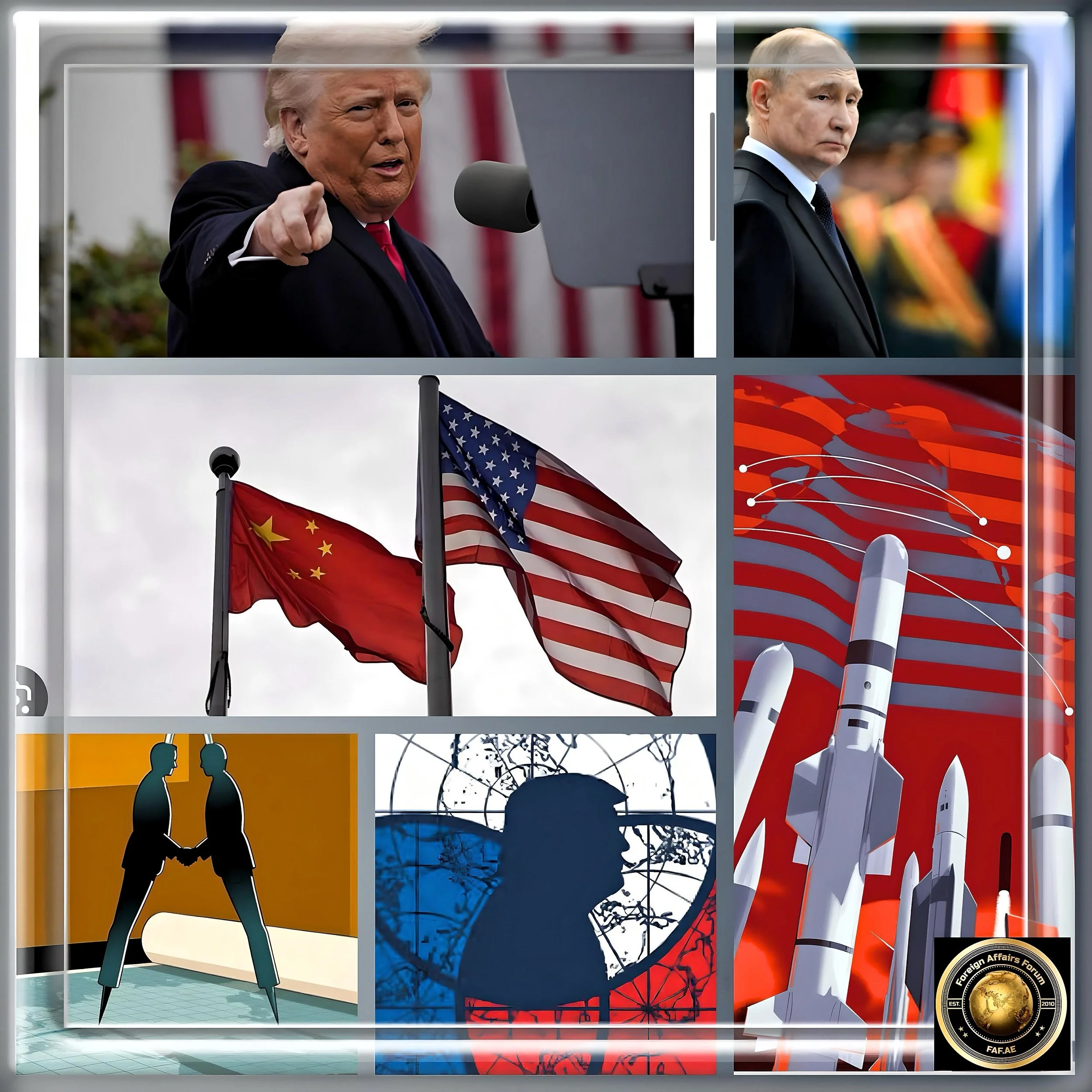
Current U.S. foreign policy, particularly under the Trump administration, has been perceived as a departure from the post-1945 rules-based liberal international order, favoring unilateralism over multilateral engagement.
The administration's approach has been characterized as a “realist ‘America First’ foreign policy agenda” that often adopts a transactional attitude toward allies while seeking rapprochement with select adversaries.
This juxtaposition is illuminating: whereas WWII Allies secured lasting victories through sustained cooperation despite ideological disparities, modern unilateral strategies risk eroding the foundations of American soft power and international influence.
The Myth of Invulnerability and Its Modern Parallels
Macintyre’s examination also elucidates how the prevailing perception of Colditz as an “escape-proof” fortress mirrors current assumptions regarding overwhelming military superiority.
Despite Nazi confidence in the castle's impregnable nature, prisoners consistently devised innovative methods to evade their captors through ingenuity, cooperation, and persistent resistance.
Analogously, contemporary deterrence theory, though valuable, exhibits limitations when rigidly applied.
The premise of deterrence posits that potential adversaries are convinced that the costs of aggressive actions will outweigh any conceivable rewards.
Yet, as demonstrated by the Colditz prisoners, even actors perceived as powerless can find avenues to resist and achieve victory through unity of purpose and creative problem-solving.
The current American strategy regarding power projection—defined as “the capacity of a state to deploy and sustain forces beyond its territorial bounds”—requires a nuanced understanding that “soft power” and diplomatic engagement often yield more sustainable outcomes than sheer military dominance.
Analyses of the Trump administration indicate a dismantling of global engagement mechanisms, including educational exchanges and soft diplomacy, in preference for more ephemeral spectacles.
Conclusion
Lessons for New American Diplomacy
The narrative of Colditz imparts several critical lessons for modern American diplomatic strategy
First, the importance of preserving international legal frameworks. Adherence to conventions such as the Geneva Conventions—even under extreme conditions—creates a viable space for civilized conduct, benefiting all involved parties.
Future American diplomacy should prioritize the strengthening of these multilateral institutions rather than undermining them.
Second, the value of sustained coalition-building over short-term unilateral action is paramount.
The third point emphasizes that apparent strength can transform into vulnerability when it depends exclusively on coercive power.
The Nazi regime, despite achieving early military victories, ultimately fell due to its foundation in domination rather than authentic legitimacy.
In contrast, contemporary American influence is most effective when it draws nations in through attraction and sets a precedent through exemplary behavior rather than relying solely on force.
The Allied success was predicated on extensive alliance networks and the mutual commitment to shared objectives, highlighting the need for a more collaborative approach in contemporary diplomacy.
Recognizing that apparent strength can devolve into vulnerability when predicated solely on coercion is crucial.
The Nazi regime's initial military successes ultimately gave way to collapse, as it was fundamentally constructed on domination rather than authentic, legitimate authority.
The effectiveness of contemporary American influence hinges on the ability to attract rather than coerce, leading through example rather than through the imposition of force alone.
The Implications for Power Diplomacy
A central thesis of MacIntyre’s examination for contemporary American power diplomacy is that sustainable influence necessitates legitimacy, not merely capability.
The prisoners at Colditz, despite being physically confined, managed to uphold moral authority through their adherence to honor codes, solidarity across national and class lines, and persistent resistance to dehumanization.
Their captors, controlling a seemingly impregnable fortress, ultimately faced defeat because their regime was rooted in systematic violations of human dignity and international law.
The Nazi strategy of governance through fear and intimidation was self-defeating, catalyzing the very resistance it sought to quell.
For modern American diplomacy, this indicates that while displays of military might and economic coercion may be occasionally necessary, they cannot replace the crucial, patient endeavor of cultivating legitimate authority through steadfast adherence to international law, respect for allied interests, and a commitment to shared values.
The current trend towards unilateralism and the erosion of soft diplomacy threaten to repeat historical errors by favoring short-term dominance over long-term influence.
The Colditz prisoners regained their freedom not through superior weaponry but via ingenuity, cooperation, and steadfast adherence to their principles.
Their experience underscores the notion that sustainable power derives from legitimacy and moral authority within an interconnected global landscape—attributes that must be cultivated through unwavering respect for international law, genuine collaboration with allies, and an acknowledgment of our shared humanity.
As contemporary global challenges continue to increase in complexity, the lessons drawn from Colditz suggest that America's diplomatic strategy should focus not on projecting unilateral power but on the deliberate nurturing of multilateral cooperation grounded in mutual respect and a collective commitment to human dignity under law.