The Return of Great-Power Diplomacy: How Strategic Dealmaking Can Fortify American Power
Introduction
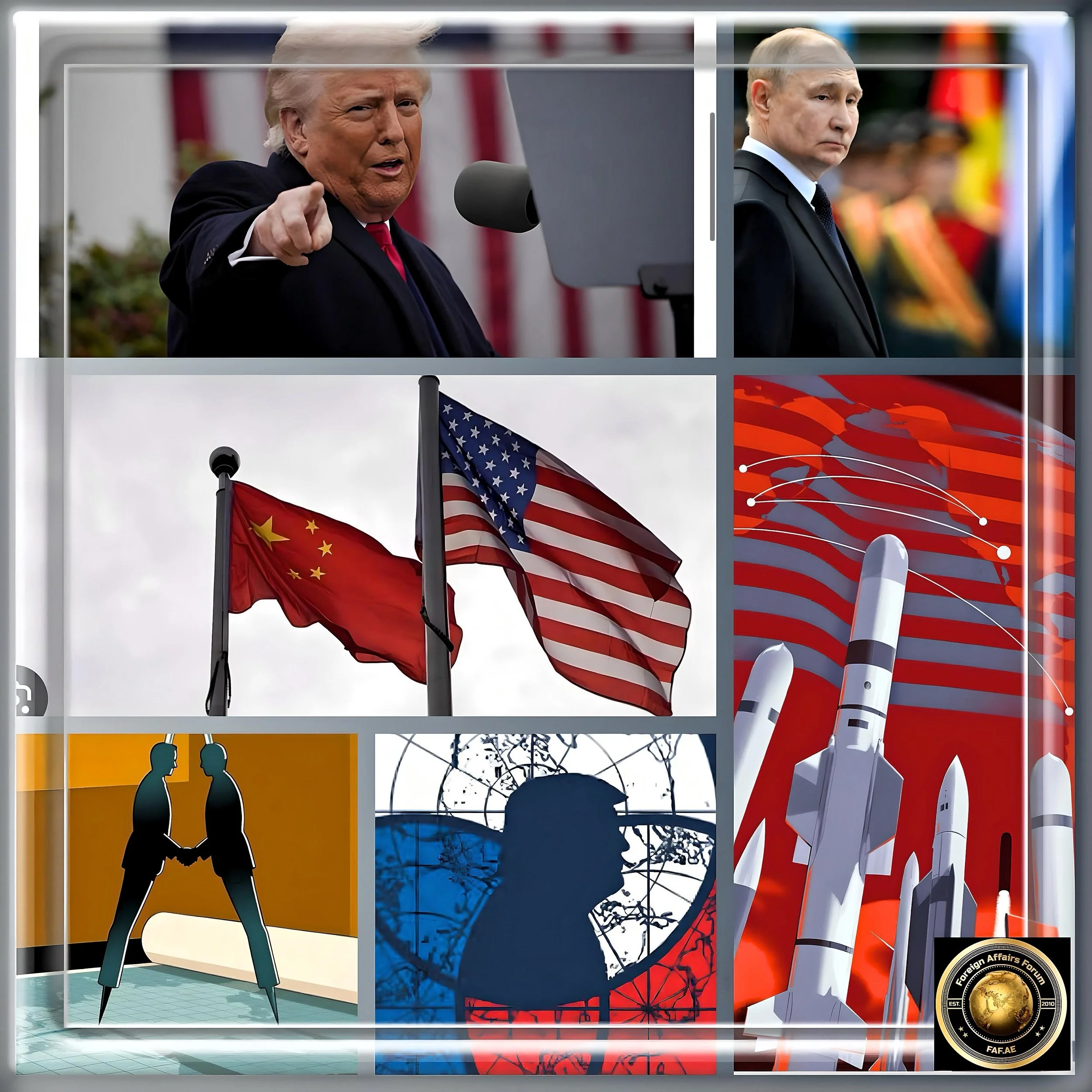
President Donald Trump initiated a series of unexpected diplomatic overtures to America’s primary adversaries in his second term, sparking renewed debate about diplomacy’s role in U.S. foreign policy.
These initiatives reflect a potential return to classical great-power diplomacy, which is an approach that uses strategic negotiations to advance national interests rather than pursuing idealistic global transformation.
This shift comes amid growing recognition that America’s post-Cold War military and economic dominance has waned, requiring Washington to employ more sophisticated diplomatic tools to navigate a world of resurgent great powers.
As international tensions rise and the specter of great-power conflict looms, a return to strategic dealmaking may offer a pragmatic path to fortifying American power while managing global risks.
The Historical Foundations of Great-Power Diplomacy
Origins and Evolution of Strategic Diplomacy
Great-power diplomacy has ancient roots, with evidence of sophisticated diplomatic practices dating back thousands of years.
The earliest known diplomatic records trace back to Mesopotamian city-states around 2850 BCE, where treaties were formalized between sovereign entities.
As civilizations evolved, so did diplomatic practices, with the development of diplomatic language, protocols, and diplomatic immunity for envoys.
Ancient Indian texts explicitly described the duties of envoys, including maintaining treaty terms, acquiring allies, and instigating dissension among enemies-functions that remain relevant in modern strategic diplomacy.
These early diplomatic foundations established principles that would later influence the formal system of great-power relations that emerged in Europe.
The modern concept of great-power diplomacy crystallized in post-Renaissance Europe, reaching its zenith in the 19th century with the Concert of Europe.
Following the Napoleonic Wars, the great powers of Britain, Austria, Russia, and Prussia later created a system for managing international relations through regular diplomatic consultations.
This concert system aimed to maintain a balance of power, prevent the rise of hegemonic states, and resolve disputes without resorting to major wars.
Under leaders like Austrian Chancellor Prince Klemenz von Metternich and British Foreign Secretary Lord Castlereagh, the Concert of Europe successfully preserved relative peace for several decades through skillful diplomacy rather than military confrontation.
After years of disagreement between the powers, the system eventually declined and collapsed following a series of wars in the mid- to late 19th century.
The Balance of Power and Bismarck’s Diplomatic System
Otto von Bismarck’s diplomatic achievements in the late 19th century offer a masterclass in great-power diplomacy driven by realist principles.
After successfully unifying Germany through a series of limited wars, Bismarck recognized that Germany had become a “saturated” power and shifted his focus to preserving the status quo diplomatically.
His foreign policy had two principal objectives: maintaining peace and the status quo while diplomatically isolating France to prevent a war of revenge.
To achieve these goals, Bismarck constructed an intricate system of alliances, including the Three Emperors’ League (Dreikaiserbund) between Germany, Austria-Hungary, and Russia; the Dual Alliance with Austria-Hungary; and eventually the Triple Alliance that incorporated Italy.
This complex web of relationships effectively isolated France while providing Germany with security guarantees from multiple directions.
Bismarck’s diplomatic strategy demonstrated the effectiveness of what classical international relations theory calls “balance of power” politics.
This concept suggests that states seek to maintain a distribution of power that prevents any single state from becoming too dominant, thereby preserving stability in the international system.
Through careful alliance management, Bismarck ensured that Germany maintained favorable relationships with most great powers while preventing the formation of hostile coalitions.
His approach relied heavily on realpolitik, prioritizing tangible national interests over ideological or moral considerations, a hallmark of classical great-power diplomacy.
Though his system eventually collapsed after his dismissal in 1890, Bismarck’s diplomatic achievements demonstrate how skillful negotiation and alliance management can enhance a state’s security more effectively than military force alone.
Great Power Diplomacy in the 20th Century
From War to Cold War: Redefining Great-Power Relations
The 20th century witnessed dramatic shifts in great-power diplomacy, from the catastrophic breakdown of the European system in World War I to the emergence of superpower diplomacy during the Cold War.
The post-World War II period saw the establishment of new great-power arrangements, most notably at the Yalta Conference in February 1945, where the leaders of the Soviet Union, United States, and Great Britain agreed on the postwar order.
This agreement reflected the reality of emerging superpower status, with the Soviet Union securing concessions regarding its position in Asia following its promised entry into the war against Japan.
The Yalta Agreement demonstrated how great powers could negotiate spheres of influence and establish rules for managing their relations while maintaining fundamentally different ideological positions.
During the Cold War, great-power diplomacy evolved to incorporate nuclear deterrence and arms control.
The Strategic Arms Limitation Talks (SALT I), culminating in agreements signed by President Nixon and Soviet leader Leonid Brezhnev in May 1972, exemplified this approach.
These negotiations produced two key agreements: the Interim Agreement limiting offensive strategic nuclear weapons and the Anti-Ballistic Missile (ABM) Treaty restricting missile defense systems.
SALT I represented a pragmatic recognition by both superpowers that unbridled competition in nuclear weapons threatened their mutual security.
These agreements created greater stability and predictability in nuclear capabilities by establishing numerical ceilings for intercontinental and submarine-launched ballistic missiles, fostering a period of détente between the rival powers.
Nixon’s Opening to China: Strategic Diplomacy in Action
President Richard Nixon’s diplomatic initiative toward China in the early 1970s represents one of the most consequential examples of strategic great-power diplomacy in the post-war era.
Following decades of strict trade embargoes imposed after the Korean War, Nixon pursued normalization with Beijing as part of a broader geopolitical strategy.
This culminated in his historic weeklong visit to Beijing in February 1972, where he engaged with Premier Zhou Enlai and signed the Shanghai Communiqué establishing guidelines for bilateral trade.
Nixon’s initiative fundamentally altered the strategic landscape of the Cold War by exploiting the Sino-Soviet split and creating a triangular relationship that enhanced America’s global position relative to the Soviet Union.
The U.S.-China opening demonstrates several core principles of effective great-power diplomacy.
First, it prioritized strategic interests over ideological purity, recognizing that practical cooperation with a communist state could advance American power in the global competition with the Soviet Union.
Second, it showed how personal diplomacy at the highest levels could overcome decades of hostility, as Nixon and Zhou conducted negotiations personally over two years.
Third, the initiative illustrated how diplomatic breakthroughs can reshape regional and global power dynamics without military confrontation.
By 1980, the relationship had evolved to include a formal U.S.-China Trade Agreement granting most-favored-nation status to Chinese exports, integrating China into the global economy, and creating new commercial opportunities for American businesses.
The Post-Cold War Decline of Strategic Diplomacy
The Unipolar Moment and Its Diplomatic Consequences
Following the collapse of the Soviet Union in 1991, the United States emerged as the world’s sole superpower, creating what many observers called a “unipolar moment” in international relations.
During this period, traditional great-power diplomacy receded as American policymakers increasingly relied on military superiority and economic dominance to achieve foreign policy objectives.
Newly declassified records from early 1992 reveal how Pentagon officials envisioned an American strategy to maintain and extend U.S. supremacy in the post-Cold War world.
The Defense Planning Guidance drafted during this period outlined “an unabashed program for perpetuating U.S. primacy” by cultivating an open, democratic order with the United States firmly atop the international hierarchy.
This approach explicitly sought to “discourage any competitor from challenging for global leadership” and prevent emerging threats from disrupting a favorable environment through unrivaled American military power.
This strategy represented a significant departure from traditional great-power diplomacy, which typically acknowledged the legitimate interests of other major powers and sought to manage international relations through negotiation rather than dominance.
Critics from across the political spectrum warned about the implications of this approach, with Democratic Senator Joseph Biden condemning it as “literally a Pax Americana” and Republican commentator Patrick Buchanan describing it as “a formula for endless American intervention in quarrels and war when no vital interest of the United States is remotely engaged.”
Despite these critiques, the belief that America could reshape the world by applying overwhelming power rather than diplomatic accommodation took root in U.S. foreign policy thinking.
The Shift from Strategic to Normative Diplomacy
As traditional great-power diplomacy declined, U.S. diplomatic efforts increasingly focused on promoting universal norms and multilateral institutions rather than advancing specific national interests through bilateral negotiations.
This shift reflected that history had “ended” with the triumph of liberal democracy and free markets, making classic balance-of-power considerations less relevant in a new era of global convergence.
Diplomatic initiatives during this period often aimed at transformative goals, such as promoting democracy, human rights, and free trade globally, rather than securing limited advantages in a competitive international system.
While normative diplomacy produced some notable successes, including the 1995 Dayton Peace Accords ending the Bosnian War, it often assumed that other powers would ultimately accept American leadership and values.
This approach to diplomacy reflected broader trends in international relations thinking that minimized the enduring nature of great-power competition.
As the United States enjoyed unprecedented global dominance, many policymakers and scholars concluded that traditional concerns about balancing power and securing spheres of influence had become obsolete.
Instead, American diplomacy could focus on creating and strengthening international institutions that would eventually make power politics irrelevant.
This optimistic vision assumed that countries like Russia and China would gradually integrate into a U.S.-led international order rather than seek to challenge or revise it. Subsequent events would demonstrate that this assumption proved premature.
Both powers eventually pursued more assertive foreign policies to enhance their influence and revise aspects of the post-Cold War order.
The Case for Reviving Great-Power Diplomacy
The Return of Strategic Competition
The post-Cold War unipolar moment has given way to a more multipolar international system characterized by renewed great-power competition.
Today, the United States faces capable rivals with substantial economic and military resources, notably China and Russia.
China’s rise, in particular, represents the most significant shift in the global balance of power in decades.
Under President Xi Jinping, China has explicitly adopted “major-power diplomacy with Chinese characteristics” as a cornerstone of its foreign policy.
This approach combines growing confidence in China’s capabilities with a willingness to challenge aspects of the U.S.-led international order.
Xi has described China’s diplomatic goal as “realizing the Chinese dream of the great rejuvenation of the Chinese nation” rather than simply maintaining a low profile in international affairs as previous Chinese leaders advocated.
Russia has also reasserted itself as a great power willing to use military force and diplomatic maneuvering to advance its interests.
Recent developments, including President Putin’s May 2025 announcement of a three-day ceasefire in Ukraine, demonstrate Moscow’s continued effort to use limited diplomatic initiatives to manage conflicts while maintaining its strategic position.
This ceasefire, which followed President Trump’s call for Russia to halt its bombardment of Ukraine, illustrates the complex interplay between military pressure and diplomatic openings that characterize contemporary great-power relations.
As China and Russia increasingly challenge U.S. interests across multiple domains, Washington faces a strategic environment that resembles historical periods of great-power competition more closely than the brief post-Cold War unipolar era.
The Limits of Military Solutions
In this new environment of great-power competition, the United States can no longer rely primarily on military superiority to achieve its objectives.
Despite maintaining the world’s most powerful armed forces, America faces real constraints on its military capacity.
The U.S. no longer possesses a military capable of fighting and defeating all potential adversaries simultaneously, particularly when those adversaries include nuclear-armed great powers.
Recent discussions within the Trump administration about potentially adjusting America’s NATO commitments reflect a recognition of these constraints.
Officials are reportedly considering prioritizing military exercises with allies that meet defense spending benchmarks.
Such deliberations indicate a growing awareness that the United States must make strategic choices about where and how to deploy its military resources.
Similarly, economic coercion alone cannot reliably force major powers to abandon core interests.
While sanctions and other economic tools remain essential elements of U.S. foreign policy, they face increasing limitations in a world where rival powers have developed significant economic resilience and alternative partnership networks.
China’s promotion of the Belt and Road Initiative and the Regional Comprehensive Economic Partnership (RCEP) represents efforts to build economic relationships that reduce vulnerability to U.S. pressure.
Despite facing significant Western sanctions, Russia has maintained its ability to pursue independent policies through economic relationships with China and other non-Western powers.
These developments necessitate a more sophisticated approach to advancing U.S. interests that combines various tools of statecraft rather than relying predominantly on military or economic coercion.
Strategic Approaches to Great-Power Diplomacy
Engaging Rivals: Calculated Risk and Pragmatic Gains
Effective great-power diplomacy requires a willingness to engage directly with rival powers to identify areas of potential agreement while maintaining firm positions on core interests.
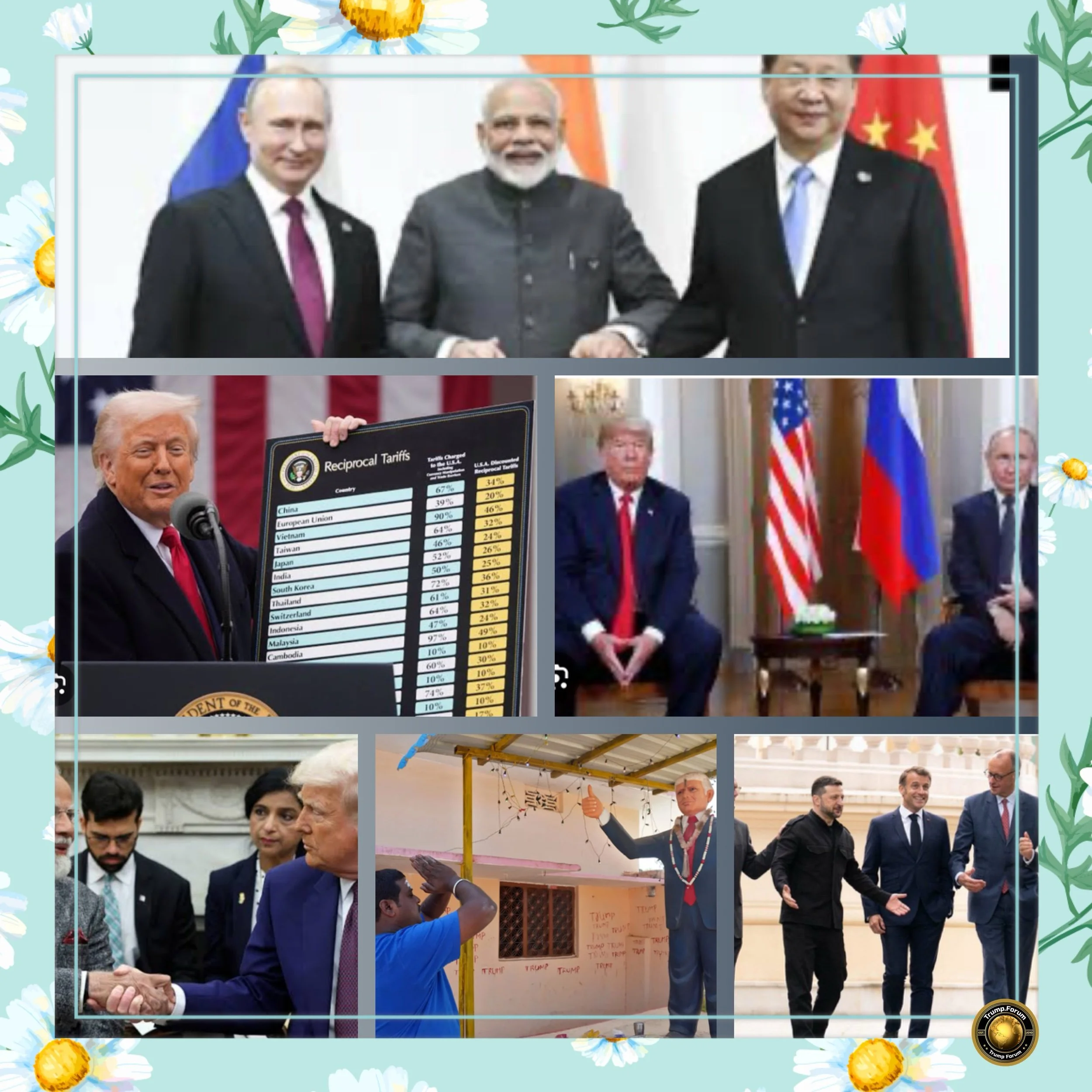
President Trump’s recent diplomatic initiatives with Russia, China, and Iran exemplify this approach.
His communications with Russian President Putin regarding the Ukraine conflict and the May 2025 ceasefire announcement suggest an effort to find diplomatic pathways to de-escalation while continuing to support Ukraine.
Similarly, Trump’s letter to Iranian Supreme Leader Ali Khamenei in March 2025 represented an attempt to initiate new nuclear talks while simultaneously maintaining pressure through sanctions and the implicit threat of military action if diplomacy fails.
These initiatives reflect the classical diplomatic practice of combining pressure with dialogue to create opportunities for agreements that advance U.S. interests.
This engagement-based approach draws on historical precedents like the Nixon administration’s opening to China and the Reagan-era nuclear negotiations with the Soviet Union.
In both cases, American presidents maintained firm positions on core security interests while seeking pragmatic agreements in areas of potential mutual benefit.
Trump’s reported desire to meet with Chinese leader Xi Jinping follows this template, suggesting an effort to manage competition with Beijing through direct leader-to-leader engagement rather than relying solely on confrontation.
Such diplomatic initiatives do not represent appeasement if they advance concrete American interests and maintain credible deterrence against aggressive actions by rival powers.
Instead, they reflect a recognition that even adversarial relationships require communication channels and negotiated understandings to prevent miscalculation and reduce the risk of conflict.
Renegotiating Alliances
From Dependency to Partnership
A crucial element of reviving great-power diplomacy involves recalibrating America’s alliance relationships to ensure greater reciprocity and burden-sharing.
The reported consideration of policies prioritizing defense commitments to NATO allies meeting established defense spending criteria represents one approach to this challenge.
While potentially controversial, such proposals reflect a broader recognition that effective great-power competition requires allies to contribute meaningfully to collective security rather than relying predominantly on U.S. resources.
This echoes classical balance-of-power thinking, emphasizing the importance of alliances in which multiple powers share the burdens of maintaining international order rather than a single hegemon assuming disproportionate responsibilities.
Historical precedents suggest that alliance renegotiation can strengthen rather than weaken security partnerships when handled skillfully.
The Concert of Europe functioned effectively because multiple powers shared responsibility for maintaining stability, with no single nation bearing all costs.
Similarly, Bismarck’s alliance system distributed security burdens among multiple states while aligning their interests with Germany’s.
In the contemporary context, more balanced alliance relationships could enhance America’s strategic position by ensuring that European and Asian partners take greater responsibility for addressing regional challenges.
This would allow the United States to focus its resources more efficiently.
While such renegotiations carry political risks, they represent a potentially necessary adaptation to a world in which American power, though still substantial, faces greater constraints than during the unipolar era.
Historical Lessons for Contemporary Diplomacy
Learning from Diplomatic Successes
The historical record offers valuable lessons for contemporary American diplomacy, particularly regarding negotiation strategies and alliance management.
The Camp David Accords 1978, which led to the 1979 Egypt-Israel peace treaty, demonstrate how American diplomatic leadership can facilitate agreements between adversaries when negotiations focus on concrete, achievable objectives rather than transformative visions.
President Jimmy Carter’s approach combined persistent personal diplomacy with practical incentives for both parties, resulting in durable agreements that have survived despite regional turbulence.
This example suggests that American diplomatic initiatives today should similarly focus on specific, achievable outcomes rather than sweeping transformations of relationships with rival powers.
Bismarck’s alliance management provides another instructive model for contemporary American diplomacy.
His approach to maintaining multiple, overlapping security relationships allowed Germany to avoid diplomatic isolation while preventing the formation of hostile coalitions.
The key to this system was flexibility and pragmatism. Bismarck recognized that maintaining good relations with Austria and Russia was challenging but vital to German security.
This led him to create the “Reinsurance Treaty” with Russia even while retaining the Dual Alliance with Austria.
Today’s American diplomats could apply similar principles by seeking to maintain cooperative relationships with countries that may have tensions with one another.
This would allow Washington to avoid being forced into rigid blocs that limit diplomatic flexibility.
Avoiding Historical Pitfalls
History also offers cautionary tales about diplomatic arrangements that undermine rather than enhance security.
The Molotov-Ribbentrop Pact of August 1939 between Nazi Germany and the Soviet Union illustrates how seemingly pragmatic agreements can produce disastrous outcomes when they sacrifice core principles for short-term advantage.
This agreement, which included secret protocols dividing Eastern European territories between the two powers, facilitated German aggression and ultimately failed to provide either signatory with lasting security.
The pact’s breakdown less than two years later with Germany’s invasion of the Soviet Union demonstrates that diplomatic agreements lacking credible enforcement mechanisms or based on fundamentally incompatible interests rarely endure.
Similarly, the experience of the interwar period underscores the danger of great powers failing to engage in serious diplomatic efforts to manage their competition.
The collapse of the Concert of Europe and the subsequent inability of great powers to establish effective mechanisms for addressing revisionist claims contributed significantly to the outbreak of both world wars.
This suggests that contemporary American diplomacy must avoid two extremes: naively trusting agreements unsupported by verification and deterrence and refusing to engage in serious diplomatic efforts to manage competition.
Effective great-power diplomacy requires persistent negotiation and compromise on peripheral issues while maintaining firm positions on core interests and values.
Implementing Great-Power Diplomacy in a Complex World
The Role of Multiparty Negotiations
In today’s interconnected world, great-power diplomacy increasingly involves multiparty negotiations rather than purely bilateral arrangements.
Such negotiations present distinct challenges, including fluctuating “best alternatives to a negotiated agreement” (BATNAs), the formation of coalitions between different parties, and complex process-management issues.
The United Nations Security Council, G7, BRICS, and other groupings described as “great power concerts” provide forums for such multilateral diplomacy.
Navigating these environments effectively requires sophisticated diplomacy that balances America’s bilateral relationships with its engagement in multilateral settings.
Russia’s recent announcement of a three-day ceasefire in Ukraine illustrates how contemporary great-power diplomacy often unfolds simultaneously across multiple channels.
While President Putin’s declaration came after direct communication with President Trump, it also prompted immediate responses from Ukrainian officials and presumably involved consultations with other interested parties.
This complex diplomatic dance, involving direct bilateral communications, public announcements, and multilateral consultations, characterizes modern great-power diplomacy.
American diplomats must develop the skills to operate effectively in this environment, understanding how to leverage bilateral relationships to achieve favorable outcomes in multilateral settings and vice versa.
Adapting Diplomatic Tools for the Digital Age
While the fundamental principles of great-power diplomacy remain relevant, the methods and tools must adapt to contemporary realities. Digital technologies have transformed how nations communicate, negotiate, and influence one another.
Social media platforms enable direct communication between leaders and the public, potentially bypassing traditional diplomatic channels.
President Trump’s use of social media to call on President Putin to “STOP!” the bombardment of Ukraine represents one example of this phenomenon.
Such public diplomacy through digital channels can complement traditional negotiations but also introduces new challenges, including the risk of miscommunication and unintended escalation.
The classification of great powers has also evolved, with economic and technological capabilities gaining importance alongside traditional military power.
Contemporary analyses identify China, France, Russia, the United Kingdom, and the United States as undisputed great powers based on their permanent seats on the UN Security Council and nuclear capabilities.
However, countries like Germany, Japan, India, and Italy are increasingly recognized as significant or emerging powers based primarily on their economic strength rather than military reach.
This reflects a broader shift in how power is defined and exercised in international relations.
Effective American diplomacy must account for these evolving power dynamics, engaging with traditional military competitors and economic and technological powerhouses that shape the international system differently.
Conclusion
Fortifying American Power Through Strategic Diplomacy
Balancing Ideals and Interests
Returning to great-power diplomacy does not require abandoning American values but pursuing them more pragmatically.
Throughout history, successful great-power diplomacy has balanced idealistic goals with realistic assessments of power and interest.
The Concert of Europe maintained relative peace while gradually accommodating liberal reforms in various states.
Similarly, American Cold War diplomacy combined principled opposition to Soviet communism with practical agreements on arms control and other issues.
Contemporary American diplomacy can likewise uphold democratic values and human rights while acknowledging the necessity of engaging with regimes that do not share these commitments.
This balanced approach recognizes that American power ultimately rests on material capabilities and moral legitimacy.
Strategic diplomatic engagement with rivals does not imply moral equivalence or the abandonment of principles; rather, it represents a pragmatic path to advancing American interests and values in a complex world.
By using diplomacy to manage competition, prevent unnecessary conflicts, and build advantageous coalitions, the United States can preserve its influence while avoiding the overextension that has undermined previous great powers.
This approach reflects the classical understanding of diplomacy not as an alternative to power politics but as its most sophisticated expression.
Securing America’s Future in a Competitive World
In an era of renewed great-power competition, strategic diplomacy offers the United States the best path to maintaining its global position while managing the risks of conflict.
By engaging rivals through carefully calibrated diplomatic initiatives, recalibrating alliance relationships to ensure greater burden-sharing, and skillfully navigating multiparty negotiations, American leaders can more effectively fortify national power than through military or economic coercion alone.
This approach draws on the rich tradition of great-power diplomacy practiced by politicians from Bismarck to Kissinger, adapting classical principles to contemporary challenges.
The diplomatic initiatives undertaken by President Trump in early 2025-engaging with Russia on Ukraine, reaching out to Iran regarding its nuclear program, and seeking a summit with China’s Xi Jinping suggest a potential return to this strategic approach to diplomacy.
While these efforts have generated controversy, they reflect a necessary adaptation to a world in which American power, though still substantial, faces greater constraints than during the unipolar era.
By rediscovering diplomacy as a hard-nosed instrument of strategy rather than merely a vehicle for promoting global norms, the United States can navigate the dangerous waters of great-power competition while preserving its strength and influence for future generations.