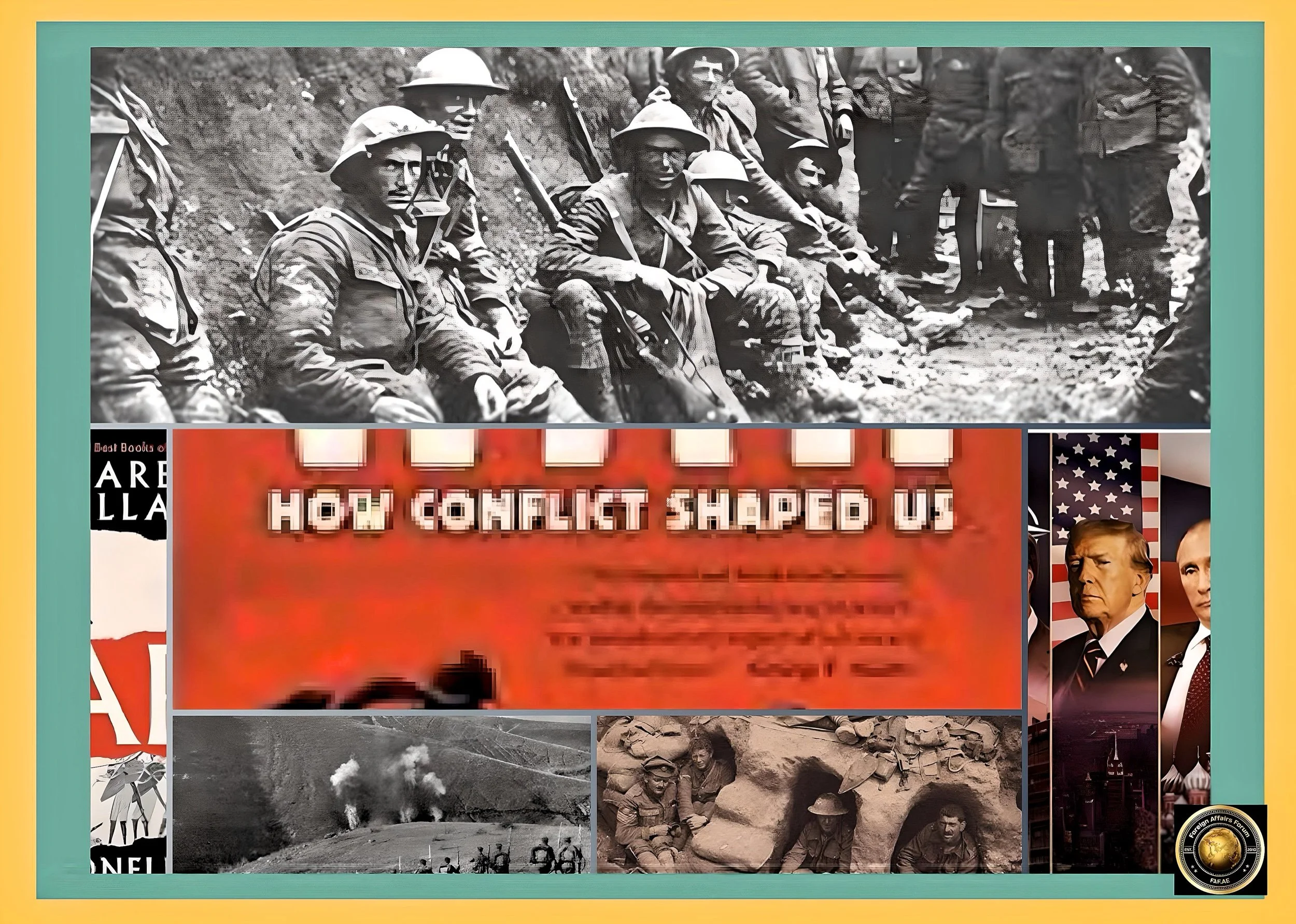
War: How Conflict Shaped Us and The War That Ended Peace - Scholarly Analysis and Contemporary Relevance
Foreword
Margaret MacMillan’s two pivotal works delve into the intricate dynamics of war and its profound effects on human civilization.
An in-depth FAF analysis emphasizes that these texts provide critical frameworks for interpreting historical patterns and assessing contemporary geopolitical risks, particularly pertinent in today’s multifaceted international arena.
Executive Summary
War functions as a catalyst for enduring social transformation, instigating hierarchical disruption and fostering societal resilience.
Historically, major conflicts have acted as transformative agents that empower marginalized groups while challenging entrenched social hierarchies.
The tumult induced by warfare often precipitates notable shifts in class structures and catalyzes movements advocating for greater equality across societal strata.
Furthermore, the collective trauma experienced in wartime significantly shapes societal attitudes towards resilience, loss, and communal identity.
These shared experiences contribute to collective identity formation, influencing prevailing values within communities, and ultimately, impacting their moral frameworks and legal systems.
The assertion that "understanding war is essential for comprehending the evolution of our societal values" encapsulates the dual role of conflict as both a reflection and a driver of sociocultural change.
War transcends mere reflection of existing norms; it serves as a catalyst for transformative shifts, reshaping public imaginaries and altering foundational beliefs that underpin social cohesion and identity in the long term.
Introduction
War: How Conflict Shaped Us - Key Insights
The Symbiotic Relationship Between War and Society
In “War: How Conflict Shaped Us,” MacMillan posits a re-evaluation of the traditional perspective of war as a purely destructive force. She argues for a symbiotic relationship between warfare and societal development, wherein both influence each other in significant ways.
This interdependence necessitates a contextual analysis of contemporary conflicts that extends beyond mere military strategy and political machinations.
Archaeological findings, such as the 5,300-year-old Ötzi the Iceman, embedded with an arrowhead, illustrate that organized violence has been a constant in human history.
This context frames war not as an anomaly but as an inherent facet of human social evolution.
War as a Driver of Progress and Innovation
Notably, despite the inherent destructiveness of war, it has historically propelled considerable advancements in human civilization.
MacMillan delineates how conflict has expedited progress across several domains:
Medical and Scientific Advances
The exigencies of World War I catalyzed advancements in medical practice, including the widespread implementation of X-ray technology, the evolution of prosthetic limbs, and innovations in surgical methods.
Marie Curie’s development of mobile X-ray units and the establishment of rehabilitation facilities exemplify how wartime needs fostered medical innovation.
Similarly, World War II ushered in radar technology, antibiotics, and surgical advancements that subsequently benefited civilian populations.
Women’s Rights and Social Change
Warfare has consistently served as a crucible for the advancement of women’s roles in society and politics.
The dynamics of World War I significantly propelled women’s suffrage, as their essential contributions in wartime labor contexts provided compelling arguments for political parity.
This trend persisted through World War II, further solidifying women’s positions in the workforce and broader societal roles.
Technological Innovation
Military research and development have historically been at the forefront of civilian technological innovation.
Innovations such as radar, which transitioned into civilian microwave technology, and the Internet’s origins in military communication systems showcase how warfare accelerates technological progression that later benefits society during peacetime.
The Evolution of Modern States and Democracy
MacMillan elucidates how modern centralized states, characterized by organized bureaucracies, are a product of centuries of warfare.
The imperatives of war—resource mobilization, population organization, and discipline maintenance—were instrumental in shaping the administrative frameworks of contemporary governments.
Paradoxically, this militaristic centralization also prompted democratic expansion, as governments required citizen-soldiers, thereby necessitating the extension of political rights to secure their allegiance.
The War That Ended Peace - Lessons from 1914
The Failure of Leadership and Imagination
MacMillan’s examination of the origins of World War I underscores that the conflict was not an unavoidable outcome but rather a consequence of leadership vacuums and failures in strategic imagination.
European leaders in 1914 exhibited a profound lack of foresight and decisiveness, hindering their capacity to avert escalation despite previously managing crises effectively.
Notable figures such as Kaiser Wilhelm II and Tsar Nicholas II epitomized this “failure of imagination,” failing to grasp the destructive potential of the impending conflict.
The Danger of Rigid Alliance Systems
The convoluted network of alliances that fragmented Europe into antagonistic camps initiated a domino effect that ultimately transformed a localized Balkan conflict into a full-scale war.
This analysis casts a critical light on the intricacies of political alliances and their roles in precipitating large-scale confrontations.
Nationalism and Imperial Rivalry
In her analysis, Margaret MacMillan underscores the pivotal role of aggressive nationalism and imperial competition in deteriorating diplomatic relations leading up to the outbreak of World War I in 1914.
This era saw the emergence of fervent nationalist movements such as Pan-Slavism, which sought to unite Slavic peoples under a single, powerful Slavic state, and Pan-Germanism, which aimed to consolidate all German-speaking populations.
These movements instilled a strong emotional commitment among their supporters, making it increasingly difficult for nations to pursue rational compromises.
The German government's quest for Weltpolitik, or global policy, coupled with its ambitious naval expansion efforts designed to rival the British fleet, illustrates how imperial aspirations could disrupt the intricate balance of power that had previously maintained relative peace in Europe.
The Arms Race Psychology
The intense naval race that unfolded between Britain and Germany, set against the backdrop of a broader European arms buildup, fostered a pervasive psychology of competition and insecurity among nations.
Military spending skyrocketed, as did advancements in weaponry, creating security dilemmas where defensive actions by one power were perceived as aggressive threats by others.
This arms race not only increased military capabilities but also cultivated an atmosphere ripe for confrontation, significantly elevating the likelihood of conflict.
Communication Breakdown and Misperception
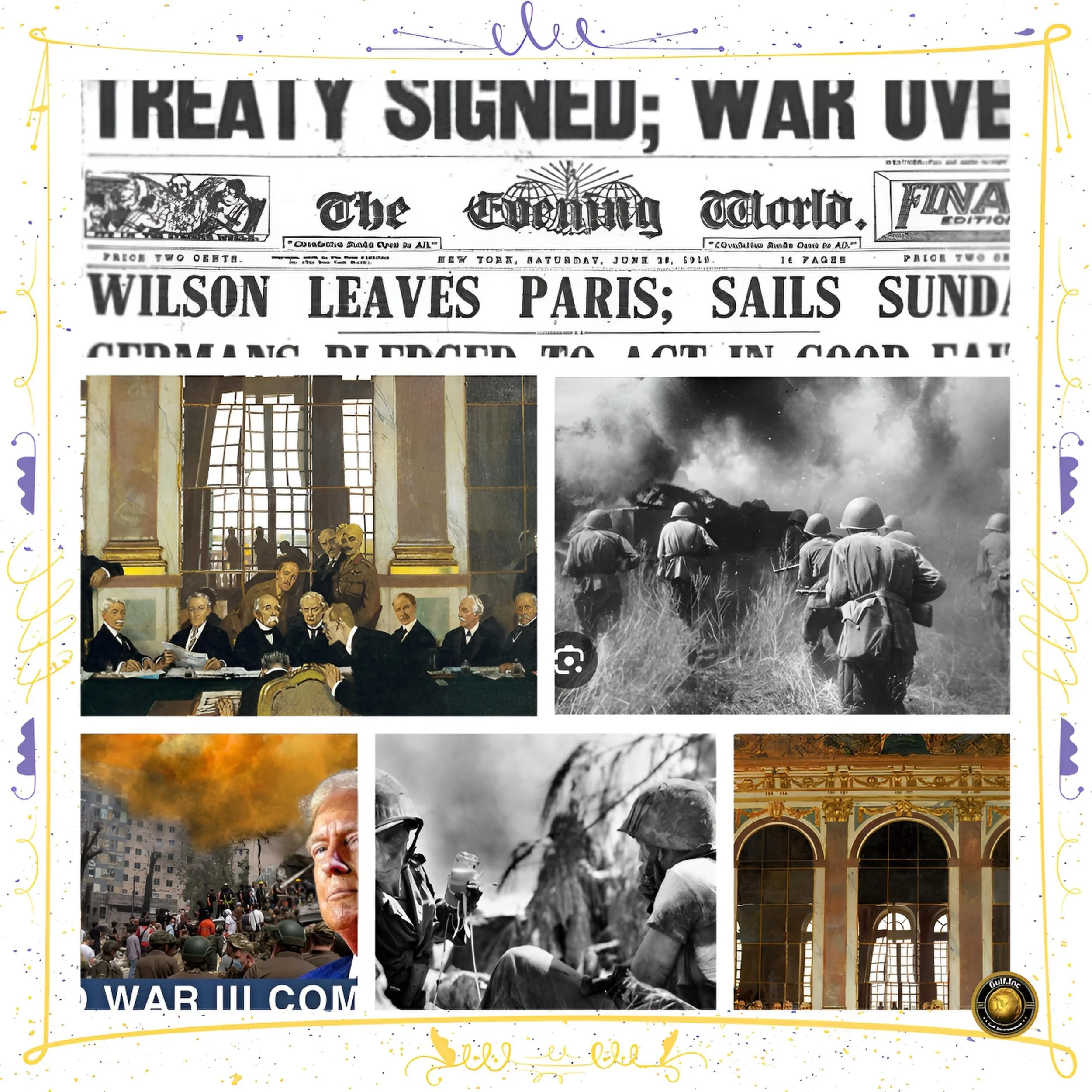
The crisis of July 1914 serves as a stark illustration of how miscommunication and misperception can exacerbate tensions, leading to catastrophic outcomes.
The infamous "Willy-Nicky" telegrams exchanged between Kaiser Wilhelm II of Germany and Tsar Nicholas II of Russia highlight the pitfalls of personal relationships and the perils of inadequate communication channels.
These messages ultimately failed to diffuse rising tensions and instead contributed to the escalation of the crisis, showing how poorly timed and poorly interpreted communications can spiral situations out of control.
Contemporary Geopolitical Parallels and Lessons
The China-US Power Transition
MacMillan’s exploration of the geopolitical landscape of 1914 offers significant insights for comprehending today's most pressing global challenge: the shifting power dynamics between the United States and China.
The transition of power between an established hegemon, represented by the U.S., and a rising challenger, embodied by China, mirrors one of the most precarious scenarios in international relations.
Scholars have drawn striking parallels between the Anglo-German rivalry of the early 20th century and the current competition between the U.S. and China.
However, MacMillan and other analysts caution that certain key differences could reduce the likelihood of direct conflict today, warranting further examination of these historical lessons.
Nuclear Deterrence
One of the most significant factors differentiating today’s geopolitical climate from that of 1914 is the presence of nuclear weapons.
This new reality creates an inherent constraint that was absent in the pre-World War I environment.
The potential for mutual assured destruction acts as a powerful deterrent against escalation, encouraging restraint among nations that would otherwise consider military action.
Economic Interdependence
While economic relationships failed to avert war in 1914, the level of economic interdependence between the United States and China far surpasses anything witnessed in the early 1900s.
However, MacMillan warns that merely having strong economic ties is inadequate to guarantee peace.
The pre-1914 era also featured robust trading relationships, highlighting the complexity and unpredictability of economic factors in international stability.
Learning from History
Unlike the leaders of 1914, contemporary politicians are armed with the historical knowledge of the disastrous consequences stemming from major power wars.
The collective memory of two world wars and the complex realities of the nuclear age encourage a cautious approach to managing international crises, as leaders strive to avoid repeating the catastrophic mistakes of the past.
Contemporary Alliance Systems and Flashpoints
Modern alliance structures, although generally more flexible than those in 1914, still foster precarious commitments that could escalate localized conflicts into broader confrontations.
NATO’s Article 5 commitment, the United States’ security guarantees to Taiwan, and China’s strategic partnerships with Russia and North Korea mirror the alliance dynamics that previously intensified tensions and ultimately led to World War I.
Current flashpoints, including Taiwan, Ukraine, and the South China Sea, represent potential "Sarajevo moments" – critical junctures where localized conflicts could ignite broader power confrontations.
The presence of multiple simultaneous crises may even pose a greater risk than the single Balkan flashpoint that characterized the lead-up to the Great War.
Technology and Modern Warfare
MacMillan emphasizes the transformative impact of technology on warfare, a notion exceedingly relevant in today's context.
Innovations such as cyber warfare, artificial intelligence, hypersonic missiles, and space-based systems introduce new arenas of possible conflict, each capable of escalating rapidly and unpredictably.
Furthermore, the immediacy of modern communication, while potentially beneficial for resolving crises, can also accelerate dangerous dynamics, especially as social media facilitates the spread of nationalist fervor and intensifies public pressure on leaders to adopt hardline stances.
Nationalism in the Digital Age
The advent of social media has revolutionized the manner in which nationalist sentiment proliferates and influences political actions.
Unlike in 1914, when public opinion was filtered through traditional media and elite networks, today’s instantaneous global communication can rapidly amplify tensions, resulting in mounting pressure on leaders to adopt confrontational policies.
Lessons for Contemporary Leaders
MacMillan’s analysis yields several crucial lessons for today’s decision-makers.
The Importance of Leadership Quality
The personal qualities and decision-making capabilities of individual leaders play an enormous role in either preventing or precipitating wars.
The ability to engage in effective diplomacy, demonstrate a willingness to compromise, and maintain composure under pressure can significantly influence the course of international relations.
Accommodating Rising Powers
As the global power landscape shifts, the management of rising powers necessitates careful orchestration by both emerging and established nations.
Such management should involve embracing compromise, recognizing each nation’s legitimate interests, and shunning the zero-sum mentality that dominated pre-World War I European politics.
Flexible Diplomacy Over Rigid Commitments
While alliances continue to be vital for national security, it is essential to cultivate diplomatic flexibility and avoid rigid commitments that could inadvertently entangle nations in unwanted conflicts.
Understanding the Limits of Economic Integration
The phenomenon of economic interdependence indeed fosters a network of stakeholders who are invested in the pursuit of peace.
However, this intricate web of financial ties and mutual benefits is not a foolproof safeguard against conflict, especially when political ambitions and security concerns diverge significantly.
Political leaders must take proactive measures to nurture and sustain peaceful relations, rather than operating under the assumption that robust economic connections will naturally obviate the risk of war.
While trade and investment can create shared interests, they alone cannot bridge the chasm created by conflicting national interests or hostile geopolitical agendas.
Crisis Management and Communication
In today’s rapidly evolving world, the establishment of reliable communication channels between nations has become paramount.
Effective communication strategies are crucial in avoiding misunderstandings and misrepresentations that can lead to escalated tensions.
Leaders must hone their crisis management skills, ensuring they have well-defined protocols for de-escalation and containment during moments of heightened conflict.
The lightning-fast nature of modern communication technologies means that any misstep or miscommunication can quickly spiral into a larger crisis, necessitating an even more acute focus on effective crisis management strategies.
Conclusion
In her comprehensive analysis, Margaret MacMillan reveals that while warfare remains a persistent thread woven into the fabric of human civilization, its interaction with societal elements is intricate and multifaceted.
Her deep dive into the dual nature of war—both as a catalyst for progress and as a harbinger of destruction—fosters a sophisticated understanding that transcends simplistic narratives of either unwavering pacifism or glorification of militarism.
The lessons drawn from the tumultuous year of 1914 offer critical insights that are strikingly pertinent to today’s geopolitical landscape, particularly in the context of US-China relations and the dynamics of alliance management and crisis prevention.
MacMillan adeptly illustrates that the patterns of history do not dictate the future; rather, the choices made by contemporary leaders can be pivotal in shaping the trajectory toward either conflict or enduring peace.
The overarching lesson from MacMillan’s work emphasizes that a complete grasp of warfare necessitates a holistic examination of its contexts—encompassing the social, technological, political, and cultural dimensions that influence both its triggers and ramifications.
In our modern era, where challenges such as great power competition, technological advancements, and global interdependence loom large, this nuanced understanding is invaluable.
As MacMillan poignantly concludes in her seminal book, “The War That Ended Peace,” there are always avenues available for leaders to explore, even amidst the gravest crises.
The true challenge lies in whether today's leaders will possess the imagination, courage, and wisdom that their counterparts tragically lacked back in 1914, thereby steering their nations away from the brink of conflict and towards a more peaceful coexistence.