New York ex-Congressman: George Santos: The Political Scandal That Shook American Democracy
Introduction
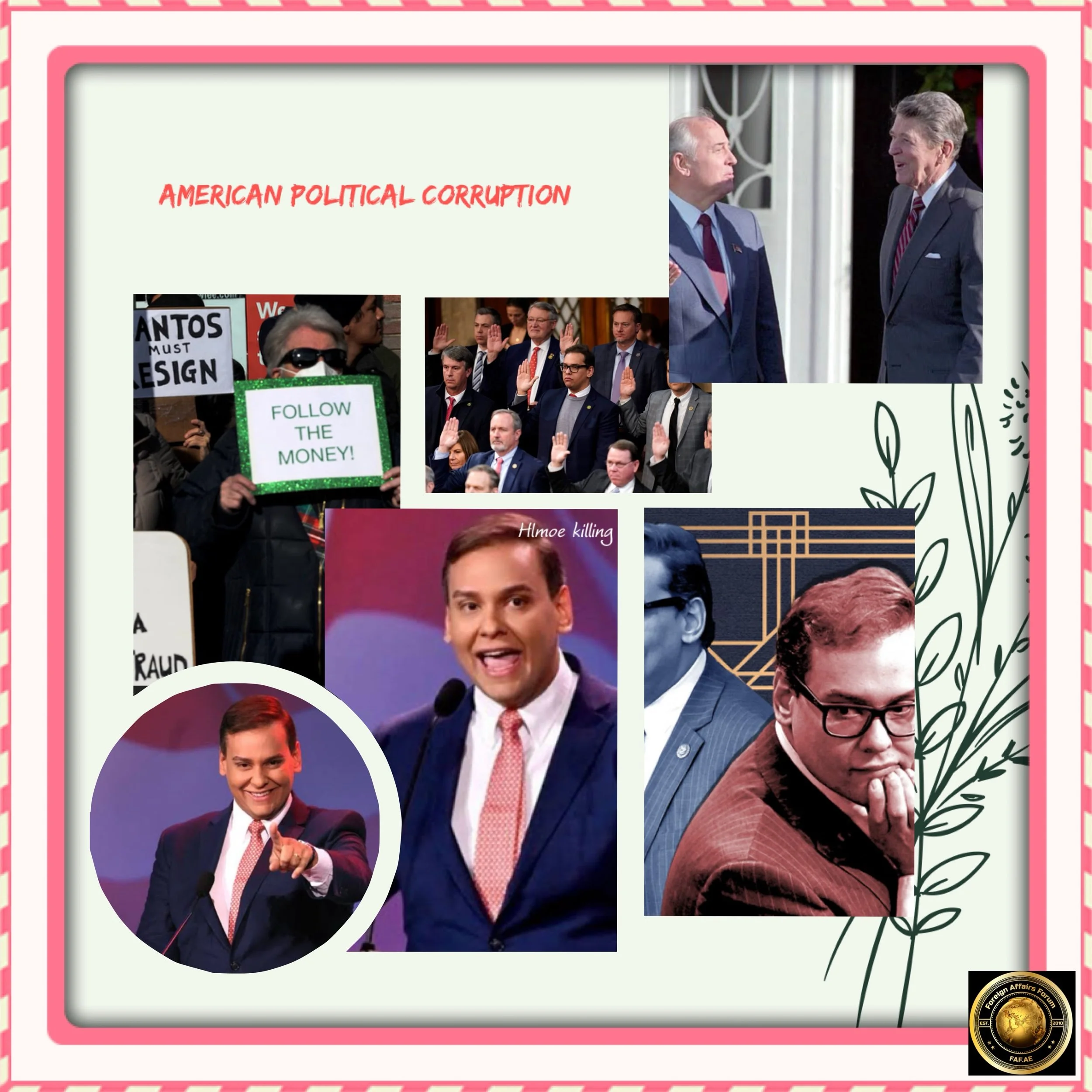
George Santos, the former Congressman from New York, serves as a poignant case study in modern political scandal, fundamentally influencing the dynamics of American democracy.
This scenario underscores critical concerns regarding integrity in political representation and raises pertinent questions regarding the structures of accountability embedded within the political system.
It necessitates a thorough analysis of ethical frameworks and the effectiveness of oversight mechanisms in legislative processes.
Moreover, Santos has become a symbol of deep-seated issues within contemporary American governance, ultimately leading to a seven-year prison sentence for convictions related to fraud and identity theft.
His approaching incarceration, coupled with a contentious final interview with Tucker Carlson, has exposed significant vulnerabilities in the American political framework, encouraging rigorous discourse on the principles of democratic accountability and the safeguarding of electoral integrity.
The Path to Incarceration
Santos is scheduled to report to federal prison on July 25, 2025, to commence an 87-month sentence resulting from convictions for wire fraud and aggravated identity theft.
His charges arise from a sophisticated timeline of financial malpractice that prosecutors argue highlights sustained deceptive practices throughout his political tenure.
The criminal allegations include identity theft of campaign donors, fraudulent acquisition of unemployment benefits, and misrepresentation of his financial disclosures to federal regulators.
In April 2025, U.S. District Judge Joanna Seybert imposed the maximum sentence of 87 months, rejecting Santos's emotional appeal for leniency.
The judge emphasized his demonstrable lack of remorse and his failure to initiate restitution payments, despite earning $360,000 from Cameo video appearances after his congressional expulsion. Santos is also mandated to repay over $373,000 to the victims of his financial crimes.
The Constructed Political Biography
Santos's political career unraveled following investigative journalism by The New York Times in December 2022, revealing extensive fabrication within his biographical narrative during the 2022 congressional campaign.
His misrepresentations included
Educational Background
Santos claimed degrees from Baruch College and New York University, with both institutions lacking any records of his attendance.
Professional Experience
He asserted employment with financial giants such as Goldman Sachs and Citigroup, later clarifying he had “never worked directly” for them.
Ethnic and Religious Identity
Santos presented himself as Jewish, stating his grandparents escaped the Holocaust, which he later retracted, admitting to his Catholic upbringing.
Career Achievements
His resume boasted implausible claims of enhancing company revenues by hundreds of millions of dollars.
Historic Congressional Expulsion
On December 1, 2023, Santos was expelled from the House of Representatives, marking him as only the sixth individual to experience such a consequence and the first Republican subjected to this measure.
The expulsion, which passed with a vote of 311-114—drawing support from 105 Republicans alongside nearly all Democrats—set a pivotal precedent. Notably, Santos was expelled without prior criminal conviction or involvement in the Confederacy.
The removal followed a damning report from the House Ethics Committee, which uncovered “substantial evidence” of Santos's violations of federal statutes and a “complex web of unlawful activity."
The committee articulated that Santos “sought to fraudulently exploit every aspect of his House candidacy for his own personal financial gain.”
Insights from the Final Interview
In his concluding interview with Tucker Carlson, Santos made grave assertions regarding systemic corruption within Congress, including:
Widespread Financial Irregularities
He argued that if legislative members faced accountability for financial misconduct, “we wouldn’t have half a Congress right now.”
Sexual Misconduct
Describing “creepy, sexual degeneracy running rampant in Congress,” he alleged instances of sexual activity in congressional storage areas.
Issues of Alcoholism
Santos claimed that alcohol abuse is pervasive, with several members allegedly relying on sober colleagues to vote in their stead.
Lack of Serious Governance
He characterized Congress as “essentially an overpaid and very expensive high school,” where 95% of activities were focused on “messaging” rather than substantive legislative work.
Concerns for Safety
Santos articulated significant fears regarding his safety during incarceration, indicating, “I don’t know that I’ll survive it. They’re putting me in a violent prison.”
He expressed doubts about his own survival skills and fighting ability, which exacerbate his concerns about the potential hazards associated with confinement in a high-risk facility.
Political Implications for American Democracy
Santos's case underscores several critical issues within American political dynamics.
Crisis of Democratic Accountability
The election of Santos despite his fabrications highlights serious deficiencies in political vetting and opposition research mechanisms, reflecting how easily deceptive narratives can penetrate democratic frameworks.
Setting a Precedent for Expulsion
The precedent established by Santos's expulsion without a preceding conviction may have far-reaching implications for future congressional discipline, raising concerns that it normalizes the removal based on mere allegations.
Erosion of Public Trust
The extent of Santos’s deceit has further eroded public confidence in political institutions, particularly as his fabrications pertain to fundamental aspects of identity and qualifications for public office.
Failures within the Party System
The scandal illuminates systemic failings within the political party apparatus, revealing vulnerabilities in the candidate selection and vetting processes that permit such situations to arise.
The Broader Context
The case of George Santos has emerged against a backdrop of significant political polarization and a measurable decline in public trust towards institutions.
Santos's deceptions went beyond conventional political maneuvering; they entailed a complete fabrication of credentials and identity.
This scandal serves as a case study in how contemporary social media dynamics and the inadequacies within campaign finance frameworks can be leveraged by fraudulent candidates.
Furthermore, the situation accentuates critical questions regarding the robustness of democratic safeguards.
Despite the extensive and deliberate falsehoods propagated by Santos, he successfully secured his election and served nearly a year in Congress before facing repercussions.
The timeline of events revealed systemic vulnerabilities that enable unqualified candidates to ascend to office without sufficient checks.
Conclusion
George Santos, the former U.S. Congressman from New York, is currently confronting a prison term exceeding seven years following his guilty plea in August 2024 on multiple counts including wire fraud, money laundering, theft of public funds, and making false statements.
He faces an aggregation of 23 charges related to these financial transgressions, underscoring the gravity of his misconduct.
Santos's impending incarceration signifies the conclusion of an unsettling chapter in congressional history, yet the ramifications of his case extend beyond individual culpability.
It has ignited discourse on the necessity to enhance candidate vetting protocols, reform campaign finance regulations, and bolster the enforcement of congressional ethics standards.
The precedent established by Santos’s expulsion may shape future congressional misconduct cases, potentially lowering the threshold for removal while simultaneously raising questions regarding due process and the sanctity of electoral sovereignty.
While his insights into congressional culture come from a compromised perspective, they have contributed to a broader public skepticism regarding the integrity of the institution.
The arc of George Santos—from a burgeoning political figure to a convicted felon—serves as a cautionary illustration of the vulnerabilities embedded within American democratic institutions.
His case elucidates the ease with which deception can infiltrate the political sphere and underscores the persistent challenges of ensuring accountability in a polarized climate.
As Santos commences his prison sentence, his legacy stands as a stark reminder of the fundamental necessity for truth and integrity within the framework of democratic governance.