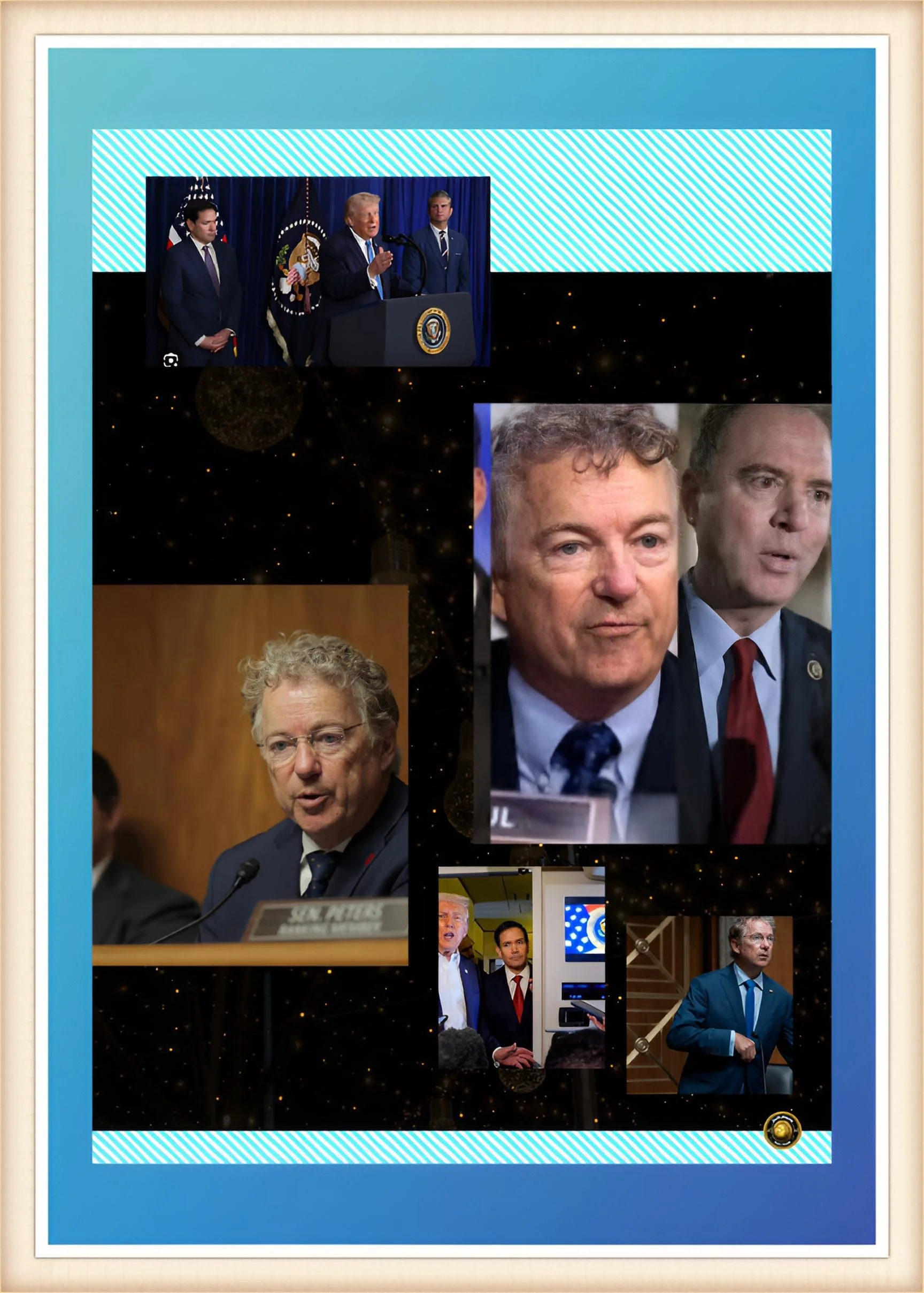
Unconstitutional Seizure: How Trump Shattered War Powers and Gutted Democracy in One Midnight Raid - Part IV
Executive Summary
The Constitution Died in Caracas: Trump’s Venezuela Operation Proves Congress Can No Longer Stop Presidential Wars
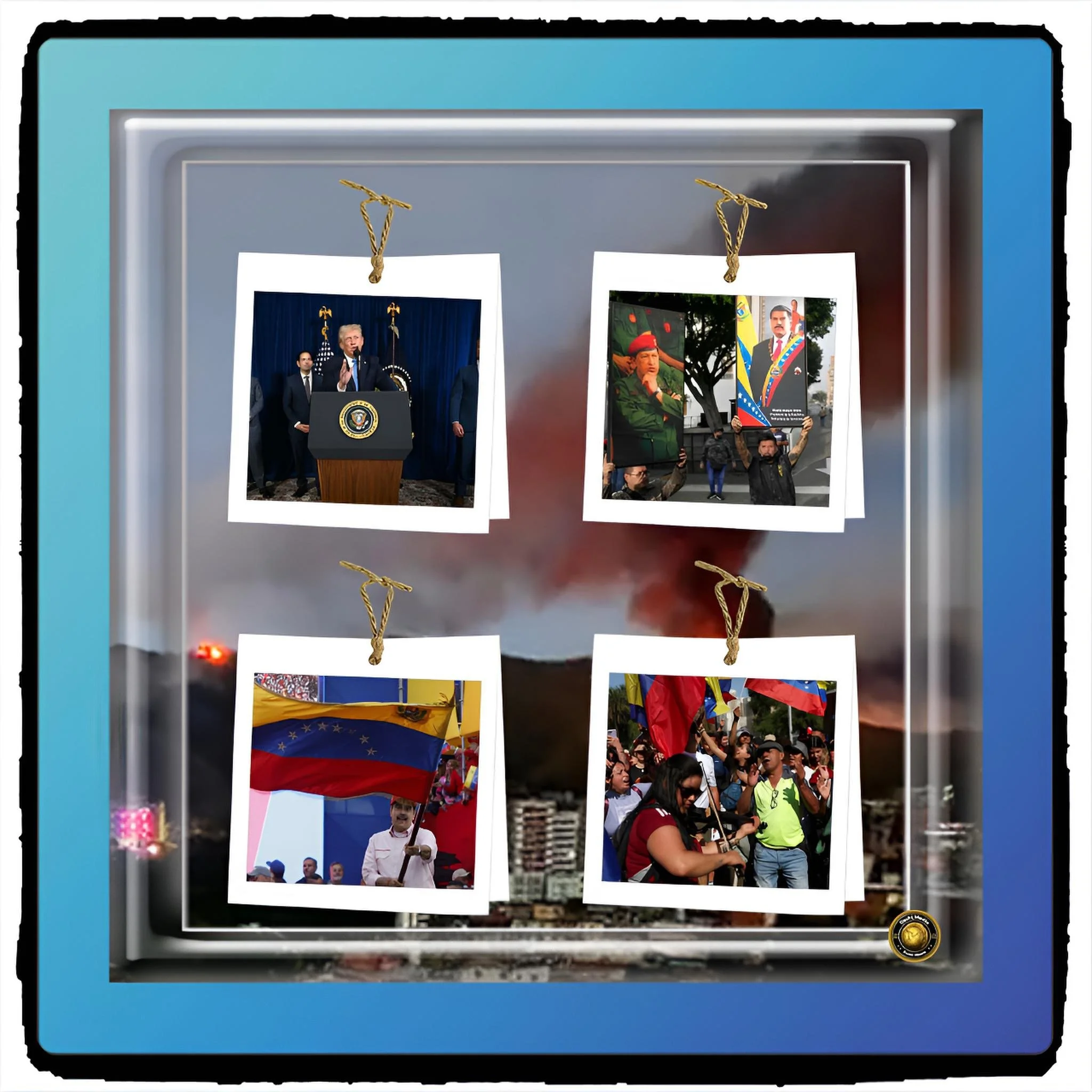
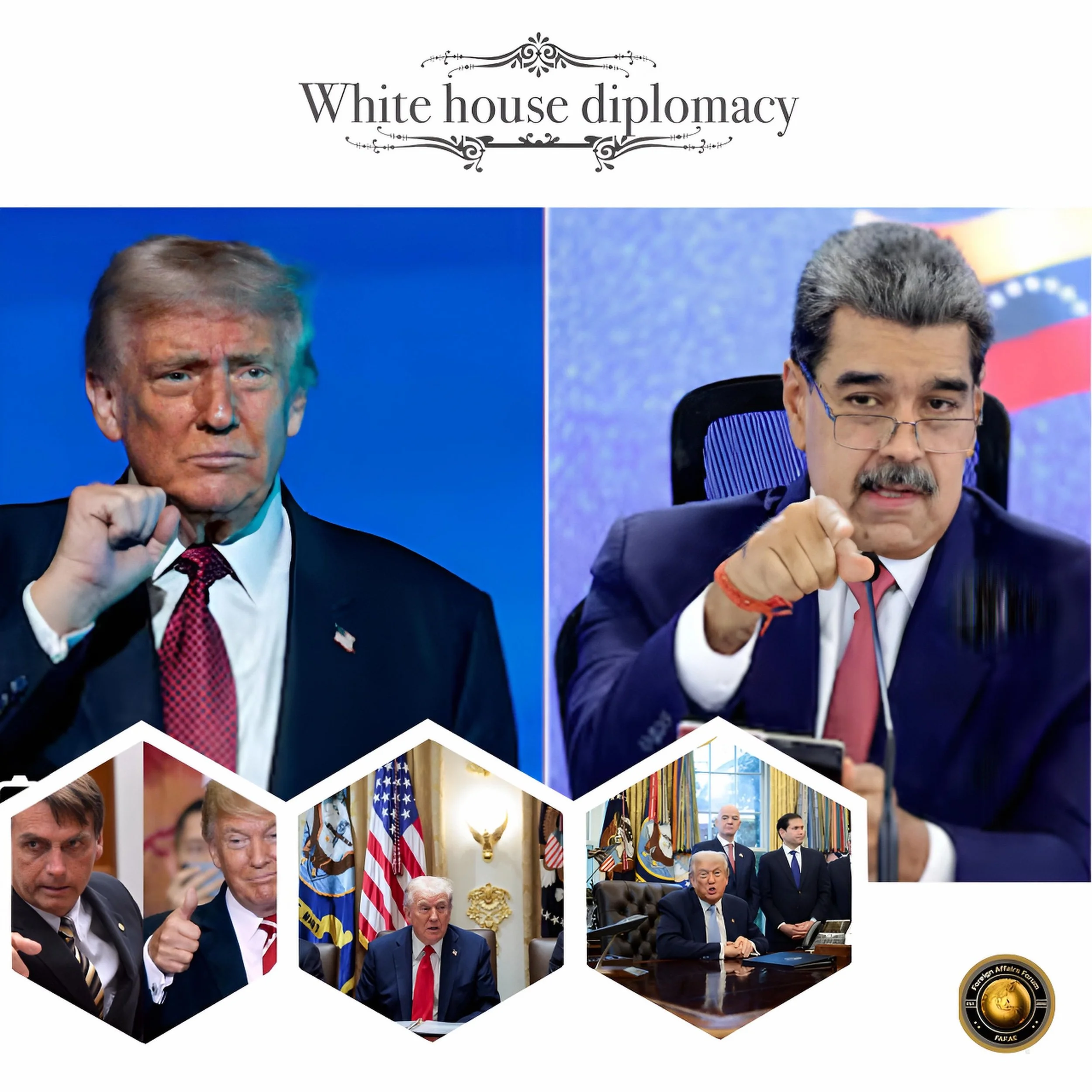
The Trump administration’s January 3, 2026 military operation capturing Nicolás Maduro represents not merely a geopolitical intervention, but a constitutional violation of extraordinary magnitude.
The operation proceeded without congressional authorization, without prior notification to Congress sufficient to permit meaningful debate, and without any imminent threat to American territory or personnel that might invoke presidential emergency powers.
This action fundamentally violates the War Powers Resolution of 1973, breaches the constitutional separation of powers that vests Congress with exclusive authority to declare war, and establishes a precedent of unilateral executive warfare that undermines democratic governance.
The administration explicitly misled Congress in November 2025 when officials privately assured lawmakers that the Trump administration lacked legal authority to conduct ground strikes in Venezuela, yet proceeded with precisely such strikes two months later.
This betrayal of legislative trust, coupled with Trump’s declaration that the United States will “run” Venezuela indefinitely, transforms the operation from a discrete military action into an open-ended military occupation and nation-building enterprise. The constitutional consequences extend far beyond this single operation: the failure of Congress to enforce its war powers through legislation or accountability will establish a precedent permitting future presidents of both parties to wage wars of choice without legislative approval.
The American people, deprived of the opportunity to voice their will through elected representatives, now confront the reality that the constitutional architecture constraining executive power has collapsed.
Introduction: The Anatomy of Constitutional Subversion
Deception and Defiance: How Trump Lied to Congress Then Waged War Anyway—Destroying Fifty Years of War Powers Law
The capture of Maduro exemplifies a methodical process of constitutional erosion that spans months of deliberate deception and escalating military action.
Unlike previous military interventions where the executive branch at least acknowledged the existence of constitutional constraints, the Trump administration has adopted a framework of explicit defiance toward congressional authority. The operation was conducted without congressional notification in advance, without a formal authorization for the use of military force, without a congressional declaration of war, and without evidence of an imminent threat to American lives or territory that might constitute a valid emergency justification under the War Powers Resolution.
The administration’s post-hoc justifications—that the operation was a law enforcement action to arrest a fugitive facing criminal charges—collapse upon examination of Trump’s subsequent statements that the United States will “run” Venezuela, that American oil companies will invest billions in reconstruction, and that the military remains prepared to conduct “much larger” operations if deemed necessary.
What distinguishes this moment from previous assertions of executive power is the transparently political calculation embedded within the decision-making process. The administration explicitly avoided seeking congressional authorization despite the opportunity to do so. Secretary of State Marco Rubio defended the silence by stating that notifying Congress could have “jeopardized” the mission, a formulation that treats the Constitution and federal law as obstacles to be circumvented rather than legal constraints to be honored.
The consequences of this constitutional breach extend beyond the immediate operation in Venezuela to the fundamental question of whether the Constitution’s war powers provisions retain any meaningful force.
Historical Context: The Pattern of Congressional Deception and Escalating Military Action
The Pattern of Betrayal: How Trump Assured Congress Land Strikes Were Illegal, Then Did Exactly That
The operational sequence leading to Maduro’s capture reflects a deliberate pattern of congressional deception spanning months. In November 2025, White House Chief of Staff Susie Wiles explicitly told Vanity Fair that ground strikes in Venezuela would require congressional approval. She stated that if Trump “were to authorize some activity on, then’s war then (we’d need) Congress.”
Simultaneously, Trump administration officials provided the same assurance to members of Congress in private briefings, informing lawmakers that the administration lacked legal authority to authorize land-based strikes against Venezuela. These statements were not made in ambiguity or error—they represented a deliberate communication to Congress designed to disarm legislative concern about executive overreach.
Yet simultaneously, the Trump administration was undertaking a comprehensive military mobilization suggesting that the stated constitutional constraints were merely rhetorical.
Throughout August through December 2025, the administration deployed the USS Gerald R. Ford aircraft carrier strike group with over four thousand naval and marine personnel, positioned F-35 fighter jets in Puerto Rico, and authorized more than twenty-seven military strikes against alleged drug-smuggling vessels in the Caribbean, resulting in nearly one hundred deaths.
In September 2025, the administration conducted what UN experts characterized as extrajudicial executions when U.S. naval forces executed a double-tap strike killing survivors of an earlier attack. These casualties and the escalating military posture conveyed that regime-change operations were imminent, contradicting the November assurances to Congress that land strikes were constitutionally impermissible.
The legislative response to these escalations reveals the institutional weakness that enabled the final constitutional violation. In October 2025, Senator Tim Kaine, a member of the Senate Armed Services and Foreign Relations committees, co-sponsored a bipartisan War Powers resolution explicitly preventing military intervention in Venezuela without congressional approval.
The resolution was narrowly defeated in a Senate vote, with only two Republicans—Senator Rand Paul of Kentucky and Senator Lisa Murkowski of Alaska—supporting the measure. The Republican majority, despite serious constitutional concerns articulated by some members, fell into line behind the Trump administration’s assurances that regime-change operations were not contemplated.
In November 2025, a companion resolution in the House sponsored by Representative Jim McGovern garnered similar bipartisan support, including votes from three Republicans, yet was defeated 213-211 in a vote that reflected the razor-thin support the administration could command even among Republicans. The voting revealed a GOP caucus substantially fractured on the question of constitutional war powers, yet ultimately deferring to Trump’s authority.
Most tellingly, Republican leaders provided lawmakers with additional private assurances that regime-change operations were beyond the Trump administration’s legal authority, assurances that would be revealed as fundamentally false within weeks of their utterance.
This pattern—deliberate misleading of Congress regarding constitutional authority, escalating military operations that contradicted stated limitations, and legislative defeat of constitutional constraints through manipulation of party loyalty—established the political conditions permitting January 3’s constitutional violation. Congress had been systematically deceived about the administration’s actual intentions and was prevented by partisan loyalty from exercising its constitutional authority.
Current Status and Key Developments: The Immediate Constitutional Crisis
The Constitutional Crisis Nobody Expected: Congress Scrambles as Trump Claims Power to Govern Foreign Nations
As of January 3, 2026, the constitutional breach is undeniable and the legislative response remains unclear. Maduro and his wife are in U.S. custody pending trial in the Southern District of New York. Trump’s explicit declaration that the United States will “run” Venezuela until a “proper” and “safe” transition occurs transforms this from a discrete military operation into an indefinite military occupation and nation-building enterprise.
Trump made clear that American personnel will govern Venezuela, that the military remains prepared for additional and larger operations, and that the objective encompasses not merely Maduro’s removal but the reconstitution of Venezuela’s governance in alignment with American strategic and economic interests.
Senator Tim Kaine announced immediately upon the operation’s completion that the Senate will vote the following week on a bipartisan War Powers resolution.
The resolution, prepared in advance of the January 3 operation and previously defeated in November, would require congressional approval for any additional military actions against Venezuela. If enacted retroactively, it would establish that the January 3 operation violated the War Powers Resolution and would prevent repetition without explicit congressional authorization.
Yet the political calculation facing Congress is profoundly uncertain. Republicans who voted against previous war powers measures now face a choice: vote to retroactively prohibit an operation their party’s president has already executed, or abstain and permit the establishment of precedent that future military interventions need not obtain congressional authorization.
Some moderate Republicans, particularly those in competitive districts or states, may recognize that voting against Trump on this measure entails substantial political cost within the party caucus. Democratic lawmakers have issued forceful statements condemning the operation as unconstitutional, yet lack the Republican votes to pass any measure through both chambers.
Latest Facts and Immediate Concerns: The Legal Jeopardy and Constitutional Implications
The Legal House of Cards: Why Trump’s ‘Criminal Extradition’ Defence Is Laughable Under Constitutional Scrutiny
The constitutional violations embedded within the January 3 operation are multitudinous and unambiguous. The War Powers Resolution of 1973, enacted in direct response to executive overreach in Vietnam, requires that the president notify Congress within forty-eight hours of committing armed forces to combat and obtain congressional approval or withdraw the forces within sixty days.
Trump did not notify Congress in advance, did not notify Congress within forty-eight hours of the operation, and did not request congressional authorization. The administration’s post-hoc notification occurred only after the operation was complete, rendering Congress unable to exercise any role in the decision-making process.
The War Powers Resolution provides narrow exceptions permitting unilateral presidential action without congressional approval: action in response to an imminent threat against American lives or territory or to protect American personnel already deployed abroad. The Trump administration has not articulated any such imminent threat.
Maduro’s government posed no military threat to the United States. No American citizens were under imminent threat. The purported criminal charges against Maduro constitute law enforcement concerns, not national security emergencies justifying military action without legislative approval.
The Trump administration’s argument that Maduro’s indictment on narco-terrorism charges provides constitutional justification for military capture and detention collapses upon examination.
First, the indictment does not constitute a legal basis for military operations—it provides grounds for extradition through established international legal processes.
Second, no nation permits unilateral military capture of heads of state based on criminal indictments; to do so would establish that any nation could militarily seize the leaders of other nations if those leaders faced charges in the capturing nation’s courts.
Third, Trump’s subsequent statements about running Venezuela, deploying American personnel to govern the country, and ensuring that American oil companies gain access to Venezuelan petroleum reserves reveal that the criminal indictment was merely a pretext for regime-change operations that the administration had previously assured Congress were beyond its constitutional authority.
Vice President J.D. Vance defended the operation on social media by stating that Maduro “has multiple indictments in the United States for narco-terrorism. You don’t get to avoid justice for drug trafficking in the United States because you live in a palace in Caracas.”
This formulation reveals the constitutional inversion at the operation’s core: the assertion that American domestic criminal law extends extraterritorially with military enforceability, and that the executive branch may deploy armed forces to apprehend foreign nationals anywhere on the globe without congressional authorization.
This doctrine, if accepted, would render the War Powers Resolution entirely meaningless and vest in the president the power to declare and wage wars unilaterally.
House Democratic Leader Hakeem Jeffries stated that the Trump administration “has not sought congressional authorization for military action and failed to adequately inform Congress prior to the operation in Venezuela.” He emphasized that the Constitution vests Congress with exclusive authority to declare war, a power that cannot be delegated, contracted away, or surrendered through presidential assertion of emergency authority.
Congressman Jim McGovern characterized the operation as “unjustified and illegal,” emphasizing that Maduro’s illegitimacy does not justify military action violating the Constitution.
The broader concern articulated by constitutional scholars and legislators is that the failure to enforce congressional war powers through legislative action or accountability will establish precedent permitting future military interventions without meaningful congressional constraint.
If Trump can conduct military operations to remove a foreign head of state without congressional authorization, what prevents future presidents from conducting similar operations against other governments deemed hostile to American interests?
The precedent extends beyond Latin America to hypothetical operations against Iran, Syria, North Korea, or other nations where the executive might assert that criminal indictments or humanitarian crises justify unilateral military intervention.
Cause-and-Effect Analysis: The Cascade of Constitutional and Democratic Consequences
Democracy Broken: How One Military Operation Destroyed Congressional War Powers Forever
The January 3 operation initiates multiple cascades of consequence for American democracy, constitutional governance, and the future of legislative authority.
For American Constitutional Democracy: The Collapse of Institutional Constraints on Executive Power
The operation demonstrates that congressional efforts to constrain executive military action through legislation can be rendered ineffectual by presidential assertion of superior authority. The War Powers Resolution, enacted fifty-three years earlier to prevent precisely the type of unilateral executive warfare exemplified by Vietnam, has been violated without consequence.
The administration acknowledged that it possessed the authority to comply with the War Powers Resolution—it informed leadership of the Senate and House intelligence committees after the operation commenced, demonstrating that notification was operationally feasible. Yet it chose not to provide advance notification, treating the constitutional requirement as optional.
The political calculation underlying this choice is transparent: the Trump administration believes that the political cost of proceeding without congressional approval is lower than the political cost of seeking authorization and potentially facing public debate about the operation’s merits.
This calculation reflects the degradation of institutional norms and the polarization of American politics along partisan lines. Congressional Republicans, despite serious constitutional concerns articulated by some members, voted against measures constraining executive power when those measures conflicted with party loyalty.
Democratic efforts to enforce constitutional war powers became partisan rather than institutional, further eroding the non-partisan consensus regarding constitutional governance.
The failure to enforce congressional war powers through legislative action or accountability will establish precedent for future presidents. If Trump faces no meaningful consequences for violating the War Powers Resolution—if Congress does not pass retroactive prohibitions, does not impeach, does not withhold appropriations for Venezuelan operations—then future presidents will recognize that congressional war powers constraints are ultimately unenforceable through political channels.
The constitutional architecture limiting presidential power to wage war without legislative approval will have been revealed as resting entirely on presidential self-restraint and respect for institutional norms.
Senator Adam Schiff stated that Trump’s action constitutes a “brazen illegal escalation” and that “acting without Congressional approval or the buy-in of the public, Trump risks plunging a hemisphere into chaos and has broken his promise to end wars instead of starting them.” The invocation of Trump’s campaign promise to “end wars, not start wars” highlights the particular hypocrisy embedded within the operation.
Trump campaigned as the candidate who would terminate America’s expensive and unsuccessful nation-building enterprises in Iraq and Afghanistan, yet his first major military action involves precisely such nation-building: the indefinite military occupation of Venezuela and the governance of its internal affairs.
For the Republican Party and Congressional Leadership: The Normalization of Constitutional Violation
The Party Over Constitution: How Republicans Sacrificed War Powers to Trump’s Loyalty Machine
The bipartisan nature of earlier War Powers resolutions suggests that concern about executive overreach transcends partisan boundaries. Yet the ultimate failure of these measures reflects the Trump administration’s ability to command Republican loyalty through party mechanisms despite serious constitutional concerns.
Republican members who voted against war powers measures faced the implicit threat that opposition to Trump would result in primary challenges, loss of committee assignments, and marginalization within the GOP caucus.
The administration’s explicit misstatement to Congress regarding its legal authority—assurances that land strikes were unconstitutional, followed two months later by precisely such strikes—suggests that misleading Congress about constitutional authority has become normative within the Trump administration.
Senator Rand Paul, a constitutional libertarian who historically opposed executive assertion of undeclared war powers, voted in favor of the November war powers resolution. Yet most Republicans, despite recognizing the constitutional problem, voted to sustain the Trump administration’s authority.
This pattern suggests that institutional loyalty to the party and the president has superseded commitment to constitutional governance. Future Republican administrations will recognize that Congress can be prevented from enforcing constitutional constraints through partisan polarization and party discipline.
For International Law and American Credibility: The Destruction of Constraints on Unilateral Military Action
America’s Credibility Collapse: How Violating Our Own Laws Destroyed Our Authority to Judge Other Nations
The operation not merely violates the American Constitution; it simultaneously violates the UN Charter prohibition on the threat or use of force against the territorial integrity or political independence of any state. The administration has not argued that Venezuela posed an imminent military threat justifying self-defense. The operation therefore lacks any basis in international law and constitutes a violation of foundational principles of the post-1945 international system.
The consequential damage to American credibility lies not in the military operation’s tactics or success, but in the explicit assertion that the United States will not be constrained by international law or multilateral institutions when unilateral military action serves American strategic interests.
The Trump administration’s explicit invocation of a revived Monroe Doctrine signals that the United States will reassert hemispheric hegemony through military power unconstrained by international legal frameworks or respect for the sovereignty of other nations. This positioning undermines American diplomatic efforts to constrain military action by China, Russia, or other powers.
If the United States violates the UN Charter by military seizure of a foreign head of state, China’s invasion of Taiwan or Russia’s continued military action in Ukraine become juridically equivalent violations that cannot be condemned on grounds of international law. The operation therefore has consequences extending far beyond Venezuela to the foundation of legal constraints on great power behavior.
For American Democracy and Popular Sovereignty: The Deprivation of the People’s Voice in War Powers
The most profound consequence of the operation lies in the deprivation of the American people’s voice in decisions regarding military action. The Framers of the Constitution vested Congress with exclusive authority to declare war precisely because war is the gravest decision any government can make.
Military action brings death to American service members and foreign civilians, diverts national resources from domestic needs, and commits the nation to objectives that may prove unattainable or counterproductive. The Constitution’s requirement that Congress declare war ensures that the decision is made by representatives elected by the people and responsive to their will.
Trump’s operation in Venezuela proceeds without this constitutionally mandated process. Opinion polling suggests substantial American opposition to the military intervention—majorities of Americans across the political spectrum express concern that the operation will entangle the United States in another costly foreign conflict resembling Iraq or Afghanistan.
Yet the American people have been deprived of the opportunity to express their will through their elected representatives. The operation proceeded through presidential fiat, not popular consent.
Senator Chris Van Hollen stated that the operation aimed to “grab Venezuela’s oil for Trump’s billionaire buddies,” characterizing the operation as fundamentally corrupt and designed to enrich corporate interests at the expense of American service members and taxpayers.
The assertion that economic interests drive military intervention—that Trump administration officials with corporate ties seek to secure Venezuelan oil reserves for American energy companies—reflects legitimate concern that the operation serves private rather than public interests. The Constitution’s requirement for congressional authorization serves partly to prevent precisely such corruption of national security decision-making by private interests.
Future Steps: The Political Struggle Over Congressional War Powers and Accountability
The Last Chance for Congress: Can War Powers Resolution Block Trump’s Venezuela Occupation, or Is It Too Late?
The immediate future will be contested between those seeking to enforce congressional war powers and those defending the Trump administration’s operational success. Senator Kaine’s bipartisan war powers resolution will be voted upon when the Senate reconvenes the following week.
The resolution will face the fundamental challenge that Trump has already executed the operation it seeks to prevent. A retroactive prohibition would constitute a political rebuke to the president and would establish that Congress views the operation as unconstitutional. Yet passing such a resolution requires either Republican votes or Democratic control of the Senate and House—political conditions not currently in place.
More likely, the Senate will pass a narrow resolution preventing future military action in Venezuela without congressional authorization, while permitting the Trump administration to claim that its January 3 operation was a justified law enforcement action rather than regime change.
This outcome would establish that Congress has reasserted some authority over future military operations, yet would fail to hold the administration accountable for the constitutional violation already committed.
The longer-term question concerns whether Congress will enforce its war powers through the appropriations process. Indefinite American military occupation and governance of Venezuela will require sustained appropriations from Congress.
Democrats could threaten to withhold appropriations unless Trump submits to congressional oversight and obtains formal authorization for ongoing military operations. Such a confrontation would force Republicans to choose between supporting Trump or supporting continued funding for military operations.
The outcome would depend on whether sufficient Republicans recognize that indefinite military occupation of Venezuela serves neither American interests nor their party’s electoral prospects.
Impeachment remains theoretically available, though politically improbable. House Democratic leadership has not called for impeachment proceedings based on the Venezuela operation, suggesting that Democrats view the political cost of impeachment as exceeding the likelihood of securing the two-thirds Senate majority required for conviction and removal.
The constitutional violation, however profound, appears unlikely to generate sufficient political will for impeachment in the near term.
Conclusion: The Degradation of Constitutional Democracy and the Future of Presidential Power
The End of Constitutional Democracy: What Happens When Presidents Can Wage Unlimited Wars Without Congressional Permission
The capture of Nicolás Maduro represents a constitutional rupture of the first magnitude. The operation proceeded without congressional authorization, without advance congressional notification sufficient to permit meaningful debate, and without any imminent threat justifying unilateral presidential action under the War Powers Resolution.
The administration explicitly misled Congress regarding its constitutional authority months before executing the operation, then proceeded without legislative approval.
Trump’s subsequent statements about running Venezuela, deploying American personnel, and ensuring corporate investment reveal that the operation constitutes regime change and nation-building, not law enforcement.
The consequences extend far beyond Venezuela to the fundamental question of whether Congress possesses meaningful authority to constrain presidential war powers. If the operation proceeds without significant political cost to the Trump administration—if Congress does not pass retroactive prohibitions, does not impeach, does not withhold appropriations—then the precedent will be established that presidents can wage wars without congressional authorization, provided they command sufficient party loyalty to prevent legislative action.
The War Powers Resolution, enacted to prevent precisely such unilateral executive action, will have been rendered meaningless.
For American democracy, this represents a profound degradation of popular sovereignty. The American people have been deprived of the opportunity to express their will regarding military action in Venezuela through their elected representatives.
The decision to risk American lives, deploy military resources, and commit the nation to an indefinite military occupation in South America was made through presidential fiat, not popular consent. This violation of constitutional democracy extends beyond Trump to the institutional capacity of any future administration to wage unilateral wars without legislative or popular authorization.
The operation also signals to the American people that the constitutional constraints that might have limited executive power have become merely rhetorical. If Trump can ignore congressional war powers and face no meaningful consequences, why should any citizen expect that other constitutional constraints on executive authority remain enforceable?
The corrosion of constitutional governance that began with earlier violations of executive authority has now reached the war powers provision itself, the most fundamental constraint the Framers placed on presidential power.
Congress must pass the Kaine bipartisan war powers resolution and must enforce its war powers through appropriations and accountability measures.
The future of American constitutional democracy depends on whether Congress recognizes that executive assertion of unilateral war powers constitutes an existential threat to legislative authority and popular sovereignty. The capture of Maduro may be a geopolitical victory for Trump, but it is a constitutional catastrophe for American democracy.