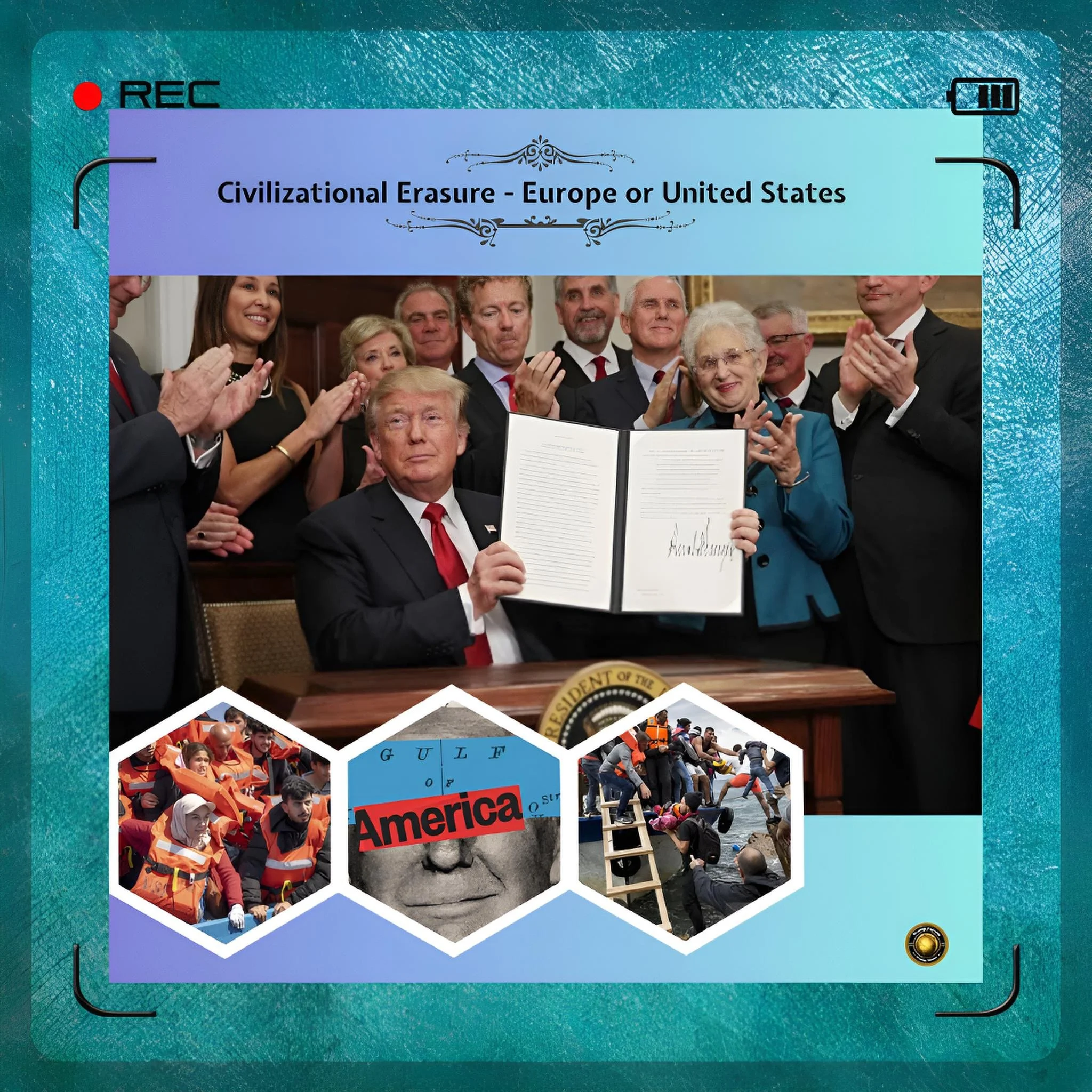
The Real Civilizational Erasure Is Happening in America: Trump's Expansion of Executive Power Undermines the West's Core Achievement
Executive Summary
The Trump administration's systematic expansion of executive power and systematic erosion of institutional constraints on the presidency represent the actual threat to Western civilization.
The defining characteristic of the West is not ethnic identity, religious solidarity, or tribal kinship—features shared by most human societies throughout history.
Instead, the West's unprecedented and nearly unique achievement has been the gradual, painstaking construction of limits on governmental power.
From Magna Carta in 1215, through the English Bill of Rights, the American Constitution, and the separation of powers doctrine, the West has built an institutional architecture designed to prevent the concentration of authority in any single actor or institution. This architecture is now under systematic assault.
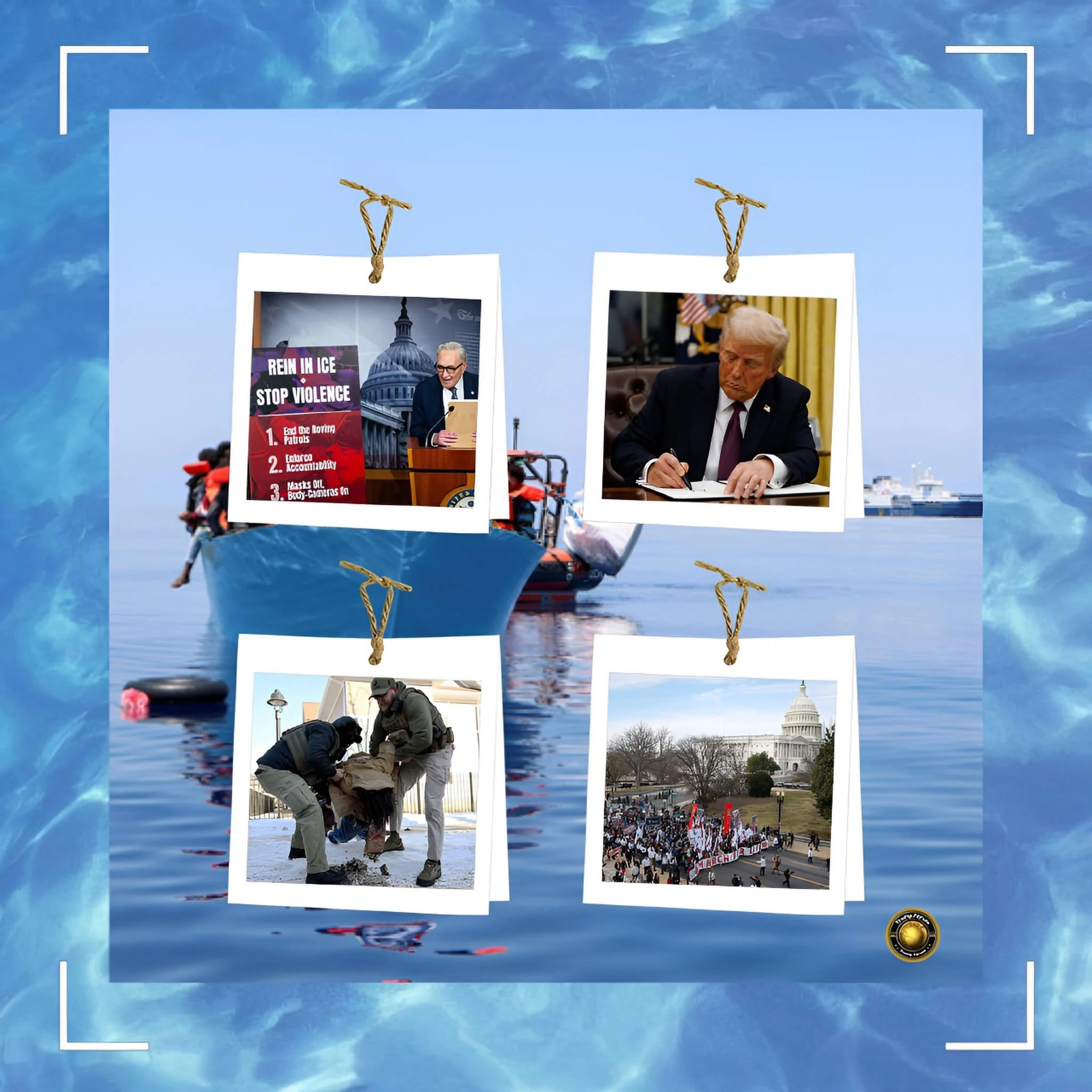
The Trump administration has expanded executive power to unprecedented degrees through a combination of executive orders issued at historic rates, withholding of congressionally appropriated funds, direct violations of federal court orders, politicization of the federal law enforcement and justice systems, removal of inspectors general and institutional checks on executive authority, and deployment of executive power into domains traditionally reserved for Congress, the courts, and civil society.
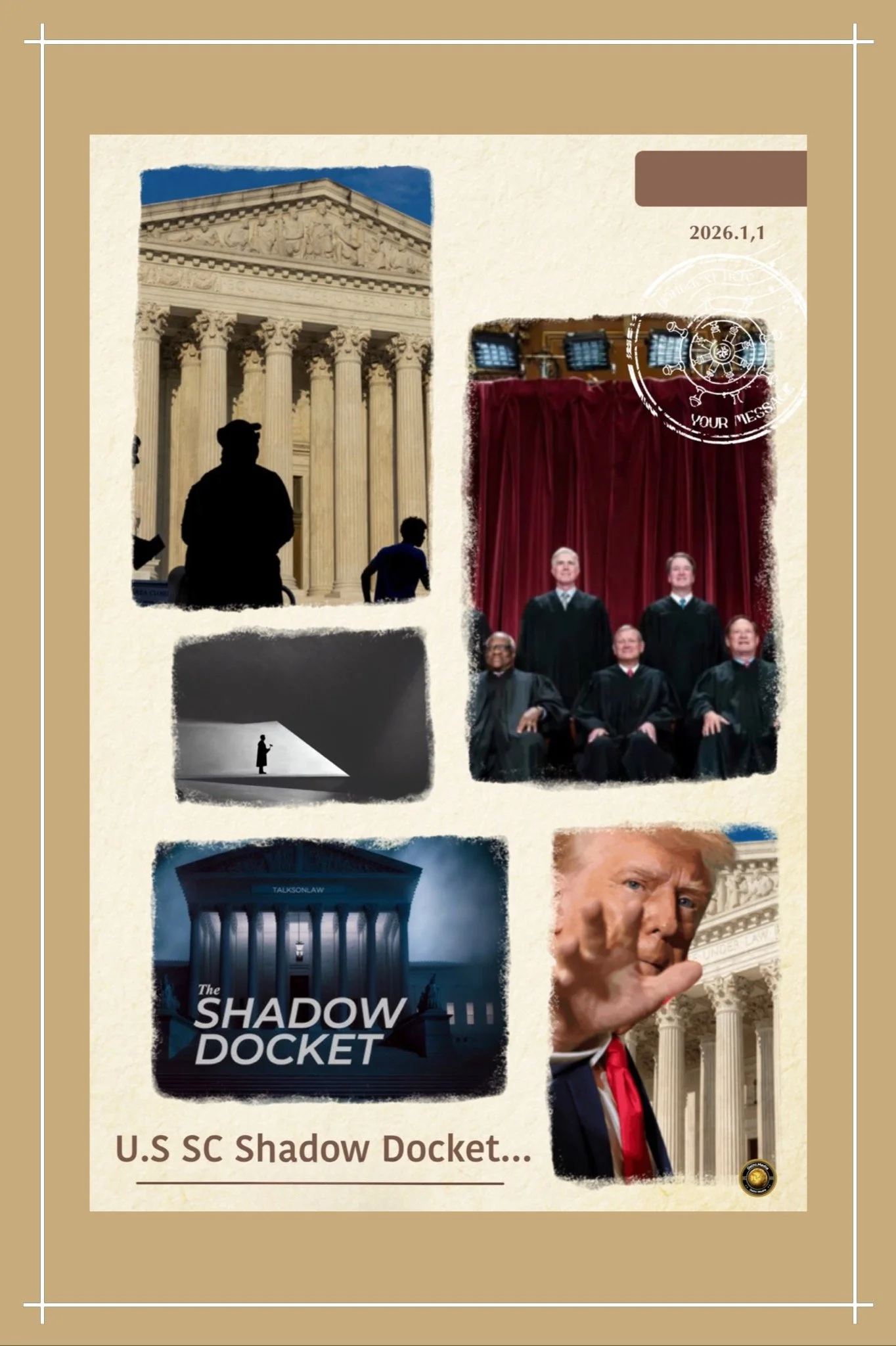
The Supreme Court has tacitly enabled this expansion through its Trump v. United States decision, which granted presidents absolute immunity for acts within their "core constitutional authority" while providing only murky guidance regarding what conduct falls within this expansive category.
The historical irony is profound: proponents of Trump's governance model claim to be defending Western civilization against alleged threats from immigration and cultural pluralism. Yet the actual threat to Western civilization emanates from the executive branch's systematic dismantling of the institutional constraints that constitute the West's defining legacy.
The absolute civilizational erasure is not occurring in Europe's demographic transitions or cultural debates; it is happening through the normalization of executive power unaccountable to law, to Congress, or to the courts.
Introduction
The Architecture of Limited Government
The Western political tradition, understood in its most profound sense, is not defined by ethnicity, religion, or cultural identity. Instead, it is determined by a distinctive institutional solution to the perennial problem of governmental power: how to prevent concentrated authority from becoming tyrannical.
The Framers of the American Constitution were not naive; they recognized that power, unconstrained by law and institutional checks, tends toward abuse. They therefore created a system in which no branch of government—executive, legislative, or judicial—could exercise sovereign authority unilaterally. Each branch possessed powers adequate to resist encroachment by the others.
This architecture emerged from centuries of English and European constitutionalist thought. The Magna Carta in 1215 established the revolutionary principle that even the king was not above the law; he was bound by the rights that he had formally recognized.
The English Bill of Rights of 1689 further elaborated the principle that legislative power superseded executive power in matters of taxation and appropriation. Montesquieu's Spirit of the Laws theorized the separation of powers as a mechanism for preserving liberty against executive tyranny.
The American Constitution embodied these principles in institutional form, creating a system in which the executive could not spend money without congressional appropriation, could not wage war without congressional authorization, and could be impeached and removed from office by Congress if he violated the Constitution or the laws.
This architecture has sustained American democracy for 235 years. It has survived economic crises, civil wars, international conflicts, and political polarization. Its resilience has depended fundamentally on the willingness of political actors to respect informal norms and constitutional limits even when defying those limits might advance short-term political interests.
Presidents have generally refrained from ignoring court orders, from spending money Congress has not appropriated, or from deploying military forces without authorization. Congress has usually resisted granting presidents blank checks to wage war or appropriate funds at their discretion.
History and Current Status
The Gradual Erosion and Acceleration
The erosion of institutional constraints on executive power has proceeded gradually over decades, but the Trump administration has dramatically accelerated it. During the Cold War, presidents claimed emergency powers to wage nuclear deterrence and to conduct covert intelligence operations.
In the post-Cold War era, successive administrations expanded presidential power over commerce, immigration, and military operations. Presidents issued executive orders with increasing frequency and scope, reshaping federal policy without Congressional action.
However, the Trump administration has crossed qualitatively new thresholds in its disregard for institutional limits. A 1-year review by the Center for Strategic and International Studies (CSIS) documented that Trump has issued executive orders at a rate exceeding Franklin D. Roosevelt during the Great Depression and World War II, historically the era of maximum presidential emergency power.
More significantly, Trump has fundamentally repudiated the norms of presidential deference to law and institutional constraints.
In 2025-2026, the Trump administration systematically withheld approximately $3 trillion in congressionally appropriated federal funding to federal agencies and states, effectively rewriting federal spending law through executive fiat.
This violated the Impoundment Control Act of 1974, legislation explicitly enacted to prevent presidents from refusing to spend funds Congress had authorized. When federal courts issued orders directing the Trump administration to restore funding and comply with appropriations law, the administration initially refused, forcing additional judicial intervention.
The administration also deployed federal law enforcement against journalists and political opponents in ways that transformed the Department of Justice into an instrument of executive political preference. Federal prosecutors who had investigated Trump or whom Trump viewed as insufficiently loyal were fired or forced to resign.
The Justice Department's internal accountability mechanisms—the Office of Legal Counsel, the Public Integrity Section—were marginalized in favor of loyalist prosecutors who understood their role as advancing Trump's political agenda.
Prosecutions of Trump opponents were initiated while prosecutions of Trump supporters were terminated. The message was unmistakable: the Department of Justice was no longer an independent institution committed to equal justice under law, but rather a political weapon deployed for executive advantage.
The administration also removed inspectors general—the internal watchdogs tasked with preventing corruption and malfeasance within federal agencies—either through direct termination or through reorganization that eliminated their independence.
By removing institutional actors with statutory responsibility to identify governmental abuses, the administration eliminated internal constraints on executive overreach. Federal agencies lost the ability to conduct independent investigations into corruption or waste.
Key Developments
Institutional Constraints Collapse
Several key developments have crystallized the erosion of institutional constraints.
First, Congress has acquiesced mainly to executive expansion. The Republican-controlled Congress, rather than reasserting its constitutional authority over appropriations and war powers, has generally enabled Trump's expansion of executive power.
Some Republicans have explicitly stated that Congress has already relinquished so much power to the executive that reasserting it would be difficult. This abdication of Congressional responsibility has fundamentally shifted the balance of power toward the executive.
Second, the Supreme Court's Trump v. United States decision in July 2024 provided a constitutional endorsement of expanded executive power.
The Court held that presidents enjoy absolute immunity from criminal prosecution for acts within their "core constitutional authority" and at least presumptive immunity for official acts within the "outer perimeter" of presidential responsibility. Critically, the Court provided minimal guidance regarding what conduct falls within these categories.
The majority held that a president's discussions with the Justice Department regarding prosecutions fall within the sphere of absolute immunity—meaning a president cannot be prosecuted for attempting to direct law enforcement to prosecute political opponents. This holding dramatically expands the president's power to weaponize law enforcement while immunizing him from prosecution.
Third, the administration has openly violated federal court orders without consequence. In approximately 33% of cases in which courts have issued orders against the Trump administration, the administration has either violated the order, delayed its implementation, provided false information to the court, or worked around it.
When confronted with judicial orders, the administration has often treated them as negotiating positions rather than binding legal directives. The courts have generally responded with additional remedial orders rather than with contempt sanctions or other enforcement mechanisms adequate to compel compliance. The clear signal: the executive need not fully comply with judicial orders.
Fourth, the administration has deployed executive power into domains traditionally understood as protected from executive interference.
The administration has attempted to impose political litmus tests on law firms, attacking those who defend immigrants or support diversity initiatives. It has tried to control media coverage through regulatory threats and prosecutorial harassment of journalists. It has issued executive orders attacking universities and educational institutions.
These actions represent an expansion of executive authority into previously considered civil society domains outside the legitimate scope of executive power.
Latest Facts and Concerns
The Constitutional Crisis Unfolds
The most acute concern animating constitutional lawyers and scholars is that the Trump administration's actions are not aberrations or overreach within a system that retains corrective mechanisms. Instead, they represent a systematic dismantling of the institutional structures that make constraint of executive power possible.
First, the administration's withholding of federal funding without Congressional authorization violates not only statutory law but also the constitutional principle of the separation of powers.
The Constitution explicitly grants Congress the "power of the purse"—the authority to determine how federal revenues are spent. By refusing to spend appropriated funds, Trump is effectively exercising legislative power, rewriting the budget without Congressional participation.
Courts have ordered compliance, but the administration has delayed and obfuscated implementation, demonstrating that judicial enforcement mechanisms are inadequate to compel compliance.
Second, the administration's politicization of law enforcement has transformed the Justice Department from an institution committed to equal justice into an instrument of political preference. Federal prosecutors have been selected or terminated based on political loyalty rather than professional qualifications.
Cases have been dismissed or initiated based on political considerations rather than evidentiary merit. The result is a justice system in which legal outcomes depend upon whether the accused person is politically aligned with the president. This is precisely the scenario the rule of law is designed to prevent.
Third, the removal of inspectors general has eliminated institutional constraints on executive misconduct. Inspectors General are statutory officers with statutory independence and statutory authority to investigate governmental misconduct.
By removing or sidelining them, the administration has eliminated internal institutional actors responsible for identifying and publicizing executive abuses. The removal itself constitutes an assault on rule-of-law principles because it removes the mechanism through which those principles would be enforced.
Fourth, the administration's assertion of power over media, law firms, and universities represents an expansion of executive authority into domains that constitute civil society. In liberal democracies, civil society is supposed to operate with protection from governmental interference.
Media organizations should be free to report critically on the government. Law firms should be free to represent clients—including immigrants, dissidents, and others the government opposes. Universities should be free to pursue academic inquiry and to determine their own institutional policies regarding diversity and inclusion.
When the executive exercises power to punish media, law firms, or universities for engaging in these core civil society functions, it is attacking the very institutions that constitute the infrastructure of liberal democracy.
Cause-and-Effect Analysis
How Institutional Collapse Occurs
The erosion of institutional constraints on executive power follows a recognizable pattern that scholars of democratic decline have documented across multiple countries and historical periods.
The process is not instantaneous; instead, it unfolds through a series of escalating incursions on institutional independence, each of which faces diminishing resistance as previous norms have already been breached.
At the initial stage, a president may claim emergency powers or assert that specific actions fall within the scope of executive prerogative.
These assertions are challenged through litigation or legislative action. If courts enforce constraints or Congress reasserts authority, the president faces absolute limits on power. However, if either the courts defer to executive judgment or Congress acquiesces, the precedent established encourages further encroachment.
In the Trump administration's case, when the president refused to spend appropriated funds, courts ordered compliance but did not impose severe sanctions for the initial violation. This established the precedent that the president could delay compliance and that enforcement mechanisms were weak.
Similarly, when the administration removed inspectors general, Congress protested but took no binding legislative action. This established that Congressional protestation alone is insufficient to prevent executive action.
As constraints prove ineffectual, the president's confidence in his power to act unilaterally increases. He expands the scope of unilateral action, moving from challenging ambiguous cases to attacking core Congressional or judicial prerogatives.
The Department of Justice becomes an instrument of executive political preference as loyalists are elevated and skeptics are removed. Law enforcement becomes selective, with prosecutions initiated against political opponents and terminated for political allies.
The cascade accelerates as the administration demonstrates that institutional constraints are ineffectual.
If a president can withhold Congressional appropriations without severe consequence, why not attempt to dissolve agencies Congress has created?
If a president can remove inspectors general without facing removal himself, why not remove other institutional actors? If a president can direct law enforcement against political opponents without facing legal consequences, why should he refrain?
The end state of this process, if unchecked, is precisely what scholars describe as "electoral autocracy": a system in which formal democratic institutions persist—elections still occur, the Constitution is still nominally in force, courts still exist—but in which executive power is so dominant and institutional constraints so eroded that opposition cannot effectively challenge the incumbent.
Citizens formally have the right to vote, but the information environment is controlled by executive power, opposition candidates face selective prosecution, and the courts are too weak or politicized to enforce constitutional limits.
Future Steps
Institutional Reassertion or Constitutional Collapse
The trajectory of American democracy now depends on whether Congress and the courts can reassert institutional constraints on executive power. Several developments are possible.
One possibility is that Congress, recognizing the threat to its constitutional authority, reasserts control over appropriations, impeaches and removes the president for constitutional violations, or passes legislation constraining executive power.
This would require sufficient Republican senators and representatives to abandon party loyalty and reassert institutional loyalty. Some signs suggest this might be possible: Senator Ron Johnson has stated that the separation of powers has been fundamentally altered and that Congress bears responsibility for having relinquished power.
Other Republicans have expressed concern about executive overreach. However, as long as a unified Republican party backs the president, Congress cannot muster the supermajorities necessary for impeachment and removal or for legislation constraining executive power.
A second possibility is that courts reassert their role as guardians of the Constitution. The Supreme Court could overturn Trump v. United States or could interpret its holdings narrowly, constraining presidential immunity. Lower courts could impose contempt sanctions on the administration for violating court orders. Courts could more aggressively enforce Congressional appropriations authority.
However, the current conservative Supreme Court majority appears unlikely to move in this direction, and lower courts face pressure from the Supreme Court to defer to presidential judgment on matters involving national security or immigration.
A third possibility is that the institutional erosion continues unchecked until American governance resembles that of other "electoral autocracies"—systems like Hungary, Poland, or Russia in which formal democratic institutions persist but executive power dominates substantive decision-making.
In such a system, elections would continue, but executive control over media, law enforcement, and the judiciary would ensure that incumbent executives retain power regardless of electoral sentiment.
Conclusion
Civilizational Erasure and the Recovery of Western Values
The irony animating contemporary political discourse is profound. Proponents of Trump's governance model claim to be defending Western civilization against alleged threats from demographic change, immigration, and cultural pluralism.
Yet the genuine threat to Western civilization emanates from the systematic erosion of the institutional constraints—separation of powers, rule of law, independent judiciary, civil service insulation from politics—that constitute the West's defining achievement.
Western civilization is not threatened by immigrants who live under the rule of law, by cultural diversity operating within constitutional constraints, or by demographic change in democratic societies.
It is threatened by the normalization of executive power unconstrained by law, by the transformation of law enforcement into an instrument of political preference, by the elimination of institutional actors whose role is to constrain executive abuse, and by the degradation of courts into servile instruments of executive will.
The recovery of Western democratic values requires a reassertion of institutional constraints, a restoration of respect for the rule of law and judicial independence, a professional civil service insulated from political purges, and a Congress willing to exercise its constitutional authority to resist executive encroachment.
Whether American institutions possess the capacity to undertake this reassertion remains the central question facing the republic.
The answer will determine whether American democracy survives as a genuine liberal democracy or slides toward the electoral autocracy that characterizes other systems that began as democratic but abandoned democratic substance.