Analysis of “The Post-Iranian Middle East: America and Israel Can Build a New Regional Order”
Introduction
This analysis presents a strategic examination of the implications of Israel's hypothetical Operation Rising Lion targeting Iran’s nuclear facilities, outlining how such an operation could realign the geopolitical landscape of the Middle East.
Though framed as a predictive analysis, the content elaborates on actual events, offering insights into the strategic rationale motivating recent military maneuvers.
Operation Rising Lion: A Strategic Turning Point
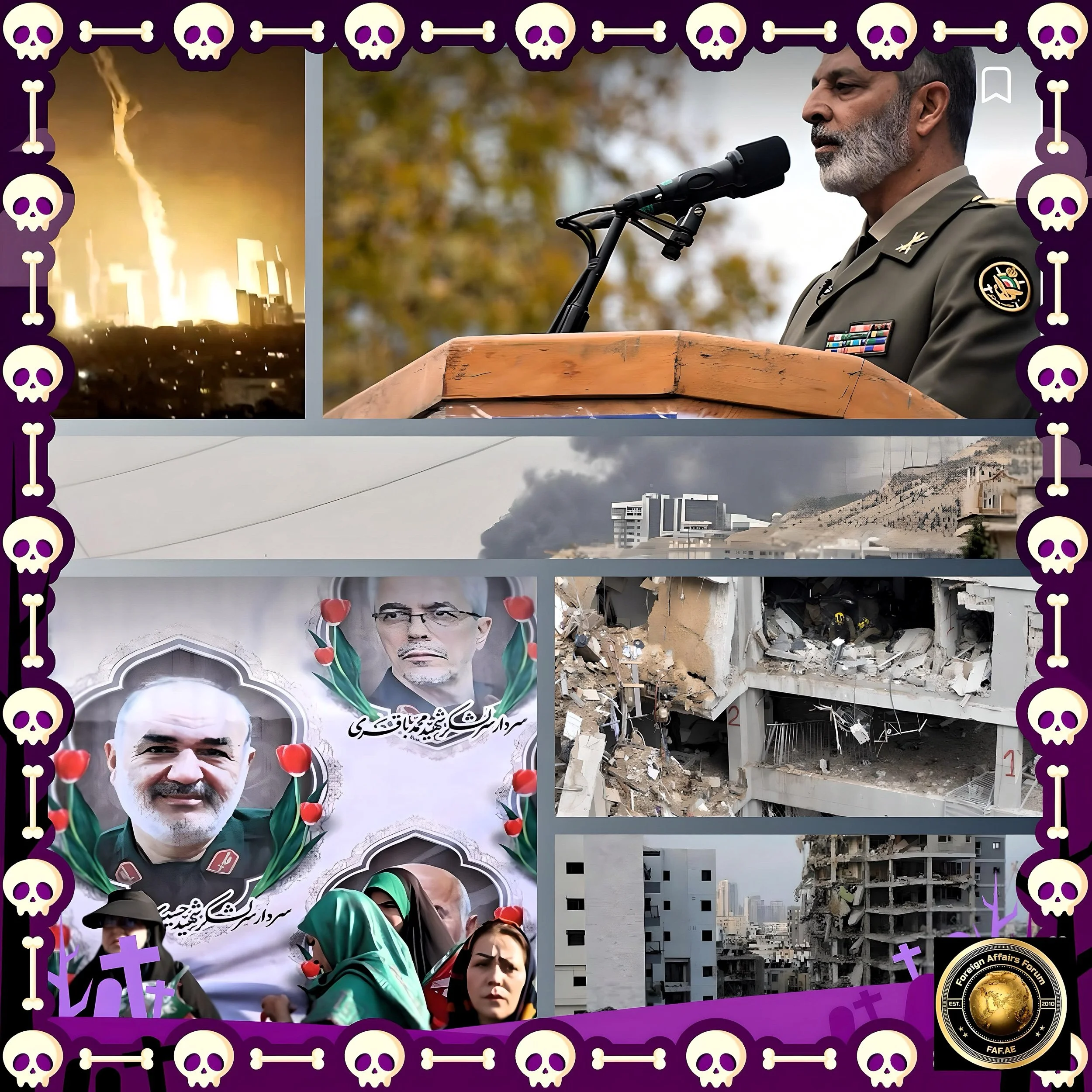
Operation Rising Lion is characterized as a 12-day military campaign initiated by Israel on June 13, 2025, explicitly aimed at dismantling Iran’s nuclear infrastructure.
Reports detail the deployment of over 200 Israeli aircraft that executed strikes on more than 100 strategic sites across Iran, targeting key nuclear installations including Natanz, Fordow, and Isfahan.
This operation constituted the first successful assault on a sophisticated, multilayered nuclear program with formidable defenses.
The operation's strategic relevance transcends immediate military goals, marking a notable instance of U.S. backing for Israel in implementing the Begin Doctrine—articulated by Prime Minister Menachem Begin, which asserts that Israel will not permit states that threaten its existence to acquire nuclear capabilities.
This doctrine, which has been a fundamental component of Israeli strategic policy for more than forty years since its formalization post the 1981 Osirak reactor strike, underscores the ideological framework guiding these actions.
The Weakening of Iran’s Regional Network
A significant factor in the analysis is Iran's diminished status due to the degradation of its proxy network.
This observation is corroborated by events from 2024 when Iran faced severe setbacks across its "Axis of Resistance."
Following the October 7, 2023, attacks on Israel, Hamas was effectively neutralized despite substantial Iranian financial support—exceeding $100 million annually—to bolster Hamas and Palestinian Islamic Jihad.
In addition, Israeli operations in 2024 targeted Hezbollah, executing key leadership losses and enforcing a ceasefire that mandated Hezbollah's withdrawal from southern Lebanon. This campaign notably dismantled Hezbollah as an operational force in the context of the October 7 conflict.
The collapse of Syria’s Assad regime in December 2024 further severed Iran's logistics corridor to Hezbollah, signaling the loss of its sole state ally and significantly impairing Tehran's capacity to exert influence in the Levant, as Syria had previously functioned as a linchpin in Iran's power projection efforts.
Iran’s Nuclear Capabilities and Vulnerabilities
The text's depiction of Iran's nuclear trajectory aligns with intelligence assessments from 2025, indicating that Iran had been enriching uranium to 60% purity—just shy of the 90% threshold necessary for weapons-grade material—and had amassed sufficient stockpiles for multiple nuclear devices.
U.S. intelligence projected that Iran could generate enough weapons-grade uranium for a single nuclear warhead within a 3-8 month timeframe should it choose to escalate its program.
The precision targeting of Iran's nuclear infrastructures represents a significant operational escalation, with Israel focusing on critical sites such as the Natanz enrichment facility and the bunkered Fordow site, situated 80-90 meters underground.
Following this, the U.S. launched Operation Midnight Hammer on June 22, 2025, deploying B-2 stealth bombers to drop 14 massive bunker-buster munitions on vital Iranian nuclear installations.
The Begin Doctrine in Practice
The exploration of the Begin Doctrine highlights its instrumental role in Israeli strategic calculations.
The doctrine's evolution from the 1981 Osirak operation to the 2025 engagement with Iran illustrates Israel's unwavering commitment to inhibiting regional adversaries from developing nuclear arsenals.
The policy has been successfully executed against adversaries in Iraq (1981), Syria (2007), and now Iran (2025).
Strategic Implications and Future Diplomacy
The assertion that military operations can create diplomatic openings is notably astute. Iran's weakening—stemming from both the dismantling of its proxy network and the degradation of its nuclear ambitions—has significantly shifted regional power dynamics.
Some analyses suggest, “Iran now finds itself in a position of unprecedented weakness, with its security environment restricted to its realistic borders.”
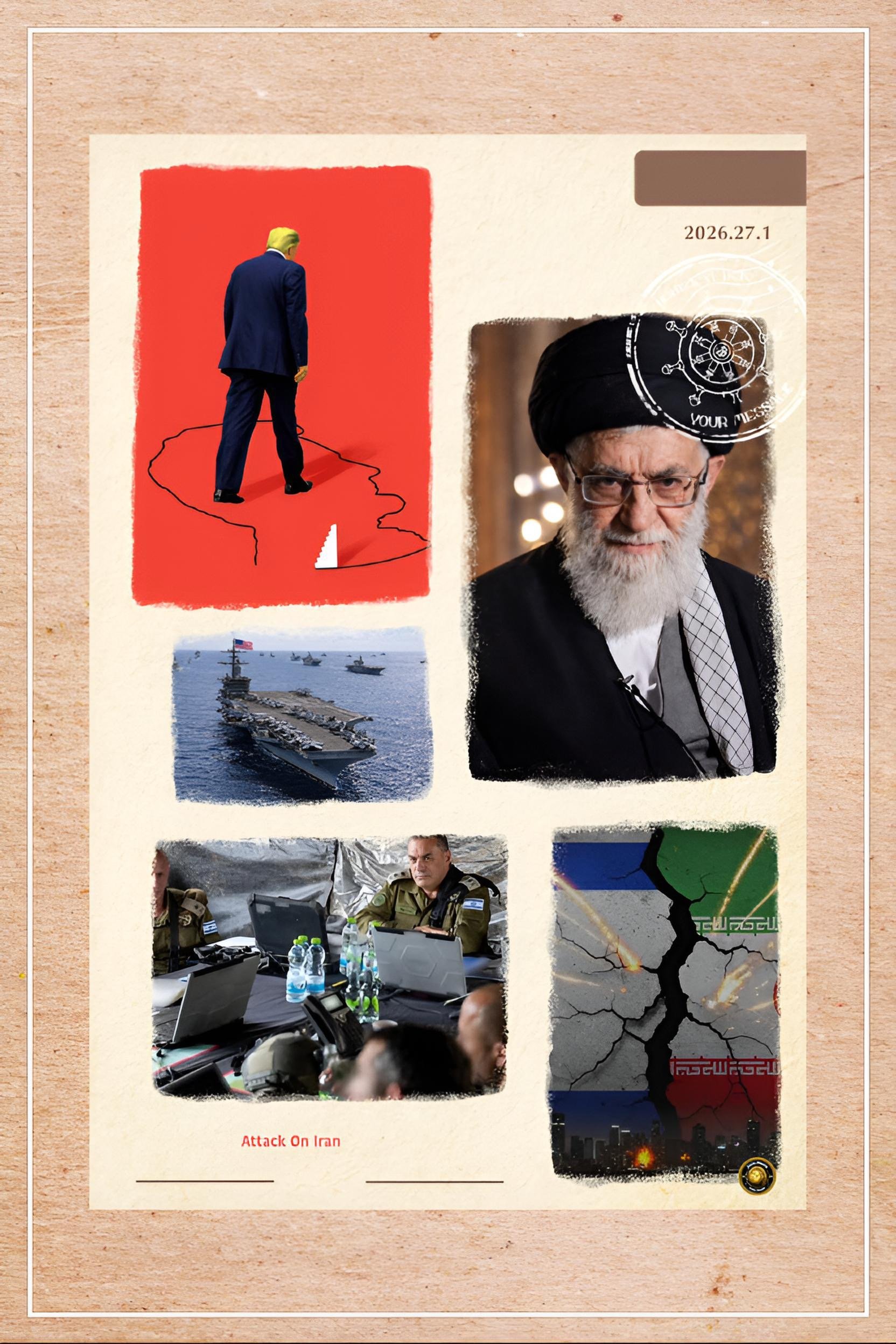
The United States’ direct involvement in nuclear strikes against Iran, all while asserting it is “not at war with Iran,” represents a marked departure from traditional American Middle East policy.
This collaboration with Israel in countering Iran's nuclear aspirations signals a coordinated U.S.-Israeli strategy aimed at curtailing atomic proliferation in the region.
Conclusion
The passage titled “The Post-Iranian Middle East” offers an insightful and nuanced strategic analysis of the potential ramifications that military operations targeting Iran’s nuclear program could have on the region's geopolitical landscape.
The author presents a compelling argument regarding Iran’s diminished influence, which has stemmed from a series of setbacks, including dismantling its proxy networks across neighboring countries and the significant weakening of its nuclear capabilities.
This assessment aligns with the events anticipated in 2024-2025, as international pressures and military actions converge to challenge Tehran's regional ambitions.
This analysis underscores the effectiveness of the Begin Doctrine, which advocates for preemptive action to neutralize perceived threats before they can fully materialize.
The author points out that, together with robust support from the United States, Israel has leveraged this doctrine to reshape its strategic environment.
This collaborative approach has opened new avenues for diplomatic engagement and heightened the possibility of constructing more stable and effective agreements aimed at curtailing nuclear proliferation in an already volatile Middle Eastern landscape.
The strategic rationale articulated in the passage indicates that by methodically dismantling Iran’s network of influence and suppressing its nuclear advancements, both Israel and the United States are fostering conditions that are more conducive to negotiating enduring agreements.
These agreements could potentially lead to a comprehensive resolution aimed at “permanently ending” Iran’s nuclear ambitions through diplomatic channels.
However, this diplomatic overture is fortified by a clear display of military readiness, signaling to Iran that the use of force is not off the table should negotiations falter.
This multifaceted approach highlights a delicate balance between military strength and diplomatic strategy in addressing one of the region’s most pressing security challenges.