Supreme Court Oral Arguments on Presidential Tariff Authority: Analysis and Implications
Executive Summary
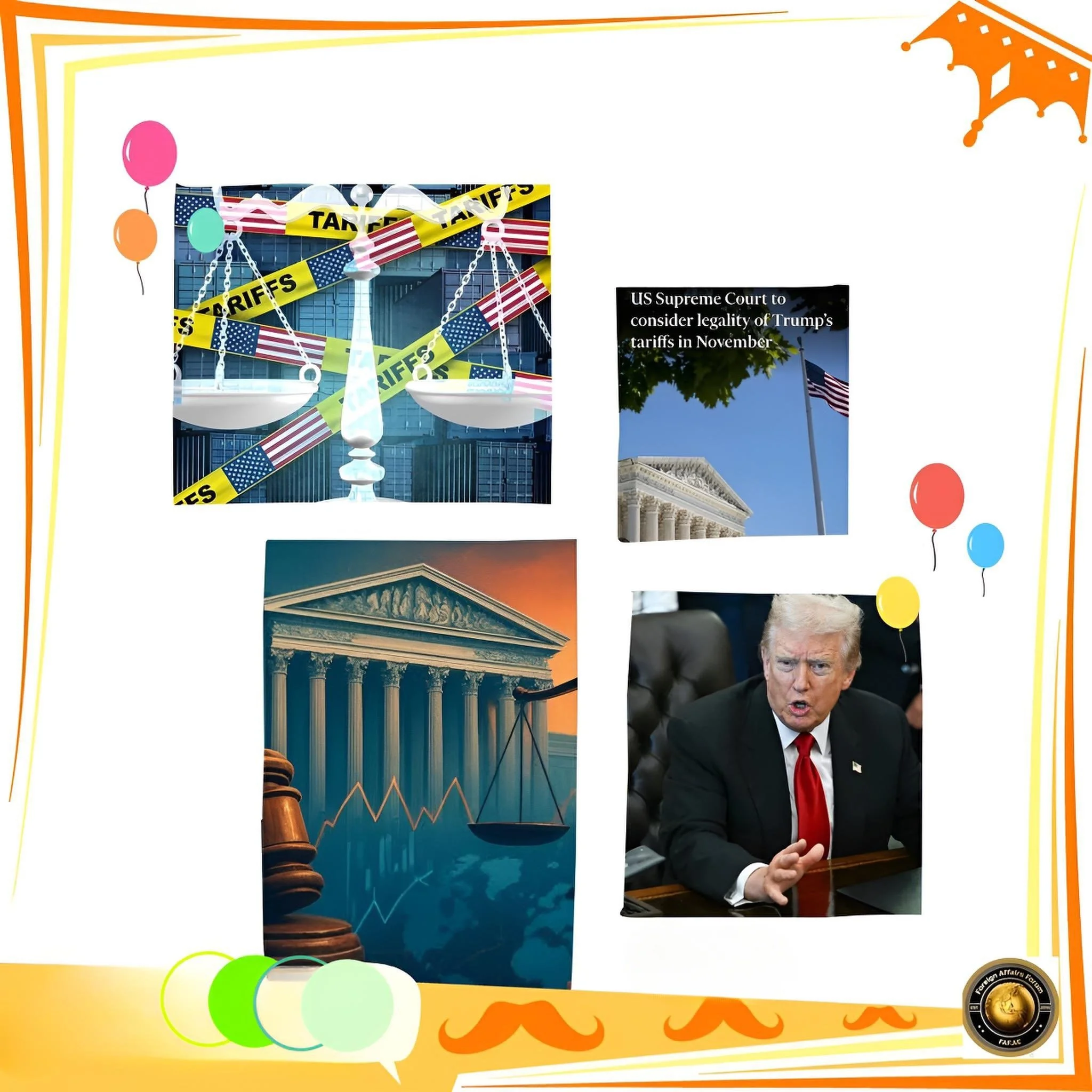
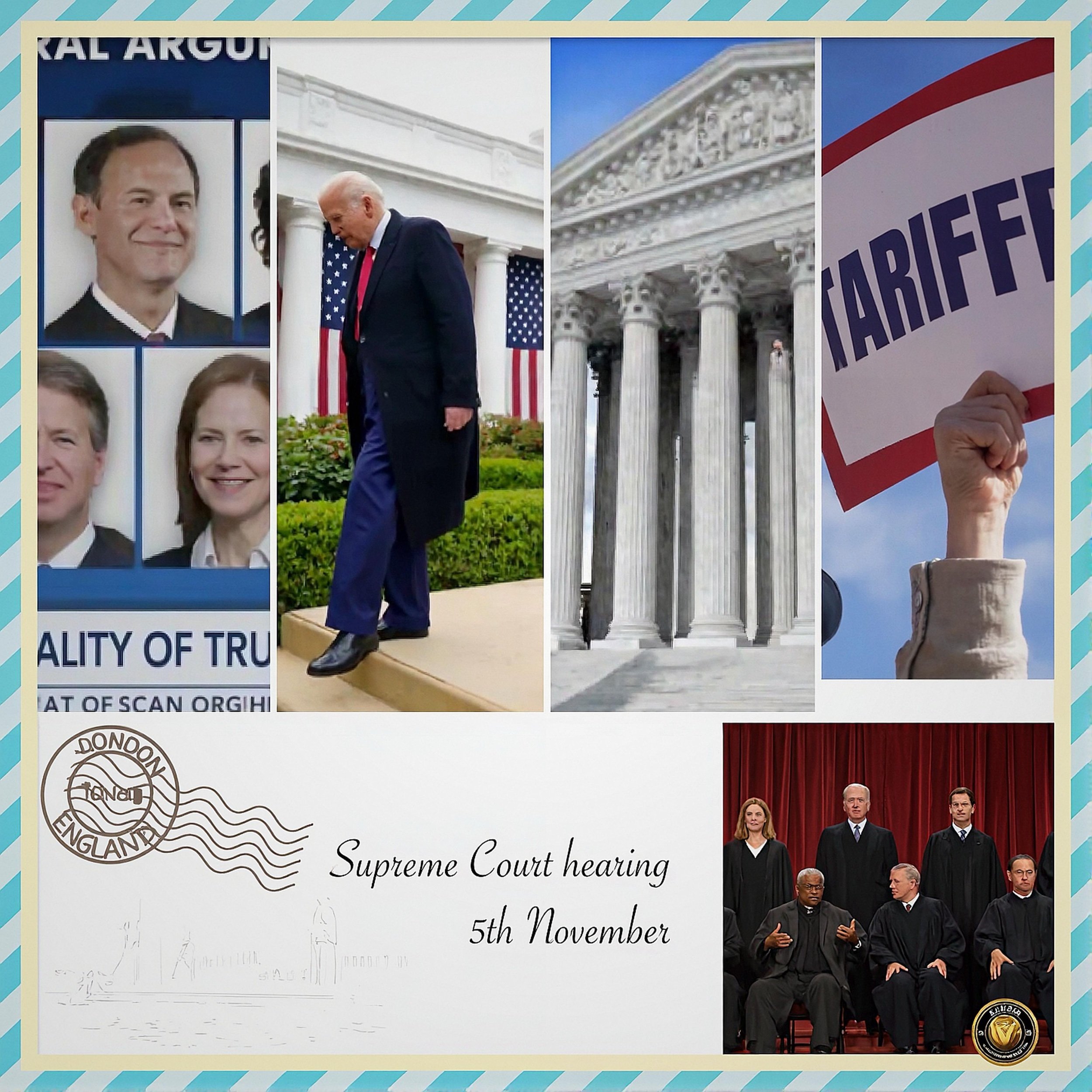
On November 5, 2025, the Supreme Court heard oral arguments in a landmark case challenging President Trump's use of emergency powers to impose sweeping global tariffs.
The justices—including members of the conservative majority—demonstrated substantial skepticism regarding the administration's constitutional and statutory authority to impose tariffs unilaterally.
The questioning patterns and judicial commentary suggest a potential ruling against the administration, which would mark a significant constraint on executive power and reshape domestic political and economic landscapes heading into the 2026 midterm elections.
Oral Arguments and Legal Framework
Administration Position
Solicitor General D. John Sauer argued that President Trump acted within statutory authority granted by the International Emergency Economic Powers Act (IEEPA).
The administration characterized the tariffs as regulatory measures addressing purported national emergencies, specifically trade deficits and the fentanyl crisis, rather than as revenue-generating taxes subject to constitutional congressional prerogative.
The administration asserted that the historical power to regulate imports necessarily encompasses tariff authority and that IEEPA's broad language provides sufficient statutory authorization for the president's actions.
Challengers' Position
Opponents, including small business associations and state officials, contended that the Constitution reserves tariff authority exclusively to Congress.
They argued that Trump's interpretation of IEEPA represents an unprecedented expansion of presidential power and that the statute does not authorize the sweeping tariff regime imposed by the administration.
Judicial Scrutiny and Key Arguments
Chief Justice Roberts
Chief Justice Roberts questioned the administration's statutory interpretation, emphasizing that Congress has neither explicitly nor implicitly granted presidents authority to impose tariffs under IEEPA.
He noted that no prior administration had applied the statute in this manner, suggesting the breadth of the claimed authority strains ordinary statutory construction.
Justice Neil Gorsuch
Justice Gorsuch explored the relationship between regulatory authority over imports and the power to impose tariffs, pressing the administration's counsel on whether these concepts are coextensive and whether such an interpretation respects the constitutional separation of powers.
Justices Sotomayor and Jackson
Both justices challenged the administration's distinction between regulatory and revenue-raising tariffs, suggesting that tariffs inherently function as taxes regardless of rhetorical framing.
Their questioning implied skepticism that semantic distinctions could overcome constitutional constraints on executive taxation powers.
Justice Kavanaugh
Justice Kavanaugh examined historical precedent, particularly President Nixon's tariff authority under a distinct statute.
While acknowledging historical context, he expressed concern about establishing unlimited presidential flexibility in imposing tariffs and questioned whether prior narrower applications could justify the administration's expansive tariff regime.
Justice Barrett
Justice Barrett pressed the administration on statutory precedent, asking whether the phrase "regulate importation" has historically conferred tariff authority outside emergency statutes.
She emphasized the importance of statutory text and established precedent in constraining executive interpretation of ambiguous language.
Conservative Judicial Stance
The six conservative justices—including Roberts, Kavanaugh, and Barrett—demonstrated notable skepticism of the administration's position.
Rather than embracing broad executive authority, these justices articulated concerns about:
The unprecedented scope of IEEPA application to global tariff regimes
The potential for unlimited executive power absent textual or historical constraint
The tension between claimed regulatory authority and constitutional congressional prerogatives regarding taxation and commerce
Notably, conservative amicus briefs from the U.S. Chamber of Commerce, Goldwater Institute, and Cato Institute opposed the administration's position, suggesting internal ideological divisions within conservative legal and business communities.
Economic and Business Impact of a Ruling Against the Administration
Tariff Refunds and Cost Relief
Invalidation of Trump's tariffs would create significant financial relief for importers.
Entities having paid tariffs under the disputed emergency authority would likely qualify for refunds potentially amounting to tens of billions of dollars.
This relief would extend to downstream supply chains and potentially to consumers through reduced import prices.
Operational and Strategic Advantages
US importers would achieve greater predictability in long-term sourcing and supply chain planning, eliminating the uncertainty associated with shifting tariff policies.
This stability would facilitate more efficient capital allocation and strategic investment decisions.
Litigation and Secondary Market Effects
Class-action litigation may emerge as companies seek recovery of costs attributable to tariffs passed through supply chains to consumers.
Financial institutions may develop secondary markets for tariff refund rights, creating both opportunities and complications for affected businesses.
Alternative Tariff Regimes
The administration might pursue narrower tariff applications under Section 232 (national security rationale) and other statutory authorities not directly implicated by the Court's decision.
Retailers, electronics manufacturers, and large importers would emerge as primary beneficiaries of reduced tariff burdens, with broader inflationary benefits accruing to consumers.
Political and Strategic Implications
Impact on Presidential Authority and Approval Ratings
A Supreme Court loss would represent the first major judicial rebuke of Trump's second-term agenda, potentially constraining executive authority across policy domains.
Conservative legal scholars and policy experts may distance themselves from expansive executive claims, forcing recalibration of the administration's regulatory approach.
Trump's national approval ratings, already elevated at concerning levels of public disapproval regarding tariff policy, would likely experience further deterioration.
Exit polling from recent elections demonstrates voter prioritization of affordability and economic concerns, constituencies where Trump's tariff policies have proven politically vulnerable.
2026 Midterm Electoral Dynamics
Democratic Strategy and Opportunities
Recent Democratic victories in New York, New Jersey, and Virginia reveal effective coalition messaging centered on cost-of-living concerns and economic mismanagement.
A Supreme Court loss on tariffs would provide Democrats with powerful evidence of constitutional executive overreach and failed economic stewardship.
The party could consolidate momentum by maintaining unified messaging across progressive and moderate factions regarding presidential accountability and consumer protection.
Democratic legislative initiatives could frame tariff re-authorization through normal congressional channels as restoration of constitutional governance and protection against executive unilateralism.
The verdict would reinforce commitment among younger voters and minority constituencies—demographics critical to the party's 2024 losses—by demonstrating that Democratic opposition to Trump administration policies produces substantive institutional outcomes.
Republican Vulnerabilities and Adaptation Strategies
Republicans would face the challenge of defending an unconstitutional policy while maintaining claims to economic stewardship.
The party would likely pivot messaging toward congressional rather than presidential responsibility, positioning Trump as a strong executive constrained by activist judicial overreach rather than acknowledging substantive policy failure.
The administration could pursue congressional re-authorization of tariffs through legislation, though moderate Republicans facing constituent economic pressure present formidable obstacles to such initiatives.
Conservative constituencies—particularly the Chamber of Commerce and business-oriented Republicans—have expressed frustration with unilateral tariff approaches, creating internal party divisions that could intensify following judicial rebuke.
Alternative legal pathways through Section 232 national security authorities might permit preservation of narrower tariff regimes, though such approaches would lack Trump's preferred comprehensive scope.
Broader Constitutional and Governance Implications
A ruling limiting presidential emergency tariff authority would reaffirm congressional prerogatives in fiscal and trade policy, marking a rare instance where the conservative constitutional majority constrains executive power.
The decision would signal limits to executive interpretation of ambiguous statutory language and establish precedent regarding application of major questions doctrine to economic policy.
The case demonstrates that conservative jurists, despite general deference to executive authority, maintain substantive commitments to constitutional separation of powers and statutory interpretation principles when executive claims appear sufficiently expansive.
Conclusion
The Supreme Court is expected to render a decision by June 2026, though the intensity and skepticism of questioning suggests expedited resolution remains possible.
The preponderance of judicial skepticism—particularly among conservative justices—indicates probable invalidation of the administration's tariff regime, requiring congressional action for tariff reestablishment.
Such an outcome would simultaneously constrain executive power, embolden Democratic messaging regarding constitutional governance and consumer protection, and force Republicans to navigate internal divisions over trade policy while defending the constitutionality of their party's flagship economic initiative.
The convergence of likely judicial constraints on tariff authority with Democratic electoral momentum around cost-of-living concerns creates a significantly altered strategic landscape for the 2026 midterm elections and shapes the broader trajectory of executive-congressional relations during Trump's second term.