A Non-Interventionist Critique of US-Iran Relations and Its Geopolitical Implications
Foreward
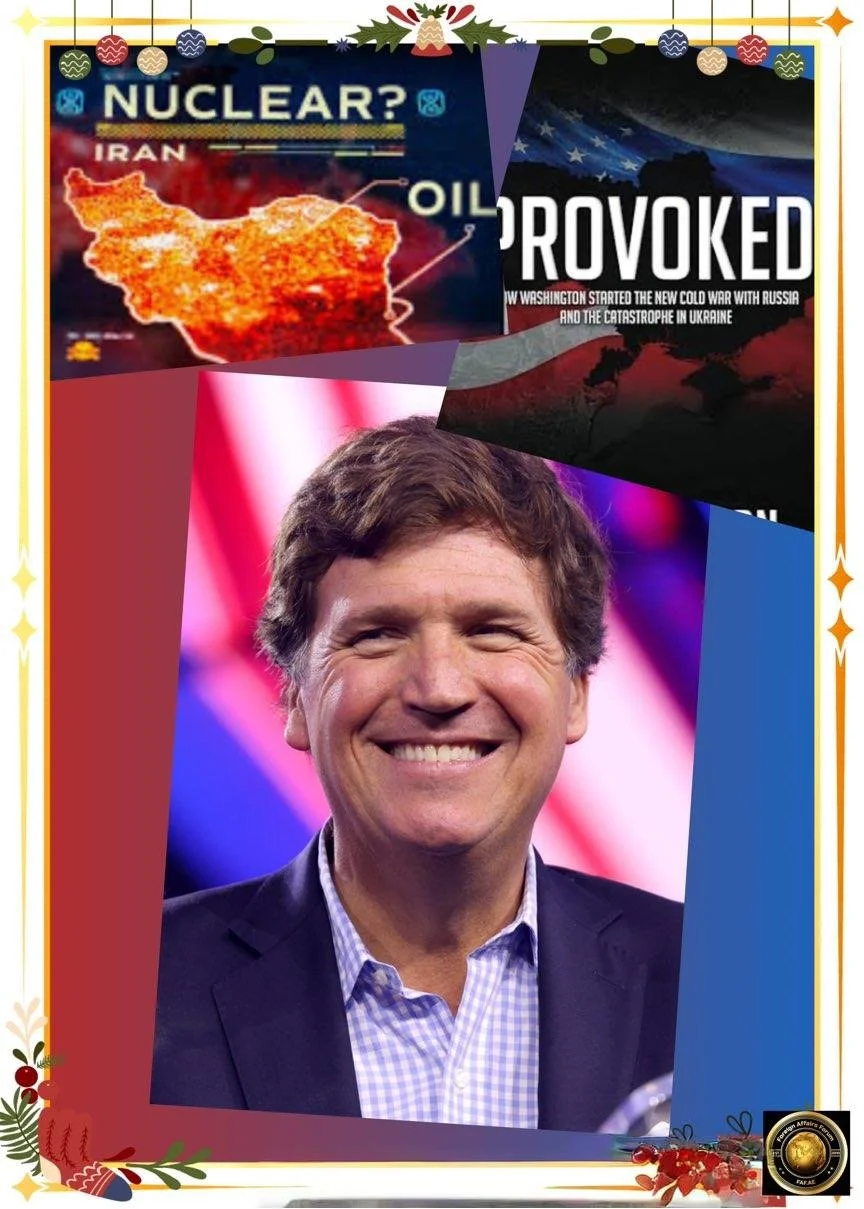
FAF offers a comprehensive analysis of the dialogue between Tucker Carlson and Scott Horton on July 3, 2025.
It focuses on a detailed critique of U.S. foreign policy toward Iran. Horton delves into the complex and often volatile nature of U.S.-Iran relations, tracing a historical framework that spans seven decades.
In this conversation, Horton articulates key historical events shaping U.S.-Iran interactions, notably the 1953 CIA-led coup that ousted Prime Minister Mohammad Mossadegh, the 1979 Islamic Revolution, and subsequent geopolitical tensions.
He highlights a consistent trend of interventionist policies leveraged by successive U.S. administrations, arguing that these strategies have failed to foster regional stability and have exacerbated anti-American sentiment among the Iranian populace.
Horton’s analysis prompts a critical reevaluation of the efficacy and long-term ramifications of U.S. engagement in Iranian affairs, particularly in the context of historical precedents.
He asserts that interventionist policies have led to adverse outcomes for Iran and broader Middle Eastern stability, complicating diplomatic relations and perpetuating regional conflicts.
Through this analysis, Horton advocates a shift towards a more diplomatic and non-interventionist approach that respects Iran's sovereignty and underscores the importance of constructive engagement.
He posits that a nuanced understanding of the historical context is imperative for formulating a more peaceful and equitable U.S. foreign policy that will benefit both nations and enhance global security.
Scott Horton’s dialogue with Tucker Carlson provides a critical libertarian non-interventionist lens that challenges dominant narratives regarding U.S.-Iran relations.
As the director of the Libertarian Institute and editorial director of Antiwar.com, his insights are pivotal in contextualizing the complexities surrounding the ongoing conflict and contribute significantly to the discourse on American foreign policy in an increasingly multipolar global landscape.
Historical Foundations of US-Iran Antagonism
Horton’s analysis locates the origins of US-Iranian antagonism in the 1953 CIA-coordinated coup that ousted Prime Minister Mohammad Mossadegh, which he terms the “original sin” of American intervention in Iranian politics.
He contends that the Dulles brothers—John Foster Dulles, then Secretary of State, and Allen Dulles, CIA Director—systematically constructed this intervention under the false narrative of Mossadegh as a communist sympathizer. Mossadegh primarily advocated for an increased share of Iranian oil revenues rather than outright nationalization.
This coup facilitated the ascent of Mohammad Reza Pahlavi, the Shah, who became a pro-Western autocrat—a regime that persisted until the upheaval of 1979.
Horton argues that the Shah’s regime harbored inherent unsustainability, aggravated by President Nixon’s demands for heightened arms purchases from the United States to offset declining military allocations due to America’s withdrawal from Vietnam.
These exorbitant military expenditures, unsustainable for the Iranian economy, significantly eroded the Shah’s legitimacy and catalyzed the conditions that spurred the Iranian Revolution in 1979.
The interview highlights a stark contradiction in U.S. policy during this era. Horton notes that the CIA and State Department counseled President Jimmy Carter regarding Ayatollah Khomeini, suggesting he was a potentially favorable figure.
These characterizations included comparisons to Mahatma Gandhi by State Department official William Sullivan.
This profound misjudgment underscores a recurring theme of American foreign policy: the failure to accurately assess the ramifications of its interventions.
The Carter Doctrine and Regional Destabilization
Horton’s thesis critically examines the Carter Doctrine and its implications for escalating regional tensions.
He argues that Carter effectively sanctioned Saddam Hussein's invasion of Iran in 1980, supported by documentation unearthed by journalist Robert Parry, which reveals that Saudi Prince Fahd communicated Carter’s approval to Hussein through Alexander Haig.
Horton elucidates that Saddam, as a Sunni minority ruler presiding over a predominantly Shiite populace, perceived the Iranian Revolution as a potential catalyst for internal insurrection.
To mitigate this risk, Saddam made the strategic decision to conscript Shiite citizens and deploy them in military opposition to Iran, igniting an eight-year conflict that Horton likens to World War I in terms of its severity, with extensive chemical weaponry used, much of which was supplied by the United States.
The Iran-Iraq War exemplifies the unintended repercussions of American interventions and the inherent instability they foster. Not only did the U.S. provide Iraq with chemical weapons precursors, but it also offered satellite intelligence to aid in targeting Iranian forces.
Compounding the issue, when Saddam employed chemical weapons against Kurdish civilians in Halabja, the Defense Intelligence Agency deflected blame onto Iran, showcasing the convoluted logic that often characterizes American foreign policy justifications.
This same incident would later be referenced by Colin Powell as a rationale for the 2003 invasion of Iraq, further illuminating the cyclical nature of U.S. foreign policy rationalizations.
The Military-Industrial Complex and Perpetual Conflict
Horton’s analysis elucidates the role of the military-industrial complex in sustaining conflicts that primarily serve elite interests rather than authentic national security imperatives.
He posits that in the wake of the Vietnam War, the Nixon administration sought novel methods to financially bolster defense contractors, which inadvertently led to an uptick in arms sales to authoritarian regimes, including the Shah’s Iran.
This trend persisted through subsequent decades, with American foreign policy increasingly oriented toward corporate profitability over genuine security considerations.
Horton critiques the 1991 Gulf War, which, despite a superficial narrative of success, he characterizes as “a massive mistake” that entrenched a long-term American military presence in the Persian Gulf.
This enduring presence was rationalized under the “dual containment” strategy designed to check Iraq and Iran simultaneously, inadvertently fostering conditions conducive to perpetual conflict and terrorism, thus complicating American foreign policy for years to come.
The Israel Factor and Regional Dynamics
A pivotal component of Horton’s discourse is the examination of Israel’s influence on U.S. policy regarding Iran. He asserts that Israeli interests obstructed potential normalization of U.S.-Iran relations in the 1990s, during which figures such as Zbigniew Brzezinski and Alexander Haig proposed enhancing economic ties with Iran.
Instead, under Martin Indyk’s guidance—who had previously served Israeli Prime Minister Yitzhak Shamir—the Clinton administration adopted a dual containment policy.
Horton meticulously chronicles the evolution of Israeli-Iranian relations, highlighting a stark transition from the tacit cooperation of the 1980s, exemplified by Israeli arms sales to Iran during the Iran-Contra affair, to the current adversarial stance.
He notes that Prime Minister Benjamin Netanyahu has consistently invoked the specter of Iranian nuclear armament since 1984, leveraging this narrative to secure unwavering American support and thwart diplomatic avenues.
The dialogue also delves into Israel’s “Clean Break” strategy, articulated by neoconservative advisors in the 1990s, which advocated for proactive military engagement against Iran, Syria, and other regional adversaries.
Horton posits that this framework has significantly influenced American policy in the region, culminating in a series of interventions that have further destabilized the Middle East.
Nuclear Weapons and Diplomatic Failures
Horton’s scrutiny of Iran’s nuclear endeavors directly contests prevalent narratives regarding the nation’s intentions. He argues that Iran possesses a “latent nuclear deterrent”—capable of rapidly developing nuclear weapons if provoked, without actualizing such capabilities.
This position parallels that of nations like Germany, Japan, and Brazil, which maintain the technical capacity to produce nuclear weapons yet choose voluntary restraint.
From Horton’s perspective, Iran’s uranium enrichment activities are primarily strategic bargaining tools aimed at coaxing the United States back to the negotiating table rather than indicators of an active weapons program.
He contends that the Trump administration’s 2018 withdrawal from the Joint Comprehensive Plan of Action (JCPOA), heavily influenced by Netanyahu, dismantled the diplomatic architecture that was effectively curbing Iran’s nuclear pursuits.
The recent military escalation between Israel and Iran raises the stakes concerning the nuclear discourse. Horton elucidates that Iran's president has explicitly renounced aspirations for nuclear weapons during a discussion with Tucker Carlson, asserting that Iran's strategic posture has remained consistent despite strikes on its nuclear facilities.
However, he acknowledges the potential for significant military repercussions from the United States should Iran decide to exit the Nuclear Non-Proliferation Treaty and publicly initiate a weapons program.
Contemporary Geopolitical Implications
The Horton-Carlson discourse offers critical insights into the current geopolitical relations landscape and the evolving debates within American conservatism regarding foreign policy.
Set against the backdrop of heightened tensions surrounding U.S. involvement in Israel's conflicts with Iran, Tucker Carlson's promotion of an "America First" agenda has led to a notable rift between him and President Trump, who publicly criticized Carlson on social media.
This schism encapsulates a larger ideological divide within the Republican Party, bifurcating traditional hawks—who endorse interventionist policies aligned with Israeli interests—from a burgeoning non-interventionist faction challenging the rationale behind perpetual military engagements in the Middle East.
Horton’s critique serves as intellectual reinforcement for those positing that U.S. interventions have consistently engendered negative repercussions, often exacerbating existing issues.
Concurrently, as Iran engages in indirect negotiations with the United States via Oman, the Trump administration's demand for "zero-level" uranium enrichment emerges as a significant barrier to diplomatic resolution, a stance Horton identifies as fundamentally obstructive. Iranian officials have unequivocally asserted that uranium enrichment remains non-negotiable, suggesting a potential deadlock that could precipitate military escalation.
The Information War and Media Dynamics
Horton’s appearance on Carlson's show—currently the leading podcast on Spotify and ranked eleventh on Apple Podcasts—highlights the capacity of alternative media platforms to contest prevailing mainstream narratives in foreign policy.
The interview, which garnered millions of views, ignited significant discourse surrounding U.S. foreign policy, illuminating the growing prominence of podcasts and independent media as influential forces in shaping public perception.
This transformation in media consumption patterns carries considerable implications for foreign policy discussions. Traditional media outlets, often supportive of interventionist agendas, are ceding ground to independent voices such as Horton and Carlson, who present contrasting viewpoints.
While this democratization of information enhances the diversity of perspectives, it concurrently complicates efforts to establish a shared factual basis for policy discourse.
Libertarian Foreign Policy Philosophy
The interview comprehensively explains libertarian foreign policy principles, especially the application of the non-aggression principle to international relations.
Horton articulates that the moral imperatives governing individual behavior—principles such as non-initiation of force, non-theft, and non-fraud—should extend to governmental actions in foreign policy.
This standpoint fundamentally opposes sanctions, coups, regime changes, and military interventions, irrespective of the type of governance in the targeted nation.
Horton’s libertarian framework draws connections between domestic and foreign policy, asserting that maintaining a global hegemony makes sustaining a limited, decentralized government at home inherently challenging.
This philosophy contrasts progressive interventionists advocating for humanitarian warfare and conservative hawks promoting military hegemony, proposing instead a cohesive non-interference principle that could significantly diminish U.S. military engagements worldwide.
Implications for U.S.-China Relations
Although the interview's primary focus is Iran, Horton’s analytical lens has significant implications for U.S.-China relations and the dynamics of great power competition.
His critique of American policy towards Russia, particularly in the context of Ukraine as developed in his work "Provoked," echoes his analysis of Iran, arguing that U.S. actions—such as NATO's enlargement and interference in regional affairs—have instigated unnecessary conflicts.
This rationale can be similarly applied to China; specifically, the U.S. military buildup in the South China Sea and support for Taiwan independence movements may be perceived as provocative maneuvers that heighten, rather than mitigate, the risk of conflict.
Horton’s non-interventionist philosophy advocates diplomatic engagement and economic collaboration over military confrontation as the optimal strategy for navigating the complexities of great power rivalry.
Economic Consequences of Interventionism
In the recent interview, Scott Horton delineates the economic implications of American interventionist policies, emphasizing the direct fiscal burdens of military expenditures and the opportunity costs associated with allocating resources away from pressing domestic issues.
He highlights Tucker Carlson's critique, which underscores the stark disparity between extensive U.S. spending on foreign military operations and the unresolved socio-economic challenges at home, including rising drug overdose rates, increased suicide incidences, and deteriorating infrastructure.
This economic narrative resonates with a significant segment of the American populace, which perceives their tax contributions as disproportionately funding overseas conflicts while neglecting domestic priorities.
Additionally, Horton’s argument gains traction when assessing the long-term economic ramifications of fostering adversarial relationships through interventionist strategies, encompassing expenses related to homeland security, economic disruptions from terrorism, and forfeited opportunities for trade and collaborative relations with states that become hostile.
The Role of Think Tanks and Policy Elites
Horton’s critique implicitly targets the influence of foreign policy think tanks and elite analysts who perpetuate interventionist advocacy despite past military engagements’ failures.
The discourse mentions influential actors and organizations, notably the Foundation for Defense of Democracies and various neoconservative luminaries, who have historically championed assertive postures toward Iran and other nations.
This critique extends to the broader foreign policy establishment’s insularity and reluctance to interrogate foundational assumptions underpinning U.S. global strategy.
Despite Horton’s extensive research and consultations with many experts over two decades, his perspectives often remain marginalized within mainstream policy dialogues, revealing the entrenched nature of interventionist ideologies in Washington.
Future Scenarios and Strategic Choices
Horton expresses a measured optimism regarding the evolving perceptions of American interventionism among the public, indicating that awareness of its costs and failures is gaining ground. Nonetheless, he cautions against the perils of ongoing policies, particularly the risks associated with sustained pressure on Iran, which might incentivize nuclear armament and precipitate large-scale conflict.
The strategic choices before the U.S. are stark: maintain the current trajectory of sanctions and military posturing in hopes of Iranian compliance, or pivot towards sincere diplomatic engagement that acknowledges Iranian security concerns while adhering to non-proliferation objectives. Horton posits that the first path likely culminates in conflict and regional destabilization, whereas the latter could foster a reduction in tensions and avert nuclear escalation.
Conclusion
Rethinking American Grand Strategy
The interview between Horton and Carlson profoundly challenges established U.S. grand strategy and the orthodox assumptions that have directed American foreign policy for decades.
It contributes to an expanding discourse around America’s international role by supplying historical context to contemporary conflicts and positing an analytical framework informed by non-interventionist tenets.
The geopolitical ramifications of this perspective extend considerably beyond Iranian policy.
Embracing Horton’s analysis would necessitate a fundamental shift in American foreign policy, moving away from military hegemony towards diplomatic engagement, economic cooperation, and respect for the sovereignty of other nations.
Such a transformation would significantly reshape military budgets, alliance dynamics, and America’s global presence.
The viral traction and spirited debates stemming from the interview illustrate a notable receptiveness among specific demographics of the American public to non-interventionist principles, remarkably when grounded in comprehensive historical evidence of the pitfalls associated with interventionism.
This phenomenon suggests that the consensus among the foreign policy establishment may be more precarious than it appears, opening avenues for alternative paradigms in international relations.
Ultimately, the Horton-Carlson dialogue serves as a comprehensive indictment of seven decades of American foreign policy toward Iran and presents a roadmap for a radically different approach to global engagement.
The feasibility of these ideas translating into actionable policy changes will hinge on the sustainable momentum of non-interventionist advocates in contesting dominant narratives and the capability of alternative media outlets to disseminate these perspectives to broader audiences.