The Perils of U.S. Intervention in Iran: Why Military Action Would Be a Strategic Catastrophe
Introduction
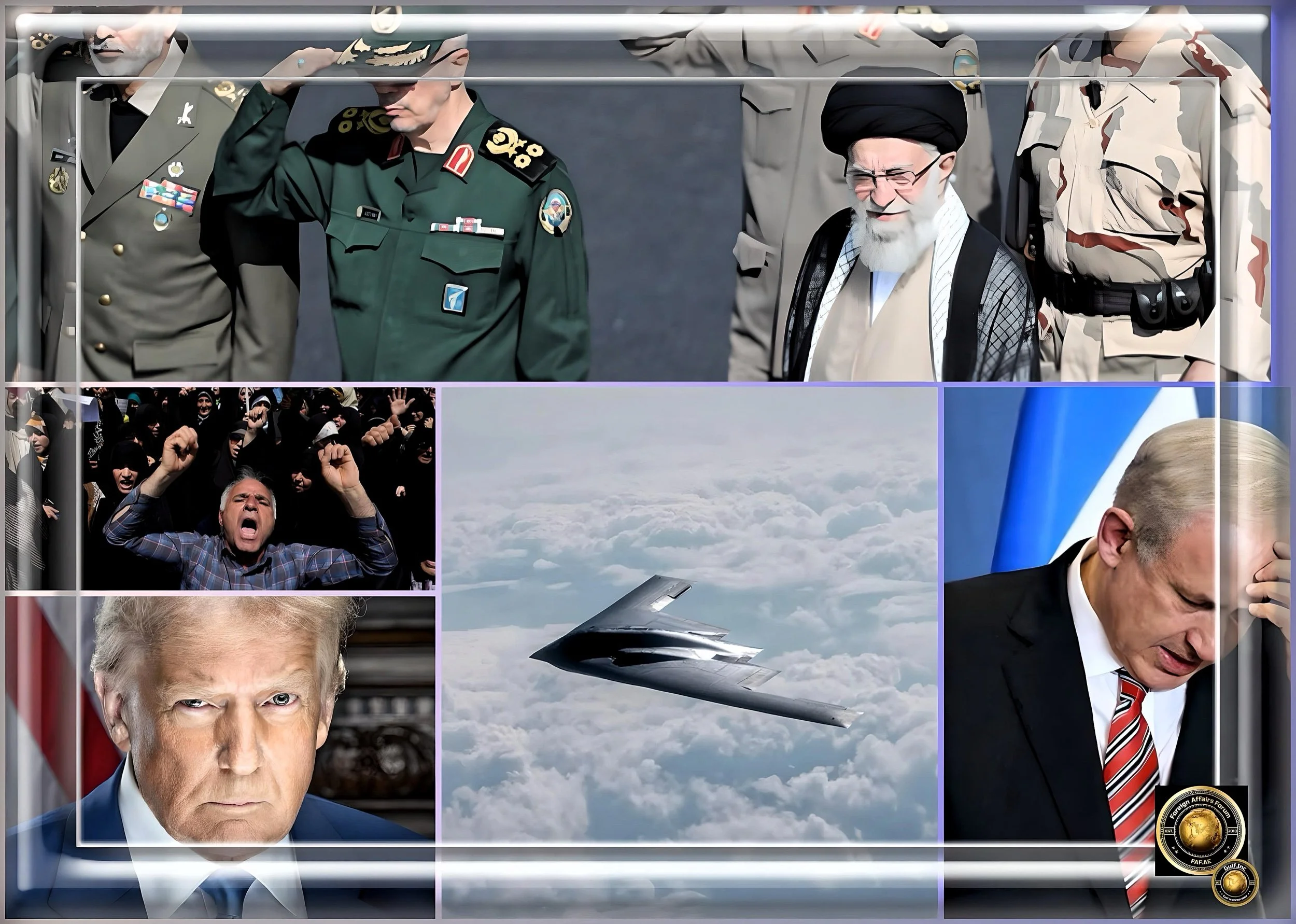
President Donald Trump’s announcement on June 19, 2025, that he will decide within two weeks whether to join Israel’s military campaign against Iran has placed America at a critical crossroads. This decision has profound implications that extend far beyond the immediate tactical objectives and threaten to replicate the strategic disasters that have plagued American foreign policy for decades. The prospect of U.S. military intervention in Iran represents not just a policy choice but a potentially catastrophic gamble that could entrench America in another Middle Eastern quagmire while failing to achieve its stated objectives.
The Current Crisis Context
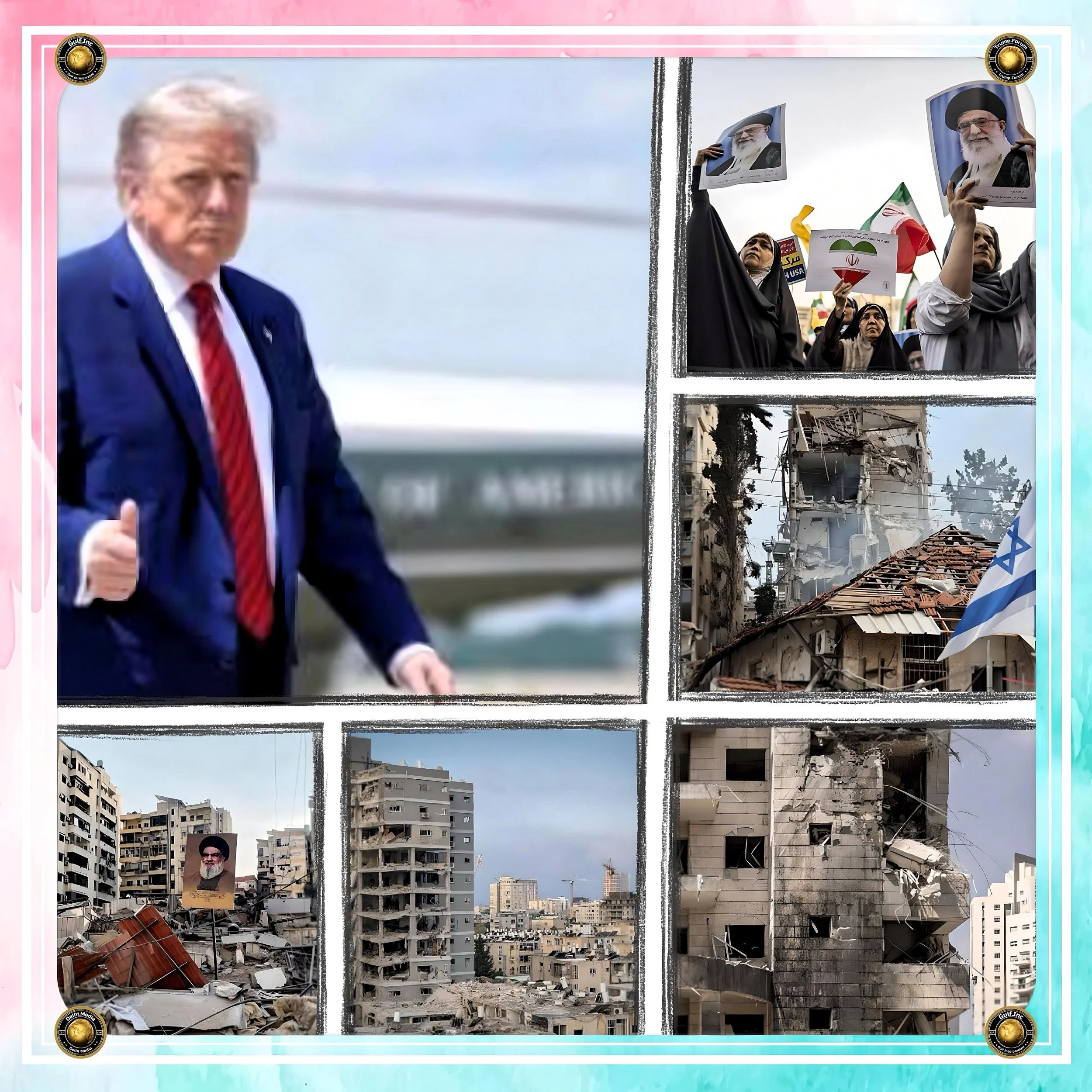
The urgency surrounding Trump’s decision stems from Israel’s ongoing Operation Rising Lion, which began on June 13, 2025, targeting Iran’s nuclear facilities, military infrastructure, and key personnel. Israel has reportedly destroyed or damaged 41 Russian warplanes and killed at least 14 Iranian nuclear scientists, while claiming to have delayed Iran’s nuclear program by at least two years. However, despite these tactical successes, the heavily fortified Fordow atomic enrichment facility remains intact, mainly representing what Israeli officials consider the final critical target requiring American military capabilities.
Iran’s nuclear program has reached an unprecedented threshold of danger, with the country possessing over 400 kilograms of uranium enriched to 60 percent purity—enough material for approximately 10 nuclear weapons if further refined to weapons-grade levels. The International Atomic Energy Agency has confirmed that Iran’s breakout timeline is effectively at zero, meaning it could produce weapons-grade material within weeks using its existing stockpiles. This nuclear proximity has intensified pressure on the Trump administration to act decisively.
Policy Pathology One: The Airpower Delusion
The Bunker Buster Fantasy
The first central pathology evident in current U.S. and Israeli planning is the persistent belief that airpower alone can achieve strategic objectives rather than merely tactical ones. The focus on the Fordow facility exemplifies this misguided confidence. Located approximately 80-90 meters underground near Qom, Fordow is protected by an estimated 260 to 360 feet of hardened concrete and rock, making it virtually impervious to conventional Israeli weapons.
Only the American GBU-57 Massive Ordnance Penetrator, a 30,000-pound bunker-buster bomb, is theoretically capable of reaching the facility. However, this capability remains untested, mainly in real-world conditions. The weapon has been tested only once and never used in combat, raising serious questions about its effectiveness against a target as deeply buried and well-protected as Fordow. Military experts acknowledge that even the GBU-57 would require multiple precise strikes in the exact location to penetrate the facility’s defenses—a complex operation with significant risk of failure.
The limitations extend beyond technical capabilities. Only the U.S. B-2 Spirit stealth bomber can carry the GBU-57, and successful destruction would require multiple bombing runs with extraordinary precision. If the initial strikes fail to breach the facility completely, Iran would likely relocate its operations to even more secure locations, making future attempts exponentially more difficult.
The Illusion of Surgical Strikes
Even if a strike on Fordow succeeds tactically, it would fail to achieve the strategic objective of ending Iran’s nuclear program. Iranian scientists retain the knowledge and expertise to rebuild damaged facilities, and most of Iran’s highly enriched uranium stockpile is dispersed across multiple locations throughout the country. The destruction of physical infrastructure would represent only a temporary setback rather than a permanent solution.
Historical precedent supports this skepticism about airpower’s strategic effectiveness. Previous U.S. bombing campaigns, from Vietnam to Iraq, have consistently failed to achieve their broader political objectives despite tactical successes. The belief that destroying a single facility or set of targets can fundamentally alter an adversary’s strategic capabilities reflects a persistent misunderstanding of how modern conflicts unfold.
Policy Pathology Two: The Regime Change Mirage
Netanyahu’s Revolutionary Fantasy
The second pathology plaguing current policy discussions is the misplaced confidence in regime change as a viable solution. Israeli Prime Minister Benjamin Netanyahu has been increasingly explicit about his ultimate objective: the overthrow of the Islamic Republic. His claims that killing Supreme Leader Ali Khamenei would “end the war” and that Israel is creating “the means to liberate the Persian people” reflect a fundamental misunderstanding of how entrenched authoritarian systems function.
The Iranian regime, after 46 years in power, has developed robust institutional structures that extend far beyond individual leadership. The Revolutionary Guard Corps, the regular military, the intelligence services, and the clerical establishment represent interconnected power centers that would likely survive the death of any single leader, including Khamenei. The comparison to Israel’s successful decapitation of Hezbollah leadership fails to account for the vast differences in scale and institutional depth between a sub-state militia and a nation-state apparatus.
The Military Requirements for Regime Change
Achieving genuine regime change in Iran would require far more than targeted strikes or even sustained bombing campaigns. Iran’s military doctrine, developed after the devastating Iran-Iraq War, emphasizes territorial defense, popular mobilization, and asymmetric resistance. The country’s geographic advantages—mountainous terrain, vast distances, and strategic depth—would make any occupation extraordinarily costly and prolonged.
The Israel Defense Forces lack both the expeditionary capability and the scale necessary to conduct regime change operations in a country of Iran’s size and population. This reality would inevitably shift the burden to American ground forces, requiring a commitment potentially exceeding the scale of the Iraq and Afghanistan interventions combined. Given Iran’s population of over 80 million and its sophisticated military capabilities, such an operation would demand hundreds of thousands of troops deployed for years or decades.
The American Public’s Rejection of Military Intervention
Polling Data Reveals Deep Opposition
Recent polling data demonstrates that the American public has learned the lessons of previous Middle Eastern interventions, even if policymakers have not. A June 2025 Washington Post poll found that 45 percent of Americans oppose U.S. strikes on Iran, while only 25 percent support them—a decisive 20-point margin against military action. This opposition spans party lines, with 65 percent of Democrats, 61 percent of Independents, and 53 percent of Republicans opposing U.S. military intervention.
Even more tellingly, only 22 percent of Americans view Iran’s nuclear program as “an immediate and serious threat,” while 48 percent consider it “somewhat serious” and 30 percent view it as either a minor threat or no threat at all. These numbers suggest that the American public does not share the administration’s sense of urgency about the Iranian nuclear program, making sustained public support for military action highly unlikely.
The Iraq War’s Enduring Legacy
The persistent memory of the Iraq War continues to shape American attitudes toward Middle Eastern interventions. The parallels between current Iran policy and the lead-up to the 2003 Iraq invasion are striking and deeply troubling. Both cases feature claims about imminent nuclear threats, involve intelligence assessments disputed by career professionals, and rely on the promise of limited, surgical military action that would quickly resolve complex geopolitical challenges.
Trump’s own Director of National Intelligence, Tulsi Gabbard, testified in March 2025 that the intelligence community had concluded “Iran is not building a nuclear weapon” and that Supreme Leader Khamenei had not revived the nuclear weapons program halted in 2003. Trump disputed these assessments, but the contradiction between political claims and intelligence conclusions echoes the intelligence manipulations that preceded the Iraq War.
The Retaliation Trap: Iran’s Asymmetric Response Capabilities
Threats to U.S. Military Assets
Iran has positioned missiles and military hardware throughout the Middle East, specifically to target American installations should the United States join Israel’s military campaign. American intelligence agencies have identified specific preparations for attacks on U.S. facilities across the region, including bases in the United Arab Emirates, Jordan, and Saudi Arabia. The United States currently maintains more than 40,000 military personnel across the Middle East, all of whom would become potential targets for Iranian retaliation.
Iran’s asymmetric warfare capabilities extend beyond direct military strikes. Iranian-backed proxy forces in Iraq and Syria would likely launch coordinated attacks on American installations. In contrast, Houthi forces in Yemen would resume their campaign against commercial shipping in the Red Sea. Iran could also deploy naval mines in the Strait of Hormuz, potentially trapping U.S. naval vessels in the Persian Gulf and disrupting global energy supplies.
The Escalation Spiral
The risk of Iranian retaliation creates a dangerous escalation dynamic that could rapidly expand beyond the original limited objectives. Each Iranian response would likely provoke additional American military action, creating a cycle of escalation that would be difficult to control or contain. Historical examples from Lebanon in the 1980s to Iraq in the 2000s demonstrate how limited interventions can quickly evolve into prolonged, costly commitments that bear little resemblance to their original scope.
Iran’s demonstrated capability for sustained asymmetric operations, developed during decades of sanctions and regional conflicts, suggests that any retaliation would be persistent and adaptable. Unlike conventional state-to-state conflicts that might end with decisive battles, Iran’s response would likely involve protracted campaigns designed to inflict maximum cost on American forces while avoiding confrontation that might justify massive retaliation.
The Historical Record: Why Regime Change Consistently Fails
Learning from Past Disasters
The historical record of U.S.-led regime change operations provides compelling evidence against the current course. The 2003 Iraq invasion, initially presented as a limited operation to remove weapons of mass destruction, evolved into an eight-year occupation that cost thousands of American lives and trillions of dollars while destabilizing the entire region. The intervention in Libya in 2011, similarly promised as a limited humanitarian operation, left that country in permanent civil war and chaos.
Afghanistan represents perhaps the most sobering example of regime change failure. Despite 20 years of military occupation, enormous financial investment, and significant initial success, the Taliban ultimately returned to power within months of American withdrawal. If the United States could not successfully establish a stable, friendly government in Afghanistan—a far smaller and less developed country than Iran—the prospects for success in Iran appear virtually nil.
The Somalia Syndrome in Iran
The Somalia intervention of the 1990s offers another cautionary tale relevant to Iran policy. What began as a humanitarian mission quickly escalated into urban warfare against local militias, culminating in the “Black Hawk Down” incident that turned American public opinion decisively against the operation. Iran’s urban centers, mountainous terrain, and sophisticated military capabilities would present challenges far exceeding those encountered in Somalia, making similar tactical disasters almost inevitable.
These historical failures share common characteristics: initial optimism about quick success, underestimation of local resistance capabilities, inadequate planning for post-conflict governance, and the persistent belief that military force alone could achieve complex political objectives. All of these same pathologies are evident in current Iran policy discussions.
The Nuclear Deterrence Paradox
The North Korea Lesson
Iran’s leaders are undoubtedly aware of the “North Korea lesson”—that countries possessing nuclear weapons are far less likely to face regime change attempts than those that abandon their programs. Libya’s Muammar Gaddafi gave up his nuclear program in 2003 in exchange for sanctions relief and normalized relations, only to be overthrown and killed eight years later during the NATO intervention. Saddam Hussein’s Iraq, which had already abandoned its nuclear program by 2003, was invaded and occupied based partly on false claims about renewed weapons development.
In contrast, North Korea’s possession of nuclear weapons has effectively deterred any serious consideration of regime change, despite decades of international sanctions and diplomatic pressure. From Iran’s perspective, the current military pressure may strengthen the case for rapid nuclear weapons development rather than abandoning the program entirely.
The Acceleration Incentive
Military strikes against Iran’s nuclear facilities, even if tactically successful, may paradoxically accelerate Iran’s path to nuclear weapons. Faced with repeated attacks on its infrastructure and personnel, Iran would have strong incentives to withdraw from the Nuclear Non-Proliferation Treaty, ending international oversight of its nuclear activities. Without IAEA inspections and monitoring, Iran could pursue weapons development in complete secrecy, making future detection and prevention far more difficult.
Israeli claims that recent strikes have delayed Iran’s nuclear program by “at least two years” miss this crucial strategic dynamic. While physical infrastructure can be rebuilt relatively quickly, the knowledge and expertise of nuclear scientists cannot be easily replaced, which is why Israel has targeted Iranian atomic scientists for assassination. However, these assassinations may also strengthen Iran’s resolve to develop nuclear weapons as quickly as possible, viewing them as the only reliable deterrent against future attacks.
The Negotiation Alternative: A Path Not Taken
Ongoing Diplomatic Efforts
Despite the military escalation, diplomatic channels remain active between the United States and Iran. Since Israel began its attacks on June 13, U.S. special envoy Steve Witkoff and Iranian Foreign Minister Abbas Araghchi have conducted multiple phone conversations, exploring possibilities for a negotiated resolution. These discussions have included a U.S. proposal for Iran to participate in a regional consortium that would enrich uranium outside of Iran—an arrangement Tehran has thus far rejected.
The fact that negotiations continue even amid military operations suggests that both sides recognize the potential for a diplomatic solution. Iranian officials have indicated they “could show flexibility in the nuclear issue” if the United States pressures Israel to end its attacks. However, they insist that negotiations cannot proceed while Israel continues its military campaign.
The Time Factor Reconsidered
Advocates of military intervention often argue that strikes “buy time” by delaying Iran’s nuclear development, even if they cannot permanently end the program. However, this framing fundamentally misunderstands the strategic objective. The goal should not be a temporary delay but a permanent resolution of the nuclear issue through sustainable agreements that both sides can accept and maintain over time.
A negotiated agreement that imposes robust verification measures on Iran’s nuclear activities while providing sanctions relief and security guarantees would give far more time than military strikes. Such an agreement would also establish mechanisms for detecting and preventing breakout attempts while avoiding the escalation risks and retaliation cycles that military action would inevitably trigger.
The Two-Week Window: A Critical Decision Point
Trump’s Deliberation Process
Trump’s decision to delay his intervention by two weeks reflects the complexity and gravity of the choice. This timeline provides a crucial opportunity to explore diplomatic alternatives and consider the full range of consequences that military action would entail. Trump has reportedly approved attack plans against Iran but is holding off on final authorization to see if Tehran will abandon its nuclear program.
The two-week window also allows time for European allies to pursue their diplomatic initiatives. Iranian Foreign Minister Araghchi met with counterparts from Britain, France, Germany, and the European Union in Geneva, seeking a resolution to the week-long conflict. These multilateral diplomatic efforts represent the kind of comprehensive approach that would be necessary for any sustainable solution to the Iran crisis.
The Stakes of the Decision
If Trump authorizes U.S. military action against Iran, he will be committing the United States to a course of action with unpredictable and potentially catastrophic consequences. The decision would represent a fundamental shift in American Middle East policy, abandoning diplomatic solutions in favor of military force against an adversary far more capable than any the United States has faced in recent conflicts.
Conversely, if Trump chooses to prioritize negotiations over military action, he would demonstrate the kind of strategic restraint that has been notably absent from American foreign policy in recent decades. Such a decision would acknowledge the limitations of military force in achieving complex political objectives while opening space for the kind of comprehensive diplomatic engagement that offers the only realistic path to a sustainable resolution.
Conclusion: The Case for Strategic Restraint
The current crisis surrounding potential U.S. military intervention in Iran represents a defining moment for American foreign policy. The choice before President Trump is not simply between action and inaction, but between repeating the strategic disasters of the past two decades and charting a more prudent course based on realistic assessments of American capabilities and interests.
The evidence strongly suggests that military intervention in Iran would fail to achieve its stated objectives while creating enormous new risks and costs for the United States. The technical challenges of destroying Iran’s nuclear infrastructure, the impossibility of achieving regime change without massive ground forces, the certainty of Iranian retaliation against American assets, and the overwhelming opposition of the American public all point toward the same conclusion: military action would be a strategic catastrophe.
History offers clear lessons about the futility of regime change operations and the limitations of airpower in achieving political objectives. From Iraq to Libya to Afghanistan, American interventions have consistently failed to create stable, friendly governments while imposing enormous costs in blood and treasure. There is no reason to believe that Iran would be different from these previous disasters, and considerable evidence suggests it would be far worse.
While more complex and time-consuming, the alternative path of sustained diplomatic engagement offers the only realistic prospect for a lasting resolution of the Iran nuclear crisis. Such an approach would require patience, compromise, and acknowledgment that military force cannot solve every international problem—qualities that have been notably absent from American foreign policy discussions but remain essential for genuine strategic success.
Trump’s two-week decision window represents a final opportunity to choose wisdom over recklessness, diplomacy over military force, and strategic restraint over the kind of interventionist overreach that has plagued American foreign policy for far too long. The stakes could not be higher for American interests and regional stability. The choice between catastrophe and prudence has rarely been clear or consequential.