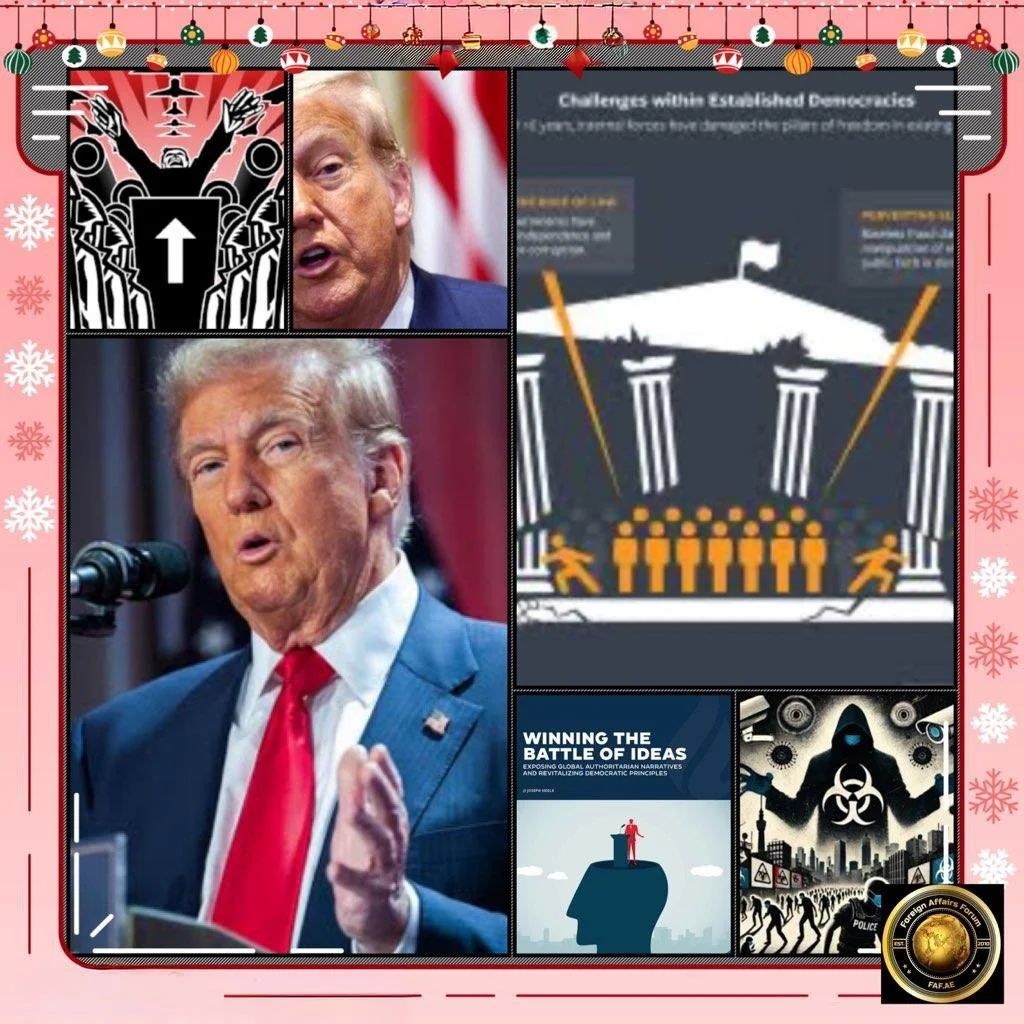
The Trump Administration’s Assault on American Democratic Institutions: A Critical Analysis - Trump’s competitive authoritarianism regime
Foreward
The Epstein Files Controversy and Justice Department Credibility
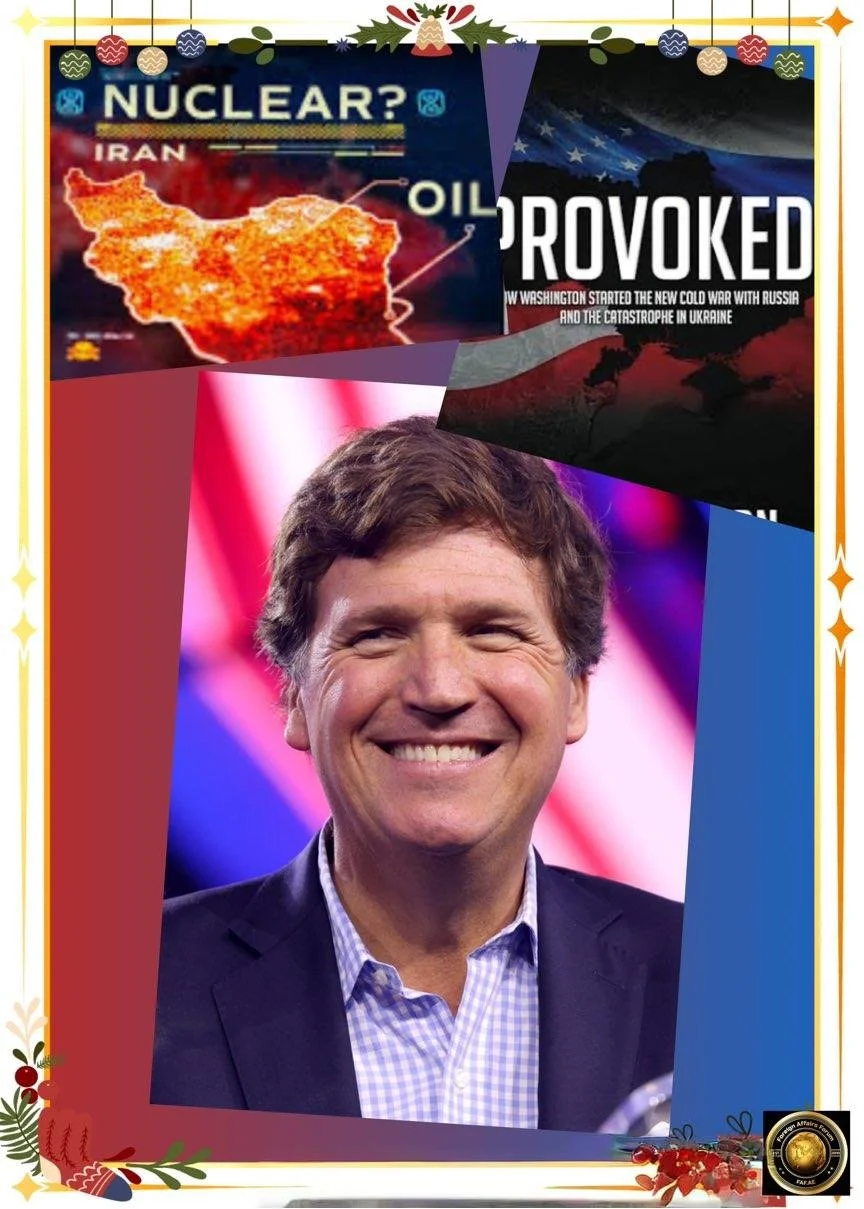
The Tucker Carlson interview with Saagar Enjeti has exposed a significant rift between the Trump administration’s promises and its actual delivery on transparency regarding the Jeffrey Epstein case.
The controversy centers on Attorney General Pam Bondi’s dramatic reversal from her initial February 2025 claim that the “Epstein client list” was “sitting on my desk” to her later clarification that she was referring to general case files, not a specific client list.
The Justice Department’s July 2025 memo concluded that no incriminating client list existed and that Epstein died by suicide, directly contradicting long-held conspiracy theories that had been promoted by now-FBI Director Kash Patel and Deputy Director Dan Bongino before joining the administration.
This revelation has triggered a backlash from Trump’s MAGA base, with conservative influencers from Laura Loomer to Elon Musk criticizing the administration’s handling of the case.
Carlson and Enjeti’s theory that intelligence agencies are protecting their own operations reflects deeper concerns about institutional capture and the politicization of justice.
Enjeti specifically cited a 2021 BuzzFeed report revealing that CIA officials committed sexual crimes involving children, most of whom were not prosecuted, suggesting a pattern of protecting individuals in sensitive positions to avoid exposing classified operations.
Systematic Attacks on International Justice and Human Rights Watchdogs
The Trump administration’s assault on international accountability mechanisms represents an unprecedented attack on global justice institutions.
The sanctions against International Criminal Court officials demonstrate a calculated strategy to undermine international law enforcement when it threatens American or Israeli interests.
The ICC Sanctions Campaign
President Trump issued an executive order in February 2025 authorizing sanctions on ICC personnel, followed by specific sanctions against Chief Prosecutor Karim Khan and four judges in June 2025.
These judges were targeted for their roles in authorizing investigations into alleged U.S. war crimes in Afghanistan and issuing arrest warrants for Israeli Prime Minister Benjamin Netanyahu and former Defense Minister Yoav Gallant.
The Albanese Sanctions
The July 2025 sanctions against UN Special Rapporteur Francesca Albanese represent a particularly troubling escalation.
Secretary of State Marco Rubio accused Albanese of conducting “illegitimate and shameful” efforts to encourage ICC action against U.S. and Israeli officials.
Albanese’s response that she is being targeted for her “pursuit of justice” while documenting what she describes as Israeli genocide in Gaza highlights the administration’s intolerance for international criticism.
The international response has been uniformly condemnatory.
UN High Commissioner for Human Rights Volker Türk described the sanctions as “deeply corrosive of good governance and the due administration of justice,” while the ICC condemned them as “a clear attempt to undermine the independence of an international judicial institution”.
The Erosion of the American Judicial System
The Trump administration’s confrontation with the federal judiciary represents one of the most severe challenges to constitutional governance in American history.
Legal scholars describe this as a systematic attack on judicial independence that parallels authoritarian tactics used in other countries experiencing democratic backsliding.
Court Defiance and Impeachment Threats
The administration has been accused of defying federal court orders, particularly regarding deportation policies.
Judge James E. Boasberg determined he had “probable cause to believe” that administration officials defied his order requiring a halt to deportations under the Alien Enemies Act.
Trump’s response was to call for Judge Boasberg’s impeachment, declaring on social media that judges were usurping presidential authority.
Unprecedented Legal Warfare
The Justice Department’s lawsuit against all 15 federal judges in Maryland represents an extraordinary escalation in the conflict between the executive and judicial branches.
Legal experts describe this as “extraordinary” and part of an escalating effort to challenge federal judges who rule against the administration.
Scholarly Assessment
Over 500 political scientists surveyed by Bright Line Watch rated American democracy’s performance as dropping from 67 to 55 points between November 2024 and February 2025, representing the biggest decline since the survey began in 2017.
Harvard’s Steven Levitsky, co-author of “How Democracies Die,” stated that “we are no longer living in a liberal democracy”.
Authoritarian Power Consolidation and the Collapse of Checks and Balances
The Trump administration’s systematic dismantling of democratic institutions follows what scholars identify as the authoritarian playbook.
The administration has moved with unprecedented speed to consolidate executive power and eliminate institutional constraints on presidential authority.
Executive Order Blitz
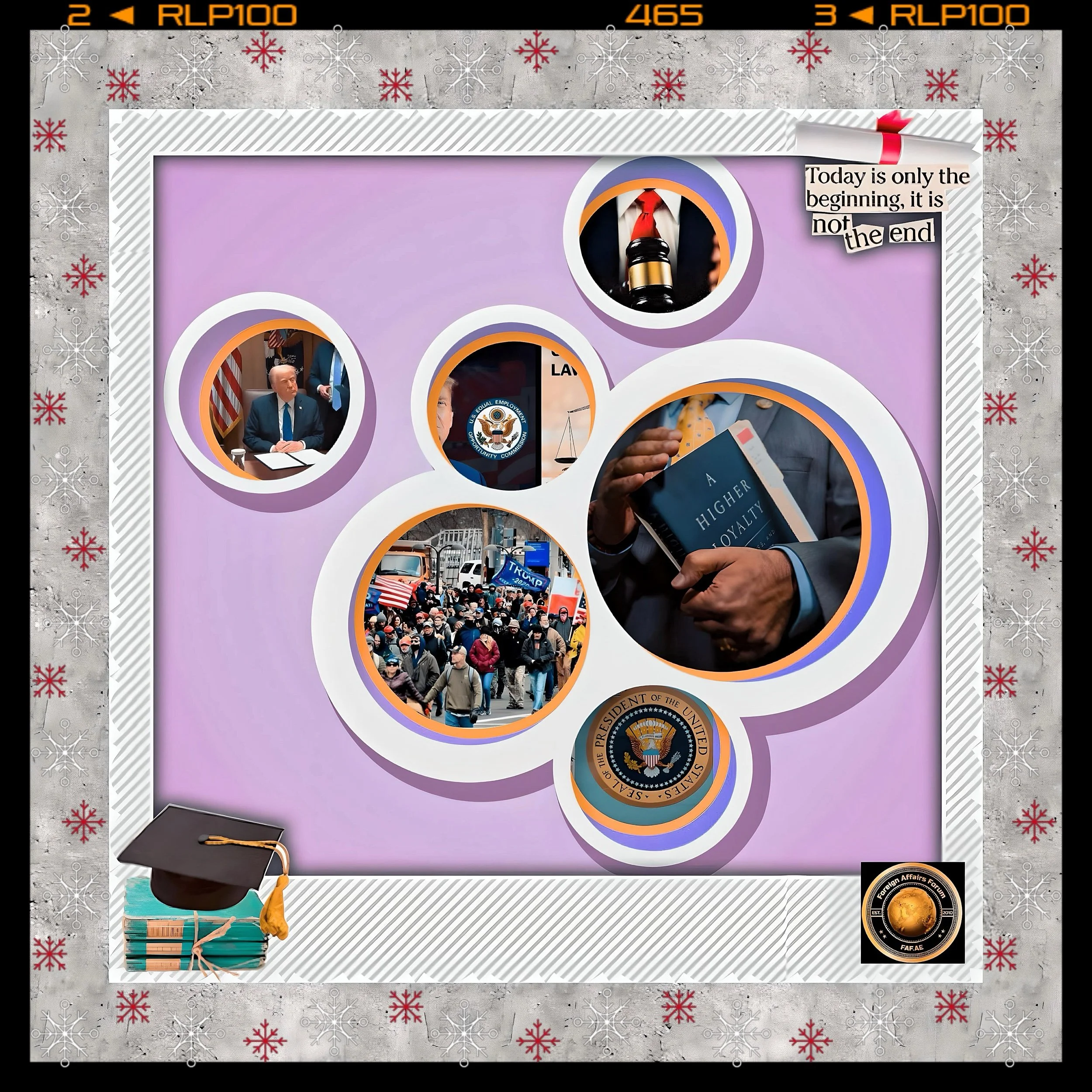
Trump has signed 124 executive orders in his first 100 days, compared to Biden’s 162 over his entire term, using these orders to bypass Congress and assert direct control over federal agencies.
Legal scholars note that Trump has “stretched his authority far more in just a few months than any recent president”.
Institutional Capture
The administration has systematically placed loyalists in key positions while removing career officials who might resist political interference.
This includes the illegal firing of inspectors general across 17 federal agencies, removing ethics enforcement officials who had previously investigated Trump administration corruption.
Justice Department Politicization
The transformation of the Justice Department into a political weapon represents perhaps the most dangerous development.
The administration has fired attorneys who worked on January 6 cases and Special Counsel Jack Smith’s investigations, while abandoning the prosecution of New York Mayor Eric Adams in what critics describe as a “crude quid pro quo”.
The Question of Totalitarian Drift
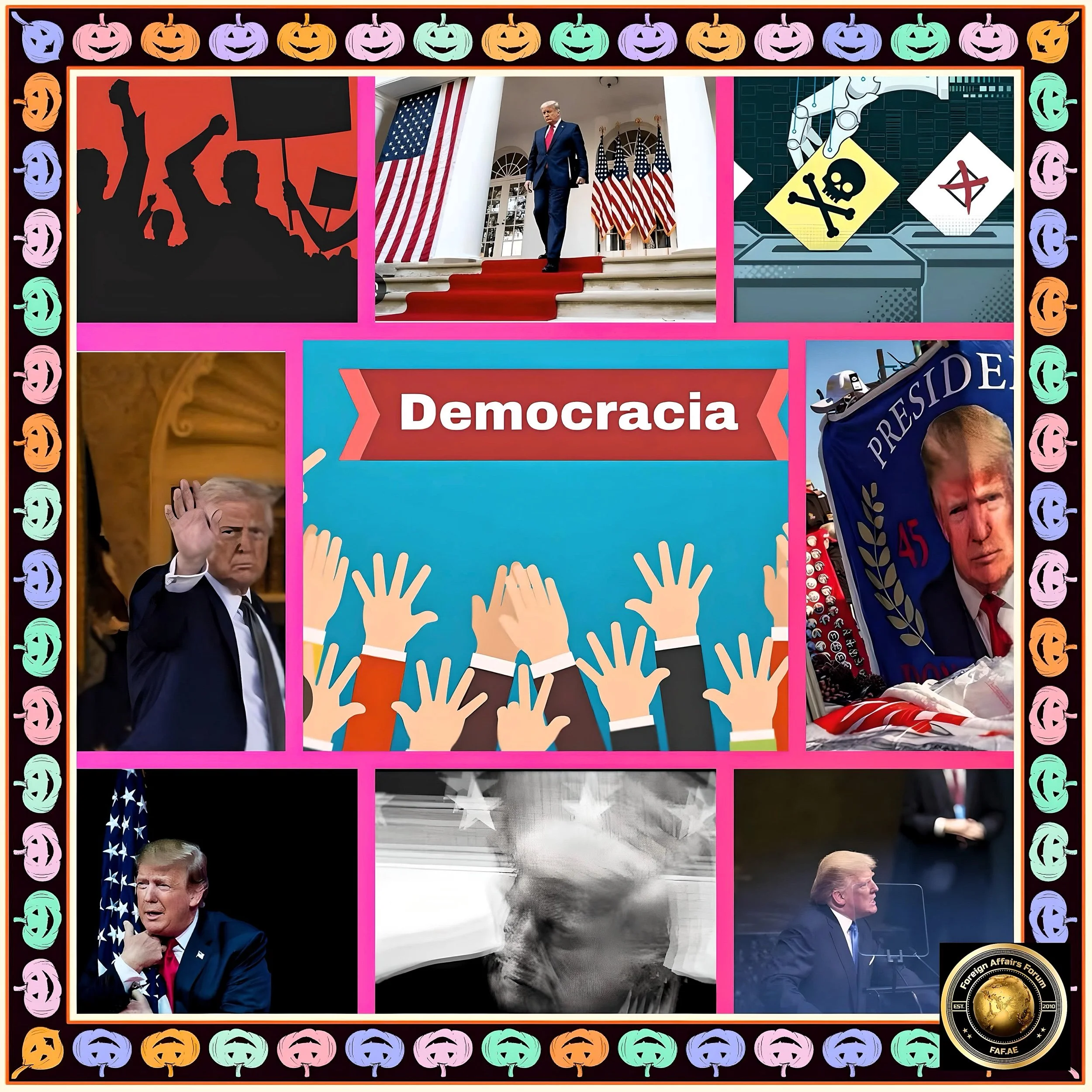
The evidence suggests that America is experiencing what scholars term “competitive authoritarianism” rather than outright totalitarianism.
Princeton’s Kim Lane Scheppele, who has studied Hungary’s democratic backsliding, warns that “we are on a very fast slide into what’s called competitive authoritarianism”.
Characteristics of Competitive Authoritarianism
Elections continue but under increasingly unfair conditions
Opposition faces legal harassment and resource constraints
Media and civil society operate under growing pressure
International oversight is rejected and sanctions imposed on critics
Judicial independence is systematically undermined
Constitutional Crisis Indicators: Legal experts identify several signs that America may be entering a constitutional crisis:
Executive defiance of judicial orders
Attempts to impeach judges for adverse rulings
Systematic attacks on oversight mechanisms
Politicization of law enforcement agencies
Rejection of international legal constraints
Presidential Accountability and the Erosion of Democratic Norms
The Supreme Court’s presidential immunity ruling has fundamentally altered the accountability landscape for American presidents.
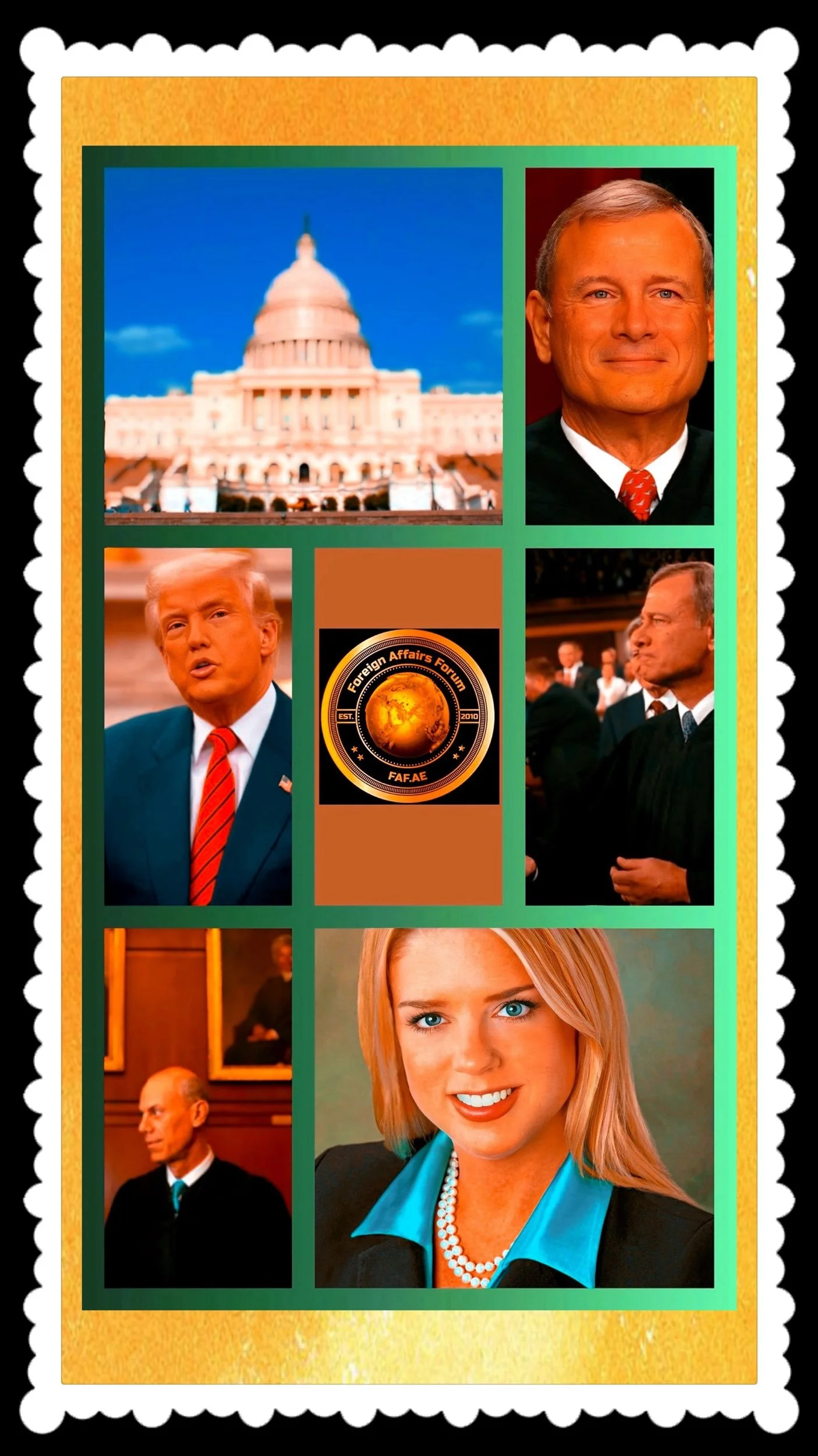
Chief Justice John Roberts’ assertion that the president wields “exclusive authority over the investigative and prosecutorial functions of the Justice Department” has emboldened Trump to treat the department as his personal enforcement arm.
The Immunity Shield
The Court’s ruling means that Trump can now “misuse the department to his heart’s content without ever having to worry about criminal liability after the fact”. This represents a dramatic departure from the principle that no one is above the law.
Institutional Degradation
The administration’s attacks on civil liberties organizations, human rights watchdogs, and international oversight mechanisms create what legal scholars describe as “a climate of fear and division” that undermines democratic governance.
Democratic Backsliding Acceleration
Unlike his first term, where Trump’s actions were constrained by institutional norms and personnel, his second term has seen the rapid implementation of what critics describe as “a punishing ruthlessness” designed to “subjugate the workforce to the wishes and demands of the administration”.
Conclusion
Implications for American Democracy
The convergence of these factors—the Epstein cover-up controversy, attacks on international justice, judicial defiance, and systematic power consolidation—suggests that American democracy is facing its most severe test since the Civil War.
The administration’s actions represent what constitutional scholars describe as a “self-coup” conducted from within the executive branch.
International Isolation
America’s attacks on international justice institutions have isolated the country from traditional allies and emboldened authoritarian regimes worldwide.
The administration’s refusal to cooperate with UN human rights mechanisms and its sanctions on international officials represent a fundamental rejection of the rules-based international order.
Institutional Collapse
The rapid erosion of checks and balances, combined with the Supreme Court’s immunity ruling, has created conditions where presidential power faces few meaningful constraints.
As Georgetown’s Stephen Vladeck notes, “we have never witnessed a president so thoroughly attempt to appropriate and centralize so much influence from other branches of government”.
The Tucker Carlson interview with Saagar Enjeti, while focused on the Epstein files controversy, has inadvertently highlighted a much larger crisis: the systematic transformation of American democracy into an authoritarian system where power is concentrated in the executive branch, dissent is suppressed, and international law is rejected.
Whether this transformation can be reversed through democratic means remains an open and deeply troubling question.
The American people face a choice between accepting this authoritarian drift or mobilizing to defend democratic institutions before they are completely captured.
The window for such mobilization may be rapidly closing as the administration consolidates its control over law enforcement, the judiciary, and civil society.
The Epstein files controversy, rather than being a mere political scandal, represents a symptom of a much deeper disease affecting the body politic of American democracy.