Defense.Forum: How Trump Could Lose This War: The Risks of Escalation in Iran, The Current Military Reality
Introduction
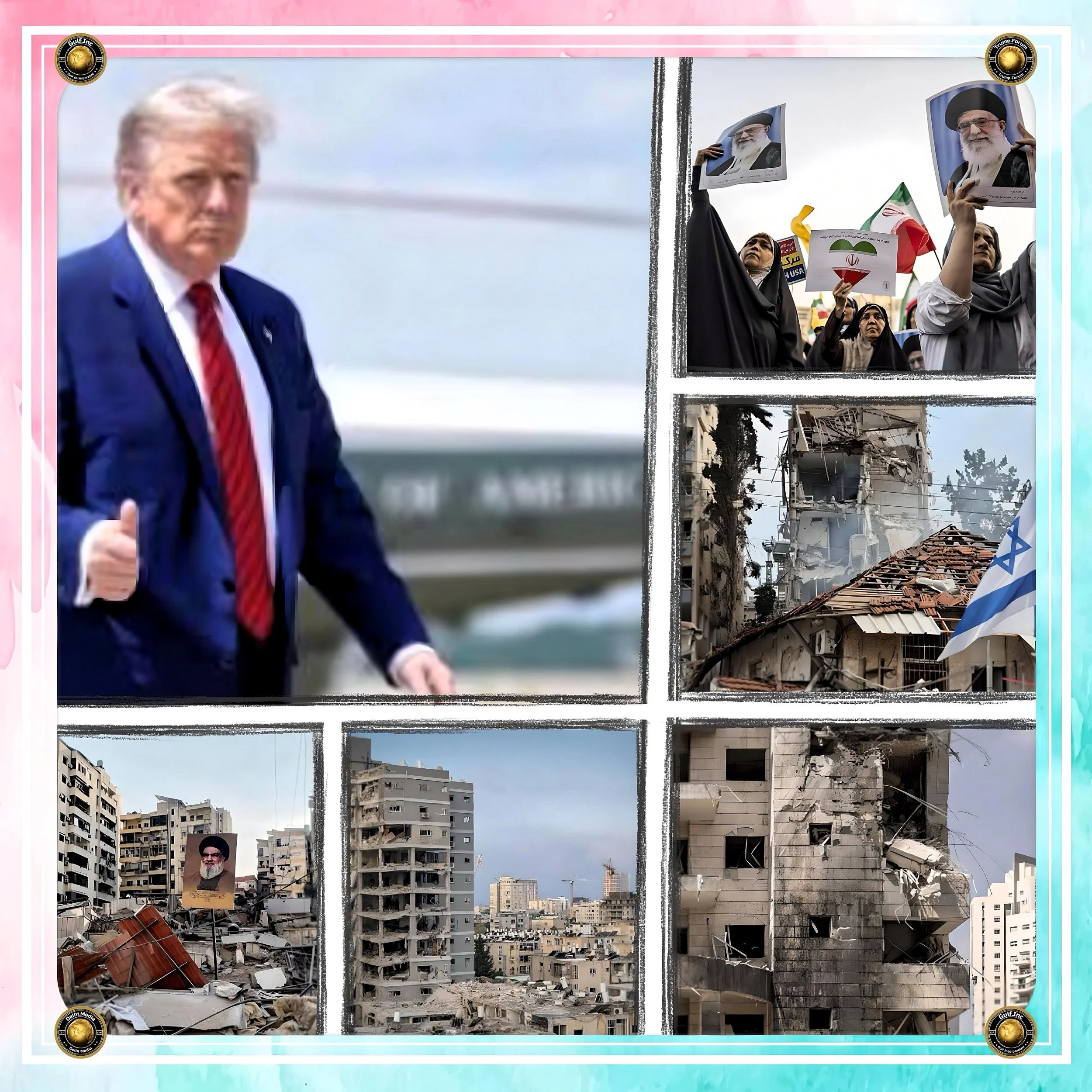
President Donald Trump’s decision to strike Iranian nuclear facilities on June 21, 2025, marks a historic turning point in the decades-long standoff with Tehran.
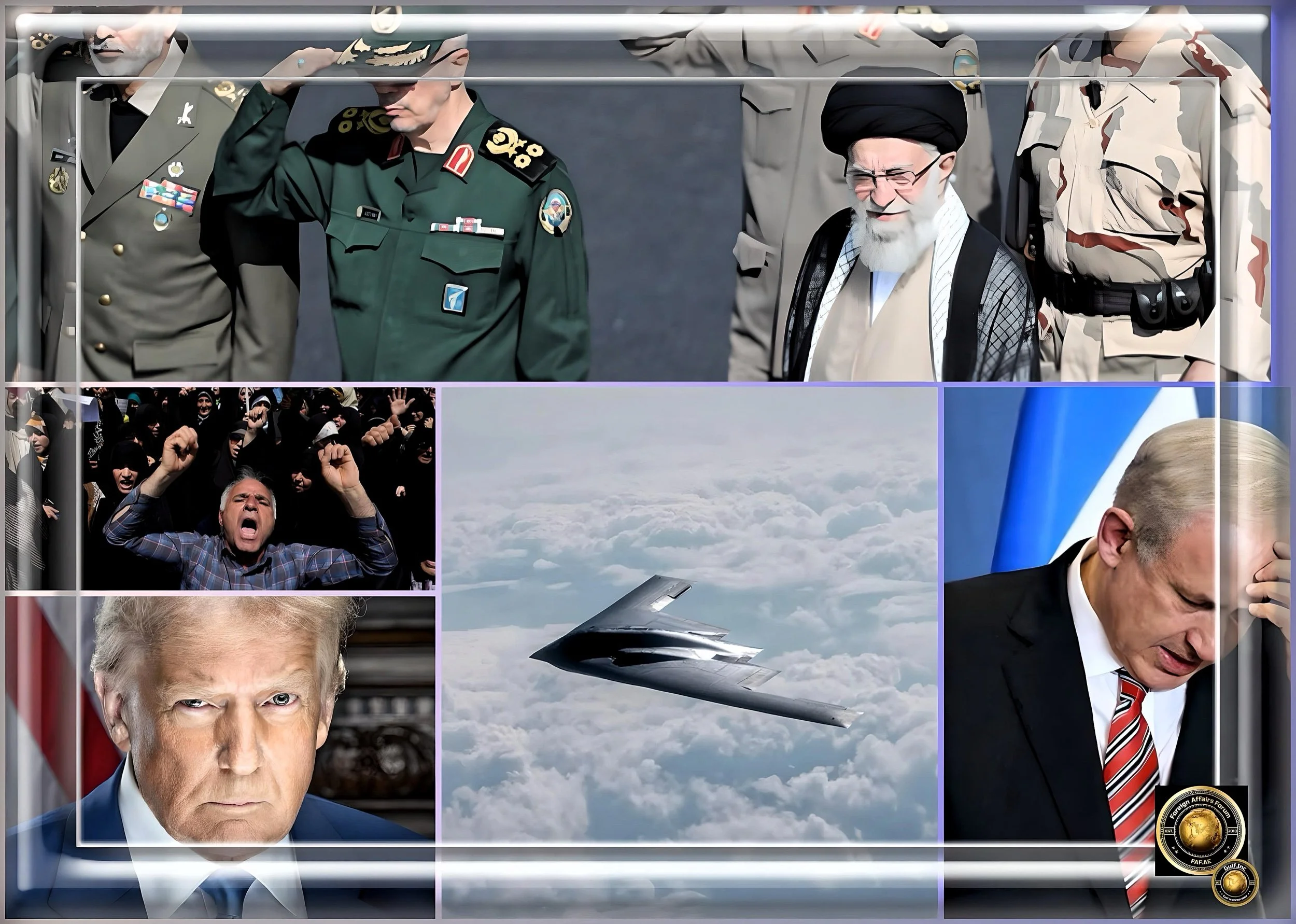
The operation, dubbed “Operation Midnight Hammer,” involved seven B-2 Spirit bombers dropping 14 massive 30,000-pound bunker-buster bombs (GBU-57 Massive Ordnance Penetrators) on three critical nuclear sites: Fordow, Natanz, and Isfahan.
This represents the first time these specialized weapons have been used in combat operations.
Trump declared that Iran’s nuclear facilities were “completely obliterated,” though comprehensive damage assessments remain pending.
Satellite imagery reveals at least six substantial craters at the Fordow facility, indicating successful penetration of the underground complex buried approximately 80-90 meters beneath a mountain.
However, Iranian officials have disputed the extent of the damage, with some claiming the facilities suffered only a limited impact.
The First Risk
Insufficient Destruction
The analysis's initial concern proves prescient: The strikes may not achieve lasting destruction of Iran’s nuclear capabilities.
Despite Trump’s bold claims, independent verification of the damage remains elusive.
Bloomberg’s analysis suggests that rather than providing a quick victory, the strikes have complicated the task of tracking uranium stockpiles and ensuring Iran cannot rebuild its weapons program.
Several factors contribute to this uncertainty.
First, Iranian officials confirmed that Iran had time to evacuate personnel and potentially relocate critical materials before the strikes.
Second, the massive bunker-buster bombs, while unprecedented in their destructive power, may not have destroyed the deeply buried facilities at Fordow.
Third, Iran’s nuclear program extends beyond these three sites, and the country maintains substantial technical knowledge and expertise that cannot be bombed away.
The International Atomic Energy Agency (IAEA) reported no increase in off-site radiation levels following the attacks. Still, its chief, Rafael Grossi, acknowledged that assessing the full damage would take considerable time.
This uncertainty creates a dangerous gap where Iran could potentially claim its program remains intact while secretly working to rebuild capabilities.
The Greater Risk
Mission Creep and Regime Change
The more significant danger lies in the opposite direction—expanding objectives beyond the limited scope. Israeli Prime Minister Benjamin Netanyahu has repeatedly called for regime change in Iran, appealing directly to the Iranian people on four separate occasions over the past year to overthrow their government.
Netanyahu’s strategy appears focused on “regime collapse” rather than “regime change,” hoping that military pressure will cause the Islamic Republic to crumble from within.
Trump’s administration has explicitly rejected regime change as an objective, with Vice President JD Vance stating: “Our view has been apparent that we don’t want a regime change.
We want to end their nuclear program, and then we want to talk to the Iranians about a long-term settlement”.
Defense Secretary Pete Hegseth reinforced this position, emphasizing that the operation had “deliberately confined” parameters.
However, the pressure for mission creep remains substantial. Several factors could drive an expansion of objectives:
Political Pressure from Israel
Netanyahu’s government has invested heavily in the narrative that only regime change can permanently solve the Iran problem.
Israeli officials argue that as long as the current regime remains in power, it will eventually rebuild its nuclear capabilities regardless of military setbacks.
This logic creates pressure for increasingly aggressive action.
Iranian Retaliation Dynamics
Iran has vowed to retaliate against U.S. interests, with Foreign Minister Abbas Araghchi warning of “everlasting consequences” and stating that “all options are on the table”.
Historical precedent suggests Iran will likely respond through asymmetric means, including attacks on U.S. military bases, disruption of shipping in the Persian Gulf, and activation of proxy forces.
If Iran’s retaliation proves effective or causes significant U.S. casualties, domestic pressure could mount for more comprehensive military action.
As one former U.S. official noted, “Missiles, militias, and acts of hostage-taking—that’s their go-to range of options”.
The Forever Wars Contradiction
Trump’s decision to strike Iran directly contradicts his long-standing criticism of America’s “forever wars” in the Middle East.
During his 2016 campaign and first presidency, Trump repeatedly condemned U.S. involvement in Iraq, Afghanistan, and other Middle Eastern conflicts as “stupid” and “endless”.
This contradiction has already created fissures within Trump’s MAGA base, with prominent supporters like Steve Bannon, Tucker Carlson, and Marjorie Taylor Greene expressing concern about U.S. involvement in another Middle Eastern conflict.
Iran’s Foreign Minister specifically highlighted this contradiction, stating that Trump “betrayed his voters” who elected him on a platform of ending America’s costly foreign wars.
The Dangers of Regime Change Strategy
Should Trump be drawn into pursuing regime change, either through escalating Iranian retaliation or political pressure, the risks multiply exponentially.
Historical precedent from Iraq, Libya, Syria, and Afghanistan demonstrates the catastrophic consequences of forced regime change in the Middle East.
Power Vacuum and Instability
Iran’s Islamic Revolutionary Guard Corps (IRGC) remains the most powerful institution within the country and would likely fill any power vacuum created by regime collapse.
A military dictatorship led by the IRGC could prove even more aggressive and dangerous than the current clerical regime, particularly regarding nuclear weapons development.
Regional Spillover Effects
Iran’s collapse would create massive refugee flows and destabilization across the region, particularly affecting neighboring Pakistan, which shares a 900-kilometer border. The proxy networks Iran has built across the Middle East would likely fragment into independent militant groups, potentially creating new security threats.
Nuclear Acceleration
U.S. intelligence officials assess that Iran would likely accelerate its nuclear weapons program if facing regime collapse or if key facilities like Fordow were bombed.
The logic is straightforward: a regime fighting for survival would view nuclear weapons as essential for deterrence.
The Path Forward
Avoiding Strategic Failure
To prevent this war from becoming a strategic disaster, Trump must resist the temptation to expand objectives beyond the current limited scope. Several principles should guide U.S. strategy:
Maintain Limited Objectives
The focus must remain narrowly defined on dismantling Iran’s nuclear capabilities rather than broader regime change.
As Defense Secretary Hegseth emphasized, “This is not an open-ended situation”. Expanding goals beyond nuclear disarmament risks creating the very “forever war” scenario Trump has long criticized.
Prepare for Asymmetric Response
Iran’s retaliation will likely come through unconventional means designed to exploit U.S. vulnerabilities without triggering an overwhelming military response.
This includes attacks on regional allies, disruption of energy supplies through the Strait of Hormuz, and activation of proxy forces like the Houthis in Yemen.
Diplomatic Off-Ramps
Despite the military escalation, diplomatic channels should remain open for de-escalation.
Trump’s previous success in preventing broader conflict after assassinating Iranian General Qasem Soleimani in 2020 demonstrates that military action need not inevitably lead to full-scale war.
Conclusion
Depending on how the situation evolves, Trump’s strike on Iran represents both a historic gamble and a potential strategic triumph.
The limited objective of destroying Iran’s nuclear capacity aligns with U.S. national interests and available military means.
However, the war could easily spiral into a broader conflict if Trump allows mission creep to expand objectives toward regime change or if Iranian retaliation provokes escalatory responses.
The president who promised to end America’s forever wars now faces the challenge of preventing his own military action from creating another one
Success will require maintaining strategic discipline, resisting political pressure for broader objectives, and managing Iranian retaliation without escalation.
The stakes could not be higher—both for regional stability and Trump’s political legacy as a leader who sought peace through strength rather than endless military interventionism.