Defense.Live- Operation Spider’s Web and the Future of War: How Drones and AI Are Reshaping Modern Conflict
Introduction
The landscape of modern warfare has undergone a seismic transformation, exemplified most dramatically by Ukraine’s Operation Spider’s Web on June 1, 2025—a coordinated drone assault that struck deep into Russian territory and destroyed billions of dollars worth of strategic bombers.
FAF, Defense.Forum analyzes the operation, alongside the first-ever drone war between India and Pakistan in May 2025, signals that the world has entered a new era of warfare where technological innovation fundamentally alters the balance of military power.
The Audacious Operation Spider’s Web
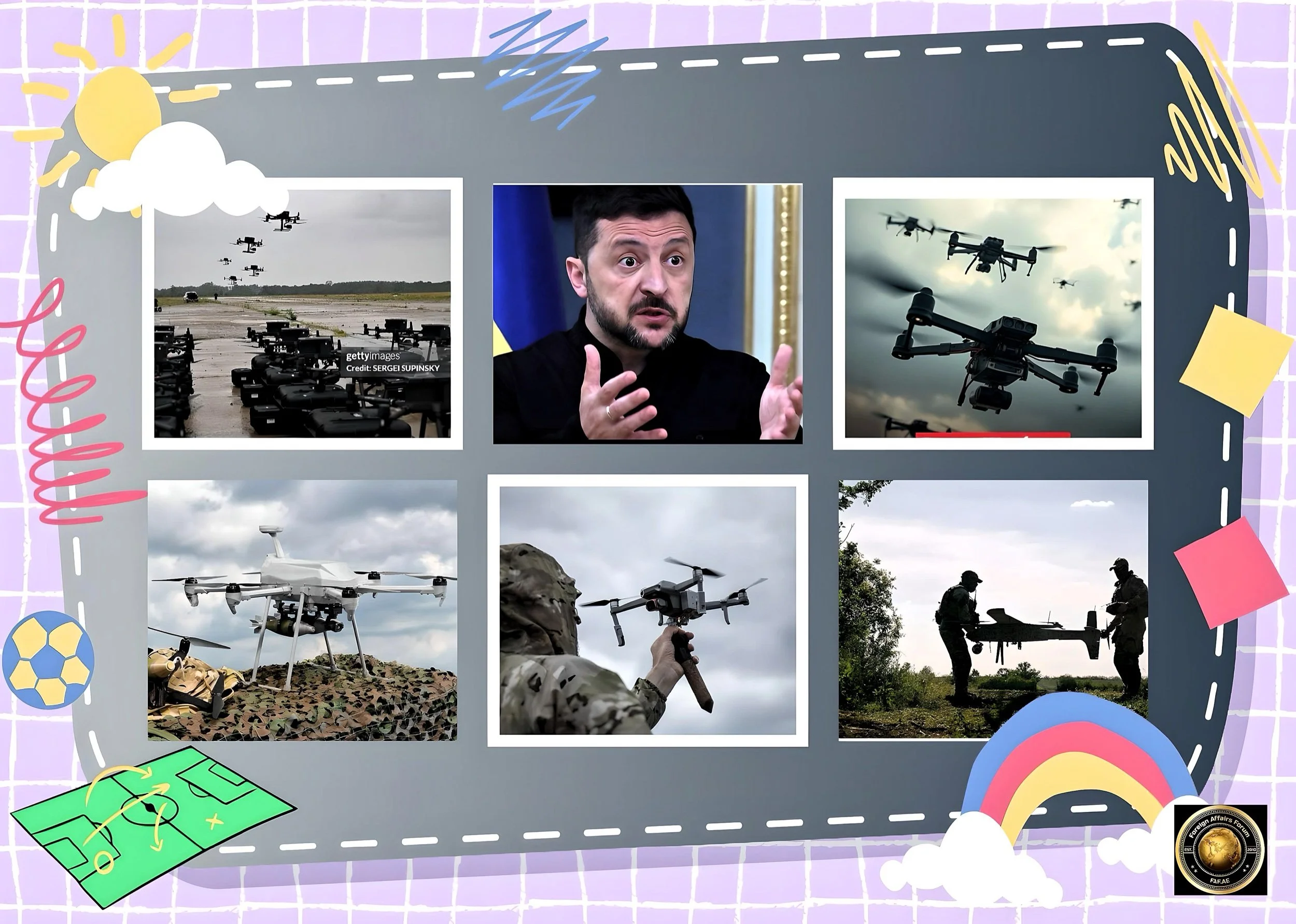
Operation Spider’s Web represents one of the most sophisticated covert military operations of the 21st century, demonstrating how relatively inexpensive technology can deliver strategic blows against major military powers. The Ukrainian Security Service (SBU) deployed 117 drones across five Russian airbases spanning five time zones, from Belaya Air Base in Eastern Siberia—4,300 kilometers from Ukraine—to installations near Moscow.
The operation’s execution was as remarkable as its scope. Ukrainian agents smuggled drones concealed in modified trucks with remote-controlled roofs, positioning them strategically near targeted airbases. These First-Person View (FPV) drones, using commercial-grade technology enhanced with artificial intelligence, were programmed to strike Russian aircraft at their most vulnerable points.
Ukrainian intelligence sources reported that AI solutions analyzed museum pieces of old Russian planes as training data to optimize targeting.
According to Ukrainian officials, the operation destroyed or damaged 41 Russian warplanes, including strategic bombers capable of carrying nuclear weapons and cruise missiles, representing approximately 34% of Russia’s strategic bomber fleet. The estimated damage reached $7 billion, achieved at a fraction of the cost using drones worth hundreds of dollars each.
Military expert Mara Karlin, former Assistant Secretary of Defense for Strategy, Plans, and Capabilities, emphasizes that while Operation Spider’s Web was stunning, “it does not completely change the face of this war”. However, she notes it will make operations significantly harder for Russia because “these are not easy planes to replace” and highlights the continued importance of surprise and strategic planning in warfare.
The India-Pakistan Drone War: A New Chapter in South Asian Conflict
Just one month before Operation Spider’s Web, the world witnessed its first drone war between nuclear-armed neighbors when India and Pakistan engaged in four days of unprecedented aerial combat from May 7-10, 2025. This conflict, triggered by the Pahalgam terrorist attack that killed 26 civilians, marked a fundamental shift in how these traditional rivals conduct warfare.
India launched Operation Sindoor with precision strikes using Israeli-made Harop, Harpy, and other advanced drone systems.
The Indian military deployed these platforms in three distinct waves, initially conducting Suppression of Enemy Air Defenses (SEAD) missions to paralyze Pakistan’s air defense networks. Pakistan responded with Operation Bunyan-um-Marsoos, deploying 300-400 drones across 36 locations, including Turkish-supplied Byker Yiha Kamikaze and Asisguard Songar systems.
The conflict demonstrated contrasting tactical approaches: Pakistan attempted to overwhelm India’s defenses through mass drone attacks, while India focused on precision targeting of military infrastructure. India successfully neutralized most Pakistani drone incursions using its S-400 defense systems and deployed counter-drones against Pakistani installations.
Karlin observes that this conflict illustrates the “stability-instability paradox,” where nuclear powers are “more likely to escalate below that threshold,” noting that drones occupy a “murky middle” in escalation dynamics between conventional artillery and cruise missiles.
The Democratization of Military Power Through Technology
The proliferation of drone technology fundamentally redistributes military capabilities across the global security landscape. The Global Peace Index 2025 revealed that drone manufacturers exploded from just six companies in 2022 to over 200 by 2024. Ukraine alone expects to produce more than 2.5 million drones in 2025, while drone attacks by Ukrainian forces have increased by more than 127 times since the early days of the conflict.
This technological democratization enables smaller actors to challenge traditional military hierarchies. Technologies costing only hundreds of dollars can now disable or destroy military assets worth millions, fundamentally redressing the power balance between state and non-state actors. The low-cost, high-impact nature of drone warfare gives insurgents and militias tools that allow them to resist far more powerful conventional forces.
However, Karlin cautions against oversimplifying this dynamic. While technology helps “Level the playing field” in the short term, the story of military innovation is less about who sets the exceptional capability first, and more about “who’s able to integrate and scale it first”. She emphasizes that larger military powers typically maintain advantages through superior integration and adaptation capabilities in the medium to long term.
Artificial Intelligence: The Force Multiplier
Integrating artificial intelligence with drone technology represents perhaps the most significant advancement in modern warfare capabilities.
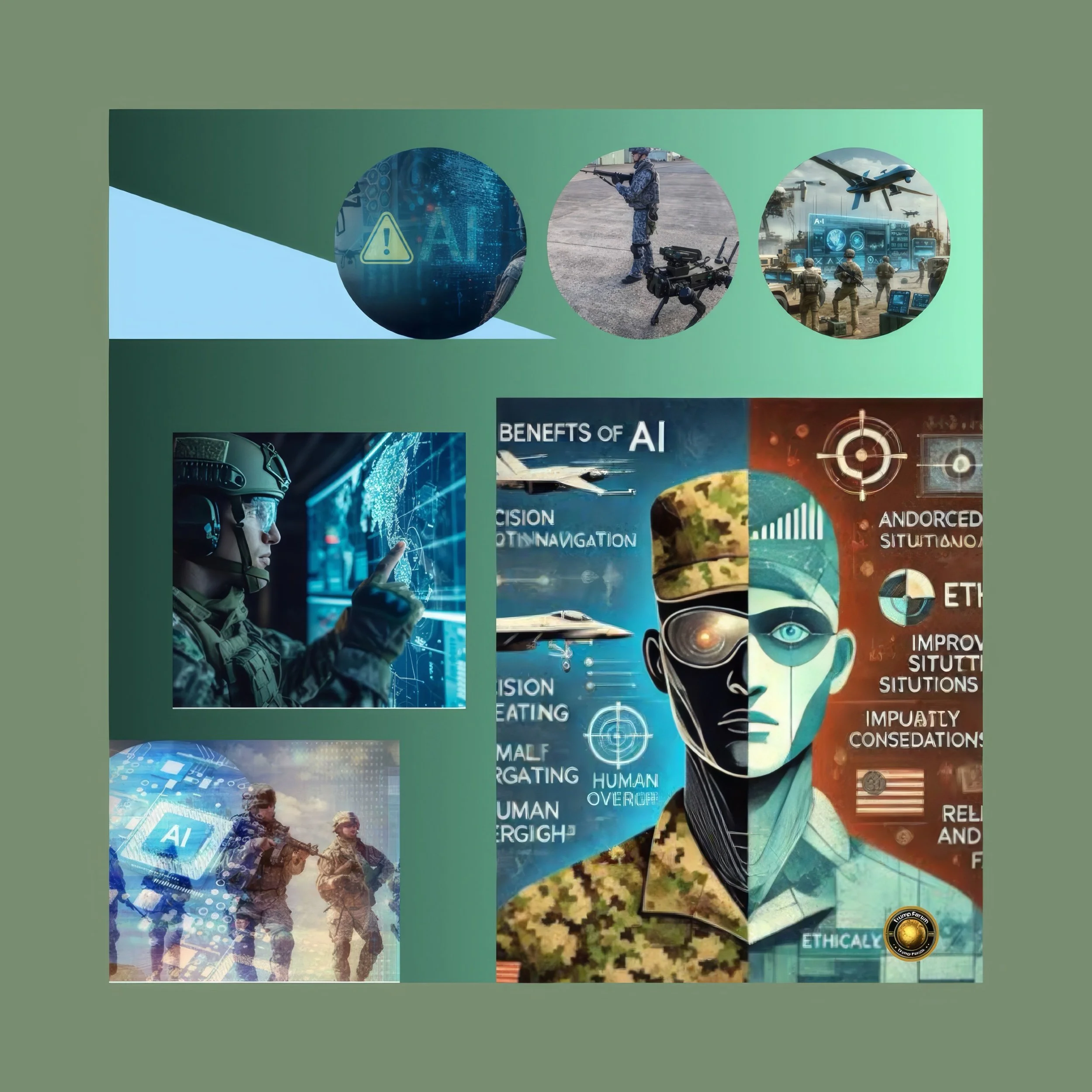
AI enhances drone systems through two major innovations: swarm intelligence and autonomous targeting. These systems can operate collaboratively, overwhelming defenses through coordinated strikes while making split-second decisions with minimal human intervention.
Operation Spider’s Web showcased how AI transforms simple commercial drones into sophisticated weapons systems.
The Ukrainian drones used ArduPilot, an open-source autopilot software commonly used by hobbyists, enhanced with AI algorithms that enabled autonomous navigation even when operators temporarily lost signal. This allowed the drones to continue their missions deep within Russian territory without human control.
Karlin emphasizes that AI is “speeding up warfare” and enabling countries to understand complex battlefields through improved information processing better. AI systems analyze intercepted communications, track enemy movements, and process vast amounts of surveillance data, extending the effectiveness of intelligence operations. However, she warns about AI “speeding up decision cycles too much,” potentially creating pressure to respond without adequate deliberation, which “could be quite dangerous in conflict”.
The next generation of drones will be AI-enhanced, capable of autonomous navigation, swarm coordination, and precision targeting.
These systems represent not just technological upgrades but a profound change in how wars are fought, with drone swarms deployable with limited human oversight for sustained, low-cost, high-impact operations.
The Collapse of the Continuum of Conflict
Modern warfare no longer fits traditional frameworks that categorized conflicts along a spectrum from low-intensity to high-intensity operations.
Karlin argues that we are witnessing “the collapse of the continuum of conflict,” where contemporary battles simultaneously feature elements across the spectrum.
In Ukraine, autonomous drones launch missiles while “robot dogs” patrol trenches reminiscent of World War I, all under the specter of nuclear weapons. The Middle East combines sophisticated air defense systems with individual shooting attacks, while the Indo-Pacific features advanced naval capabilities alongside cyber warfare.
This represents what Karlin terms a return to “total war,” where combatants draw on vast resources, mobilize societies, and attack broad varieties of targets.
This transformation requires military planners to abandon traditional linear thinking about conflict escalation. Instead of discrete categories, modern warfare presents “everything, everywhere, all at once”—a complex integration of conventional, unconventional, cyber, and nuclear domains operating simultaneously.
Strategic Implications for Military Powers
The proliferation of advanced drone and AI technologies creates opportunities and challenges for established military powers. China has made significant progress in autonomous technologies, with breakthroughs in vehicle perception and navigation enhancing both military and civilian applications. Chinese advancements in AI-driven reconnaissance drones, including bird-shaped systems reported in 2024, demonstrate sophisticated capabilities for bypassing traditional security measures.
The United States faces particular challenges in adapting to this new warfare paradigm. Karlin notes concerns about the “hollowing out of the civilian force in the Defense Department,” which makes conducting civilian oversight and meaningful defense planning difficult. She warns that civilian oversight is crucial for looking holistically across forces and strategically allocating resources.
With its $175 billion price tag over three years, the Trump administration's Golden Dome missile defense initiative represents a fundamental shift in American defense strategy. Karlin criticizes this approach as potentially problematic, noting it would consume about a fourth of the defense budget while “effectively saying to our adversaries that America will just hunker down and focus on protecting itself”. This contradicts historical U.S. defense planning that emphasized power projection to address challenges before they reach American territory.
The Arms Race in Drone Countermeasures
The proliferation of drone threats has triggered intensive development of countermeasure technologies. India’s response to drone warfare includes advanced AESA radars, AWACS systems, integrated command networks, and various neutralization methods, including Akash SAMs, anti-aircraft guns, lasers, and electronic jamming systems. Indigenous projects like Bhargavastra rockets and the Indrajaal defense grid represent comprehensive approaches to drone threat mitigation.
The challenge extends beyond individual platforms to address swarm attacks. In 2024, the U.S. Army tested countermeasures against swarms of up to 40 drones, illustrating the urgency of developing effective multi-drone defenses. These systems must integrate kinetic and non-kinetic solutions, including electronic warfare capabilities that jam or redirect autonomous systems.
However, the rapid pace of drone innovation creates an asymmetric challenge where defensive systems costing millions must counter offensive platforms costing thousands. This economic disparity forces military planners to develop layered defense approaches that combine multiple technologies and tactics.
Nuclear Implications and Escalation Dynamics
The intersection of drone warfare with nuclear-armed states introduces unprecedented complexities to deterrence calculations. Karlin observes that nuclear weapons have taken on “greater salience over the last few years” due to Russian saber-rattling and the demonstrated vulnerability of conventional forces to drone attacks. This has triggered discussions about nuclear capabilities in countries that previously avoided such conversations, including South Korea, Japan, Germany, Poland, and Sweden.
The India-Pakistan drone conflict demonstrated how these sophisticated systems can enable escalation below the nuclear threshold while maintaining strategic ambiguity. Both countries could conduct significant military operations without risking pilot casualties or triggering automatic escalation mechanisms associated with aircraft losses.
This dynamic challenges traditional extended deterrence arrangements. Karlin notes that U.S. allies are “effectively saying, ‘We don’t trust that compact anymore,’” leading to discussions about alternative nuclear arrangements, including potential European deterrence frameworks. The credibility of extended deterrence now requires more sophisticated approaches, including forward deployment of atomic platforms and more integrated war planning with allies.
Economic and Industrial Transformation
The drone revolution is reshaping defense industrial bases worldwide. India plans to invest up to $470 million in UAV capabilities over the next 12-24 months—approximately three times pre-conflict levels—as both countries enter a race for drone superiority. This represents a fundamental shift in defense procurement priorities from expensive, complex platforms to distributed, lower-cost systems.
The economic implications extend beyond military spending to civilian technology sectors. Integrating commercial technologies into military applications blurs traditional boundaries between defense and civilian industries. Companies producing commercial drones, AI software, and electronic components suddenly become critical elements of national security infrastructure.
This transformation forces traditional defense contractors to adapt their business models while creating opportunities for smaller, more agile companies to enter the defense market. The democratization of military technology means that innovative solutions can emerge from unexpected sources, challenging established defense acquisition processes.
Future Warfare Scenarios
Military experts anticipate further evolution toward AI-driven autonomous systems operating in coordinated swarms. Future conflicts will likely feature semi-autonomous drones making in-flight decisions, integrated with cyber and space-based systems. Countries are racing to develop better detection capabilities through satellite radar and cheaper countermeasures, including directed-energy weapons and cyber-hacking capabilities.
The convergence of multiple technologies—drones, AI, cyber capabilities, and space systems—will create new forms of integrated warfare that challenge traditional military doctrines. Karlin emphasizes that successful military organizations must develop “new approaches to rules of engagement, surveillance, and precision-targeted strikes” while maintaining human oversight of autonomous systems.
The proliferation of these technologies to non-state actors presents additional challenges. Terrorist groups and criminal organizations gaining access to sophisticated drone and AI capabilities could conduct attacks previously requiring state-level resources. This necessitates new approaches to homeland security and international cooperation in technology governance.
Preparing for the New Era
The transformation of warfare through drones and AI requires fundamental changes in military planning, training, and doctrine. Karlin argues that military organizations must develop “new frameworks for balancing intelligence preservation against operational effectiveness” while adapting to opponents with sophisticated counterintelligence capabilities.
Educational institutions and military academies need to integrate emerging technologies into their curricula while maintaining focus on fundamental principles of strategy and leadership. The speed of technological change means that military professionals must become continuous learners, adapting to new capabilities and threats throughout their careers.
International cooperation becomes increasingly critical as these technologies proliferate globally. Developing common standards, sharing threat intelligence, and coordinating defensive measures will be essential for maintaining stability in an era of democratized military power.
Conclusion
Operation Spider’s Web and the India-Pakistan drone war mark inflection points in military history, demonstrating how technological innovation can rapidly reshape the strategic landscape. While drones and AI offer smaller powers new capabilities to challenge traditional military hierarchies, the ultimate advantage will likely accrue to those nations and organizations that most effectively integrate, scale, and adapt these technologies within comprehensive strategic frameworks.
The collapse of traditional conflict categories and the emergence of “total war” characteristics in modern conflicts require military planners, policymakers, and scholars to reconsider their approaches to warfare, deterrence, and international security. As Karlin observes, we are witnessing not just technological evolution but a transformation in the nature of conflict itself—one that demands new thinking about how to prepare for, conduct, and ultimately prevent future wars.
The democratization of military power through accessible technologies creates both opportunities for deterrence and risks of miscalculation. Success in this new era will require technological superiority and wisdom in how these powerful tools are integrated into broader strategies for maintaining peace and security in an increasingly complex world.