Defense.Forum-The Many Ways U.S. Involvement in the War on Iran Could Go Badly - Trump’s Evolving Position on Iran?
Introduction
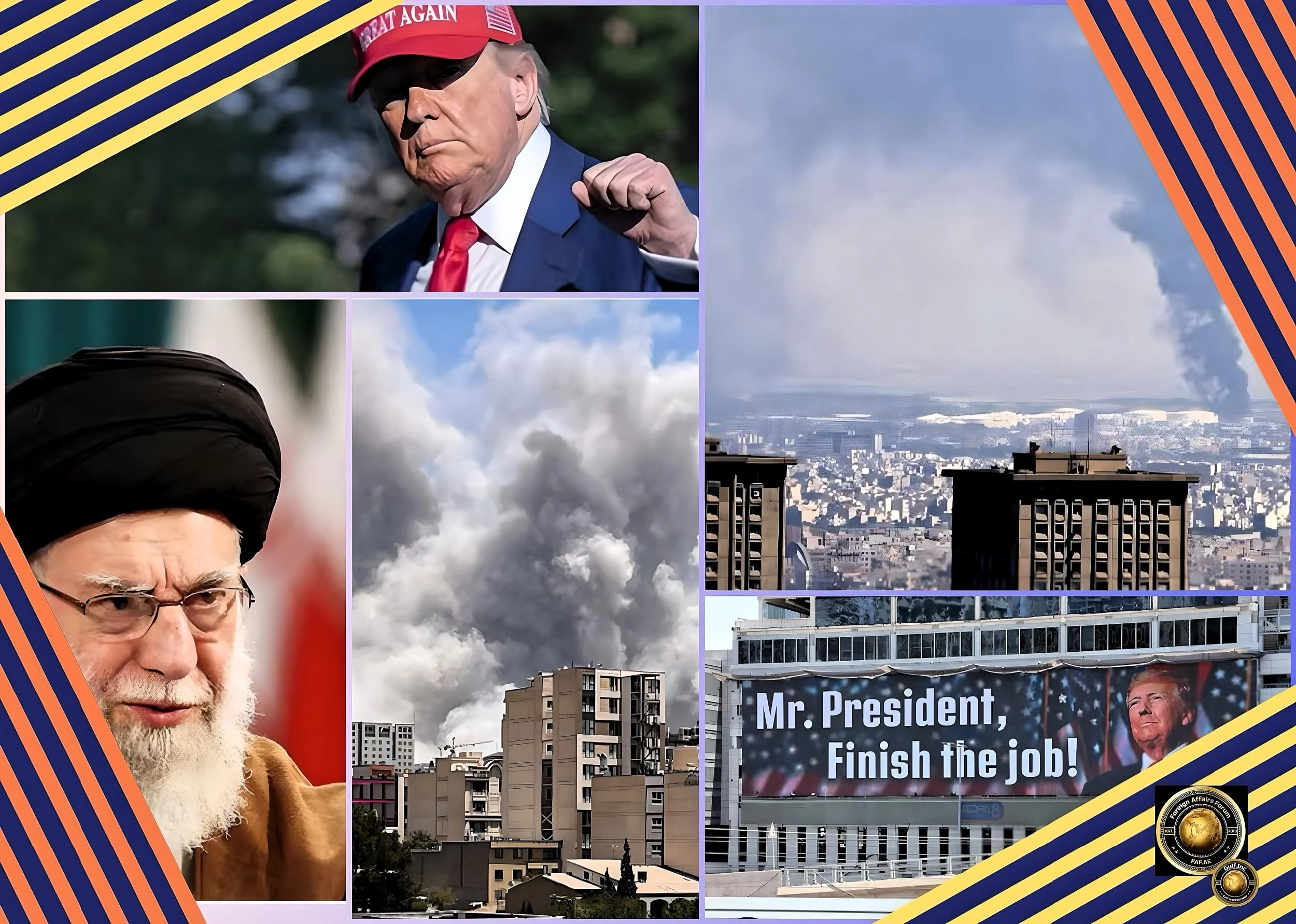
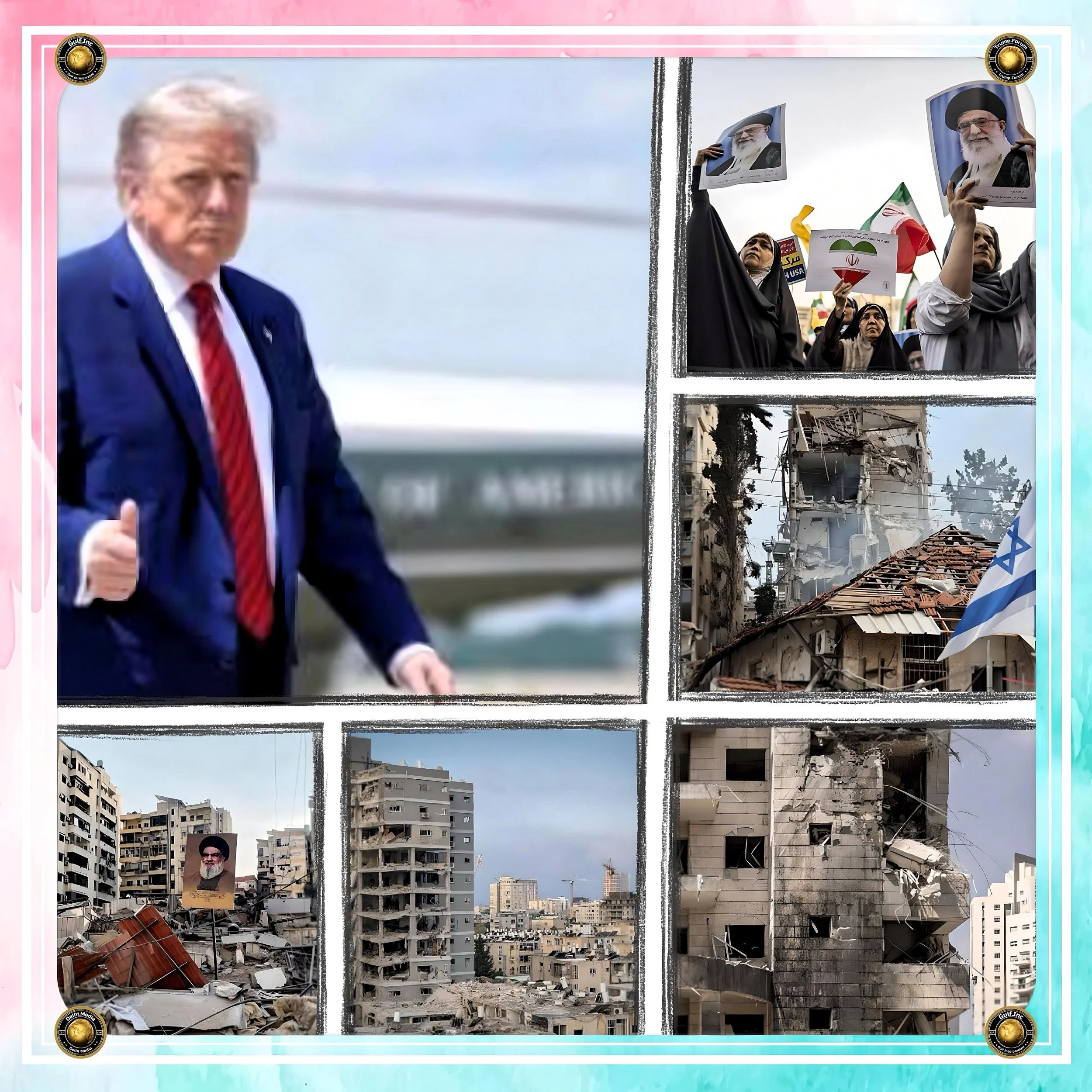
President Donald Trump’s stance on potential U.S. involvement in the Israel-Iran conflict has undergone a notable shift from initial caution to apparent enthusiasm for military action.
While Trump initially characterized Israel’s strikes as “unilateral” and denied U.S. involvement, it has since emerged that the United States had prior knowledge of these attacks.
Trump has now given himself a two-week deadline to decide whether the U.S. will directly engage in military strikes against Iran, stating there is a “substantial chance of negotiations” but also indicating willingness to use force.
This evolution reflects Trump’s desire to position himself as a “peacemaker-in-chief” and someone prepared to take decisive military action.
His recent comments suggesting Iran was “very close” to developing nuclear weapons contradict U.S. intelligence assessments, indicating a shift toward justifying potential military intervention.
Historical Precedent: The Catastrophic Costs of Middle East Interventions
The Iraq War Disaster
The U.S. invasion of Iraq in 2003 provides a sobering template for understanding the potential consequences of military intervention in Iran. The Iraq War resulted in staggering human and financial costs that continue to reverberate today.
Human Casualties
Total Iraqi deaths
460,000 as a direct or indirect result of the war, with over 60% directly attributable to violence
Violent civilian deaths
186,901-210,296 documented by the Iraq Body Count project
U.S. military deaths
Over 4,400 American service members killed
Coalition casualties: Thousands of additional allied troops killed
Financial Costs
Direct U.S. spending
At least $757.8 billion in Department of Defense expenditures
Total estimated cost
Nearly $1.8 trillion, projected to reach $2.89 trillion by 2050, when including veteran care costs
Hidden costs
Interest payments on borrowed funds, long-term medical care for over 32,000 wounded troops
The war unleashed sectarian violence that spawned ISIS and left Iraq as a fragmented state that has never fully recovered from the destruction.
The Afghanistan Debacle
America’s longest war ended in even more ignominious failure, demonstrating the limits of U.S. military power in achieving political objectives.
The Staggering Toll:
U.S. financial cost
$2.313 trillion spent on operations in Afghanistan and Pakistan
American casualties
2,324 U.S. military personnel killed, plus 3,917 U.S. contractors
Afghan casualties
70,000 Afghan military and police deaths, 46,319 civilians killed
Total deaths
243,000 people died as a direct result of the war
The 2021 withdrawal epitomized the mission’s failure, with the Taliban rapidly recapturing the country and a chaotic evacuation that resulted in 13 U.S. service members killed in a terrorist attack.
The Biden administration’s investigation concluded that officials “prioritized the optics of the withdrawal over the security of U.S. personnel on the ground”.
The Specific Dangers of War with Iran
Military Vulnerabilities and Retaliation Risks
U.S. involvement in strikes against Iran would immediately expose over 40,000 American troops stationed across the Middle East to Iranian retaliation. Iran has demonstrated its capability and willingness to strike U.S. forces, having launched 13 ballistic missiles at U.S. troops in Iraq in January 2020 that wounded around 100 American personnel.
Iran’s Foreign Minister Abbas Araghchi has warned that U.S. military intervention would be “very, very dangerous for everybody,” with Iran’s Supreme Leader Ali Khamenei threatening “irreparable damage” if America joins the conflict. Iranian officials claim they have “many indications” that the U.S. has already been involved in Israeli bombardments “since day one”.
The Nuclear Escalation Paradox
The primary justification for potential U.S. strikes centers on Iran’s nuclear program, which intelligence assessments indicate has reached hazardous levels. Iran’s “breakout time” to produce weapons-grade uranium has shrunk from about one year under the 2015 nuclear deal to potentially just days or weeks.
However, military action could paradoxically accelerate rather than prevent Iranian nuclear weapons development.
The Institute for Science and International Security rates Iran’s nuclear threat at 157 out of 180 points, indicating “Extreme Danger”. Iran can now produce approximately 175 kg of weapons-grade uranium in three weeks at its fortified Fordow facility alone—enough for seven nuclear weapons.
The Bunker Buster Dilemma
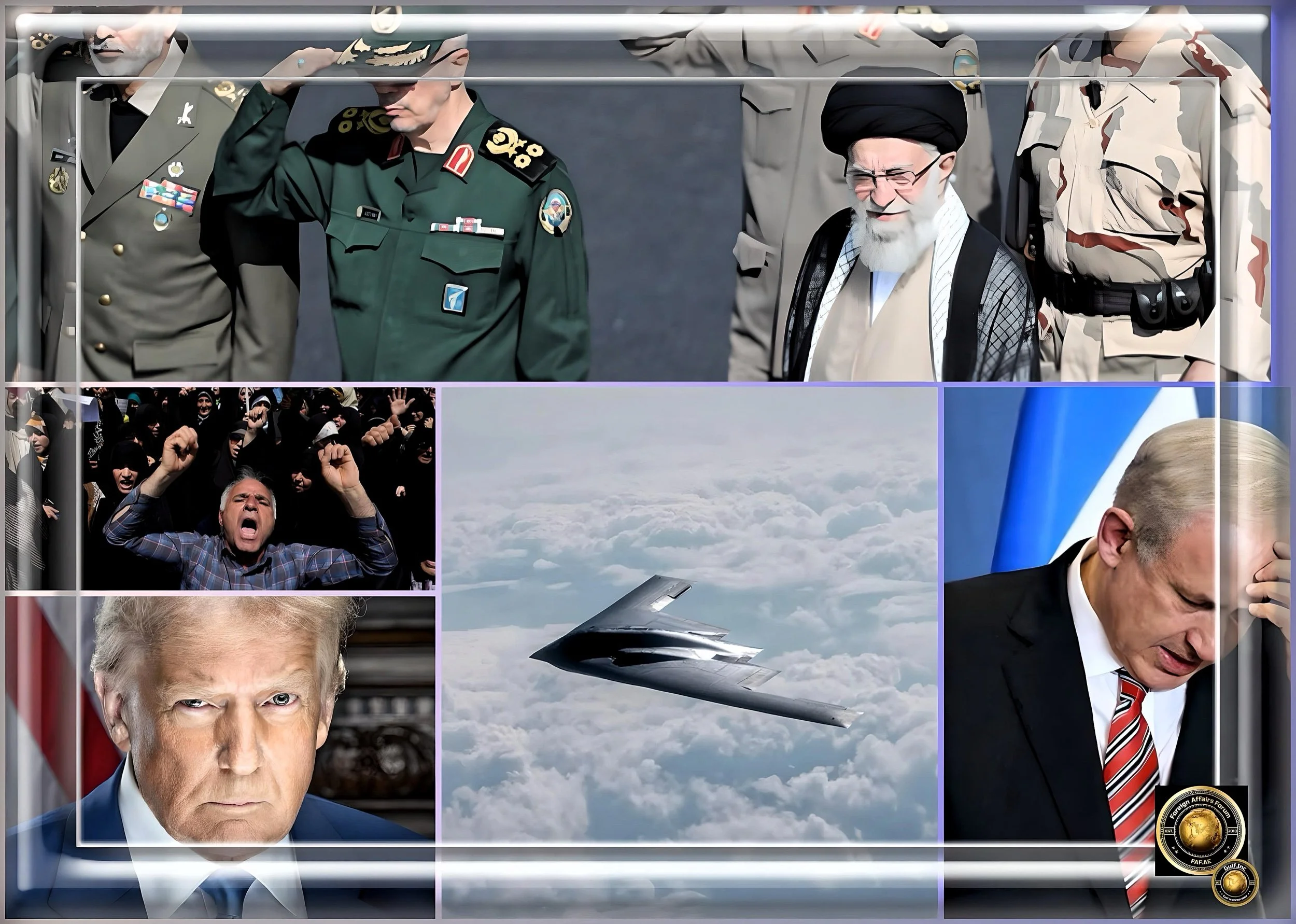
Trump’s consideration of targeting Iran’s underground Fordow uranium enrichment facility would require the use of America’s 30,000-pound “bunker buster” bombs, which only U.S. B-2 stealth bombers can carry.
This represents the most escalatory option available, as these weapons are specifically designed to destroy the most heavily fortified targets and would signal a total U.S. commitment to dismantling Iran’s nuclear program through force.
Regional Destabilization and Alliance Fractures
Proxy War Expansion
Military action against Iran would likely trigger a broader regional conflagration involving Iran’s extensive network of proxy forces across the Middle East. The conflict could easily expand beyond Iran’s borders to include Hezbollah in Lebanon, various militias in Iraq and Syria, and Houthi forces in Yemen.
Allied Opposition and Isolation
Recent diplomatic efforts by European allies to find a negotiated solution have been dismissed by Trump, who stated, “Europe is not going to be able to help this one”. This dismissive attitude toward allied concerns mirrors the pattern that led to U.S. isolation during the Iraq War buildup.
Regional allies are also expressing serious reservations. Even Pakistan, despite its complex relationship with Iran, has warned that “Israeli actions against Iran can have dangerous effects in the region and beyond”.
American Public Opposition
Recent polling reveals significant domestic opposition to military action against Iran. A Washington Post survey found that only 25% of Americans support launching airstrikes against Iran over its nuclear program, while 45% oppose such action. Notably, 39% of Americans are “very concerned” about the prospect of a full-scale war with Iran.
This public skepticism reflects war-weariness from two decades of Middle East conflicts that achieved few of their stated objectives while exacting enormous costs.
The Trap of Endless War
Military analysts warn that U.S. involvement carries “a high risk of becoming an endless war”. Trump may believe he can execute a limited, one-time strike, but Iran’s capacity for retaliation through both conventional forces and proxy networks virtually guarantees escalation.
The experience in Iraq and Afghanistan demonstrates how initial military interventions based on limited objectives inevitably expand in scope and duration as new challenges emerge. Iran’s geographic size, population of 85 million, and strategic depth make it a far more formidable adversary than Iraq or Afghanistan ever were.
International Law and Precedent Concerns
Direct U.S. participation in offensive military action against Iran would “constitute an endorsement and encouragement” of destabilizing behavior and deal “yet another blow to the norm of non-aggression and international law”. This would provide additional rhetorical ammunition to other aggression-minded powers like Russia and China.
Conclusion
The historical record of American military interventions in the Middle East over the past generation provides a clear warning about the dangers of U.S. involvement in a war with Iran. The Iraq War cost nearly $3 trillion and hundreds of thousands of lives while leaving the region more unstable. The Afghanistan War consumed $2.3 trillion over two decades and ended in complete failure.
Iran represents an even more challenging adversary, with greater military capabilities, strategic depth, and capacity for regional retaliation than either Iraq or Afghanistan possessed.
Trump’s apparent shift from caution to enthusiasm for military action risks repeating the same catastrophic mistakes that have characterized American Middle East policy for the past twenty years, potentially on an even larger scale.
The American people’s skepticism about another Middle East war, combined with the opposition of key allies and the enormous risks of escalation, should give policymakers serious pause before embarking on what could become the most consequential and destructive military intervention of the modern era.