Trump Weighs Direct U.S. Military Involvement Against Iran: Tehran Warns of All-Out War
Introduction
As the Israel-Iran conflict enters its ninth day, President Donald Trump faces one of the most consequential foreign policy decisions of his presidency: whether to commit American forces to direct military action against Iran.
The stakes could not be higher, with Tehran issuing stark warnings that U.S. involvement would trigger an “all-out war” across the Middle East. Trump has set a two-week deadline to make this critical decision, creating a ticking clock that has captivated global attention and sent shockwaves through financial markets.
The Current Military Situation
Escalating Casualties and Destruction
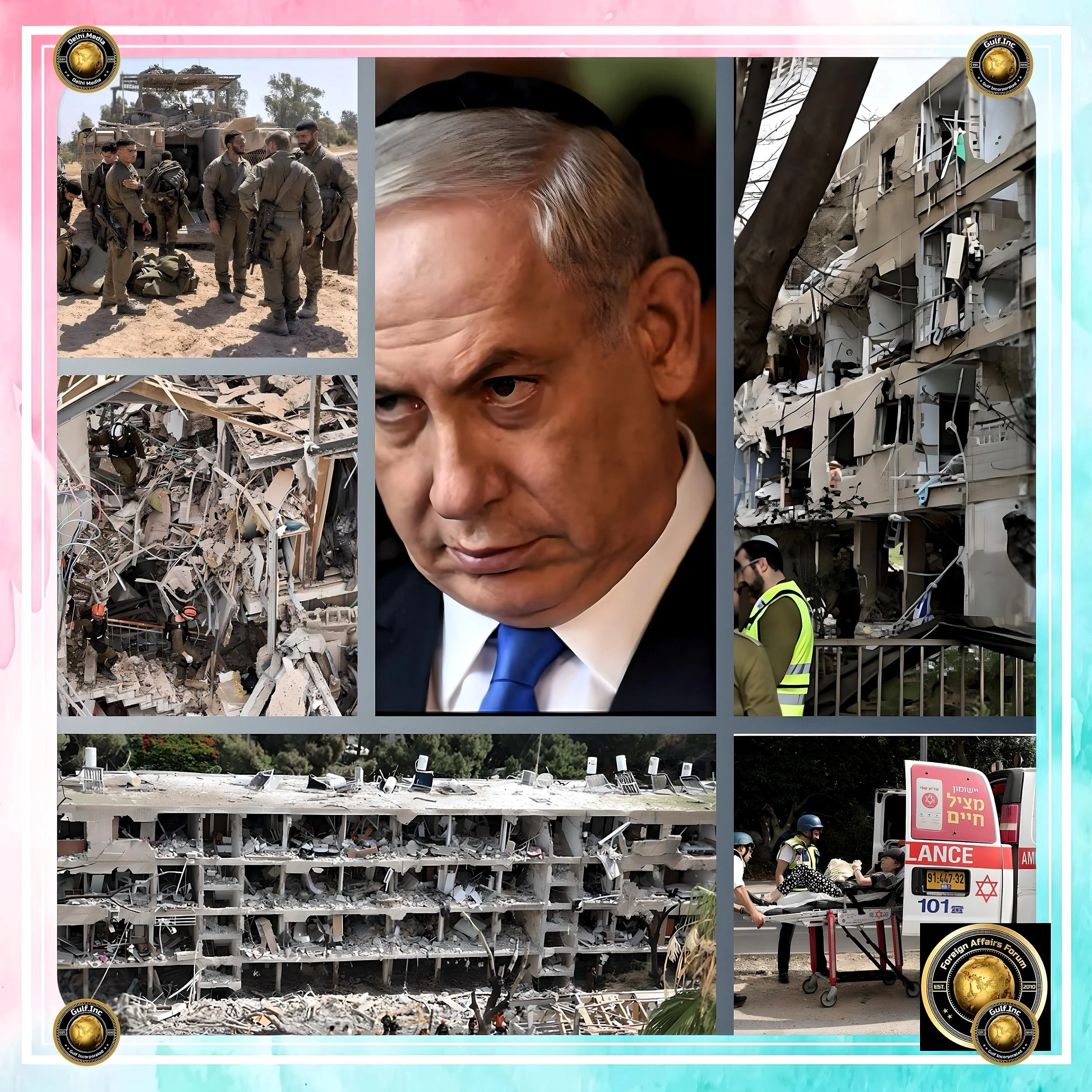
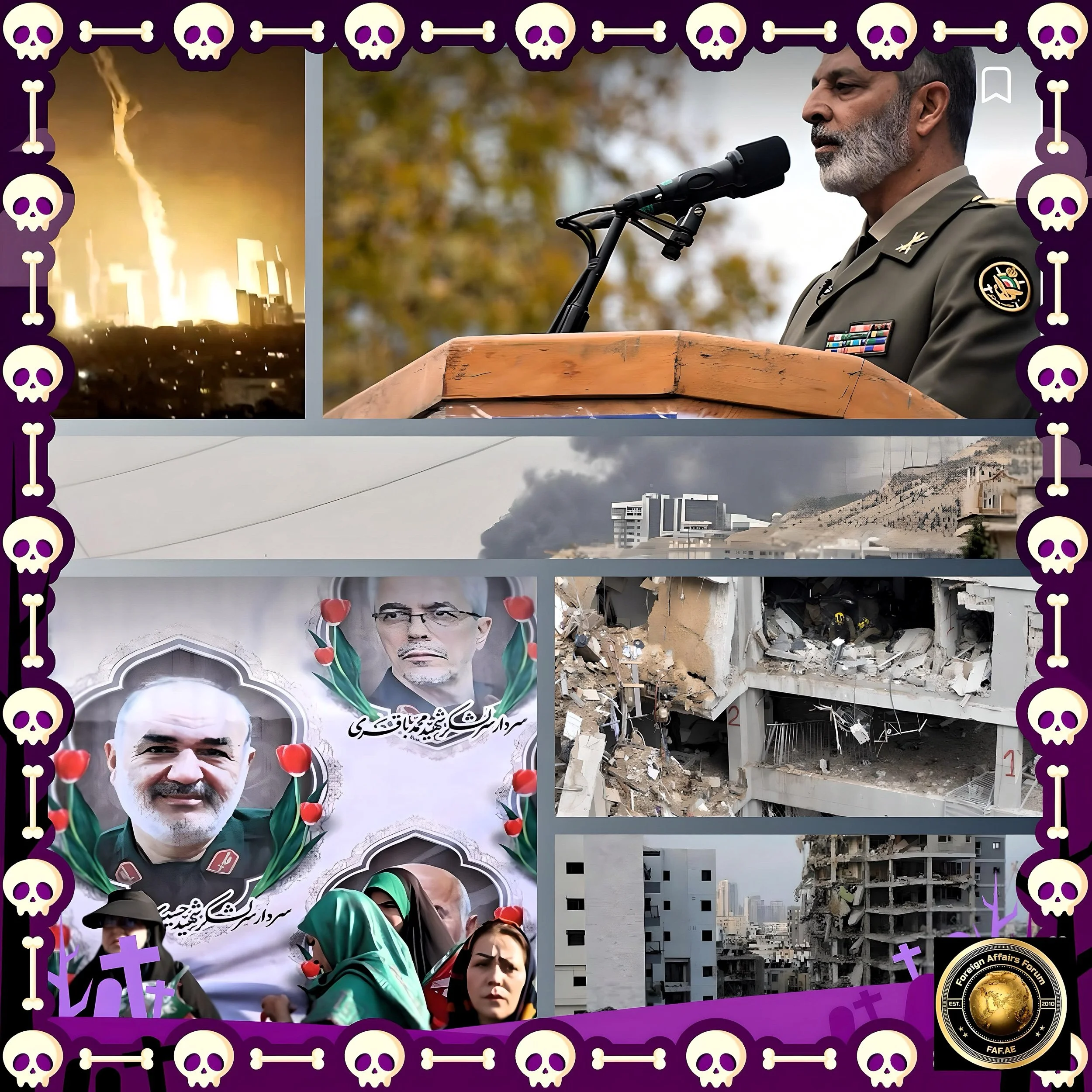
The conflict, which began with Israel’s Operation Rising Lion on June 13, has already extracted a devastating human toll. Israeli strikes have killed at least 639 people in Iran and wounded 1,329 others, bringing the total number of casualties to 1,968. Other sources report that the death toll has reached over 630 Iranian civilians, with more than 2,500 injuries. In contrast, Iranian retaliatory strikes have resulted in 24 civilian deaths in Israel.
Israeli military operations have targeted multiple sites across 16 Iranian provinces, including military installations, nuclear facilities, and infrastructure in Tehran, Isfahan, Fars, and other regions. The strikes have successfully eliminated much of Iran’s senior military leadership, including veteran commanders like Saeed Izadi of the Quds Force’s Palestinian Corps.
Nuclear Facilities Under Attack
Israel’s primary objective appears to be dismantling Iran’s nuclear capabilities, with particular focus on the heavily fortified Fordo enrichment facility. Located approximately 60 miles south of Tehran and buried deep within mountainous terrain, Fordo is believed to be constructed deeper underground than the Channel Tunnel connecting the UK and France. The facility represents Iran’s most secure nuclear site. It poses a unique challenge: while Israel has demonstrated air superiority over Iran, only the United States possesses the bunker-busting capability necessary to destroy this underground complex.
Trump’s Two-Week Ultimatum
The Decision Timeline
On Thursday, June 19, White House Press Secretary Karoline Leavitt announced that Trump would decide on U.S. military involvement “within the next two weeks”. This timeline has become a familiar refrain for Trump, who has used similar two-week deadlines throughout his presidency for major policy announcements. The president reiterated this timeframe on Saturday: “I’m giving them (Iran) a period - and I would say two weeks would be the maximum”.
Trump’s statement, delivered through his press secretary, emphasized the conditional nature of his decision: “Based on the fact that there is a substantial chance of negotiations that may or may not take place with Iran shortly, I will make my decision whether or not to go within the next two weeks”.
Strategic Ambiguity and Mixed Signals
The president has deliberately maintained strategic ambiguity about his intentions, telling reporters: “I may do it, I may not do it. I mean, nobody knows what I’m going to do”. This uncertainty reflects Trump’s negotiating style but has also created confusion among allies and adversaries about American intentions.
Trump’s evolving rhetoric on the conflict reveals his internal struggle between his anti-war campaign promises and pressure to support Israel militarily. Initially, his administration denied any involvement in Israeli strikes, labeling them as “unilateral”. However, Trump has since begun using the word “we” when referring to Israeli operations, suggesting a psychological shift toward viewing the conflict as a shared endeavor.
Iran’s Warnings of All-Out War
Tehran’s Red Lines
Iranian officials have issued increasingly dire warnings about the consequences of American military involvement. On Saturday, Foreign Minister Abbas Araghchi warned that U.S. participation in the conflict would be “very, very dangerous for everybody”. He emphasized Iran’s belief that the U.S. has already been involved in Israeli operations “since day one,” despite American denials.
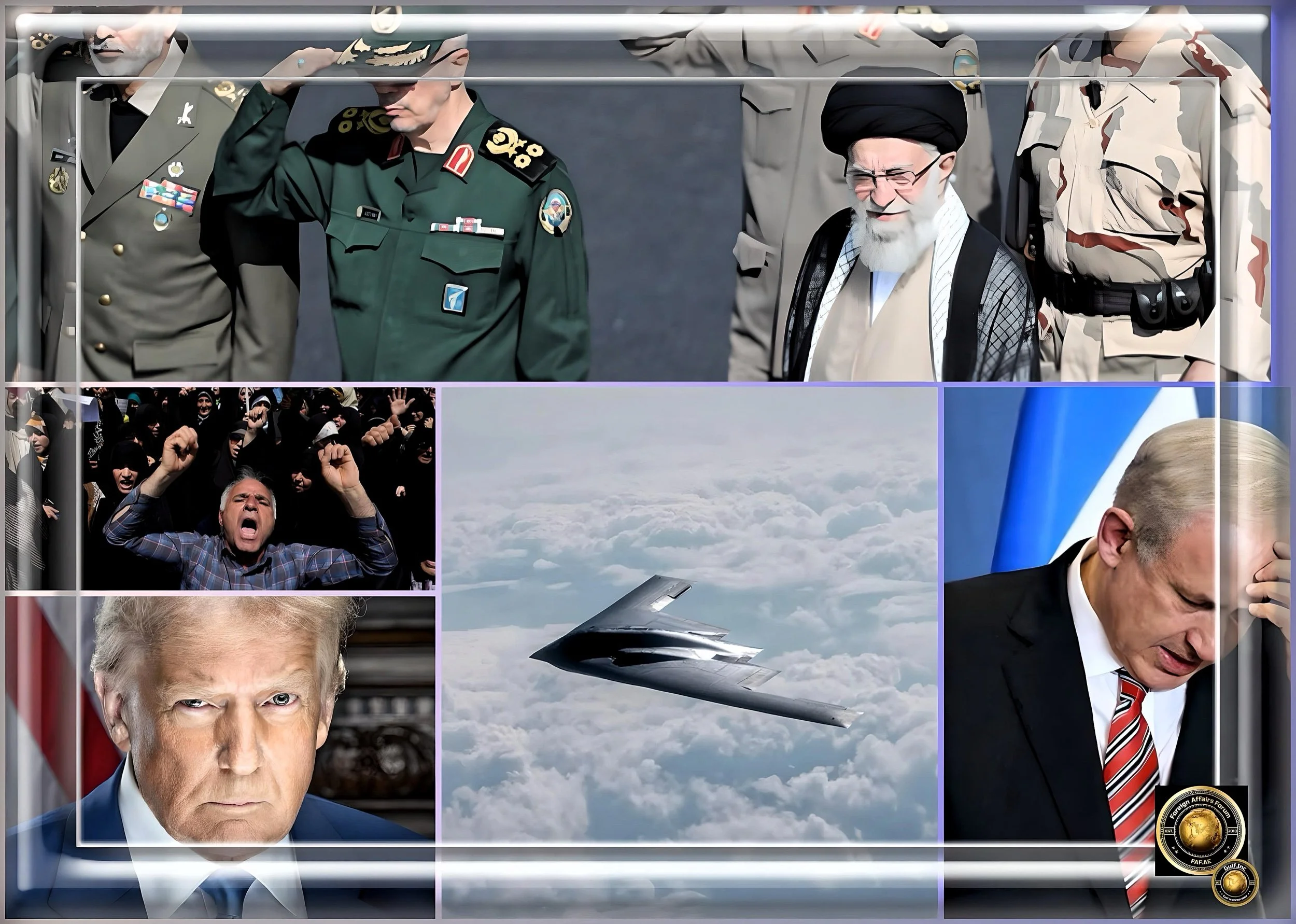
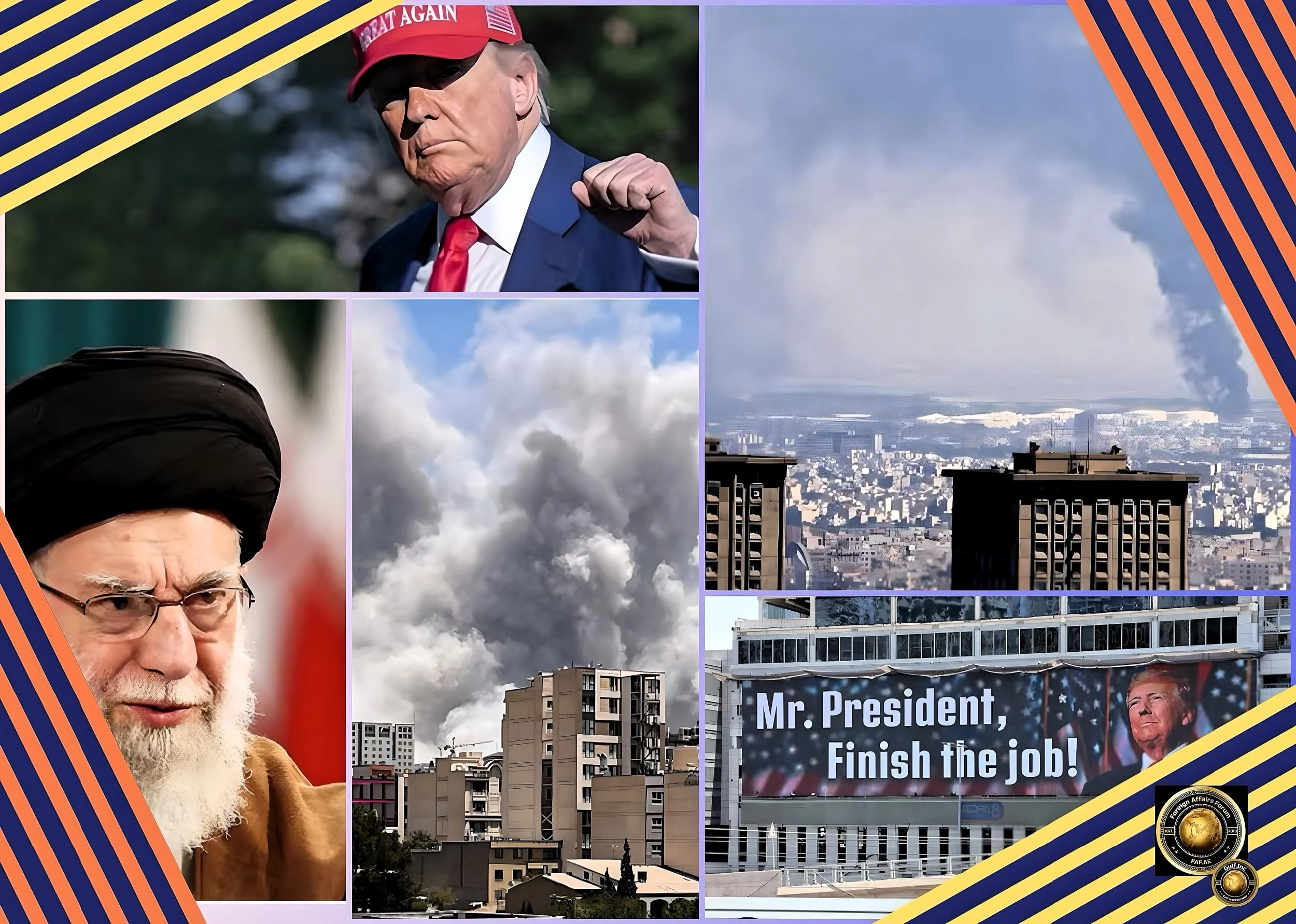
Supreme Leader Ali Khamenei has been even more explicit, threatening “irreparable damage” if the U.S. joins the Israeli campaign. In a televised address, he declared: “The Americans should know that any U.S. military intervention will undoubtedly be accompanied by irreparable damage. The U.S. entering this matter war is 100% to its detriment”.
Military Preparations for Retaliation
Iran has backed up its warnings with concrete military preparations. U.S. intelligence officials report that Iran has moved key missile assets into operational positions and activated allied militia networks across the region. The preparations include positioning medium- and long-range ballistic missiles, as well as cruise missile platforms, near launch-ready sites inside Iran and in parts of Iraq and Syria controlled by Iranian-aligned militias.
These missile systems have ranges exceeding 1,000 kilometers and can reach central U.S. installations in the region within minutes. Iran is also coordinating with proxy groups, including Hezbollah in Lebanon, Houthi forces in Yemen, and Popular Mobilization Forces in Iraq.
U.S. Military Deployments and Preparations
Massive Force Buildup
The United States has initiated a substantial military buildup in the Middle East, deploying assets that would be necessary for any potential strike on Iranian nuclear facilities. The Pentagon has moved B-2 stealth bombers to Guam, aircraft uniquely capable of carrying the 30,000-pound GBU-57 Massive Ordnance Penetrator, designed to destroy deeply buried targets.
Additional military deployments include the USS Nimitz aircraft carrier, which is being repositioned from the Indo-Pacific to the Middle East to replace the Carl Vinson Strike Group. The U.S. has also dispatched approximately 30 refueling aircraft to Europe and deployed additional F-16, F-22, and F-35 fighter jets.
Vulnerable U.S. Assets
Despite this military buildup, U.S. forces in the region remain highly vulnerable to Iranian retaliation. Nearly 40,000 American troops are deployed across key countries, including Iraq, Syria, Kuwait, Qatar, Bahrain, the UAE, and Jordan. Many of these bases are located within missile range of Iran or its proxy militias, making them attractive targets for retaliation.
Iranian-backed militias have already begun testing American defenses, launching missile attacks against three U.S. bases in northeastern Syria between June 14 and 15. Iraqi militia group Kataib Hezbollah has explicitly threatened that American bases would become “akin to duck-hunting grounds” if the U.S. enters the conflict.
The European Diplomatic Alternative
Last-Ditch Diplomatic Efforts
As Trump contemplates military action, European allies are pursuing a diplomatic alternative. On Friday, foreign ministers from the UK, France, and Germany, as well as EU foreign policy chief Kaja Kallas, held talks with Iranian Foreign Minister Abbas Araghchi in Geneva. These discussions represent the first direct diplomatic engagement between Iran and Western powers since the crisis began.
French President Emmanuel Macron instructed his foreign minister to develop a diplomatic initiative in collaboration with “close partners,” suggesting that Europe is preparing to propose a comprehensive resolution to the conflict. UK Foreign Secretary David Lammy emphasized after meeting with U.S. Secretary of State Marco Rubio that “a window now exists in the next two weeks to secure a diplomatic resolution”.
Iran’s Conditional Openness
Iran has expressed conditional willingness to engage diplomatically, but maintains that negotiations cannot proceed “as long as the aggression continues”. Araghchi told European negotiators that Iran remains “ready to consider diplomacy once again” but emphasized the need for Israeli attacks to cease first.
This position creates a diplomatic catch-22: Iran demands an end to Israeli strikes as a prerequisite for talks, while Israel shows no signs of halting its campaign to dismantle Iran’s nuclear capabilities.
The Nuclear Question: Intelligence vs. Assessment
Contradicting Intelligence Assessments
Trump’s decision-making has been complicated by his public rejection of U.S. intelligence community assessments regarding Iran’s nuclear program. Director of National Intelligence Tulsi Gabbard testified to Congress in March that Iran’s Supreme Leader had not authorized the development of a nuclear weapon. However, Trump has repeatedly contradicted this assessment, claiming Iran is “very close” to developing nuclear weapons.
When pressed about the discrepancy between his claims and intelligence findings, Trump told reporters: “Then my intelligence community is mistaken”. This unusual public contradiction of intelligence assessments has raised concerns among critics who argue Trump is “blatantly ignoring facts to rationalize potential direct US engagement in the conflict”.
The Fordo Dilemma
The Fordo nuclear enrichment facility represents the crux of the nuclear dilemma. Israeli officials argue that Iran’s activities at this underground complex pose an existential threat, while Iran maintains its nuclear program is solely for peaceful purposes. The facility’s deep underground construction makes it impervious to conventional Israeli munitions, creating pressure for U.S. involvement with more powerful bunker-busting weapons.
Trump has been briefed on both the risks and benefits of bombing Fordo, with sources indicating his mindset is that “disabling it is necessary because of the risk of weapons being produced in a relatively short period of time”. One source close to the president stated: “He believes there’s not much choice. Finishing the job means destroying Fordo”.
Regional and Global Implications
Proxy Network Activation
U.S. military involvement would likely trigger a broader regional conflict involving Iran’s extensive proxy network. Iranian-backed groups have already demonstrated their readiness to escalate, with Houthi forces in Yemen having shot down seven U.S. Reaper drones worth over $200 million in recent weeks. The Houthis have also indicated they would resume attacks on Red Sea shipping if the U.S. joins the conflict.
Iraqi militias under Iranian influence have explicitly threatened to target U.S. bases throughout the region, while Hezbollah in Lebanon has the capability to open a northern front against Israel. This multi-front scenario could rapidly expand beyond what either the U.S. or Israel initially intended.
Economic and Strategic Consequences
Iran has threatened to disrupt critical maritime chokepoints, including the Strait of Hormuz and the Bab-el-Mandeb waterway, which could severely impact global energy supplies. The potential for mining operations in the Strait of Hormuz poses particular risks to U.S. naval forces operating in the Persian Gulf.
The conflict has already demonstrated the limitations of current missile defense systems, with approximately 40 Iranian missiles breaching Israeli air defenses out of 400 launched. This success rate suggests that U.S. bases in the region, despite their defensive capabilities, remain vulnerable to sustained missile barrages.
Historical Precedents and Warnings
Lessons from Previous Interventions
Foreign policy analysts have drawn parallels to previous U.S. military interventions in the Middle East, warning of potential consequences. The U.S. interventions in Iraq were “enormously costly in both lives and treasure and left a broken country in their wake,” while the occupation of Afghanistan “ended in abject retreat, having achieved even fewer of its goals and after exacting even higher costs”.
The 2011 intervention in Libya may provide the most relevant precedent, where U.S. and European collaboration helped overthrow Muammar al-Qaddafi but “shattered that country, sending it spiraling downward into warlord-driven violence and civil war”. Critics argue that Trump’s current approach shows similar risks of “surrendering decision-making about American strategy and national security to another country’s leader, namely Israeli Prime Minister Benjamin Netanyahu”.
The Patience Problem Returns
Trump’s approach to the Iran crisis mirrors the same impatience that has characterized his broader foreign policy approach. His demand for Iran’s “unconditional surrender” and his preference for quick results over sustained diplomatic engagement echo the patterns that led to the failure of his previous Middle East initiatives.
Conclusion
A Moment of Maximum Danger
President Trump’s two-week deadline has created what European diplomats describe as a “perilous moment” for Middle East stability. The convergence of military preparations, diplomatic initiatives, and ultimatums has created a volatile mix where miscalculation could trigger the very all-out war that Iran has promised.
The president’s decision will likely be influenced by multiple factors: his desire to support Israel while avoiding another Middle East quagmire, his skepticism of intelligence assessments that contradict his preferred narrative, and his historical pattern of using deadlines as negotiating tools rather than firm commitments. As one official noted, Trump “likes to make the final decision one second before it’s due, because things change, especially with war”.
Whether Trump ultimately chooses military action or diplomatic restraint, his decision will reshape Middle East geopolitics and potentially define his presidential legacy. The next two weeks will determine whether strategic patience can prevail over the impulse for decisive action, and whether diplomacy can succeed where military threats have failed to achieve lasting solutions to one of the world’s most complex conflicts.