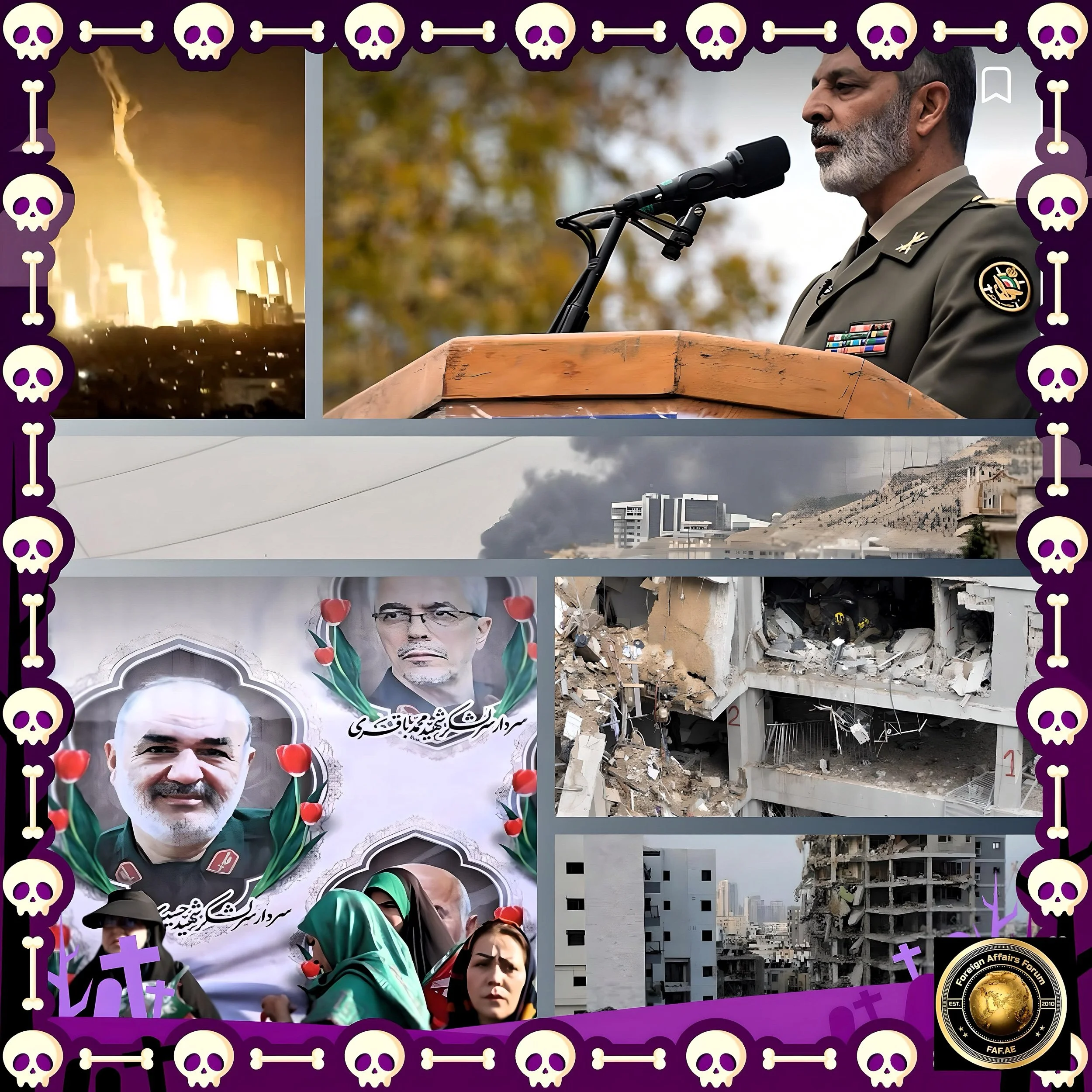
War.Live- The Intelligence Window: How Timing Shaped Israel’s Strategic Strike on Iran
Introduction
The concept of an “intelligence window” has emerged as a critical factor in modern military timing, particularly evident in Israel’s recent Operation Rising Lion against Iran in June 2025.
This strategic principle—where military operations are timed to maximize the effectiveness of carefully positioned intelligence assets before they risk exposure or degradation—represents a sophisticated evolution in contemporary warfare planning.
Understanding the Intelligence Window Concept
The intelligence window refers to the finite timeframe during which covert intelligence capabilities remain viable and undetected by adversaries.
This temporal constraint forces military planners to balance the desire for optimal strategic conditions against the risk of losing carefully cultivated intelligence advantages.
The window operates on the principle that intelligence assets, whether human sources, technological implants, or pre-positioned equipment, have a limited operational lifespan before detection becomes likely.
Intelligence professionals recognize that threat intelligence has a “shelf life” that must be carefully managed. Different types of intelligence deteriorate at varying rates.
Some operational intelligence may only be viable for hours or days, while other strategic intelligence assets can remain effective for years before requiring activation.
This temporal dynamic creates pressure for “use it or lose it” decision-making in military operations.
The Hezbollah Precedent: Exploding Pagers Operation
Israel’s September 2024 attack on Hezbollah using exploding pagers provides a clear illustration of intelligence window dynamics.
The operation represented the culmination of a complex intelligence effort that reportedly took years or even decades to plan.
The timing of the attack was driven by Israeli concerns that Hezbollah was on the verge of discovering that their communication devices had been compromised.
The pager attacks killed at least eight people and injured 2,750 others across Lebanon, with 200 critically wounded.
Hezbollah blamed Israel for orchestrating what appeared to be a synchronized attack on their communications system, noting that hundreds of fighters possessed such devices.
The operation demonstrated how intelligence windows can dictate tactical timing—Israeli leaders activated their capability rather than risk its discovery and loss.
Operation Rising Lion: The Iran Application
Israel’s June 2025 Operation Rising Lion against Iran represents a larger-scale application of intelligence window principles.
The operation launched on June 13, 2025, targeting Iran’s nuclear facilities, military commanders, and strategic infrastructure with unprecedented precision.
According to intelligence sources, the attack was “the culmination of years of work by the Mossad to target Iran’s nuclear program”.
Multi-Year Intelligence Preparation
The operation required extensive preparation involving multiple intelligence dimensions. Israeli intelligence spent over three years securing essential equipment for the operation, including smuggling small drones hidden in vehicles to enable close-range strikes.
The Mossad worked with “a huge number of people—a mass of agents deep inside Iran, operating at the highest level of penetration imaginable”.
Intelligence sources reveal that Israel had managed to place drones inside Iran that could strike strategic assets and had pinpointed the locations of key regime figures.
The operation involved pre-positioned assets that had been dormant for months before activation. These assets included bomb-laden quadcopter drones smuggled into Iran via suitcases, trucks, and shipping containers.
The Timing Decision
The timing of Operation Rising Lion appears to have been influenced by intelligence window considerations rather than immediate nuclear threats. US officials did not observe significant changes in Iran’s nuclear program or evidence of a decision to weaponize.
Iran had been consistently described as being “a few months away” from developing nuclear weapons capability for several years without crossing that threshold.
However, Israel had assembled a remarkable covert military infrastructure inside Iran by June 2025.
The concern about losing this carefully constructed capability may have been a decisive factor in the timing decision.
Israeli Prime Minister Benjamin Netanyahu activated the operation after notifying President Donald Trump.
This followed years of preparation that began with initial planning in October 2024.
Strategic and Operational Implications
Technology Integration
The operation showcased advanced integration of artificial intelligence with traditional intelligence gathering. AI systems were used to analyze intercepted communications, track Iranian leaders’ movements, and process vast surveillance data.
This technological enhancement extends the effectiveness of intelligence windows by enabling more precise targeting and timing decisions.
Multi-Domain Coordination
Operation Rising Lion demonstrated unprecedented coordination between Israeli intelligence services, military branches, and defense industries.
The operation involved simultaneous strikes across multiple domains—cyber, air, ground-based assets, and special operations—synchronized through carefully timed intelligence activation.
Risk Assessment Framework
Intelligence window operations require sophisticated risk assessment to balance operational security against mission effectiveness.
Military planners must continuously evaluate whether maintaining covert capabilities longer provides a strategic advantage or increases detection risk.
This assessment involves monitoring adversary counterintelligence capabilities and behavioral patterns that might indicate discovery.
Broader Military Doctrine Evolution
The intelligence window concept reflects broader changes in modern warfare doctrine. Contemporary military operations increasingly rely on persistent surveillance, pre-positioned assets, and real-time intelligence fusion to achieve tactical surprise.
This approach requires long-term planning horizons and acceptance that intelligence investments may need rapid activation to prevent loss.
Military doctrine now emphasizes synchronizing intelligence operations with tactical planning to maximize decision advantage.
The concept of “intelligence-driven operations” has evolved to include temporal considerations where timing becomes as critical as targeting accuracy.
Challenges and Limitations
Operational Security Concerns
Managing extended intelligence operations presents significant operational security challenges.
The longer covert assets remain in place, the greater the risk of discovery through routine security measures, personnel changes, or counterintelligence activities. This creates inherent tension between operational patience and security preservation.
Political and Diplomatic Constraints
Intelligence windows must be balanced against diplomatic considerations and alliance relationships.
Israel’s notification to President Trump before launching Operation Rising Lion illustrates how intelligence timing must accommodate political realities and international coordination requirements.
Attribution and Escalation Management
Covert operations designed around intelligence windows must consider attribution challenges and escalation dynamics.
While maintaining plausible deniability can help manage escalation, the effectiveness of intelligence window operations often requires acknowledgment of success to achieve deterrent effects.
Conclusion
The intelligence window concept represents a significant evolution in modern military planning, where the temporal limitations of covert capabilities increasingly drive operational timing decisions.
Israel’s operations against both Hezbollah and Iran demonstrate how sophisticated intelligence preparation creates both opportunities and constraints for military action.
This approach requires military organizations to develop new frameworks for balancing intelligence preservation against operational effectiveness.
As adversaries develop more sophisticated counterintelligence capabilities, managing intelligence windows will likely become more critical in strategic military planning.
The success of Operation Rising Lion suggests that intelligence window considerations will continue to influence primary military operations, potentially reshaping how nations approach conflict timing and strategic surprise in an era of persistent surveillance and advanced detection capabilities