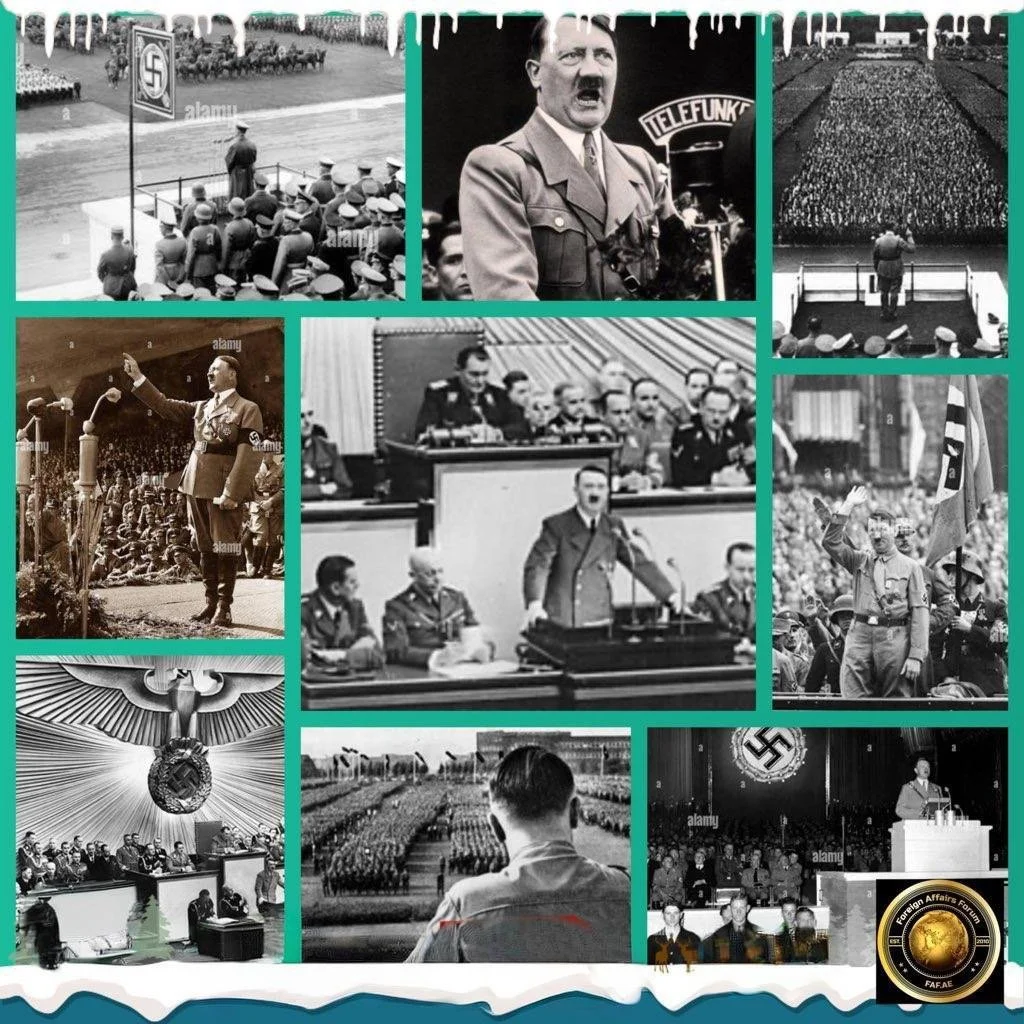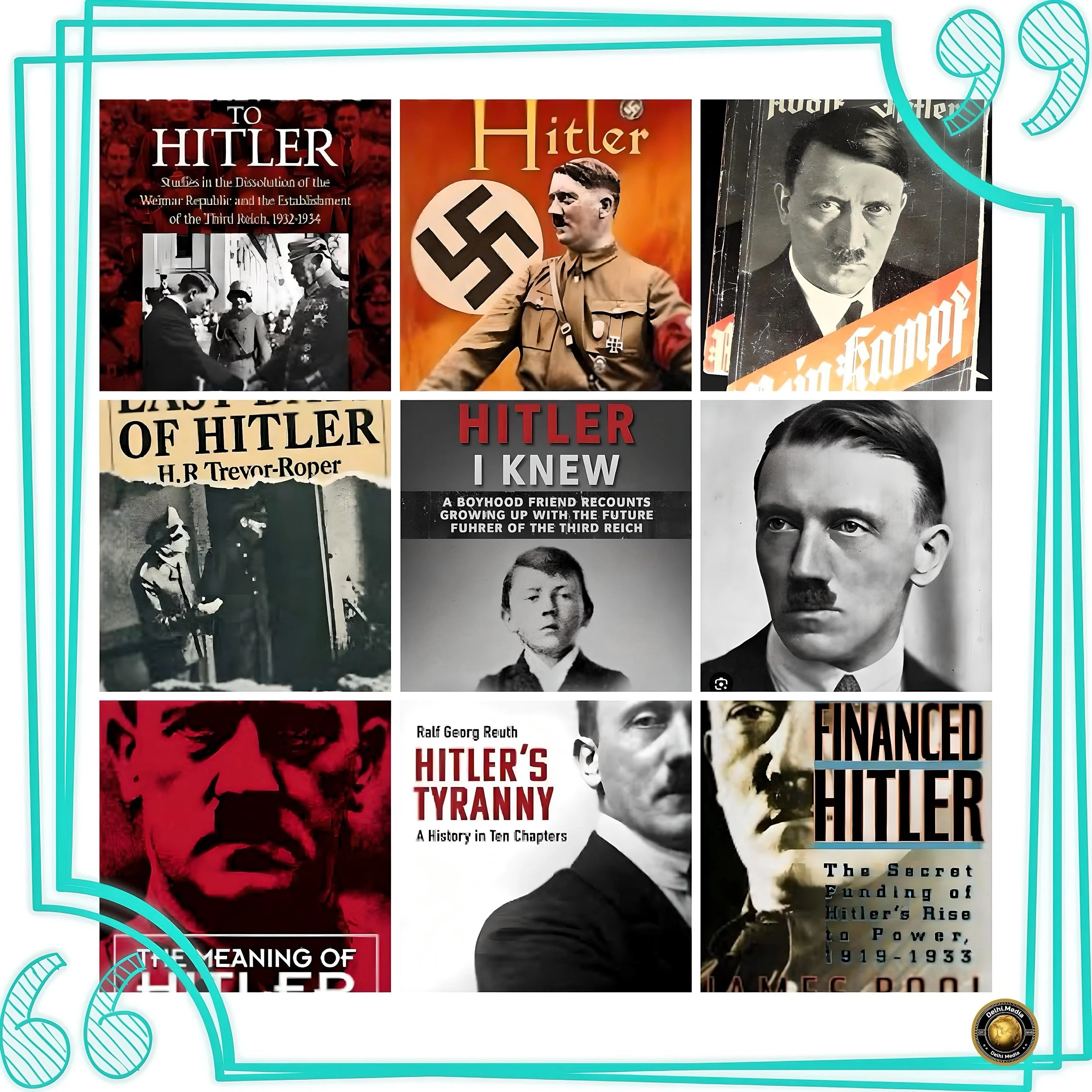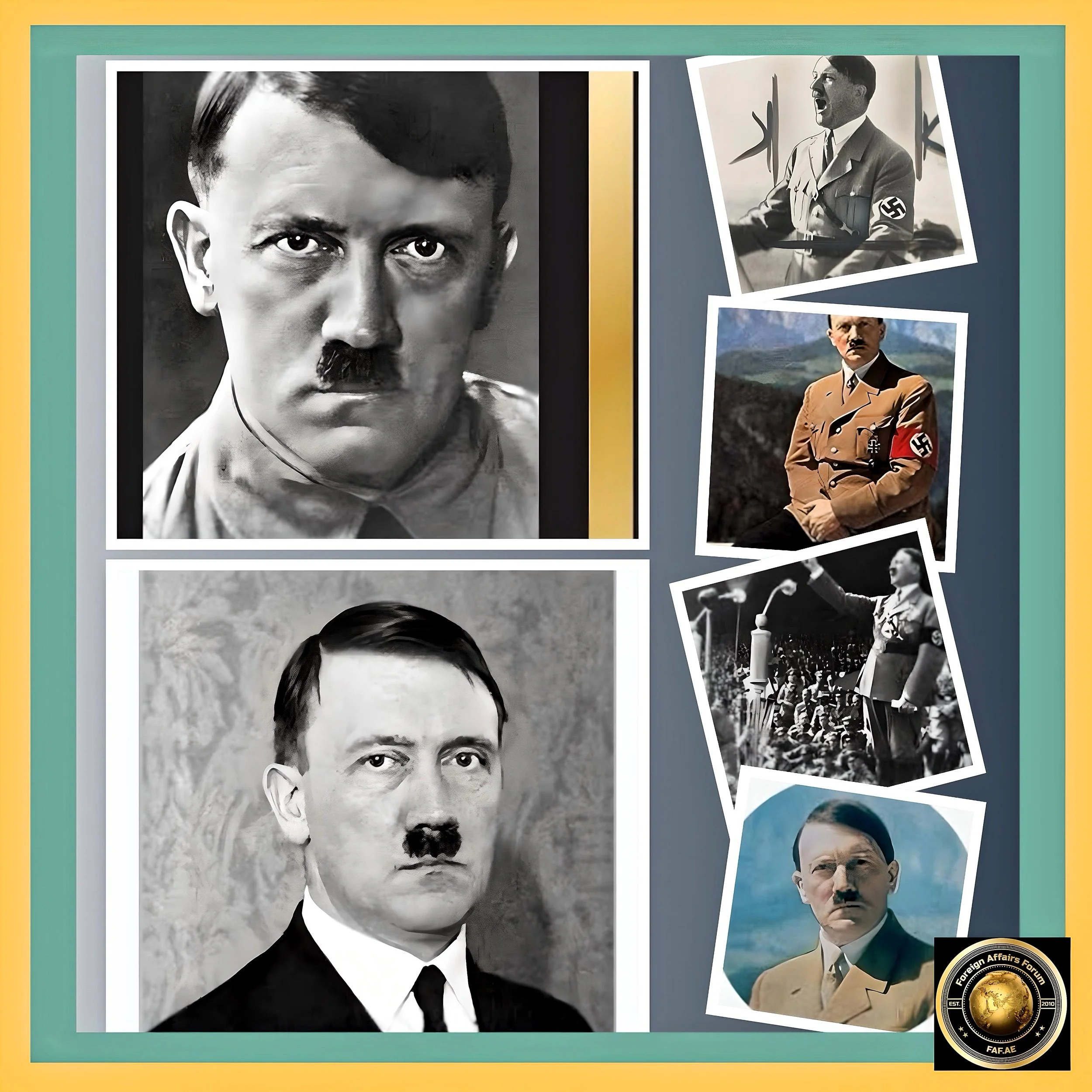
Nazi.Media—”In His Own Words: The Essential Speeches of Adolf Hitler” - A Critical Analysis.
Overview of the Publication
“In His Own Words:
The Essential Speeches of Adolf Hitler” is a controversial 2022 publication by Antelope Hill Publishing, translated and compiled by C.J. Miller.
FAF, Nazi.Media analyzes the book presents itself as a collection of translated Hitler speeches with historical commentary, claiming to fill a gap in English-language translations of Nazi oratory.
The 263-page volume contains 13 speeches spanning Hitler’s political career, from early NSDAP addresses to wartime proclamations.
Publisher Background and Concerns
Antelope Hill Publishing represents a significant concern in the context of this publication.
The Southern Poverty Law Center has identified Antelope Hill as a white nationalist publisher and antisemitic hate group founded in 2020.
Vincent Cucchiara, Sarah Cucchiara, and Dmitri Loutsik established the company. They maintained anonymity until investigators exposed them in 2022.
The publisher specializes in translating historical works by Nazis, fascists, and ultranationalists, while also promoting contemporary white nationalist writings.
Antelope Hill has demonstrated precise ideological alignment with extremist movements, including collaboration with the National Justice Party and The Right Stuff podcast network.
The company has even offered discounts to commemorate Hitler’s birthday and refers to “Uncle Hitler” in promotional materials.
Translation Challenges and Scholarly Context
Academic Standards for Hitler Speech Translation
Translating Hitler’s speeches presents unique scholarly and ethical challenges that extend beyond linguistic conversion.
Academic researchers emphasize that Hitler’s rhetoric relied heavily on emotional appeals, nationalist sentiment, and sophisticated propaganda techniques that require extensive contextual knowledge to translate accurately.
The established academic standard for Hitler speech translation is Max Domarus’s comprehensive four-volume work “Hitler: Speeches and Proclamations 1932-1945,” published by Bolchazy-Carducci Publishers.
This scholarly edition, which spans 3,400 pages and provides extensive historical context, represents decades of rigorous academic work.
German scholars are developing a new critical edition through the Institute of Contemporary History Munich-Berlin, expected to be completed around 2027.
Legitimate Academic Approaches
Professional historians and translation scholars approach Hitler’s speeches with careful attention to historical context, propaganda analysis, and ethical considerations.
Academic translations typically include extensive commentary explaining the speeches' historical circumstances, rhetorical techniques, and broader implications.
The University of Texas's research on Hitler’s rhetoric demonstrates a scholarly approach, analyzing topoi (rhetorical themes) and their cultural foundations rather than simply presenting translations without a critical framework.
Such academic work examines how Hitler weaponized existing cultural beliefs rather than creating entirely new ideologies.
Ethical and Methodological Concerns
Problems with the Antelope Hill Approach
The Antelope Hill publication raises several critical concerns when compared to established academic standards:
Lack of Scholarly Credentials
The translator “C.J. Miller” appears to be a pseudonym, following Antelope Hill’s pattern of using anonymous or pseudonymous translators.
Most legitimate translations in their catalog are credited to pseudonyms, including some attributed to neo-Nazi message boards.
Absence of Critical Framework
Unlike established academic editions, the book presents speeches without the extensive critical apparatus necessary for responsible historical engagement.
Professional historians emphasize that Hitler’s speeches require detailed contextual explanation to prevent misinterpretation.
Publisher’s Ideological Agenda
Given Antelope Hill’s documented white nationalist orientation and collaboration with extremist groups, the publication serves ideological rather than scholarly purposes.
Academic Standards for Historical Translation
Legitimate academic translation of historically sensitive material requires several elements absent from this publication
Institutional Affiliation
Professional translators typically work through established academic institutions with peer review processes
Extensive Commentary
Scholarly editions provide detailed historical context, propaganda analysis, and ethical frameworks
Transparent Methodology
Academic translators explain their translation choices and limitations
Ethical Guidelines
Responsible scholarship addresses the moral implications of disseminating hate speech
Historical Context and Availability of Translations
Existing Scholarly Resources
Contrary to the book’s claims about neglected translations, substantial academic resources exist to study Hitler’s rhetoric.
The Max Domarus collection remains the standard scholarly reference, while university archives and libraries maintain extensive collections of translated speeches with proper historical context.
Academic databases contain numerous peer-reviewed articles analyzing Hitler’s speeches, providing the critical framework for understanding their historical significance and rhetorical techniques.
These scholarly approaches focus on understanding propaganda methods and their historical impact rather than presenting the speeches as primary texts.
Current Academic Projects
German institutions are developing a comprehensive critical edition of Hitler’s speeches, similar to the academic treatment of “Mein Kampf”.
This project, led by the Institute of Contemporary History Munich-Berlin, will provide the thorough scholarly apparatus necessary for responsible historical engagement.
Conclusion
“In His Own Words”
The Essential Speeches of Adolf Hitler” problematically departs from established academic standards for historical translation and analysis.
The publication’s origin from a documented white nationalist publisher, use of pseudonymous translation, and lack of a critical scholarly framework raise serious concerns about its purpose and reliability.
While the study of Hitler’s rhetoric serves legitimate historical and educational purposes, such work requires rigororous academic standards, inst’ rigorous academic standards, institutional oversight, and critical commentary.
The availability of this material through a hate group publisher undermines these educational goals and potentially serves to promote rather than critically examine extremist ideology.
Scholars, educators, and the general public seeking to understand Hitler’s rhetorical impact should rely on established academic resources that provide the critical framework for responsible historical engagement.
The existence of this publication highlights the importance of supporting legitimate academic institutions and their rigorous approaches to historically sensitive material.