Commercial Technology and the New Battlespace: Why Algorithm Warfare Is Reshaping Global Military Strategy
Executive summary
Algorithm Warfare Is Redefining Military Power as Commercial Technology Rewrites the Rules of Conflict
The character of warfare is undergoing one of the most profound transformations since the industrialization of military power in the nineteenth century.
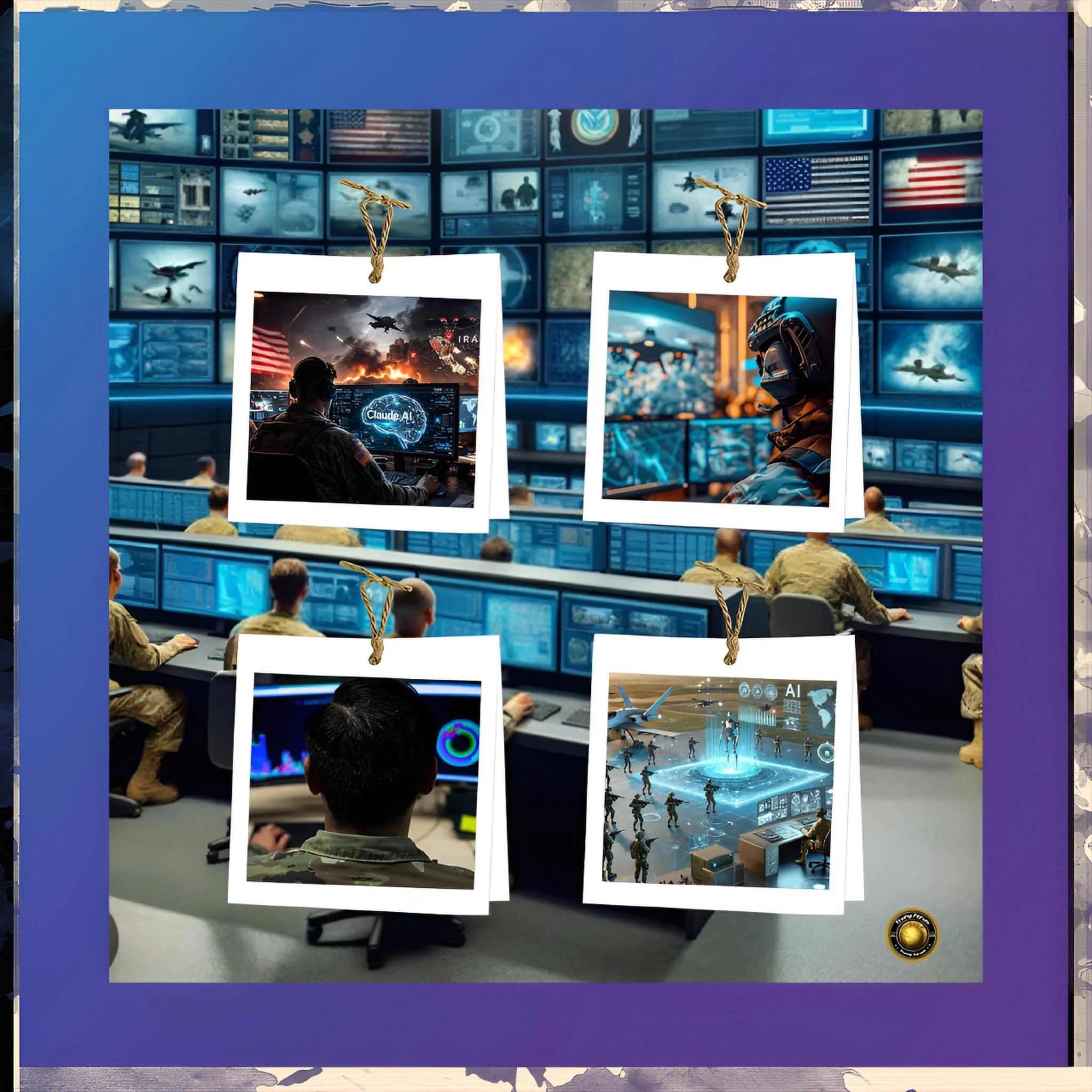
In the emerging era of algorithm warfare, commercial technologies—particularly artificial intelligence, autonomous systems, commercial satellites, and inexpensive drones—are dramatically reshaping the way wars are fought.
Precision strike capabilities once required billions of dollars in research, specialized defense industries, and years of procurement cycles.
Today, comparable tactical effects can be achieved using commercially available technologies costing only a few thousand dollars.
This transformation has destabilized the traditional military procurement model that dominated defense planning for decades.
Historically, large military institutions invested in highly complex platforms such as fighter aircraft, tanks, or missile systems designed to remain operational for thirty or more years.
These platforms were built over procurement cycles lasting 10 to 15 years.
In contrast, algorithm-driven warfare evolves on a time scale measured in months or even weeks. Software updates, commercial sensors, and machine-learning improvements rapidly change battlefield capabilities.
The implications are profound. First, the cost curve of warfare is reversing. Cheap offensive technologies can destroy expensive defensive platforms.
A drone carrying a $500 payload can turn off a $5 million tank or threaten a $100 million aircraft.
Second, the diffusion of commercial technology means that even non-state stakeholders or small states can acquire capabilities once reserved for major powers.
Third, the pace of innovation in the commercial technology sector far exceeds that of traditional military procurement systems.
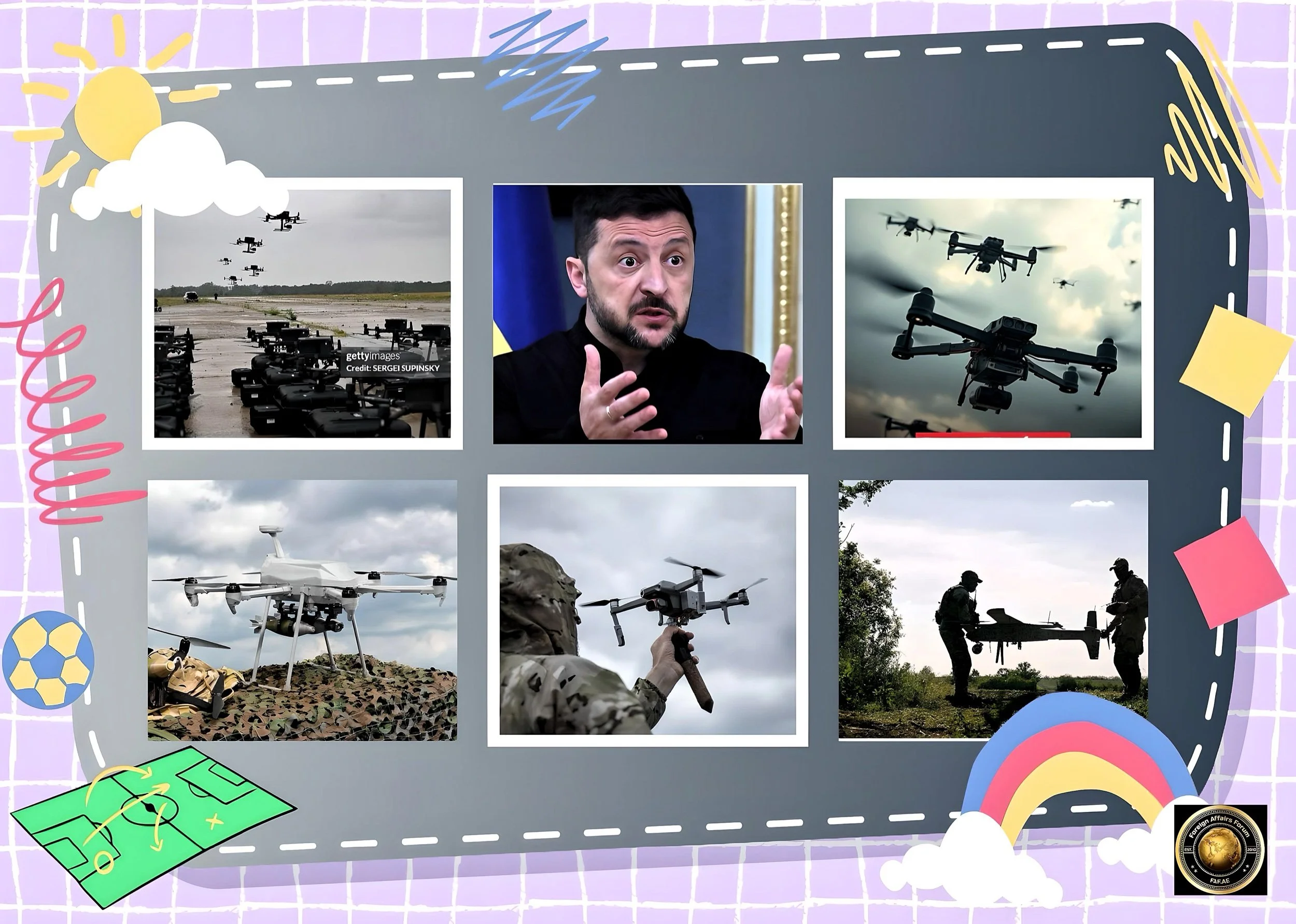
Recent conflicts, particularly the war in Ukraine, have demonstrated how commercial drones, satellite imagery, and algorithmic targeting tools can reshape battlefield dynamics.
Soldiers now operate inexpensive drones guided by live video feeds, while artificial intelligence systems analyze vast quantities of data to identify targets.
Commercial satellite constellations sustain communications, provide navigation, and enable real-time reconnaissance.
This emerging environment requires a fundamental rethinking of defense strategy. Militaries must shift from platform-centric procurement models toward software-driven innovation ecosystems.
They must build partnerships with commercial technology firms, develop flexible acquisition processes, and emphasize rapid experimentation.
Defense organizations that fail to adapt risk being outpaced by adversaries that harness commercial innovation more effectively.
Algorithm warfare, therefore, represents not merely a technological evolution but a structural transformation of military power. States that successfully integrate commercial technologies into their defense strategies will shape the future of global security.
Those that remain tied to outdated procurement cycles may find their most expensive military assets increasingly vulnerable on tomorrow’s battlefield.
Introduction
From Trench Controllers to Autonomous Systems: How Algorithm Warfare Is Transforming Modern Battlefields
For centuries, military power has depended on states' ability to mobilize economic resources, industrial capacity, and technological expertise.
The most powerful armies were typically those capable of producing the most advanced weapons systems.
Precision strike technologies, long-range missiles, and advanced surveillance capabilities were therefore concentrated in the hands of a small number of technologically advanced states.
This model of military power is now undergoing a dramatic transformation. The rapid development of commercial digital technologies—particularly artificial intelligence, autonomous systems, advanced sensors, and low-cost drones—has fundamentally altered the relationship between cost and battlefield effectiveness.
In the emerging era of algorithm warfare, the ability to integrate software, data, and commercial technologies into military operations increasingly determines strategic advantage.
Algorithm warfare refers to the use of algorithms, artificial intelligence, and autonomous systems to analyze information, guide weapons, and coordinate military operations.
These technologies allow military forces to process vast quantities of data, identify targets, and deploy weapons with unprecedented speed and precision. Crucially, many of these capabilities are no longer developed exclusively within defense industries. Instead, they originate in the commercial technology sector.
Commercial innovation now drives many of the technologies shaping modern warfare. Companies producing consumer drones, satellite imagery services, and machine-learning software contribute directly or indirectly to military capabilities.
The pace of technological change in these industries far exceeds that of traditional defense procurement systems.
This shift creates both opportunities and challenges. On the one hand, militaries can access advanced technologies at far lower cost than before. On the other hand, adversaries can do the same.
The widespread availability of commercial technologies reduces the barriers to entry for precision warfare, enabling even relatively small stakeholders to acquire sophisticated capabilities.
The resulting transformation is already visible on contemporary battlefields. In recent conflicts, soldiers have deployed inexpensive drones for reconnaissance, delivering explosives, and guiding artillery fire.
Artificial intelligence systems process satellite imagery to identify troop movements and equipment concentrations. Communications networks built from commercial satellite systems sustain military operations even in contested environments.
These developments signal the emergence of a new paradigm in military power. Algorithm warfare is not simply a new tool within existing military structures. It represents a fundamental reconfiguration of how wars are fought, how militaries organize themselves, and how defense industries operate.
Understanding this transformation requires examining the historical evolution of military technology, the current state of algorithm-driven warfare, and the strategic implications for states seeking to maintain military superiority in an increasingly competitive technological environment.
History and current status
Cheap Code, Costly Consequences: The Rise of Algorithm Warfare and the Collapse of Traditional Defense Cycles
The evolution of modern warfare has always been closely linked to technological innovation. The introduction of gunpowder weapons in early modern Europe reshaped military strategy by replacing armored knights with firearms and artillery.
The Industrial Revolution further transformed warfare by enabling the mass production of weapons and the large-scale mobilization of armies.
During the twentieth century, military technology advanced at an unprecedented pace. World War I introduced mechanized warfare, chemical weapons, and aircraft. World War II saw the emergence of radar, jet engines, and nuclear weapons.
The Cold War further accelerated technological competition between the United States and the Soviet Union, producing innovations such as ballistic missiles, satellite reconnaissance, and precision-guided munitions.
The late twentieth century witnessed another major transformation with the emergence of information-based warfare.
Advances in computing and communications technology enabled militaries to integrate sensors, networks, and weapons systems into complex command-and-control architectures. Precision-guided munitions became central to modern military operations.
However, these capabilities remained largely confined to major powers. Developing advanced precision weapons required massive investments in research and development, specialized defense industries, and sophisticated manufacturing infrastructure.
Only a handful of countries possessed the economic and technological capacity to build such systems.
The rise of commercial digital technologies in the twenty-first century began to erode this monopoly. The global technology industry produced innovations that were rapidly adopted for military purposes.
Artificial intelligence algorithms capable of analyzing large data sets, miniaturized sensors used in consumer electronics, and advanced communications networks developed for civilian applications all became relevant to military operations.
The proliferation of commercial drones represents one of the most visible examples of this trend. Originally designed for photography and recreational use, drones quickly proved useful for military reconnaissance and targeting. Their relatively low cost made them accessible to a wide range of stakeholders.
Recent conflicts have demonstrated how these technologies can be adapted for combat operations.
Small drones equipped with cameras and explosive payloads have been used to attack armored vehicles, artillery positions, and troop concentrations. Their ability to provide real-time video feeds allows operators to guide them precisely to their targets.
Commercial satellite technology has also become increasingly important in modern warfare. Satellite imagery services provide high-resolution images that can reveal troop movements and infrastructure developments. Satellite communications networks enable secure communication even when traditional networks are disrupted.
Artificial intelligence systems further enhance these capabilities by processing large volumes of data to identify patterns and potential targets. Machine-learning algorithms can analyze satellite imagery, radar signals, and communications data far more quickly than human analysts.
Together, these technologies are reshaping the battlefield. Warfare is becoming increasingly data-driven, autonomous, and decentralized. Instead of relying solely on expensive military platforms, modern forces increasingly employ networks of inexpensive sensors, drones, and algorithmic systems.
Key developments
Several technological developments have accelerated the emergence of algorithm warfare.
Advances in artificial intelligence have enabled machines to perform tasks that previously required human decision-making. Machine-learning algorithms can recognize objects in images, predict patterns in data, and adapt to changing conditions.
Another key development is the rapid improvement of drone technology. Commercial drones have become smaller, more reliable, and more capable.
They can carry cameras, sensors, and explosive payloads while transmitting live video to operators. Their relatively low cost allows militaries to deploy them in large numbers.
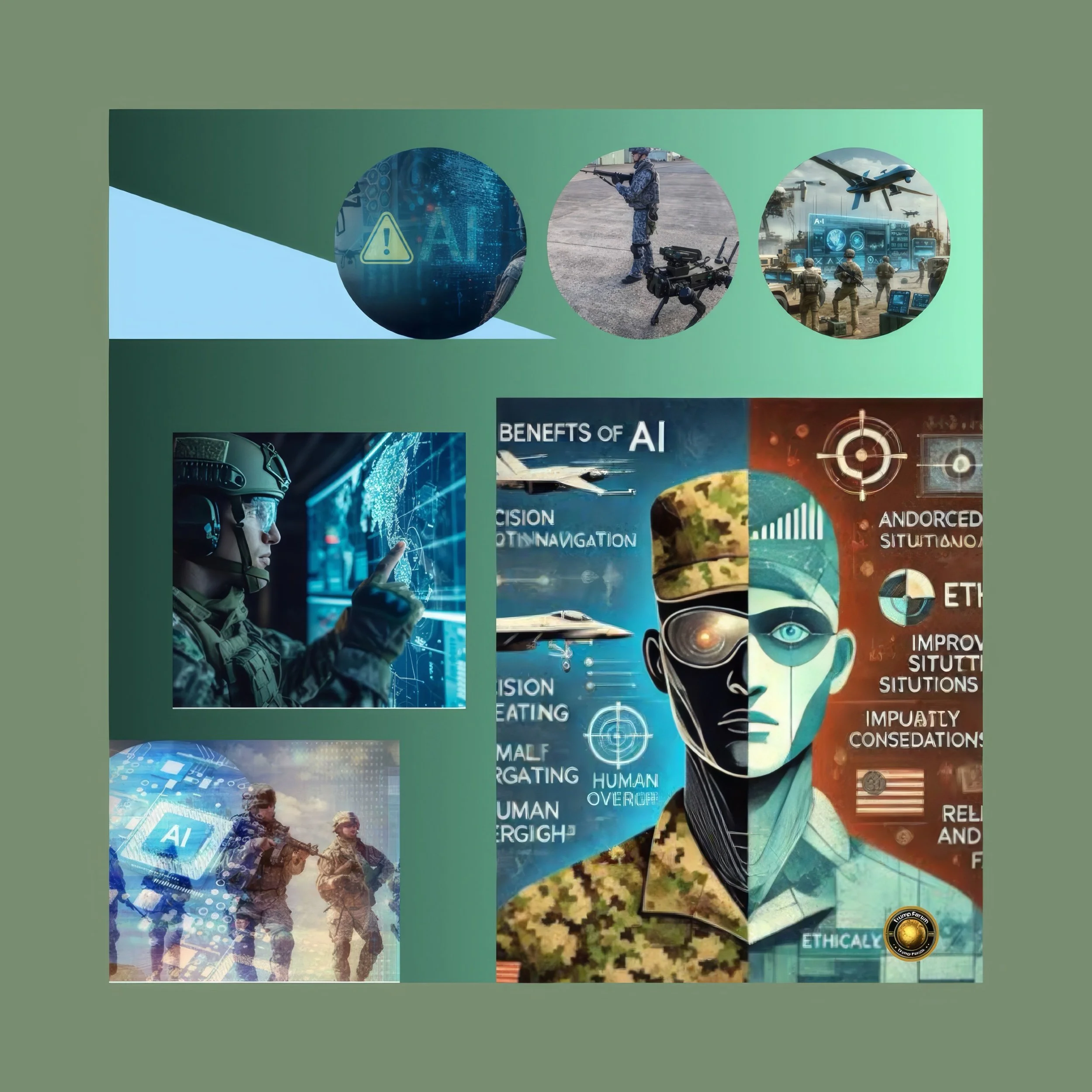
Autonomous systems represent another important innovation. Autonomous drones can navigate using artificial intelligence algorithms, identify targets, and carry out missions with minimal human intervention. While fully autonomous weapons remain controversial, semi-autonomous systems are already widely used.
The proliferation of commercial satellite constellations has also transformed military communications and reconnaissance. Satellite networks provide global coverage, enabling real-time transmission of data and imagery.
These systems can sustain military communications even when terrestrial networks are disrupted.
Open-source intelligence has further enhanced situational awareness. Information from social media, commercial satellite imagery, and publicly available data sources can be analyzed to track military movements and identify emerging threats.
Together, these developments create a new operational environment in which information flows rapidly across digital networks. Decision-making cycles shorten dramatically as algorithms analyze data and provide recommendations.
Latest facts and concerns
Despite the advantages offered by algorithm warfare, the new technological environment raises several significant concerns.
One major issue is the vulnerability of advanced military platforms to inexpensive attacks. Tanks, aircraft, and ships designed to withstand traditional threats may be vulnerable to swarms of low-cost drones.
Another concern involves the proliferation of military capabilities to non-state stakeholders. Commercial technologies are widely available and relatively easy to acquire.
This accessibility increases the risk that terrorist organizations or insurgent groups could obtain advanced capabilities.
Cybersecurity represents another major challenge. Algorithm-driven military systems rely heavily on digital networks and software.
These systems may be vulnerable to cyberattacks aimed at disrupting communications, manipulating data, or disabling weapons systems.
Ethical and legal questions also arise from the increasing use of autonomous systems. Human operators have traditionally made decisions about the use of lethal force.
Autonomous weapons raise complex questions about accountability and responsibility.
Cause-and-effect analysis
The rise of algorithm warfare results from several interconnected technological and economic trends. Rapid innovation in the commercial technology sector has produced powerful digital tools that can be adapted for military purposes.
Globalization has facilitated the spread of these technologies across international markets.
The declining cost of computing power has made artificial intelligence systems accessible to a wider range of stakeholders. At the same time, the miniaturization of sensors and electronics has enabled the development of compact autonomous systems.
These technological changes produce strategic consequences. As offensive capabilities become cheaper and more widely available, traditional defensive systems become increasingly vulnerable.
This dynamic alters the balance between offense and defense on the battlefield.
Future steps
Adapting to algorithm warfare requires significant institutional reform within military organizations.
Defense procurement systems must become more flexible and responsive. Instead of relying solely on long-term development programs, militaries should adopt rapid experimentation and iterative development processes.
Partnerships with commercial technology companies will become increasingly important. Many of the most important innovations in artificial intelligence and software development originate outside traditional defense industries.
Militaries must also invest in digital infrastructure and data management capabilities. Algorithm-driven warfare relies on the ability to collect, process, and analyze large volumes of information.
Conclusion
Drones, Data, and Algorithms: The New Military Revolution Challenging Traditional Defense Procurement Models
Algorithm warfare represents a fundamental transformation of modern military power.
The convergence of artificial intelligence, autonomous systems, and commercial technology is reshaping the character of warfare. Precision strike capabilities once reserved for major powers are now widely accessible.
This transformation challenges traditional defense procurement systems and strategic assumptions. Military organizations must adapt to a world in which innovation occurs rapidly and technological advantages may be short-lived.
The future of warfare will increasingly depend on states' ability to integrate commercial technologies into their defense strategies.
Those who succeed will shape the strategic landscape of the 21st century.
Those that fail may find themselves vulnerable to adversaries armed not with expensive weapons systems but with inexpensive algorithms and commercially available technology.