European Defense Capabilities Against Russian Drones Amid Wavering US Support
Executive Summary
As geopolitical tensions escalate, particularly due to the ongoing conflict involving Russia, European nations are increasingly focused on enhancing their defense capabilities in response to the proliferation of Russian drone technology.
This urgency is further compounded by a sense of uncertainty surrounding the level of support that the United States may provide in the future, prompting European countries to assess and strengthen their autonomous military capabilities.
In recent years, the integration of advanced unmanned aerial vehicles (UAVs) into Russian military operations has posed significant challenges for European defense systems.
These drones have demonstrated their effectiveness in reconnaissance and targeting, undermining traditional military strategies and requiring a reassessment of existing defense protocols.
To counter this evolving threat, European defense initiatives are exploring a variety of measures, including investing in cutting-edge anti-drone technologies and enhancing intelligence sharing among NATO allies.
Furthermore, collaborative projects aimed at developing new drone detection systems and electronic warfare capabilities are gaining momentum, highlighting the need for a unified response to a shared security concern.
Amid this backdrop, European nations are also expanding their partnerships with the defense industry to foster innovation in drone countermeasures, while simultaneously bolstering their military readiness through joint exercises and training programs focused on counter-drone operations.
The emphasis on self-reliance in defense matters is becoming increasingly evident, as European leaders recognize the imperative to safeguard their airspace and maintain regional stability in an environment characterized by shifting allegiances and uncertain support from traditional allies.
Introduction
European nations face a critical test of their defense capabilities as they confront growing Russian drone threats while questions mount about long-term US commitment to the continent’s security.
Recent incidents, including Russian drone incursions into NATO territory, have exposed significant gaps in Europe’s preparedness for modern warfare dominated by unmanned systems.
The Drone Challenge Reshaping European Defense
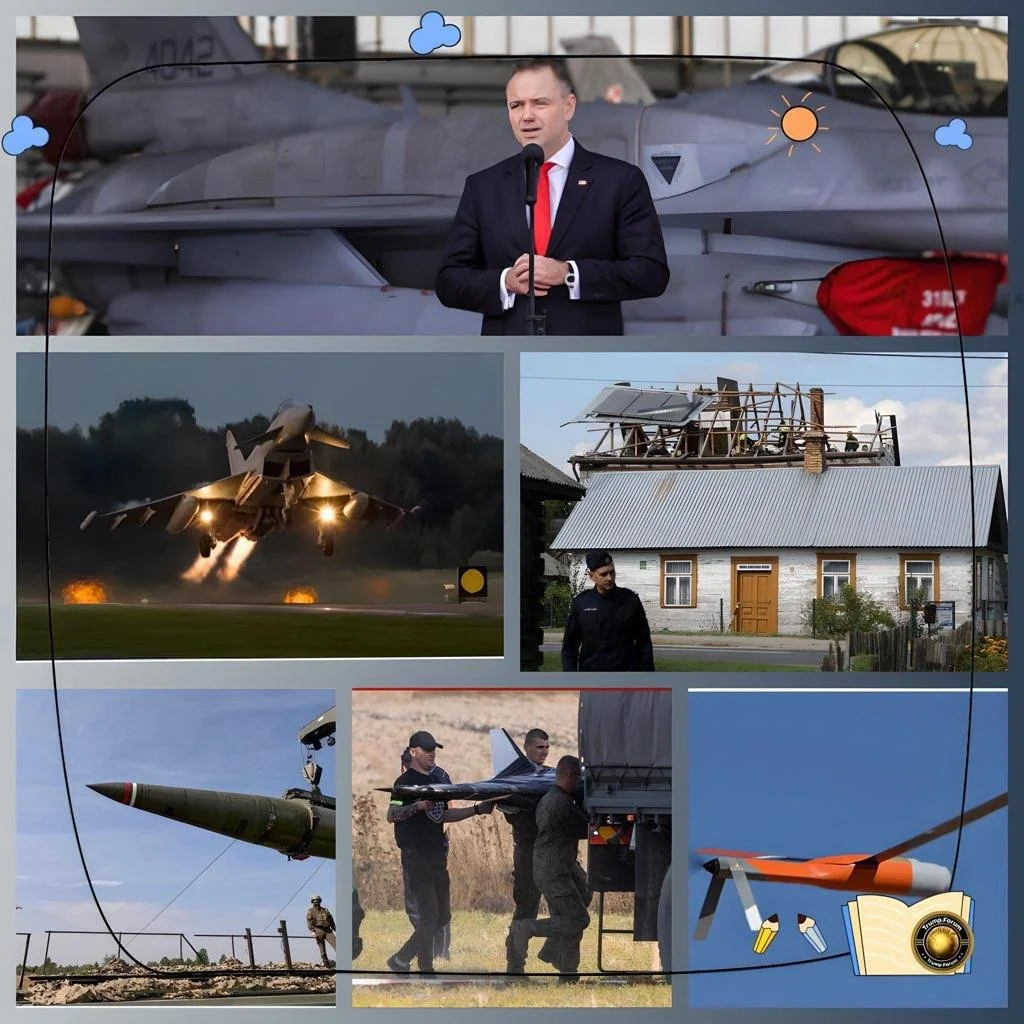
In September 2025, Russia executed a significant drone incursion into Poland, heralding a pivotal moment for NATO. This event marked the inaugural occasion in which NATO aircraft actively engaged Russian assets within the confines of NATO airspace, underscoring a dramatic escalation in regional tensions.
During this incident, a fleet of 19 to 23 Russian drones breached Polish airspace, prompting a mixed response from NATO forces. Ultimately, only four of these drones were successfully intercepted, with contributions from advanced fighter jets including the Dutch F-35s, Polish F-16s, and Italian Airborne Warning and Control System (AWACS) aircraft.
This limited success illustrated a profound challenge faced by European defenses—countering swarms of low-cost drones with traditionally expensive air defense systems, which struggle to adapt to such rapidly evolving threats.
European Defense Commissioner Andrius Kubilius issued a stark warning, indicating that Russia might unleash as many as 5 million drones in any potential assault on NATO. He emphasized the necessity for Europe to surpass this staggering number to maintain the upper hand in any impending conflict.
This situation is further contextualized by the experiences on the Ukrainian front lines, where drones have been responsible for approximately 80% of Russian frontline losses, a trend that starkly reveals the vulnerability of traditional armored vehicles; tanks now face an average survival time of merely six minutes in areas heavily dominated by drone activity.
A Surge in European Defense Investment
In response to escalating threats, European Union defense spending surged to an unprecedented €343 billion in 2024, representing a notable 19% increase from the previous year and constituting 1.9% of the bloc's GDP. Remarkably, this expenditure now eclipses China’s defense outlay by a factor of 1.5 and is more than triple that of Russia’s military budget.
Forecasts for 2025 expect this figure to swell to €381 billion, which would push European defense spending beyond NATO's established target of 2% of GDP for the very first time.
The EU's ambitious ReArm Europe initiative, which aims for an extraordinary total of around €800 billion, has been designed to bridge an estimated €1.8 trillion gap in defense investments that has accumulated since the conclusion of the Cold War.
Amid pressures from the Trump administration, NATO allies collectively pledged to raise their defense budgets to 5% of GDP by 2035—though this ambitious target has raised concerns regarding sustainability and the overall efficiency of expenditure.
Advancements in Drone Production and Defensive Capabilities
Amidst this backdrop, Ukraine has emerged as a formidable leader in global drone production, with estimates suggesting the manufacture of over 4 million drones in 2024. President Zelensky has indicated that Ukraine could potentially ramp up production to an astounding 8 million drones annually.
This sharp increase—from an earlier production rate of 20,000 units monthly in 2024 to an expected 200,000 monthly by 2025—signals an urgent response to the contemporary demands of the battlefield.
In this competitive landscape, European companies are racing to innovate and enhance counter-drone technologies.
For instance, Germany’s STARK has developed loitering munitions optimized for battlefield efficiency, and Alpine Eagle has introduced interceptor drones capable of engaging targets at distances of up to 5 kilometers.
In addition, Poland has successfully created its indigenous “Monster” system—a four-barrel Gatling gun chambered in 12.7mm, designed to autonomously detect and neutralize drone threats within a 2-kilometer range.
Despite these advancements, Europe's procurement of drones remains significantly behind. While Ukraine utilized a staggering 1.3 million drones in 2024, NATO member countries collectively procured only a fraction of that amount.
In recognition of the critical role that Ukrainian drones play—credited with inflicting at least 23% of Russian equipment losses—the European Commission has announced a substantial €7 billion investment into Ukraine’s drone industry, funded through interest accumulating from frozen Russian assets.
This strategic investment highlights the growing acknowledgment of the tactical importance of drone warfare in modern military engagements.
Strategic Autonomy and Wavering US Commitment
The strategic posture adopted by the Trump administration has fostered a climate of notable uncertainty regarding the United States' commitments to extended deterrence in Europe.
Trump's conditional interpretation of NATO's Article 5—asserting that the U.S. commitment to defend allies is contingent upon their defense spending levels—poses a fundamental challenge to the longstanding transatlantic security architecture.
His claim that Article 5 "depends on your definition" and explicit threats to withdraw support from allies not meeting spending benchmarks have significantly undermined the credibility of deterrence assurances that have traditionally bolstered NATO's foundation.
In response to this precarious environment, European leaders are actively pursuing greater strategic autonomy.
A pivotal initiative in this regard is the European Defence Industrial Strategy (EDIS), which aims to enhance intra-EU defense trade with an ambitious target of 35% of the overall EU defense market by 2030.
This strategy also stipulates that at least 50% of EU defense procurement should originate from within Europe, thereby reducing dependence on non-European suppliers.
Additionally, the EU has launched the Security Action for Europe (SAFE) program, dedicating €150 billion in loans specifically for arms procurement.
This initiative is designed to fortify European defense firms and incorporates preferential procurement requirements that tend to marginalize U.S. defense enterprises in favor of EU firms.
NATO's response to escalating security concerns along its eastern flank has been robust.
Following recent drone incursions over Polish airspace, NATO commenced “Operation Eastern Sentry,” deploying advanced assets including French Rafale fighters, German Eurofighters, additional F-16s, and bolstered air defense systems to reinforce the alliance’s eastern defenses.
Lithuania has asserted its readiness to intercept any drone violations of its airspace, investing in sophisticated anti-drone systems and enhanced surveillance technologies.
Poland has emerged as a key player in thwarting drone threats, committing approximately 4.48% of its GDP to defense in 2023—the highest in Europe. Its layered defense strategy integrates advanced Patriot PAC-3 batteries to counter high-altitude threats, Narew medium-range surface-to-air missiles, and indigenous systems, like the Monster, tailored for close-range drone engagements.
Despite these rising defense budgets, Europe faces significant challenges in achieving genuine defense self-reliance.
Current production capabilities within the European defense sector are inadequate for the demands of large-scale wartime operations, and the industrial base lacks the surge capacity evidenced by Ukraine's manufacturers during conflict.
The EU's defense sector, employing around 500,000 individuals with an estimated turnover of €70 billion, suffers from fragmentation across its 27 member states, obstructing operational efficiency and collaboration.
Experts concur that fostering meaningful deterrent capabilities will require substantial time and investment. Projections indicate that by 2030, enhanced military budgets could yield improved self-defense capabilities; however, current assets are insufficient for sustained high-intensity conflicts without direct U.S. support.
The principal challenge facing Europe is not solely the effectiveness of military systems, but rather the inadequacy of quantities necessary for large-scale, protracted operations.
The nuclear aspect of European strategic autonomy represents perhaps the most substantial limitation.
The existing nuclear arsenals of France and the United Kingdom are insufficient to credibly substitute for U.S. extended deterrence, especially considering Russia's considerable stockpile of over 4,000 nuclear warheads.
The divergence between the U.S. approach—focused on counterforce strategies aimed at neutralizing an adversary's nuclear capabilities—and the European preference for minimum deterrence highlights Europe's limitations in effectively mitigating the potential consequences of Russian nuclear retaliation.
Any European initiative aimed at achieving nuclear parity with Russia would necessitate an unprecedented level of collaboration among France and other EU member states, as well as a dramatic increase in the size and diversity of their nuclear arsenals—a scenario that remains politically untenable and technically daunting in the medium term.
Conclusion
Assessment: Partial Deterrence, Strategic Dependence
Europe’s defense capabilities against Russian drone threats and conventional aggression are improving but remain incomplete.
The continent can likely handle limited incursions and maintain baseline deterrence against opportunistic Russian probes.
However, sustained defense against large-scale Russian aggression would require either continued US involvement or several more years of intensive European rearmament.
The current European approach of punishment-based conventional counterstrike strategy - threatening retaliatory strikes against Russian high-value targets rather than attempting to intercept all incoming threats - offers a more realistic deterrent framework than costly defensive systems.
Yet this strategy’s credibility ultimately depends on European willingness to escalate conflicts to draw the US into any major confrontation.
While Washington wavers on long-term commitments, Europe’s €800 billion rearmament effort represents the continent’s most serious attempt at strategic autonomy since World War II.
Success will depend on sustained political will, industrial capacity building, and realistic assessment of what European forces can accomplish independently versus in partnership with diminished but still critical US support.