Trump’s Military Deployment in Los Angeles: Current Actions and Broader Implications for Federal Authority
Introduction
The deployment of Marines and National Guard troops to Los Angeles represents an unprecedented escalation in the federal response to civilian protests, raising significant questions about the potential expansion of presidential emergency powers.
President Donald Trump’s decision to send military forces to address immigration-related demonstrations has sparked intense debate about constitutional boundaries, the possibility of invoking the Insurrection Act, and concerns about broader authoritarian measures.
FAF, Trump.Forum analyzes as the current situation unfolds against a backdrop of longstanding speculation about Trump’s willingness to use extraordinary executive powers, including potential martial law declarations, making this deployment a critical moment for understanding the limits of presidential authority in domestic affairs.
Current Military Deployment in Los Angeles
Scale and Nature of the Deployment
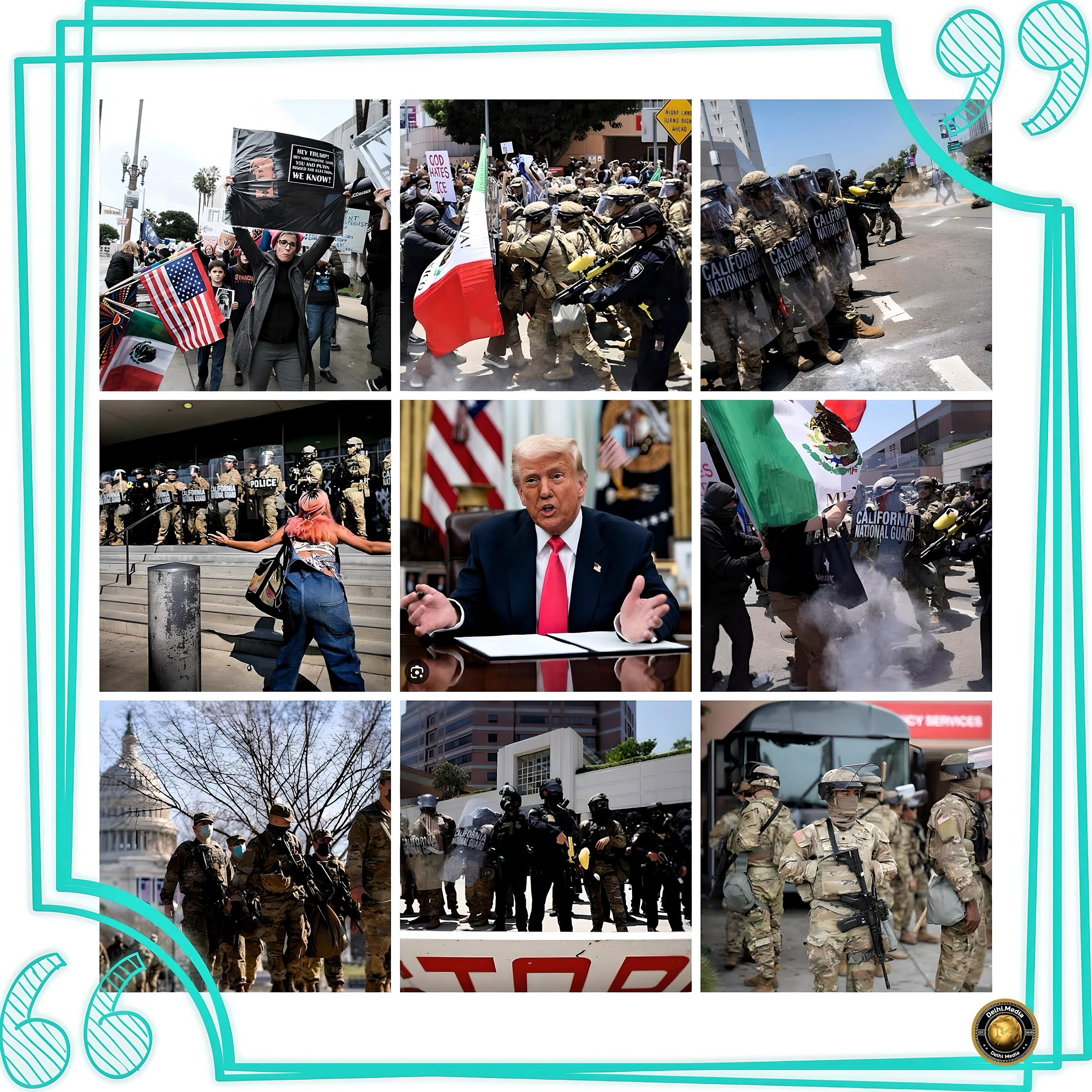
The Trump administration has deployed substantial military resources to Los Angeles in response to ongoing protests against immigration enforcement operations.
The deployment includes approximately 2,000 California National Guard members initially mobilized over the weekend, with an additional 2,000 Guard troops ordered on Monday.
Most significantly, the administration has activated approximately 700 Marines from the 2nd Battalion, 7th Marines, stationed at the Marine Corps Air Ground Combat Center in Twentynine Palms, California.
This represents the mobilization of an entire Marine infantry battalion, marking a notable escalation in Trump’s use of military force as a show of strength against demonstrators.
The protests began on Friday, June 6, following Immigration and Customs Enforcement (ICE) raids across Los Angeles that resulted in the arrest of 118 immigrants, including 44 people in Friday’s operations alone.
The demonstrations initially focused on locations where ICE operations occurred, including a clothing warehouse in the Fashion District and a federal building in downtown LA where protesters believed detainees were being held.
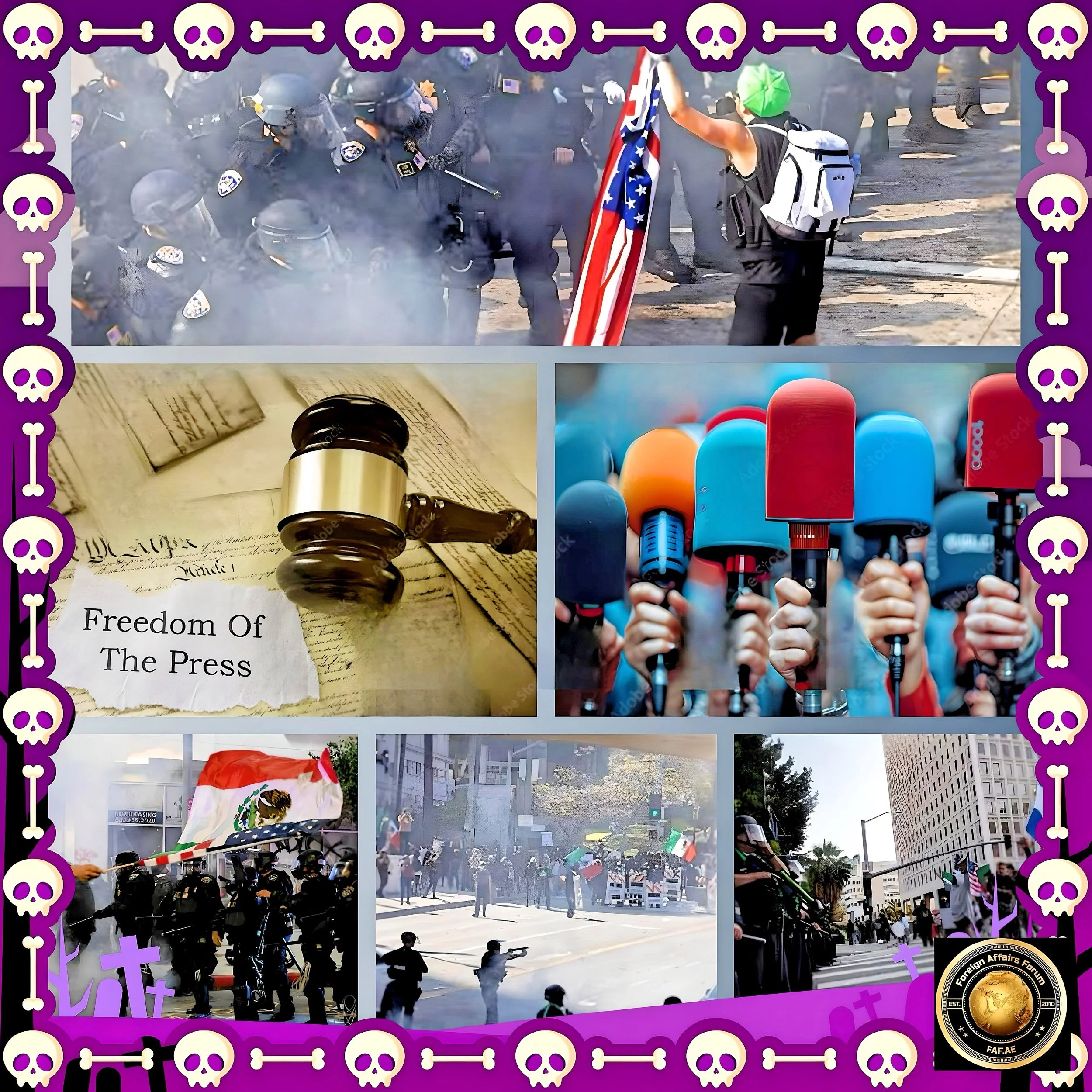
The situation escalated over the weekend, with reports of vandalism, burning vehicles, and clashes between demonstrators and law enforcement using tear gas and rubber bullets.
Legal Authority and Constitutional Questions
Trump’s deployment operates under Title 10, specifically 10 USC 12406, which grants the president authority to federalize the National Guard under specific conditions, including foreign invasion threats, rebellion against U.S. government authority, or situations where regular forces cannot enforce federal laws.
This deployment does not constitute an invocation of the Insurrection Act but represents a significant use of federal military power in civilian law enforcement contexts.
The mobilized Marines are prohibited from engaging in law enforcement actions such as making arrests unless Trump invokes the Insurrection Act, which would grant broader authority to deploy military forces to quell insurrection or rebellion against federal authority.
The deployment has prompted immediate legal challenges from California officials.
Governor Gavin Newsom has announced intentions to sue the Trump administration, arguing that the mobilization violates the 10th Amendment of the U.S. Constitution because he did not request federal assistance.
Newsom and state Attorney General Rob Bonta have already initiated legal action regarding the National Guard deployment, claiming it was illegal without gubernatorial consent.
This marks the first time in decades that a president has sent troops without the governor's consent or explicit request.
The Insurrection Act: Legal Framework and Historical Context
Understanding the Insurrection Act of 1807
The Insurrection Act of 1807 represents one of the executive branch’s most formidable emergency powers, enabling the president to send military forces within the United States and utilize them against American citizens.
Enacted initially to provide Congress’s constitutional authority to “provide for calling forth the Militia to execute the Laws of the Union, suppress Insurrections and repel Invasions,” the act serves as the primary exception to the Posse Comitatus Act, which generally prohibits federal military forces from engaging in civilian law enforcement activities.
The act grants the president authority to deploy military forces to quell civil disorder situations.
It has been invoked in response to 30 crises over its 230-year history, though this does not always result in actual military deployment.
The Insurrection Act provisions allow troop deployment regardless of a state’s request. The Act outlines various scenarios justifying military intervention to quell violent protests or enforce federal laws in specific regions.
The law includes somewhat ambiguous language, with one provision granting the president the right to suppress rebellion or domestic violence in any state impeding U.S. law.
This lack of a clear definition for “conspiracy” means that the president could interpret provisions to justify military action against individuals suspected of conspiring to violate federal law.
The last president to invoke the Insurrection Act against a state’s wishes was Lyndon Johnson, who federalized the National Guard to protect civil rights demonstrators during the historic march from Selma to Montgomery.
Trump’s Statements and Potential Invocation
When questioned about potentially invoking the Insurrection Act, Trump has provided ambiguous responses that suggest he is considering this option.
When reporters asked whether he planned to invoke the act, Trump responded, “Depends on whether or not there’s an insurrection. " He emphasized his determination to prevent protesters from “getting away with it” and asserted, “We’re not going to let them get away with it.”
We’re going to have troops everywhere”. However, when pressed about whether he believes an insurrection is occurring, he replied, “No, no, but you have people, and we’re not going to allow them to get away with it.”
In his presidential memorandum dispatching National Guard members, Trump asserted that the protests disrupted law enforcement and referred to demonstrations as a “form of rebellion” against U.S. authority.
On social media, Trump has labeled protesters as “violent, insurrectionist mobs” and indicated he was instructing cabinet members “to take all necessary actions” to halt what he termed riots.
Senior White House advisor Stephen Miller has characterized the protests as “a violent insurrection.”
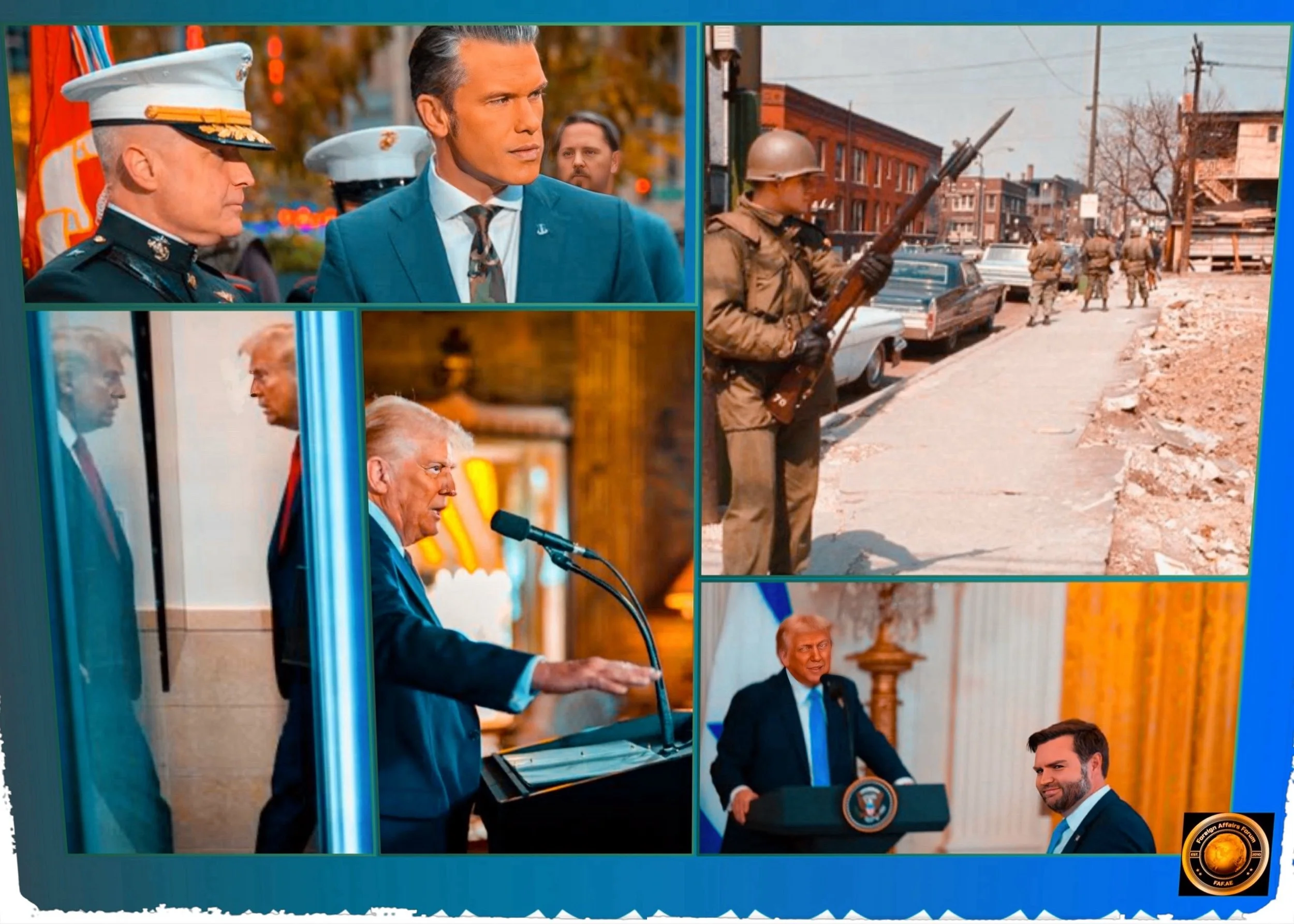
At the same time, Defense Secretary Pete Hegseth stated that active duty Marines were on “alert” and would be deployed if “violence persists,” claiming the protests posed a national security threat.
Martial Law Speculation and Broader Authoritarian Concerns
April 20th Deadline and Executive Order Context
Significant speculation has emerged regarding Trump’s potential martial law declaration, particularly around April 20, 2025, which was marked 90 days after a key executive order.
On January 20, 2025, Trump signed an executive order declaring a national emergency at the southern border. The order included provisions suggesting he might “invoke the Insurrection Act of 1807” and potentially deploy military personnel within the United States within this 90-day timeframe.
The executive order mandated that the secretaries of defense and homeland security provide a report on border conditions with “recommendations regarding actions that may be necessary to achieve operational control of the southern border, including whether to invoke the Insurrection Act of 1807”.
Despite widespread social media speculation about martial law declarations on April 20th, reports indicate that Defense Secretary Pete Hegseth and Homeland Security Secretary Kristi Noem are not recommending Trump invoke the Insurrection Act based on current border conditions.
According to recent reports, while Trump requested the report by April 21st, the actual memo from the Pentagon and DHS will likely not reach the White House until sometime later, giving Trump more time to consider his options.
The current border crossings have fallen to under 300 per day, which officials cite as evidence that extraordinary measures may not be necessary.
Constitutional Limitations and Legal Boundaries
Legal scholars have emphasized essential distinctions between the Insurrection Act and martial law, noting that invoking the former would not equate to declaring the latter.
Martial law involves temporarily substituting military authority for civilian rule and is usually invoked during war, rebellion, or natural disaster. Military commanders have unlimited authority to make and enforce laws.
However, experts assert there is no clear legal avenue for Trump to implement martial law as it is traditionally understood.
The Supreme Court has established that martial law can only be enforced in active war zones, and an 1866 ruling stated that martial law cannot be enforced if civilian courts remain operational.
The circumstances under which presidents have declared martial law that courts have recognized are “exceedingly narrow,” requiring “active hostilities on US soil that inhibit civilian legal proceedings.”
Legal expert analysis suggests no constitutional justification exists for Trump to declare martial law at the southern border, which “is not an area of active hostilities, despite the administration’s framing of cartel activities.”
The U.S. has historically enforced martial law in very limited circumstances, such as in Hawaii for three years following Pearl Harbor and in certain areas during the Civil War under President Lincoln.
State and Local Response to Federal Deployment
California Officials’ Opposition and Legal Challenges
California Governor Gavin Newsom has strongly opposed Trump’s military deployment, describing it as illegal and unnecessarily provocative.
Newsom has labeled Trump a “dictatorial president” and called the Marine deployment a “mad fantasy,” arguing that such actions are “un-American.”
In social media posts, Newsom has accused Trump of trying to “provoke chaos by sending 4,000 soldiers onto American soil” and characterized the deployment as “deranged” decision-making.
He has emphasized that U.S. Marines “are not political tools” and accused the Secretary of Defense of unlawfully deploying Marines for Trump’s political benefit.
The governor has announced plans to deploy an additional 800 law enforcement officers to “clean up President Trump’s mess,” positioning state resources as a counter to federal military presence.
Newsom has also threatened to “take legal action” regarding the Marine deployment, building on previous lawsuits against the National Guard deployment.
Los Angeles Mayor Karen Bass had similarly criticized the federal response, stating that the National Guard had not been deployed when Trump initially praised their effectiveness and lambasted the administration for “attacking our people.”
Police and Military Coordination Challenges
Los Angeles Police Chief Jim McDonnell has expressed concerns about the military deployment, stating confidence in the police department’s ability to handle large-scale demonstrations and indicating that the Marines’ arrival without coordinating with local police would present “significant logistical and operational challenges.”
The police chief’s statement suggests that local law enforcement views the military presence as unnecessary and potentially counterproductive to maintaining public safety.
This friction between local and federal authorities reflects broader tensions about the appropriate role of military forces in civilian law enforcement contexts.
The deployment has created coordination issues as military personnel are restricted in their law enforcement capabilities unless broader emergency powers are invoked.
According to sources familiar with the Marine mobilization, the Marines' role will be to supplement the National Guard presence, but their specific responsibilities remain uncertain.
Under current authorities, the Marines and National Guard are prohibited from engaging in law enforcement actions such as making arrests, which limits their effectiveness in addressing civil unrest beyond protecting federal property and personnel.
Implications for Democratic Governance and Civil Liberties
Precedent and Constitutional Concerns
The current deployment raises significant questions about the expansion of presidential emergency powers and the erosion of federalism principles.
Deploying military forces without state consent represents a departure from traditional cooperation between federal and state authorities in managing civil unrest.
Constitutional scholars and civil liberties advocates have expressed concern that such deployments normalize the use of military force in civilian contexts and could serve as stepping stones to more extensive authoritarian measures.
The situation has prompted advocacy organizations to warn about potential threats to democratic governance.
Groups like Indivisible have outlined response strategies for potential Insurrection Act invocation, emphasizing the need for “joyful, defiant, nonviolent action” and warning that “any action by the president to deploy the armed forces and military in our communities – against immigrants or anyone else – would be outrageously authoritarian, dangerous, illegal and wrong.”
These organizations emphasize distinguishing between legitimate emergency powers and authoritarian overreach.
Broader Pattern of Executive Power Expansion
The Los Angeles deployment occurs within a broader context of Trump administration efforts to expand executive authority in immigration enforcement and border security.
The administration has characterized immigration as a national security threat requiring extraordinary measures, including potential military deployment at the southern border and expanded detention facilities.
This framing justifies emergency powers that critics argue exceed constitutional boundaries and threaten civil liberties.
The administration’s rhetoric has consistently emphasized military solutions to civilian policy challenges, with Trump previously threatening to deploy military forces against “radical left lunatics” and stating during 2020 protests that governors should use the National Guard to “dominate the streets.”
This pattern suggests a willingness to use military force as a primary tool of domestic governance rather than as a last resort for genuine emergencies. The current situation in Los Angeles may serve as a test case for broader applications of such powers.
Conclusion
Trump's recent deployment of Marine Corps and National Guard personnel to Los Angeles signifies a notable intensification of military intervention in domestic law enforcement, thereby raising critical issues regarding constitutional limits and the framework of democratic governance.
Although the deployment is facilitated through existing federal statutes rather than declaring martial law or invoking the Insurrection Act, it sets a worrisome precedent that could pave the way for more expansive authoritarian measures.
Legal objections from California officials, coupled with dissent from local law enforcement agencies, underscore the contentiousness of employing military assets without the explicit consent of state authorities or demonstrable necessity.
This move occurs in a broader atmosphere rife with speculation regarding potential martial law or the invocation of the Insurrection Act, suggesting that the Los Angeles deployment indicates a trend toward increasing executive authority rather than merely a response to civil disorder.
Current legal and political restrictions constrain the administration's capacity to impose martial law.
Yet, the readiness to mobilize military forces against civilian demonstrators signifies a troubling deterioration of the long-standing separation between military and civil jurisdictions.
Ultimately, the implications of these actions hinge on whether they remain singular occurrences or evolve into a framework for broader authoritarian governance.
Therefore, sustained vigilance and ongoing legal scrutiny are imperative for safeguarding democratic institutions and civil liberties.