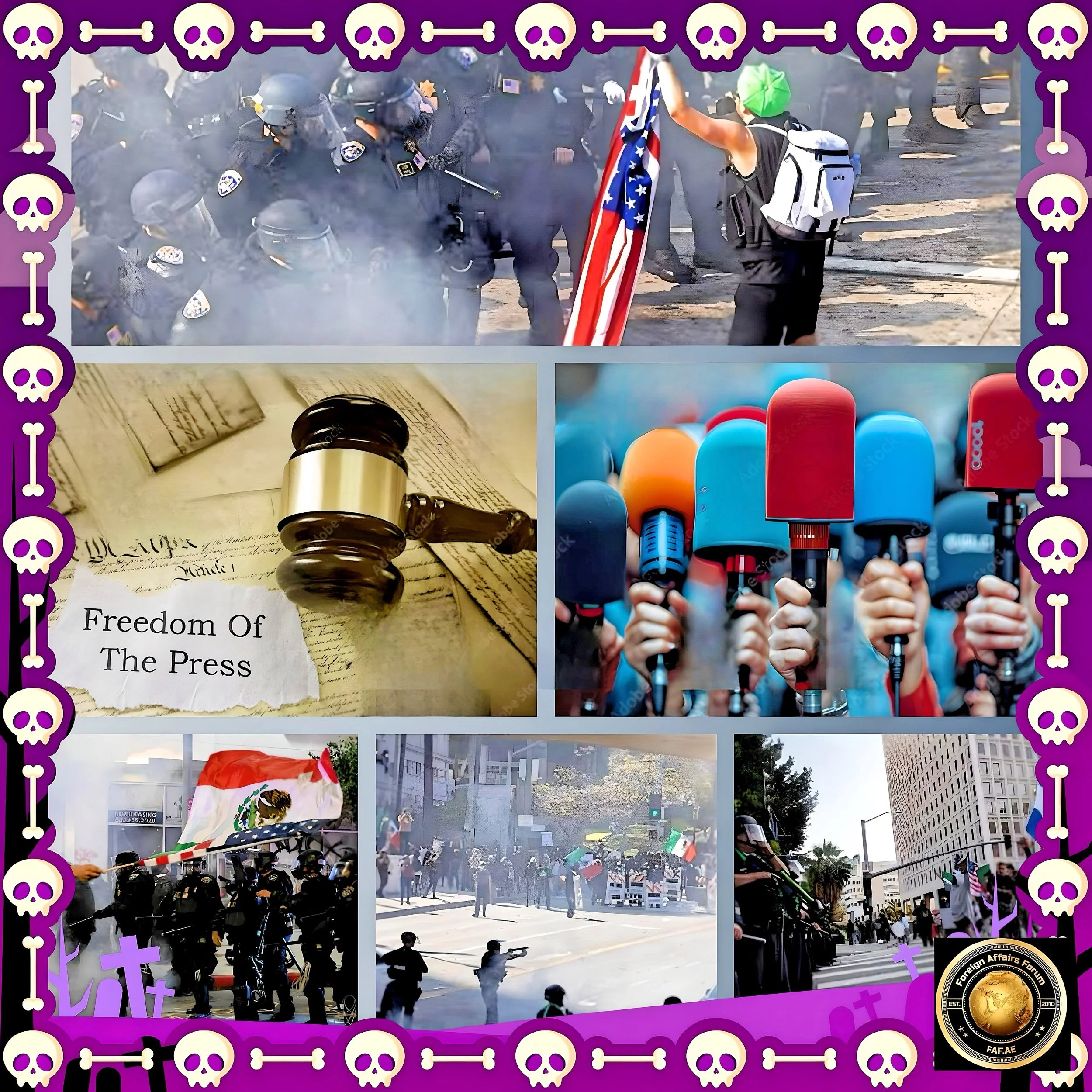
The Los Angeles Protests: A Constitutional Crossroads for America
Introduction
The ongoing protests in Los Angeles against President Trump’s immigration enforcement operations have evolved into a significant constitutional crisis that extends far beyond immigration policy.
FAF, Washington.Media concerns stem from federal troops deployed on American streets, legal challenges mounting, and protests spreading nationwide; this situation represents a critical test of America’s democratic institutions, civil liberties, and the balance of power between federal and state governments.
The Militarization of Domestic Law Enforcement
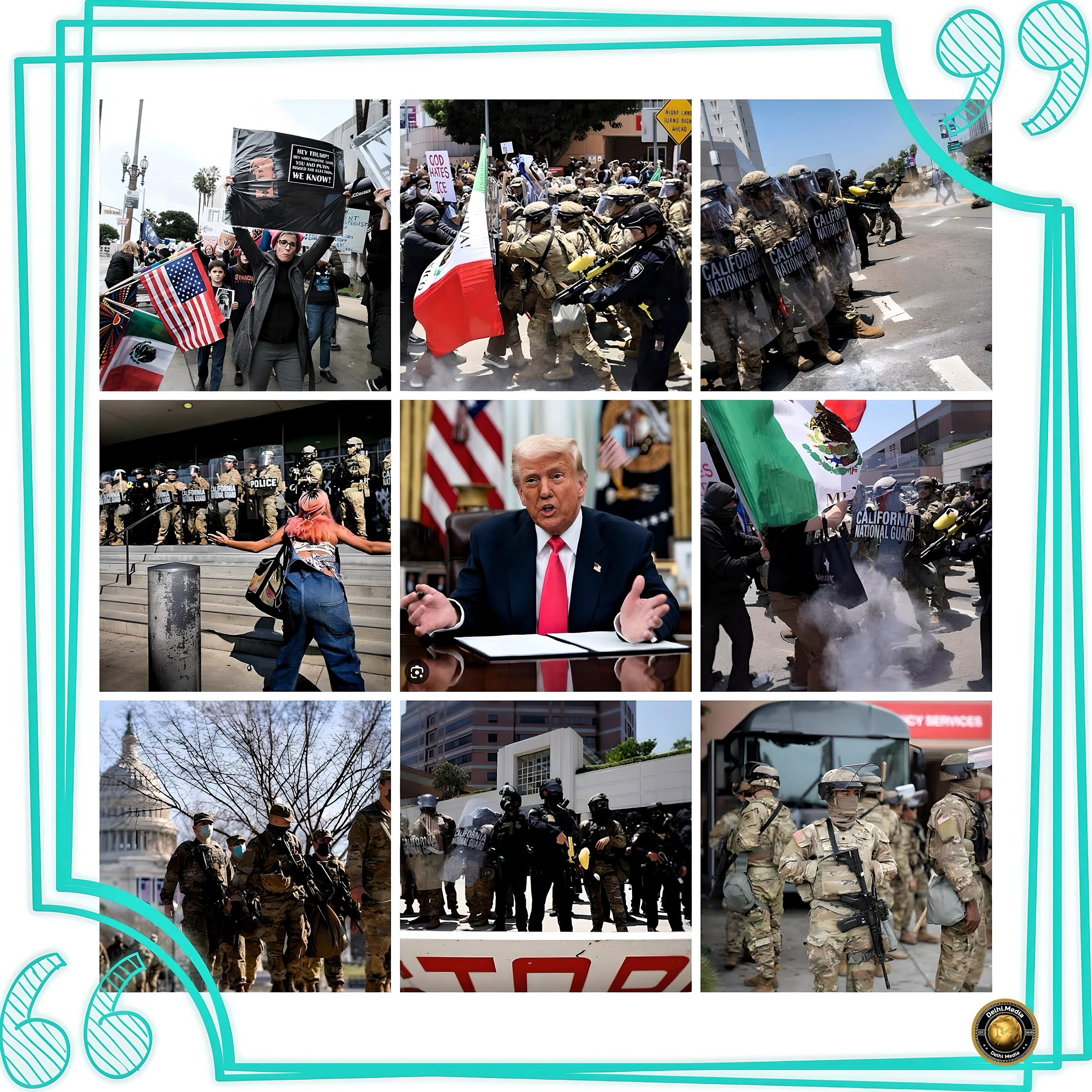
The deployment of approximately 4,000 National Guard troops and 700 Marines to Los Angeles marks one of the most significant domestic military operations in recent American history.
This unprecedented show of force—without the consent of California’s governor or Los Angeles’s mayor—represents a potential violation of democratic norms and established legal precedents regarding the use of military forces for domestic law enforcement.
The Trump administration has authorized this deployment by invoking Title 10 of the federal code, claiming it is necessary to protect federal immigration officials and federal property.
However, legal experts have challenged this justification, arguing that the deployment exceeds constitutional limits and blurs the critical line between military and civilian roles.
The Posse Comitatus Act of 1878 explicitly prohibits using the military for domestic law enforcement without specific congressional authorization.
This fundamental law prevents the armed forces from being used as a tool of domestic suppression and maintains the separation between military and civilian authority essential to democratic governance.
Expanding Military Role
What began as a mission to protect federal buildings has expanded to include
National Guard troops are authorized to detain individuals until law enforcement can arrest them
Some troops accompanying ICE agents on enforcement operations
Marines being deployed to “restore order” in civilian areas
This mission creep raises serious concerns about the militarization of immigration enforcement and represents what Governor Newsom has called a “military dragnet” across Los Angeles.
Constitutional and Legal Implications
The current situation in Los Angeles represents a direct challenge to several fundamental constitutional principles:
Federalism Under Threat
The deployment of federal troops without state consent undermines the federalist structure of American governance, which reserves police powers to the states.
The Trump administration has created what legal experts describe as a dangerous precedent for federal overreach by sidestepping state leadership and centralizing power in Washington.
California’s lawsuit against the Trump administration argues that the deployment violates state sovereignty and exceeds presidential authority.
This legal challenge highlights the tension between federal immigration enforcement powers and states’ rights to manage their public safety.
First Amendment Rights at Risk
The First Amendment protects the right to peaceful assembly and protest, cornerstone principles of American democracy.
While the government can impose reasonable “time, place, and manner” restrictions on speech, such as the limited downtown curfew, these restrictions must be content-neutral and narrowly tailored.
The massive military presence in Los Angeles raises concerns about whether these constitutional protections are being respected.
When federal troops are deployed to areas where protests “are likely to occur,” as Trump’s memorandum states, it creates a chilling effect on free speech and assembly rights.
Public Opinion and Political Divisions
American public opinion on both the immigration enforcement operations and the protests remains deeply divided along partisan lines. A CBS News/YouGov poll found that while 54% of Americans approve of Trump’s deportation policy in principle, 56% disapprove of how these policies are being implemented.
The partisan divide is stark
93% of Republicans endorse deportation measures
Only 18% of Democrats support these measures
Independent voters are split, with 49% supporting deportation efforts
Regarding who should manage the situation in Los Angeles, most Americans (56%) believe state and local governments should take the lead rather than federal authorities.
72% of Democrats and 56% of independents share this view, while only 25% of Republicans think the federal government should be in charge.
Historical Context and Precedents
The domestic deployment of military forces has a complex and often troubling history in the United States. Previous instances include:
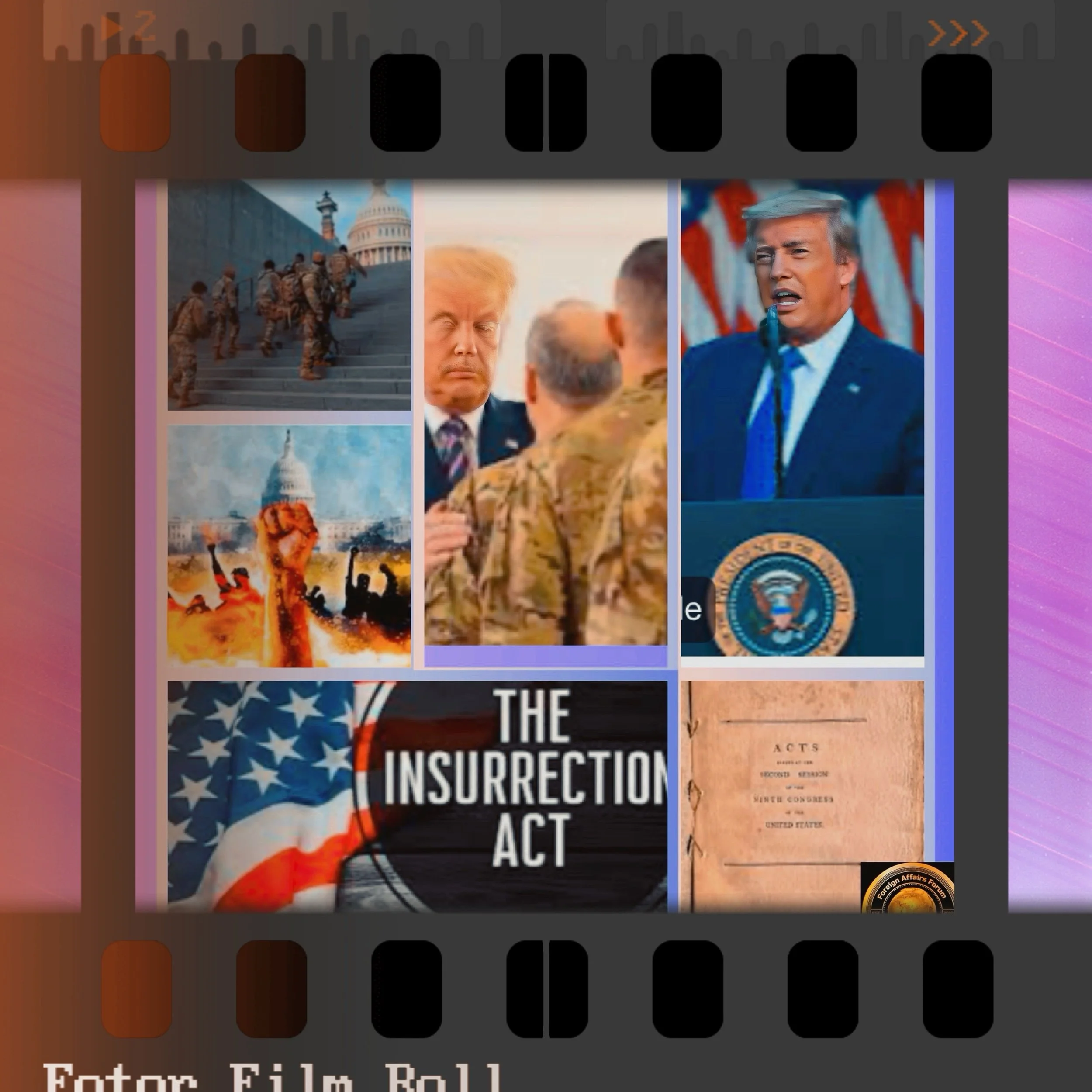
The 1992 Los Angeles riots following the Rodney King verdict, when President George H.W. Bush implemented the Insurrection Act at the request of California’s governor
The use of federal troops during the Civil Rights era, including in 1957 when troops were sent to enforce school desegregation in Arkansas
The 2020 George Floyd protests, when California’s governor deployed National Guard troops with the support of local officials
What distinguishes the current situation is that federal troops have been deployed without state or local request or consent and an explicit invocation of the Insurrection Act.
This represents a significant departure from historical precedent and raises concerns about the potential for military involvement in domestic law enforcement to become normalized.
Economic and Social Impact
The protests have had significant economic impacts on downtown Los Angeles businesses.
Mayor Bass reported that 23 businesses were looted on Monday night alone, with the Theatre Jewelry Center and adjacent businesses suffering shattered windows and broken display cases.
The Pentagon estimates the 60-day military deployment will cost $134 million, covering travel, lodging, and meals for military personnel.
This substantial expenditure raises questions about the proportionality of the federal response, especially given that the curfew covers less than 0.2% of the city’s area.
Business owners have expressed nuanced views about the protests.
Jewelry store owner Paresh Bhavsar, himself an immigrant and U.S. citizen, stated he supports protesting but condemned the destruction, saying, “I support protesting. I’m Indian, an immigrant too. I’m a U.S. citizen now. We dream of coming to Los Angeles, and then this happens? It’s lawless”.
What This Means for America
The current situation in Los Angeles represents a critical moment for American democracy for several reasons:
Testing Constitutional Guardrails
Deploying federal troops without state consent tests the constitutional guardrails that separate military and civilian authority.
How courts respond to California’s legal challenge will set important precedents for the limits of presidential power in domestic affairs.
Erosion of Democratic Norms
The use of military force against civilian protesters risks normalizing authoritarian responses to political dissent. Protest is not merely permitted in a democracy—it is essential to its health and vitality.
When military force is used to suppress or intimidate protesters, it undermines this vital democratic function.
Deepening Political Polarization
The sharply divided public opinion on both immigration enforcement and the protests reflects and reinforces America’s deep political polarization.
This polarization makes it increasingly difficult to find common ground on complex issues and threatens the shared understanding necessary for democratic governance.
Setting Dangerous Precedents
If the current deployment can stand, it could establish precedents for future presidents to use military force for domestic political purposes.
This would represent a significant shift away from America’s tradition of civilian government control and could lead to further militarization of domestic conflicts.
Conclusion
The situation in Los Angeles represents more than a dispute over immigration policy—it tests America’s constitutional order and democratic resilience.
The deployment of federal troops without state consent, the expansion of their role beyond protecting federal property, and the legal challenges to this deployment all raise fundamental questions about the balance of power in American democracy.
As protests spread to other cities and the legal battle unfolds, Americans face critical questions about the proper role of military forces in domestic affairs, the balance between federal and state authority, and the protection of constitutional rights during social unrest.
How these questions are resolved will have profound implications for the future of American democracy and the rule of law.
The coming days and weeks will be crucial in determining whether America’s democratic institutions can withstand this test and reaffirm the principles of federalism, civilian control, and constitutional rights that have defined American governance for over two centuries