India-Pakistan Nuclear Deterrence and Military Balance in 2025
Introduction
An era of light or darkness in the Northern Hemisphere?
India and Pakistan, as we speak, stand at a critical juncture following India’s missile strikes against targets in Pakistan and Pakistan-occupied Kashmir in retaliation for the Pahalgam terror attack.
FAF's comprehensive analysis examines both nations’ nuclear deterrence strategies, their respective military capabilities, global concerns, and the broader geopolitical implications of the current crisis.
Nuclear Deterrence Strategies
India’s Nuclear Doctrine and Capabilities
India maintains a “no first use” nuclear policy and has developed a nuclear triad capability as part of its “credible minimum deterrence” doctrine.
This approach allows India to deliver nuclear weapons via aircraft, land-based ballistic missiles, and submarine-launched missiles, providing comprehensive deterrence against both Pakistan and China.
The completion of deterrence patrols by the indigenous nuclear submarine INS Arihant marked a significant milestone in India’s nuclear capabilities, placing it among an elite group of countries with a fully operational nuclear triad.
India’s nuclear arsenal has grown steadily over the years.
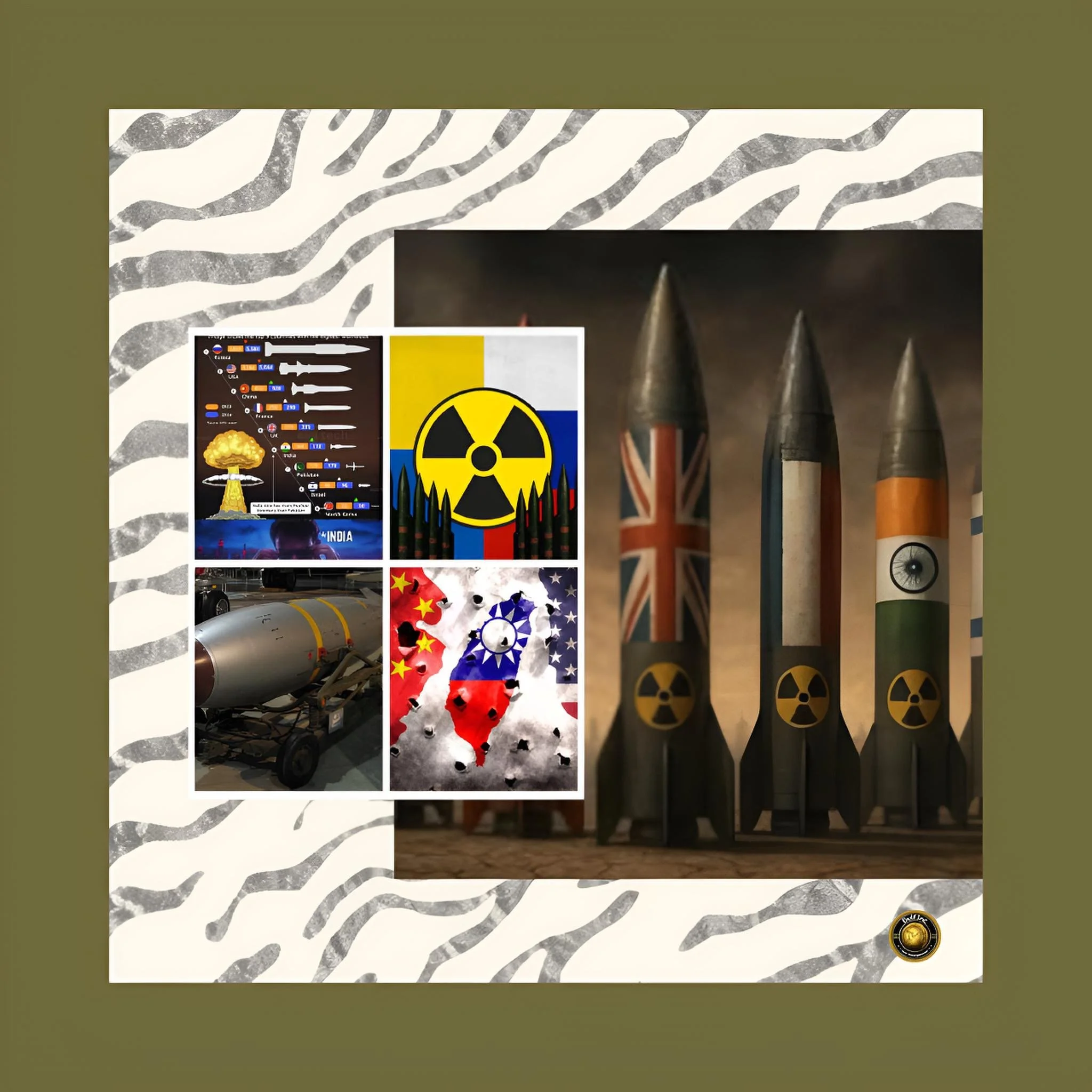
According to the Stockholm International Peace Research Institute (SIPRI), India currently possesses 172 atomic warheads, having added eight in the past year alone.
This marks the first time in 25 years that India’s nuclear stockpile has surpassed Pakistan’s, representing a significant shift in the regional balance of power.
The foundation of India’s nuclear strategy is what experts call “deterrence by punishment,” which focuses on a countervalue targeting strategy aimed at inflicting unacceptable damage rather than destroying the adversary’s nuclear forces.
India’s policy is to absorb a first strike if necessary and respond with “massive retaliation” to cause unacceptable damage to the aggressor.
Pakistan’s Nuclear Doctrine and Capabilities
Pakistan began developing nuclear weapons in January 1972 under Prime Minister Zulfikar Ali Bhutto and conducted its first nuclear tests in May 1998 in response to India’s tests.
Unlike India, Pakistan does not maintain a “no, first use” policy.
Instead, its nuclear doctrine promotes deterrence by guaranteeing an immediate “massive retaliation” to any aggressive attack against the state.
According to SIPRI’s latest assessment, Pakistan currently possesses 170 nuclear warheads.
The actual size of Pakistan’s nuclear stockpile has been difficult to gauge due to the extreme secrecy surrounding the program.
Still, in 2007, a retired Pakistani Army Brigadier-General suggested Pakistan had “about 80 to 120 genuine warheads”. This number has increased since then.
The fact remains that these weapons are upgraded and usable in a war situation, which is one of the main points of a nuclear deterrent.
A distinctive feature of Pakistan’s nuclear strategy is its deliberate ambiguity about the size of its arsenal, targeting options, and thresholds for nuclear use.
This ambiguity serves Pakistan well and allows more flexibility to adjust its policy as India continues to evolve its conventional and nuclear posture.
Pakistan’s Defense Capabilities of Concern to India
Tactical Nuclear Weapons
Perhaps the most concerning development for India is Pakistan’s focus on developing tactical nuclear weapons (TNWs) for battlefield use.
The Nasr short-range ballistic missile system, capable of delivering nuclear warheads, was specifically developed to counter India’s conventional military superiority.
These weapons are intended to provide Pakistan with “flexible deterrent options” and are part of what Pakistan calls its “full spectrum deterrence” approach.
Nuclear Doctrine Thresholds
Pakistan has established a four-threshold nuclear doctrine that outlines the circumstances under which it might employ atomic weapons
A public or private warning
A demonstration atomic test of a small nuclear device on its soil
The use of nuclear weapons on Pakistan’s soil against foreign attacking forces
The use of nuclear weapons against military targets on foreign soil, likely in thinly populated areas
This graduated approach creates strategic ambiguity and increases the risk of nuclear escalation during conventional conflicts.
Nuclear Infrastructure and Production
Pakistan has been expanding its nuclear infrastructure, particularly at its Khushab nuclear facility, which is increasing its capacity to produce plutonium.
The development of plutonium-based weapons allows Pakistan to create more sophisticated and compact nuclear weapons, such as those tested at Kharan on May 30, 1998, which are believed to be tritium-boosted weapons that can significantly increase explosive yield.
What are Plutonium-based nuclear weapons?
Pakistan has developed plutonium-based nuclear weapons through its Khushab Nuclear Complex, which houses four heavy-water reactors dedicated to producing weapons-grade plutonium.
These reactors, coupled with reprocessing facilities at New Labs and Chashma, enable Pakistan to separate plutonium from spent nuclear fuel for use in compact, lightweight warheads.
This shift from uranium-based designs allows for tactical nuclear weapons (e.g., short-range missiles like the Nasr) with smaller yields (5–10 kilotons) optimized for battlefield use.
Plutonium vs. Generic Nuclear Weapons
Advantages
Plutonium warheads require less fissile material for critical mass (≈4–8 kg vs. 15–20 kg of uranium).
Implosion designs using plutonium are more efficient and scalable for miniaturization.
Tactical flexibility: Smaller warheads enable deployment on mobile launchers and cruise missiles.
Challenges
Plutonium-240 contamination (spontaneous fission) complicates storage and requires advanced implosion technology to prevent pre-detonation.
Reprocessing plutonium is chemically complex and produces high heat and radiation, demanding specialized facilities.
While plutonium weapons are technologically demanding, they are not inherently “superior” to all uranium-based designs.
Modern thermonuclear weapons (fusion-boosted or staged devices) used by major nuclear powers far exceed pure fission weapons in yield and efficiency.
The U.S. and Russia lead in advanced technologies like thermonuclear warheads, multiple independently targetable reentry vehicles (MIRVs), and directed-energy systems.
Pakistan’s plutonium-based arsenal, while sophisticated for regional deterrence, lacks the scale and fusion capabilities of these major powers.
India’s Defense Capabilities of Concern to Pakistan
Conventional Military Superiority
India’s conventional military superiority represents Pakistan’s most significant security concern. With a PowerIndex score of 0.1184, India ranks fourth in the Global Firepower Index, behind only the United States, Russia, and China.
The Indian Armed Forces consist of 1.45 million active troops, 1.15 million reserves, and over 2.5 million paramilitary personnel.
This overwhelming numeric advantage is a primary driver behind Pakistan’s development of tactical nuclear weapons as an equalizer.
Advanced Weapons Systems
India’s defense modernization programs have yielded sophisticated weapons systems across all service branches.
The Indian Air Force operates 2,229 aircraft, including 600 fighter jets such as the Rafale and Su-30MKI.
The Indian Army fields advanced tanks like the T-90 Bhishma and indigenous Arjun, while the Navy operates 150 warships and submarines, including two aircraft carriers: INS Vikramaditya and INS Vikrant.
Of particular concern to Pakistan is India’s BrahMos supersonic cruise missile system, which can be launched from land, air, and sea platforms, providing India with precision strike capabilities that could target Pakistani military installations with minimal warning.
India Nuclear program - plutonium-based.
India’s nuclear weapons program is plutonium-based, relying on domestically produced weapon-grade plutonium from reactors like Dhruva and the now-shut CIRUS at the Bhabha
Atomic Research Centre (BARC) near Mumbai. As of 2024, India’s stockpile includes 0.7 ± 0.16 tonnes of weapon-grade plutonium, theoretically sufficient for 130–210 nuclear warheads (assuming 4–6 kg per warhead).
Key Infrastructure and Production
Dhruva Reactor: Operational since 1985, this 100 MWt heavy-water reactor produces 12–18 kg of weapon-grade plutonium annually.
Prototype Fast Breeder Reactor
PFBR, begun in 2024, is a 500 MWe reactor that could add 100–150 kg of plutonium per year if optimized for weapons production.
Reprocessing
India separates plutonium at facilities like Tarapur and Kalpakkam, enabling warhead assembly.
Historical Context
India’s first nuclear test in 1974 (Smiling Buddha) used plutonium from the CIRUS reactor, a design aided by Canadian and U.S. civilian nuclear cooperation.
Subsequent tests in 1998 confirmed thermonuclear capabilities, though their success remains debated.
Strategic Implications
Arsenal Size
Estimated at 172 warheads in 2024, with delivery systems including land-based missiles (Agni-V), submarine-launched missiles (K-4), and aircraft.
Fissile Material Reserves
Beyond weapon-grade plutonium, India holds ~9.2 tonnes of reactor-grade plutonium (potentially usable for weapons) and 5.3±2 tonnes of HEU (30–45% enriched for naval reactors).
Analysts suggest theoretical maximums of 2,686 warheads if civilian stocks are repurposed.
India’s no-first-use policy and triad development reflect a focus on deterrence against Pakistan and China, though its growing plutonium stockpile raises proliferation concerns.
Financial Resources and Defense Spending
India has allocated ₹6.81 lakh crore ($75 billion) to the Ministry of Defence in the Union Budget for FY 2025, making defense the highest-funded sector in the government budget at 13.45% of total spending.
This financial commitment dwarfs Pakistan’s defense budget and allows India to maintain its qualitative and quantitative military edge.
Global Political and Economic Concerns
Economic Implications
The current crisis poses significant economic risks, particularly for Pakistan.
Global rating agency Moody’s has warned that escalating tensions would weigh on Pakistan’s economic growth and hamper the government’s ongoing fiscal consolidation efforts.
This comes at a particularly vulnerable time for Pakistan’s economy, which has been stabilizing thanks to a $7 billion IMF bailout program secured last year and a $1.3 billion climate resilience loan granted in March 2025.
India has already taken punitive economic measures against Pakistan, including banning imports of goods coming from or transiting through Pakistan and barring Pakistani ships from entering Indian ports.
More concerning from Pakistan’s perspective is India’s request to the IMF to review loans disbursed to Pakistan, which could threaten the financial lifeline, keeping Pakistan’s $350 billion economy afloat.
Regional Stability
The conflict threatens to destabilize the entire South Asian region.
Non-nuclear South Asia Association of Regional Cooperation (SAARC) members, such as Bangladesh, Sri Lanka, Nepal, Bhutan, and the Maldives, are increasingly constrained by the India-Pakistan escalation.
Bangladesh is particularly vulnerable following its recent regime change. Anti-India sentiment runs high, and the interim government is navigating a deeply polarized landscape.
Global Strategic Implications
From a global strategic perspective, an extended India-Pakistan crisis would impact the United States Indo-Pacific strategy, as Washington views India as a cornerstone of its regional balancing efforts against China.
A protracted conflict would divert India’s strategic focus away from the maritime Indo-Pacific and toward its western land borders, constraining its ability to act as a net security provider in the broader region.
China’s Role in the Conflict
China’s Diplomatic Position
China has publicly called on both India and Pakistan to exercise maximum restraint “in the larger interest of peace and stability” in the region.
While opposing all forms of terrorism, China described India’s military operation as “regrettable” and urged both sides to “act in the larger interest of peace and stability, remain calm, exercise restraint, and refrain from taking actions that may further complicate the situation.”
China-Pakistan Alliance
Despite its calls for restraint, China has also reaffirmed its support for Pakistan.
Chinese Ambassador Jiang Zaidong met with Pakistani President Asif Ali Zardari amid the tensions and described the relationship between China and Pakistan as one of “ironclad brothers who have always supported each other in challenging times.”
This statement suggests that while China may not want to see escalation, it stands firmly behind Pakistan in the current crisis.
Strategic Implications of Chinese Involvement
Any direct Chinese involvement would significantly escalate the crisis and potentially trigger wider geopolitical ramifications. China itself is expanding its nuclear arsenal faster than any other country, growing from 410 warheads in 2023 to 500 in 2024.
Given the complex dynamics between China, India, and Pakistan and broader tensions between China and the United States, Chinese intervention could transform a regional conflict into a much more dangerous international crisis.
India’s Defense Strengths from a Global Perspective
International Standing and Strategic Partnerships
India’s position as the world’s fourth most powerful military underscores its ongoing efforts to modernize its forces and enhance strategic defense capabilities.
According to Forbes’ latest rankings, India is the 12th most powerful country globally, considering its economic standing, international alliances, and military strength.
India’s strategic partnerships, particularly with the United States through frameworks like the Quad, enhance its global position.
These relationships provide India with access to advanced military technology and international diplomatic support that Pakistan lacks.
Nuclear Triad and Second-Strike Capability
India’s fully operational nuclear triad places it in an exclusive group alongside the United States, Russia, China, France, and the United Kingdom.
The nuclear-powered submarine INS Arihant gives India a secure second-strike capability that is particularly valuable given its “no first use” policy.
This submarine can remain underwater indefinitely without detection, making it virtually invulnerable to preemptive strikes and ensuring India’s ability to retaliate even after absorbing a first strike.
Indigenous Defense Production
India has made significant strides in indigenous defense manufacturing, reducing its reliance on imports and strengthening its strategic autonomy.
Programs like “Make in India” have accelerated domestic production of weapons systems, ammunition, and other military equipment, enhancing India’s long-term military sustainability.
The Triggering Crisis
Pahalgam Attack and Its Aftermath
The current escalation between India and Pakistan stems from an attack on April 22, 2025, in occupied Kashmir’s Pahalgam that killed 26 people, mostly tourists, in one of the deadliest assaults since 2000.
India has identified three perpetrators, claiming that two are Pakistani nationals, and labeled them as “terrorists.” Pakistan has rejected these allegations and called for an independent investigation.
In response to the attack, India implemented a series of escalating measures, including:
Suspending the Indus Waters Treaty
Shutting down the only operational land border crossing at Attari
Downgrading diplomatic ties
Banning imports from Pakistan
Barring Pakistani ships from Indian ports
These measures culminated in India’s military strikes against what it described as “terrorist infrastructure” in Pakistan and Pakistan-occupied Kashmir on May 7, 2025.
Conclusion
The current crisis between India and Pakistan represents one of the most dangerous confrontations between these nuclear-armed neighbors in recent years.
Both countries possess substantial nuclear arsenals and delivery systems capable of inflicting catastrophic damage.
India’s conventional military superiority, coupled with Pakistan’s reliance on nuclear weapons as an equalizer, creates a volatile dynamic with significant escalation risks.
The international community, particularly the United States, has engaged diplomatically to prevent further escalation.
However, the complex web of regional alliances, particularly China’s support for Pakistan, complicates efforts to defuse tensions.
The economic consequences of prolonged conflict would be severe, especially for Pakistan’s fragile economy, while broader strategic implications would ripple throughout South Asia and impact global geopolitics.
As the situation continues to evolve, the risk of miscalculation remains high.
Both countries’ nuclear deterrence strategies will be tested as they navigate this crisis, with the international community watching closely for signs of either escalation or de-escalation in the coming days and weeks.