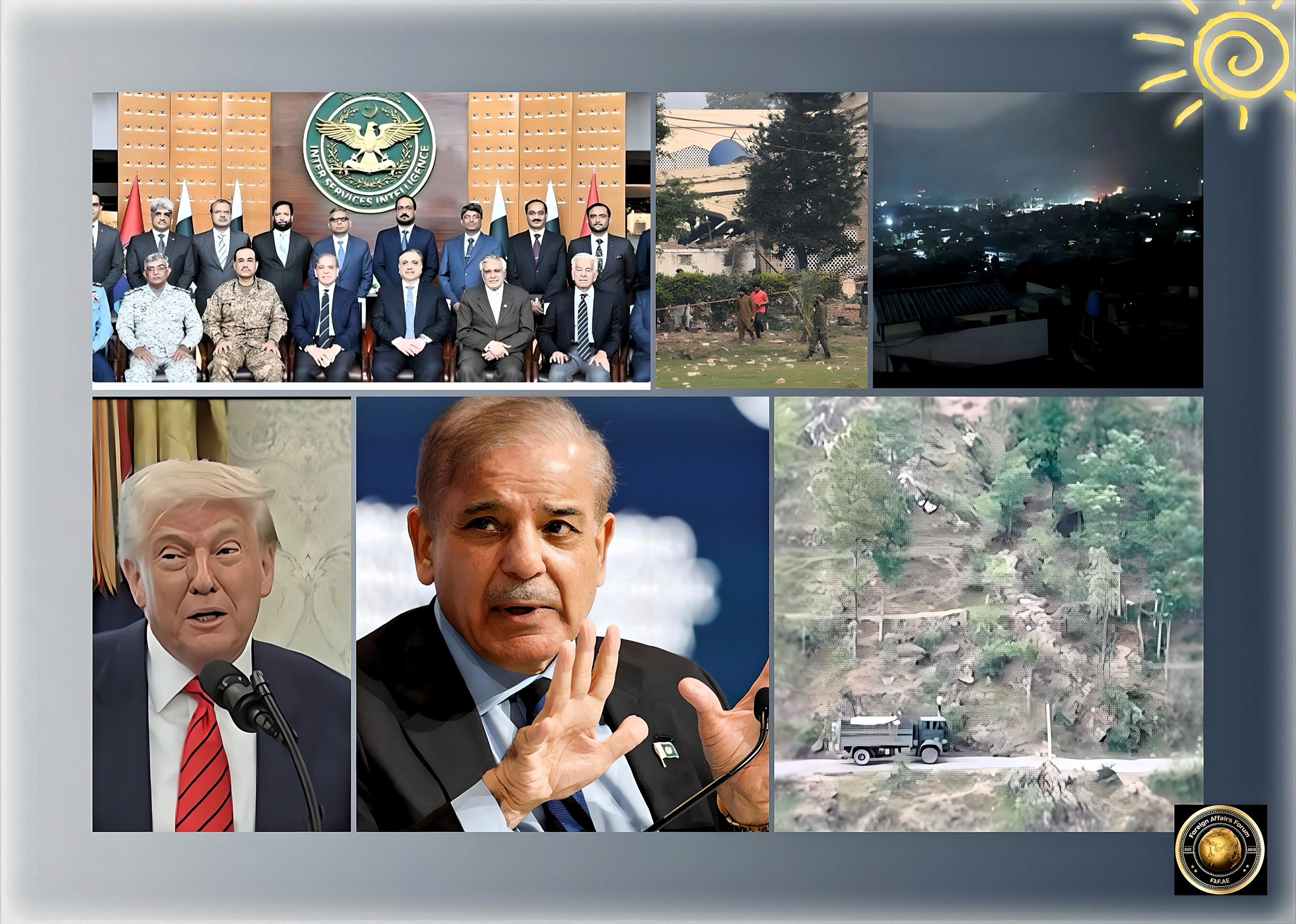
Pakistan’s Response Measures to India’s “Operation Sindoor” Strikes
Introduction
On May 6, 2025, India launched “Operation Sindoor,” conducting precision strikes on multiple locations in Pakistan and Pakistan-administered Kashmir in response to the April 22 attack on tourists in Kashmir’s Pahalgam.
Pakistan has implemented several retaliatory measures and threatened further action.
Military Responses
Pakistan has initiated both immediate military actions and promised additional responses to India’s strikes. According to Pakistani officials, the country has already engaged militarily in several ways:
Direct Military Actions
Pakistan claimed to have shot down five Indian fighter jets during the confrontation, though India has not confirmed these claims.
Ahmed Sharif Chaudhry, spokesperson for the Pakistani military, stated in an interview with Geo TV: “Pakistan will retaliate at a time and location of its choosing. This heinous provocation will not go unanswered”.
The Pakistan Army reportedly opened artillery fire along the Line of Control in the Bhimber Gali area of the Poonch-Rajauri sector, continuing ceasefire violations that had been occurring for over ten days.
Missile Tests and Military Preparedness
In the days leading up to India’s strikes, Pakistan conducted two missile tests, demonstrating its military readiness.
On May 3, Pakistan tested the Abdali surface-to-surface ballistic missile with a range of 450 km, followed by a test of the Fatah series surface-to-surface missile with a range of 120 km on May 5.
Following the second test, Prime Minister Shehbaz Sharif stated that Pakistan’s defense is “in strong hands.”
Aviation and Transportation Measures
Pakistan has implemented significant restrictions on air travel in response to the military situation:
Airport Closures
Reports indicate that key airports in Pakistan will remain closed for 48 hours following India’s strikes. This measure appears to be a security precaution and a symbolic response to India’s military action.
Airspace Restrictions
Before the recent strikes, Pakistan had already closed its airspace to Indian airlines following the Pahalgam attack in April. This restriction continues as part of the broader response to escalating tensions.
Diplomatic Statements and Actions
Pakistan’s leadership has issued strong statements condemning India’s strikes and promising retaliation:
Official Statements
Prime Minister Shehbaz Sharif characterized India’s strikes as an “act of war” and declared: “Pakistan has every right to respond forcefully to this act of war imposed by India, and a forceful response is being given.”
He further stated: “The Pakistani nation and its armed forces know very well how to deal with the enemy. We will never allow the enemy to succeed in its malicious objectives”.
Pakistan’s Defense Minister Khawaja Asif disputed India’s claim that the strikes targeted terrorist infrastructure, asserting instead that “India has shamelessly assaulted the civilian populace, and we will respond appropriately.”
Trade and Visa Restrictions
Following the Pahalgam attack in April, Pakistan had already suspended all trade with India, including through third countries, and halted the issuance of special South Asian visas to Indian citizens.
These measures remain in place as part of Pakistan’s broader response strategy.
Claims Regarding Civilian Impact
Pakistan has made several assertions about civilian casualties resulting from India’s strikes:
Pakistan claimed that India’s military actions resulted in at least eight fatalities and over 35 injuries, with missiles impacting areas in Pakistan-administered Kashmir and the eastern province of Punjab.
Officials also reported that three individuals, including a child, lost their lives, and 12 others sustained injuries.
The Pakistani military stated that five locations were struck, including two mosques.
According to Pakistani security sources, the sites hit included Ahmedpur East and Muridke in Punjab, as well as Kotli, Bagh, and Muzaffarabad in Pakistan-administered Kashmir.
Conclusion
Pakistan’s response to India’s “Operation Sindoor” strikes has been multifaceted, combining immediate military actions, aviation restrictions, strong diplomatic statements, and claims of civilian casualties.
The Pakistani leadership has explicitly promised further retaliation, suggesting that tensions between the two nuclear-armed nations may continue to escalate.
Both countries have taken steps that indicate preparation for potential further conflict, with Pakistan’s Prime Minister characterizing the situation as an “act of war” that demands a forceful response.